

P0031 on 1998-2003 Mazda Protege: Heater Circuit Low Causes and Fixes
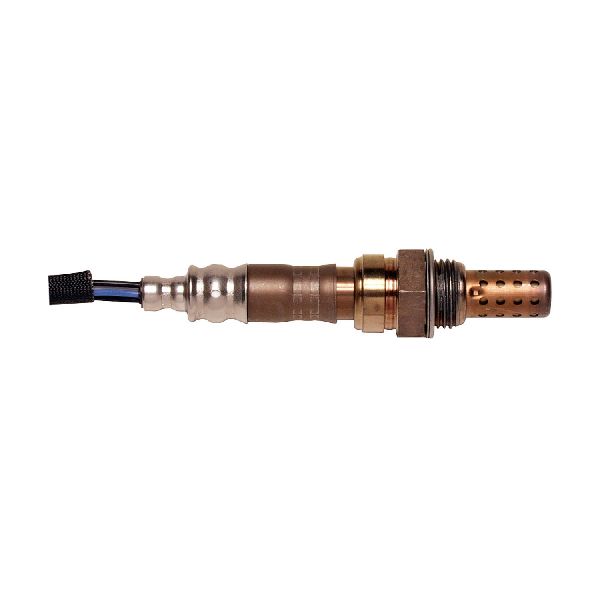
On a 1998-2003 Mazda Protege, code P0031 almost always means the internal heater in the front (upstream) oxygen sensor has failed. The most common fix is to replace the sensor, which costs about $50-$120 for a quality aftermarket part like a Denso or NTK, and is a DIY-friendly job. Before replacing, it's wise to check the 10A 'ENGINE' fuse in the driver's side interior fuse panel.
- P0031 on a Protege almost certainly means you need a new front oxygen sensor.
- The correct sensor is the 'upstream' or 'Bank 1, Sensor 1' unit, located on the exhaust manifold.
- Before replacing the sensor, do a quick check of the 10A 'ENGINE' fuse in the driver's side interior fuse box.
- Use penetrating oil on the old sensor before trying to remove it to avoid it breaking off in the manifold, as noted in Mazda TSB 01-003/15.
- While you're under the hood, inspect the large black rubber air intake hose for cracks, as this is another very common failure item on Proteges that can cause performance issues.
What's Unique About the 1998-2003 Mazda Protege
For the Mazda Protege (and its wagon variant, the Protege5), P0031 is a very common and straightforward code. The oxygen sensors on this platform are known to fail with age, with some owners on forums reporting failures as early as 20,000-30,000 miles. There are no significant differences in the cause or fix across the 1.6L (ZM-DE), 1.8L (FP-DE), or 2.0L (FS-DE) engines used in this period. The most frequent issue reported by owners is simply the failure of the sensor's internal heater element due to normal wear and tear. A minor platform-specific challenge is that the sensor's electrical connector is located in a tight spot under the intake manifold, which can be tricky to access.
Generation note: The 1998-2003 range covers the end of the eighth generation (BH, 1995-1998) and the entire ninth generation (BJ, 1999-2003). The diagnosis and fix for P0031 are consistent across these generations and their respective engines (1.6L, 1.8L, 2.0L). The primary part, the upstream oxygen sensor, is located in the exhaust manifold for all models, making it relatively easy to access from the front of the engine bay.
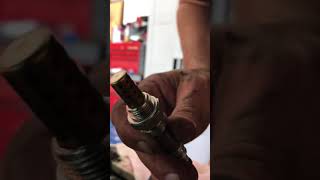
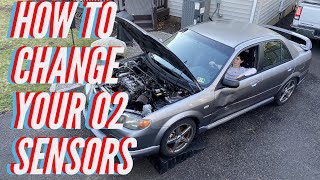
🎬 Watch: Step-by-step upstream O2 sensor replacement on a ProtegeSymptoms You May Notice
- Check Engine Light (CEL) is on
- Reduced fuel economy
- Engine may hesitate or run rough, especially when cold
- Hesitation or stumbling on acceleration, particularly after a stop
- Failure to pass an emissions test
- Replacing the downstream (rear) oxygen sensor. P0031 specifically refers to Sensor 1, which is the upstream sensor located on the exhaust manifold before the catalytic converter.
- Ignoring a cracked air intake hose. A significant vacuum leak from a cracked intake boot between the air filter and throttle body can cause various engine performance issues and sometimes trigger other codes. While less likely to cause P0031 directly, it's a very common issue on Proteges and should be checked during any under-hood diagnosis.
- Using a cheap, universal oxygen sensor. Owners report that low-quality sensors can be dead-on-arrival or fail quickly, causing the P0031 code to return. It is best to use a direct-fit sensor from an OEM-quality brand.
Most Likely Causes
- Failed Upstream Oxygen Sensor 🔴 High Probability → Shop Oxygen Sensor The heater element within the sensor is a very common failure point on this model, often due to age and heat cycles. Forum users report these sensors failing prematurely, sometimes with as few as 20-30k miles.
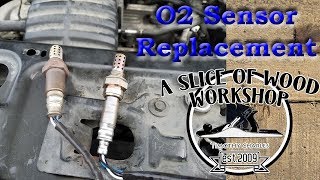
How to confirm: Unplug the sensor and measure the resistance between the two heater circuit wires (on Denso OEM-style sensors, these are the two black wires). A good sensor should have a low resistance, typically between 3.0-3.6 ohms at room temperature for the front sensor. A reading of infinite resistance (OL on a multimeter) means the heater element is broken (open circuit) and confirms sensor failure. 🎬 See how to test and replace an O2 sensor
Typical fix: Replace the Bank 1, Sensor 1 (upstream) oxygen sensor. Using a quality direct-fit sensor from a brand like Denso (Part No. 234-4721) or NTK is highly recommended to avoid premature failure of cheaper parts.
Est. part cost: $50-$120 - Damaged Wiring or Connector 🟡 Medium Probability The wiring harness runs near the hot exhaust manifold and can become brittle, melted, or damaged over time. The connector, tucked under the intake manifold, can also collect dirt and moisture, leading to corrosion.
How to confirm: Visually inspect the wiring harness from the sensor to the main engine harness for any signs of melting, chafing, or breaks. Check the connector for corrosion, moisture, or backed-out pins. With the key on and engine off, use a multimeter to verify 12V power at the harness-side connector.
Typical fix: Repair the damaged section of wire or clean/replace the connector.
Est. part cost: $5-$30 - Blown Fuse ⚪ Low Probability
How to confirm: Check the fuse panel for a blown fuse related to the engine or emissions system. On the Protege, this is specifically the 10A 'ENGINE' fuse located in the interior fuse panel in the driver's side footwell (position 14). Also check for an 'EFI' or 'A/F HEATER' fuse in the under-hood fuse box.
Typical fix: Replace the blown fuse. If it blows again immediately, a short circuit exists in the heater circuit that must be found and repaired.
Est. part cost: $1-$5
Rare But Worth Checking
- Faulty Powertrain Control Module (PCM): This is extremely rare and should only be considered after all other possibilities (sensor, wiring, fuses) have been exhaustively ruled out.
Diagnosis Steps
- Verify the code with an OBD-II scanner. Confirm P0031 is present and note any other codes. 🎬 Watch: How to diagnose and fix code P0031
- Visually inspect the Bank 1 Sensor 1 (upstream) oxygen sensor's wiring and connector. It is located on the front of the engine in the exhaust manifold. Look for any obvious signs of damage, melting, or corrosion. The connector is under the intake manifold.
- Check the fuse for the O2 sensor heater circuit. Specifically, inspect the 10A 'ENGINE' fuse in the driver's side interior fuse box (position 14).
- If the fuse and wiring appear okay, disconnect the sensor's electrical connector.
- Test the sensor's heater circuit resistance. Use a multimeter on the sensor's connector (not the harness side) across the two heater pins (usually two black wires). A good sensor will have low resistance, specifically 3.0-3.6 ohms. Infinite resistance (OL) means the heater is broken (open circuit), which is the most common failure.
- If resistance is good, test for power at the harness connector. With the key on, engine off, one pin should have 12V (battery voltage). If no voltage is present, trace the circuit back from the fuse.
- If 12V power is present and the sensor's heater resistance is good, the issue may be in the ground control wire back to the PCM or an intermittent wiring fault.
- If all tests point to a faulty sensor, replace the Bank 1, Sensor 1 oxygen sensor. Apply anti-seize compound to the threads of the new sensor if not pre-applied.
Parts You'll Likely Need
- Upstream Oxygen Sensor (Bank 1, Sensor 1)
(OEM #ZM03-18-861A-9U (1.6L), FP49-18-861-9U (1.8L), FS7N-18-861-9U (2.0L))— This is the most common cause of code P0031, as the internal heater element fails over time.
Trusted brands: Denso (e.g., 234-4721 for 2.0L), NGK/NTK, Bosch
OEM price range: $150-$250
Aftermarket price range: $50-$120
Related Codes That Often Appear With This One
- P0032: HO2S Heater Control Circuit High (Bank 1 Sensor 1) - This is the companion code indicating a short circuit or higher-than-expected voltage in the same heater circuit.
- P0037: HO2S Heater Control Circuit Low (Bank 1 Sensor 2) - This indicates a similar heater circuit fault, but for the downstream (rear) oxygen sensor.
Technical Service Bulletins (TSBs) & Recalls
- TSB 01-003/15 - This bulletin, which supersedes several previous versions including 01-006/08, provides a specific procedure for removing seized oxygen or air/fuel ratio sensors to minimize the risk of damaging the exhaust component they are threaded into. The procedure involves letting the system cool and using penetrating oil.
Platform-Specific Known Issues
- Mazda issued a Technical Service Bulletin (TSB 01-003/15, which supersedes 01-006/08) for oxygen sensors seizing in the exhaust manifold. It is highly recommended to let the exhaust cool completely, then use a quality penetrating oil and let it soak before attempting removal with a 22mm O2 sensor socket to avoid breaking the sensor or damaging the manifold threads.
Mechanic-Grade Diagnostic Values
- Front O2 Sensor Heater Element Resistance — expected: 3.0-3.6 Ohms at room temperature (approx. 68°F/20°C).. Failure: A reading of infinite resistance (OL) indicates an open circuit (failed heater). A reading near zero ohms indicates a short circuit.
- O2 Sensor Heater Power Supply Voltage — expected: 12V (Battery Voltage) at the harness-side connector with Key On, Engine Off.. Failure: 0V or significantly low voltage points to a blown fuse, a bad relay, or a break in the power wire from the fuse.
- Heater Circuit Current Draw — expected: Greater than 0.8 Amps when active.. Failure: The PCM sets code P0031 when the measured current is below the threshold, often <0.8A, indicating an open or high-resistance circuit.
- Scan Tool Live Data PID: HTR11 — expected: Status should change to 'ON' approximately 15-30 seconds after a cold start.. Failure: If the PID status remains 'OFF' when it should be 'ON', it confirms the PCM is not commanding the heater, or it has detected an immediate fault and shut the circuit down.
Hidden / Shadow Codes Worth Checking
- Mode 6, Test ID $81 (example): Advanced scan tools can access Mode 6 data, which provides raw test results from the PCM's self-diagnostics. For the O2 heater, this often includes a measurement of the current draw, which can be compared against manufacturer minimum/maximum thresholds to confirm a fault without waiting for the P-code to set. (see via An OBD-II scan tool that supports Mode 6 data.)
Scan Tool Commands That Help
- Mazda WDS (Worldwide Diagnostic System) or equivalent: Live Data Monitoring (PID: HTR11) — Use this to confirm if the PCM is commanding the O2 sensor heater to turn on. This helps differentiate between a control-side problem (PCM, wiring) and a component failure (sensor heater) without needing to perform manual electrical tests at the connector.
Wiring & Ground Locations
- 10A 'ENGINE' Fuse — In the interior fuse panel, located in the driver's side footwell, typically at position 14.. This fuse provides the 12V power supply for the oxygen sensor heater circuit. A blown fuse will cause P0031 and is the first electrical component to check.
- PCM Pin 94 (Front Sensor) — At the Powertrain Control Module (PCM) connector. The PCM is typically in the engine bay near the firewall.. This pin is reported to be the ground control for the front O2 sensor heater on some models. Testing continuity from this pin to the sensor connector can identify a broken control wire, which is a rare but possible cause.
- O2 Sensor Connector Pins C & D — On the 4-pin connector for the O2 sensor itself, located under the intake manifold.. These are the specific terminals for the heater circuit. Resistance is measured across these two pins on the sensor side. On the harness side, one of these pins should have 12V power with the key on.
Real Owner Repair Stories
- Reddit user Panda85m in r/MazdaProtege (2000 Mazda Protege) — Persistent Check Engine Light with O2 sensor codes (specifically P1135, a similar heater circuit code).
❌ Tried (didn't work) Googling for solutions provided conflicting information.
✅ What actually fixed it The problem was incorrect wiring at the sensor connector. The owner manually re-pinned the connector to match the correct wire order for the vehicle's harness. The fix was described as: "managed to pull the variations from each sensor cable and put it in the right way to the Arnes plug, now 0 check engine light."
When the Usual Fixes Don't Work
- While a failed sensor is the cause over 90% of the time, there are documented cases where the code persisted after sensor replacement. In one instance, the root cause was found to be an incorrectly wired connector from a previous repair or an improperly installed universal sensor. Correcting the pinout of the connector resolved the code without needing another new part. This highlights the importance of verifying the entire circuit, including connector integrity, if a new sensor doesn't fix the issue.
Model Year Variations Within This Range
- 1998-2003: The primary variation is the specific OEM part number for the upstream oxygen sensor based on engine displacement (1.6L, 1.8L, or 2.0L). The diagnostic and repair procedure for P0031 remains consistent across all engines in this year range.
Diagnostic Flowchart
Other Known Issues on This Vehicle
Issues unrelated to this code that are worth knowing about as an owner of this generation:
- Premature Body Rust 🔴 High — Very common, especially in regions with road salt. Rust typically appears on rear wheel wells, rocker panels, and underbody, sometimes within 3-5 years of new.
- Automatic Transmission (FN4A-EL) Failure 🔴 High — A significant number of owners report issues like harsh shifting, delayed engagement, or complete failure, often occurring shortly after the warranty period (around 60,000-80,000 miles). (Ref: Multiple TSBs exist for shifting issues, such as TSB #05-005-15-3027 for whining noises.)
- Leaking Valve Cover Gasket 🟡 Low — Common age-related issue. The gasket becomes hard and brittle, allowing oil to seep onto the exhaust manifold (causing a burning smell) or into the spark plug wells (causing misfires).
- Cracked Air Intake Hose 🟠 Medium — The ribbed rubber section of the intake hose between the MAF sensor and throttle body frequently cracks with age, causing unmetered air to enter the engine. This leads to a lean condition (P0171), rough idle, and hesitation.
- Weak/Failing Motor Mounts 🟠 Medium — The factory motor mounts, particularly the passenger-side one, are prone to premature failure, leading to excessive engine vibration and noise in the cabin.
Used vs. New Parts: Buying Guide for This Vehicle
When a used part is the smart pick: For this specific repair, a used part from a junkyard is NOT recommended. The oxygen sensor is a wear-and-tear component with a finite lifespan, and the heater element is the most common failure point. The cost of a new, quality aftermarket sensor is low enough that the risk and labor of installing a used part with unknown remaining life is not a smart choice.
What to inspect on the donor part:
- Not applicable, as buying a used oxygen sensor is not advised.
OEM-only on this vehicle (don't cheap out):
- While not strictly OEM-only, using a generic, unbranded 'universal' sensor is strongly discouraged. These often fail prematurely, can be wired incorrectly, or may be dead on arrival.
Aftermarket brands forum-validated for this vehicle:
- Denso (OEM supplier for many Japanese vehicles)
- NGK / NTK
Brands owners have reported issues with on this vehicle:
- Unbranded 'eBay' sensors
- Universal sensors that require splicing, unless you are certain of the wiring diagram and quality.
Real Owner Stories
Aggregated from forums and TSBs cited above. Mileages and costs reflect what owners reported in those sources.
2002 Mazda Protege5
Symptoms: Check engine light, car runs bad, hesitates for 5-10 seconds before accelerating after a stop.
What fixed it: Replacement of the front oxygen sensor.
Source hint: Mazdas247.com thread: 'CEL code P0031 - bad o2 sensor' (Dec 30, 2004)
2003 Mazda Protege5
Symptoms: P0031 code triggered; owner needed to identify Bank 1 Sensor 1 location.
What fixed it: Identification and replacement of the upstream sensor before the catalytic converter, though the forum noted the importance of proper diagnosis as codes can return if the root cause isn't addressed.
Source hint: Mazda Forum thread: 'P0031 code' (Nov 20, 2012)
2001 Mazda Protege — ~25000 miles
Symptoms: Premature failure of the heater element within the oxygen sensor.
What fixed it: Replacement of the upstream oxygen sensor.
Source hint: Mazdas247.com forum users reporting sensors failing with as few as 20-30k miles.
2002 Mazda Protege5
Symptoms: P0031 code and poor gas mileage.
What fixed it: Community advised against cheap eBay parts and recommended a quality replacement sensor.
Source hint: Mazda3Club.com thread: 'code P0031, what do I do?' (Feb 22, 2008)
Related OBD-II Codes
Frequently Asked Questions
Is there a specific procedure for removing the oxygen sensor on my Protege to avoid damaging the manifold?
Where is the 'ENGINE' fuse located on a 1998-2003 Protege, and could it cause P0031?
What is the correct resistance for a new upstream oxygen sensor on this vehicle?
Which specific replacement part is recommended for the Bank 1 Sensor 1 on a Protege?
Where exactly is the Bank 1 Sensor 1 connector located on the Protege engine?
Can a cracked air intake hose cause symptoms similar to a P0031 sensor failure?
Helpful Videos
We Have This Part in Stock



The information in this article is provided for general reference and educational purposes only. Vehicle specifications, procedures, and part compatibility can vary by production date, trim level, and region. Always consult your vehicle's factory service manual and verify part numbers before purchasing or performing repairs. Safety-critical components such as airbags, seat belts, and braking systems should be installed by a qualified professional.
- Mazda Protege:
- 🧭 Diagnostic Flowchart
- 🎬 Helpful Videos
- 🛍️ Shop This Part
- What's Unique About the 1998-2003 Mazda Protege
- Symptoms You May Notice
- Most Likely Causes
- Rare But Worth Checking
- Diagnosis Steps
- Parts You'll Likely Need
- Related Codes That Often Appear With This One
- Technical Service Bulletins (TSBs) & Recalls
- Platform-Specific Known Issues
- Mechanic-Grade Diagnostic Values
- Hidden / Shadow Codes Worth Checking
- Scan Tool Commands That Help
- Wiring & Ground Locations
- Real Owner Repair Stories
- When the Usual Fixes Don't Work
- Model Year Variations Within This Range
- Other Known Issues on This Vehicle
- Used vs. New Parts: Buying Guide for This Vehicle
- Real Owner Stories
- 2002 Mazda Protege5
- 2003 Mazda Protege5
- 2001 Mazda Protege — ~25000 miles
- 2002 Mazda Protege5
- Related OBD-II Codes
- Frequently Asked Questions
- 🎟️ Get 5% Off