

P0031 on 2005-2010 Scion tC 2.4L: A/F Sensor Heater Circuit Causes and Fixes
On a 2005-2010 Scion tC, code P0031 almost always means the internal heater for the upstream Air/Fuel (A/F) ratio sensor has failed. This sensor is Bank 1, Sensor 1. Replacing the sensor with a quality aftermarket part (like Denso 234-9049) is the most common fix. Before replacing, check the 'A/F HEATER' fuse in the engine bay fuse box. Expect to pay $90-$150 for a quality sensor or over $200 for an OEM part. It's a straightforward DIY job for many.
- P0031 on a Scion tC means the heater in your front Air/Fuel sensor isn't working.
- The most likely fix is to replace the upstream A/F sensor, located on the exhaust manifold.
- Before buying a new sensor, always check the 'A/F HEATER' fuse and relay in the engine bay fuse box—it's a cheap and easy check.
- Use a quality replacement sensor from Denso (Part No. 234-9049) or another OEM-spec brand for best results; avoid universal sensors.
- This repair is manageable for a DIYer with basic tools and an O2 sensor socket. Expect the VSC and TRAC lights to turn off once the Check Engine Light is cleared.
What's Unique About the 2005-2010 Scion tC
The first-generation Scion tC uses a wideband Air/Fuel (A/F) ratio sensor for its upstream sensor (Bank 1, Sensor 1), which is more sophisticated than a traditional oxygen sensor. This code specifically targets the sensor's internal heater, which is critical for getting the sensor to its correct operating temperature quickly for closed-loop fuel control. Because Toyota (Scion's parent company) heavily relies on Denso as an original equipment supplier, a failed heater element within the Denso sensor is the most probable cause for this code on the tC. Using non-OEM or universal sensors can often lead to immediate or recurring P0031 codes due to mismatched resistance or wiring.
Symptoms You May Notice
- Check Engine Light is on
- VSC and TRAC OFF lights may also illuminate simultaneously with the Check Engine Light
- Decreased fuel economy
- Rough idle, especially when the engine is cold
- Failed emissions test
- Replacing the downstream (post-catalytic converter) oxygen sensor. P0031 specifically refers to Sensor 1, which is the upstream sensor.
- Replacing the sensor without first checking the 'A/F HEATER' fuse and relay.
- Using a cheap 'universal' oxygen sensor. Many forum users report that these often don't work correctly with the Toyota/Scion system and can cause the code to return immediately.
Most Likely Causes
- Failed Air/Fuel Ratio Sensor 🔴 High Probability → Shop Oxygen Sensor The internal heater element is a common failure point in A/F sensors as they age from constant, rapid heat cycles. It's the most cited reason for P0031 on Scion and Toyota forums.
How to confirm: With the engine off, disconnect the sensor and measure the resistance between the two heater circuit pins (usually the two same-colored wires, often black) using a multimeter. A reading of 'OL' (Open Line/infinite resistance) confirms the heater has failed. A service manual for the 2AZ-FE engine specifies a standard resistance, typically between 2-4 ohms, but an open circuit is a definitive failure.
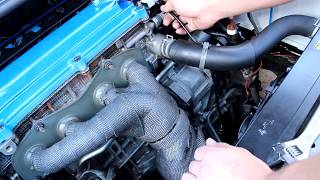
Typical fix: Replace the upstream Air/Fuel Ratio Sensor (Bank 1, Sensor 1). The Denso 234-9049 is a commonly cited direct-fit replacement. 🎬 Watch this step-by-step 2006 Scion tC sensor replacement guide.
Est. part cost: $85-$210 - Blown A/F Heater Fuse or Relay 🟡 Medium Probability
How to confirm: Inspect the fuse box in the engine bay. Look for a fuse labeled 'A/F HEATER' (often a 15A or 20A fuse) and check if it is blown. Also, check the associated 'EFI MAIN' and 'A/F HEATER' relays in the same fuse box, as a faulty relay can also cause this issue.
Typical fix: Replace the blown fuse or faulty relay. If a new fuse blows immediately, this indicates a short circuit in the wiring that must be found and repaired.
Est. part cost: $1-$25 - Damaged Wiring or Connector ⚪ Low Probability
How to confirm: Visually inspect the wiring harness leading to the A/F sensor for any signs of melting, chafing, or breaks, especially where it may contact the hot exhaust manifold or engine block. Check the connector for corrosion, moisture, or loose/bent pins. A forum user on ScionLife mentioned swapping sensors only to find the issue persisted, highlighting the importance of checking wiring.
Typical fix: Repair the damaged section of wiring or clean/replace the connector.
Est. part cost: $5-$50
Rare But Worth Checking
- Faulty Engine Control Module (ECM): This is very uncommon. All other possibilities, especially the sensor, fuse, relays, and wiring, should be thoroughly ruled out before considering the ECM as the cause.
Diagnosis Steps
- Read the code with an OBD-II scanner to confirm P0031 is present. Note if other codes, like C1201, are also stored.
- Locate the fuse box in the engine bay. Find the fuse labeled 'A/F HEATER' (check diagram on fuse box lid) and inspect it. If it's blown, replace it and see if the code returns.
- Inspect the 'EFI MAIN' and 'A/F HEATER' relays in the same fuse box. You can swap them with a known good relay of the same type to test.
- If fuses/relays are good, locate the upstream A/F sensor on the exhaust manifold. Visually inspect its wiring harness and connector for any obvious damage, melting, or corrosion.
- Disconnect the sensor's electrical connector. Use a multimeter set to Ohms (Ω) to measure the resistance of the heater circuit on the sensor side. Probe the two wires that are the same color (typically black). An 'OL' or infinite resistance reading means the heater is broken and the sensor must be replaced. The expected reading on a good sensor is between 2-4 ohms.
- If the sensor resistance is good, check for power at the harness connector. With the ignition key in the 'ON' position (engine off), one pin in the harness connector should have ~12V battery power. If no power is present, the issue is upstream in the wiring or relay circuit.
- If all checks pass, the issue could be an intermittent wiring problem or, in very rare cases, a fault in the ECM driver circuit.
Parts You'll Likely Need
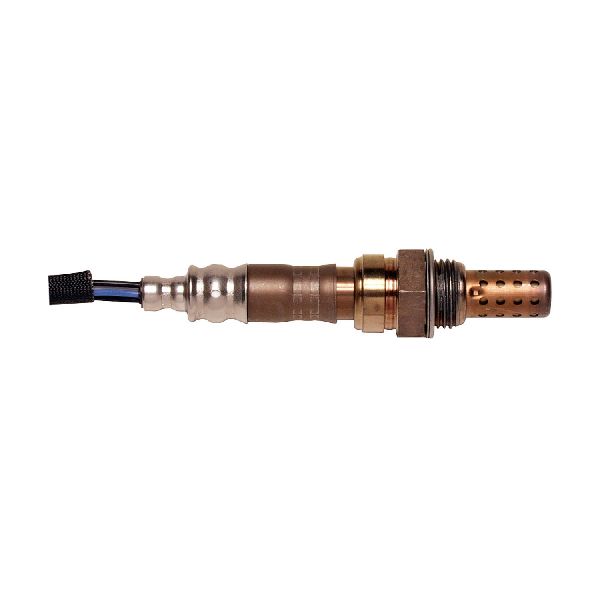
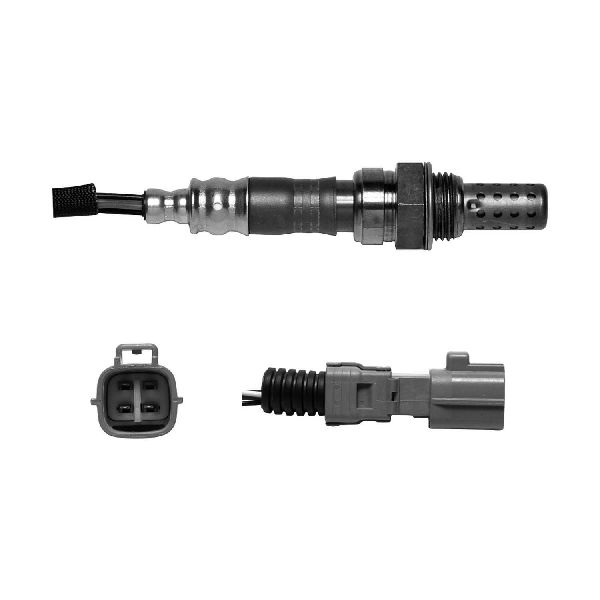
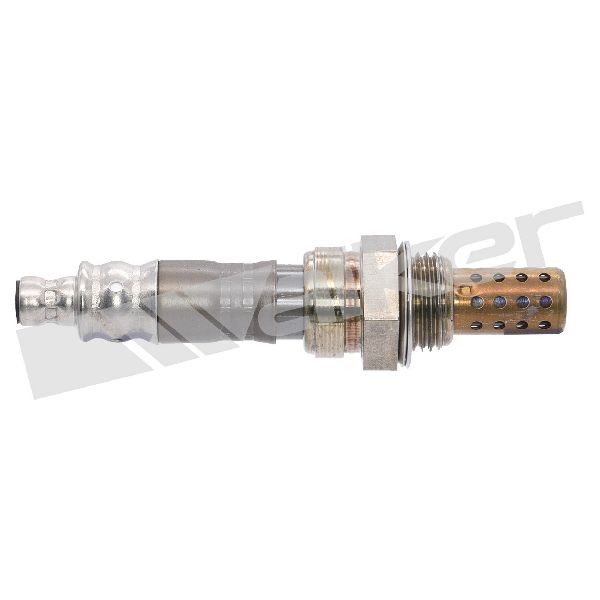
- Air/Fuel Ratio Sensor (Upstream)
(OEM #89467-06030)— This is Bank 1, Sensor 1. Its internal heater is the most common failure point for code P0031.
Trusted brands: Denso (OEM Manufacturer), NGK/NTK
OEM price range: $195-$280
Aftermarket price range: $87-$150
Related Codes That Often Appear With This One
- C1201 (Engine Control System Malfunction) - This code is often set by the ABS/VSC system when an engine-related fault like P0031 occurs, causing the VSC/TRAC lights to come on.
Platform-Specific Known Issues
- A post on ScionLife.com from 2006 mentions a potential TSB for 2005 models related to the primary O2 sensor calibration, but no specific TSB number was confirmed. This is likely anecdotal and not a widespread issue.
- A common owner experience shared on forums is the importance of using an OEM-spec Denso sensor. A user on ScionLife.com detailed their trouble after installing a Bosch universal sensor, which did not resolve the code, highlighting the sensitivity of the Scion's ECU.
Mechanic-Grade Diagnostic Values
- A/F Sensor Heater Element Resistance — expected: 2 to 4 Ohms at room temperature.. Failure: An 'OL' (Open Line) or infinite resistance reading indicates a burned-out heater element.
- A/F Sensor Heater Current Draw — expected: Greater than 0.8 Amps when heater is commanded ON by the ECM.. Failure: Current less than 0.8 Amps will trigger DTC P0031.
- A/F Sensor Harness Voltage (Key On, Engine Off) — expected: ~12V (battery voltage) between the black wire (+) and chassis ground.. Failure: No voltage indicates a problem with the A/F HEATER fuse, EFI relay, or wiring.
- A/F Sensor Harness ECM Reference Voltages (Key On, Engine Off) — expected: 3.3V between orange and brown wires; 3.0V between white and brown wires.. Failure: Incorrect voltages point to a wiring issue between the harness and ECM, or a faulty ECM.
- Fuel Pressure (2AZ-FE Engine) — expected: 304 to 343 kPa (44 to 50 psi).. Failure: Not directly related to P0031, but a key health indicator for the 2AZ-FE engine.
Scan Tool Commands That Help
- Toyota Techstream: Data List > A/FS B1 S1 — To view the live voltage output waveform of the A/F sensor. This helps confirm if the sensor is responding to changes in engine conditions, which is useful after a repair to verify functionality.
- Toyota Techstream: Active Test — Allows the technician to manually command components on or off. While a specific test for the heater circuit isn't detailed, this function is used to test related relays and systems to isolate the fault.
- Toyota Techstream: Read Freeze Frame Data — To see the exact engine conditions (speed, temperature, load, etc.) at the moment the P0031 code was set. This can provide clues if the failure is intermittent or only occurs under specific circumstances.
Wiring & Ground Locations
- A/F Sensor (Bank 1 Sensor 1) Connector — On the A/F sensor pigtail, connecting to the engine harness at the rear of the engine.. This is the primary connection point to test sensor resistance and check for power/ground from the harness side. Corrosion or damage here is a common fault location.
- Ground Point Ee — On the rear of the engine.. This is a main engine ground point. A loose or corroded connection here can cause a variety of sensor issues, including incorrect readings or faults for the A/F sensor circuit.
- Ground Point E3 — Located in the engine harness at the top rear of the engine.. This ground point is part of the engine control harness. A fault here could interrupt the ground path for multiple sensors, including the A/F sensor.
- A/F HEATER Fuse & Relay — In the engine room relay block (fuse box), located on the driver's side of the engine bay.. This fuse and relay supply the 12V power to the sensor's heater element. It is the first place to check for a loss of power to the circuit.
Real Owner Repair Stories
- CamryForums.com user 'toyomoho' (2003 Toyota Camry LE 2.4L 2AZ-FE (same engine as tC)) — Persistent P0031 code that would return quickly on a cold engine, but take 15-20 miles to return if reset on a warm engine.
❌ Tried (didn't work) Replacing the A/F sensor (Bank 1, Sensor 1) with a new Denso part.
✅ What actually fixed it The user did not post the final resolution, but the high-value takeaway was the advanced diagnostic steps provided by a moderator: performing specific voltage checks at the sensor harness for ECM reference signals (3.3V and 3.0V), which isolates the problem to the wiring or the ECM itself when a new sensor doesn't fix the issue.
OEM Part Supersession History
89467-33080→89467-06030— Standard part revision and consolidation by the manufacturer.
Model Year Variations Within This Range
- 2007-2010 vs 2005-2006: The 2AZ-FE engine was updated for the 2007 model year. The compression ratio was increased from 9.6:1 to 9.8:1, the ECU and MAF sensor were changed, and the newer blocks feature oil squirters under the pistons. While the A/F sensor part number remained the same, diagnostics involving the ECU or MAF data could be slightly different between these year groups.
Diagnostic Flowchart
Used vs. New Parts: Buying Guide for This Vehicle
When a used part is the smart pick: For this specific repair, using a used part is almost never a smart choice. The A/F sensor is a wear-and-tear item with a finite lifespan. However, if the fault is traced to a damaged connector pigtail or a faulty A/F HEATER relay, a used part from a reputable auto recycler is a reasonable and cost-effective option.
Donor-vehicle mileage cap: roughly under 80000 miles for the part to have meaningful remaining life.
What to inspect on the donor part:
- For a relay: Ensure the part number matches exactly and there is no visible corrosion on the pins.
- For a wiring pigtail: Inspect for any signs of melting, brittleness, or previous repair (splices). Ensure the locking tab on the connector is intact.
OEM-only on this vehicle (don't cheap out):
- Air/Fuel Ratio Sensor - While not strictly 'OEM-only', it is highly recommended to use the OEM manufacturer (Denso) or a reputable OE equivalent like NTK. The Scion's ECU is sensitive to the precise resistance and signal from this sensor.
Aftermarket brands forum-validated for this vehicle:
- Denso (OEM)
- NGK / NTK
Brands owners have reported issues with on this vehicle:
- Universal oxygen sensors (any brand) that require cutting and splicing wires. These are a frequent cause of repeat failures for this code on Toyota/Scion vehicles.
Real Owner Stories
Aggregated from forums and TSBs cited above. Mileages and costs reflect what owners reported in those sources.
2006 Scion tC
Symptoms: The check engine light came on with code P0031.
What fixed it: After replacing the O2 sensor and checking fuses with no luck, the owner discovered the A/F sensor relay was faulty. Swapping it with the horn relay resolved the code, confirming a new relay was needed.
Source hint: owner_reports section citing a ScionLife forum post
Scion tC 1G
Symptoms: A P0031 code appeared after installing a turbo and using a Bosch universal O2 sensor.
What fixed it: The forum consensus was that the universal sensor was incompatible or wired incorrectly, and that a proper OE-spec sensor was required to fix the code.
Source hint: ScionLife.com thread titled 'P0031 On a new Bank 1 Need Help'
Scion tC
Symptoms: The P0031 code persisted even after installing a new Bosch universal sensor.
What fixed it: The experience highlighted the sensitivity of the Scion's ECU; the implied fix was to replace the universal sensor with an OEM-spec Denso sensor.
Source hint: Vehicle-specific issues section citing a ScionLife.com user experience
Related OBD-II Codes
Frequently Asked Questions
Why are my VSC and TRAC OFF lights on at the same time as the Check Engine Light for P0031?
What is the most likely part I need to fix P0031 on my 2.4L tC?
I'm replacing the A/F sensor. Is there a specific brand I should use for my Scion tC?
How can I test my old A/F sensor before buying a new one?
I replaced the A/F sensor, but the P0031 code came back. What should I check next?
I heard about a Technical Service Bulletin (TSB) for the O2 sensor on 2005 models. Is this a known issue?
Helpful Videos
We Have This Part in Stock



The information in this article is provided for general reference and educational purposes only. Vehicle specifications, procedures, and part compatibility can vary by production date, trim level, and region. Always consult your vehicle's factory service manual and verify part numbers before purchasing or performing repairs. Safety-critical components such as airbags, seat belts, and braking systems should be installed by a qualified professional.
- Scion tC:
- 🧭 Diagnostic Flowchart
- 🎬 Helpful Videos
- 🛍️ Shop This Part
- What's Unique About the 2005-2010 Scion tC
- Symptoms You May Notice
- Most Likely Causes
- Rare But Worth Checking
- Diagnosis Steps
- Parts You'll Likely Need
- Related Codes That Often Appear With This One
- Platform-Specific Known Issues
- Mechanic-Grade Diagnostic Values
- Scan Tool Commands That Help
- Wiring & Ground Locations
- Real Owner Repair Stories
- OEM Part Supersession History
- Model Year Variations Within This Range
- Used vs. New Parts: Buying Guide for This Vehicle
- Real Owner Stories
- 2006 Scion tC
- Scion tC 1G
- Scion tC
- Related OBD-II Codes
- Frequently Asked Questions
- 🎟️ Get 5% Off