

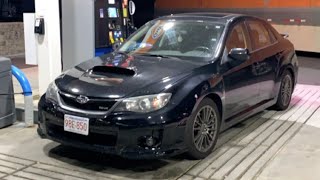
P0031 on 2012-2014 Subaru Impreza WRX: Front O2 Sensor Heater Circuit Causes and Fixes
On a Subaru WRX with the EJ255 turbo engine, code P0031 almost always means the internal heater for the front Air/Fuel (A/F) ratio sensor has failed. The most common fix is to replace the sensor with an OEM-equivalent part like Denso 234-9108. Before buying parts, always check the 15A A/F sensor fuse in the interior fuse box, as a shorted wire from contact with an exhaust heat shield is another very common cause and will often trigger P0037 at the same time.
- P0031 on a turbo Subaru almost always points to the front A/F (O2) sensor.
- ALWAYS check the 15A A/F sensor fuse in the interior fuse box before buying a new sensor. If it's blown, inspect for a short circuit from the wiring touching a heat shield.
- If the fuse is good, the sensor's internal heater has likely failed. Confirm with a multimeter test; a good sensor reads ~2-4 ohms, a bad one reads open.
- Use a quality replacement sensor from a brand like Denso or NGK to avoid compatibility issues.
- The job is DIY-friendly, but the old sensor can be seized in the exhaust. Use plenty of penetrating oil and a proper O2 sensor socket.
What's Unique About the 2012-2016 Subaru Impreza
Turbocharged Subaru EJ-series engines like the EJ255 are known for having their front A/F sensors fail. These engines are sensitive to the air-fuel mixture, making a fast-acting, properly heated sensor critical for performance and engine health. Owners and mechanics strongly recommend using an OEM or high-quality OEM-supplier part (like Denso), as cheaper aftermarket sensors can be incompatible or fail quickly. A unique and well-documented issue on this platform is the potential for the passenger-side exhaust heat shield to rust, bend, or loosen, contacting the sensor wiring harness. This creates a short to ground that blows the 15A fuse for the heater circuit, often triggering both P0031 and P0037 (rear sensor heater) codes simultaneously.
🎬 Watch: How to fix P0031 and P0037 codes together.Generation note: The user's request for a '2012-2016 Subaru Impreza' with the 'EJ255 2.5L Turbo (WRX)' engine spans multiple vehicle generations and models. The 2012-2014 Impreza WRX (third-generation Impreza platform) used the EJ255 engine. However, from 2015 onwards, the WRX became a separate model line with a different engine (FA20DIT), and the standard Impreza used non-turbo engines. This guide primarily applies to the 2012-2014 Impreza WRX with the EJ255 engine, but the information is also highly relevant for other turbocharged Subarus of the era that used the EJ255, like the 2008-2014 WRX/STI, 2009-2013 Forester XT, and 2005-2012 Legacy GT.
Symptoms You May Notice
- Check Engine Light (CEL) is on
- Flashing cruise control light (a standard Subaru feature when a CEL is present)
- Disabled traction/stability control (VDC Off light)
- Reduced fuel economy
- Rough idle, especially when the engine is cold
- Potential for reduced engine performance or running in a 'safe' mode
- Failed emissions test
- Replacing the rear oxygen sensor (Sensor 2). P0031 specifically refers to the front sensor (Sensor 1) before the catalytic converter.
- Replacing the A/F sensor without first checking the 15A fuse in the interior fuse box. If the fuse is blown, a new sensor will not fix the problem and the fuse will likely blow again.
- Assuming a new, non-OEM sensor is good. Some cheap aftermarket sensors can be faulty out of the box or incompatible, immediately triggering the same code.
Most Likely Causes
- Failed Front Air/Fuel (O2) Sensor Heater Element 🔴 High Probability The heater element inside the sensor is a common failure point on these vehicles due to age and many heat cycles. It essentially burns out like a lightbulb filament, creating an open circuit.
How to confirm: Disconnect the sensor and use a multimeter to measure the resistance between the two heater circuit wires (typically the two wires of the same color, often black). A good sensor will have a low resistance (usually 2-5 ohms), while a failed sensor will show infinite resistance or 'OL' (Open Line).
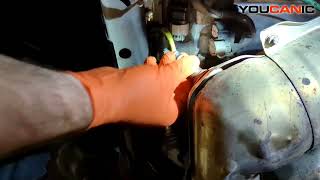
Typical fix: Replace the front Air/Fuel ratio sensor (Bank 1, Sensor 1). An O2 sensor socket is highly recommended for removal. 🎬 See this walkthrough for replacing upstream and downstream sensors.
Est. part cost: $120-$250 - Blown A/F Sensor Fuse 🟡 Medium Probability The exhaust heat shields on these models can rust, bend, or come loose and make contact with the O2 sensor's wiring harness. This creates a short to ground that blows the fuse for the heater circuit. This is a very frequent issue discussed in owner forums.
How to confirm: Check the 15A A/F sensor fuse, often located in the interior fuse box under the driver's side dashboard. If it is blown, thoroughly inspect the wiring around the sensor for physical contact with the heat shield before replacing the fuse.
Typical fix: Replace the blown 15A fuse. If the cause was a short, bend the heat shield away from the wiring harness or secure it to prevent recurrence. The sensor itself may also need replacement if it was damaged by the short.
Est. part cost: $1-$5 - Damaged Wiring or Connector ⚪ Low Probability The wiring harness is located near hot exhaust components and the turbocharger, and can become brittle, frayed, or melted over time, leading to an open or short circuit.
How to confirm: Visually inspect the wiring harness from the sensor to the main engine harness for any signs of melting, chafing, or broken wires. Check the connector (located near the passenger side strut tower) for corrosion or pushed-out pins.
Typical fix: Repair the damaged section of wiring or replace the connector pigtail.
Est. part cost: $10-$40
Rare But Worth Checking
- Failed Engine Control Module (ECM): This is extremely rare. The ECM's internal driver for the heater circuit can fail. This should only be considered after all other possibilities (sensor, fuse, wiring) have been definitively ruled out by thorough testing, including checking for 12V power at the harness connector with the key on.
Diagnosis Steps
- Read the code with an OBD-II scanner to confirm P0031 is present. Note any other codes, especially P0037, as this points towards a fuse issue.
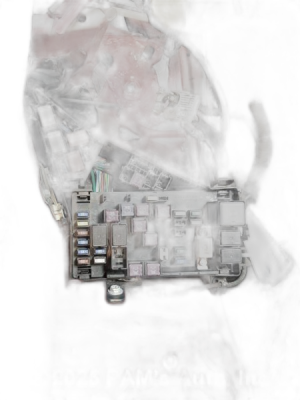
- Locate and check the A/F sensor fuse (typically a 15A mini fuse) in the interior fuse panel under the driver's side dash.
- If the fuse is blown, inspect the front and rear O2 sensor wiring for shorts, particularly from contact with exhaust heat shields, before replacing the fuse.
- If the fuse is good, locate the front A/F sensor on the passenger-side exhaust manifold, pre-turbo.
- Disconnect the sensor's electrical connector (near the passenger strut tower) and inspect it for damage or corrosion.
- Using a multimeter set to Ohms (Ω), measure the resistance across the two heater pins 🎬 Watch: How to test the sensor heater circuit with a multimeter. on the sensor side of the connector (these are usually the two wires of the same color, often black).
- A reading between 2-5 ohms indicates a good heater circuit. A reading of infinity or 'OL' (Open Line) confirms the heater has failed and the sensor must be replaced.
- If the sensor resistance is good, check for 12V power at the corresponding pin on the harness side of the connector with the ignition on. If power is missing, there is a wiring issue between the fuse box and the sensor.
Parts You'll Likely Need
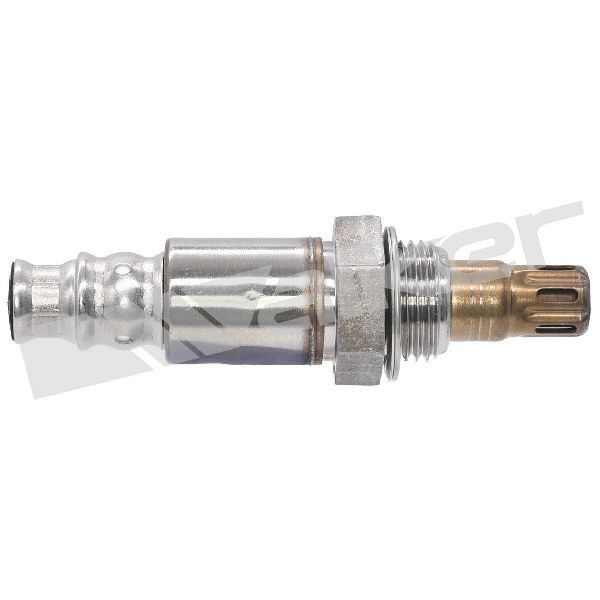
- Front Air/Fuel Ratio Sensor
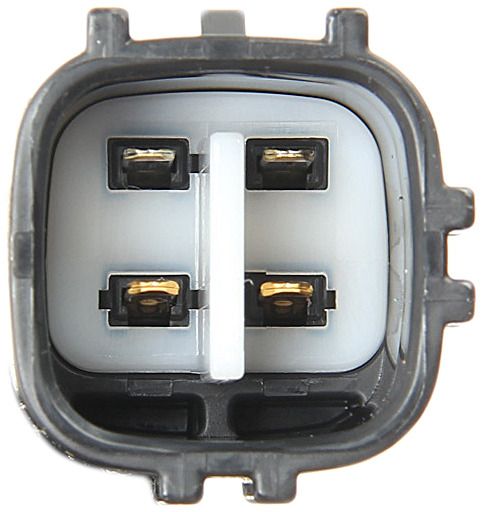
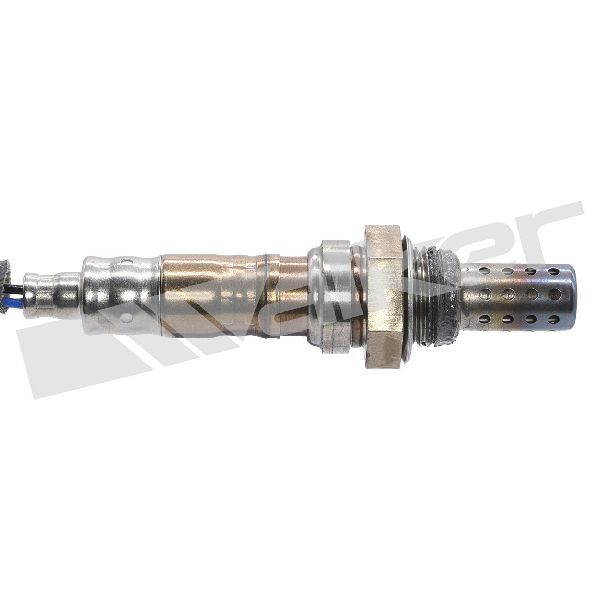
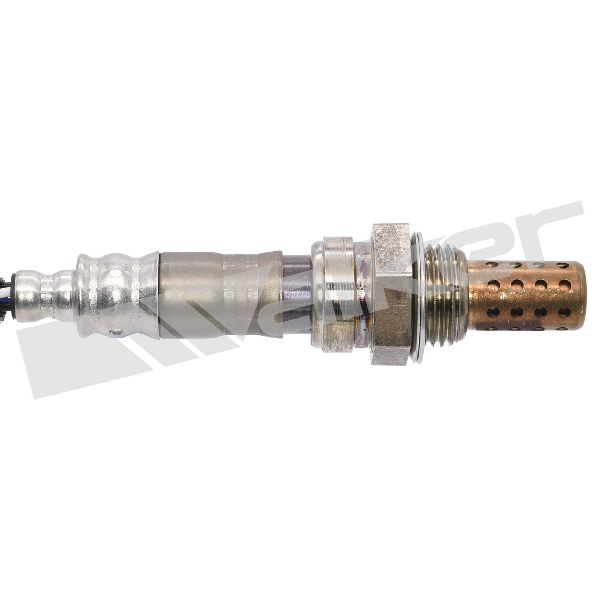
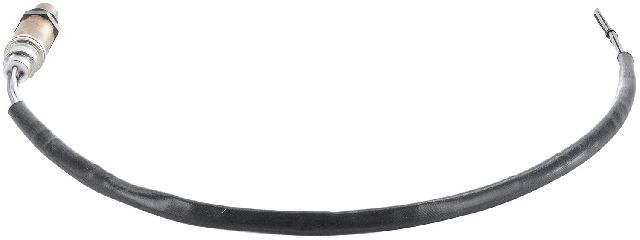
(OEM #22641AA480)— This is the most common cause of P0031. The internal heating element fails, which is integral to the sensor.
Trusted brands: Denso (OEM Supplier, P/N: 234-9108 or DOX-0361), NGK/NTK
OEM price range: $220-$280
Aftermarket price range: $120-$180 - 15A Mini Fuse — A common secondary cause is a blown fuse, often due to the sensor wiring shorting on a heat shield.
Trusted brands: Bussmann, Littlefuse
OEM price range: $1-$5
Aftermarket price range: $1-$5
Related Codes That Often Appear With This One
- P0037 — This code is for the rear O2 sensor heater circuit (Bank 1, Sensor 2). Seeing P0031 and P0037 together strongly suggests a blown fuse, as a single 15A fuse often powers the heater circuits for both the front and rear sensors. The root cause is frequently a short in the wiring for either sensor.
Technical Service Bulletins (TSBs) & Recalls
- No specific TSBs directly addressing P0031 were found. However, a safety recall for the secondary air injection pump relay (NHTSA Recall 16V-738, Subaru Campaign WTM-73) is highly relevant to 2008-2014 Impreza turbo models. A faulty relay can cause the pump to run continuously and overheat, posing a fire risk.
Platform-Specific Known Issues
- A rusted, bent, or loose exhaust heat shield on the passenger side can contact the front O2 sensor or its wiring, causing a short circuit that blows the A/F sensor fuse and triggers codes P0031 and often P0037 simultaneously.
Mechanic-Grade Diagnostic Values
- Front A/F Sensor Heater Circuit Resistance — expected: 2.5 to 3.5 Ohms at room temperature. Some sources state 2-5 Ohms is acceptable.. Failure: A reading of 'OL' (Over Limit) or infinite resistance indicates a burned-out heater element. A reading near zero Ohms indicates an internal short.
- A/F Sensor Harness Connector Voltage (Key On, Engine Off) — expected: ~12V (Battery Voltage) on one of the heater circuit pins (power feed).. Failure: No voltage indicates a problem upstream, such as a blown fuse, faulty relay, or wiring break.
- A/F Sensor Heater Current (via Scan Tool) — expected: Typically above 0.8 Amps when active.. Failure: Current below the specified threshold (e.g., <0.8A) will trigger the P0031 code.
Scan Tool Commands That Help
- Subaru Select Monitor (SSM): Current Data Display & Save — Use this to view live data parameters like 'A/F Sensor #1 Resistance' and 'A/F Sensor #1 Current'. This helps confirm if the ECU is seeing the same fault that is being measured manually, which is useful for diagnosing intermittent wiring issues or verifying a fix.
- Subaru Select Monitor (SSM) or OBD-II Scan Tool: Clear Memory Mode — After replacing the sensor or fixing the circuit, this function must be used to clear the DTC. On some Subarus, simply disconnecting the battery may not be sufficient to clear the code from all memory modules.
Wiring & Ground Locations
- E24 / E23 (Connector) — The main 4-pin harness connector for the front A/F sensor, located on the passenger-side strut tower in the engine bay.. This is the primary test point for checking voltage from the harness and resistance on the sensor, allowing a technician to isolate the fault without accessing the sensor itself.
- Heater Circuit Wires — On the sensor-side connector, these are typically the two wires of the same color (usually black).. These are the specific pins that must be probed with a multimeter to measure the resistance of the internal heater element.
- Engine Ground Straps — Braided ground straps connecting the engine block to the chassis frame, typically low on both driver and passenger sides.. While not a direct cause, these main grounds are known to corrode and break on Subarus. A poor engine ground can create unstable voltage and erratic sensor readings across the system, potentially complicating diagnosis.
Real Owner Repair Stories
- YouTube user Nathan Oikarinen (2008-2014 Subaru WRX (similar platform)) — Check Engine Light with codes P0031 and P0037.
❌ Tried (didn't work) Initial assumption was a bad sensor.
✅ What actually fixed it Found the 15A A/F sensor fuse was blown. The root cause was an exhaust heat shield on the passenger side that had bent and was touching the O2 sensor, creating a short to ground. The fix was to bend/break the heat shield away from the sensor and replace the blown fuse. The sensor itself also had to be replaced due to damage from the short.
OEM Part Supersession History
22641AA480→No direct supersession found, this remains the active part number.— N/A
Heads up: The Denso 234-9108 (or DOX-0361) is the direct OEM equivalent and is widely reported as the only reliable aftermarket replacement. Many other aftermarket brands are known to be incompatible or fail quickly, often throwing the same P0031 code immediately after installation.
Model Year Variations Within This Range
- 2011-2014 WRX: Starting in 2011, Subaru moved the front O2 sensor connector from the engine block onto the main body harness near the passenger strut tower. This is different from earlier 2008-2010 models where the connector was on the engine itself. This is particularly relevant for engine swaps, as an older STI engine harness will not have the correct connector location for a 2011-2014 WRX body harness.
Diagnostic Flowchart
Other Known Issues on This Vehicle
Issues unrelated to this code that are worth knowing about as an owner of this generation:
- Piston Ringland Failure 🔴 High — A notorious weak point of the stock hypereutectic pistons in EJ255/EJ257 engines, especially when modified or driven hard. Can occur on stock vehicles. Symptoms include increased oil consumption, smoke from the exhaust or oil filler cap (blow-by), and eventual loss of compression.
- Secondary Air Injection Pump Failure 🟠 Medium — The relay for the air pump can stick, causing the pump to run continuously, overheat, and melt, creating a fire risk. This prompted a recall. (Ref: NHTSA: 16V-738 / Subaru: WTM-73)
- Turbo Oil Starvation (Banjo Bolt Filter) 🔴 High — Small mesh filters inside the banjo bolts for the turbo oil feed line can clog with debris over time, starving the turbo of oil and leading to catastrophic failure. Many owners and shops proactively remove these filters as a preventative measure.
- Rod Bearing Failure 🔴 High — Can occur due to oil starvation from aggressive driving, low oil levels, or clogged oil passages. Often presents as a distinct engine knocking sound.
- Valve Cover Gasket Leaks 🟡 Low — Common on boxer engines after 100,000 miles. Oil drips onto hot exhaust components, causing a burning oil smell and visible smoke from the engine bay.
Used vs. New Parts: Buying Guide for This Vehicle
When a used part is the smart pick: For this repair, a used part is almost never a smart choice. The primary failure is the A/F sensor itself, which is a wear-and-tear item with a finite lifespan. Installing a used sensor is risky as its remaining life is unknown. Used wiring connectors or heat shields from a junkyard are acceptable if the original parts are physically damaged.
Donor-vehicle mileage cap: roughly under 30000 miles for the part to have meaningful remaining life.
What to inspect on the donor part:
- For a connector: Check for brittle plastic, corrosion on pins, and ensure locking tabs are intact.
- For a heat shield: Ensure it is not rusted through, bent, or deformed.
OEM-only on this vehicle (don't cheap out):
- Air/Fuel Ratio Sensor
Aftermarket brands forum-validated for this vehicle:
- Denso (P/N: 234-9108) is the original equipment manufacturer and is the most recommended replacement.
- NGK/NTK is also a reputable OEM supplier for many Japanese vehicles and is considered a reliable alternative.
Brands owners have reported issues with on this vehicle:
- Generic, unbranded sensors from online marketplaces like Amazon or eBay are frequently reported to be faulty out of the box or incompatible, causing the P0031 code to return immediately.
Real Owner Stories
Aggregated from forums and TSBs cited above. Mileages and costs reflect what owners reported in those sources.
2012 Subaru WRX EJ255
Symptoms: Threw a p0031 code. Tested with a multimeter and it passed the beep test with 3.5 ohms.
What fixed it: The owner was in the process of diagnosing the sensor heater circuit using a multimeter to confirm if the sensor or the circuit was the fault.
Source hint: reddit r/subaru
2019 Subaru WRX
Symptoms: P0031 and P0037 codes appeared simultaneously.
What fixed it: Found a burnt fuse and traced the cause to O2 sensor shielding that had worn through from exhaust vibration, causing a short.
Source hint: Reddit r/WRX
2005-2012 Subaru Legacy GT (EJ255)
Symptoms: CEL P0031 on an EJ-series engine.
What fixed it: Replacement of the front Air/Fuel ratio sensor (Bank 1, Sensor 1) located on the passenger-side exhaust manifold.
Source hint: LegacyGT.com thread titled 'howto-replace-upstream-oxygen-sensor-cel-p0031-237511.html'
Related OBD-II Codes
Frequently Asked Questions
My 2012 WRX has a P0031 and the cruise control light is flashing. Is the cruise control broken?
Does the secondary air injection pump recall (WTM-73) apply to my 2012-2014 Impreza WRX?
Where is the A/F sensor fuse located on a 2012-2016 Impreza WRX?
Why did my VDC Off light come on at the same time as the P0031 code?
Can a rusted heat shield cause a P0031 code on my EJ255 engine?
What resistance should I see when testing the front A/F sensor on my WRX?
Helpful Videos

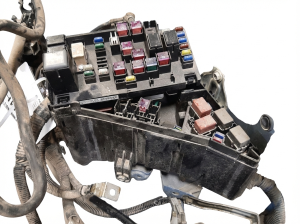
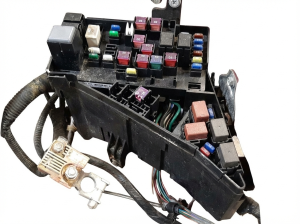
Used OEM Parts in Stock
New Aftermarket Parts Available

The information in this article is provided for general reference and educational purposes only. Vehicle specifications, procedures, and part compatibility can vary by production date, trim level, and region. Always consult your vehicle's factory service manual and verify part numbers before purchasing or performing repairs. Safety-critical components such as airbags, seat belts, and braking systems should be installed by a qualified professional.
- Subaru Impreza:
- 🧭 Diagnostic Flowchart
- 🎬 Helpful Videos
- 🛍️ Shop This Part
- What's Unique About the 2012-2016 Subaru Impreza
- Symptoms You May Notice
- Most Likely Causes
- Rare But Worth Checking
- Diagnosis Steps
- Parts You'll Likely Need
- Related Codes That Often Appear With This One
- Technical Service Bulletins (TSBs) & Recalls
- Platform-Specific Known Issues
- Mechanic-Grade Diagnostic Values
- Scan Tool Commands That Help
- Wiring & Ground Locations
- Real Owner Repair Stories
- OEM Part Supersession History
- Model Year Variations Within This Range
- Other Known Issues on This Vehicle
- Used vs. New Parts: Buying Guide for This Vehicle
- Real Owner Stories
- 2012 Subaru WRX EJ255
- 2019 Subaru WRX
- 2005-2012 Subaru Legacy GT (EJ255)
- Related OBD-II Codes
- Frequently Asked Questions
- 🎟️ Get 5% Off