

P0031 on 2009-2014 Subaru Outback: Heater Circuit Low Causes and Fixes
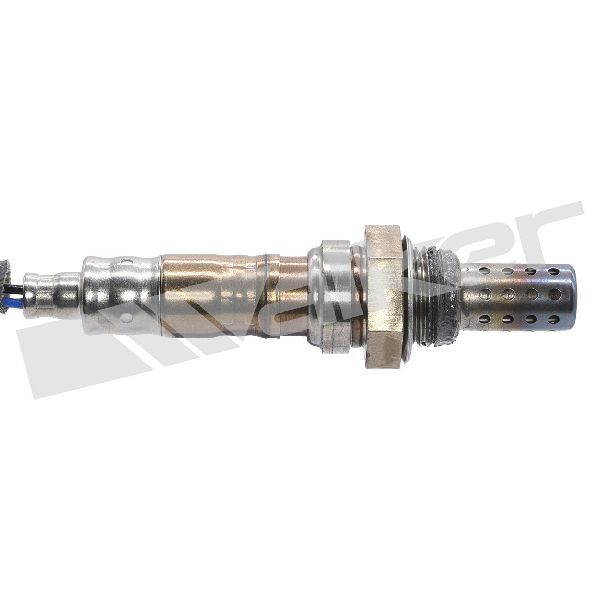
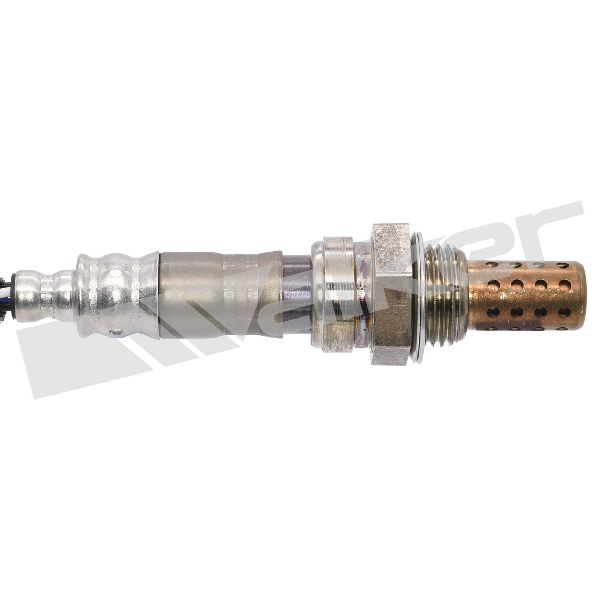
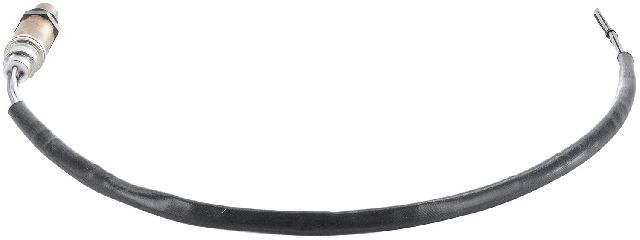
On a 2009-2014 Subaru Outback, code P0031 almost always means the internal heater for the front oxygen sensor (A/F sensor) has failed. Replacing the sensor is the fix. Expect to pay $80-$150 for an aftermarket sensor (like Denso, the OEM supplier) or $160-$220 for a genuine Subaru part. It's a common DIY job unless the sensor is seized in the exhaust, which is a frequent and significant challenge.
- P0031 on a 2009-2014 Outback is a very common code pointing directly to a failed front Air/Fuel Ratio sensor.
- The most likely fix is to replace the sensor. Denso is the original manufacturer and a reliable aftermarket choice.
- It is critical to buy the correct part for your vehicle's specific year and engine, as they differ between generations (2009 vs 2010-2014) and engine types (2.5L vs 3.6L).
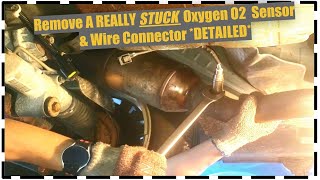
- The biggest challenge is often the physical removal of the old sensor, which can be seized. Use penetrating oil and an O2 sensor socket.
- Before buying a new sensor, it's wise to quickly check the fuse for the heater circuit to rule out a simple electrical issue.
What's Unique About the 2009-2014 Subaru Outback
For this generation of Subaru Outback, the P0031 code is a very common and straightforward issue. The original equipment (OE) sensor is made by Denso, and owners almost universally find that the heater element simply fails from age and heat cycles. There are no widespread design flaws or complex electrical issues tied to this code; it's typically a simple wear-and-tear component failure. The most significant challenge is often not the diagnosis, but the physical removal of the old old sensor, which can be tightly seized in the exhaust manifold due to rust and heat cycling. Many owners report needing heat, penetrating oil, and specialized tools for removal.
Generation note: This range covers two Outback generations. The 2009 model is the final year of the third generation (Gen 3). The 2010-2014 models are the fourth generation (Gen 4). The 2.5L engine also changed from the EJ253 (SOHC) to the FB25B (DOHC) in 2013. The front oxygen sensors are different between these generations and engines, so it is critical to buy the correct part for your specific year and engine. The 3.6R H6 engine also uses a specific sensor.
Symptoms You May Notice
- Check Engine Light is on
- Cruise control light may flash (a common Subaru behavior when a CEL is present)
- VDC Off or Traction Control light may illuminate
- Slightly decreased fuel economy
- Failure to pass an emissions test
- Rough or uneven idle
- Replacing the rear oxygen sensor (Sensor 2). The code P0031 specifically refers to Sensor 1, which is the sensor located before the catalytic converter.
- Assuming a new, non-OEM sensor is good. Some forum users report getting a P0031 code immediately after installing a cheap aftermarket sensor, suggesting it was faulty out of the box or incompatible. Sticking with Denso (the OEM manufacturer) is highly recommended.
Most Likely Causes
- Failed Front Oxygen (A/F) Sensor Heater Element 🔴 High Probability → Shop Oxygen Sensor This is a standard wear-and-tear item. The internal heating element is subjected to thousands of heat cycles and eventually burns out, creating an open circuit.
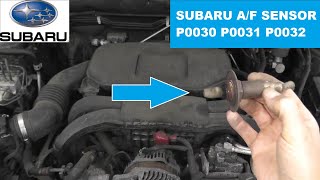
How to confirm: Disconnect the sensor and measure the resistance between the two heater wires 🎬 Watch: How to test and replace upstream sensors for P0031. (typically the two wires of the same color, often black). A good sensor will have a low resistance, typically between 2 and 4 ohms. A failed sensor will show infinite resistance (Open Line or 'OL' on a multimeter).
Typical fix: Replace the front oxygen (A/F) sensor (Bank 1, Sensor 1).
Est. part cost: $80-$220 - Blown Fuse ⚪ Low Probability While not common, a short in the sensor or its wiring can blow the fuse for the heater circuit. On some Subarus, a damaged exhaust heat shield can contact the sensor wiring, causing a short.
How to confirm: Check the fuse for the A/F or O2 sensor heater circuit. In the engine bay fuse box, it is often a 15A fuse labeled 'A/F SENSOR HEATER' or similar. On some models, it may be in an unlabeled block; for a 2017 Crosstrek, a similar issue was traced to the third fuse from the bottom in a black fuse block. Always check the owner's manual or fuse diagram for your specific year.
Typical fix: Replace the blown fuse. If the new fuse blows immediately, it indicates a persistent short circuit in the wiring or the sensor itself that must be diagnosed and repaired.
Est. part cost: $1-$5 - Damaged Wiring or Connector ⚪ Low Probability The wiring harness runs close to the hot exhaust and can become brittle or melt if a retaining clip breaks. The connector can also accumulate dirt or corrosion, leading to a poor connection.
How to confirm: Visually inspect the wiring harness from the sensor to the main engine harness for any signs of melting, chafing, or broken wires. Check that the connector is clean, secure, and free of corrosion. Ensure the harness is not making contact with the exhaust manifold or heat shields.
Typical fix: Repair the damaged section of wire or clean/replace the connector. Secure the harness away from hot components with zip ties if necessary.
Est. part cost: $5-$50
Rare But Worth Checking
- Faulty Engine Control Unit (ECU): This is extremely rare. Before condemning the ECU, all other possibilities (sensor, fuse, wiring) must be exhaustively ruled out by a professional. A faulty ECU driver can fail to provide the ground signal to the heater circuit.
Diagnosis Steps
- Confirm the code P0031 is present using an OBD-II scanner. Note any other codes.
- Check the fuse for the A/F or O2 sensor heater circuit, typically a 15A fuse in the engine compartment fuse box. If it's blown, replace it and see if the code returns. If it blows again, suspect a short circuit in the sensor or wiring.
- If the fuse is good, locate the front oxygen sensor (Bank 1, Sensor 1). On 4-cylinder models, it's in the exhaust manifold on the passenger side, easily visible from the top of the engine bay. On 6-cylinder models, Bank 1 is the passenger side bank.
- Visually inspect the sensor's wiring harness and connector for any signs of melting, corrosion, or damage. Ensure it is not touching any part of the exhaust.
- Disconnect the sensor's electrical connector. Identify the two wires for the heater circuit (they are usually the same color, often black).
- Using a multimeter set to Ohms (Ω), measure the resistance across the two heater pins on the sensor side of the connector. A good Denso sensor should read a low resistance, typically between 2.5 and 3.5 ohms at room temperature. An infinite reading (OL) indicates the heater has burned out and the sensor must be replaced.
- If the sensor resistance is good, you must test for power and ground at the vehicle harness connector. With the ignition ON (engine OFF), one pin should have battery voltage (~12V) and the other is a duty-cycled ground controlled by the ECU. A lack of voltage points to a wiring or fuse issue; a lack of ground control could point to a wiring or ECU issue (this is advanced diagnosis).
Parts You'll Likely Need
- Front Air/Fuel Ratio Sensor (2010-2012 2.5L SOHC EJ253)
(OEM #22641AA54A)— This is the correct sensor for the Gen 4 Outback with the EJ253 engine. The internal heater is the component that fails. The corresponding Denso part is 234-9123.
Trusted brands: Denso (OEM), Bosch, NGK/NTK
OEM price range: $150-$220
Aftermarket price range: $90-$150 - Front Air/Fuel Ratio Sensor (2013-2014 2.5L DOHC FB25B)
(OEM #22641AA640)— This is the correct sensor for the updated Gen 4 Outback with the FB25B engine. 🎬 See this step-by-step replacement for 2013 and newer models. The internal heater is the component that fails. The corresponding Denso part is 234-9136.
Trusted brands: Denso (OEM), Bosch, NGK/NTK
OEM price range: $160-$230
Aftermarket price range: $100-$160 - Front Air/Fuel Ratio Sensor (2009 2.5L SOHC EJ253)
(OEM #22641AA360)— This is the correct sensor for the Gen 3 Outback. The corresponding Denso part is 234-9123. The internal heater is the component that fails.
Trusted brands: Denso (OEM), Bosch, NGK/NTK
OEM price range: $160-$220
Aftermarket price range: $80-$140 - Front Air/Fuel Ratio Sensor (2010-2014 3.6L H6 EZ36D)
(OEM #22641AA53A)— This is the correct sensor for the 6-cylinder models. The corresponding Denso part is 234-9092. The internal heater is the component that fails.
Trusted brands: Denso (OEM), Bosch, NGK/NTK
OEM price range: $170-$240
Aftermarket price range: $110-$180
Platform-Specific Known Issues
- The most common vehicle-specific issue is the sensor becoming seized in the exhaust manifold due to rust. Applying penetrating oil (like PB Blaster or a 50/50 mix of acetone and ATF) to a warm (not hot) exhaust and letting it soak can help.
- A special 22mm O2 sensor socket with a slit for the wire is highly recommended for removal. In severe cases, owners have had to cut the wires off the old sensor to fit a 6-point deep socket and a breaker bar.
- If the sensor is extremely stuck, some owners have resorted to heating the exhaust bung with a MAPP or oxy-acetylene torch to break the rust bond. In worst-case scenarios, an air hammer/chisel may be required, or even dropping the exhaust manifold for better access.
Mechanic-Grade Diagnostic Values
- A/F Sensor Heater Resistance — expected: 2.7 - 2.8 ohms at room temperature. Failure: Infinite resistance or 'OL' (Open Line) on a multimeter indicates a burned-out heater element.
- A/F Sensor Heater Current Draw — expected: 0.4 - 1.0 amps when active. Failure: Current draw less than 0.25A or 0.8A (depending on ECU logic) will trigger the P0031 code.
- A/F Sensor #1 Resistance (Live Data) — expected: A specific ohm value displayed on the scan tool.. Failure: A reading that is out of the expected range, though the specific range is not documented in the search results.
- A/F Sensor #1 Current (Live Data) — expected: A specific mA value displayed on the scan tool.. Failure: A reading that is out of the expected range.
Scan Tool Commands That Help
- Subaru Select Monitor: Current Data Display & Save — This function allows a technician to view live data from the A/F sensor, including 'A/F Sensor #1 Resistance' and 'A/F Sensor #1 Current'. This can help confirm if the ECU is seeing the same fault (low current/bad resistance) that is measured manually, which is useful for diagnosing intermittent wiring issues.
- Subaru Select Monitor: Clear Memory — After replacing the sensor, this function is used to clear the DTC. On newer Subarus, simply disconnecting the battery may not be sufficient to clear the code from memory, requiring a scan tool to perform the reset.
Wiring & Ground Locations
- Engine Ground Straps — On 2.5L engines, there are braided ground straps connecting the engine block to the chassis frame on both the driver and passenger sides, low in the engine bay.. While not a direct cause of P0031, these main engine grounds are known to corrode and break on Subarus. A poor engine ground can cause a variety of strange electrical issues and unstable sensor readings. Checking their condition is a wise 'while you're in there' step for any electrical diagnosis.
- Main Chassis Ground — The main ground point where the negative battery cable connects to the chassis. This area should be free of paint and corrosion for a solid connection.. All sensor circuits ultimately rely on a clean path to ground. A compromised main ground can introduce resistance and voltage drops throughout the electrical system, potentially affecting sensor heater operation.
- A/F Sensor Connector (Harness Side) — Located to the left of the upper radiator hose, clipped to a bracket along with the rear O2 sensor connector.. This is the primary point for testing. One pin on the harness side should have ~12V with the key on (power from the A/F heater relay/fuse), and the other pin is the ground control from the ECU.
Real Owner Repair Stories
- YouTube user Nathan Oikarinen (2008-2014 Subaru WRX (similar platform)) — P0031 and P0037 codes present.
❌ Tried (didn't work) Initial diagnosis pointed towards replacing the O2 sensors.
✅ What actually fixed it The metal exhaust heat shield on the passenger side had bent or broken and was physically touching the O2 sensor. This created a short circuit that repeatedly blew the O2 sensor heater fuse. The final fix was to bend/break off the interfering part of the heat shield, replace the blown fuse, and replace the sensor that was damaged by the short. - Reddit user in r/subaru (Subaru (model not specified)) — P0031 code returned instantly after replacing the Bank 1 Sensor 1 O2 sensor.
❌ Tried (didn't work) Replacing the O2 sensor., Clearing the code., Checking all fuses.
✅ What actually fixed it The user was advised to perform a load test on the circuit using a headlight bulb connected between the heater power and ground pins on the vehicle's harness connector. This method confirms if the circuit can supply enough current to operate the heater, which a simple multimeter voltage test might miss if there's high resistance in the wiring. The final resolution was not posted, but this diagnostic step is a critical mechanic-grade technique.
OEM Part Supersession History
22641AA54A→No supersession found in search results.— N/A
Heads up: This part number is specifically for the 2010-2012 Subaru Outback and Legacy with the 2.5L SOHC non-turbo engine. It is not compatible with 2013-2014 models with the FB25B engine.
Diagnostic Flowchart
Used vs. New Parts: Buying Guide for This Vehicle
When a used part is the smart pick: Never. The Air/Fuel (O2) sensor is a wear-and-tear component with a finite lifespan. The internal heater element that causes P0031 fails due to age and heat cycles. A used sensor has an unknown amount of life left and is a poor value, even if it works initially.
What to inspect on the donor part:
- Not applicable as buying used is not recommended.
OEM-only on this vehicle (don't cheap out):
- While not strictly 'OEM-only', using the OEM supplier (Denso) or a trusted equivalent like NTK is highly recommended. The ECU is sensitive to the specific performance characteristics of the A/F sensor.
Aftermarket brands forum-validated for this vehicle:
- Denso (OEM supplier for Subaru A/F sensors)
- NTK (also known as NGK, another reputable OEM supplier for many brands)
Brands owners have reported issues with on this vehicle:
- Bosch: While a major OEM supplier for European brands, forum users across multiple communities report frequent issues, incompatibility, and premature failures when using Bosch aftermarket sensors on Subarus.
- Generic/No-Name 'eBay' brands: These are often incompatible or fail quickly, leading to the code returning.
Real Owner Stories
Aggregated from forums and TSBs cited above. Mileages and costs reflect what owners reported in those sources.
2011 Subaru Outback 2.5L — ~173000 miles
Symptoms: Check Engine Light with codes P0030, P0031, or P0032.
What fixed it: The owner replaced the front oxygen sensor (air fuel sensor).
Source hint: YouTube comment on 'Subaru Air Fuel Sensor P0030 P0031 P0032'
2013 Subaru Outback — 150000 miles
Symptoms: Check Engine Light with code P0031.
What fixed it: The owner was quoted for replacing all four O2 sensors, but commenters advised that P0031 is specific to Bank 1, Sensor 1 and replacing only that sensor should resolve the issue.
Cost: $500
Source hint: Reddit r/MechanicAdvice
Related OBD-II Codes
Frequently Asked Questions
Where is the front oxygen sensor located on my 2009-2014 Outback?
Why are my cruise control and traction control lights on with the P0031 code?
What should the resistance of a good front A/F sensor be?
My mechanic wants to replace all four O2 sensors for this one code. Is that necessary?
What special tool is needed to replace the oxygen sensor?
The old sensor is completely seized in the exhaust. What are my options?
I replaced the fuse for the A/F sensor heater, but it blew again immediately. What's next?
Helpful Videos
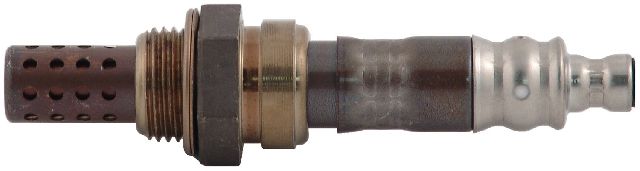
We Have This Part in Stock


The information in this article is provided for general reference and educational purposes only. Vehicle specifications, procedures, and part compatibility can vary by production date, trim level, and region. Always consult your vehicle's factory service manual and verify part numbers before purchasing or performing repairs. Safety-critical components such as airbags, seat belts, and braking systems should be installed by a qualified professional.
- Subaru Outback:
- 🧭 Diagnostic Flowchart
- 🎬 Helpful Videos
- 🛍️ Shop This Part
- What's Unique About the 2009-2014 Subaru Outback
- Symptoms You May Notice
- Most Likely Causes
- Rare But Worth Checking
- Diagnosis Steps
- Parts You'll Likely Need
- Platform-Specific Known Issues
- Mechanic-Grade Diagnostic Values
- Scan Tool Commands That Help
- Wiring & Ground Locations
- Real Owner Repair Stories
- OEM Part Supersession History
- Used vs. New Parts: Buying Guide for This Vehicle
- Real Owner Stories
- 2011 Subaru Outback 2.5L — ~173000 miles
- 2013 Subaru Outback — 150000 miles
- Related OBD-II Codes
- Frequently Asked Questions
- 🎟️ Get 5% Off