

P0031 on Subaru Outback 2.5L (2009-2012): Front O2 Sensor Heater Failure Causes and Fixes
On a 2009-2012 Subaru Outback with the 2.5L EJ253 engine, code P0031 almost always means the front air/fuel ratio sensor's internal heater has failed. The fix is to replace the sensor. Expect to pay $80-$150 for a quality aftermarket part (like Denso) or $160-$220 for an OEM part. It's a common DIY job, but the sensor can be difficult to remove if seized.
- P0031 on a 2009-2012 Outback 2.5L almost certainly means you need a new front Air/Fuel Ratio sensor.
- Use a quality Denso or OEM Subaru sensor to avoid compatibility problems.
- The biggest challenge of the repair is often the old sensor being seized in the exhaust; use plenty of penetrating oil.
- You can confirm the sensor has failed with a multimeter by checking for resistance on the heater circuit pins; a reading of 'OL' or infinite resistance means it's bad.
- This guide is for the EJ253 engine (2009-2012); the 2013-2014 models use a different engine (FB25B) and a different sensor.
What's Unique About the 2009-2014 Subaru Outback
This is a very common failure on Subarus of this era, including the Outback. The front A/F sensor's heater element has a finite lifespan and frequently fails, making P0031 a familiar code to many owners. While the code itself is generic, the cause on this platform is almost always the sensor itself rather than complex wiring or computer issues. It's important to note that while the prompt covers 2009-2014, the EJ253 engine was only used until the 2012 model year; 2013-2014 models use the FB25B engine, which requires a different sensor part number.
Generation note: The 2009-2014 range covers the end of the 3rd generation (2009, model code BP) and the 4th generation (2010-2014, model code BR). More importantly, the engine changed in 2013 from the EJ253 to the FB25B. This guide specifically applies to the 2009-2012 models equipped with the EJ253 2.5L engine.
Symptoms You May Notice
- Check Engine Light is on
- Cruise control light flashing (a common Subaru trait when a CEL is present)
- Vehicle Stability Control (VSC) or Traction Control light is on
- Reduced fuel economy
- Possible rough idle or slight hesitation, especially on a cold start
- Replacing the rear oxygen sensor (Sensor 2). The code P0031 is specific to Bank 1, Sensor 1, which is the front sensor located before the catalytic converter.
- Assuming a new, non-OEM sensor is good. Many owners report getting a P0031 code immediately after installing a cheap, unbranded aftermarket sensor, suggesting it was faulty out of the box or incompatible. It is critical to use an OEM or OEM-supplier part like Denso or NTK.
Most Likely Causes
- Failed Front Air/Fuel Ratio Sensor (Bank 1, Sensor 1) 🔴 High Probability → Shop Oxygen Sensor The internal heater element within the sensor is a common failure point on Subaru vehicles of this vintage after years of heat cycles. It is a standard wear-and-tear item.
How to confirm: Disconnect the sensor and measure the resistance between the two heater circuit wires (the two black wires on the sensor connector). A good new sensor will read between 2.7 and 2.8 ohms. An infinite resistance reading (displayed as 'OL' or 'Open Line' on a multimeter) confirms the heater circuit is open and the sensor is bad.
Typical fix: Replace the front air/fuel ratio sensor. Apply the included anti-seize compound to the threads of the new sensor before installation, being careful not to get any on the sensor tip. 🎬 See this walkthrough for replacing the upstream oxygen sensor. Torque the new sensor to 35 ft-lbs.
Est. part cost: $80 - $220 - Damaged Wiring or Connector ⚪ Low Probability The wiring harness is located in the engine bay near hot exhaust components and can become brittle, melted, or damaged over time. A bent or broken exhaust heat shield can also contact the sensor or wiring, causing a short circuit.
How to confirm: Visually inspect the wiring and connector leading to the front A/F sensor for any signs of melting, chafing, corrosion, or loose pins. Ensure the harness is not touching the exhaust manifold. With the key on and engine off, check for 12V power at the heater circuit feed pin on the vehicle-side connector.
Typical fix: Repair the damaged section of the harness or replace the connector pigtail.
Est. part cost: $15 - $50 - Blown Fuse ⚪ Low Probability
How to confirm: Check the fuse box inside the car, typically to the left of the steering column, for a blown fuse. It is often a 15A fuse and may be labeled 'A/F Heater' or located in an unlabeled block. On similar models, it has been identified as the third fuse from the bottom in the black fuse block inside the cabin.
Typical fix: Replace the blown fuse. If it blows again immediately, this indicates a short circuit in the wiring (e.g., a melted wire or bent heat shield) that must be diagnosed and repaired.
Est. part cost: $1 - $5
Rare But Worth Checking
- Faulty Engine Control Module (ECM): This is extremely rare. All other possibilities, especially the sensor itself and its wiring, should be exhaustively ruled out before considering the ECM as the cause.
Diagnosis Steps
- Read the code with an OBD-II scanner to confirm P0031 is present.
- Visually inspect the front A/F sensor's wiring harness and connector for any obvious damage, such as melting, fraying, or corrosion. The connector is typically located on the passenger side of the engine bay, to the left of the upper radiator hose.
- Check the fuse for the sensor heater circuit in the vehicle's interior fuse box. It is often a 15A fuse.
- If the wiring and fuse are okay, disconnect the sensor's electrical connector.
- Using a multimeter set to measure resistance (ohms), test the heater circuit terminals on the sensor side of the connector. 🎬 Watch: A step-by-step guide to diagnosing and fixing the P0031 code. These are the two black wires.
- A healthy new sensor should show a resistance between 2.7 and 2.8 ohms. If the meter reads 'OL' (Open Loop/infinite resistance) or a very high resistance, the heater element has failed and the sensor must be replaced.
- If the sensor resistance is good, you must then check for battery voltage (approx. 12V) and ground at the vehicle-side connector with the ignition on, which may indicate a wiring or ECM issue.
Parts You'll Likely Need
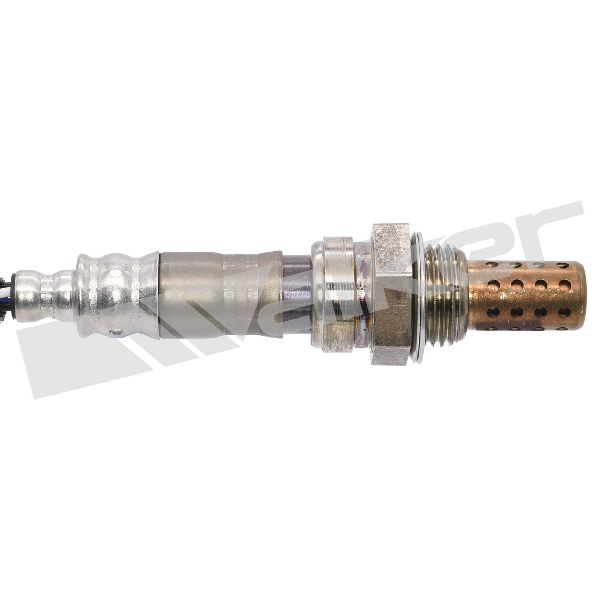
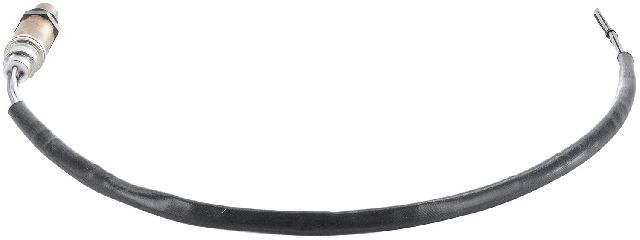
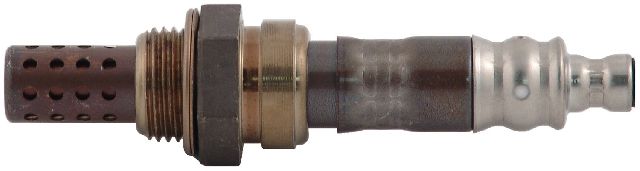
- Front Air/Fuel Ratio Sensor (2010-2012 EJ253)
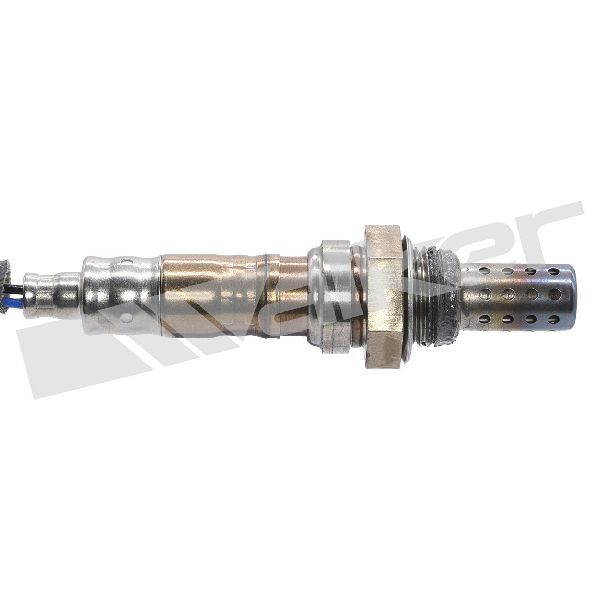
(OEM #22641AA54A)— This is the component that contains the heater element that fails, directly causing the P0031 code in the vast majority of cases.
Trusted brands: Denso (OEM supplier, Part No. 234-9123), NGK/NTK (Part No. 24696)
OEM price range: $160-$220
Aftermarket price range: $80-$150
Related Codes That Often Appear With This One
- P0030 — P0030 indicates a general fault in the same heater control circuit, and they often point to the same root cause: a failed sensor.
- P0032 — P0032 indicates a 'Heater Control Circuit High' condition, which is the opposite of P0031 but is related to the same component and wiring.
- P0037 — This code is for the rear O2 sensor heater circuit (Bank 1, Sensor 2). If it appears with P0031, it strongly suggests a shared power supply issue, like a blown A/F heater fuse or relay, rather than two simultaneously failed sensors.
Platform-Specific Known Issues
- The front A/F sensor is notoriously difficult to remove from the exhaust manifold. It frequently seizes due to rust and heat cycles. Liberal use of a high-quality penetrating oil (like PB Blaster or AeroKroil) and allowing it to soak for several hours or overnight is highly recommended.
- A specialized 22mm (or 7/8") offset oxygen sensor socket is the recommended tool for removal, as it allows for better leverage and clearance for the wire. 🎬 Watch: How to remove and replace a seized Outback oxygen sensor.
- In severe cases, dropping the exhaust manifold may be necessary to get enough leverage or to apply heat from a torch to the manifold bung (not the sensor itself) to break it free.
- Using cheap, unbranded aftermarket sensors can lead to immediate or premature failure. It is strongly recommended to use the OEM part or a sensor from the original equipment manufacturer, which is Denso for this vehicle.
Mechanic-Grade Diagnostic Values
- Front A/F Sensor Heater Resistance — expected: 2.7 - 2.8 ohms for a new Denso sensor at room temperature. General acceptable range is 2.0 - 4.0 ohms.. Failure: Infinite resistance ('OL' on multimeter), indicating an open circuit.
- A/F Sensor Heater Circuit Voltage (at harness) — expected: Approximately 12V (battery voltage) with Key On, Engine Off.. Failure: 0V or significantly less than 12V, indicating a blown fuse or wiring issue upstream.
- A/F Sensor Heater Circuit Current Draw (Live Data) — expected: A specific amperage draw defined by the manufacturer (e.g., above 0.8A).. Failure: Current draw below the minimum threshold (e.g., < 0.8 A) will trigger P0031.
- Engine Control System Ground Resistance — expected: Less than 0.5 ohms between the ground pin at the harness and the chassis/battery negative.. Failure: High resistance (e.g., 5 ohms was found in one case) can cause a voltage drop and trigger the code.
Scan Tool Commands That Help
- Subaru Select Monitor (SSM) or equivalent advanced scanner: Current Data Display & Save — To view live data parameters such as 'A/F Sensor #1 Resistance' and 'A/F Sensor #1 Current'. This helps verify if the ECU is seeing the same electrical fault that is being measured manually, which is useful for diagnosing intermittent wiring problems.
- Subaru Select Monitor (SSM) or equivalent advanced scanner: Clear Memory / Reset DTCs — After a repair is completed. On some Subarus, simply disconnecting the battery is not enough to fully reset the ECU's learned values and stored codes; a scanner-initiated reset is required.
Wiring & Ground Locations
- A/F Heater Fuse — In the interior fuse box, located on the lower part of the dashboard on the driver's side. It is often a 15A fuse in an unlabeled black block, potentially the third fuse from the bottom.. This fuse provides power to the sensor's heater circuit. If it blows due to a short, the heater will not operate, causing P0031. It is a critical and easy first check.
- E22 / A/F Sensor Connector — The main electrical connector for the front A/F sensor, located on the passenger-side strut tower in the engine bay, often clipped to a bracket.. This is the primary test point for checking voltage/ground from the vehicle harness and for checking resistance on the sensor itself without needing to access the sensor in the exhaust.
- Engine Ground Clusters — Ground wires are bundled and bolted to the top of the intake manifold.. While a less common cause, a loose or corroded main engine ground can create unstable sensor readings and electrical issues. In one documented case, a high-resistance ground at an engine connector (E3) was the root cause of P0031.
- A/F Heater Relay — The exact location is not consistently documented. Some diagrams suggest a relay in the cabin fuse box, while others indicate the heater circuit is powered by the main relay.. If the relay fails, it will cut power to the heater circuit. However, given the difficulty in locating it and the rarity of failure, this should be considered only after the sensor, fuse, and wiring have been thoroughly checked.
Real Owner Repair Stories
- YouTube user Nathan Oikarinen (2008-2014 Subaru WRX (similar platform and circuit design)) — Check Engine Light with codes P0031 and P0037 (both front and rear heater circuits).
❌ Tried (didn't work) Initially suspected the sensor itself was the primary failure.
✅ What actually fixed it The owner found the passenger-side exhaust heat shield was physically touching the O2 sensor, causing a short circuit. This blew the 15A A/F heater fuse. The final fix was replacing the fuse and bending/breaking off the part of the heat shield that was making contact. The sensor was also replaced, but the root cause was the short. - The Factory Five Forum user (Subaru engine in a kit car build) — Persistent P0031 code after checking sensor and wiring. Also noted that voltage reading at the OBD port did not match battery voltage.
❌ Tried (didn't work) Standard P0031 troubleshooting focused on the sensor and its direct harness.
✅ What actually fixed it Traced a bad ground connection. The 'control system' ground pins (7 and 15 on ECU connector B134) measured 5 ohms of resistance. The fault was isolated to the E3 engine connector. Cleaning the connector and applying dielectric grease brought resistance down to 0.2 ohms and resolved the code. - Reddit user Odd_Axolotl (Subaru (model not specified, but common issue)) — P0031 code appeared immediately after replacing the upstream O2 sensor.
❌ Tried (didn't work) Replacing the sensor with a new Denso part.
✅ What actually fixed it The community advised that the ECU needed to be reset to clear old fuel trim data learned from the faulty sensor. The recommended procedure was to disconnect the positive battery cable for several minutes to drain residual power and force the ECU to relearn.
OEM Part Supersession History
22641AA54A→No supersession found. This remains the current OEM part number for the specified application.— N/A
Heads up: Ensure this specific part number is used for the 2010-2012 EJ253 engine. The 2013+ FB25B engine uses a different sensor.
Model Year Variations Within This Range
- 2009-2012: These model years use the EJ253 engine and require the front A/F sensor part number 22641AA54A or its direct aftermarket equivalent (Denso 234-9123).
- 2013-2014: These model years use the newer FB25B engine, which has a different exhaust manifold design and requires a different A/F sensor. This guide does not apply to these years.
Diagnostic Flowchart
Other Known Issues on This Vehicle
Issues unrelated to this code that are worth knowing about as an owner of this generation:
- Head Gasket Failure 🔴 High — Common on SOHC EJ253 engines, typically between 80,000 and 150,000 miles. The failure mode is often an external oil or coolant leak between the cylinder head and block.
- Timing Belt Replacement 🔴 High — This is a critical maintenance item. The service interval is 105,000 miles or 105 months (approx. 8.75 years), whichever comes first. Failure of this belt is catastrophic as the EJ253 is an interference engine.
- Catalytic Converter Failure 🟠 Medium — Can fail at higher mileage, often triggering a P0420 code. Some owners report issues with the vehicle's computer not accepting aftermarket converters, requiring a more expensive OEM replacement.
- Excessive Oil Consumption 🟠 Medium — More prevalent in the 2013-2014 models with the FB25B engine due to piston ring issues, but can also be a symptom of head gasket leaks on the EJ253. (Ref: A class-action lawsuit affected 2013-2014 models.)
- Steering Wheel Vibration or 'Shimmy' 🟡 Low — Some 2010-2011 models experienced a steering wheel vibration at highway speeds. (Ref: TSB 05-48-10 was issued to address this, involving modifications to steering and suspension components.)
Used vs. New Parts: Buying Guide for This Vehicle
When a used part is the smart pick: A used part is only a reasonable choice for the wiring harness connector (pigtail) if the original is physically damaged (melted, corroded, broken clip). For the sensor itself, buying used is strongly discouraged.
Donor-vehicle mileage cap: roughly under 80000 miles for the part to have meaningful remaining life.
What to inspect on the donor part:
- For a connector pigtail, inspect for any signs of brittleness, cracking, or corrosion on the pins.
- Ensure the locking tab on the connector is intact and functional.
- Verify there is enough wire length on the pigtail for a proper splice.
OEM-only on this vehicle (don't cheap out):
- None for this specific repair. The OEM suppliers (Denso, NTK) are widely available and trusted.
Aftermarket brands forum-validated for this vehicle:
- Denso (Part No. 234-9123)
- NGK / NTK (Part No. 24696)
Brands owners have reported issues with on this vehicle:
- Unbranded 'eBay special' sensors
- Universal sensors that require splicing
- Some owners report issues with Bosch sensors on this specific Subaru application, despite Bosch being a reputable brand for other vehicles.
Real Owner Stories
Aggregated from forums and TSBs cited above. Mileages and costs reflect what owners reported in those sources.
2008 Subaru Outback 2.5L — 177000 miles
Symptoms: The check engine light was on with code P0031.
What fixed it: Replacing the front A/F sensor (Bank 1, Sensor 1).
Source hint: Reddit r/MechanicAdvice
2013 Subaru Outback 2.5L — ~115000 miles
Symptoms: Owner replaced the upstream O2 sensor but the P0031 code returned immediately.
What fixed it: Ensuring a high-quality Denso sensor was used and resetting the ECU after replacement.
Source hint: Reddit r/subaru - Thread Title: 'just replaced the upstream 02 sensor and now it's throwing a p0031 what am i supposed to do?'
2010 Subaru Forester 2.5L — ~100000 miles
Symptoms: Code P0031 due to A/F sensor heater failure; owner questioned using universal sensors.
What fixed it: Using a Denso OEM-supplier sensor instead of a 'universal' or cheap aftermarket part.
Source hint: Reddit r/SubaruForester - Thread Title: 'Should I jump for OEM O2 Sensor?'
Related OBD-II Codes
Frequently Asked Questions
Why is my cruise control light flashing and the VSC light on when I have a P0031 code?
Which brand of sensor should I buy for my 2009-2014 Outback 2.5L?
Where is the fuse for the A/F sensor heater located on my Outback?
How can I confirm if the sensor itself is bad before buying a new one?
Is there a TSB for the steering wheel vibration I'm feeling alongside this code?
What is the correct torque spec for the new front A/F sensor?
Helpful Videos

We Have This Part in Stock


The information in this article is provided for general reference and educational purposes only. Vehicle specifications, procedures, and part compatibility can vary by production date, trim level, and region. Always consult your vehicle's factory service manual and verify part numbers before purchasing or performing repairs. Safety-critical components such as airbags, seat belts, and braking systems should be installed by a qualified professional.
- Subaru Outback:
- 🧭 Diagnostic Flowchart
- 🎬 Helpful Videos
- 🛍️ Shop This Part
- What's Unique About the 2009-2014 Subaru Outback
- Symptoms You May Notice
- Most Likely Causes
- Rare But Worth Checking
- Diagnosis Steps
- Parts You'll Likely Need
- Related Codes That Often Appear With This One
- Platform-Specific Known Issues
- Mechanic-Grade Diagnostic Values
- Scan Tool Commands That Help
- Wiring & Ground Locations
- Real Owner Repair Stories
- OEM Part Supersession History
- Model Year Variations Within This Range
- Other Known Issues on This Vehicle
- Used vs. New Parts: Buying Guide for This Vehicle
- Real Owner Stories
- 2008 Subaru Outback 2.5L — 177000 miles
- 2013 Subaru Outback 2.5L — ~115000 miles
- 2010 Subaru Forester 2.5L — ~100000 miles
- Related OBD-II Codes
- Frequently Asked Questions
- 🎟️ Get 5% Off