

P0031 on 2003-2008 Toyota Corolla 1.8L: Causes and Fixes for the A/F Sensor Heater Circuit
On a 2003-2008 Toyota Corolla with the 1.8L 1ZZ-FE engine, code P0031 almost always means the upstream Air/Fuel Ratio Sensor (Bank 1, Sensor 1) has failed. The most common fix is to replace this sensor, which is a DIY-friendly job costing between $60 for an aftermarket part and $150 for an OEM Denso sensor. Before replacing, check the 15A 'A/F HEATER' fuse.
- P0031 on your Corolla points to a problem with the heater circuit in the upstream Air/Fuel Ratio Sensor (Bank 1, Sensor 1).
- Before buying parts, always check the 15A 'A/F HTR' fuse in the engine bay fuse box.
- The most common fix is replacing the sensor itself. This is a beginner-friendly DIY job.
- Use a quality replacement sensor from a brand like Denso (the original equipment manufacturer, part #234-9041) to ensure compatibility and longevity.
- This guide applies specifically to the 2003-2008 Corolla with the 1.8L 1ZZ-FE engine and its platform-mates, the Toyota Matrix and Pontiac Vibe.
What's Unique About the 2003-2013 Toyota Corolla
For this generation of Toyota Corolla, the reliability of the electronics is generally high, but the A/F sensor is a common wear-and-tear item. The P0031 code is a very frequent and well-documented issue. The good news is that the cause is almost always the sensor itself, making diagnosis straightforward. Unlike on some other vehicles where wiring or computer issues are more common for this code, on the 1ZZ-FE Corolla, a failed sensor is the primary suspect. This issue is also identical on its platform-mates, the Toyota Matrix and Pontiac Vibe equipped with the same 1.8L engine.
Generation note: The specified year range 2003-2013 covers two Corolla generations. However, the 1ZZ-FE 1.8L engine was only used in the 9th Generation (2003-2008) in North America. The 10th Generation (2009-2013) used the 2ZR-FE engine. This guide is specific to the 2003-2008 models with the 1ZZ-FE engine.
Symptoms You May Notice
- Check Engine Light is on
- Decreased fuel economy
- Rough idle, especially when the engine is cold
- Failing an emissions test
- Vehicle may show incorrect fuel trim values on a scan tool.
- Replacing the downstream oxygen sensor (Bank 1, Sensor 2) instead of the upstream Air/Fuel Ratio sensor (Bank 1, Sensor 1). P0031 specifically refers to Sensor 1.
- Replacing the sensor without first checking the 'A/F HEATER' fuse.
- Using a cheap, non-OEM/Denso sensor which may be faulty out of the box or fail quickly.
Most Likely Causes
- Failed Air/Fuel Ratio Sensor (Bank 1, Sensor 1) 🔴 High Probability → Shop Oxygen Sensor The internal heater element is a common failure point due to age and thousands of heat cycles. It's considered a wear item.
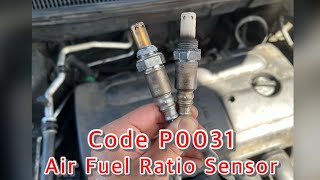
How to confirm: Unplug the sensor and measure the resistance between the two heater pins (usually the two wires of the same color, often black). A correct reading should be between 1.8 and 3.4 ohms at 20°C (68°F). A reading that is open (infinite resistance) or shorted (near zero ohms) confirms the heater element has failed. 🎬 See this video for a breakdown of P0031 causes and fixes.
Typical fix: Replace the Air/Fuel Ratio sensor located in the exhaust manifold. It is highly recommended to use an OEM or Denso branded sensor, as some aftermarket sensors are known to fail prematurely or not work at all.
Est. part cost: $60-$150 - Blown A/F Heater Fuse ⚪ Low Probability
How to confirm: Locate the fuse box in the engine bay. Find the fuse labeled 'A/F HEATER' (typically 15A) and visually inspect it or test for continuity with a multimeter. This is a critical first check before replacing parts.
Typical fix: Replace the blown fuse. If it blows again immediately, this indicates a short circuit in the wiring or the sensor itself that must be diagnosed.
Est. part cost: $1-$5 - Damaged Wiring or Connector ⚪ Low Probability The wiring harness is close to the hot exhaust and can become brittle or damaged over time.
How to confirm: Visually inspect the wiring harness and connector leading to the A/F sensor for any signs of melting, chafing, or corrosion. Check for 12V power at the connector's power pin with the key on. A lack of power points to a wiring or fuse issue.
Typical fix: Repair the damaged section of the wiring harness or clean/replace the connector.
Est. part cost: $10-$50
Rare But Worth Checking
- Faulty Engine Control Module (ECM): This is extremely rare. The ECM's driver circuit for the heater could fail. This should only be considered after all other possibilities (sensor, fuse, wiring) have been definitively ruled out. Note that some 2005-2008 Corollas were recalled for unrelated ECM issues that could cause harsh shifting or a no-start condition.
Diagnosis Steps
- Verify the code P0031 is present using an OBD-II scanner.
- Check the 15A 'A/F HTR' fuse in the fuse box located in the engine compartment. If it's blown, replace it and see if the code returns.
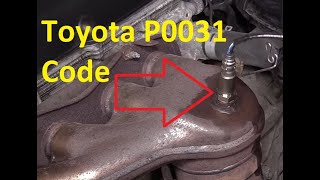
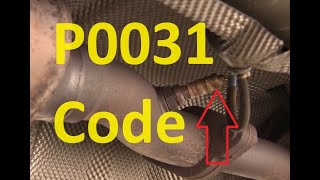
- If the fuse is good, locate the upstream Air/Fuel Ratio sensor. On the 1ZZ-FE, it is on the front of the engine, screwed into the exhaust manifold 🎬 Watch: This 5-minute video shows the sensor replacement process., making it easy to access.
- Inspect the sensor's wiring and connector for any visible damage, such as melting or frayed wires.
- Disconnect the sensor. Test the heater circuit resistance across the two pins of the same color on the sensor side of the connector. A good sensor will have a resistance between 1.8 and 3.4 ohms at room temperature. An infinite reading (open circuit) is the most common failure and confirms the sensor is bad.
- If the sensor's resistance is good, check for 12-volt power at the vehicle's harness connector with the ignition on. If there is no power, the problem is in the wiring or fuse circuit.
- If all other steps check out, the sensor itself is the most likely culprit. Replace the Air/Fuel Ratio sensor with a quality part. 🎬 Watch: A step-by-step walkthrough for replacing the upstream sensor.
Parts You'll Likely Need
- Air/Fuel Ratio Sensor (Bank 1, Sensor 1)
(OEM #89467-12010)— This is the upstream sensor whose internal heater circuit commonly fails, triggering code P0031. Denso is the Original Equipment Manufacturer for Toyota.
Trusted brands: Denso (OEM, Part #234-9041), NGK/NTK
OEM price range: $120-$160
Aftermarket price range: $60-$100
Platform-Specific Known Issues
- While the P0031 code is an electrical failure of the heater circuit, the 1ZZ-FE engine (especially pre-2006 models) is notorious for excessive oil consumption due to piston ring design. Over time, this oil burning can foul the sensor tip, but this is a separate issue from the heater circuit failure that triggers P0031.
Mechanic-Grade Diagnostic Values
- A/F Sensor Heater Resistance — expected: 1.8 to 3.4 Ω at 20°C (68°F). Failure: Open circuit (infinite resistance) or near-zero ohms (short circuit).
- ECM Heater Control Voltage (at ECM connector) — expected: 9 to 14 V with ignition ON. Failure: No voltage indicates a wiring issue between the ECM and the sensor circuit power supply.
- ECM Trigger Threshold for P0031 — expected: Heater current should be above 0.8 Amps when the heater is commanded ON.. Failure: The ECM will set code P0031 if the current is less than 0.8 Amps.
- Power at Sensor Connector — expected: 12V+ (battery voltage) at the heater power pin with key on, engine off.. Failure: No voltage points to a blown fuse (A/F HTR), bad relay, or open in the power wire.
Wiring & Ground Locations
- A/F Sensor Connector (A5) — On the front of the engine, plugged into the A/F sensor on the exhaust manifold.. This is the primary connector to test for power, ground, and sensor resistance. The heater circuit pins are typically the two wires of the same color (e.g., two black wires).
- ECM Connector E5 (Pin HA1A) — At the Engine Control Module (ECM), which is typically located behind the glove box.. Pin HA1A (E5-7 on some models) is the ECM's control output for the A/F sensor heater. Checking for 9-14V here against a ground pin (like E1, E5-28) can confirm if the ECM driver is functioning.
- Engine Block Ground — On the 1ZZ-FE, there is an important harness ground point on the block, right above the VVT-i solenoid on the passenger side of the engine.. A poor engine ground can cause a variety of electrical issues, including incorrect sensor readings and fault codes. Ensure this ground is clean and tight.
- Chassis Ground — A main ground point from the battery negative terminal connects to the chassis near the shock tower or fender wall.. This is the main ground reference for the vehicle's electrical system. A corroded or loose connection here can create system-wide voltage problems.
Real Owner Repair Stories
- YouTube - Robinson's Automotive Specialist (2004 Jeep Grand Cherokee (demonstrates a universal P0031 diagnostic principle)) — Check Engine Light with code P0031.
❌ Tried (didn't work) Replacing the upstream O2 (A/F) sensor.
✅ What actually fixed it The heater control wire was shorted to ground in the harness. The technician found the heater was constantly powered instead of being pulse-width modulated by the ECM. Repairing the shorted wire resolved the code without replacing any parts. - NHTSA ODI #10901973 — An owner reported that the check engine light remained on with an error reading of P0031 even after the O2 sensor had been replaced 7 to 10 times. Despite resetting the system, the light persisted year after year.
OEM Part Supersession History
89467-12010→N/A, still active— This is the primary OEM part number for the 2004-2008 Corolla with the 1.8L engine.
Heads up: The OEM equivalent is Denso 234-9041. Be cautious not to use Denso 234-9042, which has a different wire length and is intended for other Toyota models, despite looking similar.
Diagnostic Flowchart
Other Known Issues on This Vehicle
Issues unrelated to this code that are worth knowing about as an owner of this generation:
- Excessive Oil Consumption 🔴 High — Very common on pre-2006 models with the 1ZZ-FE engine. Can start as early as 60,000-80,000 miles. Caused by a design flaw in the pistons/oil-return holes. (Ref: Toyota addressed this with an updated piston design in mid-2005 and offered warranty extensions, but no formal recall was issued for all vehicles.)
- Timing Chain Tensioner O-Ring Leak 🟡 Low — A common oil leak point as the engine ages (typically over 100,000 miles). The O-ring dries out and allows oil to seep from the side of the engine.
- Engine Control Module (ECM) Failure 🟠 Medium — Affected 2005-2008 models. Cracks on the ECM's circuit board could lead to harsh shifting, engine stalling, or a no-start condition. (Ref: Toyota issued a safety recall (NHTSA campaign ID: 10V384000) to replace the faulty ECMs.)
- Power Window Regulator/Motor Failure 🟡 Low — Commonly reported issue where the power windows become slow, get stuck, or stop working. Usually requires replacing the window motor or regulator assembly.
Used vs. New Parts: Buying Guide for This Vehicle
When a used part is the smart pick: For this specific repair, buying a used Air/Fuel Ratio sensor is NOT recommended. It is a wear-and-tear item with a finite lifespan, and a used part may fail soon after installation. A used part only makes sense for related components if an extremely rare fault is diagnosed, such as a faulty ECM or a damaged wiring harness pigtail that can be spliced in.
Donor-vehicle mileage cap: roughly under 80000 miles for the part to have meaningful remaining life.
What to inspect on the donor part:
- For a wiring harness pigtail: Ensure wires are not brittle, melted, or cracked. The connector should click securely with no corrosion on the pins.
- For an ECM: Verify the part number matches exactly. Check for any signs of water damage or corrosion on the case and pins.
OEM-only on this vehicle (don't cheap out):
- Air/Fuel Ratio Sensor: Strongly recommended to use OEM (Toyota) or the original equipment manufacturer (Denso, part #234-9041). This specific vehicle's ECM is sensitive to the heater circuit's resistance, and many aftermarket sensors will cause the code to return.
Aftermarket brands forum-validated for this vehicle:
- Denso (OEM)
- NGK/NTK
Brands owners have reported issues with on this vehicle:
- Generic, unbranded, or 'white-box' sensors are frequently reported on forums to be faulty out of the box or fail within a few months for this specific application.
Real Owner Stories
Aggregated from forums and TSBs cited above. Mileages and costs reflect what owners reported in those sources.
2010 Toyota Corolla 1.8L
Symptoms: Check engine light is on, code for air fuel ratio sensor (P0031).
What fixed it: Replaced the upstream air/fuel ratio sensor (Bank 1, Sensor 1) with an original Denso part.
Source hint: Vertex AI Search - Toyota Corolla Oxygen Sensor Replacement - Code P0031 / P2195 - Easy 15 Minutes Fix
2006 Toyota Corolla 1.8L
Symptoms: Check engine light with code P0031. Scan tool data showed the A/F sensor voltage was not responding when revving the engine.
What fixed it: Replaced the upstream air/fuel ratio sensor (Bank 1, Sensor 1) with a new original Denso sensor.
Source hint: Vertex AI Search - 2006 Toyota Corolla 1.8L owner report
2003 Toyota Corolla
Symptoms: Owner detailed a diagnostic process after replacing the sensor did not fix the issue, requiring further investigation of wiring and voltages.
What fixed it: Checking wiring and voltages after a sensor replacement failed to clear the code.
Source hint: Reddit r/CarsAustralia - 'P0031 electrician help!'
2005 Pontiac Vibe 1.8L 1ZZ-FE
Symptoms: Misfires and o2 sensor problem; user experiences code P0031.
What fixed it: Identified as an upstream O2 sensor heater issue shared with the Corolla platform.
Source hint: GenVibe.com - 'Misfires and o2 sensor problem'
2006 Toyota Corolla
Symptoms: Code P0031 persisted even after a previous sensor replacement.
What fixed it: Advised that using a non-OEM sensor was the likely cause and to use a quality part.
Source hint: CarKiller.com Forums - 'Corolla 2006 with code P0031'
Related OBD-II Codes
Frequently Asked Questions
Where is the A/F sensor located on my 1ZZ-FE engine?
Can I use any aftermarket sensor to fix P0031 on my Corolla?
Which fuse should I check for a P0031 code on a 2003-2013 Corolla?
Is there a recall for the ECM on 2005-2008 models that might cause engine issues?
My 2005 Corolla burns a lot of oil; could this be related to P0031?
What is the correct resistance for a healthy A/F sensor heater on this vehicle?
Helpful Videos
We Have This Part in Stock



The information in this article is provided for general reference and educational purposes only. Vehicle specifications, procedures, and part compatibility can vary by production date, trim level, and region. Always consult your vehicle's factory service manual and verify part numbers before purchasing or performing repairs. Safety-critical components such as airbags, seat belts, and braking systems should be installed by a qualified professional.
- Toyota Corolla:
- 🧭 Diagnostic Flowchart
- 🎬 Helpful Videos
- 🛍️ Shop This Part
- What's Unique About the 2003-2013 Toyota Corolla
- Symptoms You May Notice
- Most Likely Causes
- Rare But Worth Checking
- Diagnosis Steps
- Parts You'll Likely Need
- Platform-Specific Known Issues
- Mechanic-Grade Diagnostic Values
- Wiring & Ground Locations
- Real Owner Repair Stories
- OEM Part Supersession History
- Other Known Issues on This Vehicle
- Used vs. New Parts: Buying Guide for This Vehicle
- Real Owner Stories
- 2010 Toyota Corolla 1.8L
- 2006 Toyota Corolla 1.8L
- 2003 Toyota Corolla
- 2005 Pontiac Vibe 1.8L 1ZZ-FE
- 2006 Toyota Corolla
- Related OBD-II Codes
- Frequently Asked Questions
- 🎟️ Get 5% Off