

P0036 on 2006-2013 Audi A3 2.0T: Causes for O2 Sensor Heater Circuit Fault
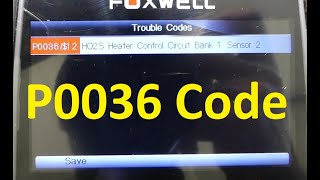
On a 2006-2013 Audi A3 with the 2.0T CCTA engine, code P0036 almost always means the downstream oxygen sensor (Bank 1, Sensor 2) has failed. Expect to pay around $70-$150 for an aftermarket sensor and $180-$250 for an OEM part. It's a straightforward DIY replacement for most home mechanics, but checking the fuse and wiring first is recommended.
- P0036 points to a fault in the heater circuit of the oxygen sensor located after the catalytic converter.
- The most likely cause is a failed oxygen sensor, which is a common wear item.
- Before buying a new sensor, check the fuse and inspect the wiring harness (under the passenger side undertray) for any visible damage like melting or corrosion.
- This is a DIY-friendly repair, requiring basic tools and a 22mm (7/8") oxygen sensor socket.
- Ignoring this code will cause an automatic failure on an emissions test.
What's Unique About the 2006-2013 Audi A3
The 2.0T CCTA engine in this generation of A3 (known as the 8P) uses a fairly standard two-sensor exhaust setup, unlike the CBFA engine variant which has three sensors for stricter emissions. P0036 points specifically to the post-catalyst sensor. While the issue is common across many vehicles, on this platform, the primary cause is almost always the sensor's internal heater element failing due to age and heat cycles. Wiring issues are less common but can occur due to the wiring's proximity to the hot exhaust components and the need to remove an underbody panel for access to the connector.
Generation note: The 2006-2013 Audi A3 is all part of the second generation (8P). However, the CCTA 2.0T engine was introduced in North America starting in the 2008 model year. This guide is specific to models equipped with this engine.
Symptoms You May Notice
- Check Engine Light is on.
- Inability to pass a state emissions test.
- Code may be accompanied by P0037 (HO2S Heater Control Circuit Low).
- Replacing the upstream (pre-catalyst) oxygen sensor. P0036 is specific to the downstream (post-catalyst) sensor's heater circuit.
- Not checking the fuse first. A blown fuse can mimic the symptoms of a failed sensor.
Most Likely Causes
- Failed Downstream Oxygen Sensor (Bank 1, Sensor 2) 🔴 High Probability → Shop Oxygen Sensor The internal heater element in oxygen sensors is a common failure point over time due to constant, extreme heat cycles. It's considered a wear-and-tear item.
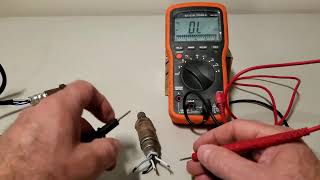
How to confirm: Using a multimeter, test the resistance between the two heater circuit pins on the sensor itself (often two wires of the same color, e.g., white or black). A healthy sensor should have a resistance between 2-10 ohms when cold. An open circuit (infinite resistance or 'OL') confirms a failed heater. 🎬 Watch: How to test the oxygen sensor heater element.
Typical fix: Replace the Bank 1, Sensor 2 oxygen sensor.
Est. part cost: $70-$250 - Damaged Wiring or Corroded Connector 🟡 Medium Probability The sensor wiring runs underneath the car and connects to the main harness above a plastic undertray on the passenger side. This location exposes it to heat, road debris, and moisture, which can cause the plastic loom and connectors to become brittle, and wires to melt or break.
How to confirm: Remove the passenger side plastic undertray (held by 10mm fasteners) to access the connector. Visually inspect the entire length of the sensor's wiring harness from the sensor to the connector. Check for melted sections, chafing, or breaks. Unplug the connector and check for green or white corrosion on the pins.
Typical fix: Repair the damaged section of wire or clean/replace the connector.
Est. part cost: $5-$50 - Blown Fuse for the Heater Circuit ⚪ Low Probability
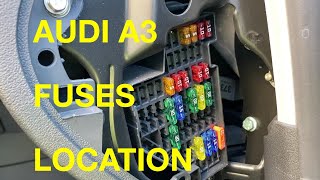
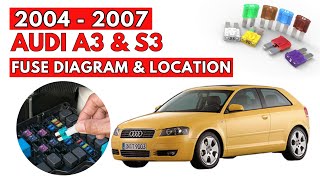
How to confirm: Locate the fuse box in the engine bay. 🎬 Watch: How to find the Audi A3 fuse boards. On many VW/Audi models of this era, the O2 sensor heater fuse is a 15A fuse in position F13 or SB13. Check your owner's manual or the fuse box diagram for the specific location. Visually inspect the fuse or use a multimeter to check for continuity.
Typical fix: Replace the blown fuse. If the new fuse blows immediately, it indicates a short circuit in the wiring that must be found and repaired.
Est. part cost: $1-$5
Rare But Worth Checking
- Faulty Engine Control Module (ECM): → Shop Engine Control Module (ECM) This is extremely rare. Before condemning the ECM, all other possibilities, including the sensor, wiring, and fuses, must be exhaustively ruled out. A faulty ECM would likely present with other codes and symptoms as well. An Audi TSB (00-06-07) specifically warns against replacing the ECM for this code without thorough diagnosis.
Diagnosis Steps
- Read the code with an OBD-II scanner to confirm P0036 is present. Note any other codes, like P0037.
- Check the fuse for the O2 sensor heater circuit in the engine bay fuse box, typically a 15A fuse in position F13 or SB13.
- Safely raise the vehicle and locate the downstream O2 sensor, installed in the exhaust pipe after the catalytic converter. Spray penetrating oil on the sensor threads to aid removal later.
- Locate and remove the plastic undertray on the passenger side to access the sensor's electrical connector.
- Visually inspect the wiring harness and connector for any signs of melting, chafing, corrosion, or physical damage.
- If the wiring and fuse are okay, disconnect the sensor.
- Test the resistance of the heater circuit on the sensor side of the connector using a multimeter. The heater wires are typically the two same-colored wires. A typical reading is between 2-10 ohms. An open circuit (infinite resistance) confirms the sensor's heater has failed.
- If the sensor's resistance is good, test for 12V power and ground at the vehicle-side connector with the ignition on. One pin should have battery voltage, and the other is a ground controlled by the ECM. Lack of power or ground points to a wiring issue or, rarely, an ECM problem.
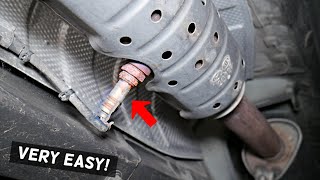
- Replace the downstream oxygen sensor if its heater circuit has failed. A 22mm or 7/8" oxygen sensor socket is requ 🎬 See this step-by-step downstream sensor replacement walkthrough.ired.
- Clear the code with the scanner and perform a drive cycle to ensure the Check Engine Light does not return.
Parts You'll Likely Need
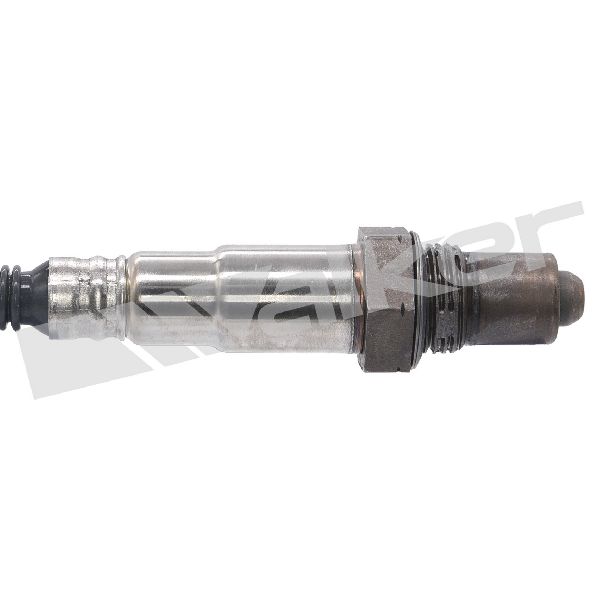
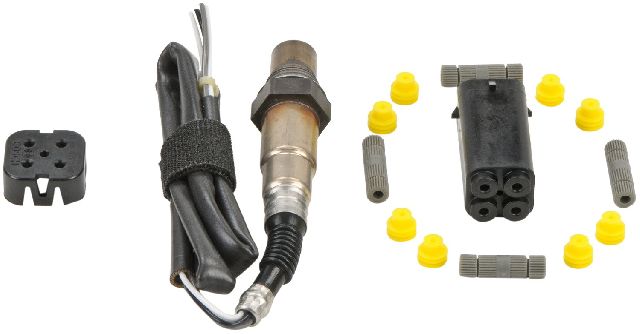
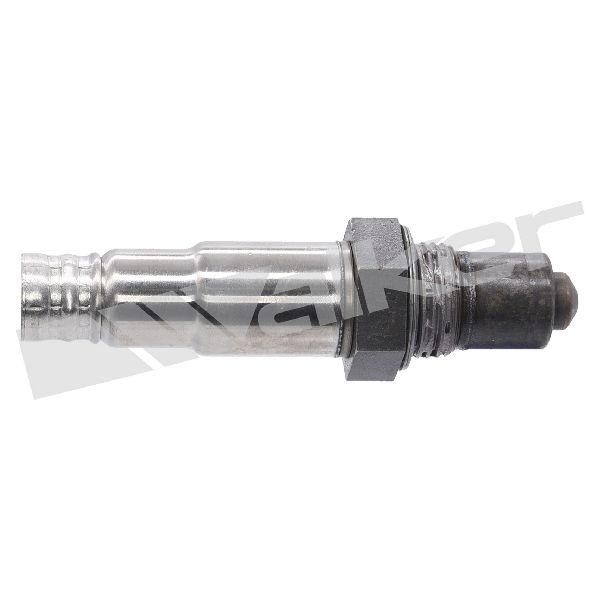
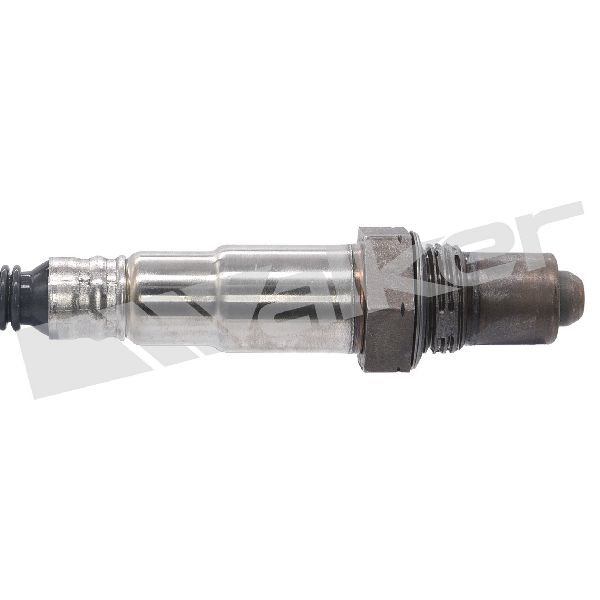
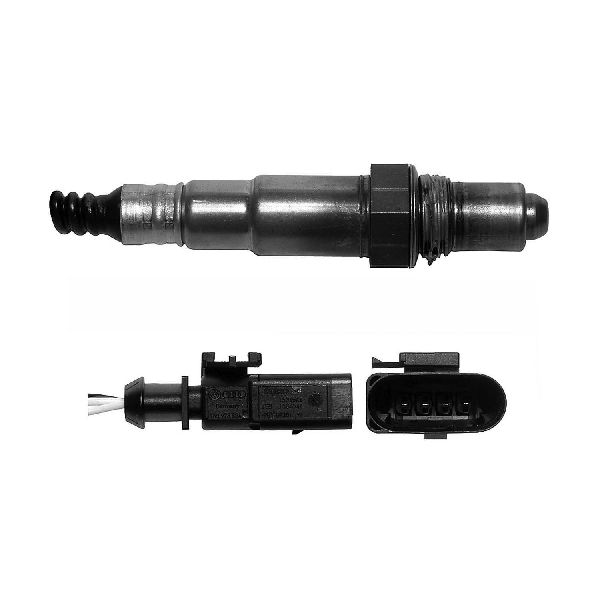
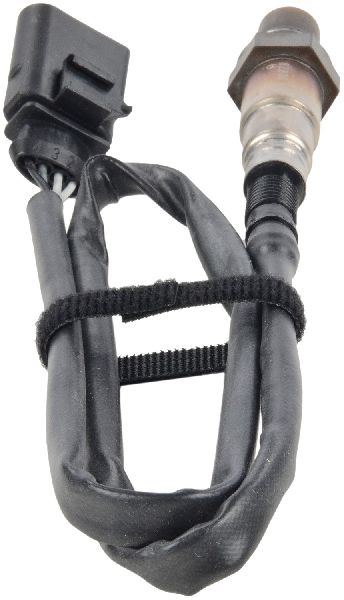
- Downstream Oxygen Sensor (Bank 1, Sensor 2)
(OEM #1K0998262D)— This is the most common cause for P0036, as the internal heater element fails over time.
Trusted brands: Bosch (OEM supplier, part #17090 or #17351 are common fits), Denso, NTK
OEM price range: $180-$250
Aftermarket price range: $70-$150
Related Codes That Often Appear With This One
- P0037: HO2S Heater Control Circuit Low (Bank 1, Sensor 2)
Technical Service Bulletins (TSBs) & Recalls
- AUDI TSB 00-06-07 (2013275/1): This TSB lists P0036 among other 'open circuit' DTCs and warns technicians not to replace the ECM without a complete and thorough diagnosis of the wiring and component first.
Platform-Specific Known Issues
- Water in Sensor/Connector: A user on a Golf MK6 forum (platform mate) with P0036 and P0037 found a significant amount of water inside the old sensor upon removal. After replacing the sensor, the codes were resolved. This suggests that moisture intrusion can be a cause of failure.
- Intermittent Connection: One owner on a Golf MK6 forum replaced a visibly broken sensor but the P0036 code remained. The final fix was to re-check all fuses, remove the new sensor, clean the connector pins with contact cleaner, and reinstall. This cleared the code, highlighting the sensitivity to a clean, secure connection.
Mechanic-Grade Diagnostic Values
- O2 Sensor Heater Resistance — expected: 2-10 Ohms at room temperature. Failure: An open circuit ('OL' on multimeter) or infinite resistance.
- Voltage at Vehicle-Side Connector (Heater Circuit) — expected: Pin 1: ~12V (battery voltage) with key on, engine off. Pin 2: Ground, controlled via Pulse Width Modulation (PWM) by the ECM.. Failure: No voltage at Pin 1 points to a fuse or wiring issue. No ground signal at Pin 2 could be a wiring or ECM driver issue.
- VCDS Live Data - Post-Cat O2 Sensor (B1S2) — expected: A relatively stable voltage reading (e.g., 0.6-0.8V) when the engine is warm and at a steady RPM, indicating the catalyst is working.. Failure: Voltage mirroring the upstream sensor's fluctuations suggests a failed catalytic converter, not necessarily a sensor issue. No reading or a fixed low/high reading points to a sensor or wiring fault.
Scan Tool Commands That Help
- VCDS (VAG-COM): Read Measuring Value Blocks (MVB) / Advanced Measuring Values — Use Engine, Groups 030-045 to monitor the live voltage of the downstream O2 sensor (B1S2) and its heater status. This helps determine if the sensor is responding and if the heater is being commanded on by the ECM.
- VCDS (VAG-COM): Basic Settings / Output Tests — Some engine controllers allow for an output test of the O2 sensor heaters. This command directly activates the heater circuit, allowing a technician to confirm with a multimeter if voltage is being sent and if the circuit can carry a load, definitively testing the wiring and ECM driver.
- Generic OBD-II Scanner: Mode 6, Test ID $01 — This diagnostic mode can show test results for non-continuously monitored systems, including the O2 sensor heater. A 'fail' result for the B1S2 heater test in Mode 6 can confirm the fault detected by the ECM.
Wiring & Ground Locations
- Fuse F13 (or SB13) — In the E-box (fuse box) in the engine compartment, on the left side near the battery.. This 15A fuse is commonly the power source for the O2 sensor heater circuits. A blown fuse will cause P0036 and is a critical first check before replacing parts.
- T4x Connector (Post-Cat O2 Sensor) — Under the vehicle on the passenger side, above the plastic undertray. The connector is typically a 4-pin black connector.. This is the connection point between the sensor and the main vehicle harness. It is a common point of failure due to corrosion or damage. Pin 1 is 12V+, Pin 2 is ECM Ground, Pin 3 is Signal Ground, Pin 4 is Signal.
- Ground Point 671 / 673 — On the left front longitudinal member in the engine bay.. While not directly for the sensor circuit itself, poor main engine or chassis grounds can cause floating voltages and erratic sensor behavior. Ensuring the main ground straps are clean and tight is a key step in resolving persistent, hard-to-diagnose electrical issues.
Real Owner Repair Stories
- AudiWorld Forums user (2010 Audi A3 2.0T CCTA) — P0036 Check Engine Light
❌ Tried (didn't work) Initial visual inspection of the sensor.
✅ What actually fixed it The harness-side connector for the downstream O2 sensor was physically broken, leaving bare wires exposed. Replacing the broken connector shell and re-pinning the wires resolved the code. - Reddit r/MechanicAdvice user (2006 Audi A3 2.0T (8P)) — P0036, OBD test shows heater control flickering on/off.
❌ Tried (didn't work) Confirmed sensor heater resistance was good., Confirmed ECM was sending ground pulse signal to Pin 2.
✅ What actually fixed it The user traced the power wire (Pin 1) back to the fuse box and found high resistance in the wiring harness itself, indicating an internal break or corrosion in the wire between the fuse box and the sensor connector. Repairing this section of the wire restored power and fixed the code.
OEM Part Supersession History
Multiple older numbers (e.g., 021906262B, 06A906262BC)→1K0998262D— VW/Audi consolidated many different sensor part numbers into a single replacement kit to simplify inventory.
Heads up: The replacement kit 1K0998262D may come with a longer cable or an extra adapter pigtail. This is normal. The critical part is ensuring the sensor type (e.g., wideband vs. narrowband) and thread are correct for the application.Bosch 17090→Bosch 17351— Part number update from Bosch. In many applications, these are interchangeable, with the primary difference sometimes being only the cable length.
Heads up: Always verify fitment with the specific vehicle's VIN. While often interchangeable, using the exact part number specified by the catalog for the vehicle's position (downstream) is the safest approach.
Model Year Variations Within This Range
- 2008-2013: The major 8P facelift occurred in 2008, which coincided with the introduction of the CCTA engine in North America. While the P0036 fault is consistent across these years, post-facelift cars (2009+) have revised exterior/interior styling and potentially minor wiring harness routing changes, but the diagnostic procedure for this specific code remains the same.
Diagnostic Flowchart
Other Known Issues on This Vehicle
Issues unrelated to this code that are worth knowing about as an owner of this generation:
- Timing Chain Tensioner Failure 🔴 High — Common on early CCTA engines (approx. 2008-2012). Failure can occur with little warning, often between 30k-100k miles, leading to catastrophic engine damage. (Ref: No recall, but multiple tensioner design updates were issued by VW/Audi. Checking for the updated tensioner is highly recommended.)
- PCV Valve / Oil Separator Failure 🟠 Medium — The diaphragm inside the PCV can tear, causing a large vacuum leak. Symptoms include a rough/high idle, whistling/hissing noise from the engine, lean codes (P0171), and high oil consumption.
- Carbon Buildup on Intake Valves 🟠 Medium — As a direct-injection engine, fuel doesn't wash over the intake valves, leading to carbon accumulation over 50k-80k miles. Causes misfires, rough idle, and reduced performance. Requires manual/walnut-blasting cleaning.
- Leaking Water Pump / Thermostat Housing 🟠 Medium — The plastic water pump and thermostat housing are prone to cracking and leaking coolant, sometimes as early as 60,000 miles. Symptoms are a slow coolant leak and a sweet smell. (Ref: A class-action lawsuit extended the warranty for this part on some models, but it was not a recall.)
- DSG Mechatronic Unit Failure 🔴 High — On models equipped with the S-Tronic/DSG transmission, the mechatronic unit can fail, causing jerky shifts, inability to select gears, and flashing gear indicator. It is an expensive repair.
Used vs. New Parts: Buying Guide for This Vehicle
When a used part is the smart pick: For this repair, a used part is almost never a smart choice. The only exception might be sourcing a used, undamaged wiring connector pigtail from a junkyard if the original is broken.
Donor-vehicle mileage cap: roughly under 80000 miles for the part to have meaningful remaining life.
What to inspect on the donor part:
- For a connector pigtail: Ensure the plastic is not brittle, the locking tab is intact, and there is at least 6 inches of clean wire to splice into.
OEM-only on this vehicle (don't cheap out):
- While not strictly 'OEM-only', using a non-reputable, no-name brand of oxygen sensor is highly discouraged. They are known to fail prematurely or provide inaccurate readings, leading to the code returning.
Aftermarket brands forum-validated for this vehicle:
- Bosch (OEM supplier)
- NTK
- Denso
Brands owners have reported issues with on this vehicle:
- Generic, unbranded sensors from online marketplaces are frequently reported on forums as being a waste of money and time.
Real Owner Stories
Aggregated from forums and TSBs cited above. Mileages and costs reflect what owners reported in those sources.
2010 Volkswagen GTI CCTA 2.0T
Symptoms: The owner experienced P0036 and P0037 codes. Upon inspection, the old sensor was found to have a significant amount of water trapped inside the unit.
What fixed it: Replacement of the downstream oxygen sensor resolved the codes caused by internal moisture intrusion.
Source hint: Golfmk6.com - '02 sensor p0036'
2011 Volkswagen GTI CCTA 2.0T
Symptoms: The owner replaced a visibly broken sensor, but the P0036 code remained active immediately after the repair.
What fixed it: The owner re-checked all fuses, removed the new sensor, cleaned the connector pins with contact cleaner, and reinstalled it to ensure a secure connection.
Source hint: Golfmk6.com - 'Pesky P0036'
Related OBD-II Codes
Frequently Asked Questions
Does Audi TSB 00-06-07 (2013275/1) mean I need a new ECM for my P0036 code?
Where is the O2 sensor heater fuse located on a CCTA 2.0T Audi A3?
I replaced the sensor on my A3 but P0036 is still there. What should I check next?
How can I confirm if the Bank 1, Sensor 2 heater has actually failed before buying a part?
Is the O2 sensor connector easily accessible on the Audi A3?
Helpful Videos
We Have This Part in Stock

The information in this article is provided for general reference and educational purposes only. Vehicle specifications, procedures, and part compatibility can vary by production date, trim level, and region. Always consult your vehicle's factory service manual and verify part numbers before purchasing or performing repairs. Safety-critical components such as airbags, seat belts, and braking systems should be installed by a qualified professional.
- Audi A3:
- 🧭 Diagnostic Flowchart
- 🎬 Helpful Videos
- 🛍️ Shop This Part
- What's Unique About the 2006-2013 Audi A3
- Symptoms You May Notice
- Most Likely Causes
- Rare But Worth Checking
- Diagnosis Steps
- Parts You'll Likely Need
- Related Codes That Often Appear With This One
- Technical Service Bulletins (TSBs) & Recalls
- Platform-Specific Known Issues
- Mechanic-Grade Diagnostic Values
- Scan Tool Commands That Help
- Wiring & Ground Locations
- Real Owner Repair Stories
- OEM Part Supersession History
- Model Year Variations Within This Range
- Other Known Issues on This Vehicle
- Used vs. New Parts: Buying Guide for This Vehicle
- Real Owner Stories
- 2010 Volkswagen GTI CCTA 2.0T
- 2011 Volkswagen GTI CCTA 2.0T
- Related OBD-II Codes
- Frequently Asked Questions
- 🎟️ Get 5% Off