

P0036 on 2015-2018 Ford Edge 2.0L EcoBoost: O2 Sensor Heater Fixes & TSB Info
For a 2016-2018 Ford Edge with only code P0036, the most likely cause is outdated engine software, which a dealer can update per TSB 18-2212 for about $110-$190. Otherwise, the problem is almost always a failed downstream oxygen sensor (Bank 1, Sensor 2), which costs $70-$150 for the part and is a straightforward DIY replacement, though accessing the connector can be tricky.
- For 2016-2018 models built before March 12, 2018, first check if TSB 18-2212 (PCM update) applies before buying parts. A dealer must verify this.
- The code refers to the downstream O2 sensor, located after the catalytic converter.
- Aside from the TSB, a failed sensor is the most common cause. The replacement is DIY-friendly, but the electrical connector is in a tight spot.
- This vehicle platform has other known issues like engine coolant intrusion and transmission problems that owners should be aware of.
What's Unique About the 2015-2018 Ford Edge
What's unique about the 2016-2018 Ford Edge with the 2.0L EcoBoost engine is that Ford issued a Technical Service Bulletin (TSB 18-2212) for this exact code. The TSB, which supersedes an earlier version (18-2097), states that if P0036 is the only code present on vehicles built on or before March 12, 2018, the recommended fix is a PCM software update, not a new sensor. This strongly suggests the original fault detection logic was too sensitive, making a trip to the dealer for a reflash a critical first diagnostic step before you buy any parts.
Symptoms You May Notice
- Check Engine Light is on
- Failure to pass an emissions inspection
- Slightly reduced fuel economy (less common)
- Replacing the oxygen sensor without first checking if TSB 18-2212 applies. Many owners have replaced the sensor only to find the code returns, when a simple software update was the correct fix. One forum user noted the dealer charges ~$190 for the reflash, tempting them to try the sensor first.
Most Likely Causes
- Outdated Powertrain Control Module (PCM) Software 🔴 High Probability → Shop Engine Control Module (ECM) Ford released TSB 18-2212 specifically for 2016-2018 models built before March 12, 2018, indicating the original software calibration was too sensitive in detecting heater circuit faults.
How to confirm: A Ford dealership or a qualified shop must check if your vehicle's VIN is covered by TSB 18-2212 and if the update has already been performed. This is the correct first step if P0036 is the only code stored.
Typical fix: Reprogram the PCM to the latest software version. This is a dealer-only or specialty shop procedure that takes approximately 0.3 labor hours.
Est. part cost: $0 - Failed Bank 1, Sensor 2 Oxygen Sensor 🔴 High Probability → Shop Oxygen Sensor The internal heating element of an O2 sensor is a common failure point due to constant exposure to extreme heat cycles and exhaust gases. This is the most likely cause if the TSB does not apply or has already been performed.
How to confirm: After ruling out the TSB, disconnect the sensor and measure the resistance across the two heater circuit pins with a multimeter. An open circuit (infinite resistance) or a reading far outside the typical 1.8-6 ohm range indicates a failed heater.
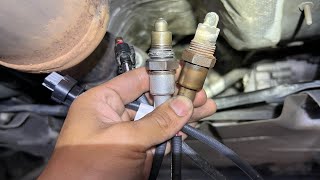
Typical fix: Replace the downstream oxygen sensor (Bank 1, Sensor 2). This requires a 22mm or 7/8" oxygen sensor so 🎬 Watch: Step-by-step 2.0L EcoBoost downstream oxygen sensor replacement guide.cket.
Est. part cost: $70-$180 - Damaged Wiring or Connector 🟡 Medium Probability The sensor wiring is routed near the hot exhaust system and can become melted, brittle, or frayed over time, causing a short or open circuit. The connector is located in a tight spot on the back of the engine, making it difficult to inspect and disconnect.
How to confirm: Visually inspect the wiring harness and connector leading to the sensor for any signs of melting, chafing, or corrosion. Check for stable voltage (approx. 12V) and ground at the connector with the key on.
Typical fix: Repair the damaged section of the wiring harness or replace the connector pigtail.
Est. part cost: $15-$50 - Blown Fuse ⚪ Low Probability
How to confirm: Consult the owner's manual or a fuse diagram for the engine compartment fuse box. For a 2016-2017 Edge, this is fuse F78, labeled 'Heated oxygen post'. Visually inspect the fuse. If it is blown, test the old sensor for a short circuit before replacing the fuse.
Typical fix: Replace the blown fuse. If it blows again, a short circuit exists in the wiring or the sensor itself that must be found.
Est. part cost: $1-$5
Rare But Worth Checking
- Failed PCM Driver Circuit: In very rare instances where the sensor, wiring, and fuse are all confirmed to be good, the internal circuit within the PCM that controls the sensor's heater can fail. This requires professional diagnosis and PCM repair or replacement.
Diagnosis Steps
- Scan for DTCs. If P0036 is the only code present and your vehicle is a 2016-2018 model built on or before March 12, 2018, contact a Ford dealer to check the status of TSB 18-2212. If it applies and hasn't been done, a PCM reprogram is the first recommended step.
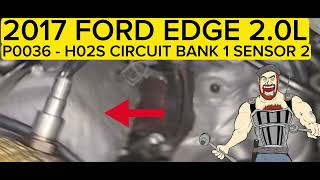
- If the TSB does not apply or has been performed, locate the Bank 1, Sensor 2 oxygen sensor. On the 2.0L EcoBoost, this is the only downstream sensor, located in the exhaust pipe after the catalytic converter. 🎬 Watch: How to locate and swap the Bank 1 Sensor 2.
- Visually inspect the sensor's wiring harness and connector for any signs of melting, burning, or physical damage from road debris or contact with the exhaust. The connector is high up on the back of the engine and can be difficult to access.
- If the wiring looks good, disconnect the sensor. Use a multimeter to measure the resistance between the two heater pins on the sensor side (usually the two wires of the same color). A good sensor should have a resistance between 1.8 and 6 ohms. A reading of 'OL' (over limit) means the heater is broken and the sensor must be replaced.
- Check the fuse for the O2 sensor heater circuit (F78 in the engine bay fuse box on 2016-2017 models). If the fuse is good, turn the key to the 'On' position (engine off) and use a multimeter to check for battery voltage (approx. 12V) on one pin of the vehicle-side connector and a good ground on another (less than 0.1 Ω resistance to chassis ground). If either is missing, trace the wiring back to find the fault.
- If wiring has power and ground, and the sensor's heater resistance is within spec, the issue could be intermittent. If all else fails, replacing the sensor is the most likely solution.
Parts You'll Likely Need
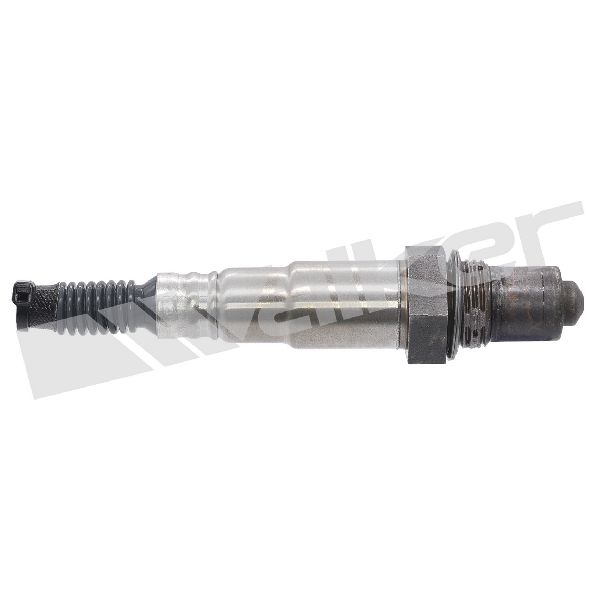
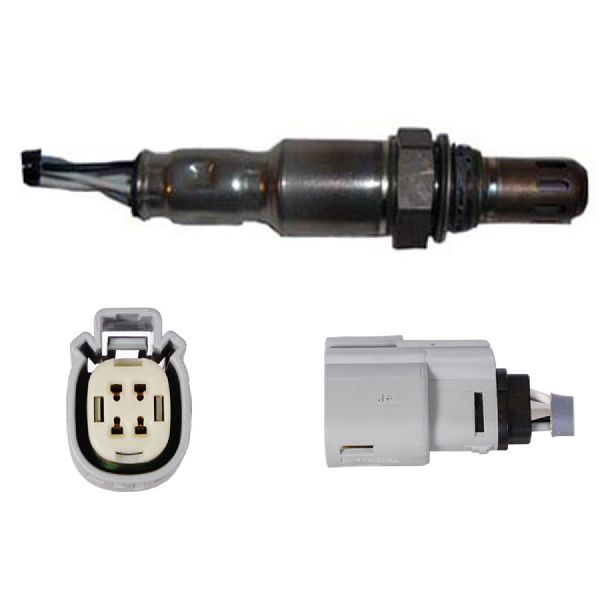
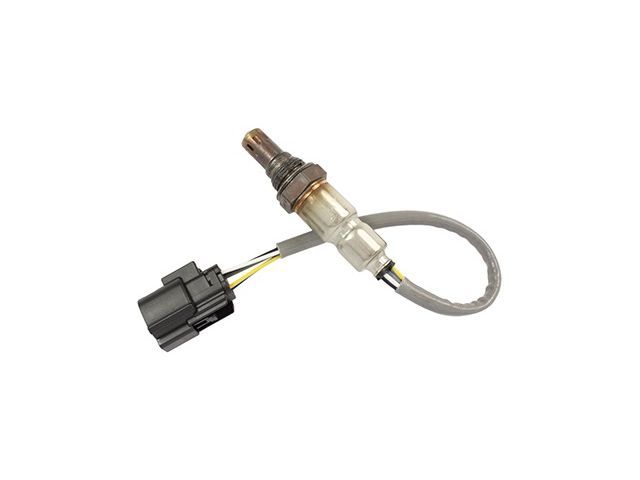
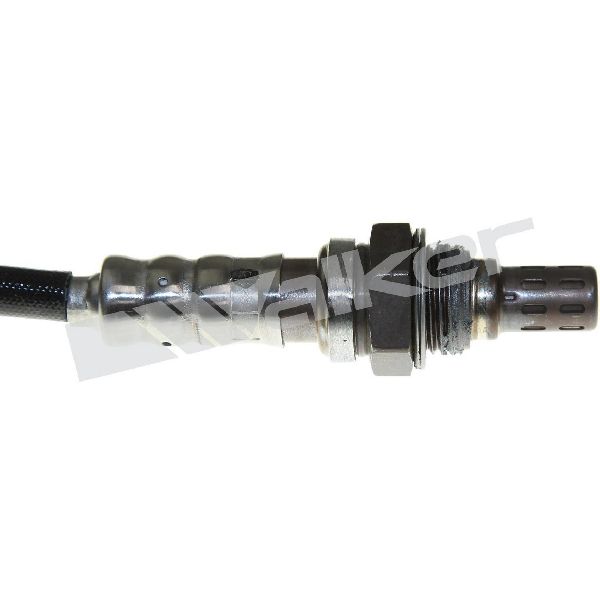
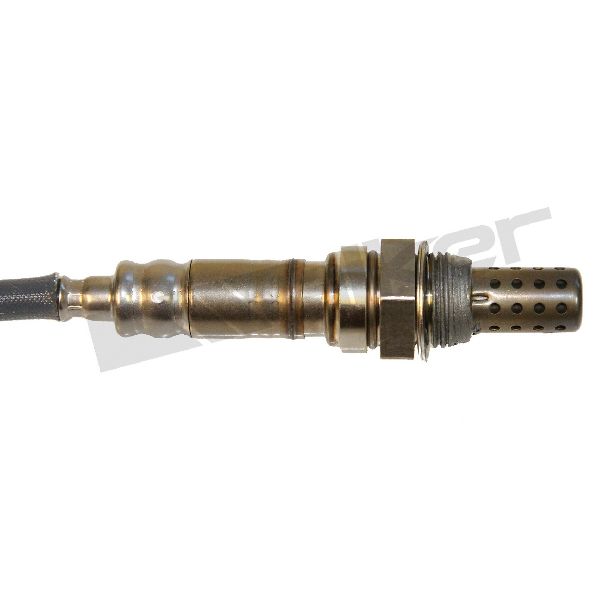
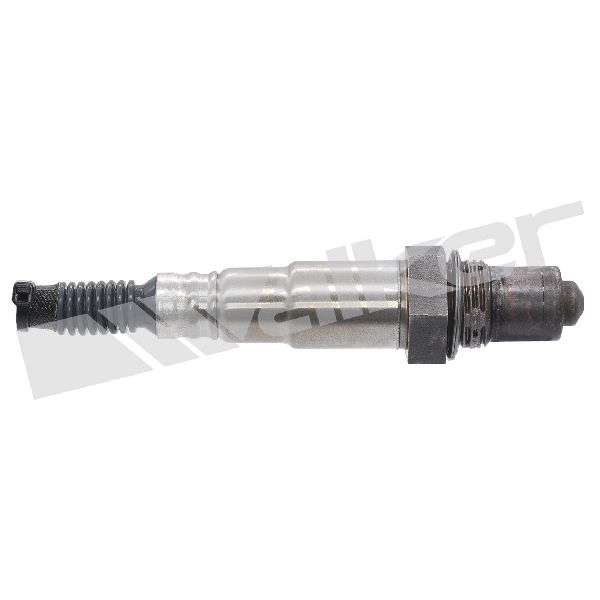
- Downstream Oxygen Sensor (Bank 1, Sensor 2)
(OEM #HS7Z-9G444-B)— This is the most common part to fail for this code. The internal heater circuit breaks. This part number replaces the previous version, HS7Z-9G444-A.
Trusted brands: Motorcraft (OEM), Bosch, Denso, NTK/NGK
OEM price range: $120-$191
Aftermarket price range: $70-$120
Technical Service Bulletins (TSBs) & Recalls
- TSB 18-2212: Supersedes TSB 18-2097. Addresses an illuminated MIL with only DTC P0036 on some 2016-2018 Edge 2.0L EcoBoost models (built on or before 12-Mar-2018), recommending a PCM reprogram.
Platform-Specific Known Issues
- TSB 18-2212: For 2016-2018 models built before 03/12/2018, Ford recommends a PCM software update as the primary fix if P0036 is the only code present.
Mechanic-Grade Diagnostic Values
- O2 Sensor Heater Circuit Resistance — expected: 1.8 - 6 ohms at room temperature, measured across the two same-colored wires on the sensor connector.. Failure: A reading of OL (Over Limit/infinite resistance) indicates an open circuit, while near-zero ohms indicates a short circuit. Either requires sensor replacement.
- Heater Circuit Supply Voltage — expected: Approximately 12V (Battery Voltage) with Key On, Engine Off.. Failure: A reading significantly below 9V suggests a problem with the power supply wiring or fuse.
- Heater Circuit Ground Integrity — expected: Less than 0.1 ohms of resistance between the ground pin on the harness-side connector and the chassis ground.. Failure: High resistance indicates a corroded or broken ground wire, which is a common issue.
Hidden / Shadow Codes Worth Checking
- P0054: HO2S Heater Resistance (Bank 1, Sensor 2). This code is more specific than P0036 and indicates the PCM has directly measured the electrical resistance of the heater circuit and found it to be out of the expected range. Setting this code almost guarantees the sensor itself has failed. (see via Standard OBD-II scanner.)
- P00D2: HO2S Heater Control Circuit Range/Performance (Bank 1, Sensor 2). This DTC indicates the PCM has detected a performance issue with the heater circuit, such as the sensor not reaching operating temperature within the expected time, even if the circuit resistance appears normal on a cold check. (see via Standard OBD-II scanner.)
- Mode 6, $TID/$CID: Ford utilizes Mode 6 diagnostic data to show results from non-continuous monitor tests. A technician can use a professional scan tool to view the test results for the HO2S heater monitor to see if it has passed or failed, and by how much it failed, even before a DTC is set. (see via Professional-grade scan tool with Mode 6 capability.)
Scan Tool Commands That Help
- Ford IDS (or equivalent professional scanner): HO2S Heater Active Command / Bidirectional Test — This function allows a technician to manually command the O2 sensor heater circuit 'ON' while monitoring voltage on the control wire with a multimeter. It is used to verify if the PCM driver is functioning and if the wiring can carry the load, helping to isolate a faulty PCM from a wiring issue after the sensor has been tested.
Wiring & Ground Locations
- HO2S B1S2 Connector — High on the back of the engine block, near the high-pressure mechanical fuel pump. It is a black connector, and of the two O2 sensor connectors there, it is the one located further inboard (towards the center of the engine).. This connector is in a difficult-to-access location and is a common point for inspection and testing. Technicians often use a long flathead screwdriver to help release the locking tab.
- Fuse F78 — In the under-hood power distribution box, located on the driver's side of the engine bay.. This fuse, labeled 'Heated oxygen post' in the 2016-2017 fuse diagram, supplies power to the O2 sensor heater circuit. A blown fuse here will cause P0036.
- Main Chassis Ground — A primary ground connection is located on a stud on the firewall, on the driver's side to the right of the battery.. While not exclusive to the O2 sensor, a poor connection at this main ground point can cause a variety of difficult-to-diagnose electrical issues, including sensor circuit faults. It should be checked for corrosion and tightness.
Real Owner Repair Stories
- YouTube channel 'Gearmo Auto' (2017 Ford Edge SE 2.0L) — Check Engine Light on with code P0036.
❌ Tried (didn't work) The diagnosis immediately pointed towards the sensor or its circuit. No other parts were replaced.
✅ What actually fixed it The Bank 1 Sensor 2 (downstream) oxygen sensor was replaced with a new Motorcraft OEM part (HS7Z-9G444-B). The video highlights the difficulty in reaching the connector on the back of the engine and the need to be careful not to tangle the wires when installing the new sensor.
When the Usual Fixes Don't Work
- The most significant counter-evidence to a standard diagnostic procedure is Ford's own Technical Service Bulletin 18-2212. For a 2016-2018 Edge, a technician's instinct might be to test and replace the sensor, as this is the cause for P0036 on most other vehicles. However, in this specific case, if P0036 is the only code present, performing a hardware replacement before checking the software status often results in the code returning, wasting time and money. The correct first step is a dealer-level software check.
OEM Part Supersession History
HS7Z-9G444-A→HS7Z-9G444-B— Part revision by the manufacturer, likely for improved durability or performance. The associated service part number also changed from DY1361 to DY1583.
Heads up: While the parts may be physically interchangeable, it is always recommended to use the latest revision (HS7Z-9G444-B) to ensure compatibility with any software updates and for the longest service life.
Model Year Variations Within This Range
- 2015: The 2015 model year marked the introduction of the redesigned 2.0L EcoBoost with a twin-scroll turbo and higher compression ratio (10.1:1) compared to the previous generation. It is not covered by TSB 18-2212 for the P0036 software glitch.
- 2016-2018 (built before 03/12/2018): These specific model years are subject to TSB 18-2212, which states that a PCM software reflash is the primary fix for a solitary P0036 code, indicating a calibration issue rather than a hardware failure.
- 2016 (built from 02/27/2016): Parts catalogs indicate a change in the downstream oxygen sensor part number effective on this date, moving from HS7Z-9G444-A to HS7Z-9G444-B.
Diagnostic Flowchart
Other Known Issues on This Vehicle
Issues unrelated to this code that are worth knowing about as an owner of this generation:
- 2.0L EcoBoost Coolant Intrusion 🔴 High — A widely documented issue affecting 2015-2018 Edge models. Coolant leaks into the cylinders due to a flaw in the engine block design, often leading to misfires (P030x codes), white exhaust smoke, and eventual catastrophic engine failure. (Ref: TSB 19-2346)
- Cracked Flexplate 🟠 Medium — Common on 2015-2018 models with the 2.0L EcoBoost, causing a rattling or knocking sound from the transmission bellhousing area. If it fails completely, it results in a loss of power to the wheels. (Ref: Customer Satisfaction Program 21B04)
- 6F35 Transmission Problems 🟠 Medium — The 6F35 transmission used in these models can suffer from torque converter shudder, harsh or delayed shifts, and premature failure. Some owners report failure before 100,000 miles. (Ref: Multiple TSBs exist for shift quality issues, but no widespread recall for mechanical failure.)
Used vs. New Parts: Buying Guide for This Vehicle
When a used part is the smart pick: For this repair, a used oxygen sensor is NOT recommended. O2 sensors are wear items with a finite lifespan, and their performance degrades over time. The labor to access the sensor is significant enough that installing a used part with unknown life remaining is a poor value proposition.
OEM-only on this vehicle (don't cheap out):
- While not strictly 'OEM-only', using a Motorcraft (OEM) sensor or a direct OEM supplier like NTK or Bosch is highly recommended. Vehicle PCMs can be sensitive to the specific resistance and response characteristics of O2 sensors, and using cheap, unbranded aftermarket sensors can lead to persistent codes or poor performance.
Aftermarket brands forum-validated for this vehicle:
- Motorcraft (OEM)
- NTK/NGK
- Bosch
- Denso
Brands owners have reported issues with on this vehicle:
- Unbranded, low-cost sensors from online marketplaces are generally not recommended due to a higher risk of premature failure or out-of-box incompatibility.
Real Owner Stories
Aggregated from forums and TSBs cited above. Mileages and costs reflect what owners reported in those sources.
2016 Ford Edge SEL 2.0L EcoBoost — 38000 miles
Symptoms: Check engine light came on twice with code P0036.
What fixed it: The repair was performed by a Ford dealer and was covered under the 80,000-mile federal emissions warranty. The fix was likely the PCM reprogram as specified in Ford TSB 18-2212.
Cost: $0
Source hint: Ford Edge Forum user 'pmbb68' cited in owner_reports
2018 Ford Edge SE 2.0L EcoBoost — 145000 miles
Symptoms: Check Engine Light with codes P0302, P0316, and P0036. Confirmed coolant leaking into the engine.
What fixed it: Confirmed coolant leaking into the engine (related to the 2.0L EcoBoost coolant intrusion issue).
Source hint: Ford Edge Forum user 'nacdj' cited in owner_reports
Related OBD-II Codes
Frequently Asked Questions
Does TSB 18-2212 apply to my 2016 Ford Edge 2.0L EcoBoost?
Will the federal emissions warranty cover the P0036 repair on my Ford Edge?
Where is the Bank 1, Sensor 2 oxygen sensor located on the 2.0L EcoBoost Edge?
Which fuse should I check for the O2 sensor heater circuit on a 2016-2017 Edge?
If I have P0036 along with P0302 and P0316, is it just a sensor failure?
What is the resistance specification for a healthy O2 sensor heater on this vehicle?
Helpful Videos
![How to Fix P0036 Engine Code in 2 Minutes [1 DIY Method / Only $19.64]](https://img.youtube.com/vi/qgkaZUN2re0/mqdefault.jpg)
We Have This Part in Stock

The information in this article is provided for general reference and educational purposes only. Vehicle specifications, procedures, and part compatibility can vary by production date, trim level, and region. Always consult your vehicle's factory service manual and verify part numbers before purchasing or performing repairs. Safety-critical components such as airbags, seat belts, and braking systems should be installed by a qualified professional.
- Ford Edge:
- 🧭 Diagnostic Flowchart
- 🎬 Helpful Videos
- 🛍️ Shop This Part
- What's Unique About the 2015-2018 Ford Edge
- Symptoms You May Notice
- Most Likely Causes
- Rare But Worth Checking
- Diagnosis Steps
- Parts You'll Likely Need
- Technical Service Bulletins (TSBs) & Recalls
- Platform-Specific Known Issues
- Mechanic-Grade Diagnostic Values
- Hidden / Shadow Codes Worth Checking
- Scan Tool Commands That Help
- Wiring & Ground Locations
- Real Owner Repair Stories
- When the Usual Fixes Don't Work
- OEM Part Supersession History
- Model Year Variations Within This Range
- Other Known Issues on This Vehicle
- Used vs. New Parts: Buying Guide for This Vehicle
- Real Owner Stories
- 2016 Ford Edge SEL 2.0L EcoBoost — 38000 miles
- 2018 Ford Edge SE 2.0L EcoBoost — 145000 miles
- Related OBD-II Codes
- Frequently Asked Questions
- 🎟️ Get 5% Off