

P0036 on 2005-2011 Ford Focus 1.6L Ti-VCT: Heater Circuit Causes and Fixes
This code points to a problem with the heater circuit for the downstream oxygen sensor (Bank 1, Sensor 2). The most common fix is replacing the sensor itself due to an internal heater failure. Expect to pay $40-$90 for an aftermarket sensor and $100-$180 for an OEM part. It's a DIY-friendly job for many. Always check the relevant fuse in the engine bay fuse box before replacing parts.
- P0036 almost always means the heater inside the downstream O2 sensor (after the catalytic converter) has failed.
- Before buying a new sensor, always check the 10A fuse (F33 in the engine bay fuse box) for the O2 sensor heaters.
- The only real symptom will be the check engine light; your car will drive normally.
- Replacing the sensor is a manageable DIY job, but the old sensor can be seized in the exhaust. Use penetrating oil and a special O2 sensor socket.
- Ensure you are replacing Sensor 2 (downstream), not Sensor 1 (upstream).
What's Unique About the 2005-2011 Ford Focus
The 2005-2011 Ford Focus with the 1.6L Ti-VCT engine is primarily the European Mk2 model. For this vehicle, the P0036 code is a straightforward electrical fault. The most common cause is simply the internal heater element of the original sensor burning out from age and countless heat cycles. While wiring issues can occur, they are less frequent than the sensor failing on its own. Owners often report that replacing the sensor resolves the code, but it's crucial to check the fuse first to avoid unnecessary expense. On this model, the downstream sensor's wiring is routed over the rear subframe, making it susceptible to damage from road debris or improper jacking.
Symptoms You May Notice
- Check Engine Light is on.
- Failure to pass an emissions test.
- In rare cases, slightly increased fuel consumption, though this is not a common symptom for a downstream sensor heater failure.
- An owner report in NHTSA ODI #10554605 noted that the illumination of the P0036 code was accompanied by a failure of the accelerator to respond to acceleration attempts while driving at approximately 55 MPH.
- Replacing the upstream (Sensor 1) oxygen sensor instead of the downstream (Sensor 2) sensor.
- Replacing the oxygen sensor without first checking the fuse, leading to the new sensor also not working.
- Replacing the sensor when the actual fault is a damaged wire or corroded connector pin.
Most Likely Causes
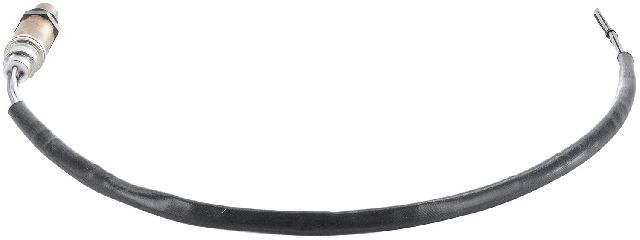
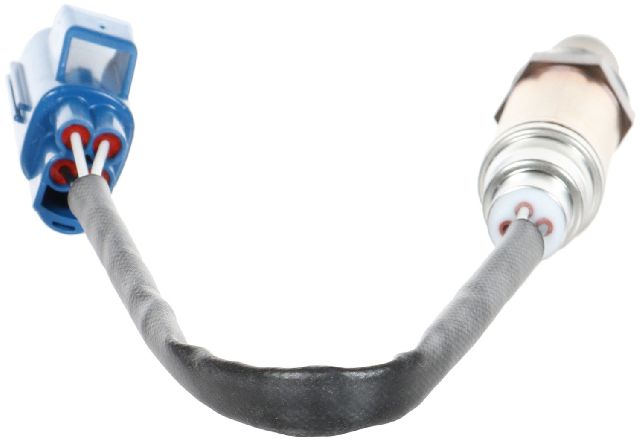
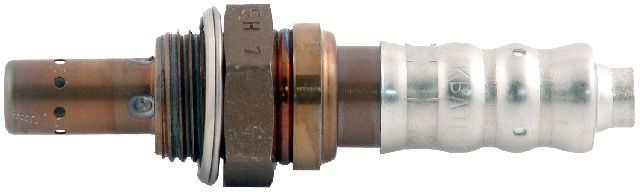
- Failed Downstream Oxygen Sensor 🔴 High Probability → Shop Oxygen Sensor The internal heater element within the O2 sensor is a common failure point over time due to constant heat cycles. It's a consumable part that eventually burns out.
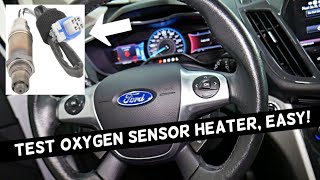
How to confirm: Disconnect the sensor and measure the resistance between the two heater circuit pins (usually the two wires of the same color, e.g., two whites or two blacks). 🎬 See how to test the O2 sensor heater circuit An infinite resistance reading (open circuit) or a near-zero reading (short circuit) confirms the heater has failed. A healthy sensor should have a specific resistance, typically between 2 and 30 ohms, with many Ford sensors of this era reading around 6 to 20 ohms when healthy.
Typical fix: Replace the Bank 1, Sensor 2 (downstream) 🎬 Watch this guide on fixing the P0036 code oxygen sensor. An O2 sensor socket is recommended for removal.
Est. part cost: $40-$180 - Blown Fuse for O2 Sensor Heater Circuit 🟡 Medium Probability → Shop Oxygen Sensor
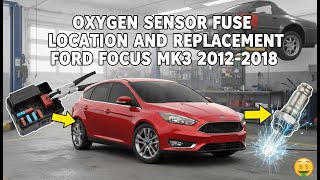
How to confirm: Locate the fuse box in the engine compartment, on the left side of the vehicle. On the Mk2 Focus, check fuse F33 (10A), which is designated for the heating of oxygen sensors. Visually inspect the fuse or test it with a multimeter for continuity. Some diagrams may also reference fuse F34 depending on the specific year and trim.
Typical fix: Replace the blown 10A fuse. If the new fuse blows immediately, it indicates a short circuit in the wiring or the sensor itself that must be diagnosed.
Est. part cost: $1-$5 - Damaged Wiring or Connector ⚪ Low Probability The sensor wiring is located under the vehicle and is exposed to road debris, moisture, and high exhaust temperatures, which can cause wires to melt, chafe, or break. The harness runs near the exhaust and over the subframe, creating potential pinch or melt points.
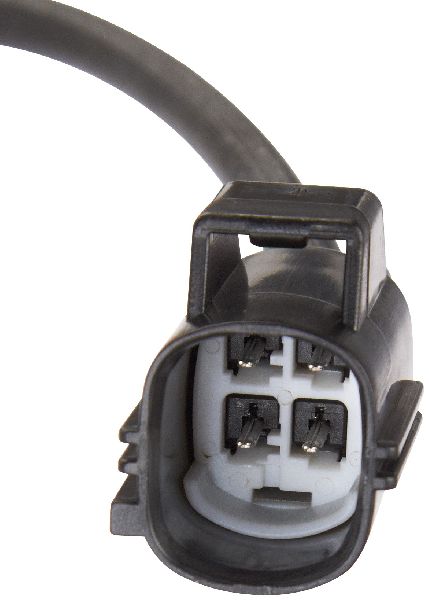
How to confirm: Visually inspect the entire wiring harness from the O2 sensor to where it connects to the main vehicle harness. Look for melted insulation, frayed wires, or corrosion inside the connector plug. Pay close attention to where the harness may contact the exhaust pipe or chassis components. Manufacturer service bulletins for other models, such as TSB Bulletin #SSM 51048 and TSB Bulletin #SSM 50993, have noted that P0036 can be caused by water intrusion or corrosion in specific electrical connectors (C1050, C201, or C1570).
Typical fix: Repair the damaged section of wire or replace the connector pigtail.
Est. part cost: $10-$30
Rare But Worth Checking
- Faulty Powertrain Control Module (PCM): → Shop Engine Control Module (ECM) This is extremely rare. Before condemning the PCM, all other possibilities (sensor, fuse, wiring) must be exhaustively ruled out. A diagnostic check showing no ground signal from the PCM to the heater circuit with the key on (despite good wiring and a good sensor) would point towards the PCM driver.
Diagnosis Steps
- Read the code with an OBD-II scanner to confirm P0036 is present. Note any other codes.
- Locate the engine compartment fuse box. On the Mk2 Focus, it's on the driver's side near the battery.
- Check fuse F33 (10A), which powers the oxygen sensor heaters. If it's blown, replace it and see if the code returns. If it blows again, suspect a short circuit in the sensor or wiring.
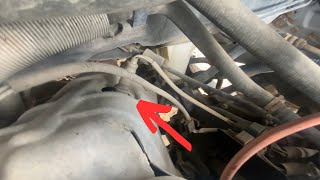
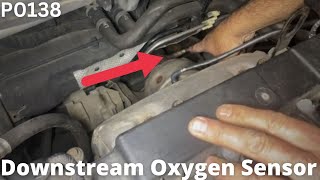
- If the fuse is good, safely raise and support the vehicle to access the downstream O2 sensor. It is located in the exhaust pipe, just after the catalytic converter. 🎬 Watch: Locate and replace your Focus oxygen sensors
- Visually inspect the sensor's wiring and connector for any signs of melting, chafing, or corrosion. Pay special attention to the area where the harness passes over the exhaust and subframe.
- Disconnect the sensor. Use a multimeter set to Ohms (Ω) to test the resistance of the heater element across the two same-colored wires on the sensor side of the connector. A reading of infinite ohms (OL) or near-zero ohms indicates a bad sensor. A good sensor should read between 2-30 Ohms.
- With the key on and engine off, check for 12V power at the heater power wire in the vehicle-side connector. Then, check the ground signal from the PCM on the other heater circuit wire. Lack of power points back to the fuse/wiring, while lack of a ground signal could indicate a wiring or, rarely, a PCM issue.
Parts You'll Likely Need
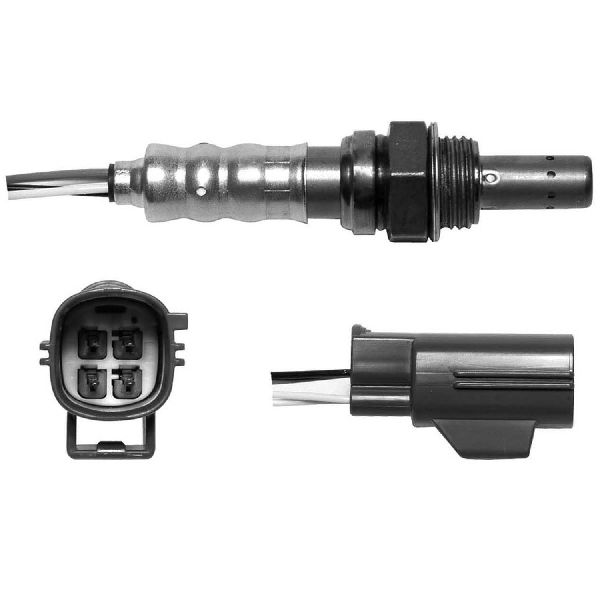
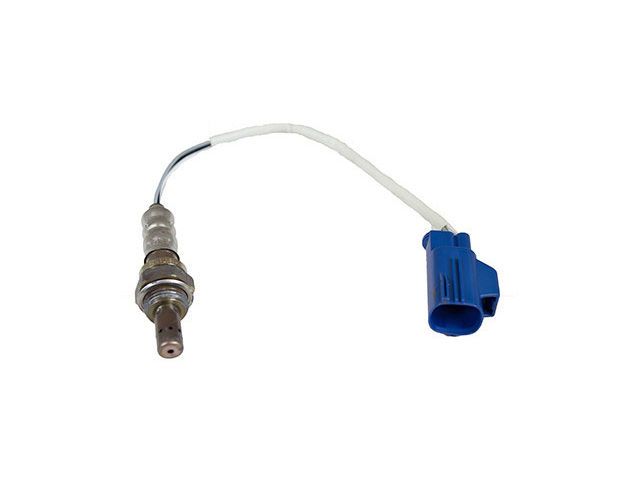
- Downstream Oxygen Sensor (Bank 1, Sensor 2)
(OEM #5S4Z-9G444-BA)— This is the most frequent cause of a P0036 code, as the internal heater element fails with age and use.
Trusted brands: Motorcraft, Bosch, Denso, NGK/NTK
OEM price range: $100-$180
Aftermarket price range: $40-$90
Related Codes That Often Appear With This One
- P0136 — P0136 indicates a 'Sensor Circuit Malfunction (Bank 1 Sensor 2)'. It often appears with P0036 because a failure in the heater circuit (P0036) prevents the sensor from reaching operating temperature, which the PCM interprets as a general sensor circuit fault.
- P0141 — Manufacturer records such as TSB Bulletin #15-0078 indicate that P0036 may frequently appear alongside P0141, P0054, and P0137 on various Ford platforms.
Technical Service Bulletins (TSBs) & Recalls
- While no TSBs were found specifically for the 2005-2011 Focus 1.6L Ti-VCT with P0036, Ford has issued TSBs for other models with similar issues. For example, TSB Bulletin #tsb18-2212 was issued for Edge models where a P0036 code could be resolved by a PCM reprogram, indicating a software logic issue rather than a hardware failure. This is a reminder that software can sometimes be the cause, although for the Mk2 Focus, a hardware fault is far more likely.
- TSB Bulletin #15-0078 notes that certain vehicles equipped with the 2.3L EcoBoost engine may exhibit an illuminated MIL with DTC P0036, P0054, P0137, and/or P0141.
Platform-Specific Known Issues
- Real Owner Experience: Misdiagnosis and PCM Ground: A user on Reddit with a 2016 Focus (a later model, but demonstrating the diagnostic principle) spent ~€800 replacing both upstream and downstream sensors, but the P0036 code returned. Their own diagnosis revealed 12V was present at the heater circuit, but the PCM was not providing the ground signal to complete the circuit, pointing to a wiring or PCM fault, not a sensor fault. This highlights the importance of testing for both power and ground before replacing parts.
Mechanic-Grade Diagnostic Values
- Downstream O2 Sensor Heater Element Resistance — expected: Between 6 and 20 ohms at room temperature.. Failure: A reading of OL (Over Limit / infinite resistance) indicates an open circuit (burnt out element). A reading near 0 ohms indicates a short circuit.
- Heater Circuit Power Supply (KOEO) — expected: ~12 Volts (Battery Voltage). Failure: 0 Volts indicates a blown fuse or a break in the power supply wire.
- Heater Circuit Ground Signal (KOEO) — expected: The PCM should provide a ground path, which can be tested for continuity to ground or by observing voltage drop when the circuit is active.. Failure: An open circuit on the ground side with power present points to a wiring issue or a faulty PCM driver.
Wiring & Ground Locations
- Main Engine Bay Ground — Under the airbox, bolted to the chassis in front of the battery. Another is located on the chassis near the main battery ground terminal on the driver-side strut tower.. A poor main ground connection can cause a variety of unpredictable electrical issues, including sensor circuit faults. Ensuring this connection is clean and tight is a crucial basic step.
- PCM Ground — On Fords with the PCM in the engine bay, a critical ground is typically located on the chassis right next to the PCM itself.. The PCM controls the ground for the O2 heater circuit. A faulty PCM ground can interrupt this control and mimic a component failure.
- Interior Ground Point — Behind the glove box, there is a chassis ground bolt accessible after removing the glove box assembly.. While less likely to be related to an engine sensor, it's a known ground location for interior electronics that shares the vehicle's overall ground plane.
Real Owner Repair Stories
- Go-Parts.com Article (Ford Focus 1.0 EcoBoost (later model, but demonstrates principle)) — P0036 code appeared.
❌ Tried (didn't work) Replaced both upstream and downstream oxygen sensors.
✅ What actually fixed it The P0036 code returned after two weeks, this time accompanied by a new P0420 'Catalyst System Efficiency' code. The story serves as a cautionary tale: improperly fixing or ignoring the P0036 allowed the engine to run with an incorrect air-fuel mixture long enough to potentially damage the catalytic converter. - NHTSA ODI #10554605 — An owner reported that while driving at approximately 55 MPH, the accelerator failed to respond to acceleration attempts and the vehicle failed to operate normally when the P0036 code and check engine light illuminated.
OEM Part Supersession History
3S4Z-9G444-AA, 5S4Z-9G444-DA→5S4Z-9G444-BA— Standard part revision and consolidation by the manufacturer.
Heads up: Using the newest part number (5S4Z-9G444-BA) is recommended to ensure compatibility with any design updates.
Model Year Variations Within This Range
- 2011: The 2011 model year was a transition to the Mk3 Focus. While this guide focuses on the Mk2 (2005-2010/11), owners of 2011 models should be aware that their vehicle may follow the Mk3 design. For the O2 sensor heater circuit, the fuse on the Mk3 is typically F32 (10A) in the engine bay fuse box, not F33 as seen on the Mk2.
Diagnostic Flowchart
Other Known Issues on This Vehicle
Issues unrelated to this code that are worth knowing about as an owner of this generation:
- Instrument Cluster Failure 🔴 High — Common issue on Mk2 and Mk2.5 models. Can cause intermittent non-starting, gauges dropping to zero, and random warning lights. Often caused by bad solder joints on the main connector.
- Rear Wheel Arch Rust 🟠 Medium — A well-documented problem where dirt and moisture collect between the rear bumper and the wheel arch, causing rust to form from the inside out.
- Water Leaking onto Spark Plugs 🟠 Medium — On 1.4L and 1.6L petrol engines, failed or leaking washer jets can allow water to drip directly onto the cylinder head, pooling in the spark plug wells and causing misfires.
- Driveshaft Seal Leak (Manual Transmission) 🟡 Low — On 1.4L and 1.6L models, the right-hand driveshaft seal on the manual gearbox can leak, often due to incorrect fitting from the factory or during clutch work.
- Rear Suspension Bushing Wear 🟠 Medium — The multi-link rear suspension's various control arm bushings are prone to wear, leading to knocking noises over bumps and potential alignment issues.
Used vs. New Parts: Buying Guide for This Vehicle
When a used part is the smart pick: For this repair, a used part is NOT recommended. The oxygen sensor is a consumable wear-and-tear item. The internal heater element that causes P0036 fails with age and use, so a used sensor has an unknown and likely limited remaining lifespan.
What to inspect on the donor part:
- Not applicable as buying a used sensor is not advised.
OEM-only on this vehicle (don't cheap out):
- While not strictly 'OEM-only', it is highly recommended to use either the Ford/Motorcraft OEM sensor or a direct OEM-supplier equivalent. Using cheap, no-name aftermarket sensors is a common reason for the code to return prematurely.
Aftermarket brands forum-validated for this vehicle:
- Bosch
- Denso
- NTK / NGK
Brands owners have reported issues with on this vehicle:
- Unbranded or 'economy' sensors with no reputation. While no specific brand is universally cited as bad, forums are filled with stories of generic sensors failing quickly or not working correctly out of the box.
Real Owner Stories
Aggregated from forums and TSBs cited above. Mileages and costs reflect what owners reported in those sources.
2016 Ford Focus (Later Model)
Symptoms: Check Engine Light on with P0036; 12V was present at the heater circuit but the code returned even after replacing both upstream and downstream sensors.
What fixed it: The issue was identified as a lack of ground signal from the PCM, indicating a wiring or PCM fault rather than a sensor failure.
Cost: $850-$900
Source hint: Reddit r/FordFocus - "Ford Focus P0036 engine light"
Ford Focus Mk2
Symptoms: Check Engine Light with codes P0036 and P0136 appearing together.
What fixed it: Replacement of the downstream O2 sensor (Bank 1, Sensor 2).
Source hint: PistonHeads UK - "Ford focus fault codes p0036 & p0136"
Ford Focus Mk2
Symptoms: Owner unable to clear codes P0036 and P0136.
What fixed it: Replacement of the downstream oxygen sensor.
Source hint: Ford Owners Club - "Focus Fault Codes P0036 & P0136"
Related OBD-II Codes
Frequently Asked Questions
Which fuse should I check for the O2 sensor heater on my Mk2 Ford Focus?
Does TSB 18-2212 apply to my 2005-2011 Ford Focus 1.6L Ti-VCT?
What resistance should I see when testing the downstream O2 sensor on my Focus?
Can I still drive my Focus with P0036 and P0136 codes active?
Are there other common issues on the 1.6L Focus that might be confused with O2 sensor wiring problems?
Helpful Videos
We Have This Part in Stock

The information in this article is provided for general reference and educational purposes only. Vehicle specifications, procedures, and part compatibility can vary by production date, trim level, and region. Always consult your vehicle's factory service manual and verify part numbers before purchasing or performing repairs. Safety-critical components such as airbags, seat belts, and braking systems should be installed by a qualified professional.
- Ford Focus:
- 🧭 Diagnostic Flowchart
- 🎬 Helpful Videos
- 🛍️ Shop This Part
- What's Unique About the 2005-2011 Ford Focus
- Symptoms You May Notice
- Most Likely Causes
- Rare But Worth Checking
- Diagnosis Steps
- Parts You'll Likely Need
- Related Codes That Often Appear With This One
- Technical Service Bulletins (TSBs) & Recalls
- Platform-Specific Known Issues
- Mechanic-Grade Diagnostic Values
- Wiring & Ground Locations
- Real Owner Repair Stories
- OEM Part Supersession History
- Model Year Variations Within This Range
- Other Known Issues on This Vehicle
- Used vs. New Parts: Buying Guide for This Vehicle
- Real Owner Stories
- 2016 Ford Focus (Later Model)
- Ford Focus Mk2
- Ford Focus Mk2
- Related OBD-II Codes
- Frequently Asked Questions
- 🎟️ Get 5% Off