

P0036 on 2012-2018 Ford Focus 2.0L: O2 Sensor Heater Circuit Causes and Fixes
On a 2012-2018 Ford Focus, code P0036 almost always means the downstream oxygen sensor (Bank 1, Sensor 2) has failed. Before replacing it, check the 15A fuse F32 in the engine bay fuse box. A new sensor costs about $40-$80 for an aftermarket part or $70-$120 for an OEM Motorcraft part.
- P0036 on a 2012-2018 Focus points to a problem with the heater in the downstream O2 sensor, located after the catalytic converter.
- Before buying any parts, first check the 15A fuse F32 in the engine bay fuse box.
- The most likely fix is replacing the downstream O2 sensor (Motorcraft part DY-1179). Avoid cheap, unbranded sensors.
- While replacing the sensor, carefully inspect the wiring harness for any signs of melting or damage, as this is another common cause.
- This is a DIY-friendly repair for those comfortable working under the car; it requires a special 22mm (or 7/8") O2 sensor socket and penetrating oil for the old, seized sensor.
What's Unique About the 2012-2018 Ford Focus
The 2012-2018 Ford Focus (Mk3 generation) with the 2.0L GDI engine has a standard emissions system where P0036 is a common and well-documented issue. Unlike some vehicles where this code might lead to complex wiring or computer diagnostics, on the Focus, it most often points to a simple failure of the downstream O2 sensor's internal heater. A key vehicle-specific diagnostic step is to check fuse F32 (a 15A fuse) in the under-hood fuse box, as a blown fuse can also cause this code and is a much cheaper fix than a new sensor. Some sources mention a 10A fuse for this circuit, but 15A is more commonly cited for the 2.0L model.
Symptoms You May Notice
- Check Engine Light is on.
- Inability to pass an emissions inspection.
- Potentially a slight decrease in fuel economy over time, though often not noticeable.
- In rare instances, drivability issues may occur; for example, NHTSA ODI #10554605 describes a situation where a vehicle exhibited a lack of accelerator response at highway speeds alongside the P0036 code.
- Replacing the upstream oxygen sensor (Bank 1, Sensor 1) instead of the correct downstream sensor (Bank 1, Sensor 2).
- Replacing the O2 sensor without first checking for a blown fuse or damaged wiring, which are simpler and cheaper fixes.
- Using cheap, unbranded oxygen sensors from online marketplaces, which are frequently reported on forums to be dead-on-arrival or fail quickly.
Most Likely Causes
- Failed Downstream Oxygen Sensor 🔴 High Probability → Shop Oxygen Sensor The internal heater element within the O2 sensor is a common failure point due to constant, extreme heat cycles. This is the most frequently reported cause by owners.
How to confirm: Disconnect the sensor and measure the resistance across the two same-colored wires (the heater circuit). An open circuit (infinite resistance or 'OL' on a multimeter) confirms the heater has failed. A good heater should have a low resistance, typically between 4.2 and 6.6 ohms for this application, though a range of 3-15 ohms is generally considered acceptable.
Typical fix: Replace the Bank 1, Sensor 2 oxygen sensor, which is located after the catalytic converter. An O2 sensor socket (22mm or 7/8") is required. Torque the new sensor to approximately 35 ft-lbs.
Est. part cost: $40-$120 - Damaged Wiring or Connector 🟡 Medium Probability The sensor's wiring is routed under the car and is exposed to road debris, moisture, and extreme heat from the exhaust, which can cause wires to melt, fray, or corrode. The harness can sometimes contact a heat shield or the exhaust pipe itself, causing it to melt and short the wires.
How to confirm: Visually inspect the entire wiring harness leading from the downstream O2 sensor up into the engine bay. Check for any signs of melting, especially where it might have contacted the exhaust pipe. Check the connector (C139, on the firewall) for corrosion (green or white powder) or bent/pushed-out pins.
Typical fix: Repair the damaged section of the wiring harness using solder and heat-shrink tubing or replace the connector pigtail. Secure the harness away from the hot exhaust pipe using high-temperature zip ties.
Est. part cost: $5-$50 - Blown Fuse ⚪ Low Probability A short in the O2 sensor's heater element or its wiring can cause the corresponding fuse to blow as a protective measure.
How to confirm: Locate and inspect fuse F32 (15A) in the fuse box located in the engine bay. If the fuse is blown, it indicates a short circuit that must be found. If the fuse blows again after replacement, the short is still present (likely in the sensor or wiring).
Typical fix: Replace the blown fuse after diagnosing and fixing the underlying short circuit in the sensor or wiring.
Est. part cost: $1-$5
Rare But Worth Checking
- Faulty Powertrain Control Module (PCM): → Shop Engine Control Module (ECM) This is extremely rare. The PCM should only be considered after all other possibilities (sensor, wiring, fuse) have been exhaustively ruled out. One owner on a Reddit forum reported a confirmed faulty PCM driver after replacing the sensor twice and verifying 12V power was present at the connector, but the PCM was not providing the ground signal.
Technical Service Bulletins (TSBs) & Recalls
While specific bulletins for the Focus are limited, manufacturer records for similar Ford platforms highlight common failure modes for P0036:
- Bulletin #tsb18-2212: Notes that certain Ford vehicles with 2.0L engines may exhibit an illuminated MIL with DTC P0036 stored in the PCM, requiring specific service procedures to correct the condition.
- Bulletin #15-0078: Lists P0036 alongside P0141 as codes that may trigger a malfunction indicator lamp on EcoBoost engines, often requiring sensor or circuit repair.
- Bulletin #SSM 50993: Describes how P0036 can be caused by water intrusion in electrical connectors (such as C1050), leading to circuit faults.
- Bulletin #SSM 51048: Indicates that P0036 and P0138 codes may be due to corrosion or water intrusion in specific harness connectors (C201 and/or C1570).
Diagnosis Steps
- Read the codes with an OBD-II scanner to confirm P0036 and check for any other related codes.
- Check fuse F32 (15A) in the under-hood fuse box and replace if blown.
- Visually inspect the wiring harness and connector for the downstream O2 sensor. Look for any signs of melting, chafing, or corrosion. Pay close attention to where the harness passes near exhaust components.
- If the wiring looks good, disconnect the O2 sensor.
- Using a multimeter set to Ohms, measure the resistance between the two heater pins (usually the two same-colored wires) on the sensor itself. A reading of infinite resistance (OL) means the sensor's heater is broken and the sensor must be replaced. A good sensor will typically read between 4.2-6.6 Ohms.
- If the sensor's resistance is good, check for power at the vehicle's harness connector. With the key on and engine off, use a multimeter to check for 12V power on one pin and a good ground on another. The PCM often provides the ground, so you may be checking for a ground signal rather than a constant ground.
- If there is no power at the harness, trace the circuit back to the fuse box. If power is present but the code persists with a known-good sensor, the problem may be on the ground control side of the circuit, pointing towards a wiring issue or a rare PCM fault.
Parts You'll Likely Need
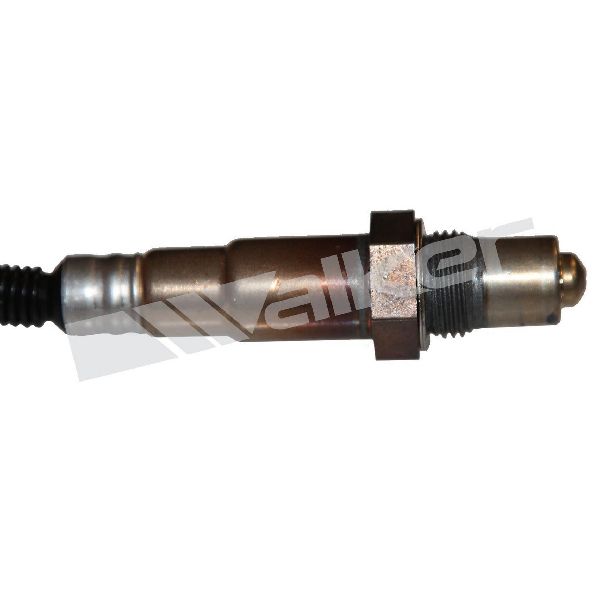
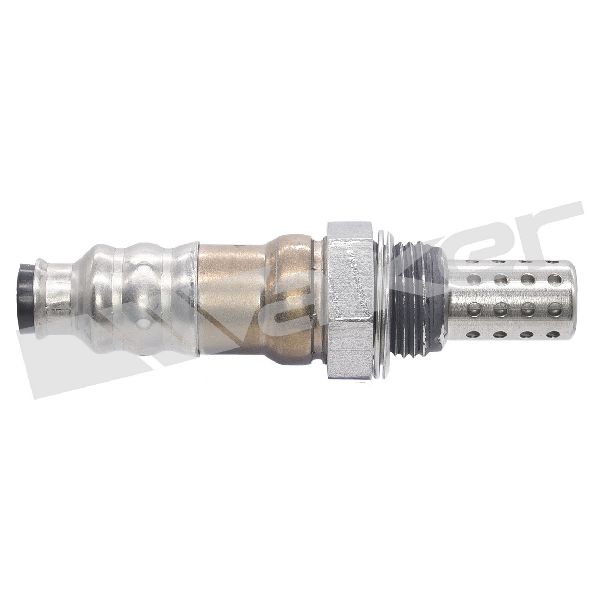
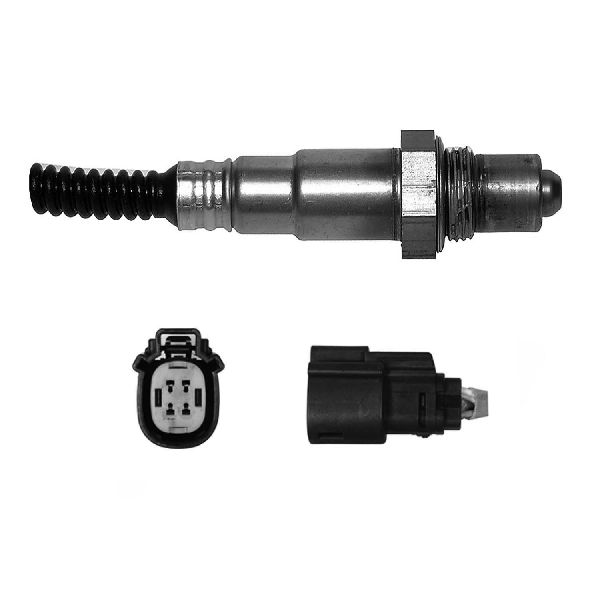
- Downstream Oxygen Sensor (Bank 1, Sensor 2)
(OEM #CV6Z-9G444-A)— This is the most common cause of code P0036, as the internal heater element fails over time.
Trusted brands: Motorcraft (DY-1179), Bosch, Denso, NGK/NTK
OEM price range: $70-$120
Aftermarket price range: $40-$80
Related Codes That Often Appear With This One
- P0136 — This code indicates a general malfunction in the same O2 sensor circuit (Bank 1, Sensor 2) and can be triggered by the same root cause.
- P0141 — This is an older, nearly identical code for the same heater circuit malfunction. It often appears with or is related to P0036.
- P0420 — This code means 'Catalyst System Efficiency Below Threshold'. A faulty downstream O2 sensor can sometimes incorrectly trigger a P0420 code, as it's the sensor responsible for monitoring the catalyst. One owner reported a pending P0420 along with P0036 after a sensor replacement.
Platform-Specific Known Issues
- Real Owner Story: PCM Ground Fault: A user on Reddit (r/FordFocus) with a 2016 Focus reported a persistent P0036 code after two sensor replacements. After extensive diagnosis, they found 12V power was present at the connector with the ignition on, but the PCM was not providing the ground signal to complete the heater circuit. This confirmed a rare PCM driver failure as the root cause.
- Real Owner Story: Fuse vs. Wiring: On the FordOwnersClub.com forum, an owner of a Focus with a similar engine noted that if only the P0036 (downstream) code is present, and not P0135 (upstream), the F32 fuse is likely fine, as it powers both heaters. This logic correctly points the diagnosis towards a wiring fault specific to the downstream sensor or the sensor itself, rather than a shared power issue.
Mechanic-Grade Diagnostic Values
- Downstream O2 Sensor Heater Resistance — expected: 4.2 to 6.6 Ohms at ambient temperature. A general acceptable range is 3-15 Ohms.. Failure: Infinite resistance (OL) indicates a broken internal heater. Near-zero resistance indicates an internal short.
- Heater Circuit Power Supply Voltage (KOEO) — expected: Approximately 12V (battery voltage) at the vehicle-side harness connector (C139) on the power supply pin.. Failure: 0V indicates a blown fuse (F32), a bad relay, or an open in the power wire from the fuse box.
- O2 Sensor Installation Torque — expected: 35 ft-lbs. Failure: Under-torquing can cause exhaust leaks; over-torquing can damage the sensor or exhaust threads.
Hidden / Shadow Codes Worth Checking
- Mode $06, TID:$81, CID:$85: Mode $06 provides raw data from the PCM's self-tests. For the O2 heater, it monitors circuit current or resistance. A failing value here can indicate a degrading heater element before it's bad enough to set a persistent P0036 code. (see via A professional scan tool or an advanced OBD-II app (like Torque Pro or OBD Fusion) that can access Mode $06 data.)
Scan Tool Commands That Help
- Advanced OBD-II Scanner (e.g., ThinkDiag, Autel, Launch): O2 Sensor Heater Bidirectional Test / Actuation Test — Use this after confirming the sensor has good resistance. This command allows you to manually command the PCM to turn the heater circuit on and off. You can then monitor the live data PIDs for heater status ('On'/'Off') and voltage to confirm the PCM driver and wiring are capable of controlling the circuit.
Wiring & Ground Locations
- C139 — The main electrical connector for the downstream O2 sensor, located on the firewall, behind the engine.. This is the primary point to test for power, ground, and signal continuity from the vehicle harness. It is exposed to heat and moisture, making it a potential point of failure due to corrosion or pin damage.
- G104 — A primary engine harness ground point bolted to the chassis on the left (driver's side) front of the engine compartment, typically located under the air filter box assembly.. This ground is shared by multiple engine sensors. A poor connection here, a known issue on the Focus platform due to paint under the terminal, can cause erratic sensor readings and various electrical faults, including an intermittent P0036.
- Heater Circuit Pins — On the 4-pin O2 sensor connector, the two heater circuit wires are typically the two wires of the same color (e.g., two white wires or two black wires).. These are the specific pins on the sensor and harness connector that must be tested for resistance (on the sensor side) and for power/ground (on the harness side).
OEM Part Supersession History
CV6Z-9G444-A→DY-1179 (Motorcraft Service Number)— DY-1179 is the service part number sold by Motorcraft, which corresponds to the Ford engineering number CV6Z-9G444-A.CV6Z-9G444-A→CV6Z-9G444-B— Part revision.
Heads up: The 'B' revision is also listed as compatible for this application and may offer improvements over the original design.
Model Year Variations Within This Range
- 2012-2018: No significant variations have been identified for the P0036 diagnostic procedure or common causes within the 2012-2018 model years for the 2.0L GDI engine. The facelift in 2015 did not alter the fundamental components of this specific circuit.
Diagnostic Flowchart
Other Known Issues on This Vehicle
Issues unrelated to this code that are worth knowing about as an owner of this generation:
- DPS6 PowerShift Transmission Failure 🔴 High — Extremely common on 2012-2016 models. Issues include shuddering, hesitation, slipping, and outright failure of clutch packs or the Transmission Control Module (TCM). (Ref: Multiple TSBs (e.g., 13-9-4, 15-0120) and a class-action lawsuit settlement were issued. Some owners report issues persist even after repairs.)
- EVAP Canister Purge Valve Failure (P1450) 🟠 Medium — Very common across all 2012-2018 models. The valve sticks open, causing code P1450, stalling after refueling, rough idle, and potential fuel tank deformation. (Ref: Subject of Ford Safety Recall 18S32 and Customer Satisfaction Program 24N07.)
- Passenger-Side Engine Mount Collapse 🟠 Medium — A frequent issue where the hydraulic passenger-side engine mount fails, causing excessive vibration in the cabin at idle and while driving.
- Poor Body Grounds (Affecting Transmission) 🟡 Low — A known issue, particularly on earlier models, where paint on the main chassis ground point under the battery box causes a poor connection. This can lead to erratic shifting from the PowerShift transmission. (Ref: Related to TSB 10-19-6 for the Fiesta, but the principle and fix (cleaning the ground point) is widely applied by owners to the Focus.)
- Electronic Power Steering Failure 🔴 High — More common on the 2012-2014 models. Owners report a sudden loss of power steering assist, sometimes intermittently, making the vehicle very difficult to steer. (Ref: NHTSA complaints led to investigations, but widespread recalls were limited.)
Used vs. New Parts: Buying Guide for This Vehicle
When a used part is the smart pick: For this repair, using a used part is almost never a smart choice. The only exception might be sourcing a connector pigtail with a few inches of wire from a junkyard harness if the original connector is physically damaged.
Donor-vehicle mileage cap: roughly under 80000 miles for the part to have meaningful remaining life.
What to inspect on the donor part:
- For a connector pigtail, inspect for any signs of melting, brittle plastic, or corrosion on the pins.
- Ensure the locking tab on the connector is intact and functional.
OEM-only on this vehicle (don't cheap out):
- Powertrain Control Module (PCM) - In the extremely rare event the PCM is faulty, it must be replaced with an OEM unit programmed specifically for the vehicle's VIN.
Aftermarket brands forum-validated for this vehicle:
- NTK/NGK
- Denso
- Bosch
Brands owners have reported issues with on this vehicle:
- Unbranded, no-name sensors from online marketplaces (e.g., eBay, Amazon) are frequently reported on forums as being dead-on-arrival or failing within a few months.
Real Owner Stories
Aggregated from forums and TSBs cited above. Mileages and costs reflect what owners reported in those sources.
2016 Ford Focus 2.0L GDI
Symptoms: Persistent P0036 code that remained even after replacing the oxygen sensor twice.
What fixed it: Diagnosis revealed the PCM was not providing the ground signal to complete the heater circuit, requiring a PCM replacement due to a failed driver.
Source hint: Reddit r/FordFocus - "Ford Focus P0036 engine light"
2012-2018 Ford Focus 2.0L GDI
Symptoms: Check engine light with code P0036; owner noted that no upstream heater codes were present.
What fixed it: The owner used diagnostic logic to determine that because P0135 was absent, the shared F32 fuse was fine, leading to the replacement of the downstream sensor/wiring.
Source hint: Ford Owners Club - "Ford Focus fault code p0036"
2012-2018 Ford Focus 2.0L GDI
Symptoms: P0036 returned shortly after an O2 sensor replacement, accompanied by a pending P0420 code.
What fixed it: The discussion identified potential issues with cheap unbranded replacement sensors or unresolved wiring faults.
Source hint: Reddit r/MechanicAdvice - "P0036 is back after o2 sensor replacement + pending P0420"
NHTSA Reported Incident
Symptoms: While driving at approximately 55 MPH, the accelerator failed to respond to acceleration attempts. Additionally, an error code (P0036) and the check engine warning light illuminated.
What fixed it: The report noted the vehicle failed to operate normally during the event, highlighting that P0036 can sometimes coincide with significant drivability issues.
Source hint: NHTSA ODI #10554605
Related OBD-II Codes
Frequently Asked Questions
If I have a P0036 code on my Focus, is it likely that fuse F32 is blown?
Where is the downstream oxygen sensor located on the 2.0L GDI engine?
What is the correct resistance for a new O2 sensor heater on a 2012-2018 Focus?
Can I use zip ties to secure the O2 sensor wiring away from the exhaust?
Is there a recall for the P0036 code on the Ford Focus?
What connector should I check for corrosion if I suspect a wiring issue?
Helpful Videos
We Have This Part in Stock



The information in this article is provided for general reference and educational purposes only. Vehicle specifications, procedures, and part compatibility can vary by production date, trim level, and region. Always consult your vehicle's factory service manual and verify part numbers before purchasing or performing repairs. Safety-critical components such as airbags, seat belts, and braking systems should be installed by a qualified professional.
- Ford Focus:
- 🧭 Diagnostic Flowchart
- 🎬 Helpful Videos
- 🛍️ Shop This Part
- What's Unique About the 2012-2018 Ford Focus
- Symptoms You May Notice
- Most Likely Causes
- Rare But Worth Checking
- Technical Service Bulletins (TSBs) & Recalls
- Diagnosis Steps
- Parts You'll Likely Need
- Related Codes That Often Appear With This One
- Platform-Specific Known Issues
- Mechanic-Grade Diagnostic Values
- Hidden / Shadow Codes Worth Checking
- Scan Tool Commands That Help
- Wiring & Ground Locations
- OEM Part Supersession History
- Model Year Variations Within This Range
- Other Known Issues on This Vehicle
- Used vs. New Parts: Buying Guide for This Vehicle
- Real Owner Stories
- 2016 Ford Focus 2.0L GDI
- 2012-2018 Ford Focus 2.0L GDI
- 2012-2018 Ford Focus 2.0L GDI
- NHTSA Reported Incident
- Related OBD-II Codes
- Frequently Asked Questions
- 🎟️ Get 5% Off