

P0036 on 2000-2007 Ford Taurus 3.0L: O2 Sensor Heater Circuit Causes and Fixes
This code indicates a failure in the heater circuit of the downstream oxygen sensor on Bank 1 (firewall side). The most common fix is to replace the Bank 1, Sensor 2 oxygen sensor itself. Before replacing, check the dedicated O2 sensor fuse (often a 20A fuse in the engine bay) and inspect the wiring for damage, especially from oil leaking from the valve cover above. Expect to pay $40-$90 for an aftermarket sensor and $70-$120 for an OEM part. It's a straightforward DIY repair if you can safely a
- P0036 on your Taurus means the heater for the oxygen sensor after the catalytic converter (on the firewall side) has failed.
- The most likely fix is to replace the Bank 1, Sensor 2 oxygen sensor.
- Before buying parts, inspect the sensor's wiring for any melting or damage, especially from leaking oil from the valve cover above it.
- Crucially, check the O2 sensor heater fuse (often a 20A fuse in the engine bay fuse box) before proceeding with more complex repairs.
- This is a manageable DIY job for those comfortable working under the vehicle with basic tools, including an O2 sensor socket and a multimeter.
What's Unique About the 2000-2007 Ford Taurus
The 2000-2007 Ford Taurus belongs to a single generation (the fourth), so the issue is consistent across these years. On the 3.0L Vulcan V6, Bank 1 is located on the firewall side of the engine. While the P0036 code itself is generic, a known issue on this platform is that oil leaks from the rear valve cover gasket can drip onto the Bank 1 oxygen sensor and its wiring harness. This can saturate the connector, degrade the wiring insulation, and cause a short or open in the heater circuit, triggering P0036.
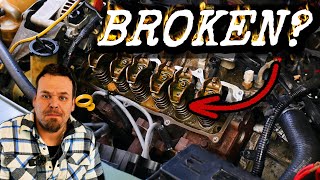
🎬 See how oil leaks can damage your engine componentsSymptoms You May Notice
- Check Engine Light is on.
- Failure to pass an emissions inspection.
- Slightly increased fuel consumption (uncommon).
- Rough engine performance (very rare for this specific code).
- Replacing the wrong oxygen sensor (e.g., replacing the upstream Sensor 1, or the sensor on Bank 2).
- Replacing the oxygen sensor without first checking the fuse and wiring harness for damage.
Most Likely Causes
- Failed Bank 1, Sensor 2 Oxygen Sensor 🔴 High Probability → Shop Oxygen Sensor The internal heater element within the oxygen sensor is a common wear-and-tear component that can burn out over time, creating an open circuit. This is the most frequent reason for a P0036 code.
How to confirm: Disconnect the sensor and measure the resistance across the two heater circuit pins (usually the two same-colored wires) with a multimeter. A reading of infinite resistance (OL) indicates an open circuit and a failed sensor. A healthy sensor heater should have a resistance typically between 3 and 25 ohms.
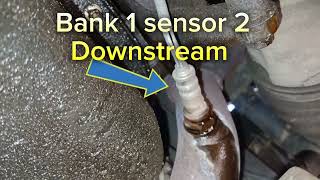
Typical fix: Replace the Bank 1, Sensor 2 oxygen sensor. This sensor is located underneath the car, after the catalytic converter on the firewall side. Accessing the connector may require reaching up over the transmission tail shaft. 🎬 Watch: Locate the Bank 1 Sensor 2 oxygen sensor
Est. part cost: $40-$120 - Damaged Wiring or Connector 🟡 Medium Probability The wiring harness is routed near the hot exhaust system and can melt, chafe, or break if not properly secured. Additionally, oil leaks from the rear valve cover gasket are a well-known issue on the 3.0L Vulcan, and the oil can drip onto the O2 sensor connector and wiring insulation, causing a short. 🎬 Watch: Step-by-step guide to replacing the valve cover gasket
How to confirm: Visually inspect the wiring harness leading to the O2 sensor for any signs of melting, fraying, or breaks. Check the connector for corrosion, pushed-out pins, or oil contamination. Test for 12V power and a good ground at the connector (harness side) with the key on.
Typical fix: Repair the damaged section of the wiring harness or clean the oil-soaked connector with electrical contact cleaner. If the connector or pins are damaged, replace the pigtail. Ensure the harness is properly secured away from the exhaust.
Est. part cost: $5-$50 - Blown Fuse ⚪ Low Probability A short circuit in the heater wiring or the sensor itself can cause the corresponding fuse to blow as a protective measure. This single fuse often powers the heaters for multiple O2 sensors.
How to confirm: Consult the owner's manual or a fuse diagram to locate the fuse for the O2 sensor heaters. On many Taurus models, this is a 20A fuse in position #7 of the power distribution box in the engine compartment. Visually inspect the fuse. If it is blown, there is a short circuit in the heater circuit of one of the O2 sensors that must be found.
Typical fix: Replace the blown fuse after diagnosing and fixing the underlying short circuit that caused it to blow. Simply replacing the fuse without finding the short will likely result in the new fuse blowing immediately.
Est. part cost: $1-$5
Rare But Worth Checking
- Faulty Powertrain Control Module (PCM): → Shop Engine Control Module (ECM) This is extremely rare. The PCM's internal driver for the heater circuit can fail. This should only be considered after all other possibilities (sensor, wiring, fuses) have been exhaustively ruled out by a professional.
Diagnosis Steps
- Read the code with an OBD-II scanner to confirm P0036 is present.
- Perform a thorough visual inspection of the Bank 1, Sensor 2 oxygen sensor and its wiring harness. Look for melted plastic, frayed wires, or signs of oil contamination from a leaking valve cover gasket above it.
- Check the vehicle's power distribution box (in the engine compartment) for a blown fuse related to the O2 sensor heaters. This is often a 20A fuse in slot #7.
- If the wiring and fuse are okay, disconnect the O2 sensor connector. The connector is often best reached from under the car, over the transmission tail shaft.
- Use a multimeter set to Ohms (Ω) to measure the resistance between the two heater pins on the sensor side of the connector (typically the two wires of the same color). A reading of infinite resistance (OL) means the heater is burned out. A normal reading is typically between 3-25 ohms.
- With the key on and engine off, use a multimeter to check for 12-volt power and a good ground on the vehicle harness side of the connector. If either is missing, trace the wiring back to find the fault.
- If the sensor's heater circuit has proper resistance and the harness has power and ground, the issue is intermittent or, in very rare cases, could be the PCM.
Parts You'll Likely Need
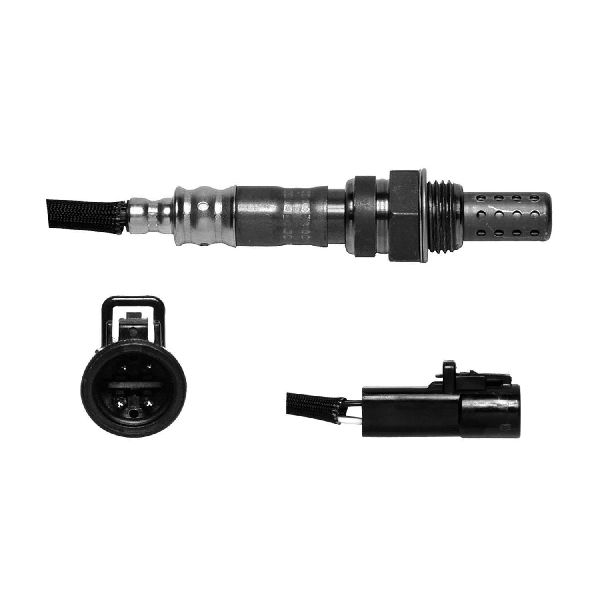
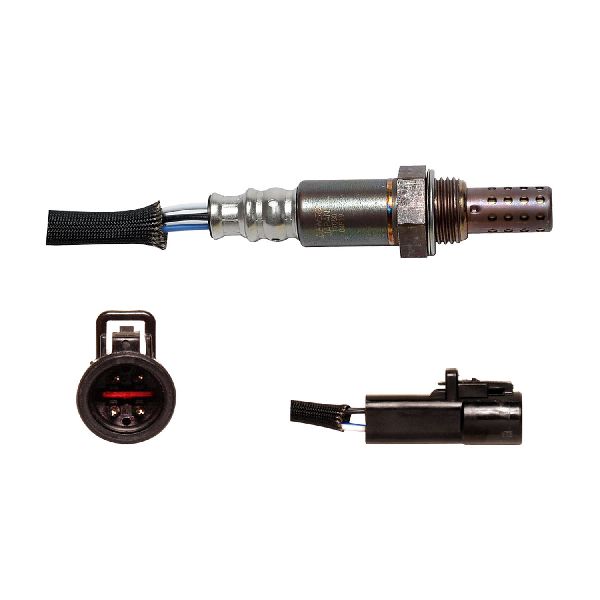
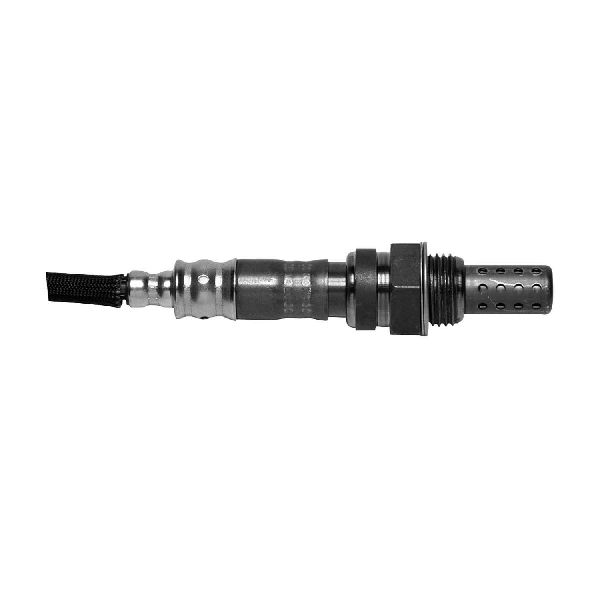
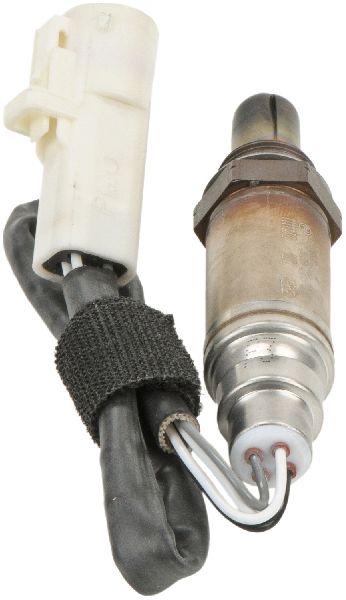
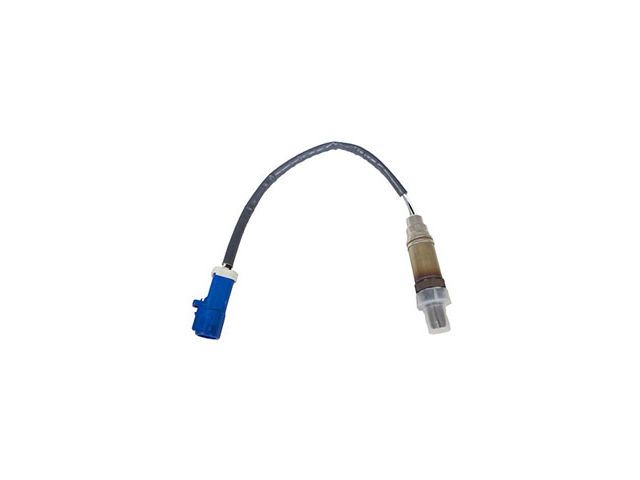
- Downstream Oxygen Sensor (Bank 1, Sensor 2)
(OEM #DY-1092)— This is the component that the code directly flags. Its internal heater element is the most common point of failure for this code.
Trusted brands: Motorcraft, Bosch, Denso, NTK
OEM price range: $70-$120
Aftermarket price range: $40-$90
Technical Service Bulletins (TSBs) & Recalls
- TSB 05-22-12: Addresses engine performance issues above 3000 RPM caused by a failing camshaft synchronizer, a common platform issue.
- TSB 02-22-1: Details correct installation procedures for the camshaft synchronizer to prevent driveability problems.
- TSB 99-18-4: Pertains to transmission shudder and harsh shifts, a common symptom of the known AX4S/AX4N transmission problems.
- NHTSA Recall 04V332000: A critical safety recall for front coil spring fracture in salt-belt states.
- Bulletin #SSM 50993: Notes that P0036 may be caused by water intrusion in the electrical connector.
- Bulletin #SSM 51048: Indicates that corrosion or water intrusion in specific connectors can trigger P0036 and illuminated MIL.
- Bulletin #tsb18-2212: Confirms that an illuminated MIL with DTC P0036 stored in the PCM may require specific service procedures to correct.
- Bulletin #15-0078: Documents instances where vehicles may exhibit P0036 along with related codes P0054, P0137, and P0141.
Platform-Specific Known Issues
- The 3.0L Vulcan V6 is known for potential oil leaks from the rear valve cover gasket. This oil can drip directly onto the Bank 1 O2 sensor and its wiring connector, saturating it. Over time, the oil degrades the plastic and rubber seals, allowing moisture in and causing corrosion or short circuits that trigger a P0036 code.
Mechanic-Grade Diagnostic Values
- O2 Sensor Heater Circuit Resistance — expected: 2 to 10 Ohms is a common range, with some sources citing 3-25 Ohms as acceptable. A more precise expectation for a healthy sensor is around 6 Ohms.. Failure: Infinite resistance (OL - Open Loop) indicates a burned-out heater element. Zero resistance indicates a short circuit within the sensor.
- HO2S Heater Circuit Voltage at Connector — expected: Approximately 12 Volts (battery voltage) should be present on the power wire of the harness-side connector with the key on, engine off (KOEO).. Failure: No voltage indicates a problem upstream, such as a blown fuse or a break in the power wire.
- PCM Pin Voltage (HO2S Heater Control) — expected: When testing the control wire from the PCM (Pin 95 for HO2S 12 on a 1999 model, which is similar), you should see the PCM pull the circuit to ground to activate the heater. Voltage will vary based on whether the PCM is commanding the heater on or off.. Failure: A constant high voltage or no voltage change when the heater should be active could indicate a faulty PCM driver, but this is rare.
Scan Tool Commands That Help
- Ford IDS / Advanced Scan Tool: O2 Heater Monitor / KOEO Self-Test — While a direct bidirectional command to toggle the heater may not be available on this older platform, running the Key-On-Engine-Off (KOEO) self-test can force the PCM to check all circuits, including the heater. A more advanced scan tool can also display the status of the O2 heater monitor, showing if the test has run and completed, which can be useful after a repair to confirm the fix before completing a full drive cycle.
Wiring & Ground Locations
- HO2S 12 Heater Control PCM Pin — On a similar year EEC-V PCM, the control circuit for the Bank 1 Sensor 2 heater (HO2S 12) is Pin 95 (Yellow/Light Blue wire).. If the sensor and harness-side power are good, a fault in the control wire back to this pin, or a faulty PCM driver at this pin, is the next logical step in diagnosis.
- Fuse #7 (2000-2003) / Fuse #F1.22 (2004-2007) — In the Power Distribution Box in the engine compartment. For 2000-2003 models, it's often a 20A fuse in slot #7. For 2004-2007 models, the designation may change to F1.22 (15A), which powers all HO2S heaters.. This is the central power source for the heater circuit. If this fuse is blown, no O2 sensor heaters will function, and multiple codes (P0036, P0054, P0141, P0161) may be present.
- G103 — A common engine ground point located on the right rear of the engine compartment.. While the O2 sensor heater is typically grounded through the PCM, other engine sensors rely on chassis grounds like G103. A poor ground here can cause erratic sensor behavior and introduce electrical noise, potentially leading to incorrect diagnoses. It's a critical point to check for any engine electrical issues.
- Heater Circuit Wires — Within the 4-wire O2 sensor connector, the two same-colored wires (often white for Bosch/Motorcraft sensors) are for the heater circuit.. These are the specific pins to probe when measuring the sensor's internal heater resistance and when checking for power and ground on the vehicle's harness.
OEM Part Supersession History
F5TF-9G444-CA, F6TF-9G444-CA, F7TF-9G444-CA→DY-1092— Part consolidation and revision over time.
Heads up: The listed part numbers are often cross-referenced to the modern Motorcraft DY-1092, which fits a wide range of Ford vehicles including the Taurus. Always verify fitment with the vehicle's VIN as wire length can vary.
Model Year Variations Within This Range
- 2000-2003 vs 2004-2007: The fuse numbering and amperage in the power distribution box for the HO2S heaters can differ. For example, a 2000 model might use a 20A fuse in slot #13 of the passenger compartment box for the power point, while a 2004 model uses different slots. The main HO2S heater fuse in the engine bay also changed designation from a simple number (e.g., #7) to an F-number (e.g., F1.22) after the 2003 model year. Always consult the specific year's fuse diagram.
- 2000-2007: While the 3.0L Vulcan V6 was the primary engine, a DOHC 3.0L Duratec V6 was available on higher trims. While the P0036 code functions identically, the physical location and access to sensors and wiring may differ slightly between the Vulcan and Duratec engines due to different manifold designs.
Diagnostic Flowchart
Other Known Issues on This Vehicle
Issues unrelated to this code that are worth knowing about as an owner of this generation:
- AX4S/AX4N Automatic Transmission Failure 🔴 High — Very common, often occurring between 60,000 and 100,000 miles. Symptoms include harsh or delayed shifting, slipping between gears, RPM flares at highway speed, and total loss of engagement. A common failure point is the torque converter splines stripping out. (Ref: TSB 99-18-4 (addresses shudder and harsh 3-2 downshifts caused by low fluid).)
- Camshaft Synchronizer Failure 🟠 Medium — Commonly occurs between 70,000 and 100,000 miles. Presents as a persistent 'chirp' or 'squeal' from the engine, often mistaken for a belt. Failure can cause the oil pump drive to fail, leading to catastrophic engine damage. (Ref: TSB 05-22-12 (addresses buck/jerk/miss conditions above 3000 RPM related to the synchronizer). TSB 02-22-1 (addresses correct installation procedures).)
- Head Gasket Failure 🔴 High — A known, though less frequent, issue with the 3.0L Vulcan V6. Symptoms include coolant consumption, white smoke from the exhaust, and coolant found in cylinders upon inspection. Repair is labor-intensive and costly.
- Intake Manifold Gasket & O-Ring Leaks 🟡 Low — Very common on high-mileage engines. The upper intake plenum gaskets and EGR tube O-rings become flat and brittle, causing vacuum leaks. This leads to lean codes (P0171, P0174), a rough idle, and general performance issues.
- Front Coil Spring Fracture 🔴 High — Affects vehicles operated in high-corrosion (salt belt) areas. The front coil spring can rust and fracture, potentially contacting and rupturing the front tire. (Ref: NHTSA Recall 04V332000 / Ford Recall 04S17)
Used vs. New Parts: Buying Guide for This Vehicle
When a used part is the smart pick: Sourcing a used part is generally not recommended for the oxygen sensor itself due to its nature as a wear item. However, obtaining a used wiring harness pigtail from a salvage yard is a very smart and cost-effective repair if your vehicle's connector is melted, cracked, or has corroded pins that cannot be saved.
Donor-vehicle mileage cap: roughly under 120000 miles for the part to have meaningful remaining life.
What to inspect on the donor part:
- For a wiring pigtail, inspect the plastic connector body for brittleness, cracks, or signs of melting.
- Ensure the locking tab is intact and functional.
- Look at the pins inside the connector; they should be clean and free of green or white corrosion.
- Make sure there is at least 6-8 inches of wire attached to the connector to allow for easy splicing.
OEM-only on this vehicle (don't cheap out):
- While not strictly 'OEM-only', using a reputable OE-supplier brand for the oxygen sensor is highly recommended. Cheap, no-name sensors are a frequent cause of repeat failures or incorrect performance.
Aftermarket brands forum-validated for this vehicle:
- NTK (often considered the OE supplier for many Fords)
- Denso
- Bosch (Direct-fit, not universal)
Brands owners have reported issues with on this vehicle:
- Universal sensors requiring splicing (these can introduce points of failure and are often lower quality).
- Unbranded or 'white-box' parts from online marketplaces with no reputation.
Real Owner Stories
Aggregated from forums and TSBs cited above. Mileages and costs reflect what owners reported in those sources.
2004 Ford Escape 3.0L V6
Symptoms: P0036 code present; owner was advised to check the heater circuit specifically rather than just replacing the sensor.
What fixed it: Inspection of the harness for 12V power and checking for melted or chafed wiring as recommended by forum members.
Source hint: fordforums.com - 'Repair P0036 Code'
2000-2007 Ford Taurus 3.0L Vulcan V6
Symptoms: Check Engine Light on; oil found saturating the O2 sensor connector and wiring insulation.
What fixed it: Cleaning the oil-soaked connector with electrical contact cleaner and repairing the rear valve cover gasket leak to prevent re-contamination.
Source hint: vehicle_specific_issues
Ford F-150 Owner
Symptoms: While driving at approximately 55 MPH, the accelerator failed to respond to acceleration attempts. Additionally, an error code (P0036) and the check engine warning light illuminated.
What fixed it: NHTSA ODI #10554605 describes this event where the vehicle failed to operate normally alongside the P0036 code.
Source hint: NHTSA ODI #10554605
Related OBD-II Codes
Frequently Asked Questions
Where is the Bank 1, Sensor 2 oxygen sensor located on my 3.0L Vulcan Taurus?
Could an oil leak cause my P0036 code on this specific Ford engine?
Which fuse should I check for the O2 sensor heater circuit on my Taurus?
Does TSB 05-22-12 relate to my P0036 oxygen sensor code?
What resistance should I see when testing the O2 sensor heater on my Vulcan V6?
Is there a recall for the 2000-2007 Taurus that affects the exhaust or sensors?
Helpful Videos
We Have This Part in Stock


The information in this article is provided for general reference and educational purposes only. Vehicle specifications, procedures, and part compatibility can vary by production date, trim level, and region. Always consult your vehicle's factory service manual and verify part numbers before purchasing or performing repairs. Safety-critical components such as airbags, seat belts, and braking systems should be installed by a qualified professional.
- Ford Taurus:
- 🧭 Diagnostic Flowchart
- 🎬 Helpful Videos
- 🛍️ Shop This Part
- What's Unique About the 2000-2007 Ford Taurus
- Symptoms You May Notice
- Most Likely Causes
- Rare But Worth Checking
- Diagnosis Steps
- Parts You'll Likely Need
- Technical Service Bulletins (TSBs) & Recalls
- Platform-Specific Known Issues
- Mechanic-Grade Diagnostic Values
- Scan Tool Commands That Help
- Wiring & Ground Locations
- OEM Part Supersession History
- Model Year Variations Within This Range
- Other Known Issues on This Vehicle
- Used vs. New Parts: Buying Guide for This Vehicle
- Real Owner Stories
- 2004 Ford Escape 3.0L V6
- 2000-2007 Ford Taurus 3.0L Vulcan V6
- Ford F-150 Owner
- Related OBD-II Codes
- Frequently Asked Questions
- 🎟️ Get 5% Off