

P0036 on 2017-2020 Hyundai Elantra: HO2S Heater Circuit Causes and Fixes
This code almost always means the downstream oxygen sensor (Bank 1, Sensor 2) has failed. Replacing the sensor is the most common fix. Expect to pay $60-$120 for an aftermarket part or $150+ for an OEM sensor. It's a straightforward DIY job for many.
- P0036 on your Elantra points specifically to the heater inside the oxygen sensor located after the catalytic converter.
- The most likely fix is replacing the downstream oxygen sensor (Bank 1, Sensor 2).
- Before buying parts, always check the fuse for the O2 sensor heater circuit first (often labeled 'SNSR 3' or 'A/F heater').
- Inspect the sensor's wiring for any signs of melting or damage, as this is the second most common cause.
- You can continue driving with this code, but you won't pass an emissions test until it's fixed.
What's Unique About the 2017-2020 Hyundai Elantra
For the 2017-2020 Hyundai Elantra (sixth generation, AD), which primarily uses the 2.0L Nu inline-four engine (G4NH), there is only one exhaust bank, so 'Bank 1' is the only bank. 'Sensor 2' definitively refers to the downstream sensor, located after the catalytic converter. On these models, the failure of the sensor's internal heater element is a very common reason for P0036, often more so than wiring or fuse issues. This is a frequent failure point across many Hyundai and Kia models sharing this powertrain.
Symptoms You May Notice
- Check Engine Light is on.
- Inability to pass a vehicle emissions test.
- Slightly decreased fuel economy (though often not noticeable to the driver).
- Engine may run in a fixed fuel mix (open loop) for longer during startup, but this rarely causes noticeable driveability issues.
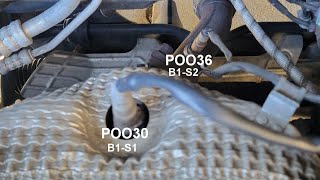
- Replacing the upstream oxygen sensor (Bank 1, Sensor 1) instead of the downstream one (Bank 1, Sensor 2). The code P0030 points to the upstream sensor, while P0036 is for the downstream sensor.
- Replacing the catalytic converter when the code is only P0036. This code points to the sensor's heater circuit, not the converter's efficiency.
Most Likely Causes
- Failed Downstream Oxygen Sensor (Bank 1, Sensor 2) 🔴 High Probability → Shop Oxygen Sensor The internal heater element within the oxygen sensor is a common failure point over time due to constant, rapid heat cycles. This is a well-documented issue on many Hyundai/Kia platforms.
How to confirm: Disconnect the sensor and test the resistance across the two heater circuit pins (usually the two wires of the same color, e.g., two white or two black wires) with a multimeter. 🎬 See how to test the heater circuit with a multimeter. An open circuit (infinite resistance or 'OL') confirms failure. The expected resistance is typically between 2-25 Ohms, with many sources citing a narrower range of 6-20 Ohms for a good sensor.
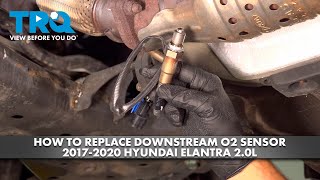
Typical fix: Replace the Bank 1, Sensor 2 oxygen sensor. This is a common DIY repair. 🎬 Watch: Step-by-step guide to replacing the downstream oxygen sensor.
Est. part cost: $60-$180 - Damaged Wiring or Connector 🟡 Medium Probability The sensor wiring is routed near the hot exhaust system, making it susceptible to melting, becoming brittle, and cracking over time. Road debris can also cause physical damage.
How to confirm: Visually inspect the wiring harness and connector leading to the sensor for any signs of melting, fraying, corrosion, or loose pins. Check for secure connection at both the sensor and the harness plug.
Typical fix: Repair the damaged section of the wiring harness or replace the connector pigtail.
Est. part cost: $15-$50 - Blown Fuse for O2 Heater Circuit ⚪ Low Probability A short in the sensor or its wiring can cause the corresponding fuse to blow as a protective measure.
How to confirm: Locate the fuse box in the engine compartment. Identify the fuse for the O2 sensor heater circuits (often labeled 'SNSR 3', 'O2 HTR', or 'A/F heater'). Visually inspect the fuse to see if it is blown. On some models, this may be a 15A fuse.
Typical fix: Replace the blown fuse. If it blows again immediately, a short circuit exists that must be diagnosed and repaired.
Est. part cost: $1-$5
Rare But Worth Checking
- Faulty Powertrain Control Module (PCM): → Shop Engine Control Module (ECM) This is extremely rare. The PCM should only be considered after all other possibilities, including the sensor, wiring, and fuses, have been thoroughly tested and ruled out.
Diagnosis Steps
- Read the code with an OBD-II scanner to confirm P0036 is present.
- Check the fuse box in the engine bay for any blown fuses related to the emissions system or O2 sensors (e.g., 'SNSR 3' or 'A/F heater'). Replace if necessary.
- Raise the vehicle safely and locate the downstream oxygen sensor (Bank 1, Sensor 2), which is positioned after the catalytic converter.
- Visually inspect the sensor's wiring harness and connector for any signs of damage, such as melting, chafing, or corrosion.
- If the wiring appears intact, disconnect the sensor's electrical connector.
- Using a multimeter set to Ohms (Ω), measure the resistance between the two pins for the heater circuit on the sensor side. These are typically the two wires of the same color.
- A reading of infinite resistance (OL) means the heater is burned out and the sensor must be replaced. A reading within the manufacturer's specification (often 2-25 Ohms) indicates the heater is likely good.
- If the sensor's heater tests good, check for voltage (should be ~12V) and ground at the vehicle-side connector with the ignition on. A lack of voltage points to a wiring or fuse issue upstream.
- If the sensor has failed, replace it. An O2 sensor socket (22mm) is recommended. If the wiring is faulty, repair it. After the repair, clear the code with the scanner and perform a drive cycle to ensure the fix was successful.
Parts You'll Likely Need
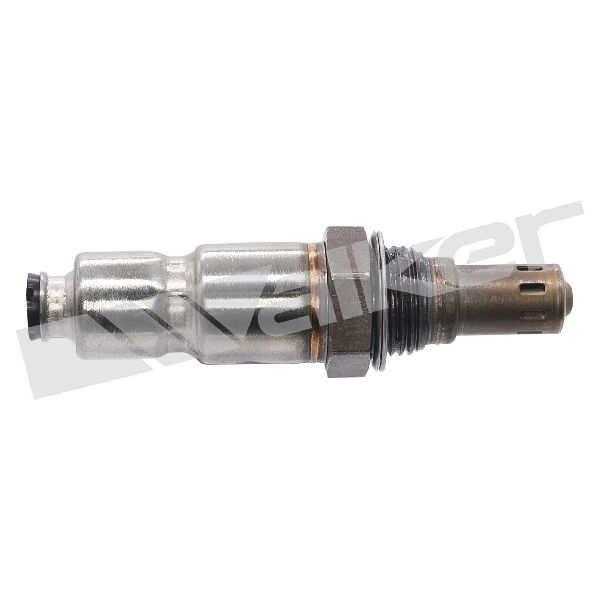
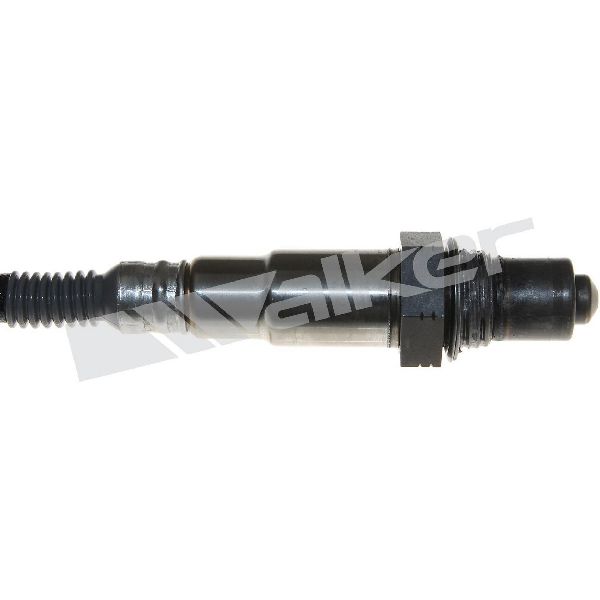
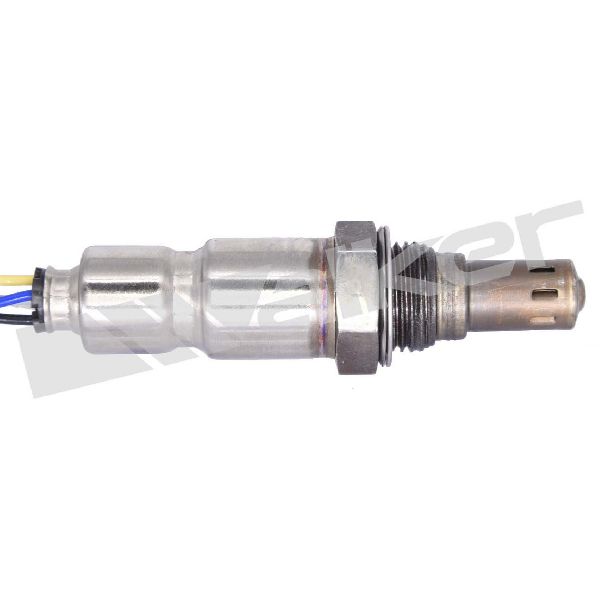
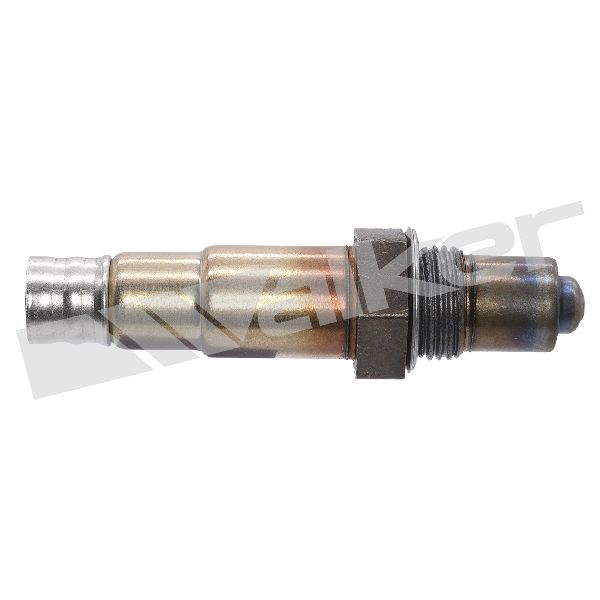
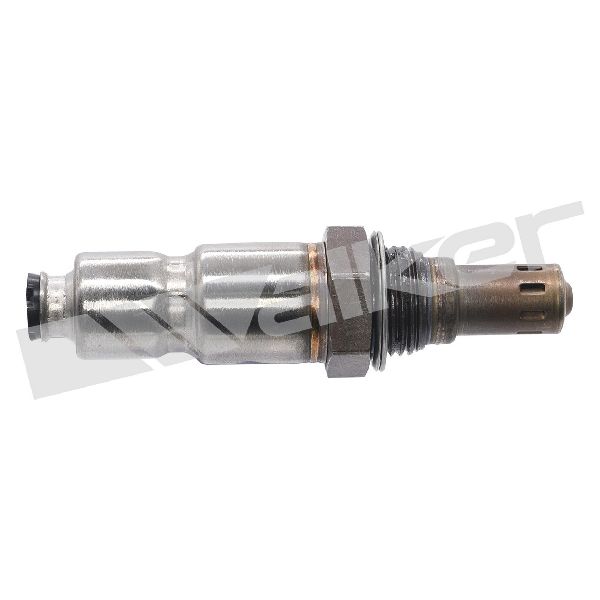
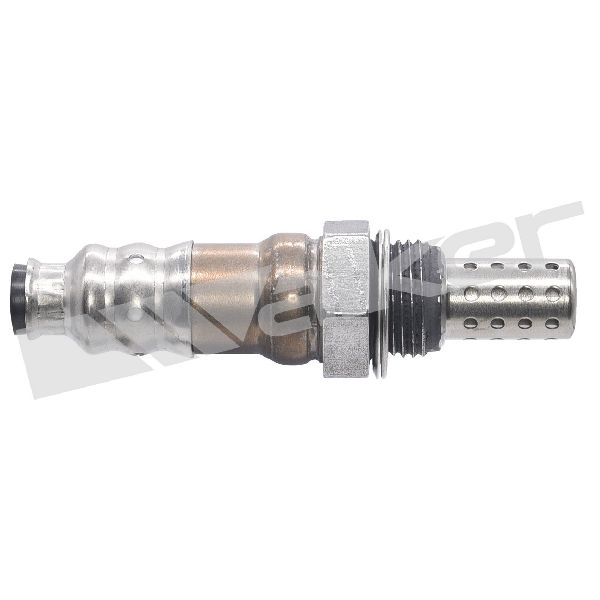
- Downstream Oxygen Sensor (Bank 1, Sensor 2)
(OEM #39210-2E410 (for 2.0L Nu engine, verify with VIN))— This is the most common cause of a P0036 code, as the internal heater element fails with age.
Trusted brands: Denso, Bosch, NGK/NTK, Walker
OEM price range: $150-$220
Aftermarket price range: $60-$120
Related Codes That Often Appear With This One
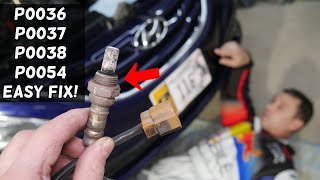
- P0037 — Indicates the heater control circuit is low, which is a more specific fault within the same circuit.
- P0038 — Indicates the heater control circuit is high, which is another specific fault within the same circuit.
- P0136 — This code relates to the sensor circuit itself (not the heater). A failing sensor can sometimes trigger both codes.
Mechanic-Grade Diagnostic Values
- Downstream O2 Sensor Heater Resistance — expected: 2.4 - 4.0 Ω at 20°C (68°F). Failure: Infinite resistance (OL) indicates an open circuit (bad sensor).
- Downstream O2 Sensor Heater Resistance (Alternate Spec) — expected: 9.0 Ω at 18-20°C (64-82°F). Failure: A significant deviation from this value or an open circuit (OL) indicates a failed heater.
- Heater Circuit Current Draw (Live Data) — expected: 0.5 - 1.5 A. Failure: No current or very low current (<0.25 A) suggests an open circuit or bad sensor; high current (>2.0 A) suggests a short circuit.
- Heater Circuit Power Supply (at harness connector) — expected: ~12V (Battery Voltage) with key on, engine off. Failure: No voltage indicates a problem upstream in the wiring or fuse box.
Hidden / Shadow Codes Worth Checking
- Mode 06, Test ID $81, Comp ID $04: This refers to the onboard monitor test for the Bank 1 Sensor 2 heater. It tracks the maximum heater current to detect malfunctions. While not a 'hidden code' in the traditional sense, it provides dealer-level insight into the specific parameter that failed. (see via An advanced OBD-II scanner capable of displaying Mode 06 test results.)
Scan Tool Commands That Help
- Hyundai GDS or equivalent professional scanner: Bi-Directional Control > O2 Sensor Heater Activation — This command forces the heater circuit on, allowing a technician to monitor live data for current draw (Amps) and voltage to confirm if the circuit is complete and the sensor is drawing the correct amount of power.
- Hyundai GDS or equivalent professional scanner: Special Functions > Oxygen Sensor > Heater Circuit Test — This is an automated test that checks for voltage and integrity of the heater circuit, providing a pass/fail result without needing to manually interpret live data.
Wiring & Ground Locations
- Fuse F32 (Engine Compartment) — In the main fuse box in the engine compartment, on the driver's side.. This 15A fuse is listed as protecting the 'Oxygen Sensor (UP/DOWN)' for 2018 models. A blown fuse here will cut power to the heater circuit and immediately trigger P0036.
- Downstream O2 Sensor Connector — The wiring harness for the downstream sensor runs up from the exhaust and the connector is located on a bracket at the back of the engine, near the valve cover.. This is the primary point for testing. Technicians test for resistance on the sensor side of the connector and for power/ground on the vehicle harness side. Its proximity to the engine makes it susceptible to heat damage over time.
Real Owner Repair Stories
- YouTube channel 'N K CAR AUTO TECH' (Hyundai i20 (similar powertrain and components)) — Check Engine Light with code P0036 stored.
❌ Tried (didn't work) The video proceeds directly to testing the component.
✅ What actually fixed it The technician used a multimeter to test the heater circuit on the old sensor and found no continuity (open circuit). A new sensor was tested and showed continuity. Replacing the downstream oxygen sensor (Bank 1, Sensor 2) and clearing the codes resolved the issue.
OEM Part Supersession History
39210-2E410→N/A— This part number appears to be correct for the 2017-2020 Elantra 2.0L.
Heads up: The subsequent generation of Elantra (2021+) with a 1.6L engine uses a different part number (e.g., 39210-2M410). While they are both oxygen sensors, they are not interchangeable. Always verify the part number with the vehicle's VIN.
Diagnostic Flowchart
Real Owner Stories
Aggregated from forums and TSBs cited above. Mileages and costs reflect what owners reported in those sources.
2013 Hyundai Elantra
Symptoms: Owner experienced codes P0036, P0037, and P0038 simultaneously.
What fixed it: Diagnosed as a common failure of the heater circuit, requiring replacement of the downstream oxygen sensor.
Source hint: Reddit r/MechanicAdvice - Elantra P0036-P0038 Codes
2014 Hyundai Sonata
Symptoms: Check engine light came on with code P0036, but the owner noticed negligible impact on fuel economy and no driveability issues.
What fixed it: Owner deferred immediate repair, as the consensus confirmed it was safe for short-term driving until an emissions test was required.
Source hint: Reddit r/AskMechanics - Realistically how long can I drive with a P0036 code?
Related OBD-II Codes
Frequently Asked Questions
Is it safe to drive my 2017-2020 Hyundai Elantra with a P0036 code?
Where is the Bank 1 Sensor 2 oxygen sensor located on the Elantra's 2.0L Nu engine?
What should the resistance be when testing the O2 sensor heater on my Elantra?
Which fuse should I check for the P0036 code on my Hyundai?
Does this P0036 issue affect other Hyundai or Kia models besides the Elantra?
What tools do I need to replace the downstream O2 sensor on my Elantra?
Helpful Videos
We Have This Part in Stock

The information in this article is provided for general reference and educational purposes only. Vehicle specifications, procedures, and part compatibility can vary by production date, trim level, and region. Always consult your vehicle's factory service manual and verify part numbers before purchasing or performing repairs. Safety-critical components such as airbags, seat belts, and braking systems should be installed by a qualified professional.
- Hyundai Elantra:
- 🧭 Diagnostic Flowchart
- 🎬 Helpful Videos
- 🛍️ Shop This Part
- What's Unique About the 2017-2020 Hyundai Elantra
- Symptoms You May Notice
- Most Likely Causes
- Rare But Worth Checking
- Diagnosis Steps
- Parts You'll Likely Need
- Related Codes That Often Appear With This One
- Mechanic-Grade Diagnostic Values
- Hidden / Shadow Codes Worth Checking
- Scan Tool Commands That Help
- Wiring & Ground Locations
- Real Owner Repair Stories
- OEM Part Supersession History
- Real Owner Stories
- 2013 Hyundai Elantra
- 2014 Hyundai Sonata
- Related OBD-II Codes
- Frequently Asked Questions
- 🎟️ Get 5% Off