

P0036 on 2012-2017 Hyundai Veloster 1.6L Turbo: Heater Circuit Causes and Fixes
This code almost always means the downstream oxygen sensor (Bank 1, Sensor 2) has a failed internal heater. Replacing the sensor is the most common fix. Before replacing, check the fuse and inspect the wiring harness for melting. Expect to pay around $60-$120 for an aftermarket part or $180-$260 for an OEM sensor. It's a DIY-friendly job for many.
- P0036 on a 2012-2017 Veloster Turbo points to a problem with the heater in the downstream O2 sensor, located after the catalytic converter.
- The most likely fix is replacing the downstream O2 sensor itself, as the internal heater is a common failure point.
- Before buying parts, always perform a quick visual inspection of the wiring for melting/damage and check the O2 sensor fuse.
- A known issue exists for 2013 turbo models, documented in recall NHTSA #13V051000, which calls for a software update to prevent engine damage.
- This is a DIY-friendly repair for those comfortable working under their car; it requires an O2 sensor socket and basic hand tools.
What's Unique About the 2012-2017 Hyundai Veloster
For the 2013 Veloster Turbo, Hyundai issued a safety recall (NHTSA #13V051000) for engine management software that could cause pre-ignition and damage the engine. While not directly for P0036, the associated TSB (16-FL-002) mentioned in 🎬 Watch: Overview of P0036 and related codes on Hyundai models repair databases likely relates to the broader campaign of ensuring engine and emissions components, including oxygen sensors, function correctly with the updated software. This indicates a known sensitivity in the engine management system on this platform during these years. Early model years were also known for engine issues due to weak connecting rods and faulty ECU tuning, making proper sensor function critical.
Symptoms You May Notice
- Check Engine Light is on.
- Failed emissions test.
- Slightly reduced fuel economy in some cases, though often not noticeable.
- No noticeable driveability issues in most cases.
- Replacing the upstream (Bank 1, Sensor 1) oxygen sensor. P0036 is specific to the downstream sensor (Sensor 2).
- Replacing the catalytic converter. This code points to the sensor's heater circuit, not the converter's efficiency.
Most Likely Causes
- Failed Downstream Oxygen Sensor (Bank 1, Sensor 2) 🔴 High Probability → Shop Oxygen Sensor The internal heater element is a common failure point over time due to constant heat cycles. A recall and TSB campaign for 2013 turbo models involving software updates also addressed emissions components.
How to confirm: After checking fuses and wiring, test the resistance of the heater circuit 🎬 Watch: A professional guide to testing O2 sensor heater circuits at the sensor's connector using a multimeter. An infinite resistance reading (open circuit) or zero resistance (short circuit) confirms a failed heater element. A healthy sensor should typically read between 6 and 20 ohms.
Typical fix: Replace the downstream (post-catalytic converter) oxygen sensor.
Est. part cost: $60-$260 - Damaged Wiring or Connector 🟡 Medium Probability The wiring harness for the sensor runs near the hot exhaust system. If clips fail, the wires can touch the exhaust and melt, causing a short or open circuit.
How to confirm: Visually inspect the entire wiring harness from the O2 sensor to the main loom. Look for melted insulation, frayed wires, or corrosion inside the connector plug. Check for continuity on each wire with a multimeter if visual inspection is inconclusive.
Typical fix: Repair the damaged section of wire or replace the connector pigtail. Secure the harness away from the exhaust using high-temperature zip ties.
Est. part cost: $10-$30 - Blown Fuse ⚪ Low Probability
How to confirm: Locate the fuse for the O2 sensor heater circuit in the vehicle's fuse box (check owner's manual for location, often labeled 'SNSR' or similar). Visually inspect the fuse or test for continuity with a multimeter.
Typical fix: Replace the blown fuse. If the new fuse blows immediately, it indicates a short circuit in the wiring or sensor that must be found and repaired first.
Est. part cost: $1-$5
Rare But Worth Checking
- Faulty Powertrain Control Module (PCM): → Shop Engine Control Module (ECM) This is very uncommon. Before suspecting the PCM, all other possibilities (sensor, wiring, fuses) must be exhaustively ruled out. A failure of the driver circuit within the PCM can cause this code, but this should be diagnosed by a professional.
Diagnosis Steps
- Scan the vehicle for any other stored trouble codes. Address other codes first if they are present.
- Check the fuse for the oxygen sensor heater circuit. This is a quick first step. Replace if blown.
- Perform a thorough visual inspection of the downstream O2 sensor's wiring harness and connector. Look for any signs of melting, chafing, or corrosion. Ensure the harness is properly secured and not touching the exhaust pipe.
- If wiring appears intact, disconnect the sensor and measure the resistance of the heater circuit pins on the sensor side. A typical reading is 6-20 ohms; an open circuit (infinite resistance, or 'OL' on a multimeter) or a dead short (near zero resistance) indicates a bad sensor.
- With the key on and engine off, check for battery voltage (approx. 12V) and a good ground signal at the vehicle's harness connector for the heater circuit. A wiring diagram is helpful here.
- If voltage and ground are present and the sensor's resistance is out of spec, replace the oxygen sensor.
- If voltage or ground is missing, trace the wiring back to the source (fuse box or PCM) to find the break or short in the harness.
- After repairs, clear the code with a scanner and perform a drive cycle to ensure the Check Engine Light does not return.
Parts You'll Likely Need
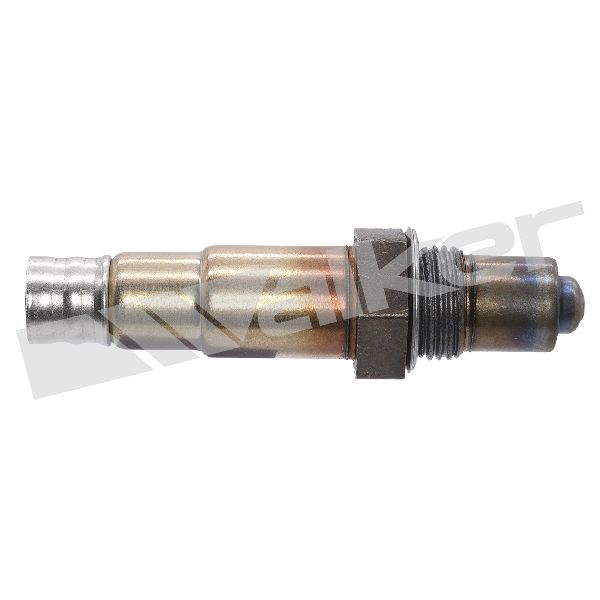
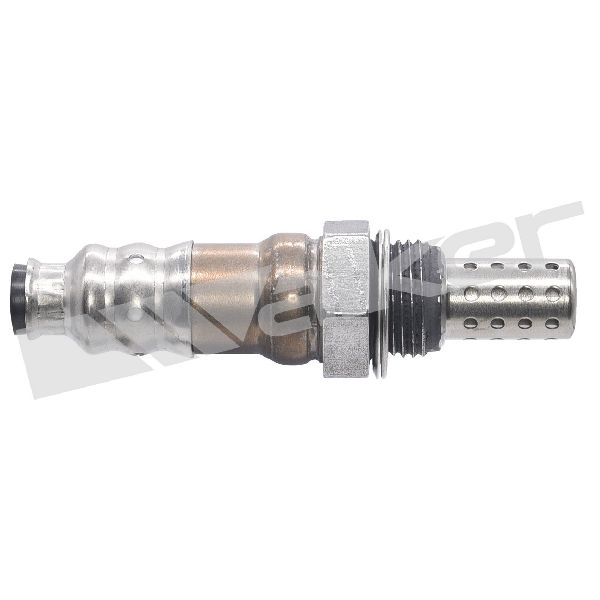
- Downstream Oxygen Sensor (Bank 1, Sensor 2)
(OEM #39210-2B250)— The internal heater element is the most common failure point for code P0036. This part number is consistently cited by Hyundai parts dealers for 2013-2015 Turbo models.
Trusted brands: Hyundai (OEM), NGK/NTK, Denso, Bosch
OEM price range: $180-$260
Aftermarket price range: $60-$120
Technical Service Bulletins (TSBs) & Recalls
- 16-FL-002: Noted a potential for the Check Engine Light to illuminate due to a faulty oxygen sensor on 2013-2015 Veloster Turbo models, requiring sensor replacement and a software update. This TSB appears to be related to a broader engine software recall campaign.
- Recall NHTSA #13V051000: Issued for 2013 Veloster Turbo models to update engine management software to prevent pre-ignition and potential engine damage.
Platform-Specific Known Issues
- A recall for 2013 Veloster Turbos (NHTSA #13V051000) addressed engine management software that could cause pre-ignition. The fix required a software update which could be related to the TSB noted in repair databases.
Mechanic-Grade Diagnostic Values
- Downstream O2 Sensor (B1S2) Heater Resistance — expected: Approx. 9.0 Ω at 20°C (68°F). Some sources give a wider generic range of 1.5-2.5 Ω or up to 25 Ω, but Hyundai-specific data is more precise.. Failure: An open circuit (OL on multimeter) or a dead short (near 0 Ω) indicates a failed heater element.
- Harness-Side Heater Circuit Power (Key On, Engine Off) — expected: Approximately 12V (battery voltage) at one of the two heater circuit pins on the harness-side connector.. Failure: Voltage below 9V or no voltage indicates a problem with the power supply from the main relay or a blown fuse.
- Harness-Side Heater Circuit Control (Engine Running) — expected: A pulse-width modulated (PWM) ground signal controlled by the ECM. A voltmeter may show an average voltage (e.g., 5-7V) that changes, while a test light connected to B+ should pulse.. Failure: A constant ground or no ground signal indicates a wiring issue or a faulty ECM driver circuit.
Scan Tool Commands That Help
- Hyundai GDS (Global Diagnostic System): Actuation Test for O2 Sensor Heater — While not explicitly found for this specific code, advanced scan tools like GDS typically have an actuation test. This would allow a technician to command the heater circuit on/off to verify the functionality of the ECM driver and wiring without the engine running, confirming if the control side of the circuit is working.
Wiring & Ground Locations
- Engine Ground Strap — A braided, exposed ground wire runs from the aluminum inlet tube on the back of the G4FJ engine over to a bolt on the passenger side strut tower brace.. This factory ground is known to be cheap, gets corroded easily, and can cause various electrical and sensor-related issues. While not a direct cause of P0036, a poor ground can create unstable sensor readings and electrical noise. Upgrading this ground to a 4 or 8-gauge wire is a common preventative measure recommended by platform enthusiasts.
- O2 Sensor Heater Circuit Pins — On a typical 4-wire sensor, the two wires of the same color (e.g., two black or two white wires) are for the heater element.. When testing resistance on the sensor itself, you must probe the two correct pins corresponding to the heater. Probing the signal or sensor ground wires will give an incorrect reading.
Real Owner Repair Stories
- North American Motoring forum user (MINI Cooper (different vehicle, but identical code behavior and fix)) — Check Engine Light with P0036.
❌ Tried (didn't work) Replaced the downstream O2 sensor with an inexpensive aftermarket part., Cleared the code, but it returned immediately upon the next engine start.
✅ What actually fixed it The user suspected the cheap sensor was the issue and ordered a quality OEM-equivalent (NTK) sensor. The implication is that using a low-quality sensor can cause the code to persist, even if the sensor is new. - Reddit r/MechanicAdvice user (Ford Focus 1.0 EcoBoost) — P0036 code that would return after 2-3 cold starts.
❌ Tried (didn't work) Replacing both O2 sensors.
✅ What actually fixed it The user's code returned after two weeks, this time accompanied by a pending P0420 (Catalyst System Efficiency Below Threshold). This story illustrates that while P0036 is a circuit code, it can sometimes be an early indicator of a developing catalytic converter issue, or that the new sensor is correctly identifying a separate problem. The final fix was not posted, but highlights the diagnostic path.
OEM Part Supersession History
39210-2B250→39210-2B250 (current)— No supersession found. This part number appears to be stable for the specified model years.
Heads up: Part number 39210-2B250 is specified for the Turbo models. The naturally aspirated Veloster uses a different part. Ensure the part is for the 'With Turbo' application.
Diagnostic Flowchart
Other Known Issues on This Vehicle
Issues unrelated to this code that are worth knowing about as an owner of this generation:
- Premature Connecting Rod Bearing Wear 🔴 High — Common enough to trigger a safety recall (NHTSA Campaign 18V934000) for 2015-2016 models. Can lead to engine knocking, seizure, and potential fire. (Ref: Recall 18V934000. The fix involves an engine inspection, replacement if necessary, and a software update to install a Knock Sensor Detection System (KSDS).)
- Engine Pre-Ignition due to Software 🔴 High — Affects 2013 Veloster Turbo models, leading to a recall (NHTSA Campaign 13V051000). Can cause excessive cylinder pressure and engine damage. (Ref: Recall 13V051000. The fix is a reprogramming of the engine management software.)
- Intake Valve Carbon Buildup 🟠 Medium — A common issue for all GDI (Gasoline Direct Injection) engines, including the G4FJ. Typically becomes noticeable after 50,000-80,000 miles, causing reduced performance and hesitation.
- High Oil Consumption 🟠 Medium — Some owners report abnormally high oil consumption, which can be a symptom of failing piston rings or other internal engine wear.
- ABS Module Electrical Short 🔴 High — A recall was issued for 2012-2014 models where the ABS module could short circuit, increasing the risk of an engine compartment fire, even when the car is off. (Ref: Recall 23V132000)
Used vs. New Parts: Buying Guide for This Vehicle
When a used part is the smart pick: A used OEM oxygen sensor can be a viable option if it comes from a low-mileage donor vehicle and is significantly cheaper than a new OEM part. However, given the relatively low cost of new aftermarket sensors and the critical function of the part, buying new is generally recommended.
Donor-vehicle mileage cap: roughly under 50000 miles for the part to have meaningful remaining life.
What to inspect on the donor part:
- Check for physical damage to the sensor tip and body.
- Ensure the wiring and connector are intact with no cuts, melting, or corrosion on the pins.
- Ask for the VIN of the donor car to verify it was a 2012-2017 Veloster Turbo.
- If possible, test the resistance of the heater circuit before purchase; it should be around 9.0 Ω.
OEM-only on this vehicle (don't cheap out):
- While not strictly OEM-only, many forum users and technicians report higher success rates and fewer compatibility issues when using OEM Hyundai or reputable Tier 1 supplier brands for oxygen sensors.
Aftermarket brands forum-validated for this vehicle:
- NGK/NTK
- Denso
- Bosch
Brands owners have reported issues with on this vehicle:
- Unbranded, no-name sensors from online marketplaces are frequently reported as being defective out of the box or failing prematurely.
Real Owner Stories
Aggregated from forums and TSBs cited above. Mileages and costs reflect what owners reported in those sources.
2013 Hyundai Veloster Turbo 1.6L
Symptoms: Check Engine Light illuminated; early year models known for engine issues due to bad ECU tuning.
What fixed it: Reprogramming of the engine management software per recall NHTSA #13V051000 and TSB 16-FL-002.
Source hint: Reddit r/veloster thread titled 'Are Veloster Turbo\'s Reliable?' and TSB 16-FL-002
2013-2017 Hyundai Veloster Turbo 1.6L
Symptoms: P0036 code appeared out of nowhere; solid Check Engine Light; no immediate driveability concerns.
What fixed it: The consensus for this specific code is to replace the downstream (post-catalytic converter) oxygen sensor after verifying the heater circuit resistance.
Source hint: Reddit r/MechanicAdvice thread titled '"P0036" out of nowhere? Is this anything to be concerned about?? Help!'
Related OBD-II Codes
Frequently Asked Questions
Is there a recall for my 2013 Hyundai Veloster Turbo that might be related to the P0036 code?
Can I continue to drive my Veloster with a solid Check Engine Light for P0036?
How can I tell if the P0036 code on my G4FJ engine is a bad sensor or just a blown fuse?
Why does the O2 sensor wiring fail so often on the Veloster Turbo?
Does the 1.6L Turbo-GDI engine have other common issues I should look out for while fixing this code?
Helpful Videos
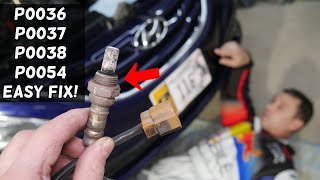

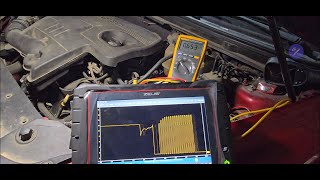
We Have This Part in Stock

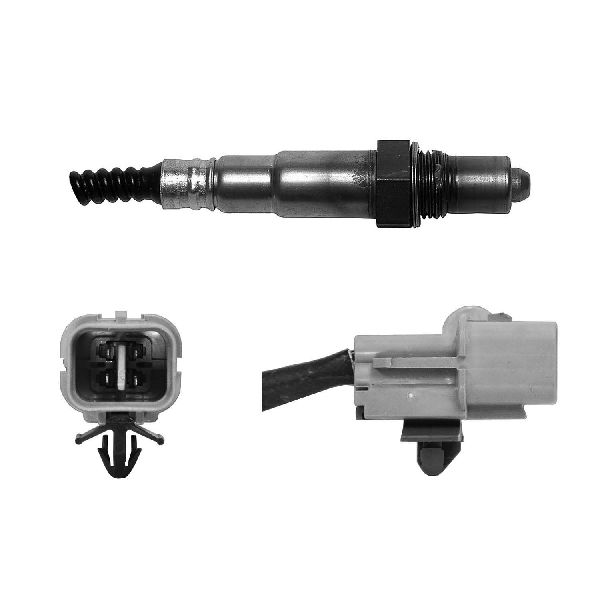


The information in this article is provided for general reference and educational purposes only. Vehicle specifications, procedures, and part compatibility can vary by production date, trim level, and region. Always consult your vehicle's factory service manual and verify part numbers before purchasing or performing repairs. Safety-critical components such as airbags, seat belts, and braking systems should be installed by a qualified professional.
- Hyundai Veloster:
- 🧭 Diagnostic Flowchart
- 🎬 Helpful Videos
- 🛍️ Shop This Part
- What's Unique About the 2012-2017 Hyundai Veloster
- Symptoms You May Notice
- Most Likely Causes
- Rare But Worth Checking
- Diagnosis Steps
- Parts You'll Likely Need
- Technical Service Bulletins (TSBs) & Recalls
- Platform-Specific Known Issues
- Mechanic-Grade Diagnostic Values
- Scan Tool Commands That Help
- Wiring & Ground Locations
- Real Owner Repair Stories
- OEM Part Supersession History
- Other Known Issues on This Vehicle
- Used vs. New Parts: Buying Guide for This Vehicle
- Real Owner Stories
- 2013 Hyundai Veloster Turbo 1.6L
- 2013-2017 Hyundai Veloster Turbo 1.6L
- Related OBD-II Codes
- Frequently Asked Questions
- 🎟️ Get 5% Off