

P0036 on 2010-2013 Kia Forte: O2 Sensor Heater Circuit Causes and Fixes
On a 2010-2013 Kia Forte, code P0036 almost always means the internal heater in the downstream oxygen sensor (Bank 1, Sensor 2) has failed. This is a very common issue across the Hyundai/Kia family. Replacing the sensor is the most common fix. Expect to pay around $30-$90 for an aftermarket sensor and $150+ for an OEM part.
- P0036 on a 2010-2013 Forte almost always points to a failed downstream (post-catalytic converter) oxygen sensor.
- The primary symptom will be an illuminated Check Engine Light; driving performance is not affected.
- Before replacing the sensor, perform a quick check of the fuse box for a blown 'SENSOR' or 'EXHAUST' fuse, typically 10A or 15A.
- This is a DIY-friendly repair for those with basic tools, but a special 22mm (7/8") O2 sensor socket is highly recommended.
- You can continue to drive the vehicle, but you will not pass an emissions test until the code is resolved.
What's Unique About the 2010-2013 Kia Forte
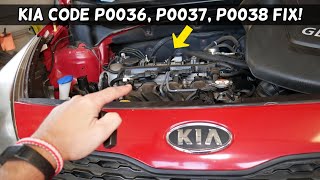
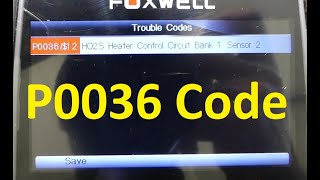
The P0036 code is a very common fault across the Hyundai and Kia family of vehicles from this era, including the Forte, Elantra, Soul, and Optima that share similar 4-cylinder Theta II engines. The cause and fix are consistently the same: 🎬 Watch: Diagnosing P0036, P0037, and P0038 on Kia models the internal heater element of the downstream O2 sensor fails due to age and heat cycles. There are no major design flaws or unique issues specific to the Forte; it's simply a common failure point for the original equipment sensor over time and mileage.
Symptoms You May Notice
- Check Engine Light is on.
- Inability to pass a vehicle emissions test.
- Slightly reduced fuel economy in some cases, though often not noticeable.
- Replacing the upstream (Bank 1, Sensor 1) oxygen sensor instead of the downstream (Bank 1, Sensor 2) sensor. The code P0036 specifically refers to Sensor 2, which is located after the catalytic converter.
Most Likely Causes
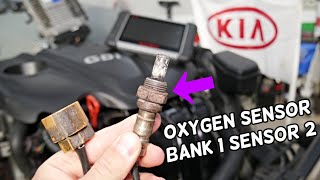
- Failed Downstream O2 Sensor (Bank 1, Sensor 2) 🔴 High Probability → Shop Oxygen Sensor The internal heater element is a common failure point on the original sensors used across many Kia and Hyundai models of this period due to repeated heat cycles.
How to confirm: Disconnect the sensor and measure the resistance across the two heater circuit pins (usually the two wires of the same color). An open circuit (infinite resistance or 'OL' on a multimeter) confirms the heater has failed. The specified resistance is typically between 3.3 - 4.1 ohms when cold. A reading outside this range also indicates a faulty sensor.
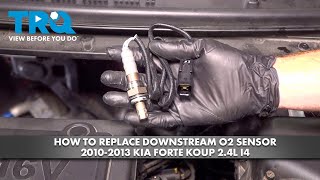
Typical fix: Replace the downstream oxygen sensor. This sensor is located on the exhaust pipe after the catalytic converter. 🎬 See this downstream O2 sensor location and replacement guide Applying anti-seize to the new sensor's threads is recommended.
Est. part cost: $30 - $140 - Damaged Wiring or Connector 🟡 Medium Probability The wiring is routed under the vehicle and near the hot exhaust, making it susceptible to heat damage, corrosion, or physical damage from road debris. Wires can melt, become brittle, or connectors can get filled with dirt and moisture.
How to confirm: Visually inspect the wiring harness and connector leading to the downstream O2 sensor for any signs of melting, fraying, corrosion, or loose pins. Check for 12V power at the harness connector with the key on, engine off. A lack of voltage points to a wiring or fuse issue upstream.
Typical fix: Repair the damaged section of wiring or clean/replace the connector. Ensure the repaired wiring is properly secured away from the exhaust pipe.
Est. part cost: $5 - $25 - Blown Fuse ⚪ Low Probability A short circuit in the sensor's heater element or its wiring can cause the associated fuse to blow as a protective measure.
How to confirm: Check the fuse boxes in the engine bay and the driver-side interior panel. While the specific fuse can vary, look for one labeled 'SNSR', 'O2 HTR', or 'EXHAUST', typically 10A or 15A. A user on an AliExpress forum mentioned fuse F17 in the driver-side kick panel for a similar Kia.
Typical fix: Replace the blown fuse. If it blows again, a short circuit exists in the wiring or the sensor itself that must be found and fixed.
Est. part cost: $1 - $5
Rare But Worth Checking
- Faulty Engine Control Module (ECM): → Shop Engine Control Module (ECM) This is extremely rare. The ECM should only be considered as a cause after all other possibilities (sensor, wiring, fuses) have been thoroughly tested and ruled out. An ECM failure would likely present other codes and symptoms as well.
Diagnosis Steps
- Verify the code with an OBD-II scanner.
- Check the fuse for the oxygen sensor heater circuit. Look for a 10A or 15A fuse labeled 'SNSR' or similar in the engine bay and interior fuse panels.
- Raise the vehicle safely using a jack and jack stands.
- Locate the downstream oxygen sensor (Bank 1, Sensor 2) on the exhaust pipe, after the catalytic converter.
- Inspect the sensor's wiring and connector for any visible damage, melting, or corrosion.
- Disconnect the sensor. Test for 12-volt power at the harness-side connector with the ignition on (engine off). No voltage indicates a wiring or fuse issue.
- Using a multimeter set to Ohms, test the resistance of the heater circuit on the sensor itself (between the two same-colored wires). A reading of 'OL' or infinite resistance means the internal heater is broken. A good sensor should read between 3.3 and 4.1 ohms.
- If the sensor's resistance is within spec and the wiring has power, check the ground wire on the harness for continuity to the chassis ground. A bad ground can also cause this code.
- If all tests pass, the fault is intermittent or, in very rare cases, could be the ECM. Clear the code, drive the vehicle, and see if it returns.
Parts You'll Likely Need
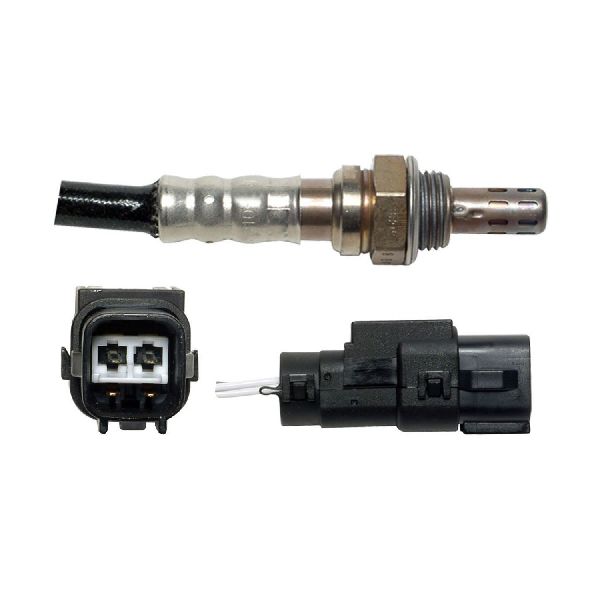
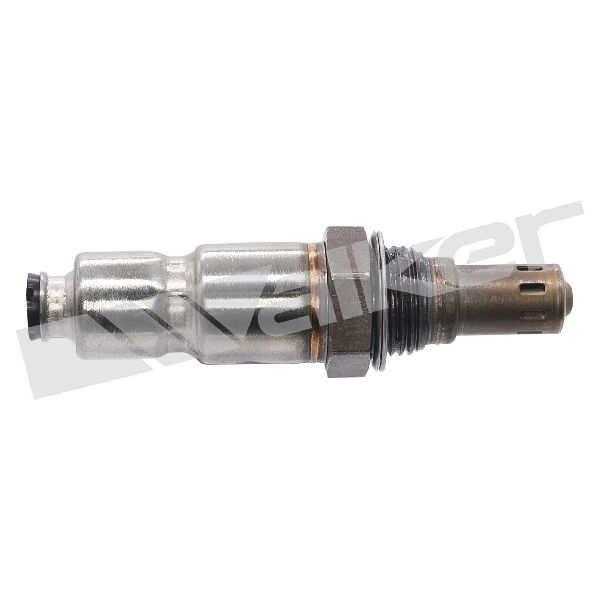
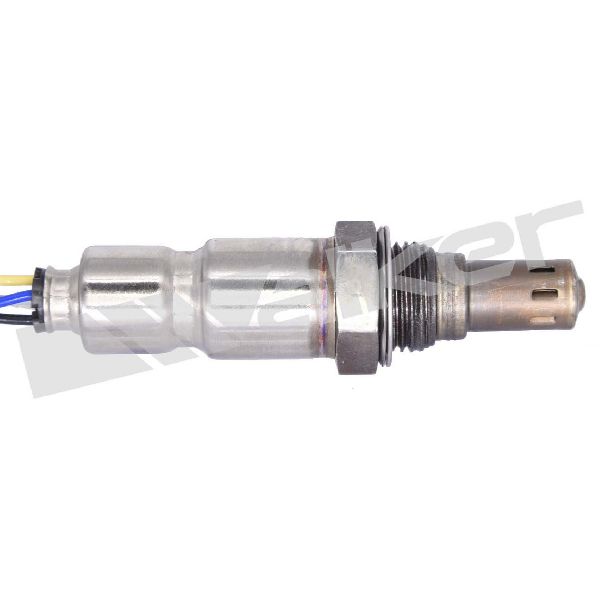
- Downstream Oxygen Sensor (Bank 1, Sensor 2)
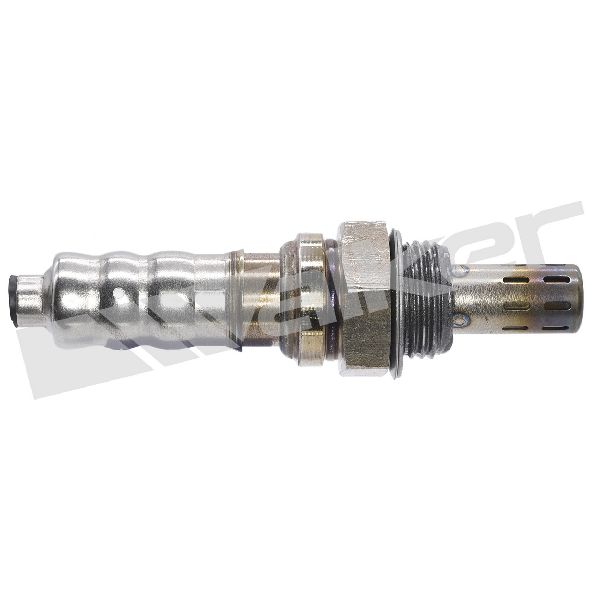
(OEM #39210-2G370)— This is the most common failure for code P0036. The internal heater element burns out, requiring replacement of the entire sensor unit. The OEM part number 39210-2G370 is listed for the 2010-2013 Forte 🎬 Watch: How to replace the downstream O2 sensor on a Forte with 2.0L and 2.4L engines, but it's crucial to verify by VIN as it can be used for both front and rear positions on different models.
Trusted brands: Denso, NGK/NTK, Bosch, Delphi, Walker Products
OEM price range: $150-$280
Aftermarket price range: $30-$90 - Oxygen Sensor Socket — A special 22mm (or 7/8") socket with a cutout for the wire is required to remove and install the oxygen sensor without damaging the wiring.
Trusted brands: Lisle, OEMTools, GearWrench
Aftermarket price range: $10-$20
Related Codes That Often Appear With This One
- P0037 — P0037 indicates 'HO2S Heater Control Circuit Low', which is a more specific fault within the same circuit. Both codes point to a problem with the downstream O2 sensor heater and are often caused by the same failed sensor.
- P0038 — P0038 indicates 'HO2S Heater Control Circuit High', also pointing to a fault in the same downstream O2 sensor heater circuit. The underlying cause is almost always the same failed sensor.
Technical Service Bulletins (TSBs) & Recalls
- No Technical Service Bulletins (TSBs) directly address the P0036 code for this specific model range. However, numerous recalls exist for other issues.
Mechanic-Grade Diagnostic Values
- Downstream O2 Sensor Heater Element Resistance — expected: 3.3 - 4.1 ohms (cold) based on general Kia specs. Some sources cite a wider range of 3-15 ohms for similar sensors.. Failure: An open circuit ('OL' or infinite resistance) or a reading significantly outside the expected range.
- Heater Circuit Power Supply (at harness connector) — expected: 12V (battery voltage) with Key On, Engine Off (KOEO).. Failure: 0V or significantly low voltage, indicating a blown fuse or wiring issue upstream.
- Heater Circuit Ground Path Integrity — expected: Less than 0.1 Ω resistance between the ground pin on the harness and a clean chassis ground.. Failure: Resistance above 0.1 Ω, indicating a corroded or loose ground connection.
Hidden / Shadow Codes Worth Checking
- Mode $06, Test ID $81: This is not a shadow code, but rather a specific test within Mode $06 that monitors the Bank 1, Sensor 2 heater circuit performance. Advanced scan tools can access this data. (see via Use an advanced OBD-II scan tool with Mode $06 functionality. A failure of this test monitor can precede the P0036 code or help confirm a borderline component.)
Scan Tool Commands That Help
- Kia GDS (Global Diagnostic System): DTC Analysis & Live Data (Sensors) — To view live data for the heater circuit duty cycle (if available), follow guided diagnostic procedures for P0036, and confirm voltage signals as seen by the ECM. This is most useful when basic multimeter tests are inconclusive.
Wiring & Ground Locations
- Downstream O2 Sensor Connector — On the 2010-2013 Forte, the connector is located on the back of the engine block, accessible from the top of the engine bay. You can find it by following the wire up from the sensor itself.. This is the primary access point for testing voltage, ground, and resistance without having to lift the vehicle after the initial sensor disconnection.
- Heater Circuit Ground — One user story for a similar Kia model noted the ground path for the circuit terminated at a main frame bolt beside the fuel tank mount. While not specific to the Forte, it highlights that the ground may not be local to the sensor.. A corroded or loose ground connection at this point can cause high resistance and trigger a P0036 code even if the sensor and power supply are good.
- Fuse 'SNSR' or 'EXHAUST' — Located in either the engine bay fuse box or the interior driver-side kick panel fuse box.. This fuse provides power to the heater circuit. A blown fuse is a possible, though less common, cause for the code.
Real Owner Repair Stories
- AliExpress User Review / Guide (2013 Kia Sportage (similar platform/powertrain)) — Persistent P0036 code, even after clearing.
❌ Tried (didn't work) Clearing the code with a scanner.
✅ What actually fixed it The user performed a full diagnostic procedure. They checked fuse F17, verified 12V at the connector, and inspected the ground path by tracing the wire to a frame bolt, cleaning the connection point. After confirming the wiring was good, they replaced the downstream O2 sensor, which resolved the code.
OEM Part Supersession History
39210-2G370→39210-2G370 (current)— No major supersession found, the part number appears stable for this application.
Heads up: This part number (39210-2G370) is used for both front and rear O2 sensors on different Kia/Hyundai models and engine configurations. It is critical to verify fitment by VIN. Ordering based only on the part number without checking the specific application (e.g., Forte 2.0L vs Optima 2.4L) can lead to receiving the wrong sensor.
Diagnostic Flowchart
Other Known Issues on This Vehicle
Issues unrelated to this code that are worth knowing about as an owner of this generation:
- Theta II Engine Failure and Fire Risk 🔴 High — Widespread enough to trigger multiple class-action lawsuits and recalls. Affects 2.4L MPI engines in this generation. Symptoms include engine knocking, oil consumption, and potential catastrophic failure. (Ref: Multiple recalls and settlement campaigns, including NHTSA campaign 20V750000 and others related to installing Knock Sensor Detection System (KSDS) software and engine replacement if necessary.)
- Faulty Brake Light Switch 🟠 Medium — Very common. A widespread recall was issued for this problem. (Ref: Kia recall SC098 (NHTSA 13V114000). The switch can fail, causing brake lights to not illuminate, cruise control to not disengage, and the shifter to be movable without pressing the brake.)
- Deteriorating Brake Pedal Stopper Pad 🟡 Low — Common on 2012-2014 models. The small plastic pad disintegrates, causing the brake light switch to remain engaged, keeping brake lights on and draining the battery. (Ref: Kia recall SC158. Dealers replace the stopper pad free of charge.)
- Failing Clock Spring 🟠 Medium — A common failure point as the vehicle ages. Symptoms include the airbag warning light illuminating and loss of steering wheel controls (horn, cruise control, radio buttons). (Ref: No specific recall, but a well-documented failure part. Replacement is necessary to restore airbag function and steering wheel controls.)
- HECU Fire Risk (ABS Module) 🔴 High — Affects 2010-2013 models. An electrical short can develop in the Hydraulic Electronic Control Unit (HECU), potentially causing an engine compartment fire, even when the vehicle is parked and off. (Ref: Kia recall SC284 (NHTSA 23V652000). The fix involves replacing fuses in the power distribution box. Owners were advised to park outside and away from structures until the repair was completed.)
Used vs. New Parts: Buying Guide for This Vehicle
When a used part is the smart pick: Never. Oxygen sensors are wear items with a finite lifespan, typically 70,000-100,000 miles. They are sensitive electronic components exposed to extreme heat and contaminants. Installing a used sensor is highly likely to mean you are installing a part that is already near the end of its life, and you risk having to do the job again soon.
What to inspect on the donor part:
- Not applicable. The internal heater element's remaining life cannot be visually inspected.
Aftermarket brands forum-validated for this vehicle:
- NTK/NGK (often the original OEM supplier)
- Denso (a primary OEM supplier with a strong reputation for quality)
- Bosch (inventor of the O2 sensor, generally high quality)
Brands owners have reported issues with on this vehicle:
- Unnamed, ultra-cheap 'no-brand' sensors from online marketplaces. While they may work initially, their longevity and accuracy are highly questionable and a common source of frustration in forums.
Real Owner Stories
Aggregated from forums and TSBs cited above. Mileages and costs reflect what owners reported in those sources.
2010-2013 Kia Forte
Symptoms: Check Engine Light on with code P0036.
What fixed it: The owner followed a diagnostic path checking the F17 fuse in the kick panel and the ground path before replacing the downstream oxygen sensor, which resolved the error.
Source hint: AliExpress product page titled 'KIA P0036 Error Code? Here's Exactly How This Oxygen Sensor Fixed My Car'
2010-2013 Kia Forte
Symptoms: Check Engine Light with codes P0036, P0037, or P0038.
What fixed it: Replacement of the downstream oxygen sensor, or repairing melted wires and bad connectors near the exhaust.
Source hint: YouTube video by 'World Mechanics' titled 'KIA CODE P0036, P0037, P0038 OXYGEN SENSOR KIA FORTE RIO, OPTIMA...'
Manufacturer Platform Reference
Symptoms: Multiple fault codes including P0171 (System too lean), P0138 (O2 sensor circuit high), and P0036 (B1S2).
What fixed it: While P0036 was present, NHTSA ODI #11581569 notes that some vehicles on this platform experienced frequent fuel pump and fuel injector services due to system defects that could cause major damage.
Source hint: NHTSA ODI #11581569
Related OBD-II Codes
Frequently Asked Questions
Is there a TSB for the P0036 code on my 2010-2013 Kia Forte?
Which fuse should I check for the O2 sensor heater circuit on my Kia?
Where is the Bank 1, Sensor 2 oxygen sensor located on the Forte?
What resistance reading should I see when testing the heater element on a new Kia sensor?
Could my P0036 code be related to the major Kia engine recalls?
My brake lights are staying on; is this related to the O2 sensor code?
OEM Part Supersession History
39210-2G370→39210-2G370 (current)— No major supersession found, the part number appears stable for this application.
Heads up: This part number (39210-2G370) is used for both front and rear O2 sensors on different Kia/Hyundai models and engine configurations. It is critical to verify fitment by VIN. Ordering based only on the part number without checking the specific application (e.g., Forte 2.0L vs Optima 2.4L) can lead to receiving the wrong sensor.
Helpful Videos
We Have This Part in Stock


The information in this article is provided for general reference and educational purposes only. Vehicle specifications, procedures, and part compatibility can vary by production date, trim level, and region. Always consult your vehicle's factory service manual and verify part numbers before purchasing or performing repairs. Safety-critical components such as airbags, seat belts, and braking systems should be installed by a qualified professional.
- Kia Forte:
- 🧭 Diagnostic Flowchart
- 🎬 Helpful Videos
- 🛍️ Shop This Part
- What's Unique About the 2010-2013 Kia Forte
- Symptoms You May Notice
- Most Likely Causes
- Rare But Worth Checking
- Diagnosis Steps
- Parts You'll Likely Need
- Related Codes That Often Appear With This One
- Technical Service Bulletins (TSBs) & Recalls
- Mechanic-Grade Diagnostic Values
- Hidden / Shadow Codes Worth Checking
- Scan Tool Commands That Help
- Wiring & Ground Locations
- Real Owner Repair Stories
- OEM Part Supersession History
- Other Known Issues on This Vehicle
- Used vs. New Parts: Buying Guide for This Vehicle
- Real Owner Stories
- 2010-2013 Kia Forte
- 2010-2013 Kia Forte
- Manufacturer Platform Reference
- Related OBD-II Codes
- Frequently Asked Questions
- OEM Part Supersession History
- 🎟️ Get 5% Off