

P0036 on 2011-2016 Kia Sportage: Heater Circuit Causes and Fixes for Bank 1 Sensor 2
This code indicates a failure in the heater circuit of the downstream oxygen sensor (Bank 1, Sensor 2). The most common fix is to replace the sensor itself, which is a DIY-friendly job. Before replacement, check the relevant fuse and wiring for damage. Expect to pay $30-$90 for an aftermarket sensor or $150-$280 for an OEM part.
- P0036 means the heater in your downstream (post-catalytic converter) O2 sensor has failed.
- The most likely fix is replacing the sensor itself, a task manageable for a DIYer with a 22mm (7/8") O2 sensor socket.
- Your car is safe to drive, but you should fix it before your next emissions test to avoid failure.
- Before buying a new sensor, always perform a quick visual check of the wiring for obvious damage and check the related fuse.
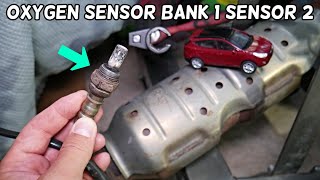
- Ensure you are replacing Sensor 2 (downstream), not Sensor 1 (upstream). The correct sensor is located after the catalytic converter.
What's Unique About the 2011-2016 Kia Sportage
The 2011-2016 Kia Sportage (SL generation) uses reliable, conventional heated oxygen sensors. There are no widespread, unique platform flaws that cause this specific code. The issue is almost always a standard wear-and-tear failure of the sensor's heater element or its wiring, which is common across many vehicles, not just this Sportage. The location of the sensor, under the vehicle and after the catalytic converter, makes its wiring susceptible to road debris and corrosion from road salt, a common point of failure noted by owners.
Symptoms You May Notice
- Check Engine Light is on
- Failure to pass an emissions inspection test
- Replacing the upstream (Sensor 1) oxygen sensor instead of the downstream (Sensor 2) sensor.
- Replacing the catalytic converter when there are no other codes (like P0420) present.
- Assuming the new sensor is faulty when the true problem is a corroded connector or broken wire.
Most Likely Causes
- Failed Downstream Oxygen Sensor 🔴 High Probability → Shop Oxygen Sensor The internal heating element of the O2 sensor is a common failure point due to constant, rapid heat cycles and exposure to exhaust gases over many miles. Corrosion from road salt is also a major contributor to failure.
How to confirm: After checking fuses and wiring, test the resistance of the heater circuit within the sensor using a multimeter. Disconnect the sensor and measure across the two heater pins (often the two same-colored wires). A healthy sensor will have a low resistance, typically between 3 and 15 ohms when cold. An open circuit (infinite resistance) or a reading far outside this range confirms a failed heater element.
Typical fix: Replace the Bank 1, Sensor 2 oxygen sensor. This requires a 22mm (7/8") oxygen sensor socket and is typically accessible from under the vehicle, after the catalytic converter. Penetrating oil is highly recommended as the sensor is often seized in the exhaust pipe.
Est. part cost: $30-$90 - Damaged Wiring or Connector 🟡 Medium Probability The sensor wiring is routed under the vehicle and can be damaged by road debris, speed bumps, or improper jacking. It can also melt if it comes into contact with the hot exhaust pipe. The connector pins can become corroded from moisture and road salt, leading to a poor connection.
How to confirm: Visually inspect the entire length of the wiring harness from the sensor to the main connector. Check for melted sections, chafing, or breaks. Unplug the connector and check for green or white crusty deposits (corrosion) or bent/broken pins. With the key on (engine off), check for 12V power at the connector's heater power wire.
Typical fix: Repair the damaged section of wire or clean the connector terminals with electrical contact cleaner. If corrosion is severe, the connector pigtail may need to be replaced.
Est. part cost: $5-$50 - Blown Fuse ⚪ Low Probability
How to confirm: Locate and inspect the fuse that supplies power to the oxygen sensor heater circuits. On many Kia models, this may be labeled 'EXHAUST' or 'SENSOR 1' and is often a 15A fuse in the driver-side or engine bay fuse box. A visual inspection or a continuity test with a multimeter will confirm if the fuse is blown.
Typical fix: Replace the blown fuse. If the new fuse blows immediately, it indicates a short circuit in the wiring to the sensor that must be diagnosed and repaired.
Est. part cost: $1-$5
Rare But Worth Checking
- Faulty Powertrain Control Module (PCM): → Shop Engine Control Module (ECM) This is extremely rare. The PCM should only be considered a potential cause after all other possibilities, including the sensor, wiring, and fuses, have been thoroughly tested and ruled out.
Diagnosis Steps
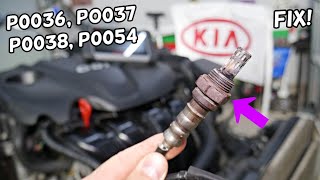
- Read the code with an OBD-II scanner 🎬 Watch: Diagnosing P0036, P0037, and P0038 codes on a Kia. to confirm P0036 is present.
- Visually inspect the downstream O2 sensor's wiring harness and connector. The sensor is located on the exhaust pipe after the catalytic converter. Look for any signs of melting, chafing, corrosion, or loose connections.
- Check the fuse for the O2 sensor heater circuit. This is often a 10A or 15A fuse in one of the vehicle's fuse boxes (check owner's manual for location).
- If the fuse and wiring appear intact, disconnect the sensor connector.
- With the ignition on (engine off), use a multimeter to check for 12-volt power and a good ground at the vehicle-side of the connector. Lack of power points to a wiring or fuse issue upstream.
- If power and ground are present, measure the resistance across the two heater circuit pins on the sensor itself (these are often the two wires of the same color). A good sensor should read between 3-15 Ohms. A reading of infinite resistance (OL) 🎬 See this troubleshooting guide for testing the heater control circuit. indicates a broken heater element, and the sensor must be replaced.
- If resistance is within spec, but power/ground was missing in the previous step, the wiring issue is further up the harness or originates from the PCM.
- If all tests pass but the code persists, the issue may be an intermittent wiring fault or, in very rare cases, a faulty PCM driver circuit.
Parts You'll Likely Need
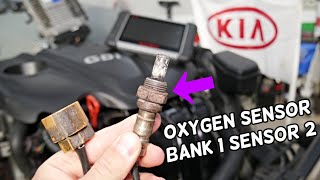
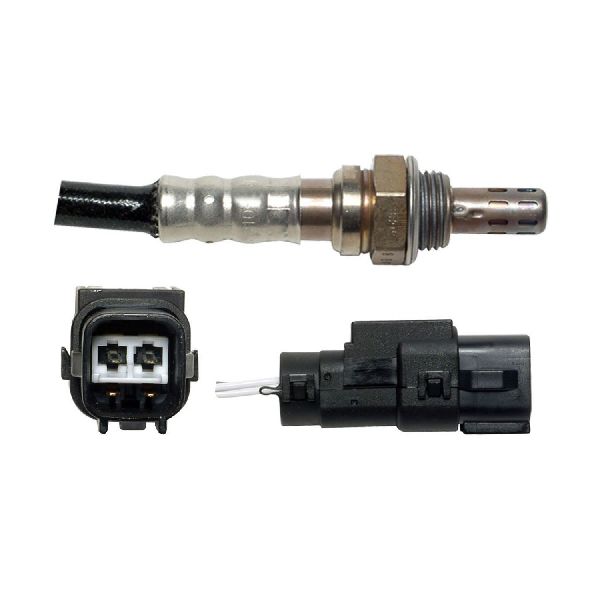
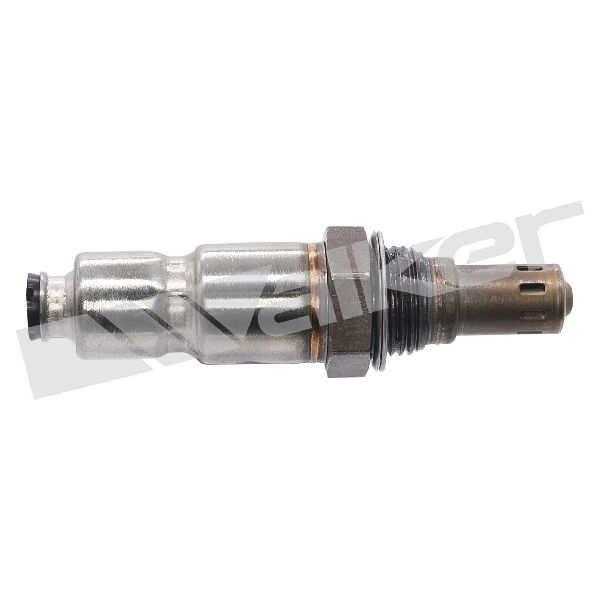
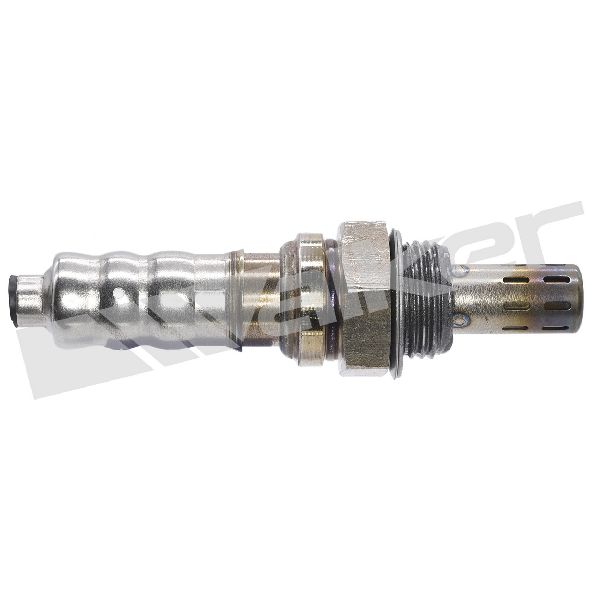
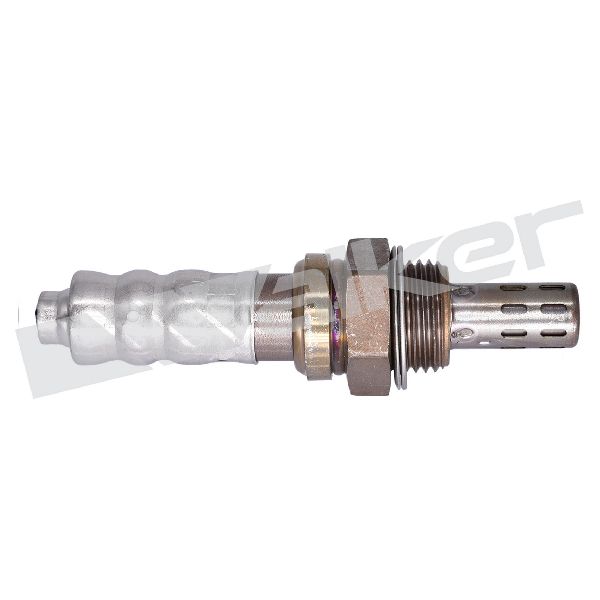
- Downstream Oxygen Sensor (Bank 1, Sensor 2)
(OEM #39210-2G650)— The internal heater element fails from age and heat cycles, which is the most common cause of code P0036.
Trusted brands: Denso, NGK/NTK, Bosch, Mando, Delphi
OEM price range: $150-$280
Aftermarket price range: $30-$90
Related Codes That Often Appear With This One
- P0037 — This code indicates the heater circuit voltage is low, which can be caused by the same root problems as P0036, such as a failed sensor heater, a short to ground, or a wiring issue.
- P0038 — This code indicates the heater circuit voltage is high, pointing to a short to power in the circuit, which is another possible failure mode of the same components that cause P0036.
Technical Service Bulletins (TSBs) & Recalls
- No Technical Service Bulletins (TSBs) directly related to code P0036 were found. A major safety recall (SC147) exists for potential engine bearing failure on 2011-2013 2.0L Turbo and some 2.4L GDI models, but this is unrelated to the P0036 emissions code.
Platform-Specific Known Issues
- Owner Experience: Simple Sensor Swap: An owner of a 2013 Kia Sportage reported consistently getting code P0036. After clearing the code and having it return, they replaced the downstream oxygen sensor (Bank 1, Sensor 2). This permanently resolved the issue, confirming the sensor's internal heater was the point of failure.
- DIY Tip: Location and Tools: Multiple DIY videos for the Kia Sportage and its platform-mate Hyundai Tucson show the Bank 1 Sensor 2 is located after the primary catalytic converter, accessible from underneath the vehicle. 🎬 Watch: How to locate and replace the downstream oxygen sensor. A special slotted 22mm (7/8") oxygen sensor socket is highly recommended for removal, as a standard wrench may not fit and can round off the sensor.
Mechanic-Grade Diagnostic Values
- O2 Sensor Heater Element Resistance — expected: 3 Ω to 15 Ω when cold. Failure: A reading of infinity (Open Loop) or significantly above 20 Ω indicates a broken internal heater element.
- Heater Circuit Power Supply Voltage — expected: 12V ± 0.5V. Failure: No voltage or fluctuating voltage points to a problem with the fuse, relay, or wiring harness upstream of the sensor.
- Heater Circuit Ground Path Integrity — expected: Less than 0.1 Ω resistance to chassis ground.. Failure: Resistance above 0.1 Ω indicates a corroded or poor ground connection, which can cause intermittent heater circuit faults.
Wiring & Ground Locations
- Heater Circuit Ground Path — A main frame bolt located beside the fuel tank mount.. This is a potential ground point for the O2 sensor circuit. Corrosion or looseness at this bolt can cause high resistance, leading to intermittent or persistent P0036 codes even with a good sensor.
- B1S2 Connector - Heater Power — On the 4-pin connector for the downstream O2 sensor, this is typically the red/black wire on the vehicle harness side.. This pin must show a steady 12V with the key on, engine off. A failure to see 12V here confirms the problem is upstream (fuse, relay, or wiring) and not the sensor itself.
- Fuse 'SENSOR 1' or 'EXHAUST' — Located in either the engine compartment or driver-side interior fuse box. Often a 15A fuse.. This fuse commonly provides power for the O2 sensor heater circuits. If it's blown, the heater will not function and will set code P0036. If it blows repeatedly, it indicates a short circuit.
Real Owner Repair Stories
- AliExpress User Review (2013 Kia Sportage) — Persistent P0036 check engine light, even after clearing codes.
❌ Tried (didn't work) Clearing the code with a scanner.
✅ What actually fixed it Replacing the downstream oxygen sensor (Bank 1, Sensor 2) with a new aftermarket unit (Delphi RE94). The owner noted the fix was permanent over six months of driving in harsh winter conditions. - NHTSA ODI #11581569 — While reported on a related Kia model, an owner noted P0036 (B1S2) appearing alongside other codes like P0171 and P0138, suggesting that faults in the oxygen sensor circuit can sometimes be part of broader fuel system or sensor issues.
OEM Part Supersession History
39210-2G650→N/A— This appears to be the stable part number for the model range.
Heads up: Some parts listings show this part number fitting both front and rear, which can be confusing. For P0036, this part is used in the 'Rear' (downstream) position for the 2.0L and 2.4L engines in this generation.
Diagnostic Flowchart
Other Known Issues on This Vehicle
Issues unrelated to this code that are worth knowing about as an owner of this generation:
- Theta II Engine Failure (Rod Bearing Wear) 🔴 High — Widespread across 2.0L Turbo and 2.4L GDI engines, particularly in 2011-2014 models. Can occur at various mileages, often without warning. (Ref: Recall SC147; Class-Action Lawsuit Settlement extending warranty to lifetime for original and subsequent owners for this specific failure.)
- Excessive Oil Consumption 🟠 Medium — Common on 2.4L GDI engines. Owners report needing to add oil between changes, sometimes as much as 1 quart per 1,000 miles. Often caused by carbon buildup on piston rings. (Ref: Hyundai TSB 23-EM-007H outlines a combustion chamber cleaning procedure to address this.)
- A/C Compressor or Control Valve Failure 🟡 Low — Intermittent or complete loss of A/C performance is a noted complaint. While more prominent in the next generation (QL), the SL generation is not immune. (Ref: TSB CLI046 was issued for the 2017+ models but describes issues (faulty control valve/compressor) that owners of earlier models also report.)
- General Electrical Problems 🟡 Low — NHTSA complaints show a pattern of electrical issues, including problems with interior lights, dashboard displays, and stalling, though less frequent than engine issues.
Used vs. New Parts: Buying Guide for This Vehicle
When a used part is the smart pick: For this specific repair, a used oxygen sensor is almost never a smart choice. O2 sensors are wear-and-tear items with a finite lifespan, and their performance degrades over time. The cost savings of a used part are minimal compared to the high risk of premature failure and having to do the job again.
Donor-vehicle mileage cap: roughly under 20000 miles for the part to have meaningful remaining life.
What to inspect on the donor part:
- If sourcing a used connector pigtail, ensure the locking tab is intact and not brittle.
- Check for any signs of corrosion (green or white powder) on the connector pins.
- Inspect the wires for brittleness, cracking, or evidence of melting.
Aftermarket brands forum-validated for this vehicle:
- NTK/NGK
- Denso
- Bosch
- Delphi
Brands owners have reported issues with on this vehicle:
- No-name, unbranded sensors from online marketplaces are a significant gamble. While they may work initially, they are known for high failure rates, incorrect resistance values, and short service life, often causing the code to return within a few months.
Real Owner Stories
Aggregated from forums and TSBs cited above. Mileages and costs reflect what owners reported in those sources.
2013 Kia Sportage
Symptoms: The vehicle consistently threw code P0036 even after clearing the codes.
What fixed it: Replacement of the downstream oxygen sensor (Bank 1, Sensor 2).
Source hint: AliExpress User Review / 2013 Kia Sportage
2013 Kia Sportage
Symptoms: Check engine light on with P0036; owner noted the factory OEM part failed due to heat degradation and undercarriage corrosion from road salt.
What fixed it: Replaced the downstream oxygen sensor.
Source hint: owner_reports
Kia Owner Report
Symptoms: An owner reported multiple codes including P0171 (System too lean), P0138 (O2 sensor circuit high), and P0036 (B1S2).
What fixed it: The owner noted frequent fuel pump and fuel injector services were required due to defects in the system causing major damage.
Source hint: NHTSA ODI #11581569
Related OBD-II Codes
Frequently Asked Questions
Does the major safety recall SC147 for the 2011-2013 Kia Sportage cover the P0036 code?
Where is the Bank 1, Sensor 2 oxygen sensor located on my 2011-2016 Sportage?
What specific tools do I need to replace the O2 sensor on this vehicle?
Which fuse should I check for the O2 sensor heater circuit in a Kia Sportage?
Is the P0036 issue common on the Hyundai Tucson as well?
Can road salt in winter climates cause this code on my Sportage?
Helpful Videos
We Have This Part in Stock


The information in this article is provided for general reference and educational purposes only. Vehicle specifications, procedures, and part compatibility can vary by production date, trim level, and region. Always consult your vehicle's factory service manual and verify part numbers before purchasing or performing repairs. Safety-critical components such as airbags, seat belts, and braking systems should be installed by a qualified professional.
- Kia Sportage:
- 🧭 Diagnostic Flowchart
- 🎬 Helpful Videos
- 🛍️ Shop This Part
- What's Unique About the 2011-2016 Kia Sportage
- Symptoms You May Notice
- Most Likely Causes
- Rare But Worth Checking
- Diagnosis Steps
- Parts You'll Likely Need
- Related Codes That Often Appear With This One
- Technical Service Bulletins (TSBs) & Recalls
- Platform-Specific Known Issues
- Mechanic-Grade Diagnostic Values
- Wiring & Ground Locations
- Real Owner Repair Stories
- OEM Part Supersession History
- Other Known Issues on This Vehicle
- Used vs. New Parts: Buying Guide for This Vehicle
- Real Owner Stories
- 2013 Kia Sportage
- 2013 Kia Sportage
- Kia Owner Report
- Related OBD-II Codes
- Frequently Asked Questions
- 🎟️ Get 5% Off