

P0036 on 2004-2011 Mazda RX-8: Rear O2 Sensor Heater Circuit Fault Causes and Fixes
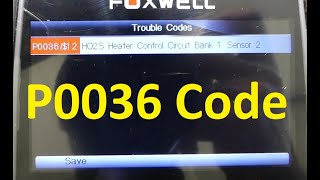
P0036 on a Mazda RX-8 indicates a problem with the heater circuit of the rear oxygen sensor. The most common cause is a failed sensor due to age and the high exhaust heat from the rotary engine. Replacing the sensor is the typical fix, costing around $80-$180 for the part. Always confirm with a multimeter test before replacing.
- P0036 points to a fault in the heater circuit of the rear O2 sensor, not the sensor's ability to read oxygen.
- The most probable cause on an RX-8 is a failed O2 sensor due to age and high exhaust heat.
- Diagnosis is straightforward: test the sensor's heater resistance with a multimeter. An open circuit confirms a bad sensor.
- This is a DIY-friendly repair for those with basic tools, but soaking the old sensor in penetrating oil is highly recommended as it can be seized in the exhaust pipe.
- Driving with this code will not harm the engine, but it will cause an automatic failure on an emissions test.
What's Unique About the 2004-2011 Mazda RX-8
The Mazda RX-8's 13B-MSP Renesis rotary engine is known for producing extremely high exhaust gas temperatures (EGTs) compared to conventional piston engines. This intense heat is particularly hard on exhaust components, including oxygen sensors, and can lead to a shorter lifespan for the sensor's internal heater element. Additionally, early RX-8 models (2004-2005) were subject to a recall related to excessive exhaust heat melting nearby components, which in some cases included wiring for the oxygen sensors.
Generation note: The 2004-2011 Mazda RX-8 covers two series: Series 1 (2004-2008) and the facelifted Series 2 (2009-2011). While the P0036 code has the same meaning for both, the specific part numbers for the rear oxygen sensor may differ. Always verify the part number for your specific model year and transmission type before purchasing.
Symptoms You May Notice
- Check Engine Light (CEL) is on.
- Inability to pass a vehicle emissions test.
- Replacing the front O2 sensor (Sensor 1) instead of the rear (Sensor 2). P0036 specifically refers to the sensor located after the catalytic converter.
Most Likely Causes
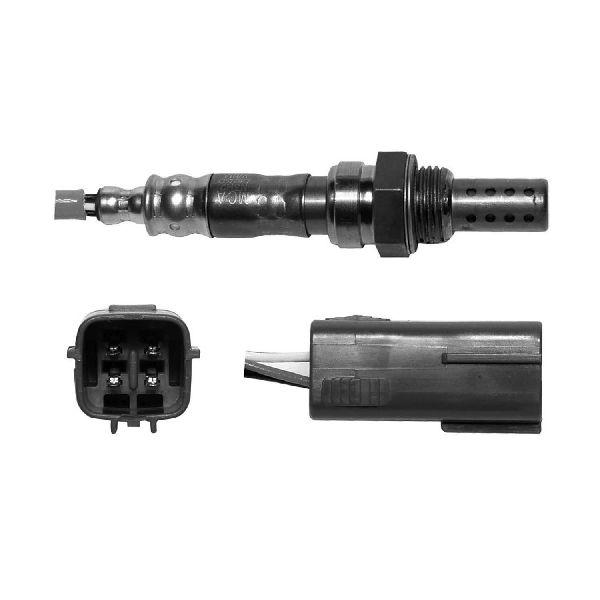
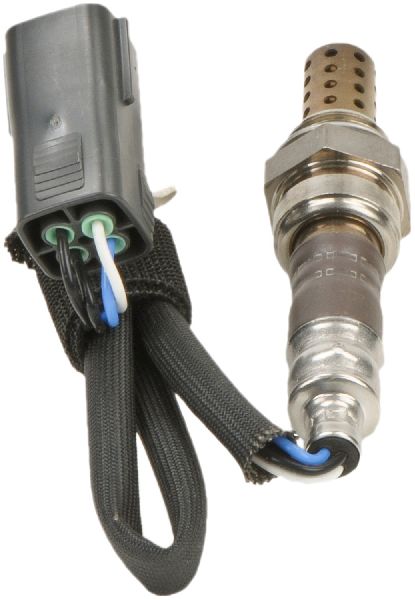
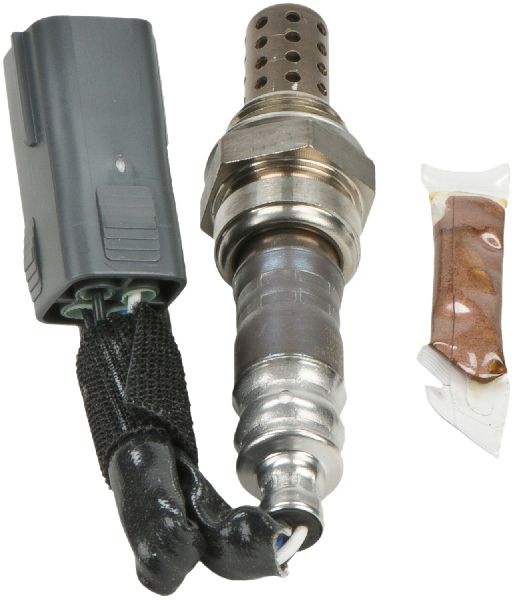
- Failed Rear Oxygen Sensor 🔴 High Probability → Shop Oxygen Sensor The internal heater element is a common failure point due to age and the high exhaust temperatures of the rotary engine.
How to confirm: Disconnect the sensor and measure the resistance between the two heater circuit pins (usually the two same-colored wires, often black). A healthy sensor should have a resistance between 5-15 ohms, with many owners reporting good OEM sensors in the 5-7 ohm range. An infinite resistance reading (Open Loop) or zero resistance (short) confirms the heater element is burned out or shorted.
Typical fix: Replace the rear oxygen sensor. It is located on the catalytic converter and can be very difficult to remove without a proper O2 sensor socket and penetrating oil.
Est. part cost: $60-$180 - Damaged Wiring or Connector 🟡 Medium Probability The sensor wiring is routed under the vehicle and is exposed to road debris and extreme exhaust heat, which can cause wires to melt, fray, or break. The connector is located on the side of the transmission.
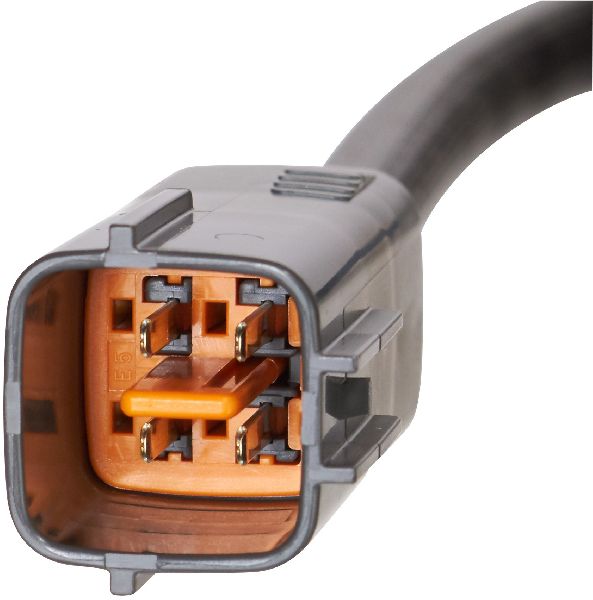
How to confirm: Visually inspect the wiring harness and connector leading to the rear O2 sensor for any signs of melting, chafing, corrosion, or loose pins. Trace the harness from the sensor to the connector on the transmission.
Typical fix: Repair the damaged section of the wiring harness or replace the connector pigtail.
Est. part cost: $15-$40 - Blown Fuse ⚪ Low Probability
How to confirm: Check the fuse box in the engine bay for a blown fuse related to the O2 sensor heaters. The fuse is often labeled 'HEATER' or may be shared with other engine components. Consult your owner's manual or the fuse box lid for the specific fuse location.
Typical fix: Replace the blown fuse. If the fuse blows again, it indicates a short circuit in the wiring that must be diagnosed.
Est. part cost: $1-$5
Rare But Worth Checking
- Faulty Powertrain Control Module (PCM): → Shop Engine Control Module (ECM) This is extremely rare. The PCM's internal driver for the heater circuit can fail, but all other possibilities should be exhausted before considering PCM replacement, which requires professional diagnosis and programming.
Diagnosis Steps
- Scan for any other stored trouble codes. Address other codes first if present.
- Perform a visual inspection of the rear oxygen sensor's wiring harness and connector. Look for any signs of melting, corrosion, or physical damage. The harness runs along the transmission.
- Check the fuse for the O2 sensor heater circuit in the engine bay fuse box.
- If the wiring and fuse are okay, disconnect the O2 sensor connector.
- Using a multimeter set to Ohms (Ω), measure the resistance across the two heater pins on the sensor itself (typically the two wires of the same color). A good sensor will read between 5-15 Ohms. An open circuit (infinite resistance) or a short (near zero ohms) means the sensor is bad and needs replacement.
- If the sensor resistance is good, check for power at the harness connector. With the ignition key in the 'ON' position (engine off), use a multimeter to check for battery voltage (~12V) at one of the heater circuit pins on the vehicle's harness side.
- Check for a good ground on the other heater circuit pin in the harness.
- If voltage or ground is missing, the wiring between the PCM/fuse box and the sensor is faulty and needs to be traced and repaired.
Parts You'll Likely Need
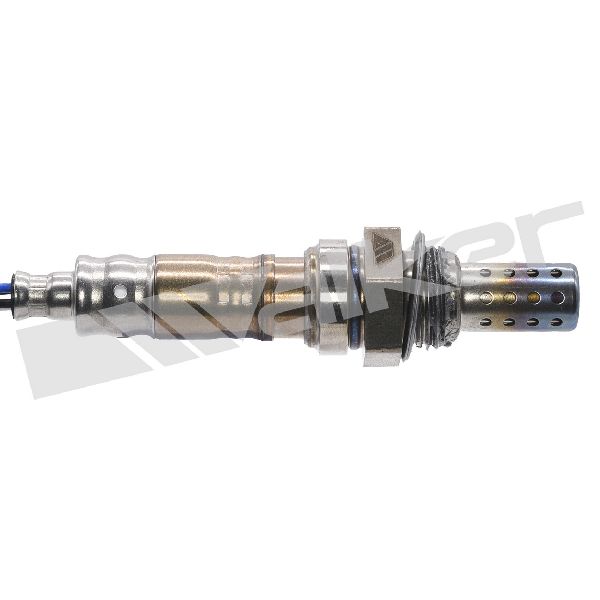
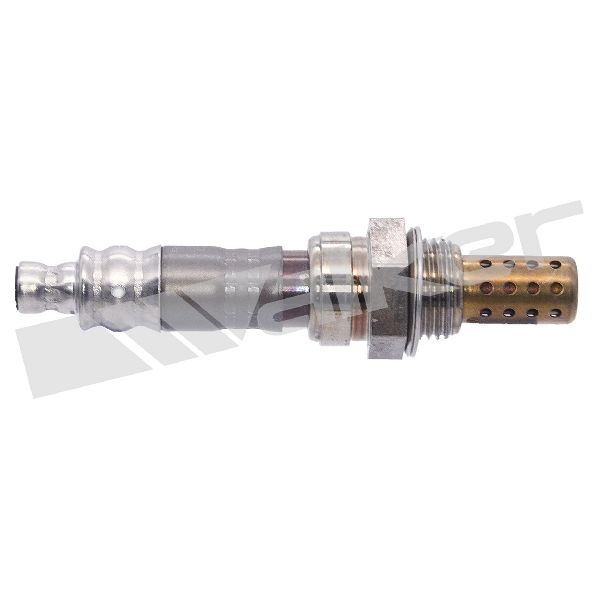
- Rear Oxygen Sensor (Bank 1, Sensor 2)
(OEM #N3H3-18-861B-9U (S1 MT), N3R1-18-861 (S2 MT), N3H2-18-861C-9U (AT))— This is the most common failure item for code P0036, as the internal heater element burns out over time.
Trusted brands: Denso, NGK/NTK, Bosch
OEM price range: $120-$200
Aftermarket price range: $60-$120
Technical Service Bulletins (TSBs) & Recalls
- While no TSBs directly address P0036, numerous TSBs exist for the RX-8 platform covering related issues like 'SULFUR SMELL FROM EXHAUST SYSTEM' (01-010/12) and 'ENGINE CRANKS NO START' (01-015/08), highlighting the platform's unique emission and engine characteristics.
Platform-Specific Known Issues
- A recall (NHTSA Campaign ID: 05V317000) was issued for 2004-2005 RX-8 models due to excessive exhaust heat. This heat could damage various components, including the oxygen sensor wiring, potentially causing this code.
- Owner experiences on forums frequently cite that the rear O2 sensor is extremely difficult to remove due to rust and heat cycling. Using a high-quality penetrating oil (like PB Blaster) and letting it soak overnight is highly recommended before attempting removal.
Mechanic-Grade Diagnostic Values
- Rear O2 Sensor Heater Resistance — expected: 5-15 Ohms at 68°F (20°C). Forum members often report healthy OEM sensors measuring specifically between 5-7 Ohms.. Failure: A reading of infinite resistance (Open Loop) or near-zero Ohms (short circuit) indicates a failed heater element.
- Voltage at Rear O2 Sensor Harness Connector (Heater Power Pin) — expected: Battery Voltage (~12V) with Key On, Engine Off (KOEO).. Failure: 0V indicates a problem with the power supply, likely the 'ENGINE' fuse or the main relay.
- Mode $06 Test ID for O2 Sensor Heater — expected: A professional scan tool can access Mode $06 data. For the O2 sensor heater monitor, the Test ID (TID) is often $21. The scan tool will show a PASS/FAIL status and measured values against PCM-defined limits.. Failure: A 'FAIL' status for TID $21 confirms the PCM has detected a heater circuit malfunction during its self-test.
Scan Tool Commands That Help
- Mazda IDS (Integrated Diagnostic System) or equivalent professional scanner: HO2S Heater On-Board Diagnostic Test — After a repair, a technician can use the Mazda IDS to command the O2 sensor heater test to run. This allows for immediate verification that the heater circuit is functioning correctly without having to perform a full drive cycle to meet the monitor's enabling criteria.
- Professional Scan Tool with Mode $06 capability: View Diagnostic Monitoring Test Results — This is used to see the raw results of the PCM's self-tests. For P0036, a technician can view the test results for the rear O2 sensor heater monitor (often TID $21) to see if it is passing, failing, or running close to the limit. This can help diagnose intermittent issues or confirm a repair's effectiveness without waiting for the check engine light to return.
Wiring & Ground Locations
- Rear HO2S Connector — Mounted to a bracket on the side of the transmission tunnel, near the catalytic converter.. This is the primary disconnection point for testing the sensor and the vehicle-side harness. It is exposed to under-car heat and debris, making it a common point of failure due to corrosion or melted plastic.
- PCM Pins 2A and 2Q — At the Powertrain Control Module (PCM), located at the right front of the engine compartment. Pin 2A is the Rear O2 Sensor Ground (PGND) and Pin 2Q is the Rear O2 Sensor signal (AV).. These are the specific pins at the PCM for the rear O2 sensor. If voltage and ground are missing at the sensor connector but present at these pins, it confirms a wiring break between the PCM and the sensor. A PCM pinout diagram is essential for this level of diagnosis.
- ENGINE Fuse (15A) — In the fuse box located in the engine compartment on the left side. It is labeled 'ENGINE' and is rated for 15 Amps.. This fuse provides power to the O2 sensor heater circuits. If this fuse is blown, neither the front nor rear O2 sensor heater will function. If it blows repeatedly, it indicates a short circuit in the wiring or a shorted sensor.
- G19 / G20 — Engine ground points located at the right-rear and rear of the engine, respectively.. While not directly for the sensor circuit itself (which is grounded through the PCM), poor engine block grounding can cause a variety of strange electrical issues and sensor reading errors. Verifying these main grounds are clean and tight is a good practice during any electrical diagnosis.
Real Owner Repair Stories
- rx8club.com user 'mkmike103' (Mazda RX-8 (year not specified)) — Check Engine Light with code P0037 (Heater Circuit Low), which is a companion code to P0036.
❌ Tried (didn't work) Replaced the original rear O2 sensor with a used sensor.
✅ What actually fixed it The user reported that replacing the sensor, even with a known-good used one, did not solve the problem. The code returned immediately upon starting the car. The final resolution was not posted, but the next diagnostic step identified by the user was to check the wiring harness with a multimeter, as the repeated failure pointed away from the sensor itself and towards a wiring or connector issue. This highlights the importance of not just replacing parts.
Model Year Variations Within This Range
- 2004-2008 (Series 1) vs 2009-2011 (Series 2): The rear oxygen sensor part numbers are different for Series 1 and Series 2 cars, and also differ between manual and automatic transmissions within those series. Using the wrong sensor, even if it physically plugs in, can result in incorrect heater resistance or signal characteristics, preventing the code from being resolved. Always verify the part number by VIN.
Diagnostic Flowchart
Other Known Issues on This Vehicle
Issues unrelated to this code that are worth knowing about as an owner of this generation:
- Apex Seal Wear / Low Compression 🔴 High — Common, especially on engines over 60,000 miles. Symptoms include difficulty starting when hot, rough idle, and power loss. (Ref: Mazda extended the engine core warranty to 8 years/100,000 miles for some model years due to this issue.)
- Ignition Coil, Plug, and Wire Failure 🟠 Medium — Considered a regular maintenance item, often requiring replacement every 30,000 miles. Weak coils lead to misfires, which can destroy the catalytic converter and damage the engine.
- Engine Flooding 🟠 Medium — Commonly caused by starting the engine cold and shutting it off before it fully warms up. This traps excess fuel in the combustion chambers, preventing a restart. (Ref: TSB 01-015/08 addresses a 'cranks no start' condition.)
- Catalytic Converter Failure 🔴 High — Often a direct result of failing ignition components causing unburnt fuel to enter the exhaust, leading to overheating and melting of the catalyst material. Symptoms include sluggish acceleration and loss of power. (Ref: Covered under the federal emissions warranty (8 years/80,000 miles), but failures are common outside this period.)
- High Oil Consumption 🟡 Low — By design, the rotary engine injects oil into the combustion chamber for lubrication, consuming about 1 quart every 1,000-3,000 miles. This is normal, but owners unfamiliar with this may run the engine low on oil, causing catastrophic failure.
- Weak Starter Motor (Early Models) 🟠 Medium — 2004-2005 models had a slower-cranking starter. Upgrading to the later, faster starter (or R3 starter) improves starting performance, especially for engines with slightly lower compression, and helps prevent flooding.
Used vs. New Parts: Buying Guide for This Vehicle
When a used part is the smart pick: For this repair, a used part is almost never a smart choice. The only exception might be sourcing a used connector pigtail from a junkyard if the original connector is physically damaged and a new pigtail is unavailable.
Donor-vehicle mileage cap: roughly under 10000 miles for the part to have meaningful remaining life.
What to inspect on the donor part:
- For a connector pigtail: check for non-brittle plastic, intact locking tabs, and clean, corrosion-free pins. Ensure there is enough wire length for splicing.
OEM-only on this vehicle (don't cheap out):
- While not strictly 'OEM-only', it is highly recommended to use either a genuine Mazda sensor or a direct OE-equivalent from Denso or NTK.
Aftermarket brands forum-validated for this vehicle:
- Denso (often the original OE supplier)
- NTK (NGK)
Brands owners have reported issues with on this vehicle:
- Universal-fit sensors that require splicing wires. While they can work, the splice points introduce potential failure points for corrosion and resistance, which can cause issues down the line.
- Unbranded, 'no-name' sensors from online marketplaces are a significant gamble. Forum reports suggest they often have incorrect heater resistance or fail quickly.
Real Owner Stories
Aggregated from forums and TSBs cited above. Mileages and costs reflect what owners reported in those sources.
2004-2011 Mazda RX-8 13B-MSP Renesis
Symptoms: The Check Engine Light was on for a heater circuit issue. Members discussed that testing the resistance of the sensor is the definitive way to find the culprit.
What fixed it: Replacing the rear O2 sensor after confirming failed resistance (Open Loop) on the heater pins.
Source hint: rx8club.com: P0037 (related code) discussion confirms rear O2 sensor as culprit
2004-2005 Mazda RX-8 13B-MSP Renesis
Symptoms: Potential damage to oxygen sensor wiring due to excessive exhaust heat as identified in a safety recall.
What fixed it: Repairing damaged wiring harness or replacing the sensor as part of addressing heat-related component failure.
Source hint: NHTSA Campaign ID: 05V317000
Related OBD-II Codes
Frequently Asked Questions
Is there a recall for my 2004-2005 Mazda RX-8 that might be causing the P0036 code?
What resistance should I see when testing the rear O2 sensor on my Renesis 1.3L?
Where is the rear O2 sensor connector located on the RX-8?
Which fuse should I check for the P0036 heater circuit?
Can I use a universal-fit oxygen sensor to fix this code?
Why is the rear O2 sensor so difficult to remove on this car?
Helpful Videos
We Have This Part in Stock

The information in this article is provided for general reference and educational purposes only. Vehicle specifications, procedures, and part compatibility can vary by production date, trim level, and region. Always consult your vehicle's factory service manual and verify part numbers before purchasing or performing repairs. Safety-critical components such as airbags, seat belts, and braking systems should be installed by a qualified professional.
- Mazda RX-8:
- 🧭 Diagnostic Flowchart
- 🎬 Helpful Videos
- 🛍️ Shop This Part
- What's Unique About the 2004-2011 Mazda RX-8
- Symptoms You May Notice
- Most Likely Causes
- Rare But Worth Checking
- Diagnosis Steps
- Parts You'll Likely Need
- Technical Service Bulletins (TSBs) & Recalls
- Platform-Specific Known Issues
- Mechanic-Grade Diagnostic Values
- Scan Tool Commands That Help
- Wiring & Ground Locations
- Real Owner Repair Stories
- Model Year Variations Within This Range
- Other Known Issues on This Vehicle
- Used vs. New Parts: Buying Guide for This Vehicle
- Real Owner Stories
- 2004-2011 Mazda RX-8 13B-MSP Renesis
- 2004-2005 Mazda RX-8 13B-MSP Renesis
- Related OBD-II Codes
- Frequently Asked Questions
- 🎟️ Get 5% Off