

P0036 on 2003-2011 Saab 9-3: O2 Sensor Heater Circuit Causes and Fixes
On a 2003-2011 Saab 9-3, code P0036 almost always means the downstream (post-catalytic converter) oxygen sensor has a failed internal heater. Replacing the sensor is the most common fix. Expect to pay $50-$100 for an aftermarket sensor and $150+ for an OEM-branded one. It's a straightforward DIY job for many, though access can be tight, especially on XWD models.
- P0036 on your Saab 9-3 points to a problem with the heater in the oxygen sensor located after the catalytic converter.
- The most likely cause is simply a failed sensor, which needs to be replaced. This is a very common failure.
- You can safely drive the car, but you should fix it to ensure your car can pass an emissions test and runs as cleanly as possible.
- Before buying a new sensor, perform a quick visual inspection of the wiring underneath the car for any obvious damage, and check fuse #2 (20A) in the engine bay fuse box.
- This is a common DIY repair that requires a special 22mm O2 sensor socket, but can be difficult due to tight access, especially on XWD models.
What's Unique About the 2003-2011 Saab 9-3
The 2003-2011 Saab 9-3 (generation YS3F) uses a standard OBD-II system, and the P0036 code aligns with the generic SAE definition. There's nothing uniquely complex about this fault on the 9-3. The vast majority of these cars use a four-cylinder (B207) or V6 (B284) engine, both of which only have one bank, making 'Bank 1' the only bank. The key challenge is often physical access to the sensor and its connector under the car. On 2.0T models, especially those with XWD, the transfer case can make accessing the sensor from below nearly impossible, forcing a more difficult approach from the side or top. Owners report needing to bend heat shields and use long, flexible ratchets to succeed. The cars use GM's Trionic (4-cyl) or Motronic (V6) engine management systems, which are sensitive to sensor quality, making OEM or high-quality aftermarket parts (like Bosch or Denso) highly recommended.
Symptoms You May Notice
- Check Engine Light is illuminated.
- Vehicle will fail an emissions test.
- No noticeable impact on engine performance or fuel economy in most cases, as this sensor primarily monitors catalyst efficiency and does not play a major role in fuel trim adjustments.
- Replacing the upstream (pre-catalytic converter) oxygen sensor. P0036 specifically refers to Sensor 2, which is the downstream sensor.
- Replacing the sensor without checking the fuse first. A blown fuse will prevent the new sensor's heater from working and the code will return immediately.
Most Likely Causes
- Failed Downstream Oxygen Sensor 🔴 High Probability → Shop Oxygen Sensor The internal heating element of an O2 sensor has a finite lifespan and eventually burns out from countless heat cycles. It is the most common point of failure for this code.
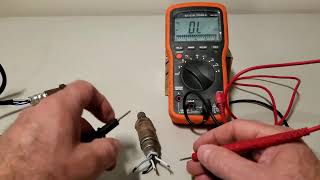
How to confirm: Using a multimeter, measure the resistance across the two heater circuit pins on the sensor itself (usually the two wires of the same color, often black). A healthy sensor should have a cold resistance typically between 3 and 15 ohms. An open circuit (infinite resistance) or a value far outside this range indicates a failed heater element.
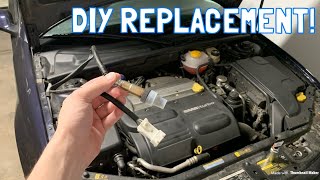
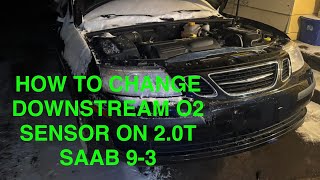
Typical fix: Replace the Bank 1, Sensor 2 oxygen sensor. 🎬 Watch this walkthrough for replacing the downstream sensor.
Est. part cost: $50-$180 - Damaged Wiring or Connector 🟡 Medium Probability The wiring for the downstream O2 sensor runs underneath the vehicle and is exposed to road debris, moisture, and high heat from the exhaust, which can lead to corrosion, melting, or breaks over time.
How to confirm: Visually inspect the wiring harness from the sensor to its connection point for any signs of melting, chafing, or corrosion. Check the connector for corroded, bent, or pushed-out pins. Use a multimeter to check for continuity and proper voltage/ground at the connector harness-side with the key on. Wiggling the harness while testing can reveal intermittent faults.
Typical fix: Repair the damaged section of wiring or replace the connector pigtail.
Est. part cost: $10-$40 - Blown Fuse ⚪ Low Probability A short circuit in the heater element or its wiring can cause the associated fuse to blow as a protective measure.
How to confirm: Locate the fuse for the O2 sensor heater circuit in the engine compartment fuse box. For the YS3F 9-3, this is often fuse #2 (20A) or related to relay #3 in the under-hood fuse box, which powers both the fuel pump and heated oxygen sensors. Check if the fuse is blown.
Typical fix: Replace the blown fuse. If it blows again immediately, a short circuit is present that must be diagnosed and repaired.
Est. part cost: $1-$5
Rare But Worth Checking
- Faulty Engine Control Module (ECM): → Shop Engine Control Module (ECM) This is extremely rare. Before condemning the ECM, all other possibilities, including the sensor, wiring, and fuses, must be exhaustively ruled out. An ECM fault would typically be accompanied by other codes as well. The Trionic 8 ECMs on these cars are known for other failure modes, but isolated O2 heater circuit failure is not a common one.
Diagnosis Steps
- Read the code with an OBD-II scanner to confirm P0036 is the primary code present.
- Visually inspect the downstream (post-catalytic converter) oxygen sensor's wiring and connector for any obvious damage, such as melting, corrosion, or frayed wires.
- Check the fuse for the oxygen sensor heater circuit in the engine bay fuse box. On 2003-2012 models, this is typically fuse #2 (20A) which may also power the fuel pump, and is linked to relay #3 labeled 'Preheated oxygen sensors'.
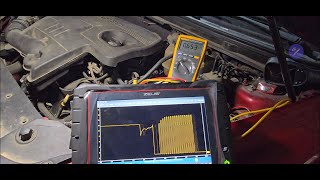
- If the wiring and fuse are okay, disconnect the sensor. Use a multimeter to test the resistance of the heater circuit on the sensor side (usually across the two same-colored wires). A reading between 3-15 ohms is typical; infinite resistance (open) or near-zero (short) confirms a bad sensor. 🎬 Watch: How to test O2 sensor heater resistance with a multimeter.
- If the sensor resistance is within spec, test the harness-side connector. With the ignition on (engine off), check for battery voltage on the power wire and a good ground on the ground wire for the heater circuit.
- If voltage and ground are present at the harness, and the sensor's resistance is good, there may be an intermittent connection issue. Wiggle the harness while monitoring voltage to check for drops.
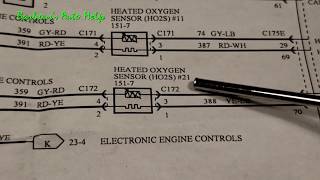
- If there is no voltage or ground at the harness, trace the wiring back to the source (fuse box/ECM) to find the open or short circuit. The Saab WIS provides detailed wiring diagrams for this.
- If all tests point to a faulty sensor, replace the Bank 1 Sensor 2 oxygen sensor. Applying penetrating oil to the sensor threads beforehand is highly recommended as they are often seized in the exhaust pipe.
Parts You'll Likely Need
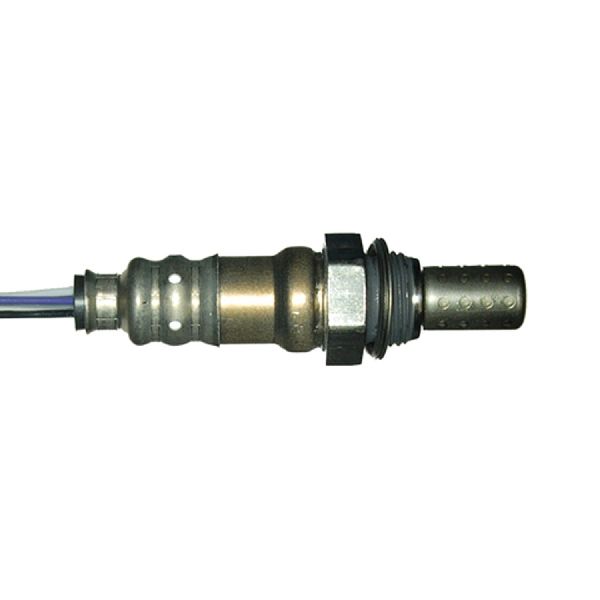
- Downstream Oxygen Sensor (Bank 1, Sensor 2)
(OEM #Saab 55353149 (for 2.0L B207 engine), Saab 93186115 (for 2.8L V6 B284 engine 2006-2009))— This is the component whose internal heating element fails, directly causing the P0036 code.
Trusted brands: Bosch (e.g., 16624 for 2.0T), Denso, NTK
OEM price range: $150-$200
Aftermarket price range: $50-$100
Platform-Specific Known Issues
- Difficult Access on 2.0T XWD Models: Owners of All-Wheel Drive (XWD) models with the 2.0T engine report that the transfer case severely obstructs access to the downstream O2 sensor, making removal from underneath the car very difficult. One user on Reddit described having to cut the old sensor's wires because they were caught on the exhaust manifold in a spot that was impossible to reach without removing the turbo.
- Fuse and Relay Location: The fuse and relay for the heated oxygen sensors are located in the main fuse box in the engine compartment, near the battery. 🎬 See this guide to locate your engine bay fuse box. For 2003-2012 models, look for fuse #2 (20A) and relay R3.
Mechanic-Grade Diagnostic Values
- Rear O2 Sensor (B1S2) Heater Resistance — expected: 3.3 - 4.1 Ohms at 20°C (68°F) for some OEM sensors. A general acceptable range is 3-15 Ohms.. Failure: Infinite resistance (open circuit) or near-zero resistance (short circuit).
- Heater Circuit Current Draw (Trionic 8) — expected: Greater than 200 mA.. Failure: The ECM will set P0036 if the current is below 200 mA for more than 10 seconds while the heater is commanded on.
- Heater Circuit Control (Trionic 8) — expected: The ECM provides a Pulse Width Modulated (PWM) ground to control the heater.. Failure: A static ground or no ground when commanded on indicates a wiring or ECM driver fault.
Scan Tool Commands That Help
- Saab Tech2: Read DTCs from specific modules (e.g., ECM). — To confirm the P0036 code is originating from the Engine Control Module (ECM) and to check for any other related manufacturer-specific codes that a generic scanner might miss.
- Saab Tech2: Activation: O2S 2 Preheating / Fuel Pump Relay. — This is a bidirectional control that allows a technician to manually command the O2 sensor heater circuit on and off. It's used to verify if the relay, fuse, and wiring are capable of delivering power to the sensor connector without having to wait for the ECM to enable the circuit during normal operation.
- Saab Tech2: Test Value: O2S 2 Preheating. — To monitor the live status (On/Off) and potentially the current draw of the heater circuit as seen by the ECM. This helps confirm if the ECM is attempting to activate the heater.
Wiring & Ground Locations
- Rear O2 Sensor (593) Connector — On 4-cylinder models, it's a brown connector located on a bracket between the power steering pump and the vacuum pump.. This is the primary connection point to test the sensor and the harness. Corrosion or damage here is a common cause of the fault.
- Trionic 8 ECM (589) Connector B, Pins 61 & 62 — The ECM is located on the front of the engine. Pins 61 and 62 on connector B are the PWM ground control for the rear O2 sensor heater.. If voltage is present at the sensor harness but the heater does not activate, testing for a PWM ground signal at these pins can help determine if the ECM driver has failed.
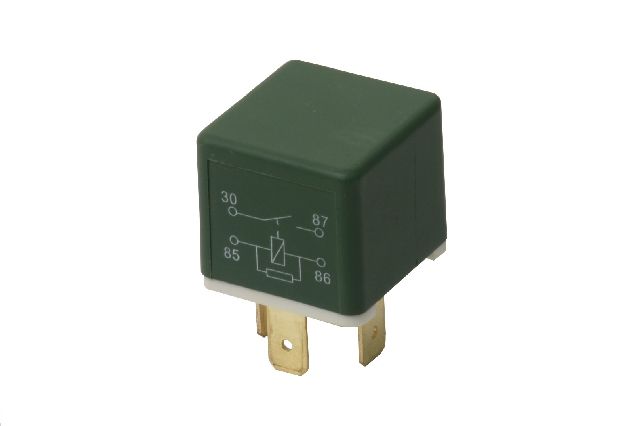
- Heater Power Source — Power is supplied from the main relay (229) via the heated oxygen sensor relay (443) in the main fuse box (727) in front of the battery.. This is the power feed for the heater circuit. A fault in this relay or the fuse box can cause a no-power condition at the sensor.
- G2 / G25 — G2 is a primary chassis ground on the side of the left-hand structural member by the battery. G25 is a primary engine ground on the left-hand engine mounting.. A poor engine or chassis ground can cause a variety of electrical issues, including erratic sensor behavior. While not a direct cause of a specific heater circuit fault, ensuring these grounds are clean and tight is a fundamental step in any electrical diagnosis.
Real Owner Repair Stories
- North American Motoring forum (MINI Cooper R52 (different vehicle, but identical code behavior)) — Check engine light with code P0036.
❌ Tried (didn't work) Replaced the downstream O2 sensor with an inexpensive aftermarket part., Cleared the code with a scan tool, but it returned immediately on the next engine start.
✅ What actually fixed it The user suspected the cheap sensor was the problem and ordered a quality NTK brand sensor. The implication is that using a non-OEM-equivalent sensor, even if new, can fail to resolve the code because its internal resistance or heater characteristics do not match what the ECM expects.
OEM Part Supersession History
Saab 24402859→Saab 93186115— Standard part update/revision.
Heads up: The original part number 24402859 is no longer available from most OEM suppliers and has been directly replaced by 93186115 for this application.
Model Year Variations Within This Range
- 2007-onward: On V6 engines, an extra ground cable was added between the cylinder banks. While not directly related to the O2 sensor circuit, it highlights ongoing changes to the engine's grounding scheme which can affect overall electrical stability.
- 2008-onward (Trionic 8): Saab WIS documentation for 2008+ models specifies the rear O2 sensor heater is grounded via ECM pins 61(B) and 62(B). Preheating is activated once coolant temp exceeds 50°C. This provides more specific diagnostic parameters than for earlier years.
Diagnostic Flowchart
Used vs. New Parts: Buying Guide for This Vehicle
When a used part is the smart pick: For this repair, a used part is almost never a smart choice. The O2 sensor is a wear-and-tear component with a finite lifespan determined by heat cycles and contamination. A used sensor has an unknown history and is likely to fail soon, if it works at all. A used wiring connector pigtail from a junkyard is acceptable if the original is physically damaged.
Donor-vehicle mileage cap: roughly under 50000 miles for the part to have meaningful remaining life.
What to inspect on the donor part:
- If salvaging a connector, inspect for any signs of melting, brittle plastic, or corrosion on the pins.
- Ensure the locking tab on the connector is intact.
- Verify the wires are flexible and not hardened or cracked from heat exposure.
OEM-only on this vehicle (don't cheap out):
- While not strictly 'OEM-only', using a reputable OEM supplier like Bosch or Denso is highly recommended. The Trionic and Motronic engine management systems are sensitive to the electrical characteristics of sensors.
Aftermarket brands forum-validated for this vehicle:
- Bosch
- Denso
- NTK / NGK
Brands owners have reported issues with on this vehicle:
- Unbranded or generic 'eBay/Amazon' sensors have a high rate of being defective out-of-the-box or failing to meet the ECM's expected resistance values, causing the code to persist.
Real Owner Stories
Aggregated from forums and TSBs cited above. Mileages and costs reflect what owners reported in those sources.
Saab 9-3 2.0T
Symptoms: Check Engine Light was on. The old sensor's cable was stuck on the exhaust manifold in a spot that was impossible to reach without removing the turbo, requiring the wires to be cut for removal.
What fixed it: Replaced the downstream O2 sensor.
Source hint: Reddit r/saab thread titled 'How are you supposed to replace the downstream o2 sensor on the 9-3?'
Related OBD-II Codes
Frequently Asked Questions
Where is the fuse for the oxygen sensor heater on my 2003-2011 Saab 9-3?
Is it safe to continue driving my Saab 9-3 with a P0036 code?
Why is it so difficult to replace the rear O2 sensor on my 2.0T XWD model?
What is the most common cause for code P0036 on this car?
How can I test the oxygen sensor heater myself?
Will my Saab 9-3 pass an emissions test with the Check Engine Light on for P0036?
Helpful Videos

We Have This Part in Stock


The information in this article is provided for general reference and educational purposes only. Vehicle specifications, procedures, and part compatibility can vary by production date, trim level, and region. Always consult your vehicle's factory service manual and verify part numbers before purchasing or performing repairs. Safety-critical components such as airbags, seat belts, and braking systems should be installed by a qualified professional.
- Saab 9-3:
- 🧭 Diagnostic Flowchart
- 🎬 Helpful Videos
- 🛍️ Shop This Part
- What's Unique About the 2003-2011 Saab 9-3
- Symptoms You May Notice
- Most Likely Causes
- Rare But Worth Checking
- Diagnosis Steps
- Parts You'll Likely Need
- Platform-Specific Known Issues
- Mechanic-Grade Diagnostic Values
- Scan Tool Commands That Help
- Wiring & Ground Locations
- Real Owner Repair Stories
- OEM Part Supersession History
- Model Year Variations Within This Range
- Used vs. New Parts: Buying Guide for This Vehicle
- Real Owner Stories
- Saab 9-3 2.0T
- Related OBD-II Codes
- Frequently Asked Questions
- 🎟️ Get 5% Off