

P0036 on 2007-2009 Saturn Aura 3.6L: O2 Sensor Heater Circuit Causes and Fixes
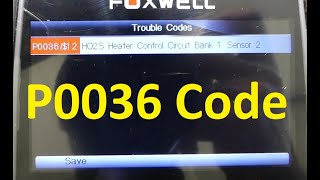
P0036 indicates a fault in the heater circuit of the Bank 1, Sensor 2 oxygen sensor. On the 3.6L V6, this is the downstream sensor on the rear cylinder bank (firewall side). The most common fix is replacing the sensor itself, which costs about $40-$90 for a quality aftermarket part. Before replacing, check fuse #45 (15A) in the underhood fuse box. It's a manageable DIY repair for those comfortable working under the vehicle with a 22mm (or 7/8") O2 sensor socket.
- P0036 points directly to a problem with the heater in the downstream (post-catalytic converter) oxygen sensor on the rear/firewall side of the engine.
- The most common solution is to replace the Bank 1, Sensor 2 oxygen sensor.
- Before replacing the sensor, always perform a quick visual inspection of the wiring for damage and check the #45 15A fuse in the underhood fuse box.
- This fault will not prevent you from driving the car, but it will cause an automatic failure on an emissions test.
- Accessing the sensor on the rear bank requires working under the car, but is a manageable DIY task with the right tools, including a 22mm (7/8") O2 sensor socket.
What's Unique About the 2007-2009 Saturn Aura
On the Saturn Aura's transversely mounted 3.6L LY7 V6 engine, Bank 1 is the rear bank, positioned against the firewall. This makes accessing the Bank 1, Sensor 2 (downstream) oxygen sensor slightly more challenging than its Bank 2 counterpart on the radiator side. While the code itself is a standard O2 sensor heater fault, the physical location is the key platform-specific detail for this repair. Wiring diagrams confirm the location as being in the rear of the engine compartment, monitoring the catalytic converter output.
Symptoms You May Notice
- Check Engine Light is on
- Failure to pass an emissions inspection
- Slightly decreased fuel economy in some cases
- Replacing the wrong oxygen sensor. P0036 specifically refers to Bank 1 (rear/firewall side) and Sensor 2 (downstream, after the catalytic converter). It is easy to mistake it for the upstream sensor (P0030/P0031) or the sensor on Bank 2 (P0056).
Most Likely Causes
- Failed Oxygen Sensor Heater Element 🔴 High Probability → Shop Oxygen Sensor The internal heating element of an oxygen sensor has a finite lifespan and can burn out over time due to constant heat cycles. This is the most common point of failure for this code on most vehicles, including the Aura.
How to confirm: Disconnect the sensor and measure the resistance across the two heater circuit pins (usually the two same-colored wires) with a multimeter. An open circuit (infinite resistance or 'OL') confirms the heater has failed. A good heater should have a resistance typically between 4 and 30 Ohms.
Typical fix: Replace the Bank 1, Sensor 2 oxygen sensor.
Est. part cost: $40-$90 - Damaged Wiring or Connector 🟡 Medium Probability The sensor's wiring is located under the vehicle and is exposed to road debris, moisture, and extreme exhaust heat, which can cause wires to break, melt on heat shields, or corrode at the connector pins.
How to confirm: Visually inspect the wiring harness and connector leading to the sensor for any signs of physical damage, melting, or corrosion on the pins. Check for 12V power on the power wire (often pink) and a good ground at the connector with the key on, engine off.
Typical fix: Repair the damaged section of the wiring harness or clean/replace the connector pigtail. Use heat-shrink tubing to protect the repair.
Est. part cost: $5-$50 - Blown Fuse ⚪ Low Probability A short circuit in the sensor or its wiring can cause the fuse that powers the heater circuit to blow. This is a shared circuit, so a failure in another sensor's heater could also cause the fuse to blow.
How to confirm: Check the fuse box in the engine compartment. Fuse diagrams for the 2008 and 2009 Saturn Aura confirm this is fuse #45, a 15A fuse, labeled "Post Cat O2 Sensor Heaters (LY7)". Visually inspect the fuse.
Typical fix: Replace the blown fuse. If it blows again immediately, a short circuit exists in the wiring or one of the downstream O2 sensors and must be found.
Est. part cost: $1-$5
Rare But Worth Checking
- Faulty Engine Control Module (ECM): → Shop Engine Control Module (ECM) This is extremely rare. The ECM's internal driver for the heater circuit can fail, but all other possibilities should be exhausted before considering ECM replacement. A faulty ground for the ECM (e.g., G103 on the top right side of the engine) could also cause this issue and should be checked first. A known cause for ECM driver failure on similar GM vehicles is fluid contamination, such as a coolant leak from a faulty thermostat housing dripping directly onto the ECM.
Diagnosis Steps
- Read the code with an OBD-II scanner to confirm P0036 is present.
- Check the #45 (15A) fuse for the oxygen sensor heaters in the engine bay fuse box. If it's blown, replace it and see if the code returns. If it blows again, a short circuit is present.
- Visually inspect the wiring harness and connector for the Bank 1, Sensor 2 oxygen sensor. It is located on the rear (firewall side) exhaust pipe, after the catalytic converter. Look for any breaks, melting, or corrosion.
- If the wiring and fuse are good, disconnect the sensor.
- Test the heater circuit resistance at the sensor's connector. Use a multimeter set to Ohms and measure between the two same-colored wires. A reading of roughly 4-30 Ohms is typical; a reading of infinity (OL) means the heater is burned out and the sensor must be replaced.
- To be thorough, check for power at the vehicle-side connector. With the key on, one pin (often a Pink wire) should have battery voltage. The other wire (Brown, Circuit 2391) is the control wire that the ECM grounds to activate the heater.
- If the sensor's heater has proper resistance but the code persists, the issue lies in the wiring or the ECM, with wiring being far more likely. Test the Brown control wire for continuity back to Pin 2 of the ECM connector to rule out a break in the harness.
Parts You'll Likely Need
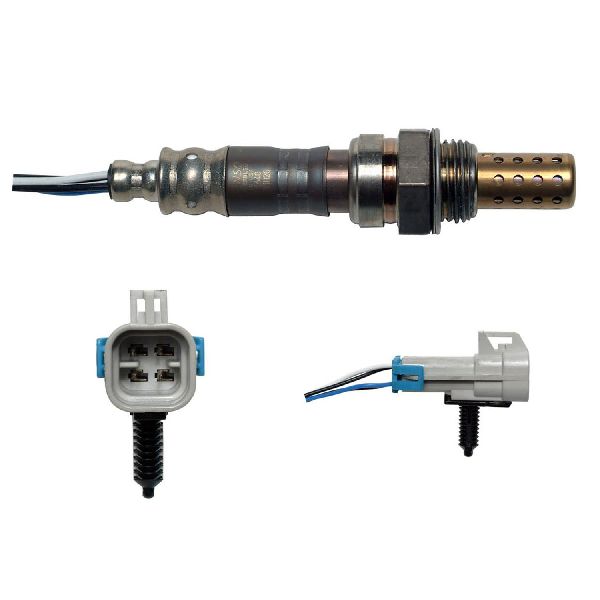
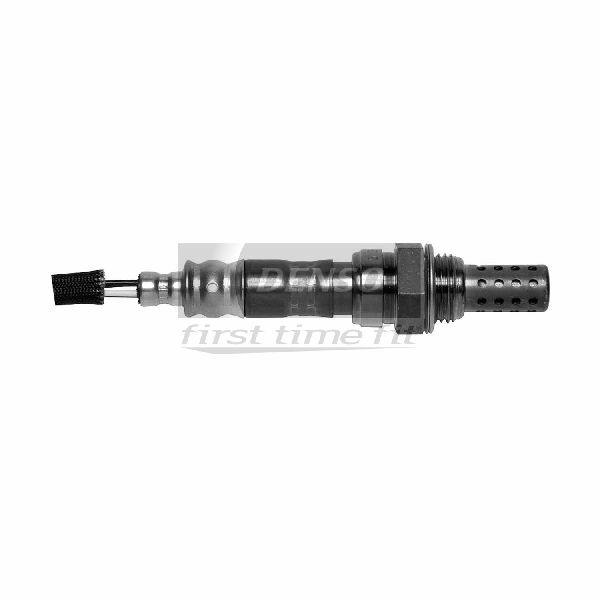
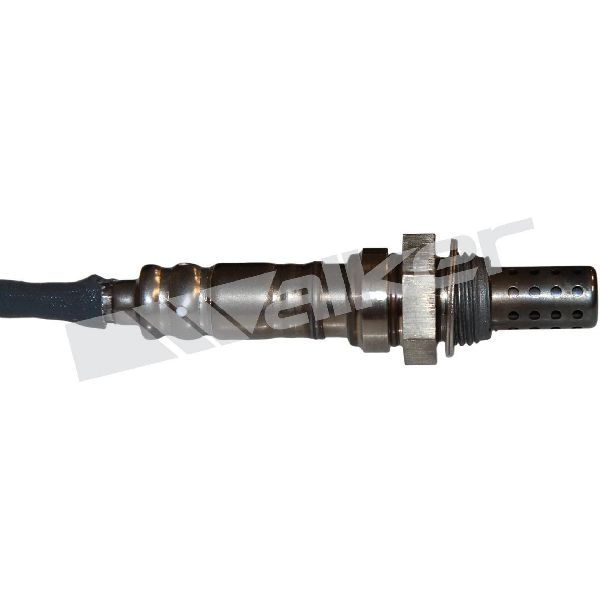
- Oxygen Sensor (Bank 1, Sensor 2)
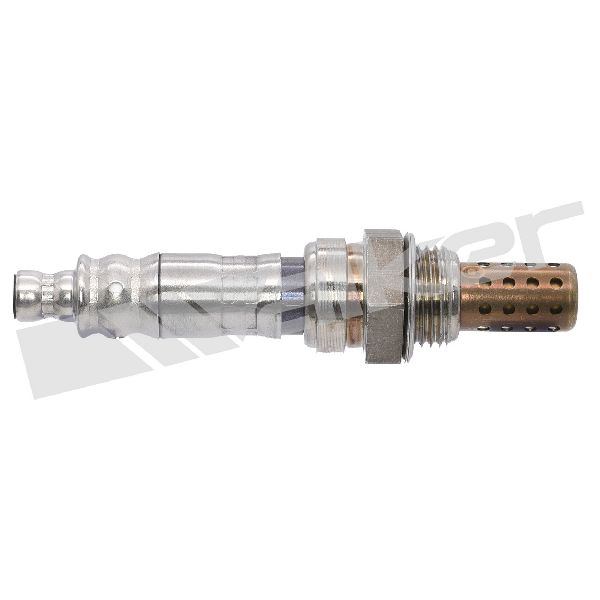
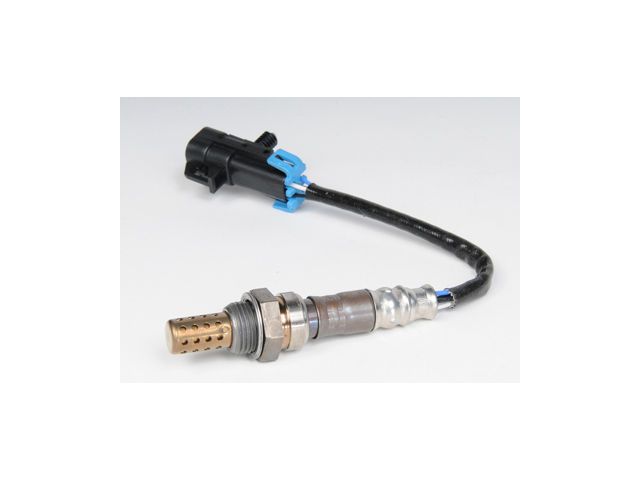
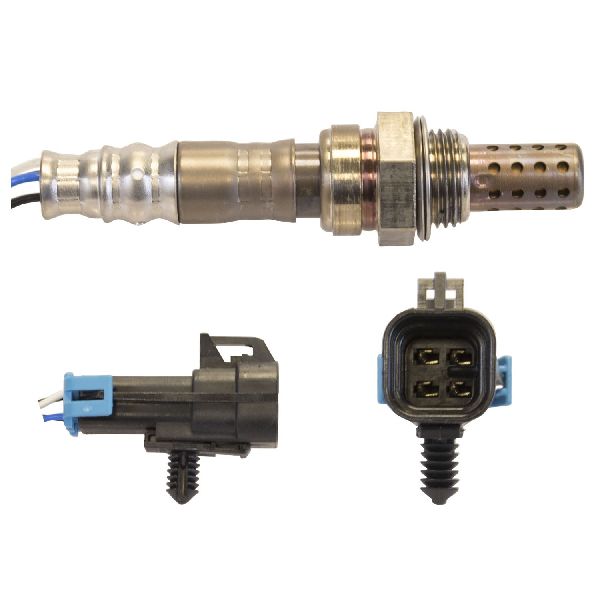
(OEM #12609457)— The internal heater element failing is the most common cause of code P0036. This part is also listed as ACDelco #213-4229.
Trusted brands: ACDelco (OEM), Denso, Bosch, NGK/NTK
OEM price range: $100-$150
Aftermarket price range: $40-$90 - Oxygen Sensor Socket — A specialized 22mm or 7/8" offset socket with a slit for the wire is highly recommended to remove and install the oxygen sensor without damaging the wiring.
Trusted brands: Lisle, OEMTOOLS, GearWrench
Aftermarket price range: $10-$25
Related Codes That Often Appear With This One
- P0141 — P0141 is the generic equivalent of P0036 for the heater circuit performance. They essentially point to the same fault and may appear together.
- P0056 — This is the same heater circuit fault but for Bank 2, Sensor 2 (radiator side, downstream). If both codes appear, it strongly suggests a common issue like a blown #45 fuse or a power supply problem affecting both sensors.
- P0054 — This code indicates 'HO2S Heater Resistance (Bank 1, Sensor 2)'. While P0036 indicates a circuit fault (open or short), P0054 points to the resistance value being out of specification, but they both point to a failure of the same sensor's heater.
Platform-Specific Known Issues
- A forum user on a platform-mate Pontiac G6 with multiple sensor heater codes (including P0036) traced the issue back to a single missing emissions-related fuse, which resolved all codes upon replacement. This highlights the importance of checking fuse #45 first.
Mechanic-Grade Diagnostic Values
- O2 Sensor Heater Element Resistance — expected: 3.3 - 4.1 Ohms at 20°C (68°F). Failure: Infinite resistance (OL) indicates an open circuit (burned out heater). Near-zero resistance indicates an internal short.
- HO2S Heater Current Draw (Scan Tool) — expected: Varying between 0.5 - 1.1 Amps when active. Failure: 0 Amps indicates an open circuit (bad sensor, fuse, or wiring). Excessively high amperage indicates a short circuit.
- Heater Circuit Power Supply — expected: Battery Voltage (approx. 12.6V KOEO, 14V+ engine running) at the Pink wire on the harness-side connector.. Failure: 0V indicates a blown fuse (#45) or an open in the power feed wire.
Scan Tool Commands That Help
- GM Tech 2 / GDS2: HO2S Heater Controls (Output Control) — After verifying the fuse and sensor resistance are good, this command allows a technician to manually command the ECM to ground the heater circuit. Using a test light connected to battery positive on the control wire, the light should flash or turn on when the command is activated, confirming the ECM driver and wiring are functional. Path: Powertrain > Special Functions > Engine Output Controls > HO2S Heater Controls.
Wiring & Ground Locations
- ECM Pin 2 — On one of the main connectors at the Engine Control Module, which is located on the left side of the engine compartment, behind the battery.. This is the specific pin for the HO2S Bank 1 Sensor 2 heater low control circuit. The wire is Brown (BN) and is part of circuit #2391. Testing for ground at this pin during the bidirectional test can definitively confirm if the ECM driver is working.
- B1S2 Connector - Heater Power — At the 4-wire connector for the rear, downstream oxygen sensor.. The Pink (PNK) wire in the connector is the 12V+ power feed from fuse #45. Verifying battery voltage here is a primary step to confirm the circuit has power.
- G105 / G111 / G113 — G105 is at the center rear of the engine. G111 is at the top rear right side of the engine. G113 is on the center left side cylinder head.. These are critical engine and cylinder head grounds. While not directly part of the heater circuit ground path (which is controlled by the ECM), a poor main engine ground can cause erratic behavior in the ECM and its sensor readings, potentially leading to false codes. Checking that these are clean and tight is good practice.
Real Owner Repair Stories
- Reddit user on r/MechanicAdvice (2012 Chevy Impala 3.6L (LFX engine, similar architecture to LY7)) — Persistent O2 heater codes P0036 and P0050.
❌ Tried (didn't work) Replacing multiple O2 sensors (Bosch brand)., Repairing and replacing heater control wires from PCM to sensors., Verifying continuity and power (12-14V) to the sensors., Replacing a related blown EMISS fuse.
✅ What actually fixed it The root cause was identified as the PCM not providing the ground signal to the heater control circuits. This was suspected to be caused by prior damage when a coolant leak from a bad thermostat dripped directly onto the PCM, frying the internal driver circuits for the heaters. The final fix was replacing the PCM.
OEM Part Supersession History
12609457→213-4229— Part number consolidation. 213-4229 is the ACDelco service part number for the GM OEM part 12609457.
Heads up: These parts are directly interchangeable.
Diagnostic Flowchart
Other Known Issues on This Vehicle
Issues unrelated to this code that are worth knowing about as an owner of this generation:
- Premature Timing Chain Stretch 🔴 High — Very common, often appearing between 70,000 and 120,000 miles. Triggers codes like P0008, P0009, P0017. (Ref: TSB #12-06-01-009F provides information on updated replacement kits. Special Coverage Adjustment #11340C extended the warranty for this issue on many GM models, though Aura coverage was inconsistent.)
- Cracked 3-5-Reverse Wave Plate in 6T70 Transmission 🔴 High — Common failure leading to loss of 3rd, 5th, and Reverse gears, often occurring as early as 30,000-50,000 miles but can happen at any time. (Ref: Special Coverage Adjustment #14404A extended the warranty to 10 years/120,000 miles for this specific failure. TSB #09-07-30-012F provides repair details.)
- Failing Intake Manifold Gaskets 🟠 Medium — A known failure point that causes vacuum leaks, leading to lean codes (like P2187/P2189) and correlation codes like P0068. (Ref: TSB PIP5529B addresses loose intake manifold bolts, a related issue that can cause similar vacuum leaks.)
- Power Steering Fluid Leaks / Loss of Assist 🟠 Medium — The V6 models used a hydraulic power steering system prone to leaks from lines or the rack and pinion assembly, leading to a loss of power steering assist.
Used vs. New Parts: Buying Guide for This Vehicle
When a used part is the smart pick: For this repair, a used part is almost NEVER a good choice for the oxygen sensor itself. However, sourcing a used connector pigtail from a junkyard harness is a smart and cost-effective way to repair a damaged or melted connector.
Donor-vehicle mileage cap: roughly under 80000 miles for the part to have meaningful remaining life.
What to inspect on the donor part:
- For a connector pigtail: ensure the plastic is not brittle, the locking tab is intact, and there is no corrosion on the metal pins.
- For an ECM: Inspect the donor vehicle for signs of flood damage or major engine fires. Check the exterior of the ECM for corrosion, especially around the connector seals.
OEM-only on this vehicle (don't cheap out):
- Engine Control Module (ECM). While a used ECM can be an option, it will require professional programming (VIN flashing) with a tool like a Tech 2 to work with your specific vehicle, which can be costly and complex. A new OEM part is the most reliable path.
Aftermarket brands forum-validated for this vehicle:
- ACDelco (OEM)
- Denso
- NGK/NTK
- Bosch (ensure it is a direct-fit, not universal)
Brands owners have reported issues with on this vehicle:
- Unknown 'white-box' or no-name brands from online marketplaces. These often have incorrect heater resistance values, leading to the code returning immediately or failing prematurely.
Real Owner Stories
Aggregated from forums and TSBs cited above. Mileages and costs reflect what owners reported in those sources.
2010 Pontiac G6 3.6L LY7 V6
Symptoms: Vehicle entered limp mode and displayed multiple codes including P0068, P0030, and P0036.
What fixed it: The issue was traced back to a single missing emissions-related fuse; replacing the fuse resolved all codes.
Source hint: 2CarPros Forum: 'Limp mode, codes P0068, P0030, P0036, etc. on a 2010 Pontiac G6'
Related OBD-II Codes
Frequently Asked Questions
Which fuse should I check first for a P0036 code on my 2008-2009 Saturn Aura 3.6L?
Where is the Bank 1, Sensor 2 oxygen sensor located on the Aura 3.6L LY7 V6?
Can I use a universal aftermarket oxygen sensor to fix this code?
What should the resistance reading be for a healthy heater element on this vehicle?
Does the Saturn Aura share this specific P0036 issue with other GM vehicles?
Is there a TSB for the timing chain issues mentioned in the context of my Aura?
Helpful Videos
We Have This Part in Stock

The information in this article is provided for general reference and educational purposes only. Vehicle specifications, procedures, and part compatibility can vary by production date, trim level, and region. Always consult your vehicle's factory service manual and verify part numbers before purchasing or performing repairs. Safety-critical components such as airbags, seat belts, and braking systems should be installed by a qualified professional.
- Saturn Aura:
- 🧭 Diagnostic Flowchart
- 🎬 Helpful Videos
- 🛍️ Shop This Part
- What's Unique About the 2007-2009 Saturn Aura
- Symptoms You May Notice
- Most Likely Causes
- Rare But Worth Checking
- Diagnosis Steps
- Parts You'll Likely Need
- Related Codes That Often Appear With This One
- Platform-Specific Known Issues
- Mechanic-Grade Diagnostic Values
- Scan Tool Commands That Help
- Wiring & Ground Locations
- Real Owner Repair Stories
- OEM Part Supersession History
- Other Known Issues on This Vehicle
- Used vs. New Parts: Buying Guide for This Vehicle
- Real Owner Stories
- 2010 Pontiac G6 3.6L LY7 V6
- Related OBD-II Codes
- Frequently Asked Questions
- 🎟️ Get 5% Off