

P0036 on 2009-2013 Subaru Forester 2.5L: Rear O2 Sensor Heater Fixes
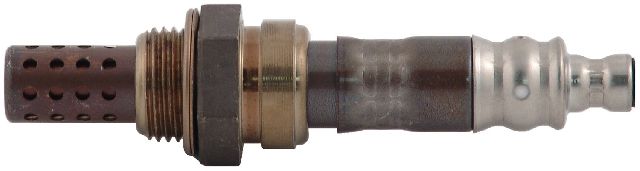
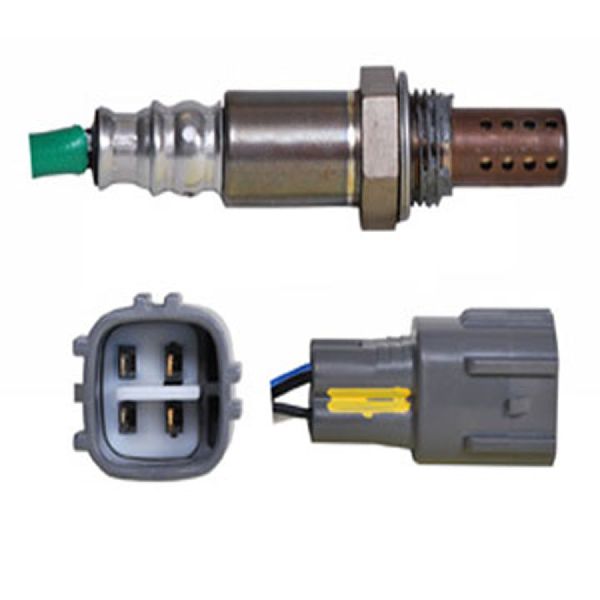
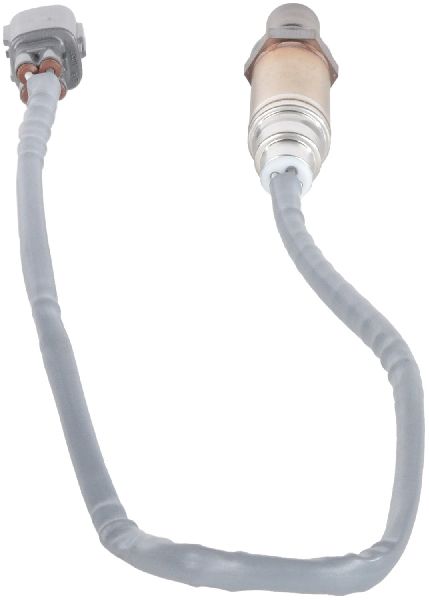
P0036 on this Forester almost always means the internal heater in the rear (downstream) oxygen sensor has failed. The most common fix is to replace the sensor. Expect to pay $60-$110 for a quality aftermarket part (Denso is OEM) and $150-$220 for an OEM sensor. It's a DIY-friendly job if the sensor isn't rusted stuck, requiring a 22mm (7/8") O2 sensor socket.
- P0036 on your 2009-2013 Forester almost certainly means the rear oxygen sensor needs to be replaced due to a failed internal heater.
- Before buying parts, perform a quick resistance test on the sensor's heater pins (two black wires) with a multimeter to confirm it has failed. A good reading is 2-15 Ohms; infinity (OL) means it's broken.
What's Unique About the 2009-2013 Subaru Forester
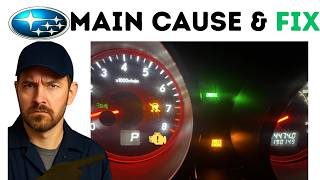
On this generation of Subaru Forester, the P0036 code is a very common and straightforward issue, almost always pointing to the sensor itself. A unique characteristic of Subarus is that the Check Engine Light (CEL) will also trigger the cruise control light to flash, disabling the system as a safety precaution. This is normal behavior and not a separate fault. 🎬 Watch: Why your cruise control light is flashing Additionally, these vehicles are known for exhaust components, including O2 sensors, becoming severely rusted into place, which can make an otherwise simple replacement difficult. For models with the EJ253 engine (2009-2010), the rear O2 sensor's electrical connector is conveniently located on the passenger side of the engine bay, making testing easier than on later models.
Symptoms You May Notice
- Check Engine Light is on
- Flashing cruise control light (and cruise control is disabled)
- Vehicle will fail an emissions test
- Potentially a slight decrease in fuel economy
- Replacing the front oxygen sensor (Air/Fuel Ratio Sensor) instead of the rear one. P0036 specifically refers to Sensor 2, which is the rear (downstream) sensor.
Most Likely Causes
- Failed Rear Oxygen Sensor 🔴 High Probability → Shop Oxygen Sensor The internal heater element is a wear-and-tear component that fails after many years and thousands of heat cycles. It is the most common point of failure for this code by a large margin.
How to confirm: Disconnect the sensor's electrical connector. Using a multimeter set to Ohms (Ω), measure the resistance between the two same-colored wires (usually black) on the sensor side of the connector. A reading of 'OL' (Open Loop) or infinite resistance means the heater circuit is broken. A good heater should have a low resistance, typically between 2 and 15 ohms at room temperature.
Typical fix: Replace the rear (Bank 1, Sensor 2) oxygen sensor. The Denso 234-4445 is a commonly cited aftermarket equivalent.
Est. part cost: $60-$220 - Damaged Wiring or Corroded Connector 🟡 Medium Probability The wiring harness runs under the vehicle and is exposed to heat, moisture, and road debris, which can cause damage or corrosion over time. The connector is typically a gray plug located on the passenger side of the transmission tunnel or in the engine bay for earlier models.
How to confirm: Visually inspect the wiring harness leading to the rear O2 sensor for any signs of melting, chafing, breaks, or corrosion in the connector pins. With the ignition on (engine off), check for 12V power at the vehicle-side connector on the specified power wire (refer to a wiring diagram for exact pinout).
Typical fix: Repair the damaged section of wiring or clean/replace the connector.
Est. part cost: $5-$50 - Corroded or Broken Exhaust Ground Strap ⚪ Low Probability Subarus often use a ground strap from the exhaust to the chassis. If this strap corrodes and breaks, it can cause grounding issues for the O2 sensor, leading to heater circuit codes. This is especially true if an aftermarket sensor is used that relies on this ground.
How to confirm: Visually inspect the exhaust system near the O2 sensor for a braided metal strap connecting the exhaust pipe or heat shield to the vehicle's frame. Check if it is intact and not severely corroded or broken.
Typical fix: Replace the ground strap. A generic strap or even a thick gauge copper wire can be used as a substitute.
Est. part cost: $10-$30
Rare But Worth Checking
- Blown Fuse: A blown fuse for the O2 heater circuit can cause this code. Check the fuse box in the engine bay for a fuse labeled 'A/F Heater' or similar. On many Foresters, this is a 15A fuse in the main fuse box. This is a quick and easy check before replacing parts.
- Faulty Engine Control Module (ECM): → Shop Engine Control Module (ECM) While extremely rare, it is possible for the driver circuit within the ECM to fail. This should only be considered after all other possibilities (sensor, wiring, fuse, grounds) have been thoroughly ruled out by testing.
Diagnosis Steps
- Read the code with an OBD-II scanner to confirm P0036 is present.
- Visually inspect the rear oxygen sensor, its wiring, and its connector for any obvious damage, such as melting, fraying, or corrosion.
- Check the 'A/F Heater' fuse (typically 15A) in the engine bay fuse panel. Replace if blown.
- Inspect the exhaust ground strap for corrosion or breakage.
- If the visual inspection passes, disconnect the O2 sensor's gray electrical connector, located on the passenger side of the engine bay (2009-2010 models) or transmission tunnel.
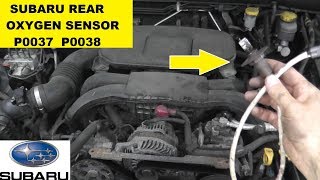
- Test the resistance of the heater element within the sensor itself. Use a multimeter to measure across the two black wires on the sensor side. An open circuit (infinite resistance) or a direct short (near 0 ohms) confirms the sensor has failed. A good sensor should read between 2 and 15 ohms. 🎬 See how to test and replace the rear sensor
- If the sensor's resistance is good, test for power at the vehicle-side connector. With the ignition on (engine off), probe the corresponding power wire pin. You should see battery voltage (~12V).
- If power and ground are present at the connector and the sensor's heater element tests good, there may be an intermittent wiring issue or, rarely, a problem with the ECM.
- If the sensor has failed, replace the rear oxygen sensor. Liberally apply penetrating oil (like PB Blaster) to the threads hours before attempting removal. A 22mm or 7/8" slotted O2 sensor socket is highly recommended.
- After replacement, clear the code with the scanner and perform a test drive to ensure the code does not return.
Parts You'll Likely Need
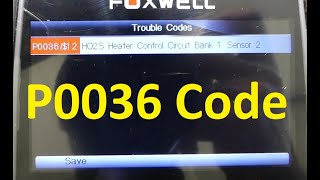
- Rear Oxygen Sensor (Downstream, Bank 1 Sensor 2) 🎬 Watch this breakdown of P0036 causes and fixes
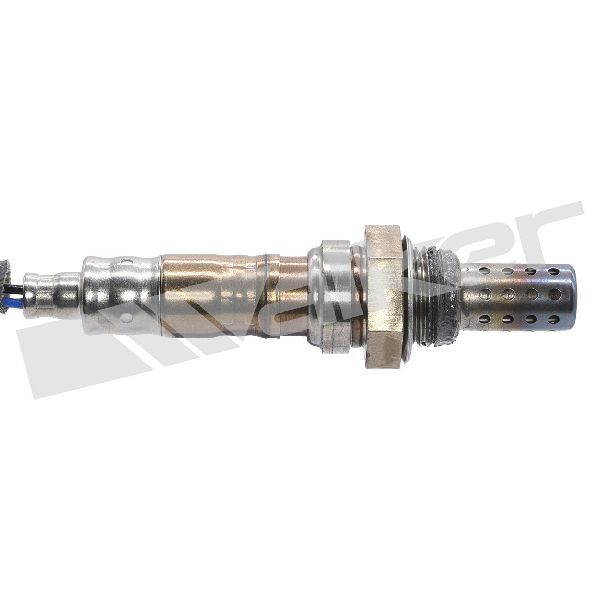
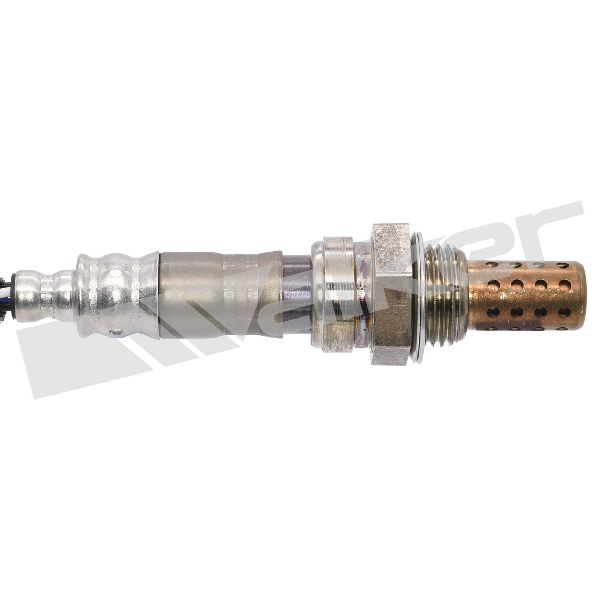
(OEM #22690AA81A)— This is the most common failure point for code P0036, as the internal heater element burns out over time.
Trusted brands: Denso (OEM Supplier), NTK, Bosch
OEM price range: $150-$220
Aftermarket price range: $60-$110
Platform-Specific Known Issues
- Oxygen sensors on these Foresters are notoriously difficult to remove due to rust and corrosion, often requiring significant penetrating oil, heat, and a specialized 22mm (7/8") O2 sensor socket.
- The cruise control system is automatically disabled and the light will flash whenever the Check Engine Light is on. This is normal behavior for this vehicle and will resolve when the fault is fixed.
Mechanic-Grade Diagnostic Values
- Rear O2 Sensor Heater Element Resistance — expected: 2 - 15 Ohms at room temperature. Some service data suggests a tighter range of 2-6 Ohms is ideal.. Failure: A reading of infinity / 'OL' (Open Loop) indicates a broken heater element. A reading near 0 Ohms indicates a short circuit.
- Heater Circuit Supply Voltage — expected: ~12V (Battery Voltage) at the harness-side connector with Key On, Engine Off (KOEO).. Failure: 0V indicates a blown fuse, relay issue, or a break in the power wire from the fuse box.
- Heater Circuit Current Draw — expected: Approximately 0.5 Amps when active.. Failure: Significantly higher current suggests a short; zero current suggests an open circuit in the sensor or wiring.
- Heater Circuit Ground Path Resistance — expected: Less than 0.1 Ohms between the sensor connector's ground pin and the chassis ground.. Failure: Resistance above 0.1 Ohms indicates a poor ground connection, which can cause intermittent codes.
Scan Tool Commands That Help
- Subaru Select Monitor (SSM) or equivalent: O2 Heater Diagnosis Status — The SSM can display the status of the O2 heater self-test ('Complete' or 'Incomplete'). This confirms if the ECM has run the necessary checks for the heater circuit, which is useful for verifying a fix after a drive cycle.
- Advanced Bidirectional Scan Tool: O2 Heater Activation Test — Some advanced scanners allow the technician to manually command the O2 sensor heater ON and OFF. This is used to verify the ECM driver, wiring, and sensor are all functioning by observing voltage drop and current draw in real-time without needing to wait for a full drive cycle.
Wiring & Ground Locations
- Rear O2 Sensor Connector — On 2009-2010 models with the EJ253 engine, the gray connector is located in the engine bay on the passenger side, near the firewall, making it easily accessible for testing.. This is the primary test point for diagnosing the sensor vs. wiring. Knowing its location saves significant time.
- Engine Ground Straps — Look for braided metal ground straps connecting the engine/exhaust assembly to the chassis. One common location is from the exhaust pipe or heat shield to the vehicle frame rail. A 2010 Forester was noted to have two, on the left and right sides of the engine.. Corrosion or breakage of these straps can create a poor ground path for the O2 sensor, leading to heater circuit codes even if the sensor itself is good.
- ECM Connectors — The main Engine Control Module (ECM) is located in the passenger footwell, behind the glove box. It has several large connectors (e.g., B134, B135, B136 on a similar generation) where the O2 sensor heater control wire terminates.. This is the final diagnostic point. If voltage tests fail at the sensor connector but the fuse is good, a technician would test for a signal directly at the ECM pin to rule out a wiring break vs. a failed ECM driver.
Real Owner Repair Stories
- Reddit user in r/SubaruForester (2005 Subaru Forester (different year, but same engine family and sensor principles)) — Rough idle, decreased MPG, and O2 sensor codes.
❌ Tried (didn't work) The user's mechanic warned against using cheaper, universal O2 sensors.
✅ What actually fixed it The user replaced both front and rear O2 sensors with OEM Subaru parts. The mechanic noted that universal sensors often have incorrect plugs requiring 'jerry rigging' and are a common cause of repeat failures. The OEM parts resolved all symptoms.
OEM Part Supersession History
22690AA810→22690AA81A, 22690AA93A— Standard part updates and supplier changes.
Heads up: Part 22690AA81A is specified for the 2.5L non-turbo EJ253 engine. The later FB25 engine (2011+ Forester) uses a different part number (e.g., 22690AA96A). While they may look similar, using the wrong part for the engine type can result in persistent codes.
Model Year Variations Within This Range
- 2009-2010 (EJ253 Engine): The rear oxygen sensor electrical connector is located in the engine bay on the passenger side, making it very easy to access for testing. The correct OEM part number is 22690AA81A or its supersession 22690AA93A.
- 2011-2013 (FB25 Engine): These models use the FB25 engine. The rear oxygen sensor connector is typically located under the vehicle near the transmission, making it harder to access. A different part number is required (e.g., 22690AA96A). The diagnostic process is the same, but the part and access point are different.
Diagnostic Flowchart
Other Known Issues on This Vehicle
Issues unrelated to this code that are worth knowing about as an owner of this generation:
- Head Gasket Failure (EJ253 Engine: 2009-2010) 🔴 High — Very common, typically between 100,000 and 150,000 miles. The failure mode is usually an external oil or coolant leak.
- Excessive Oil Consumption (FB25 Engine: 2011-2013) 🔴 High — Common enough to trigger a class-action lawsuit. Some owners report consuming over a quart of oil every 1,200 miles. (Ref: TSB 02-157-14R; warranty extension to 8 years/100,000 miles for affected vehicles.)
- Catalytic Converter Failure (P0420 Code) 🟠 Medium — A frequently reported issue, often occurring after 80,000 miles. (Ref: Federal emissions warranty covers converters for 8 years/80,000 miles. PZEV-rated vehicles have extended 15 year/150,000 mile coverage in certain states.)
- Takata Airbag Inflator Recall 🔴 High — Widespread recall affecting most 2009-2013 Foresters. Failure can cause serious injury. (Ref: NHTSA Recall #19V-008 (and others). Check VIN for status.)
Used vs. New Parts: Buying Guide for This Vehicle
When a used part is the smart pick: For this repair, a used part is almost never a good choice for the oxygen sensor itself, as it is a wear item with a limited lifespan. However, sourcing a used wiring harness pigtail/connector or an engine-to-chassis ground strap from a junkyard is a perfectly acceptable and cost-effective repair if those components are the cause of the fault.
Donor-vehicle mileage cap: roughly under 100000 miles for the part to have meaningful remaining life.
What to inspect on the donor part:
- For a wiring connector: Inspect for brittle or cracked plastic, corrosion on the pins, and ensure the locking tab is intact.
- For a ground strap: Ensure the braided metal is not frayed, corroded, or oil-soaked. Check that the metal eyelets at each end are solid.
OEM-only on this vehicle (don't cheap out):
- Oxygen Sensor: While not strictly 'OEM-only', it is highly recommended to use either a genuine Subaru part or a sensor from the original equipment manufacturer, which is Denso for this vehicle.
Aftermarket brands forum-validated for this vehicle:
- Denso (OEM supplier)
- NTK/NGK
Brands owners have reported issues with on this vehicle:
- Universal-fit oxygen sensors that require cutting and splicing wires. These are a frequent cause of incorrect readings, poor connections, and the code returning.
Real Owner Stories
Aggregated from forums and TSBs cited above. Mileages and costs reflect what owners reported in those sources.
2009-2013 Subaru Forester 2.5L
Symptoms: Check Engine Light is on and the cruise control light is flashing.
What fixed it: Replacing the rear oxygen sensor with a Denso part.
Source hint: subaruforester.org - Multiple threads
2009-2013 Subaru Forester 2.5L
Symptoms: P0036 code triggered by grounding issues.
What fixed it: Replacing a corroded or broken exhaust ground strap with a generic strap or thick gauge copper wire.
Source hint: r/SubaruForester
2011-2013 Subaru Forester FB25 — ~100000 miles
Symptoms: Consuming over a quart of oil every 1,200 miles.
What fixed it: Repairs performed under TSB 02-157-14R and the associated warranty extension to 8 years/100,000 miles.
Source hint: TSB 02-157-14R
Related OBD-II Codes
Frequently Asked Questions
Why is my cruise control light flashing and the system disabled on my 2010 Forester?
Is there a specific replacement part recommended for the rear oxygen sensor on the EJ253 engine?
Could a broken strap under my car be causing the P0036 code?
Does the emissions warranty cover catalytic converter issues on my Forester?
Where is the rear O2 sensor connector located on a 2009 Forester?
Is there a recall I should be aware of for the 2009-2013 Forester model years?
Helpful Videos
We Have This Part in Stock


The information in this article is provided for general reference and educational purposes only. Vehicle specifications, procedures, and part compatibility can vary by production date, trim level, and region. Always consult your vehicle's factory service manual and verify part numbers before purchasing or performing repairs. Safety-critical components such as airbags, seat belts, and braking systems should be installed by a qualified professional.
- Subaru Forester:
- 🧭 Diagnostic Flowchart
- 🎬 Helpful Videos
- 🛍️ Shop This Part
- What's Unique About the 2009-2013 Subaru Forester
- Symptoms You May Notice
- Most Likely Causes
- Rare But Worth Checking
- Diagnosis Steps
- Parts You'll Likely Need
- Platform-Specific Known Issues
- Mechanic-Grade Diagnostic Values
- Scan Tool Commands That Help
- Wiring & Ground Locations
- Real Owner Repair Stories
- OEM Part Supersession History
- Model Year Variations Within This Range
- Other Known Issues on This Vehicle
- Used vs. New Parts: Buying Guide for This Vehicle
- Real Owner Stories
- 2009-2013 Subaru Forester 2.5L
- 2009-2013 Subaru Forester 2.5L
- 2011-2013 Subaru Forester FB25 — ~100000 miles
- Related OBD-II Codes
- Frequently Asked Questions
- 🎟️ Get 5% Off