

P0036 on 2008-2011 Subaru Impreza 2.5L: Rear O2 Sensor Heater Circuit Causes and Fixes
This code almost always means the heater element inside the rear (downstream) oxygen sensor has failed. Expect to pay around $70-$120 for an aftermarket sensor (Denso is the OEM supplier) or $150-$220 for an OEM part. Replacement is a common DIY fix, with the main difficulty being potential rust seizing the sensor in the exhaust pipe. Using penetrating oil and a 22mm (7/8") O2 sensor socket is crucial.
- P0036 points specifically to an electrical fault in the rear O2 sensor's heater, not its ability to read oxygen.
- The most likely fix is replacing the rear (downstream) oxygen sensor with an OEM (22690AA810) or quality aftermarket part like Denso 234-4445.
- Before buying parts, always perform a quick visual inspection of the sensor's wiring for obvious damage and check Fuse #13 (15A) in the engine bay fuse box.
- This is a DIY-friendly repair for those with basic tools, but a seized/rusted sensor can make removal difficult. Use penetrating oil liberally and the correct 22mm (7/8") O2 sensor socket.
- Driving with this code is generally safe but should be addressed to pass emissions and re-enable the flashing cruise control.
What's Unique About the 2008-2011 Subaru Impreza
On the Subaru Impreza with the EJ253 engine, this code is straightforward and extremely common. Since the boxer engine has an exhaust manifold for each cylinder bank that joins into a single pipe before the catalytic converter, there is only one 'Bank 1'. Sensor 2 is definitively the rear (downstream) sensor. The most common failure point by a wide margin is the sensor's internal heater burning out over time, a frequent occurrence on many vehicles of this era, including Subarus. There are no major platform-specific design flaws that make this vehicle unusually prone to the issue beyond normal wear and tear, with failures often reported between 80,000 and 120,000 miles.
Symptoms You May Notice
- Illuminated Check Engine Light is the most common and often only symptom.
- Flashing 'CRUISE' light on the dashboard and disabled cruise control functionality, 🎬 Watch: Why your cruise light flashes when the CEL is on a common Subaru response to any CEL.
- Vehicle will fail an emissions test.
- Potential for slightly reduced fuel economy over a long period, though this is not a primary symptom for a downstream sensor heater failure.
- Replacing the front oxygen sensor (Air/Fuel Ratio Sensor) instead of the rear one. P0036 specifically points to Sensor 2, which is the rear/downstream sensor.
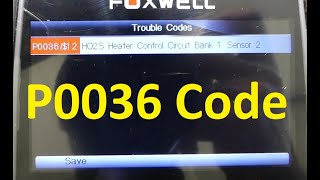
- Replacing the catalytic converter. While O2 sensors and converters are related, this code points to the sensor's electrical heater circuit, not the efficiency of the converter itself. 🎬 See this breakdown of P0036 causes and common fixes
- Mistaking a rattling exhaust heat shield for a more serious problem. Heat shield rattle is extremely common on these cars and is a separate, benign issue.
Most Likely Causes
- Failed Rear Oxygen Sensor 🔴 High Probability → Shop Oxygen Sensor The internal heater element is a common failure point on oxygen sensors due to constant, extreme heat cycles. This is a normal wear-and-tear item that fails with age and mileage.
How to confirm: Disconnect the sensor's gray electrical connector (located on the passenger side of the transmission tunnel). Measure the resistance across the two black wires on the sensor side of the connector. An open circuit (infinite resistance/OL) confirms the heater has burned out. A good sensor should read between 2 and 6 ohms when cold.
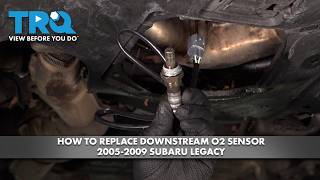
Typical fix: Replace the rear (Bank 1, Sensor 2) oxygen sensor. Soaking the old sensor's threads with penetrating oil (like PB Blaster) for an hour or more is highly recommended to avoid damaging the exhaust pipe. 🎬 Watch this step-by-step walkthrough for replacing both O2 sensors
Est. part cost: $70-$220 - Damaged Wiring or Connector 🟡 Medium Probability The wiring harness runs under the vehicle near the hot exhaust, making it susceptible to melting, corrosion, or physical damage from road debris. The plastic connector itself can also become brittle and break.
How to confirm: Visually inspect the entire wiring harness leading from the rear O2 sensor up to where it enters the cabin. Check for melted insulation, frayed wires, or corrosion inside the connector plug. A wiring diagram can help trace the circuit.
Typical fix: Repair the damaged section of wire or replace the connector pigtail.
Est. part cost: $15-$50 - Blown Fuse ⚪ Low Probability
How to confirm: Check Fuse #13 (15A) in the main fuse box located in the engine compartment. This fuse is often labeled for the A/F and O2 sensors.
Typical fix: Replace the blown fuse. If it blows again, a short circuit exists in the wiring or the sensor itself that must be diagnosed. A shorted sensor is a common reason for a repeatedly blowing fuse.
Est. part cost: $1-$5
Rare But Worth Checking
- Faulty Engine Control Module (ECM): → Shop Engine Control Module (ECM) This is very uncommon. The ECM should only be considered after all other possibilities (sensor, wiring, fuses) have been definitively ruled out.
- Corroded Exhaust System Ground Strap: A poor ground connection can sometimes cause erratic electrical behavior in exhaust sensors. Check the condition of any ground straps connected to the exhaust system.
Diagnosis Steps
- Connect an OBD-II scanner to confirm P0036 is the active code.
- Perform a visual inspection of the rear oxygen sensor, its connector, and the wiring harness. Look for any signs of melting, chafing, corrosion, or loose connections.
- Check Fuse #13 (15A) in the engine compartment fuse box. Replace if blown.
- If the fuse and wiring appear intact, disconnect the oxygen sensor's gray electrical connector.
- Using a multimeter set to Ohms (Ω), measure the resistance between the two black heater pins on the sensor side of the connector.
- A reading of infinite resistance (OL) means the heater is burned out and the sensor must be replaced. A reading between 2-6 ohms is generally considered good. A reading near zero ohms indicates a short circuit, which also requires sensor replacement.
- If the sensor's resistance is good, check for battery voltage (~12V) on the vehicle-side of the harness connector with the key on, engine off (KOEO). Lack of power or ground indicates a wiring issue upstream or, rarely, a problem with the ECM.
- After replacing the part, clear the code with the scanner and perform a drive cycle to ensure the Check Engine Light does not return.
Parts You'll Likely Need
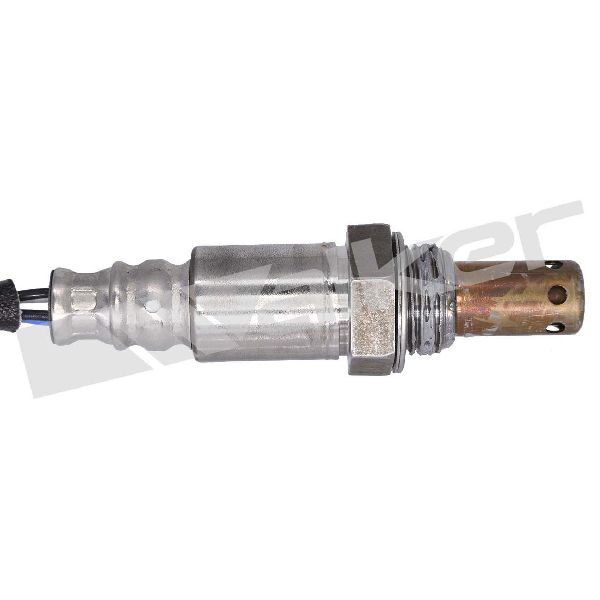
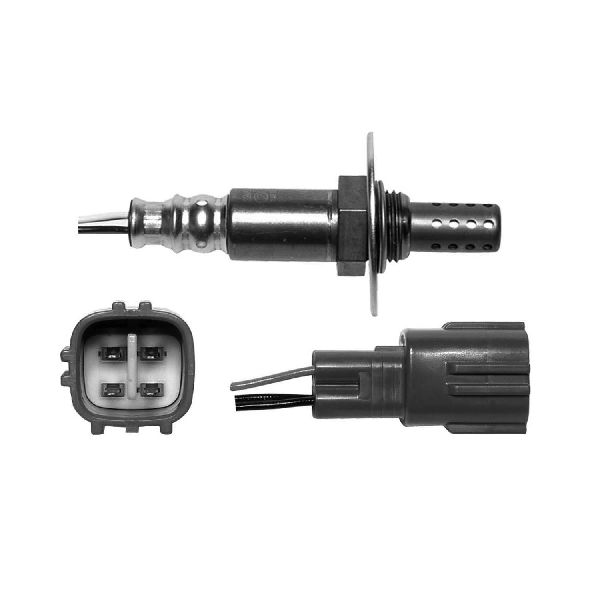
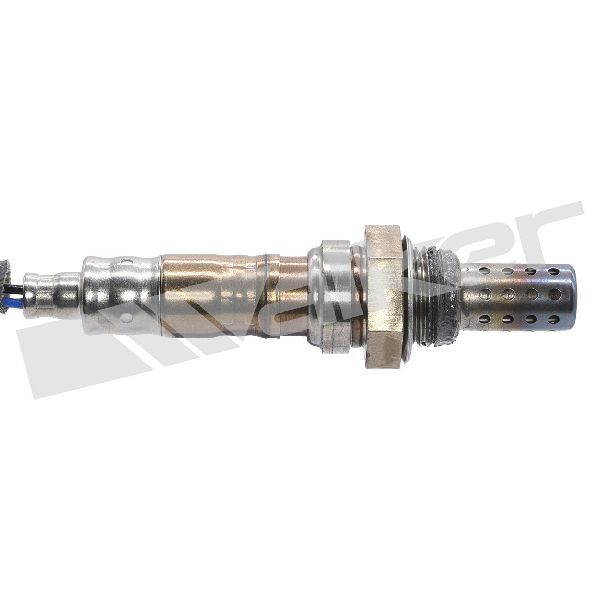
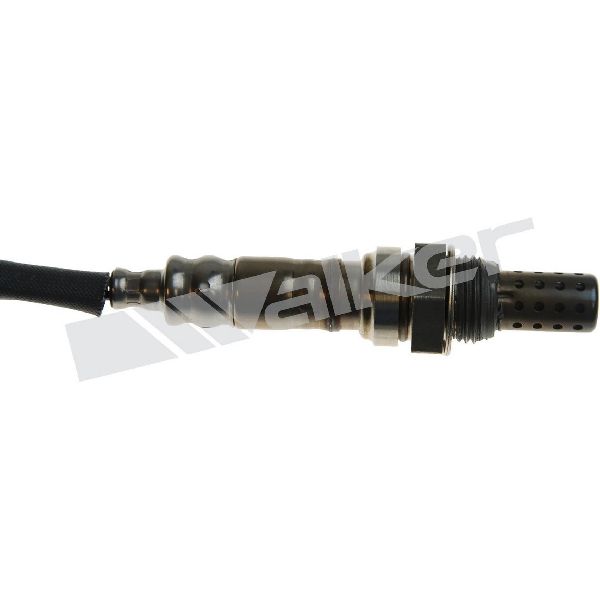
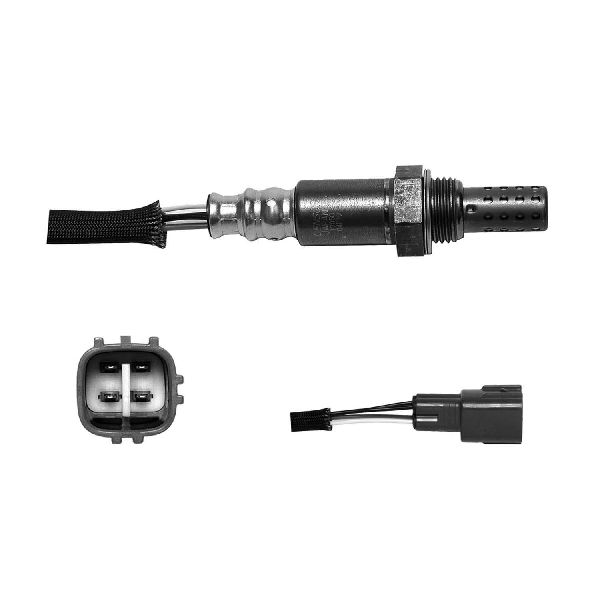
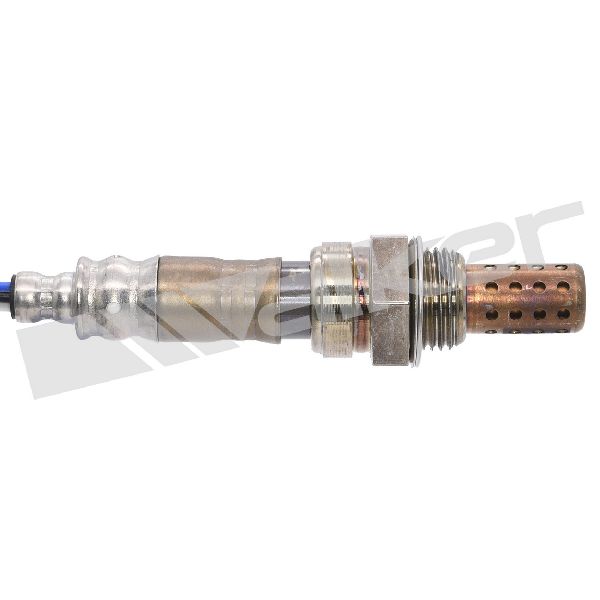
- Rear Oxygen Sensor (Downstream)
(OEM #22690AA810)— This is the component that contains the heater element reported as faulty by code P0036. The internal heater burning out is the most frequent cause. Denso is the original equipment manufacturer (OEM).
Trusted brands: Denso (OEM supplier, Part #234-4445), Bosch (Part #15172), NGK/NTK (Part #24642)
OEM price range: $150-$220
Aftermarket price range: $70-$120
Platform-Specific Known Issues
- Owner Experience: DIY Replacement: An owner of a 2009 Impreza 2.5i on a popular Subaru forum described getting the P0036 code at 110,000 miles. They confirmed the failure by measuring infinite resistance on the sensor's heater pins. The biggest challenge was removing the old sensor, which was seized. After letting it soak in penetrating oil overnight and using a 7/8" box wrench, it came loose. They installed a Denso 234-4445, cleared the code, and the issue was resolved.
- Common Failure Mileage: Across multiple forums, owners of the 2008-2011 Impreza and its platform mates (Forester, Legacy) report this code appearing most frequently between 80,000 and 120,000 miles, consistent with the expected lifespan of the original sensor's heater element.
Mechanic-Grade Diagnostic Values
- Rear O2 Sensor Heater Resistance — expected: 2 to 6 Ohms (when cold). Failure: Infinite resistance (OL) indicates an open circuit. Near-zero resistance indicates a short circuit.
- Heater Circuit Voltage at Harness Connector — expected: ~12V / Battery Voltage (Key On, Engine Off). Failure: No voltage indicates a blown fuse or an open in the power supply wire.
- Heater Circuit Current Draw — expected: Approximately 0.5 Amps. Failure: Significantly higher current suggests a short; zero current suggests an open circuit.
- Heater Circuit Ground Path Resistance — expected: Less than 0.1 Ohms. Failure: Resistance higher than 0.1 Ohms indicates a poor ground connection, which can trigger the code.
Scan Tool Commands That Help
- Subaru Select Monitor (or equivalent professional scan tool): Heater Circuit Active Test / Command Heater ON — To verify if the ECM is capable of commanding the heater circuit on. If the command is sent but the heater does not activate (and the sensor/wiring are good), it points towards a rare ECM driver issue.
Wiring & Ground Locations
- Rear O2 Sensor Connector (E25) — Typically found on the passenger side of the transmission tunnel, accessible from underneath the vehicle. The gray 4-pin connector plug is for the rear O2 sensor.. This is the primary disconnection point for testing the sensor's heater resistance and checking for power/ground from the vehicle harness.
- Main Engine Ground — The main engine-to-chassis ground strap is located on the top starter mounting bolt, which secures the starter to the transmission bell housing.. While not specific to the O2 sensor circuit, a poor main engine ground can cause a host of floating ground issues and erratic electrical behavior, potentially contributing to sensor codes.
- Exhaust Ground Strap — A smaller ground strap connecting the exhaust pipe (often on the downpipe or J-pipe) to the vehicle chassis or transmission.. This strap ensures the exhaust system is properly grounded. If it's missing, corroded, or not reinstalled after exhaust work, it can cause electrical noise and trigger sensor fault codes.
Real Owner Repair Stories
- Reddit r/MechanicAdvice (Ford Focus (demonstrates a common cross-platform issue)) — P0036 code returned immediately after replacing the rear O2 sensor.
❌ Tried (didn't work) Replacing the rear O2 sensor.
✅ What actually fixed it The resolution was not posted, but other users advised the owner to stop replacing parts and test the circuit for power and ground, and to only use OEM or high-quality OEM-supplier sensors instead of cheap generic parts.
When the Usual Fixes Don't Work
- While the vast majority of P0036 codes are fixed by replacing the rear O2 sensor, there are documented cases where the code returns immediately. This almost always points to one of three issues: 1) The replacement sensor is a cheap, unbranded part that is either defective out of the box or incompatible. 2) There is an actual wiring problem (open/short) between the connector and the ECM that was not diagnosed. 3) The fuse for the heater circuit blows instantly, indicating a short circuit in the harness or the new sensor itself.
OEM Part Supersession History
22690AA810→22690AA81A, 22690AA93A— Standard part revisions by the manufacturer.
Heads up: The Denso 234-4445 is the direct, OE-equivalent aftermarket replacement and is widely confirmed to be compatible with the entire 2008-2011 Impreza 2.5L range.
Diagnostic Flowchart
Other Known Issues on This Vehicle
Issues unrelated to this code that are worth knowing about as an owner of this generation:
- Head Gasket Failure 🔴 High — Very common. Prone to external oil and/or coolant leaks, typically between 100,000 and 150,000 miles. The EJ253 is one of the most well-known engines for this issue.
- Exhaust Heat Shield Rattle 🟡 Low — Extremely common. The thin metal heat shields, particularly around the catalytic converter and exhaust manifold, rust at their mounting points and create a metallic rattling or buzzing noise, especially at certain RPMs.
- Excessive Oil Consumption 🟠 Medium — Common as the engine ages (typically over 100k miles). Can be caused by leaking head gaskets, valve cover gaskets, or worn piston rings. Owners should monitor oil levels frequently.
- Timing Belt Maintenance 🔴 High — This is a critical maintenance item, not a defect. The EJ253 is an interference engine, meaning if the timing belt breaks (recommended replacement interval is 105,000 miles), catastrophic engine damage will occur. The water pump and idler pulleys are typically replaced at the same time.
- Takata Airbag Recalls 🔴 High — Widespread recall affecting this generation. The airbag inflators can rupture, sending metal fragments into the cabin. Owners should verify their VIN with Subaru or NHTSA to ensure the recall has been performed. (Ref: NHTSA Recalls / Subaru Campaigns TKA-20, TKB-20, TKC-20)
Used vs. New Parts: Buying Guide for This Vehicle
When a used part is the smart pick: NEVER for the oxygen sensor itself, as it is a wear-and-tear component with a limited lifespan. A used part will have unknown remaining life and is likely to fail soon. A used wiring harness pigtail from a junkyard is a perfectly acceptable repair for a damaged connector.
What to inspect on the donor part:
- For a connector/pigtail: ensure the plastic is not brittle or cracked.
- Check that the locking tab is intact and functional.
- Inspect the pins inside the connector for any signs of green or white corrosion.
OEM-only on this vehicle (don't cheap out):
- While not strictly 'OEM-only', it is highly recommended to use either the genuine Subaru sensor or the direct OEM-supplier part to avoid compatibility issues.
Aftermarket brands forum-validated for this vehicle:
- Denso (Part #234-4445) - This is the Original Equipment Manufacturer.
- NTK/NGK (Part #24642)
- Bosch (Part #15172)
Brands owners have reported issues with on this vehicle:
- Unbranded, generic sensors from online marketplaces (eBay, Amazon) are frequently reported by owners to be dead-on-arrival or fail prematurely, causing the P0036 code to return.
Real Owner Stories
Aggregated from forums and TSBs cited above. Mileages and costs reflect what owners reported in those sources.
2009 Subaru Impreza 2.5i — 110000 miles
Symptoms: Check Engine Light (P0036). Confirmed failure by measuring infinite resistance on the sensor's heater pins.
What fixed it: Replaced the rear oxygen sensor with a Denso 234-4445 after soaking the seized threads in penetrating oil overnight.
Source hint: vehicle_specific_issues: Owner Experience: DIY Replacement
2011 Subaru Impreza 2.5i
Symptoms: Check Engine Light and community advice on using the correct socket and penetrating oil for a DIY fix.
What fixed it: Replacement of the rear O2 sensor heater.
Source hint: Reddit r/subaru - P0036 on 2011 Impreza
2008-2011 Subaru Impreza — ~100000 miles
Symptoms: Check Engine Light and flashing cruise control light.
What fixed it: Replacement of the rear O2 sensor as confirmed by a mechanic.
Source hint: SubaruImpreza.org - P0036 Check Engine Light
Related OBD-II Codes
Frequently Asked Questions
Why is my 'CRUISE' light flashing and my cruise control disabled on my 2010 Impreza?
Which specific fuse should I check for a P0036 code on my 2.5L Impreza?
Where is the rear oxygen sensor connector located on the 2008-2011 Impreza?
What resistance reading should I see on a healthy rear O2 sensor heater for this vehicle?
Is there a specific replacement part recommended by the Subaru community for this fix?
Are there any safety recalls I should be aware of for my 2008-2011 Impreza while fixing this?
Helpful Videos
We Have This Part in Stock

The information in this article is provided for general reference and educational purposes only. Vehicle specifications, procedures, and part compatibility can vary by production date, trim level, and region. Always consult your vehicle's factory service manual and verify part numbers before purchasing or performing repairs. Safety-critical components such as airbags, seat belts, and braking systems should be installed by a qualified professional.
- Subaru Impreza:
- 🧭 Diagnostic Flowchart
- 🎬 Helpful Videos
- 🛍️ Shop This Part
- What's Unique About the 2008-2011 Subaru Impreza
- Symptoms You May Notice
- Most Likely Causes
- Rare But Worth Checking
- Diagnosis Steps
- Parts You'll Likely Need
- Platform-Specific Known Issues
- Mechanic-Grade Diagnostic Values
- Scan Tool Commands That Help
- Wiring & Ground Locations
- Real Owner Repair Stories
- When the Usual Fixes Don't Work
- OEM Part Supersession History
- Other Known Issues on This Vehicle
- Used vs. New Parts: Buying Guide for This Vehicle
- Real Owner Stories
- 2009 Subaru Impreza 2.5i — 110000 miles
- 2011 Subaru Impreza 2.5i
- 2008-2011 Subaru Impreza — ~100000 miles
- Related OBD-II Codes
- Frequently Asked Questions
- 🎟️ Get 5% Off