

P0036 on 2019-2024 Toyota RAV4: HO2S Heater Circuit Causes and Fixes
This code indicates a problem with the heater circuit in the downstream oxygen sensor (Bank 1, Sensor 2). The most common fix is replacing the sensor itself, which costs around $70-$150 for an aftermarket part or $180-$250 for an OEM Denso part. It's a manageable DIY job for those with basic tools. Before replacing, check the 'EFI NO.1' fuse.
- P0036 points directly to a fault in the heater for the oxygen sensor located after the catalytic converter.
- The most probable cause is a failed oxygen sensor, which is a common wear item. The OEM replacement is Denso part #234-4508.
- Driving is safe, but you will not pass an emissions test until the issue is resolved.
- Before buying a new sensor, always check the 10A 'EFI NO.1' fuse in the engine bay and visually inspect the wiring for damage, as this can save you time and money.
- A special O2 sensor socket (7/8" or 22mm) is highly recommended for DIY replacement.
What's Unique About the 2019-2024 Toyota RAV4
For the 5th generation Toyota RAV4 (2019-2024) with the A25A-FKS engine, the P0036 code is a straightforward and increasingly common issue as these vehicles age. There are no unique platform-specific quirks noted in major TSBs directly for P0036. However, TSB T-SB-0010-24 does exist for some A25A-FKS engines, including the RAV4, that exhibit a MIL ON condition with various DTCs on a cold start, indicating a sensitivity in the engine control system. The primary cause for P0036 remains the sensor itself failing due to age and constant heat cycles, a typical wear-and-tear scenario. A notable characteristic of this system is that the ECM may not activate the downstream heater circuit immediately at startup, waiting several minutes until the engine is partially warmed before commanding the heater on, which can be confusing during diagnosis.
Symptoms You May Notice
- Check Engine Light is on.
- Inability to pass a state emissions inspection.
- Slight potential decrease in fuel economy (often not noticeable by the driver).
- Replacing the upstream Air-Fuel Ratio sensor (Sensor 1) instead of the downstream Oxygen Sensor (Sensor 2). The codes are specific, so ensure you are working on the correct sensor, which is located after the catalytic converter.
Most Likely Causes
- Failed Downstream Oxygen Sensor 🔴 High Probability → Shop Oxygen Sensor The internal heater element is a common failure point on all oxygen sensors due to constant, extreme heat cycles. It is a wear-and-tear item, making it the most likely culprit, especially on vehicles approaching or exceeding 100,000 miles.
How to confirm: Disconnect the sensor and measure the resistance between the two heater circuit pins (usually the two same-colored wires, e.g., black) on the sensor side. A healthy heater should have a low resistance (typically 11-15 ohms when cold for a downstream sensor on a similar Toyota platform). An infinite resistance reading (open circuit) or a very high reading confirms the heater has failed and the sensor needs replacement.
Typical fix: Replace the Bank 1, Sensor 2 oxygen sensor. The OEM part is made by Denso.
Est. part cost: $70-$250 - Damaged Wiring or Connector 🟡 Medium Probability The sensor wiring is routed underneath the vehicle and is exposed to road debris, water, and extreme heat from the exhaust. This can cause wires to melt, fray, or break, and the connector pins can corrode.
How to confirm: Visually inspect the entire wiring harness leading to the downstream O2 sensor for any signs of melting, chafing, or broken wires. Check that the harness is properly secured in its clips away from the hot exhaust pipe. Unplug the connector and check for corrosion, moisture, or pushed-out pins. The connector is located on the passenger side, accessible after removing the front passenger wheel and looking toward the rear of the engine bay.
Typical fix: Repair the damaged section of the wiring harness or clean/replace the connector.
Est. part cost: $5-$50 - Blown Fuse ⚪ Low Probability A short in the heater circuit wiring or the sensor itself can cause the corresponding fuse to blow.
How to confirm: Check the fuse for the O2 sensor heater circuit. For this RAV4 generation, this is typically the 10A 'EFI NO.1' fuse located in the engine compartment fuse box. A visual inspection or a multimeter test will confirm if the fuse is blown.
Typical fix: Replace the blown fuse. If the new fuse blows immediately, it confirms a persistent short circuit in the wiring or sensor that must be found and repaired.
Est. part cost: $1-$5
Rare But Worth Checking
- Faulty Engine Control Module (ECM): → Shop Engine Control Module (ECM) This is extremely rare and should only be considered after all other possibilities (sensor, wiring, fuses) have been exhaustively tested and ruled out.
Diagnosis Steps
- Read the code with an OBD-II scanner to confirm P0036 is the primary or only code present.
- Visually inspect the downstream O2 sensor's wiring harness and connector. Look for any signs of melting, corrosion, or physical damage, ensuring it's clipped securely away from the exhaust.
- Locate and check the 10A 'EFI NO.1' fuse in the engine compartment fuse box. If it's blown, replace it and see if the code returns. If it blows again, suspect a short circuit.
- If the fuse and wiring are good, disconnect the O2 sensor connector.
- Using a multimeter set to ohms, measure the resistance across the two heater pins on the sensor itself (typically the two wires of the same color). An open circuit (infinite resistance) or a reading outside the manufacturer's spec (generally 11-15 ohms for a similar downstream sensor) indicates a failed sensor that needs replacement.
- If the sensor resistance is good, test the vehicle's wiring harness. Turn the ignition to 'ON' (engine off). Use a multimeter to check for 12V power on one pin of the harness connector and a good ground on another. Lack of power points to an issue with the fuse or the power supply wire, while lack of ground points to a break in the ground wire or a bad ECM ground driver.
Parts You'll Likely Need
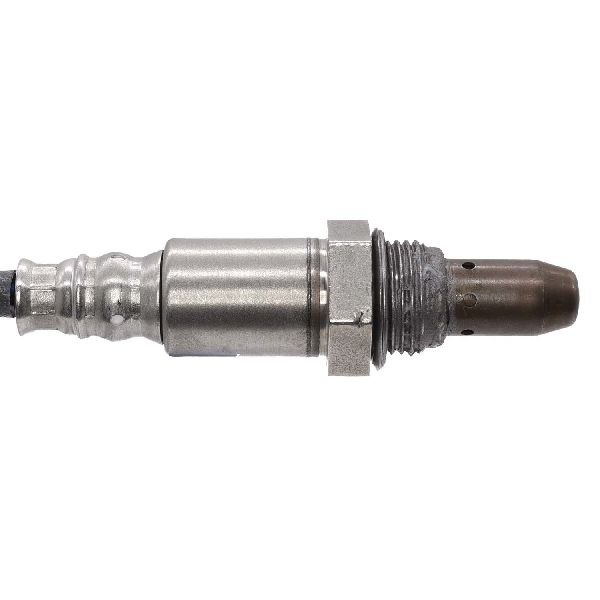
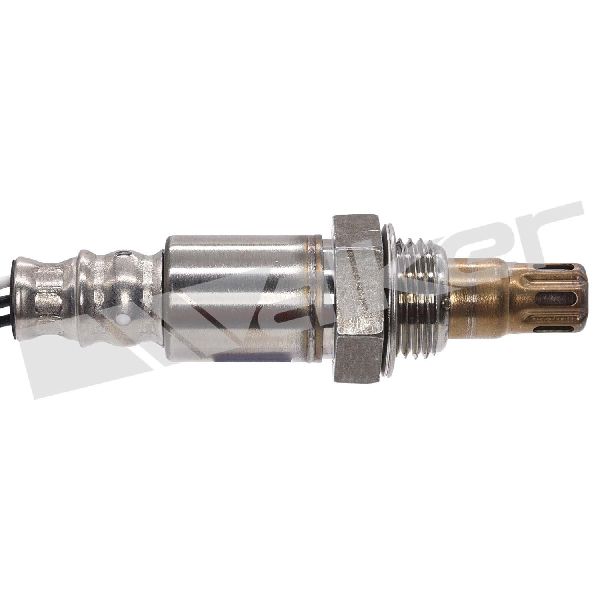
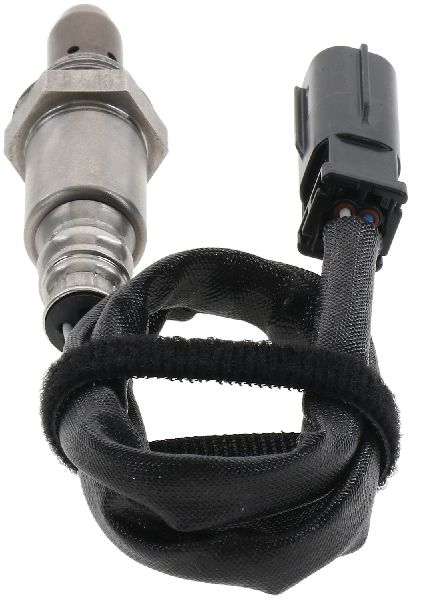
- Downstream Oxygen Sensor (Bank 1, Sensor 2)
(OEM #89465-0R080)— This is the most common failure for code P0036, as the internal heater element burns out over time.
Trusted brands: Denso (OEM) - Part #234-4508, Bosch, Walker, NGK/NTK
OEM price range: $180-$250
Aftermarket price range: $70-$150
Technical Service Bulletins (TSBs) & Recalls
- TSB T-SB-0010-24 (NHTSA ID: 10252262): Pertains to 2019-2024 RAV4s with the A25A-FKS engine that may exhibit a MIL ON condition with various DTCs upon a cold start. While not specific to P0036 alone, it acknowledges potential ECU logic issues under certain conditions.
Platform-Specific Known Issues
- On RAV4World forums, a user with a 2019 RAV4 reported getting the P0036 code at 95,000 miles. The fix was replacing the downstream O2 sensor (Denso 234-4508). The user noted the job was straightforward but required an O2 sensor socket and some patience to access the connector.
Mechanic-Grade Diagnostic Values
- Downstream O2 Sensor (B1S2) Heater Resistance — expected: 11.7 to 14.5 ohms at 68°F (20°C).. Failure: An infinite reading (OL) indicates an open circuit. A reading far outside the specified range indicates a faulty heater element.
- Scan Tool Live Data - O2 Sensor Heater Resistance (B1S2) — expected: Should match the multimeter reading (approx. 11-15 ohms).. Failure: A very high resistance value, such as the 5300 ohms seen in a diagnostic video on a similar Toyota, points to an open circuit internally.
- Heater Circuit Control Wire Voltage (at sensor connector) — expected: A pulse-width modulated (PWM) ground signal from the ECM when the heater is commanded on.. Failure: No PWM signal when one is expected (after the engine has run for a few minutes) could indicate a wiring issue or a faulty ECM driver. The presence of a PWM signal confirms the ECM and wiring are likely good, pointing to the sensor itself.
Hidden / Shadow Codes Worth Checking
- P003613: This is a Toyota-specific sub-code, or 'infotype', for P0036. The '13' suffix specifically means 'Circuit Open'. (see via Professional scan tools like Toyota Techstream or high-end Snap-on/Autel scanners will display this more detailed code.)
- P003612: This is another Toyota infotype for P0036. The '12' suffix means 'Circuit Short to Battery'. (see via Requires a professional-grade scan tool capable of reading manufacturer-specific codes.)
Scan Tool Commands That Help
- Toyota Techstream: Active Test: 'Control the Injection Volume for A/F Sensor' — While primarily for testing the upstream A/F sensor, this test can indirectly verify the downstream sensor's health. By forcing a rich or lean condition (+/- 12.5% fuel), you can watch the downstream O2 sensor voltage on the live data graph. A healthy downstream sensor should show a corresponding change after the fuel trim adjustment, confirming it is responsive.
- Toyota Techstream: Data List / Live Data Monitoring — Use this to view the specific resistance value of the O2 sensor heater circuit as reported by the ECM. This can quickly confirm an open circuit (very high resistance) without needing to physically access the sensor for a multimeter test.
Wiring & Ground Locations
- B1S2 Connector — The downstream O2 sensor connector is located on the passenger side of the vehicle. It can be accessed by removing the front passenger side wheel and looking through the wheel well towards the back of the engine/firewall area.. This is the primary connection point to test both the sensor-side resistance and the harness-side power and ground without having to raise the vehicle significantly.
- Heater Circuit Wires — On a typical 4-wire Denso sensor, the two wires for the heater circuit are the same color (often both black). The other two wires (e.g., blue and white) are for the sensor signal and ground.. Correctly identifying the heater wires is critical for performing a resistance test on the sensor and a voltage/ground test on the harness connector.
Real Owner Repair Stories
- YouTube channel 'Disciple Diagnostics' (2019 Toyota Camry with A25A-FKS engine) — Check Engine Light with code P003613 (Circuit Open).
❌ Tried (didn't work) The technician immediately suspected the sensor based on the code.
✅ What actually fixed it Diagnosis confirmed an open circuit in the Bank 1 Sensor 2 heater element. The scan tool showed over 5,000 ohms of resistance, and a multimeter test confirmed a reading of 172 ohms (spec is ~11-15 ohms). Replacing the downstream oxygen sensor resolved the fault. - Reddit user in r/rav4club (2019 RAV4 XLE (non-hybrid) at 150,000 miles) — Check Engine Light and AWD system disabled, with code P0037 (Heater Circuit Low), a related code to P0036.
❌ Tried (didn't work) Initial confusion about which sensor was Bank 1, Sensor 2.
✅ What actually fixed it The owner bought and replaced the downstream O2 sensor, which fixed the issue and re-enabled the AWD system.
OEM Part Supersession History
89465-0R010→89465-0R080— Standard part update/revision.
Heads up: IMPORTANT: Both of these part numbers (89465-0R010, 89465-0R080) are for the previous generation 2009-2012 RAV4 and will NOT fit the 2019-2024 models, despite being cited in some parts catalogs. Always verify fitment with VIN. The correct aftermarket equivalent is Denso 234-4508.
Diagnostic Flowchart
Other Known Issues on This Vehicle
Issues unrelated to this code that are worth knowing about as an owner of this generation:
- Roof Rack Water Leak 🔴 High — Common on 2019-2021 models. Caused by faulty roof rail clip seals, leading to water in the headliner, A-pillars, and potentially damaging electronics like airbags. (Ref: Toyota Customer Support Program 22TE05 (NHTSA ID 10236192) extends warranty coverage for this issue to 10 years/unlimited mileage.)
- Hesitation/Lurching from 8-Speed Automatic Transmission 🟠 Medium — Primarily reported in 2019-2021 gas models at low speeds. Many owners report a hesitation or jerky shifting, especially before the transmission is fully warm. (Ref: Toyota has issued ECU software updates via TSBs to improve shift logic and smoothness.)
- Hybrid High-Voltage Cable Corrosion ('Cablegate') 🔴 High — Affects RAV4 Hybrid models in regions with heavy road salt use. The main high-voltage cable connector under the vehicle is susceptible to corrosion, which can disable the hybrid system. (Ref: Toyota extended the warranty for this component, but repairs can be expensive if out of warranty.)
- Fuel Tank Not Filling to Capacity 🟡 Low — A widely reported issue on 2019-2020 models where the fuel gauge would show full, but the tank would not accept its full rated capacity. (Ref: Toyota addressed this with a redesign of the fuel tank and sending unit.)
- Milky or Discolored Engine Oil 🟠 Medium — Noted on A25A-FKS engines. Can be caused by short-trip driving cycles not allowing the engine to burn off condensation. (Ref: TSB TSB-0104-21 (NHTSA ID 10252251) addresses this condition.)
Used vs. New Parts: Buying Guide for This Vehicle
When a used part is the smart pick: A used oxygen sensor is almost never a smart choice. It is a wear-and-tear component with a finite lifespan, similar to a spark plug. The labor to install it is the same whether the part is new or used, and the risk of premature failure on a used sensor is very high. Given the relatively low cost of a new aftermarket sensor, buying new is strongly recommended.
Donor-vehicle mileage cap: roughly under 50000 miles for the part to have meaningful remaining life.
What to inspect on the donor part:
- Verify the part came from a vehicle that was not in a flood.
- Inspect the connector for any signs of corrosion, melted plastic, or pushed-out pins.
- Check the sensor's metal body for signs of extreme corrosion or physical impact damage.
- If possible, test the resistance of the heater circuit before purchase; it should be within the 11-15 ohm range.
Aftermarket brands forum-validated for this vehicle:
- Denso (OEM supplier)
- NGK / NTK
- Bosch (unless it's for a European vehicle, some forums report issues on Japanese cars, but generally reliable)
Brands owners have reported issues with on this vehicle:
- Generic, unbranded 'white-box' parts from online marketplaces should be avoided. While brands like Walker are considered economy lines, they are generally more reliable than no-name parts.
Real Owner Stories
Aggregated from forums and TSBs cited above. Mileages and costs reflect what owners reported in those sources.
2019 Toyota RAV4 — 95000 miles
Symptoms: Check Engine Light with code P0036.
What fixed it: Replacing the downstream O2 sensor with a Denso 234-4508 unit.
Source hint: rav4world.com/threads/p0036-code-on-2019-rav4.312089/
Related OBD-II Codes
Frequently Asked Questions
Is there a specific TSB for the Check Engine Light on my 2019-2024 RAV4 with the A25A-FKS engine?
What is the specific replacement part number for the downstream oxygen sensor on a 2019 RAV4?
Where is the O2 sensor connector located on this generation of RAV4?
Which fuse should I check if I have a P0036 code on my RAV4?
What resistance should I see when testing the downstream O2 sensor heater on a Toyota platform like the RAV4?
Can I keep driving my RAV4 with the P0036 code active?
Helpful Videos
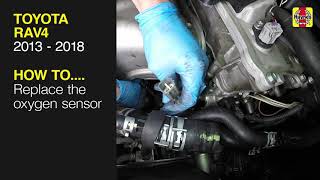
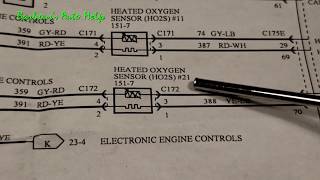
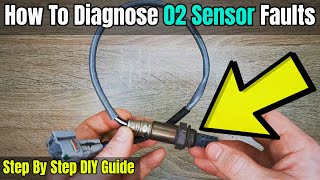
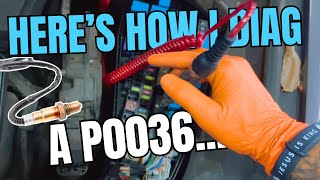

We Have This Part in Stock

The information in this article is provided for general reference and educational purposes only. Vehicle specifications, procedures, and part compatibility can vary by production date, trim level, and region. Always consult your vehicle's factory service manual and verify part numbers before purchasing or performing repairs. Safety-critical components such as airbags, seat belts, and braking systems should be installed by a qualified professional.
- Toyota RAV4:
- 🧭 Diagnostic Flowchart
- 🎬 Helpful Videos
- 🛍️ Shop This Part
- What's Unique About the 2019-2024 Toyota RAV4
- Symptoms You May Notice
- Most Likely Causes
- Rare But Worth Checking
- Diagnosis Steps
- Parts You'll Likely Need
- Technical Service Bulletins (TSBs) & Recalls
- Platform-Specific Known Issues
- Mechanic-Grade Diagnostic Values
- Hidden / Shadow Codes Worth Checking
- Scan Tool Commands That Help
- Wiring & Ground Locations
- Real Owner Repair Stories
- OEM Part Supersession History
- Other Known Issues on This Vehicle
- Used vs. New Parts: Buying Guide for This Vehicle
- Real Owner Stories
- 2019 Toyota RAV4 — 95000 miles
- Related OBD-II Codes
- Frequently Asked Questions
- 🎟️ Get 5% Off