

P0036 on 2005-2015 Toyota Tacoma 4.0L V6: O2 Sensor Heater Circuit Causes and Fixes
This code indicates a problem with the heater circuit for the oxygen sensor located after the catalytic converter on Bank 1 (passenger side). The most common fix is replacing the Bank 1, Sensor 2 oxygen sensor itself. Expect to pay $50-$100 for an aftermarket sensor and $120-$200 for an OEM Denso part. It's a straightforward DIY job for most owners.
- P0036 on a 2nd Gen Tacoma points to a problem with the heater in the passenger side, post-catalytic converter O2 sensor.
- The most probable cause is a failed sensor, which is a common wear item.
- Before buying a new sensor, perform a quick visual check of the wiring for any obvious damage from heat or debris.
- For best results and to avoid potential issues, use an OEM-quality Denso replacement sensor (Part No. 234-4260 is a common cross-reference for OEM 89465-04340).
- This is a DIY-friendly repair that requires basic hand tools and an O2 sensor socket.
What's Unique About the 2005-2015 Toyota Tacoma
On the 2nd Generation Tacoma with the 1GR-FE engine, this code is a very common and straightforward issue. The oxygen sensors are a known wear item, but the underlying electrical system is robust. Unlike some vehicles where this code might point to complex wiring or ECU issues, on the Tacoma, it almost always means the sensor itself has failed. Owners on forums like Tacoma World frequently report resolving this code with a simple sensor swap, strongly recommending the use of OEM Denso sensors to avoid compatibility problems. While the upstream sensors are a more complex Air/Fuel Ratio type, the downstream Sensor 2 is a conventional heated oxygen sensor.
Symptoms You May Notice
- Check Engine Light is on.
- Potential for slightly decreased fuel economy.
- Guaranteed failure of an emissions test.
- Replacing the wrong oxygen sensor. P0036 specifically refers to Bank 1 (passenger side), Sensor 2 (downstream/after the catalytic converter). It is easy to confuse it with Sensor 1 (upstream) or the sensors on Bank 2 (driver's side).
- Assuming the code is caused by a removed catalytic converter. While a removed cat will cause other codes (like P0420), P0036 is specific to the heater circuit and indicates an electrical fault, not a cat efficiency problem.
Most Likely Causes
- Failed Oxygen Sensor (Bank 1, Sensor 2) 🔴 High Probability → Shop Oxygen Sensor The internal heater element is a common failure point on oxygen sensors as they age from constant heat cycles. It's considered a routine maintenance/wear item.
How to confirm: Disconnect the sensor and measure the resistance across the two heater pins (usually the two same-colored wires). A reading of 'OL' (Open Loop) on a multimeter indicates a broken heater element. A service manual for a similar Toyota engine suggests a healthy resistance is around 11-16 Ω at room temperature.
Typical fix: Replace the Bank 1, Sensor 2 oxygen sensor. The sensor is located on the passenger side exhaust pipe, just after the catalytic converter.
Est. part cost: $50 - $200 - Damaged Wiring or Connector 🟡 Medium Probability The sensor wiring is located under the truck and is exposed to heat from the exhaust, road debris, and moisture, which can cause wires to melt, fray, or corrode over time. The wiring harness runs up into the cab and the connector is located under the passenger seat carpet, which can be a site for corrosion if moisture enters the cab.
How to confirm: Visually inspect the wiring harness leading to the sensor for any signs of melting, chafing, or breaks. Check the connector plug (located under the passenger seat carpet) for corrosion or backed-out pins.
Typical fix: Repair the damaged section of the wiring harness or clean/replace the connector terminals.
Est. part cost: $5 - $50 - Blown Fuse ⚪ Low Probability A short circuit in the sensor or its wiring can cause the related fuse to blow as a protective measure.
How to confirm: Check the fuse box in the engine bay for a blown fuse related to the A/F Heater or emissions system. A wiring diagram is helpful to identify the specific fuse.
Typical fix: Replace the blown fuse. If the new fuse blows immediately, it indicates a persistent short circuit that must be found and repaired.
Est. part cost: $1 - $5
Rare But Worth Checking
- Faulty Engine Control Module (ECM): → Shop Engine Control Module (ECM) This is extremely rare. The ECM should only be considered a potential cause after all other possibilities (sensor, wiring, fuses) have been exhaustively tested and ruled out.
Diagnosis Steps
- Read the code with an OBD-II scanner to confirm P0036 is the only code present.
- Locate the Bank 1, Sensor 2 oxygen sensor on the passenger side exhaust pipe, downstream of the catalytic converter.
- Visually inspect the sensor's wiring harness for any obvious signs of damage, such as melting, fraying, or corrosion.
- Trace the wiring to its connector, which is typically found inside the cab under the passenger-side carpet, and inspect the connector for damage or corrosion.
- If the wiring appears intact, disconnect the sensor. Use a multimeter to measure the resistance between the two heater pins on the sensor side of the connector. A reading of infinite resistance (OL) means the heater is broken and the sensor must be replaced. A good sensor should have a low resistance, typically in the range of 11-16 ohms.
- If the sensor's resistance is within spec, check for power and ground at the vehicle-side connector with the ignition on. You will need a vehicle-specific wiring diagram for pinouts. Lack of power could indicate a blown fuse, while lack of ground could indicate a wiring issue back to the ECM.
- If the sensor and wiring test good, the final, though very unlikely, culprit is the ECM.
Parts You'll Likely Need
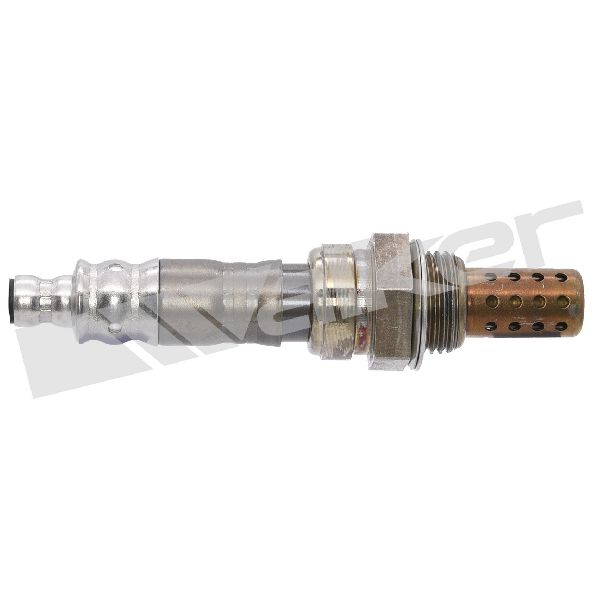
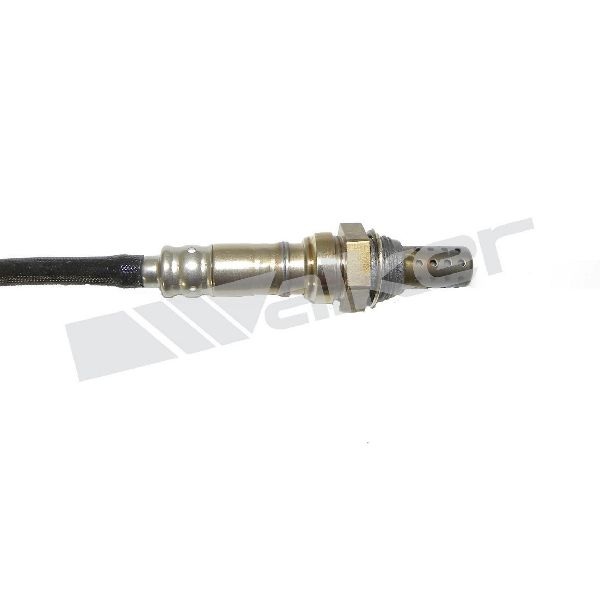
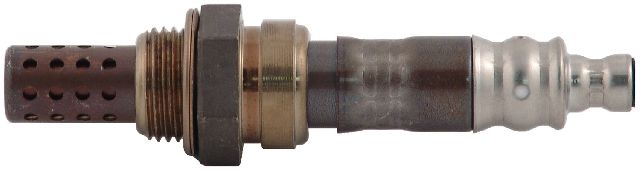
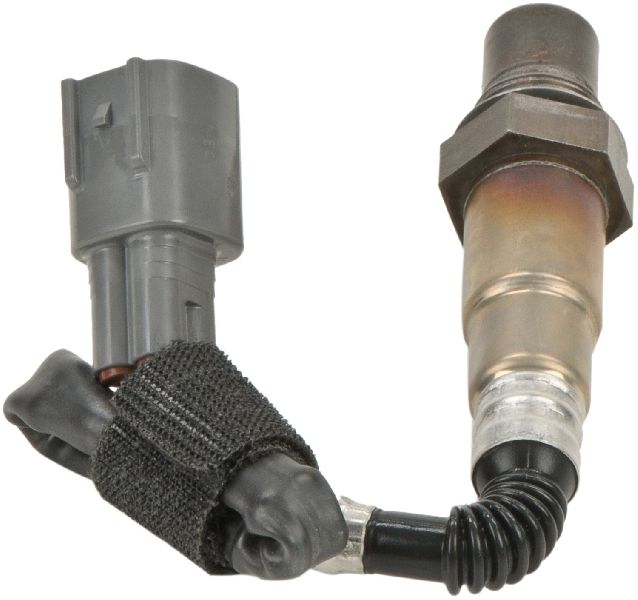
- Oxygen Sensor (Bank 1, Sensor 2)
(OEM #89465-04340)— This is the component that contains the heater element that most commonly fails, triggering the P0036 code.
Trusted brands: Denso (OEM), Bosch, Walker Products, NTK/NGK
OEM price range: $120-$200
Aftermarket price range: $50-$100
Platform-Specific Known Issues
- Owner Experiences with P0036: A user on Tacoma World with a 2003 Tacoma (pre-generation but relevant) experienced P0036 along with P0135 after the previous owner removed the downstream catalytic converter. This highlights that while the heater circuit code is electrical, it often gets addressed during exhaust modifications. The fix in these cases often involves using a spacer or 'defouler' to move the O2 sensor out of the direct exhaust stream, though this does not fix the underlying electrical heater fault.
Mechanic-Grade Diagnostic Values
- O2 Sensor Heater Element Resistance — expected: 11 - 16 Ω at 68°F (20°C) as per service manual. Some general sources cite a wider range of 2-25 Ω.. Failure: A reading of 'OL' (Over Limit) or infinite resistance on a multimeter indicates a broken/open heater element.
- Heater Circuit Supply Voltage — expected: Approximately 12V (Battery Voltage) with Key On, Engine Off (KOEO).. Failure: No voltage indicates a blown fuse, faulty relay, or an open circuit in the power supply wire.
- Heater Circuit Control (ECM side) — expected: When the ECM commands the heater ON, the ground control wire should drop to near 0V. When OFF, it may show battery voltage.. Failure: Voltage on the control wire never drops to 0V, indicating the ECM is not commanding the heater on, or there's a break in the ground wire.
- Downstream O2 Sensor Voltage (Live Data) — expected: On a warm, functioning catalytic converter, the voltage should be relatively stable and high (above 0.6V). However, some Toyota strategies may show a very low voltage (around 0.05V) at idle, which is not necessarily a fault.. Failure: Voltage that is stuck, not responding, or mirroring the upstream sensor's fluctuations can indicate a problem, though P0036 is specific to the heater circuit, not sensor signal.
Hidden / Shadow Codes Worth Checking
- Mode $06, TID $05, CID $81: This specific monitor in Mode $06 tracks the heater circuit of the Bank 1 Sensor 2. A failure here directly corresponds to the P0036 code. Technicians can view this data to see if the test has run and passed or failed before the check engine light illuminates. (see via Advanced OBD-II scan tools that support Mode $06 data display.)
Scan Tool Commands That Help
- Toyota Techstream: Active Test: 'Control the Injection Volume for A/F Sensor' — While this test is primarily for upstream A/F sensors, it can be used to force rich/lean conditions. By observing the downstream O2 sensor's reaction (or lack thereof), a technician can assess its overall health, although it doesn't directly test the heater circuit. A non-responsive sensor might have multiple issues beyond just the heater.
- Toyota Techstream: Data List — To monitor live data streams for 'O2 Sensor B1S2' voltage and 'A/F Heater B1S2' status (On/Off). This allows a technician to see if the ECM is commanding the heater on and what the sensor's voltage response is in real-time.
Wiring & Ground Locations
- A/F Heater Fuse & Relay — In the engine bay fuse/relay box. Look for components labeled 'A/F HEATER' or similar.. This fuse and relay provide the power for the oxygen sensor's heater element. A blown fuse or failed relay will cut power to the entire circuit, causing this code.
- B1S2 O2 Sensor Connector — The harness for the sensor runs from the exhaust pipe up through a grommet in the floor pan and connects under the passenger seat, beneath the carpet.. This is a common point for corrosion if water has entered the cab. It is also the primary access point for testing both the sensor and the vehicle-side harness without having to work under the vehicle.
- Chassis Ground Points — Key grounds are located behind the driver and passenger side kick panels, and on the frame rail near the rear shock mount.. While not a direct ground for the sensor heater (which is typically grounded through the ECM), poor chassis grounds can introduce electrical noise and voltage drop issues that can affect sensor readings and ECM behavior. A corroded exhaust ground strap has also been noted as a potential cause.
Real Owner Repair Stories
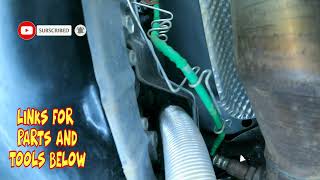
- YouTube video by 'Fix It All' (Toyota Tacoma (year not specified, but 2nd Gen body style)) — Check Engine Light with O2 sensor codes.
❌ Tried (didn't work) The owner was about to replace the O2 sensors.
✅ What actually fixed it Upon inspection before replacing parts, a bare wire was found in the factory wiring harness leading to the front O2 sensor. The wire had been pulled out of the connector pin. Repairing the damaged wire in the harness resolved the issue.
Diagnostic Flowchart
Other Known Issues on This Vehicle
Issues unrelated to this code that are worth knowing about as an owner of this generation:
- Frame Rust Perforation 🔴 High — Very common, especially in cold climates with road salt. Led to warranty extensions and buyback programs for 1995-2010 models. (Ref: Customer Support Program (not a formal recall) for 2005-2010 models.)
- Rear Leaf Spring Fracture 🔴 High — Common on 2005-2011 models, particularly 4x4 and PreRunner. Corrosion and stress can cause a leaf to snap, potentially puncturing the fuel tank. (Ref: NHTSA Recall #14V-604.)
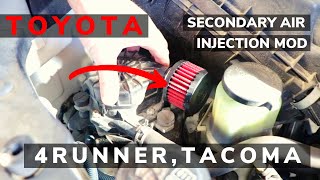
- Secondary Air Injection System Failure 🟠 Medium — Common on 2012-2015 models. The foam filter in the air pump disintegrates, destroying the pump and potentially clogging the switching valves, leading to expensive repairs and 'limp mode'. (Ref: A limited service campaign/warranty extension was offered but has since expired for most vehicles. A common DIY preventative fix is the 'Uni-filter mod'.)
- Head Gasket Failure (Early Models) 🟠 Medium — More prevalent on 2005-2006 models around cylinder #6. Toyota reportedly updated the gasket design mid-2006. Failure often occurs after 150k miles.
- Front Crankshaft Seal Oil Leak 🟡 Low — Reported on some earlier 2TR-FE (4-cylinder) and 1GR-FE engines. A minor but messy leak from the front timing cover.
Used vs. New Parts: Buying Guide for This Vehicle
When a used part is the smart pick: For this repair, a used part rarely makes sense. The oxygen sensor is a wear-and-tear item with a finite lifespan. The labor to install it is the same whether the part is new or used, and the risk of a used sensor failing shortly after installation is high. A used wiring harness pigtail from a junkyard could be a cost-effective solution if only the connector is damaged.
Donor-vehicle mileage cap: roughly under 50000 miles for the part to have meaningful remaining life.
What to inspect on the donor part:
- For a pigtail: ensure the plastic is not brittle, the locking tab is intact, and there is no sign of corrosion on the pins.
- For a sensor (if you must): avoid sensors with heavy carbon deposits, physical damage, or from vehicles with known engine problems (e.g., burning oil).
OEM-only on this vehicle (don't cheap out):
- Oxygen Sensor - While not strictly 'OEM-only', forum consensus strongly recommends using the OEM supplier, Denso, to avoid compatibility and performance issues that are common with off-brand sensors on this platform.
Aftermarket brands forum-validated for this vehicle:
- Denso (OEM supplier)
- NTK/NGK
- Bosch
Brands owners have reported issues with on this vehicle:
- Generic, unbranded 'eBay' or 'Amazon' sensors are frequently reported to fail quickly or not work correctly out of the box.
Real Owner Stories
Aggregated from forums and TSBs cited above. Mileages and costs reflect what owners reported in those sources.
2003 Toyota Tacoma (Pre-generation 1GR-FE context)
Symptoms: The owner observed P0036 along with P0135 after the previous owner had removed the downstream catalytic converter.
What fixed it: The owner addressed the codes in the context of exhaust modifications, though the heater circuit specifically requires a functional electrical connection or sensor replacement.
Source hint: Tacoma World (tacomaworld.com) - Thread titled 'catalytic converter removed and not seeing P0036 and P0135'
Related OBD-II Codes
Frequently Asked Questions
Where is the Bank 1, Sensor 2 oxygen sensor located on my 4.0L V6 Tacoma?
Which brand of oxygen sensor should I buy for my Tacoma to fix P0036?
I found the O2 sensor connector under my passenger seat carpet; why is it there?
Can I use a 'defouler' or spacer to fix the P0036 heater circuit code?
What resistance should I see when testing the heater element on my Tacoma's O2 sensor?
Is there a fuse I should check for the P0036 code on my 2005-2015 Tacoma?
Helpful Videos
![How to Fix TOYOTA P0036 Engine Code in 2 Minutes [1 DIY Method / Only $19.64]](https://img.youtube.com/vi/5IqswOSGoz4/mqdefault.jpg)

We Have This Part in Stock


The information in this article is provided for general reference and educational purposes only. Vehicle specifications, procedures, and part compatibility can vary by production date, trim level, and region. Always consult your vehicle's factory service manual and verify part numbers before purchasing or performing repairs. Safety-critical components such as airbags, seat belts, and braking systems should be installed by a qualified professional.
- Toyota Tacoma:
- 🧭 Diagnostic Flowchart
- 🎬 Helpful Videos
- 🛍️ Shop This Part
- What's Unique About the 2005-2015 Toyota Tacoma
- Symptoms You May Notice
- Most Likely Causes
- Rare But Worth Checking
- Diagnosis Steps
- Parts You'll Likely Need
- Platform-Specific Known Issues
- Mechanic-Grade Diagnostic Values
- Hidden / Shadow Codes Worth Checking
- Scan Tool Commands That Help
- Wiring & Ground Locations
- Real Owner Repair Stories
- Other Known Issues on This Vehicle
- Used vs. New Parts: Buying Guide for This Vehicle
- Real Owner Stories
- 2003 Toyota Tacoma (Pre-generation 1GR-FE context)
- Related OBD-II Codes
- Frequently Asked Questions
- 🎟️ Get 5% Off