

P0037 on 2009-2016 Audi A4 2.0T: Causes and Fixes for O2 Sensor Heater Fault
On a 2009-2016 Audi A4 2.0T, P0037 almost always points to a failed internal heater in the downstream (post-catalytic converter) oxygen sensor. Replacing the sensor is the most common fix. Before replacing, check the fuse for the O2 heater circuits, located in the engine bay ECU box. Expect to pay $70-$150 for an aftermarket part and $180-$250 for an OEM sensor.
- P0037 on your Audi A4 almost certainly means the heater inside your rear oxygen sensor has failed.
- This is a minor issue that won't stop you from driving the car, but it will cause a
What's Unique About the 2009-2016 Audi A4
The 2.0L TFSI engine in the B8/B8.5 generation A4 is generally reliable, but like any modern engine, its oxygen sensors are wear-and-tear items. The P0037 code is a very common and straightforward fault on this platform. Unlike some complex electronic issues, the diagnosis for P0037 is typically simple, with the vast majority of cases being resolved by replacing the sensor itself. Before replacing the sensor, it's worth checking the associated fuse, as this can sometimes be the cause, especially if other heater circuit codes (P0031, P0051, P0057) are present simultaneously.
Generation note: The 2009-2016 model years cover the Audi A4 B8 generation, which includes the 2013-2016 facelift (B8.5). No significant differences have been noted regarding the diagnosis or repair of code P0037 between these model years. The EA888 Gen 2 engine (engine code CAEB) was used from 2009-2014 and is particularly known for other issues like oil consumption.
Symptoms You May Notice
- Check Engine Light is on
- Vehicle will fail an emissions test
- Slight increase in fuel consumption (uncommon, as the rear sensor has minimal impact on fuel trim)
- Rough idle or hesitation (very rare for this specific sensor fault)
- Replacing the upstream (pre-catalyst) oxygen sensor instead of the downstream (post-catalyst) one.
- Replacing the catalytic converter when the issue is only with the sensor monitoring it. A P0420 code would typically accompany P0037 if the catalyst were also an issue.
- Assuming the sensor is bad without checking the fuse first, especially when multiple heater codes are present.
Most Likely Causes
- Failed Downstream Oxygen Sensor 🔴 High Probability → Shop Oxygen Sensor The internal heating element of an O2 sensor is a common failure point due to constant heat cycles and exposure to exhaust gases. It is considered a consumable part with a finite lifespan, and on the B8 A4, it is the most frequent cause of P0037.
How to confirm: Disconnect the sensor and measure the resistance across the two heater circuit wires (usually the same color, often white). An open circuit (infinite resistance) or a reading far outside the manufacturer's specification (typically 2-20 ohms) confirms a failed heater element. A short to ground can also trigger the code.
Typical fix: Replace the Bank 1, Sensor 2 oxygen sensor. This is a DIY-friendly job requiring a 22mm O2 sensor socket. 🎬 Watch: This 10-step walkthrough shows you how to replace the sensor.
Est. part cost: $70-$250 - Blown Fuse 🟡 Medium Probability A short circuit in the sensor's heater element or its wiring can cause the corresponding fuse to blow. If multiple O2 sensor heater codes (e.g., P0031, P0037, P0051) appear at once, a blown fuse is the most likely culprit.
How to confirm: Locate the fuse box in the plenum chamber (under the windshield wipers) which houses the ECU. On the B8 platform, the O2 sensor heater fuse is often a 15A fuse in this box. Visually inspect the fuse or test it with a multimeter. If the fuse is blown, it's a strong indicator of the problem's source.
Typical fix: Replace the blown fuse. If the new fuse blows immediately, a short circuit exists in the wiring or one of the O2 sensors.
Est. part cost: $1-$5 - Wiring or Connector Damage ⚪ Low Probability The wiring for the downstream O2 sensor is routed under the vehicle, where it is exposed to road debris, heat from the exhaust, and moisture. This can lead to chafing, melting, corrosion in the connector pins, or physical breaks over time.
How to confirm: Visually inspect the entire wiring harness from the sensor to where it enters the cabin. Pay close attention to the connector for any signs of fraying, melting, corrosion, or loose pins. Perform a continuity test on the heater circuit wires between the sensor connector and the ECM if a wiring diagram is available.
Typical fix: Repair the damaged section of the wiring harness or clean/replace the connector.
Est. part cost: $10-$100
Rare But Worth Checking
- Faulty Engine Control Module (ECM): → Shop Engine Control Module (ECM) This is extremely rare. Before condemning the ECM, all other possibilities (sensor, fuse, wiring) must be exhaustively ruled out. A failed driver circuit within the ECM for the O2 heater can cause this code, but it should be the last item to consider.
Diagnosis Steps
- Read the code using an OBD-II scanner and confirm P0037 is present. Note any other codes.
- If multiple O2 heater codes are present, check the fuse first. It is likely located in the engine compartment ECU box under the plastic cowl.
- If the fuse is good, raise the vehicle safely and locate Bank 1, Sensor 2 (the oxygen sensor after the catalytic converter).
- Inspect the sensor's connector and wiring harness for any visible damage, corrosion, melting, or chafing against the chassis or heat shields.
- If the wiring looks okay, disconnect the sensor.
- Using a multimeter set to Ohms, measure the resistance between the two heater pins on the sensor itself (usually the two wires of the same color). A good sensor typically reads between 2 and 20 ohms. An infinite reading (OL) means the heater is burned out and the sensor needs replacement. 🎬 Watch: How to test the heater circuit with a multimeter.
- If the sensor's resistance is within spec, check for battery voltage at the heater power wire on the vehicle's harness connector (with the key on, engine off).
- Check for a good ground on the corresponding ground pin in the harness connector.
- If power and ground are good and the sensor's resistance is normal, the fault may lie within the wiring harness between the connector and the ECM, or, in very rare cases, the ECM itself.
Parts You'll Likely Need
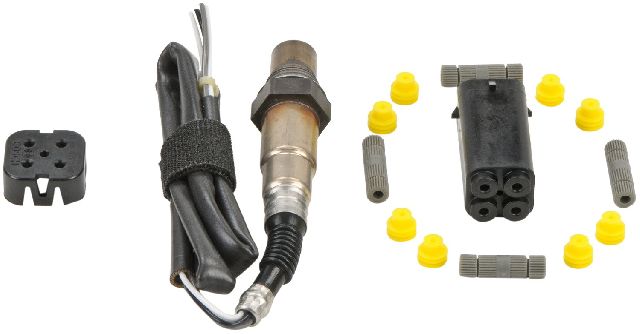
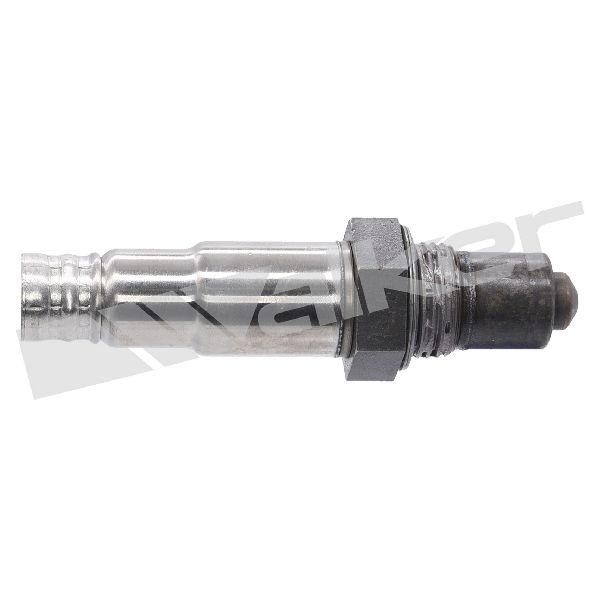
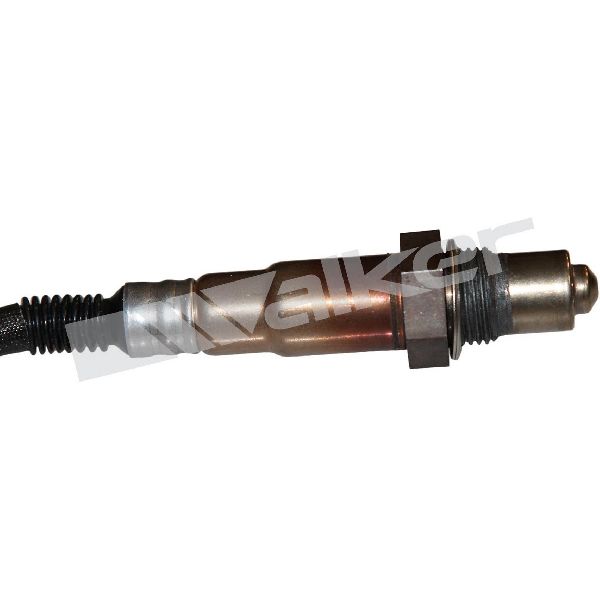
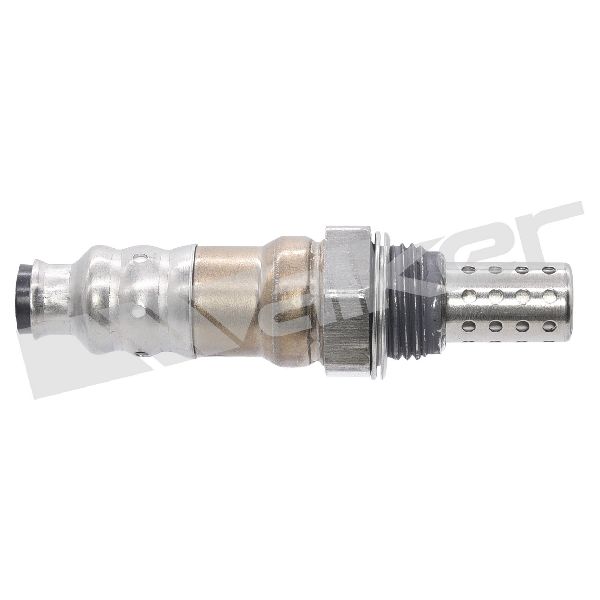
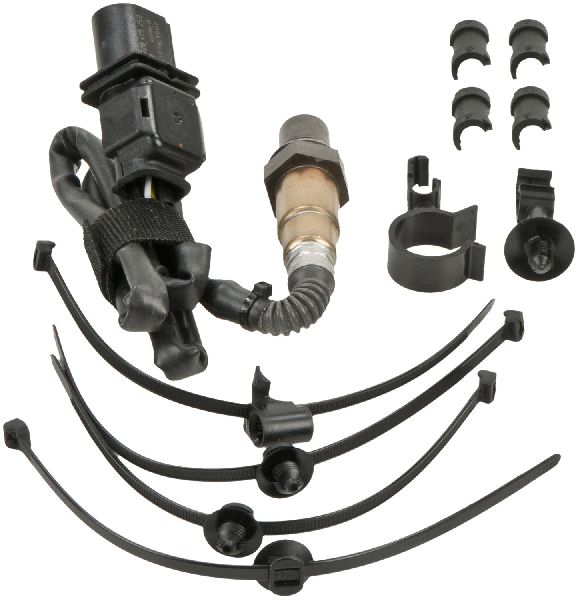
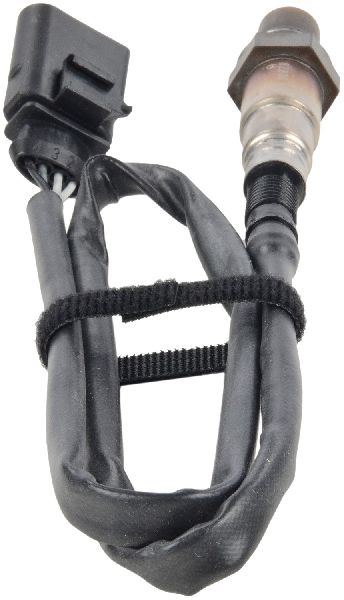
- Downstream Oxygen Sensor (Bank 1, Sensor 2)
(OEM #1K0-998-262-T (This is a common superseding part number, always verify with VIN). Previous revisions include 06H906262A and 06J906262K.)— The internal heater element fails from age and heat cycles, which is the most frequent cause of code P0037.
Trusted brands: Bosch (often the OEM supplier), Denso, NGK/NTK, Bremmen Parts
OEM price range: $180-$250
Aftermarket price range: $70-$150
Related Codes That Often Appear With This One
- P0036 — P0036 is a general fault for the same heater circuit, while P0037 specifically indicates a 'low' or short-to-ground condition.
- P0038 — P0038 indicates a 'high' or short-to-power condition in the same heater circuit. Seeing it intermittently with P0037 could suggest a wiring issue.
- P0031, P0051, P0057 — These are heater circuit low codes for the other O2 sensors (Bank 1 Sensor 1, Bank 2 Sensor 1, Bank 2 Sensor 2). If they appear together with P0037, it almost certainly points to a common power supply problem, like a single blown fuse or a faulty relay, not four failed sensors.
Technical Service Bulletins (TSBs) & Recalls
- Audi TSB 2024062/04: While not directly for P0037, this TSB addresses high oil consumption on the 2.0T engine by replacing the crankcase pressure regulating valve and front crankshaft seal. Excessive oil burning can, over a long period, contaminate and shorten the life of oxygen sensors.
Platform-Specific Known Issues
- Fuse Location Confusion: The fuse for the O2 sensor heaters is not in the cabin or engine side fuse panels. It is located in the waterproof ECU box in the engine bay plenum, under the windshield cowl. This requires removing the cowl cover for access, which can be confusing for first-time DIYers. 🎬 See this guide to locate the hidden ECU fuse box.
Mechanic-Grade Diagnostic Values
- O2 Sensor Heater Resistance (cold) — expected: 4-10 Ohms. Failure: Infinite resistance (Open Loop) or a value significantly outside the expected range indicates a failed heater element.
- Heater Circuit Power Supply (KOEO) — expected: ~12V (Battery Voltage). Failure: No voltage indicates a problem with the fuse, relay, or wiring from the power source.
- VCDS Measuring Block for O2 Heater Status — expected: VCDS Measuring Value Block (MVB) 030, Field 2 should show a test result (e.g., 'B1-S2 OK').. Failure: A 'Test OFF' or 'Heater OFF' status when the heater should be active points to a command issue or fault.
Scan Tool Commands That Help
- VCDS (VAG-COM): Read Measuring Value Blocks (MVB) - Group 030, 031, 032 — To observe the live status of the O2 sensor heaters, including the heater 'On'/'Off' command from the ECU and the resulting sensor readiness state. This can help determine if the ECU is attempting to activate the heater.
- VCDS (VAG-COM): Switch to Basic Settings - Group 034 — To initiate the oxygen sensor heater test sequence. The screen will display the test results for both upstream and downstream sensors, which can confirm if the heater is failing the ECU's self-test.
Wiring & Ground Locations
- Fuse SB7 — In the fuse holder (Holder B) located in the engine compartment E-box, under the plastic plenum cover near the windshield.. This 15A fuse is often the specific fuse for 'Lambda probe 1 after catalytic converter -GX7-'. A blown SB7 will cut power to the heater circuit, causing P0037.
- Sensor Connector T6k — The 6-pin black connector for the downstream O2 sensor, typically clipped to a bracket on the transmission housing.. This is the primary point for testing the sensor and the vehicle-side harness. Pins 1 and 2 are typically for the heater circuit. Corrosion or damage here is a common cause of failure.
- Ground Point 12 — At the center of the firewall in the engine bay.. This is a primary engine management ground point. While not exclusive to the O2 sensor, a poor connection here can cause various electrical issues, including sensor faults.
- Ground Point 640 — Ground connection on the exhaust system itself, often near the transmission.. Some Audi systems use a dedicated ground strap for the exhaust to ensure proper sensor readings. A corroded or missing strap can cause erratic sensor behavior, although it's less likely to cause a specific heater circuit code.
Real Owner Repair Stories
- Audizine forum user report (2009-2016 Audi A4 2.0T) — Persistent P0141 (a related heater circuit code, diagnosis is identical to P0037) after replacing the sensor.
❌ Tried (didn't work) Replacing the downstream O2 sensor
✅ What actually fixed it The issue was a broken wire inside the insulation near the sensor connector. The break was not visible externally and was only discovered by physically tugging on each individual wire at the connector, which revealed the broken conductor. - Ross-Tech Forums user (Audi A4 (B8)) — P0037 code would not clear after replacing the sensor and checking the fuse.
❌ Tried (didn't work) Replacing the downstream oxygen sensor, Checking the fuse in the engine bay box
✅ What actually fixed it The user performed a load test on the heater power supply wire using a headlamp bulb. The bulb did not light up brightly, indicating insufficient current despite showing 12V with a multimeter. This pointed to high resistance in the power wire between the fuse box and the sensor connector, which required further harness tracing to locate and repair.
Model Year Variations Within This Range
- 2009-2013 (B8): Primarily used the EA888 Gen 2 (e.g., CAEB engine code). This engine is well-known for potential oil consumption issues which can reduce the lifespan of O2 sensors and the catalytic converter over time.
- 2013-2016 (B8.5 Facelift): Began the transition to the EA888 Gen 3 engine. While the P0037 diagnosis is identical, the Gen 3 engine has significant internal differences, including an integrated exhaust manifold in the cylinder head and different timing components. Part numbers for sensors may differ from late-production Gen 2 engines, so VIN verification is critical.
Diagnostic Flowchart
Other Known Issues on This Vehicle
Issues unrelated to this code that are worth knowing about as an owner of this generation:
- Excessive Oil Consumption 🔴 High — Very common on 2009-2011.5 models with the EA888 Gen 2 (CAEB) engine. Caused by faulty piston ring design. Can lead to oil levels dropping by 1 quart in as little as 1,000 miles. (Ref: Subject of multiple class-action lawsuits and TSBs (e.g., 2024062/04) for diagnosis and repair, which involves new pistons and rings.)
- Timing Chain Tensioner Failure 🔴 High — Common on pre-facelift (approx. before 2013) EA888 engines. The original tensioner design can fail without warning, allowing the timing chain to jump teeth, leading to catastrophic engine damage (bent valves). (Ref: No official recall, but an updated tensioner part was released. It is a critical preventative maintenance item for owners of affected model years.)
- PCV Valve Failure 🟠 Medium — The diaphragm inside the PCV (crankcase ventilation) valve can tear, typically after 50,000-80,000 miles. This causes a large vacuum leak. (Ref: No TSB, but it's a very common failure. Symptoms include a rough idle, whistling noise from the engine, and high oil consumption.)
- Water Pump Failure 🟠 Medium — The water pump, often with a plastic housing, is prone to leaking or impeller failure, typically between 60,000 and 100,000 miles. (Ref: A recall was issued for some models due to an auxiliary coolant pump overheating, but the main engine water pump is a separate common failure item.)
- Intake Manifold Carbon Buildup 🟡 Low — As a direct-injection engine, the 2.0T TFSI does not spray fuel over the intake valves. This leads to carbon deposits building up over time (typically noticeable by 60,000-100,000 miles), which can cause misfires, hesitation, and reduced performance. (Ref: No TSB. Requires periodic manual cleaning (walnut blasting) as a maintenance item.)
Used vs. New Parts: Buying Guide for This Vehicle
When a used part is the smart pick: Never. Oxygen sensors are wear-and-tear items with a finite lifespan, similar to spark plugs or brake pads. The internal heater element is the most common failure point. A used sensor has an unknown history and a high probability of premature failure, making the labor to install it a wasted effort.
What to inspect on the donor part:
- Not applicable as buying used is strongly discouraged.
OEM-only on this vehicle (don't cheap out):
- While not strictly 'OEM-only', using a sensor from the Original Equipment Manufacturer (OEM supplier) is critical. Cheap, unbranded sensors are known to have incorrect heater resistance values or fail quickly, causing the code to return.
Aftermarket brands forum-validated for this vehicle:
- Bosch (very often the OEM supplier for Audi)
- NGK / NTK
- Denso
Brands owners have reported issues with on this vehicle:
- Generic 'no-name' or unbranded sensors from online marketplaces. These frequently fail to meet the precise heater current monitoring specifications of the Audi ECU, leading to persistent fault codes even if the sensor is 'new'.
Real Owner Stories
Aggregated from forums and TSBs cited above. Mileages and costs reflect what owners reported in those sources.
2010 Audi A4 2.0T
Symptoms: Owner experienced running issues and a Check Engine Light.
What fixed it: Replacement of the downstream (Bank 1, Sensor 2) oxygen sensor.
Source hint: Ross-Tech Forums thread titled '30671'
2012 Audi A4 2.0T
Symptoms: Multiple simultaneous O2 heater codes including P0031, P0037, P0051, and P0057.
What fixed it: Identifying a single power supply issue, such as a blown fuse or relay, rather than replacing individual sensors.
Source hint: Reddit r/Audi thread 'seasonal_mechanical_question_thread_summer_2016'
Related OBD-II Codes
Frequently Asked Questions
Where is the O2 sensor heater fuse located on my B8 Audi A4? I can't find it in the cabin.
I have P0037 along with P0031, P0051, and P0057. Did all four of my sensors fail at once?
Does Audi TSB 2024062/04 for high oil consumption relate to my P0037 code?
Can I test the Bank 1, Sensor 2 heater element myself with a multimeter?
Is the P0037 code common on other Audi models with the 2.0T engine?
Helpful Videos

We Have This Part in Stock

The information in this article is provided for general reference and educational purposes only. Vehicle specifications, procedures, and part compatibility can vary by production date, trim level, and region. Always consult your vehicle's factory service manual and verify part numbers before purchasing or performing repairs. Safety-critical components such as airbags, seat belts, and braking systems should be installed by a qualified professional.
- Audi A4:
- 🧭 Diagnostic Flowchart
- 🎬 Helpful Videos
- 🛍️ Shop This Part
- What's Unique About the 2009-2016 Audi A4
- Symptoms You May Notice
- Most Likely Causes
- Rare But Worth Checking
- Diagnosis Steps
- Parts You'll Likely Need
- Related Codes That Often Appear With This One
- Technical Service Bulletins (TSBs) & Recalls
- Platform-Specific Known Issues
- Mechanic-Grade Diagnostic Values
- Scan Tool Commands That Help
- Wiring & Ground Locations
- Real Owner Repair Stories
- Model Year Variations Within This Range
- Other Known Issues on This Vehicle
- Used vs. New Parts: Buying Guide for This Vehicle
- Real Owner Stories
- 2010 Audi A4 2.0T
- 2012 Audi A4 2.0T
- Related OBD-II Codes
- Frequently Asked Questions
- 🎟️ Get 5% Off