

P0037 on 2009-2017 Chevrolet Traverse: Heater Circuit Low Causes and Fixes
This code almost always means the Bank 1, Sensor 2 oxygen sensor has failed. This is the downstream sensor on the firewall side of the engine. Expect to pay $40-$80 for an aftermarket sensor and $100-$150 for an OEM part. It's a DIY-friendly fix with basic tools, but always check the related fuse first and inspect for power steering fluid leaks on 2016-2017 models.
- P0037 points to a failure in the heater circuit of the oxygen sensor after the catalytic converter on the firewall side (Bank 1).
- The most likely fix is replacing the Bank 1, Sensor 2 oxygen sensor, an accessible and DIY-friendly job.
- Before replacing the sensor, always check the fuse for the heater circuit first (often labeled 'O2 HTR').
- On 2016-2017 models, inspect for power steering fluid leaks above the sensor wiring, as this is a known issue (TSB 18-NA-009) that can cause the code.
What's Unique About the 2009-2017 Chevrolet Traverse
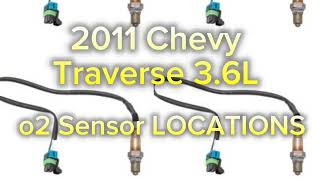
On the Traverse's transversely mounted 3.6L V6, 'Bank 1' is the cylinder bank against the firewall, which can make access tricky 🎬 Watch: See exactly where each O2 sensor is located for some repairs. However, for this specific code (P0037), it refers to Sensor 2, the downstream sensor. Fortunately, this sensor is located after the catalytic converter and is significantly easier to access from underneath the vehicle than the upstream sensor on the same bank. Owners of 2016-2017 models must be aware of a known issue where leaking power steering fluid can damage the Bank 1 O2 sensor wiring, as detailed in TSB 18-NA-009. This issue is shared across the GM Lambda platform, affecting the GMC Acadia, Buick Enclave, and Saturn Outlook. Additionally, manufacturer service bulletin TSB Bulletin #PIT5336 notes that this vehicle may exhibit a Service Engine Soon Malfunction Indicator Lamp specifically for heater circuit codes like P0037.
Symptoms You May Notice
- Check Engine Light is on
- Vehicle fails an emissions test
- Slightly reduced fuel economy
- Rough idle or hesitation (less common)
- Replacing the wrong oxygen sensor. It is critical to identify Bank 1 (firewall side) and Sensor 2 (downstream, after the catalytic converter).
- Replacing the catalytic converter. This code is for the sensor's heater circuit, not the performance of the converter itself.
- Ignoring a blown fuse. A new sensor will not work if the fuse that powers its heater circuit is blown.
- Assuming a new sensor is good. Defective new parts, even OEM, can be a cause of persistent codes.
Most Likely Causes
- Failed Bank 1, Sensor 2 Oxygen Sensor 🔴 High Probability → Shop Oxygen Sensor Oxygen sensors are wear-and-tear items. The internal heater element is a very common failure point after many heat cycles, eventually burning out like a light bulb filament.
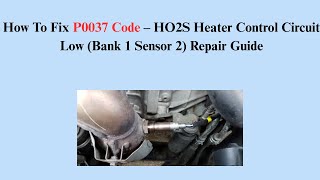
How to confirm: After confirming the fuse is good, test the resistance 🎬 Watch: Step-by-step guide to diagnosing and fixing the P0037 code of the heater circuit at the sensor's connector using a multimeter. An open circuit (infinite resistance/OL) confirms a failed heater. A good sensor typically has a resistance between 2 and 10 ohms. The heater circuit pins are usually the two wires of the same color (e.g., two black or two white wires).
Typical fix: Replace the Bank 1, Sensor 2 oxygen sensor. This is the downstream sensor on the firewall (rear) side of the engine. After replacement, perform a 'HO2S heater resistance learn reset' with a scan tool, or clear all codes (even if none are set) to force the ECM to relearn the new sensor's heater resistance.
Est. part cost: $40-$150 - Damaged Wiring or Connector 🟡 Medium Probability The sensor and its wiring are located under the vehicle, exposed to road debris, moisture, and extreme heat from the exhaust, which can cause insulation to become brittle and fail. On 2016-2017 models, leaking power steering fluid from the power steering gear inlet hose can directly contaminate the wiring harness for this sensor, causing shorts or high resistance.
How to confirm: Visually inspect the wiring harness from the sensor to the main loom for any signs of melting, chafing, corrosion, or fluid contamination. Check the connector pins for corrosion or damage. Ensure the connector is fully seated, as a partially connected plug can cause this fault. Perform a continuity test on the heater circuit wires between the ECM and the sensor connector.
Typical fix: Repair the damaged section of wire or replace the connector pigtail. If contaminated with fluid, the source of the leak (power steering hose) must also be repaired, and in severe cases, the entire engine wiring harness may need replacement per TSB 18-NA-009.
Est. part cost: $10-$50 for a pigtail; potentially much higher if a harness replacement is needed. - Blown Fuse for the O2 Heater Circuit ⚪ Low Probability
How to confirm: Locate the fuse for the O2 sensor heaters in the under-hood fuse box (often labeled 'O2 HTR', 'HO2S', or similar). Visually inspect the fuse and test for continuity with a multimeter. The fuse box layout differs between 2009-2012 and 2013-2017 models.
Typical fix: Replace the blown fuse. If the fuse blows again immediately, it indicates a short circuit in the wiring or within one of the O2 sensors that must be diagnosed before replacing the fuse again.
Est. part cost: $1-$5
Rare But Worth Checking
- Faulty Engine Control Module (ECM): → Shop Engine Control Module (ECM) This is extremely rare. Before condemning the ECM, all other possibilities (sensor, wiring, fuses) must be exhaustively ruled out. The ECM's internal driver for the heater circuit can fail, but it's an unlikely cause.
Diagnosis Steps
- Scan the vehicle for any other stored trouble codes.
- Locate the under-hood fuse box and check the fuse for the oxygen sensor heater circuit (e.g., 'O2 HTR'). Replace if blown.
- If the fuse is good, safely raise the vehicle and locate the Bank 1, Sensor 2 oxygen sensor. It is on the rear exhaust pipe, after the catalytic converter.
- Inspect the sensor's wiring harness and connector for any visible damage, melting, or corrosion. For 2016-2017 models, specifically check for signs of power steering fluid leaking from the inlet hose above the harness. Ensure the connector is fully seated.
- Disconnect the sensor. Using a multimeter set to Ohms, test the two heater circuit pins on the sensor side for resistance. A reading of infinite resistance (OL) or a value far outside the typical 2-10 ohm range indicates a failed heater element.
- With the key on and engine off, test the heater circuit power wire on the vehicle harness side of the connector (often terminal D). You should see battery voltage (approx. 12V) against a known good ground.
- If voltage is missing, there is a wiring issue between the fuse box and the sensor. If voltage is present and the sensor's resistance is out of spec, the sensor is faulty. Replace it and perform an 'HO2S heater resistance learn reset' or clear all codes.
- If the sensor, wiring, and fuse all test good, the issue may be with the ECM, but this is highly unlikely and requires professional diagnosis.
Parts You'll Likely Need
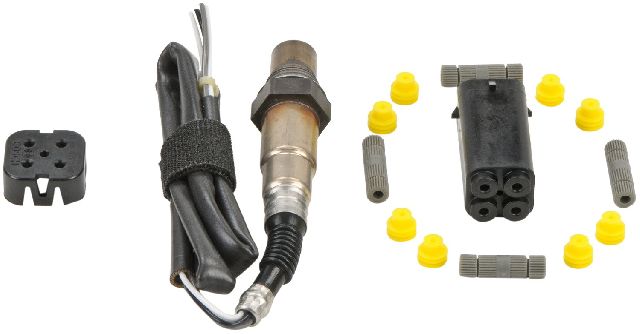
- Oxygen Sensor (Bank 1, Sensor 2)
(OEM #ACDelco 213-4229 (Verify specific fitment by VIN))— The internal heater element of the oxygen sensor is the most common failure point for this code.
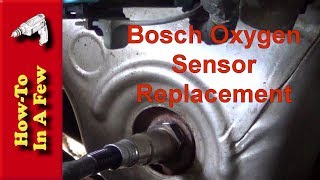
Trusted brands: ACDelco (OEM), Denso (often the OE manufacturer), Bosch, NGK/NTK
OEM price range: $100-$150
Aftermarket price range: $40-$80
Technical Service Bulletins (TSBs) & Recalls
- TSB 18-NA-009: Details the diagnosis and repair for power steering fluid leaking onto and damaging the Bank 1 O2 sensor wiring on 2016-2017 models, which can cause P0037 among other codes.
- TSB Bulletin #PIT5336: A manufacturer service bulletin that addresses vehicles exhibiting a Service Engine Soon Malfunction Indicator Lamp with Diagnostic Trouble Codes including P0037.
Platform-Specific Known Issues
- TSB 18-NA-009: Power Steering Fluid Leak: On 2016-2017 Traverse models, this bulletin notes that a leaking power steering fluid hose can drip onto the Bank 1 oxygen sensor wiring harness. This contamination can cause various O2 sensor codes, including P0037. The official repair involves replacing the leaking hose, the affected oxygen sensor, and potentially the entire engine wiring harness if it is saturated with fluid.
Mechanic-Grade Diagnostic Values
- O2 Sensor Heater Element Resistance — expected: 2 - 10 Ohms at room temperature. Failure: Open circuit (OL or infinite resistance) or a value significantly outside the expected range.
- Heater Circuit Power Supply Voltage (at harness connector) — expected: ~12V (Battery Voltage) with Key On, Engine Off. Failure: 0V or significantly low voltage, indicating a blown fuse or open in the power supply wire.
Scan Tool Commands That Help
- GDS2 / Tech2 or equivalent professional scan tool: HO2S Heater Resistance Learn Reset — This function must be performed after replacing a heated oxygen sensor. The ECM learns the resistance of the heater circuit on cold starts. Failing to reset this learned value can cause the ECM to operate the new heater incorrectly, potentially leading to premature failure or persistent codes. Clearing all DTCs (even if none are present) may also perform this reset.
Wiring & Ground Locations
- G110 — Located on the right rear of the engine, mounted to a bracket on the back of the cylinder head, directly above the power steering pump pressure hose.. This is a major engine ground point shared by multiple components, including the ECM. A loose or corroded G110 ground can cause intermittent and difficult-to-diagnose electrical issues, including O2 sensor circuit faults that may not appear to be related to a bad ground at first glance.
- HO2S B1S2 Connector Pins — At the sensor connector for Bank 1, Sensor 2.. For testing, power is typically on Terminal D (ignition circuit) and the ECM provides the ground control on Terminal E (heater control circuit). Knowing these pin letters allows for precise testing of the vehicle-side harness.
- Under-hood Fuse Block — Located in the engine compartment on the passenger side of the vehicle.. This block contains the fuse for the O2 sensor heater circuits (often labeled 'O2 HTR' or similar). The physical layout of this fuse block changed with the 2013 model year facelift, so diagrams for 2009-2012 will differ from 2013-2017.
Real Owner Repair Stories
- ScannerDanner Forum User (GM vehicle with LS1 engine (similar zirconia O2 sensor technology)) — Persistent O2 sensor codes and running issues.
❌ Tried (didn't work) Initial diagnosis pointed to a bad sensor. The first set of brand new, genuine GM replacement sensors was installed.
✅ What actually fixed it The new OEM sensors showed no activity at all. After extensive testing confirmed the vehicle's wiring and ECM were good, the new sensors were returned and swapped for another new pair. The second set of new sensors worked correctly. The root cause was defective-out-of-the-box replacement parts from the dealer. - MiracleMAX YouTube Channel (Holden Commodore (platform sharing GM 3.6L V6)) — O2 heater circuit fault code.
❌ Tried (didn't work) The sensor had apparently been replaced recently.
✅ What actually fixed it Upon physical inspection, the mechanic found the electrical connector for the O2 sensor was not fully seated and clipped in. A simple push to click the connector into place resolved the fault, highlighting the importance of checking basic mechanical connections before condemning parts.
When the Usual Fixes Don't Work
- While the vast majority of P0037 codes are fixed by replacing the Bank 1 Sensor 2 oxygen sensor, there are documented cases where the issue persisted. In one instance, two consecutive brand-new, genuine GM sensors were found to be defective out of the box, and the problem was only resolved with a third new sensor. In another case, a recently replaced sensor threw the same code because the installer failed to fully seat the electrical connector until it clicked, leading to an open circuit condition that mimicked a failed heater. These cases underscore the importance of verifying both the new part's integrity and the quality of the installation before moving on to more complex wiring or ECM diagnosis.
OEM Part Supersession History
GM 12609457→ACDelco 213-4229— Standard part number update from GM to ACDelco branding.
Heads up: These part numbers are generally interchangeable for the specified application. However, always verify fitment with the vehicle's VIN, as numerous similar-looking sensors exist for different GM engines (e.g., 2.4L vs 3.6L) that are not compatible.
Model Year Variations Within This Range
- 2013-2017: The under-hood and instrument panel fuse box layouts were changed as part of the 2013 model year facelift. When searching for the O2 sensor heater fuse, ensure you are using a diagram specific to the post-facelift models.
- 2016-2017: These specific model years are covered by TSB 18-NA-009, which identifies a potential power steering fluid leak from an inlet hose that can drip onto and contaminate the Bank 1 O2 sensor wiring harness, causing P0037 and other related codes.
Diagnostic Flowchart
Other Known Issues on This Vehicle
Issues unrelated to this code that are worth knowing about as an owner of this generation:
- Premature Timing Chain Stretch 🔴 High — Very common on earlier 2009-2012 LLT engines, often appearing between 70,000 and 120,000 miles. Caused by a combination of chain design and overly optimistic oil life monitor intervals. (Ref: GM Special Coverage Adjustment 11340C extended warranty coverage to 10 years/120,000 miles for this issue on certain 2009 models. TSB 12-06-01-009D introduced updated timing chain service kits.)
- 6T75 Transmission 3-5-R Wave Plate Failure 🔴 High — A well-documented failure, especially in 2009-2011 models, often occurring just outside the powertrain warranty period (>100,000 miles). The wave plate fractures, sending metal debris through the transmission, leading to a loss of 3rd, 5th, and Reverse gears and eventual total failure. (Ref: GM Special Coverage 14404B extended the warranty for this specific failure to 10 years/120,000 miles on 2009 models.)
- Power Steering Pump/Gear Leaks & Failure 🟠 Medium — Widespread across many model years, with failures reported from 40,000 to over 100,000 miles. Leaks can be caused by pump wear or fluid thickening in extreme cold. One owner on Reddit reported a pump failure diagnosis on their 2012 Traverse. (Ref: Special Coverage Adjustment 14329 covered pump wear on 2009-2011 models for 10 years/150,000 miles. TSB 18-NA-009 addresses leaks dripping on O2 sensor wiring.)
- Intake Valve Carbon Buildup 🟠 Medium — An inherent issue for the direct-injection LLT and LFX engines, often causing misfires, rough idle, and reduced power as mileage increases (typically over 80,000 miles).
- EVAP Purge Valve Failure (P0496) 🟡 Low — A very common and relatively inexpensive failure. Symptoms include a check engine light for code P0496, difficulty starting after refueling, and slight engine hesitation.
Used vs. New Parts: Buying Guide for This Vehicle
When a used part is the smart pick: For this repair, a used part is only recommended for the wiring connector pigtail if the original is damaged or corroded. The oxygen sensor itself should always be purchased new.
Donor-vehicle mileage cap: roughly under 80000 miles for the part to have meaningful remaining life.
What to inspect on the donor part:
- For a pigtail: Inspect for flexible, uncracked wire insulation.
- Check for clean, corrosion-free connector pins.
- Ensure the locking tab on the connector is intact and functional.
OEM-only on this vehicle (don't cheap out):
- While not strictly 'OEM-only', using unbranded 'white box' or suspiciously cheap online oxygen sensors is highly discouraged. They are a frequent cause of premature failure, incorrect readings, and persistent check engine lights.
Aftermarket brands forum-validated for this vehicle:
- Denso
- NTK (NGK)
- Bosch
Brands owners have reported issues with on this vehicle:
- Unbranded or no-name sensors from online marketplaces.
Real Owner Stories
Aggregated from forums and TSBs cited above. Mileages and costs reflect what owners reported in those sources.
2016-2017 Chevrolet Traverse 3.6L V6
Symptoms: Various O2 sensor codes including P0037 caused by fluid contamination on the wiring harness.
What fixed it: Replaced the leaking power steering hose, the affected oxygen sensor, and potentially the entire engine wiring harness if saturated with fluid.
Source hint: TSB 18-NA-009
2012 Chevrolet Traverse 3.6L V6
Symptoms: Power steering pump failure, which is a prevalent issue that can lead to the wiring damage noted in related TSBs.
What fixed it: Diagnosis of power steering system components to prevent fluid leaks from damaging electrical connectors.
Source hint: Reddit r/MechanicAdvice thread titled '2012 chevy traverse power steering'
Related OBD-II Codes
Frequently Asked Questions
I have a 2017 Traverse with code P0037; could a power steering leak be the cause?
Where is the Bank 1, Sensor 2 oxygen sensor located on my 3.6L V6 Traverse?
Is there a specific reset procedure required after replacing the O2 sensor on this vehicle?
Which fuse should I check for the P0037 heater circuit on a 2012 Traverse?
My 2009 Traverse has P0037 and transmission issues; are they related?
What resistance should I see when testing the O2 sensor on my Traverse?
Helpful Videos
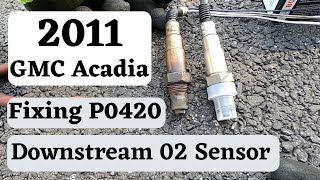
We Have This Part in Stock

The information in this article is provided for general reference and educational purposes only. Vehicle specifications, procedures, and part compatibility can vary by production date, trim level, and region. Always consult your vehicle's factory service manual and verify part numbers before purchasing or performing repairs. Safety-critical components such as airbags, seat belts, and braking systems should be installed by a qualified professional.
- Chevrolet Traverse:
- 🧭 Diagnostic Flowchart
- 🎬 Helpful Videos
- 🛍️ Shop This Part
- What's Unique About the 2009-2017 Chevrolet Traverse
- Symptoms You May Notice
- Most Likely Causes
- Rare But Worth Checking
- Diagnosis Steps
- Parts You'll Likely Need
- Technical Service Bulletins (TSBs) & Recalls
- Platform-Specific Known Issues
- Mechanic-Grade Diagnostic Values
- Scan Tool Commands That Help
- Wiring & Ground Locations
- Real Owner Repair Stories
- When the Usual Fixes Don't Work
- OEM Part Supersession History
- Model Year Variations Within This Range
- Other Known Issues on This Vehicle
- Used vs. New Parts: Buying Guide for This Vehicle
- Real Owner Stories
- 2016-2017 Chevrolet Traverse 3.6L V6
- 2012 Chevrolet Traverse 3.6L V6
- Related OBD-II Codes
- Frequently Asked Questions
- 🎟️ Get 5% Off