

P0037 on 2001-2010 Chrysler PT Cruiser 2.4L: O2 Sensor Heater Fixes and Causes
This code means the heater inside the downstream oxygen sensor (Bank 1, Sensor 2) has failed. The most common fix is to replace the sensor itself, which costs about $30-$70 for an aftermarket part. Before replacing, check the fuse and inspect the wiring for damage. Critically, on the PT Cruiser, a leaking oil pressure switch can wick oil up the wiring harness to the PCM, causing this code and others, so this must be checked.
- P0037 almost always points to a problem with the downstream (post-catalytic converter) oxygen sensor's heater.
- The most likely fix is replacing the sensor, which is an affordable and straightforward DIY job for many owners.
- Before buying parts, always check the fuse for the O2 heaters first.
- **Crucially for PT Cruiser owners:** If you also have a P0031 code, check your PCM connectors for oil contamination from a leaking oil pressure sensor before you suspect a bad PCM.
What's Unique About the 2001-2010 Chrysler PT Cruiser
While a bad oxygen sensor is the most frequent cause for P0037 on most cars, the PT Cruiser has a specific and notorious issue that can lead to misdiagnosis. A leaking oil pressure switch can allow engine oil to travel up the wiring harness through capillary action, eventually contaminating the main engine computer (PCM) connectors. This oil contamination can short out the oxygen sensor heater circuits, triggering P0037 and often P0031 (for the upstream sensor) simultaneously. Mechanics who are unaware of this may incorrectly blame the PCM itself, leading to a very expensive and unnecessary repair. This issue is so common it is discussed widely in owner forums and demonstrated in multiple repair videos.
🎬 Watch: How oil travels from the sensor to the computerGeneration note: The 2001-2010 range covers the entire production run of the PT Cruiser. A facelift occurred in 2006, which updated styling and interior features, but the 2.4L engine (both naturally aspirated and turbo) and basic exhaust layout remained consistent. The diagnostic approach for P0037 is the same for all years, though specific part numbers for sensors may vary slightly. For 2006-2010 models, the under-hood fuse box changed from a Power Distribution Center to an Integrated Power Module, which may alter fuse numbering.
Symptoms You May Notice
- Check Engine Light is on
- Failing a state emissions inspection
- Slight decrease in fuel economy
- Rough idle or hesitation (less common)
- Replacing the PCM when the actual cause is oil contamination in the harness from a leaking oil pressure sensor.
- Replacing the oxygen sensor without first checking the fuse or inspecting the wiring for obvious damage.
- Replacing O2 sensors repeatedly when a blown fuse, shared power/ground issue, or the oil-wicking problem is the root cause.
Most Likely Causes
- Failed Downstream Oxygen Sensor 🔴 High Probability → Shop Oxygen Sensor The internal heater element in oxygen sensors is a common failure item due to constant heat cycles and age. It's a wear-and-tear component.
How to confirm: Disconnect the sensor and measure the resistance across the two heater circuit pins (usually the two same-colored wires). An open circuit (infinite resistance) or a dead short (zero resistance) indicates a failed heater. A typical good reading for Chrysler sensors is between 5-7 ohms at room temperature.
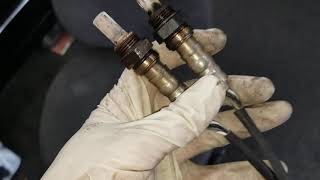
Typical fix: Replace the Bank 1, Sensor 2 (downstream) oxygen sensor. Soaking the old sensor threads with a penetrating oil like PB Blaster for 10-15 minutes can make removal much easier. A special slotted oxygen sensor socket is recommended. 🎬 See this walkthrough for replacing the downstream oxygen sensor
Est. part cost: $30-$70 - Damaged Wiring or Connector 🟡 Medium Probability The sensor and its wiring are located under the car, exposed to road debris, water, and extreme exhaust heat, which can cause wires to melt, break, or corrode. The connector itself can also become filled with dirt or moisture.
How to confirm: Visually inspect the entire wiring harness leading from the downstream O2 sensor to the main harness for any signs of melting, chafing, or broken wires. Check the connector for corrosion, pushed-out pins, or physical damage.
Typical fix: Repair the damaged section of the wiring harness or replace the connector pigtail.
Est. part cost: $10-$30 - Blown Fuse ⚪ Low Probability A short in the heater circuit wiring or the sensor itself can cause the corresponding fuse to blow. This is often a symptom of another problem.
How to confirm: For 2001-2005 models, locate the fuse for the O2 sensor heaters in the Power Distribution Center in the engine bay. Check fuse #13 (20A), labeled 'Fuel Pump/Auto Shut Down (ASD)'. This fuse provides power to the ASD relay, which in turn powers the O2 sensor heaters. For 2006-2010 models with the Integrated Power Module, the specific fuse may differ. Visually inspect the fuse to see if it's blown.
Typical fix: Replace the blown fuse. If it blows again, a short circuit exists that must be found and repaired.
Est. part cost: $1-$5
Rare But Worth Checking
- Leaking Oil Pressure Sensor: This is a well-documented issue on PT Cruisers and other Chrysler products with the 2.4L engine. The sensor, located near the oil filter housing, leaks oil internally. This oil then wicks up the wiring harness into the main PCM connectors, causing a short. This often triggers both P0037 and P0031 codes. Inspecting the PCM connectors for oil is a critical diagnostic step on this vehicle before replacing any other parts.
- Faulty Powertrain Control Module (PCM): → Shop Engine Control Module (ECM) The driver circuit within the PCM that controls the O2 sensor heater can fail. This is rare and should only be considered after all other possibilities, including the oil-wicking issue, have been thoroughly ruled out. In one documented case, a technician bypassed the failed PCM driver by wiring the heater control circuit to the ASD relay through a 2-amp bulb to provide the correct power without setting new codes. 🎬 Watch: Troubleshooting heater circuit codes P0031 and P0037
Diagnosis Steps
- Read the trouble codes with an OBD-II scanner.
- Check for the presence of other codes, especially P0031.
- Inspect fuse #13 (20A) in the engine bay Power Distribution Center (for 2001-2005 models). This fuse powers the ASD relay, which feeds the O2 heaters. Replace if blown.
- Safely raise the vehicle and locate the downstream O2 sensor, installed in the exhaust pipe after the catalytic converter.
- Visually inspect the sensor's wiring harness and connector for any signs of melting, chafing, corrosion, or physical damage.
- Disconnect the sensor. With the key in the 'On' position (engine off), use a multimeter to check for 12-volt power on the heater power wire in the vehicle-side connector. This power is supplied by the ASD relay.
- Check for a good ground on the corresponding ground wire in the connector.
- If power and ground are good, test the heater element of the O2 sensor itself. Measure the resistance between the two heater pins on the sensor (typically same-colored wires). A reading of infinite resistance (open) or near-zero resistance (short) confirms the sensor is bad. A good sensor should read between 5-7 ohms.
- Cruiser-Specific Step: If codes P0031 and P0037 are present, or if the diagnosis is inconclusive, locate and disconnect the main electrical connectors at the PCM. Carefully inspect the connectors and pins for any signs of oil contamination. If oil is found, the source is a leaking oil pressure sensor that must be replaced, and the harness and PCM connectors must be thoroughly cleaned with electrical contact cleaner until completely dry.
- If no oil is found and all other components test good, the fault may lie within the PCM, which is a rare failure.
Parts You'll Likely Need
- Downstream Oxygen Sensor (Bank 1, Sensor 2)
(OEM #56044214AA)— This is the most common cause of code P0037, as the internal heater element fails over time.
Trusted brands: Denso, Bosch, NTK, Mopar
OEM price range: $80-$120
Aftermarket price range: $30-$70 - Oil Pressure Sensor / Switch
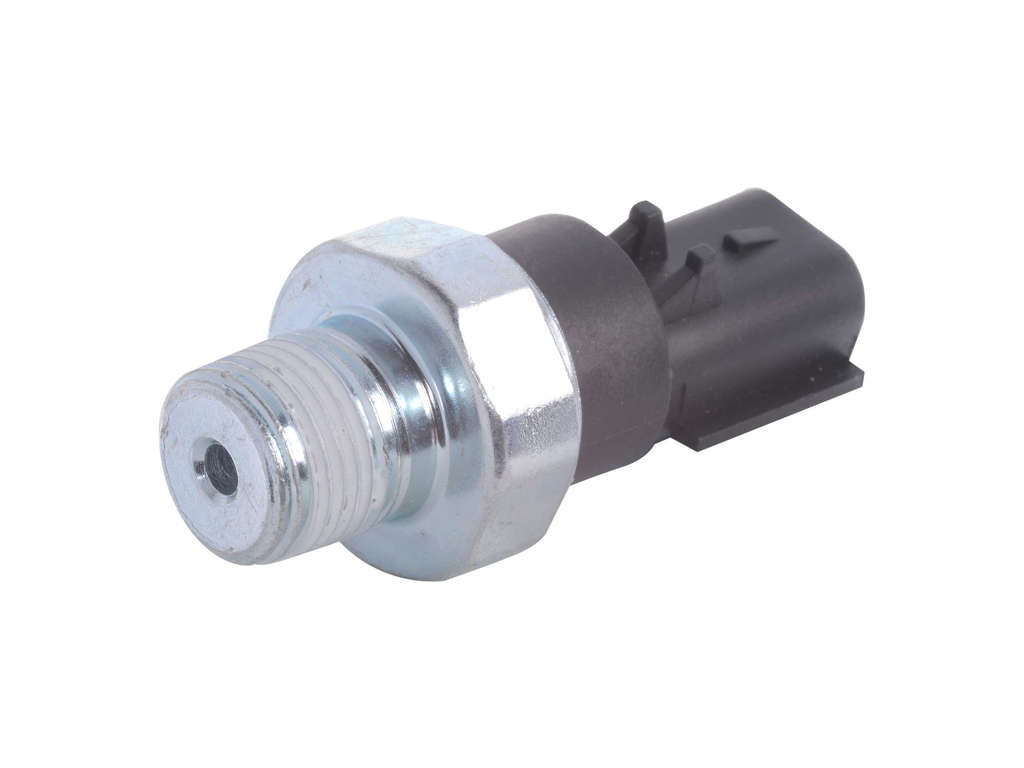
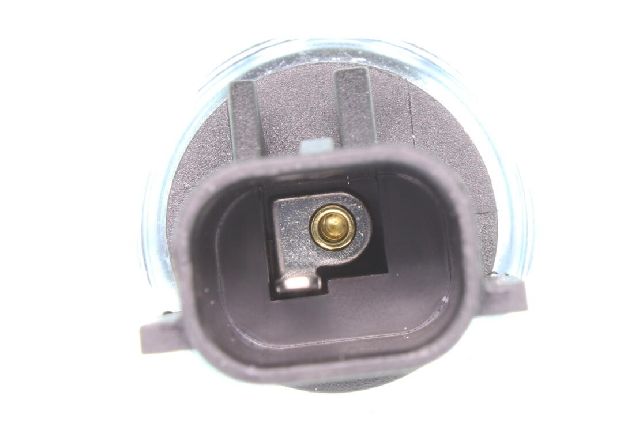
(OEM #56028807AB)— If P0037 is caused by the specific oil-wicking issue, this sensor is the root cause and must be replaced to prevent the problem from recurring. It is highly recommended to use a genuine Mopar part to ensure a quality seal and prevent a repeat failure.
Trusted brands: Mopar, Standard Motor Products
OEM price range: $25-$45
Aftermarket price range: $10-$25
Related Codes That Often Appear With This One
- P0031 — P0031 is the same heater circuit fault but for the upstream sensor (Bank 1, Sensor 1). When both codes appear together, it strongly suggests a shared problem like a blown fuse, a common power/ground wire issue, or the specific PT Cruiser oil-wicking problem from the oil pressure sensor.
- P0038 — This code indicates a 'Heater Control Circuit High' condition for the same sensor. Seeing P0037 and P0038 together or intermittently could point to an erratic short in the wiring or a failing PCM driver.
Technical Service Bulletins (TSBs) & Recalls
- While no TSB was found specifically for P0037 or the oil-wicking issue on the PT Cruiser, several TSBs exist for oil leaks and consumption on various Chrysler engines, indicating a broader pattern of oil control issues. TSBs like 09-008-15 and 09-006-20 discuss oil loss diagnosis, and another TSB for newer engines warns against replacing the entire oil filter assembly for simple leaks that can be fixed with a new gasket, showing a history of misdiagnosed oil leaks.
- Manufacturer TSB Bulletin #1805022REVA notes that P0037 (O2 Sensor 1/2 Heater Circuit Low) can appear alongside other heater circuit codes like P0031, P0032, and P0038, as well as P0339 for the crankshaft position sensor.
- Manufacturer TSB Bulletin #1805916 also documents P0037 occurring in conjunction with other oxygen sensor heater circuit low codes (P0031, P0051, P0057) and camshaft position sensor codes (P0344) across the Chrysler lineup.
Platform-Specific Known Issues
- A leaking oil pressure sensor can force oil up through the wiring harness into the PCM connectors, causing a short in the O2 heater circuits and triggering P0037 and P0031. This is a critical check before considering PCM replacement.
- The oil pressure switch is located near the oil filter housing, and its connector should be inspected for oil. If oil is present in the connector, it has failed internally and is the source of the contamination.
Mechanic-Grade Diagnostic Values
- Downstream O2 Sensor (Bank 1, Sensor 2) Heater Element Resistance — expected: 5-7 ohms at room temperature. Failure: Infinite resistance (open circuit) or near-zero resistance (short circuit)
- O2 Sensor Heater Power Supply Voltage — expected: ~12V (Battery Voltage) with Key On, Engine Off. Failure: 0 Volts indicates a problem with the ASD relay or its power supply fuse.
- PCM O2 Heater Control Signal (at PCM connector) — expected: Pulsed ground signal when active. Failure: No signal, or a constant ground, may indicate a PCM driver issue.
Scan Tool Commands That Help
- DRB III (or emulator): O2 Heater Test — The DRB III, the dealer tool for this era, has a specific function to command the O2 heaters on and observe the sensor's response. This allows a technician to test the entire circuit, from the PCM driver to the heater element itself, without waiting for the engine to meet the normal operating conditions for heater activation. This can quickly isolate a bad sensor, wiring fault, or failed PCM driver.
Wiring & Ground Locations
- Fuse #13 (2001-2005) — In the Power Distribution Center (under-hood fuse box) next to the air filter housing.. This 20A yellow fuse provides power to the Auto Shut Down (ASD) relay, which in turn powers the O2 sensor heaters. If this fuse is blown, both O2 sensor heaters will be inoperative, often setting both P0031 and P0037.
- PCM Connector C2, Pin 18 — On the Powertrain Control Module (PCM). For a 2003 model, this is the second connector (C2) and the 18th pin.. This specific pin is the 'O2 1/2 Heater Control' circuit. It is the wire the PCM uses to provide a pulsed ground to activate the downstream O2 sensor heater. Checking for a signal here or for continuity from this pin to the sensor connector is a definitive way to test the control wire.
- Connector C103 — A large engine harness connector located above the starter, mounted to the engine block.. This is a major junction connector through which many critical engine signals pass. A forum user reported that corrosion or a poor connection at C103 caused multiple, intermittent codes, including O2 heater circuit high codes (P0032/P0038). While a different fault, it highlights this connector as a potential source for widespread electrical issues on the 2.4L Turbo engine.
Real Owner Repair Stories
- YouTube channel 'Pine Hollow Auto Diagnostics' (2003 Chrysler PT Cruiser Turbo, 135,000 miles) — Check Engine Light with codes P0031 and P0037, lack of power, no turbo boost, poor fuel economy. Vehicle was stuck in open loop.
❌ Tried (didn't work) Replacing both oxygen sensors with new, good quality parts.
✅ What actually fixed it The root cause was a failed PCM that was not providing ground to the O2 sensor heater circuits. However, the technician also noted the common oil-wicking issue from the oil pressure sensor as a primary cause of these codes and inspected the PCM connectors for oil, which is the first step a DIYer should take. In this specific video case, the technician performed an advanced bypass of the failed PCM driver by wiring the heater control circuits to the ASD relay through a 2-amp bulb to provide the correct current and trick the PCM. - YouTube channel 'chopperdave' (Chrysler PT Cruiser (year not specified)) — Check Engine Light with codes P0031 and P0037 for both upstream and downstream O2 sensor heaters.
❌ Tried (didn't work) The video warns that people often replace both O2 sensors and then the computer, only for the codes to return.
✅ What actually fixed it The problem was a leaking oil pressure sensor. The video shows oil inside the sensor's electrical connector. This oil wicked up the wiring harness and contaminated the PCM connectors, causing the short circuit for the O2 heaters. The fix was to replace the faulty oil pressure sensor, its connector pigtail, and thoroughly clean the oil out of the main PCM connectors with electrical contact cleaner. - NHTSA ODI #11181490 — An owner reported that their vehicle had P0037 codes that would not cancel. Despite a dealership replacing the oxygen sensors, the issue was not resolved, and the technician suggested the computer (PCM) was the cause.
Model Year Variations Within This Range
- 2006-2010: A facelift for the 2006 model year included an updated interior and exterior, but also changed the under-hood fuse box from a 'Power Distribution Center' to an 'Integrated Power Module' (IPM). This means fuse numbers and locations for the O2 sensor heater circuit may be different from the earlier 2001-2005 models. Always refer to the diagram on the fuse box lid for the specific vehicle.
Diagnostic Flowchart
Used vs. New Parts: Buying Guide for This Vehicle
When a used part is the smart pick: For this specific repair, using used parts is generally not recommended. The primary failure components are wear-and-tear items or parts with known design flaws.
Donor-vehicle mileage cap: roughly under 100000 miles for the part to have meaningful remaining life.
What to inspect on the donor part:
- If sourcing a wiring harness or connector, inspect thoroughly for any signs of oil contamination, melted plastic, or brittle insulation.
- Avoid sourcing any electronic sensors from a junkyard vehicle.
OEM-only on this vehicle (don't cheap out):
- Oil Pressure Sensor / Switch: Due to the high failure rate of aftermarket units and the severe damage caused by the oil-wicking issue, it is strongly recommended to use a genuine Mopar replacement part to ensure a durable seal.
Aftermarket brands forum-validated for this vehicle:
- NTK (NGK): Frequently cited in forums as the OEM supplier for Chrysler O2 sensors. Often considered the best aftermarket choice for fit and performance.
- Denso: Another high-quality brand often used as an OEM supplier, considered a reliable alternative to NTK or Mopar.
Brands owners have reported issues with on this vehicle:
- Generic/No-Name O2 Sensors: While cheaper, unbranded sensors often have lower quality heater elements and may not have the precise response rate required by the PCM, leading to persistent codes or poor performance.
- Bosch O2 Sensors (on some Chrysler vehicles): While a reputable brand, some forum users across various Chrysler/Jeep models report issues with Bosch sensors not performing as well as the OEM-supplier NTK, leading to premature failure or codes returning.
Real Owner Stories
Aggregated from forums and TSBs cited above. Mileages and costs reflect what owners reported in those sources.
2005 Chrysler PT Cruiser Touring 2.4L
Symptoms: MIL Lamp on with codes P0037, P0031, and P0340.
What fixed it: The report was a request for help; the owner had already replaced both O2 sensors as well as the cam and crank sensors without resolving the issue.
Source hint: P0037 Diagnostic Trouble Code Discussion for Mar 2011 on iATN
Chrysler PT Cruiser 2.4L
Symptoms: Check Engine Light with codes P0031 & P0037.
What fixed it: The problem was caused by oil from a leaking oil pressure switch wicking up the wiring harness and contaminating the PCM connector. The fix was to replace the leaking sensor and thoroughly clean the oil out of the harness connector and PCM.
Source hint: YouTube Channel 'subtledriver': A video titled 'Heater circuit o2 sensor fix! Chrysler PT Cruiser Dodge Neon p0031 & p0037'
Jeep Liberty 2.4L
Symptoms: Multiple O2 sensor codes, including P0037, returned even after replacing the sensors.
What fixed it: The issue was ultimately resolved by finding and replacing a blown 15A fuse that powered the sensor heater circuits.
Source hint: Reddit r/JeepLiberty: A thread titled 'O2 Sensor Codes and problems!'
2001 Chrysler PT Cruiser 2.4L
Symptoms: The owner was trying to diagnose an oil leak in the engine bay.
What fixed it: The forum thread illustrates the diagnostic process for finding a leak but does not state a final resolution, highlighting a common owner experience.
Source hint: Chrysler Forum - chryslerforum.com: A 2010 thread titled 'Help: Oil leak from somewhere'
Related OBD-II Codes
Frequently Asked Questions
I have both P0037 and P0031 codes on my PT Cruiser. What's the first thing I should check?
Where is the fuse for the oxygen sensor heater on a 2003 PT Cruiser?
What is the correct resistance for the downstream O2 sensor heater on my 2.4L PT Cruiser?
My mechanic replaced the O2 sensor but the P0037 code came back. What else could be wrong?
Are other Chrysler vehicles with the 2.4L engine known to have this same P0037 problem?
Helpful Videos

We Have This Part in Stock


The information in this article is provided for general reference and educational purposes only. Vehicle specifications, procedures, and part compatibility can vary by production date, trim level, and region. Always consult your vehicle's factory service manual and verify part numbers before purchasing or performing repairs. Safety-critical components such as airbags, seat belts, and braking systems should be installed by a qualified professional.
- Chrysler PT Cruiser:
- 🧭 Diagnostic Flowchart
- 🎬 Helpful Videos
- 🛍️ Shop This Part
- What's Unique About the 2001-2010 Chrysler PT Cruiser
- Symptoms You May Notice
- Most Likely Causes
- Rare But Worth Checking
- Diagnosis Steps
- Parts You'll Likely Need
- Related Codes That Often Appear With This One
- Technical Service Bulletins (TSBs) & Recalls
- Platform-Specific Known Issues
- Mechanic-Grade Diagnostic Values
- Scan Tool Commands That Help
- Wiring & Ground Locations
- Real Owner Repair Stories
- Model Year Variations Within This Range
- Used vs. New Parts: Buying Guide for This Vehicle
- Real Owner Stories
- 2005 Chrysler PT Cruiser Touring 2.4L
- Chrysler PT Cruiser 2.4L
- Jeep Liberty 2.4L
- 2001 Chrysler PT Cruiser 2.4L
- Related OBD-II Codes
- Frequently Asked Questions
- 🎟️ Get 5% Off