

P0037 on 2001 Dodge Dakota 3.9L V6: O2 Sensor Heater Circuit Fixes
For a 2001 Dodge Dakota with the 3.9L V6, code P0037 almost always points to a failed heater element inside the Bank 1, Sensor 2 oxygen sensor. This is the downstream sensor located after the catalytic converter on the driver's side. Replacing the sensor is the most common fix. Before replacing, it is crucial to check the O2 sensor heater fuse in the under-hood Power Distribution Center (PDC), as a blown fuse will cause this code. Parts typically cost between $25 and $60 for an aftermarket repla
- P0037 on your 2001 Dakota 3.9L V6 refers to a problem with the heater in the downstream (post-catalytic converter) oxygen sensor on the driver's side.
- The most likely cause is a failed oxygen sensor, which is a common wear-and-tear item.
- CRITICAL FIRST STEP: Before buying any parts, check the fuse for the O2 heater circuit in the under-hood fuse box (PDC). Forum posts strongly indicate it is a fuse labeled "U".
- Perform a quick visual inspection of the sensor's wiring to check for obvious damage from heat or road debris before condemning the sensor.
- This is a DIY-friendly repair; a special 22mm (or 7/8") slotted O2 sensor socket is highly recommended to make removal easier. Soaking the sensor threads in penetrating oil beforehand will help greatly.
What's Unique About the 2001-2001 Dodge Dakota
On the second-generation Dodge Dakota, the P0037 code is a straightforward emissions fault. There are no widely documented, unique platform-specific failures that cause this code beyond the typical aging of components. The wiring for the downstream sensor runs along the underbody and is susceptible to road debris, heat, and corrosion over time, but this is common to most trucks of this era. A common point of confusion for owners is that the 3.9L V6 only has two oxygen sensors in total (one upstream, one downstream), both on the driver's side exhaust pipe which serves both cylinder banks. The computer still uses Bank 1 / Bank 2 logic, assigning the single downstream sensor as Bank 1, Sensor 2. The diagnostic process is standard, with the sensor itself being the most frequent point of failure, followed closely by the related fuse.
Symptoms You May Notice
- Check Engine Light (CEL) is on.
- Vehicle will automatically fail an emissions test.
- Potentially a slight decrease in fuel economy.
- In some cases, a strong smell of fuel or black smoke from the exhaust if the issue persists and affects fuel trim.
- Replacing the oxygen sensor without first checking the fuse and wiring. A simple blown fuse or a damaged wire can mimic the symptoms of a failed sensor and is a cheaper and easier first check.
Most Likely Causes
- Failed Bank 1, Sensor 2 Oxygen Sensor 🔴 High Probability → Shop Oxygen Sensor The internal heater element of oxygen sensors has a finite lifespan and can burn out over time, which is common on vehicles of this age. Contamination from engine byproducts can also lead to failure.
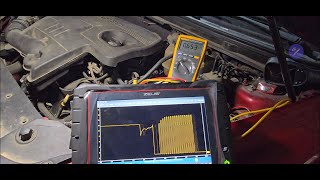
How to confirm: Test the resistance of the heater circuit within the O2 sensor using a multimeter. Disconnect the sensor and measure between the two heater wires (often the same color 🎬 See this guide on testing oxygen sensor heater circuits., e.g., two white wires). A reading of infinite resistance (open circuit) or a reading far from the typical 2-30 ohms confirms a failed element. A service manual for a similar Dodge Dakota suggests a range of 2.0 to 30.0 ohms is acceptable.
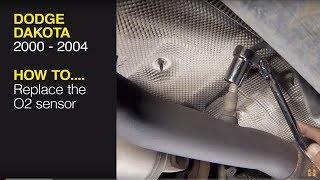
Typical fix: Replace the Bank 1, Sensor 2 (downstream, driver's side) oxygen sensor. Applying rust penetrant to the threads 🎬 Watch: Step-by-step oxygen sensor replacement walkthrough. before removal is highly recommended.
Est. part cost: $25-$60 - Blown Fuse 🟡 Medium Probability A short in the heater circuit, either in the sensor itself or the wiring, will cause the corresponding fuse to blow as a protective measure.
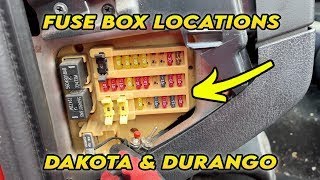
How to confirm: Locate the Power Distribution Center (PDC) under the hood 🎬 Watch: How to find the fuse box on your Dakota., next to the battery. Check the fuse for the O2 sensor heater circuit. In forum discussions for 2001-2003 Dakotas, a fuse labeled "U" in the PDC is specifically mentioned as protecting the O2 heater circuits. Visually inspect this fuse to see if it is blown.
Typical fix: Replace the blown fuse. If the fuse blows again immediately, a short circuit exists in the wiring or the new O2 sensor that must be found and repaired.
Est. part cost: $1-$5 - Damaged Wiring or Connector 🟡 Medium Probability The sensor's wiring is routed under the vehicle and is exposed to exhaust heat, moisture, and potential damage from road debris, which can cause shorts or open circuits. The connector itself can also become contaminated or corroded.
How to confirm: Visually inspect the wiring harness leading to the O2 sensor for any signs of melting, chafing, corrosion, or broken wires. Check the connector for corrosion, pushed-out pins, or moisture. The connector often has a red locking tab that must be disengaged before separating.
Typical fix: Repair the damaged section of the wiring harness or clean/replace the connector. Ensure the repaired wiring is properly secured away from the hot exhaust pipe.
Est. part cost: $5-$25
Rare But Worth Checking
- Faulty Powertrain Control Module (PCM): → Shop Engine Control Module (ECM) This is extremely rare. Before condemning the PCM, all other possibilities (sensor, wiring, fuses) must be exhaustively ruled out. A faulty PCM driver for the heater circuit is a last-resort diagnosis. If multiple O2 heater codes (e.g., P0031, P0037, P0051, P0057) appear simultaneously, the likelihood of a PCM or shared power/ground issue increases significantly.
Technical Service Bulletins (TSBs) & Recalls
Manufacturer service bulletins for this and related Dodge platforms highlight the persistence of heater circuit issues. TSB Bulletin #18-092-15 specifically identifies P0037 as "O2 Sensor 1/2 Heater Circuit Low," often appearing alongside other heater circuit faults. Similarly, cross-manufacturer documentation such as TSB Bulletin #25-002-14 and TSB Bulletin #25-004-12 categorize P0037 as a "Heater Circuit Low 1/2" condition. Furthermore, TSB Bulletin #25-003-13 notes that this fault indicates a malfunction in the O2 sensor 1/2 heater circuit, which may require systematic electrical testing of the heater resistance.
Diagnosis Steps
- Retrieve the P0037 code using an OBD-II scanner.
- Check the dedicated fuse for the oxygen sensor heater circuit. In the 2001 Dakota, this is located in the Power Distribution Center (PDC) under the hood. Forum members have identified fuse "U" as the correct one for the O2 heaters. Replace if blown and re-test. If it blows again, a short exists.
- Visually inspect the Bank 1, Sensor 2 (driver's side, post-catalytic converter) oxygen sensor and its wiring harness. Look for any signs of physical damage, melting on the exhaust, or corrosion in the connector. Ensure the connector is securely latched.
- If the fuse and wiring appear intact, disconnect the sensor. Use a multimeter to test the resistance of the heater element across the two heater pins on the sensor side of the connector (often same-colored wires). A reading of infinite resistance (open circuit) or a very low resistance (short) means the sensor has failed. A good sensor should read between approximately 2 and 30 ohms.
- With the key in the 'On' position (engine off), use a multimeter or test light to check for battery voltage (approx. 12V) and a good ground at the vehicle-side of the sensor connector. If voltage or ground is missing, there is a fault in the wiring leading back to the PDC or PCM.
- If the wiring, fuse, and power/ground are all good, but the sensor's heater element tested okay, the issue may be an intermittent connection or a rare PCM fault. However, the most probable cause remains the sensor itself.
- After replacing the sensor or repairing the circuit, clear the code with the scanner and perform a drive cycle (including idling for a few minutes) to ensure the Check Engine Light does not return.
Parts You'll Likely Need
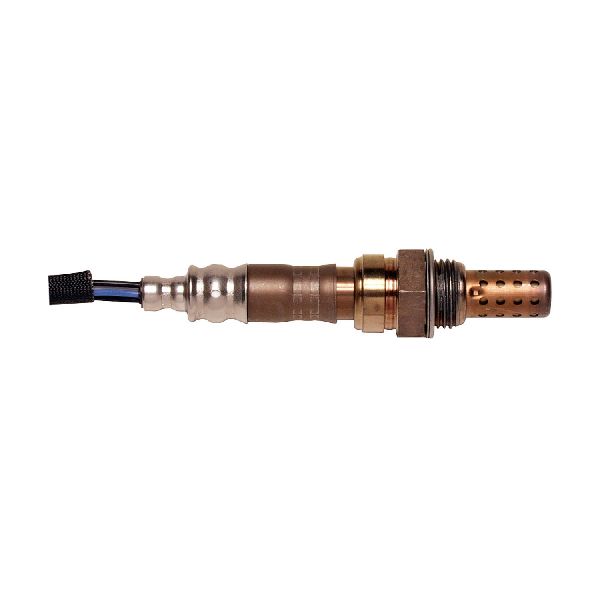
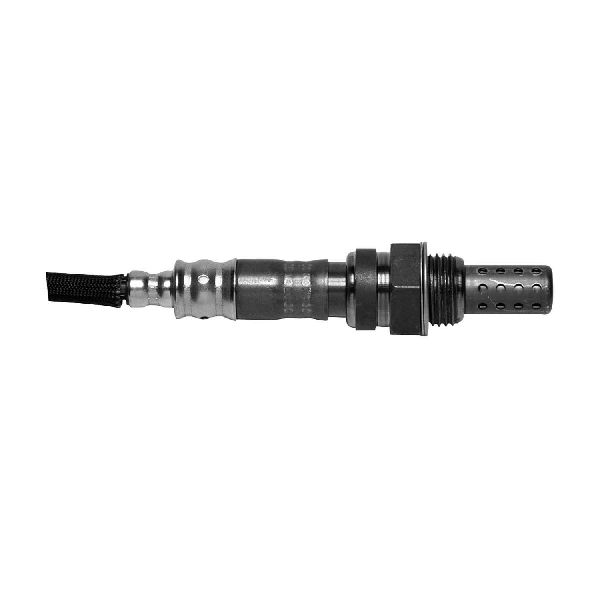
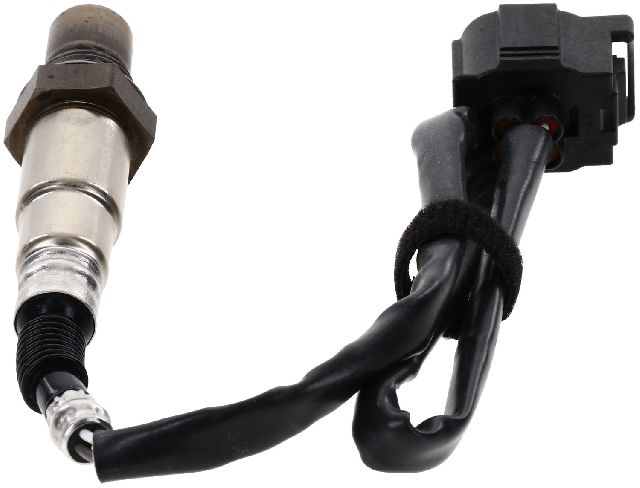
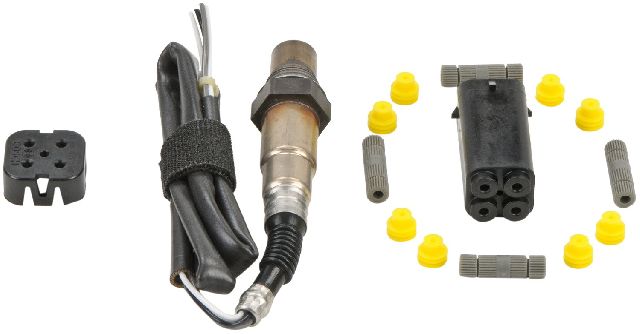
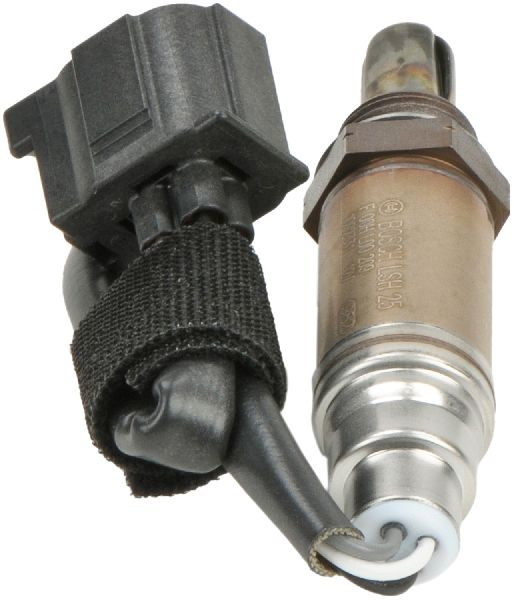
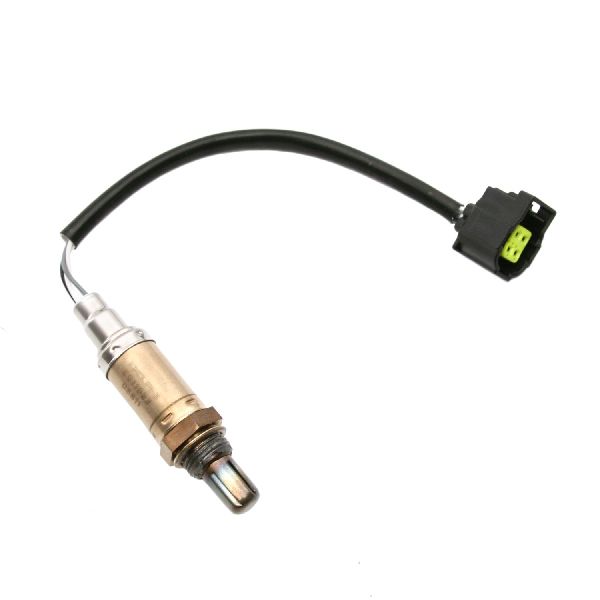
- Oxygen Sensor (Bank 1, Sensor 2)
(OEM #56041344AA (Mopar))— The internal heater element is the most common failure point for code P0037.
Trusted brands: Denso (e.g., 234-4749), Bosch, NTK (e.g., 23132), Walker Products
OEM price range: $60-$100
Aftermarket price range: $25-$60
Related Codes That Often Appear With This One
- P0141 — P0141 is a generic code for 'O2 Sensor Heater Circuit Malfunction (Bank 1 Sensor 2)'. P0037 is a more specific version indicating a 'low' circuit condition. They both point to the same component and issue.
- P0031 — This is the 'Heater Circuit Low' code for the upstream sensor (Bank 1, Sensor 1). If both P0031 and P0037 appear together, it strongly suggests a problem with a shared power source, such as a blown fuse or faulty relay, rather than two sensors failing at once.
Mechanic-Grade Diagnostic Values
- O2 Sensor Heater Element Resistance — expected: 4.5 Ohms at 70°F (for NTK brand sensors). Failure: A reading of infinite Ohms (open circuit) or near zero Ohms (short circuit).
- PCM Monitoring Prerequisite — expected: Battery voltage must be above 10.6 volts for the PCM to run the heater circuit test.. Failure: If system voltage is below 10.6V, the test may not run, and the code may not set even with a fault present.
- Heater Circuit Power at Connector — expected: Approximately 12V (battery voltage) with Key On, Engine Off.. Failure: No voltage indicates a problem with the fuse, relay, or wiring from the PDC.
Scan Tool Commands That Help
- Noid Light or 194 Bulb: Heater Circuit Activation Test — Since a specific bidirectional command on a DRB III scanner is not documented for this model year, a noid light can be used as a substitute. Connect the light to the power and ground pins of the vehicle-side O2 sensor connector. When the engine is started, the light should illuminate, confirming the PCM is commanding the heater circuit on by providing power and ground via the relay.
Wiring & Ground Locations
- Power Distribution Center (PDC) — In the engine compartment, on the driver's side inner fender, next to the battery.. This under-hood fuse box contains the fuse and relay for the oxygen sensor heater circuit.
- Mini Fuse #36 (or 'U') — Inside the Power Distribution Center (PDC).. This 20A fuse provides the power for the oxygen sensor heater circuit. It is a primary failure point.
- O2 Sensor Heater Relay — Inside the Power Distribution Center (PDC). The specific slot can be identified by the diagram on the PDC cover.. This relay, controlled by the PCM, switches power on to the heater element. A faulty relay will prevent the heater from working, causing a P0037.
- Powertrain Control Module (PCM) — In the engine compartment, on the passenger's side inner fender panel.. The PCM controls the O2 sensor heater relay and monitors the circuit voltage, setting the P0037 code if a fault is detected.
- PCM Connector C1, Pin 28 — On the PCM, which is located on the passenger side inner fender. C1 is one of the large multi-pin connectors.. This pin, with a Tan/White wire, is the heater control circuit for the Bank 1 Sensor 2 O2 sensor on 1999-2002 models. It can be tested for continuity back to the sensor connector.
- G111 — Near the battery in the engine compartment.. This is a major engine compartment ground point. While not exclusively for the O2 sensor, a poor connection here can cause various electrical issues, including sensor faults.
Real Owner Repair Stories
- DodgeForum.com user (2004 Dodge Dakota (similar system, but highlights relay difference)) — Intermittent P0141 and P0161 codes (heater circuit faults for both downstream sensors).
❌ Tried (didn't work) Initial diagnosis was confusing due to intermittent nature.
✅ What actually fixed it The diagnostic advice given was to swap the O2 sensor heater relay in the PDC with an identical relay (e.g., the A/C relay) to see if the problem resolved or moved. This is a common, no-cost diagnostic step for pre-2004 models to rule out a faulty relay before replacing sensors.
Model Year Variations Within This Range
- 2001-2003: These models use an older PCM architecture that relies on a dedicated O2 sensor heater relay located in the Power Distribution Center (PDC) to supply power to the heater circuits.
- 2004+: Later models with the Next Generation Controller (NGC) integrate the function of the relay. The NGC directly controls the voltage to the O2 sensor heaters without an external, serviceable relay in the PDC.
Diagnostic Flowchart
Used vs. New Parts: Buying Guide for This Vehicle
When a used part is the smart pick: A used part is almost never recommended for the oxygen sensor itself, as it is a sensitive wear item. However, sourcing a used wiring harness connector (pigtail) from a junkyard is a smart choice if the original connector is melted, corroded, or physically broken.
What to inspect on the donor part:
- For a connector/pigtail: Check for flexible, non-brittle plastic.
- Ensure locking tabs are intact and not broken.
- Inspect metal pins for any signs of green or white corrosion.
- Confirm the attached wires are supple and not hardened or cracked from heat.
OEM-only on this vehicle (don't cheap out):
- No parts for this specific repair are considered 'OEM-only', as high-quality aftermarket sensors are widely available and effective.
Aftermarket brands forum-validated for this vehicle:
- NTK (often the OEM supplier)
- Denso
- Bosch
Brands owners have reported issues with on this vehicle:
- Unnamed or 'white box' brands from online marketplaces can have high failure rates.
- Some forum users have reported issues with Bosch sensors on this specific engine family, despite it being a major brand, suggesting potential application-specific issues.
Real Owner Stories
Aggregated from forums and TSBs cited above. Mileages and costs reflect what owners reported in those sources.
2003 Dodge Dakota 3.9l v6
Symptoms: Check Engine Light with codes P0031 and P0037 appeared after replacing O2 sensors. A P0132 code was also present.
What fixed it: Replaced fuse 'U' in the Power Distribution Center (PDC) under the hood.
Source hint: DodgeForum.com - P0031 and P0037 after o2sensor changes
2006 dodge dakota 3.7 v6
Symptoms: Check Engine Light with all four O2 sensor heater codes (P0031, P0037, P0051, P0057), plus the temperature gauge was not working.
What fixed it: No resolution was reported by the owner, who suspected a PCM issue after confirming the fuses were good and replacing one sensor did not help.
Source hint: Reddit r/MechanicAdvice: all 4 o2 sensors bad heater circuit
Related OBD-II Codes
Frequently Asked Questions
Where is the fuse for the P0037 oxygen sensor heater on my 2001 Dakota 3.9L?
Which specific oxygen sensor does P0037 refer to on my truck?
What resistance reading should I get from a good O2 sensor heater on this Dakota?
I have P0037 along with other O2 heater codes like P0031 and P0051. Does this mean all my sensors are bad?
Will my 2001 Dodge Durango with the same 3.9L V6 engine have the same problem?
What is the most common fix for P0037 besides replacing the sensor itself?
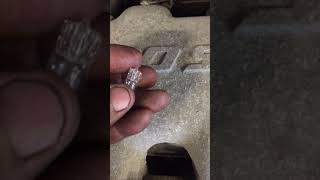
Helpful Videos
We Have This Part in Stock

The information in this article is provided for general reference and educational purposes only. Vehicle specifications, procedures, and part compatibility can vary by production date, trim level, and region. Always consult your vehicle's factory service manual and verify part numbers before purchasing or performing repairs. Safety-critical components such as airbags, seat belts, and braking systems should be installed by a qualified professional.
- Dodge Dakota:
- 🧭 Diagnostic Flowchart
- 🎬 Helpful Videos
- 🛍️ Shop This Part
- What's Unique About the 2001-2001 Dodge Dakota
- Symptoms You May Notice
- Most Likely Causes
- Rare But Worth Checking
- Technical Service Bulletins (TSBs) & Recalls
- Diagnosis Steps
- Parts You'll Likely Need
- Related Codes That Often Appear With This One
- Mechanic-Grade Diagnostic Values
- Scan Tool Commands That Help
- Wiring & Ground Locations
- Real Owner Repair Stories
- Model Year Variations Within This Range
- Used vs. New Parts: Buying Guide for This Vehicle
- Real Owner Stories
- 2003 Dodge Dakota 3.9l v6
- 2006 dodge dakota 3.7 v6
- Related OBD-II Codes
- Frequently Asked Questions
- 🎟️ Get 5% Off