

P0037 on 2012-2018 Ford Focus 2.0L: Causes and Fixes for O2 Sensor Heater Circuit Low
This code almost always means the heater element inside the downstream oxygen sensor (Bank 1, Sensor 2) has failed. The most common fix is to replace the sensor itself, which costs between $45 for an aftermarket part and $150 for an OEM Motorcraft part. Before replacing, it is wise to first check fuse F32 in the engine bay fuse box and inspect the sensor's wiring for any visible damage.
- P0037 points directly to a fault in the heater circuit of the downstream oxygen sensor (Bank 1, Sensor 2).
- The most probable cause is a failed O2 sensor itself, which has a burned-out internal heater.
- Before replacing the sensor, always check the 10A fuse F32 in the engine bay fuse box and inspect the wiring for damage.
What's Unique About the 2012-2018 Ford Focus
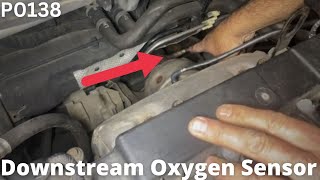
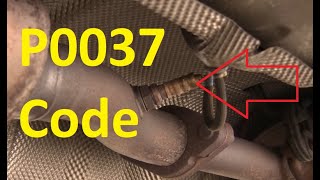
For the third-generation Ford Focus (Mk3), the P0037 code is a very common and straightforward issue. The 2.0L GDI engine is an inline-four, so it only has one exhaust bank, which simplifies diagnosis as there is no 'Bank 2' to worry about. The downstream sensor is located after the catalytic converter and is relatively easy to access from under the car, while its electrical connector is conveniently located at the top of the engine bay near the firewall, making testing and replacement easier than on many other vehicles.
Generation note: The 2012-2018 model years cover the entire third generation (Mk3) of the Ford Focus in North America. This includes the 2015 facelift, but the 2.0L GDI powertrain and the relevant emissions components for this code remained consistent.
Symptoms You May Notice
- Check Engine Light is on.
- Vehicle will automatically fail an emissions test.
- Slightly reduced fuel economy.
- Rough idling (less common).
- Replacing the upstream (Bank 1, Sensor 1) oxygen sensor. P0037 specifically refers to the downstream sensor (Sensor 2).
- Replacing the catalytic converter. While O2 sensor codes can be related to converter issues, P0037 points specifically to the sensor's heater circuit, not the converter's efficiency.
Most Likely Causes
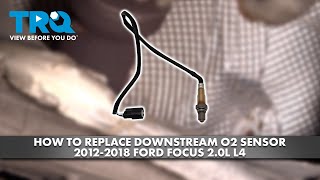
- Failed Downstream Oxygen Sensor (Bank 1, Sensor 2) 🔴 High Probability → Shop Oxygen Sensor The internal heater element of the sensor is a common failure point due to constant heat cycles and exposure to exhaust gases, typically failing between 60,000 and 90,000 miles. This is the most frequent cause for P0037. 🎬 See this breakdown of P0037 causes and common fixes.
How to confirm: Disconnect the sensor and measure the resistance between the two heater circuit pins (usually the two same-colored wires, often white). An open circuit (infinite resistance or 'OL') confirms the internal heater has burned out. A good sensor should have a resistance between 4.2 and 6.6 ohms at room temperature.
Typical fix: Replace the downstream oxygen sensor. An oxygen sensor socket (22mm or 7/8") is recommended for removal. The sensor should be torqued to 35 ft-lbs.
Est. part cost: $45-$150 - Damaged Wiring or Connector 🟡 Medium Probability The sensor's wiring is routed under the car near the hot exhaust, making it susceptible to melting, chafing, or physical damage from road debris. The connector is located at the top of the firewall and can collect moisture or debris.
How to confirm: Visually inspect the entire wiring harness from the O2 sensor to its connector (C149) on the firewall. Look for melted sections, frayed wires, or breaks. Check the connector for corrosion, moisture, or pushed-out pins. The heater power wire is typically Violet/Orange, and the PCM control wire is Brown/Green.
Typical fix: Repair the damaged section of the wiring harness or replace the connector pigtail. Secure the new wiring away from the hot exhaust pipe with high-temp zip ties.
Est. part cost: $10-$30 - Blown Fuse for O2 Heater Circuit ⚪ Low Probability A short circuit in the heater element of a failing O2 sensor or in the wiring harness can cause the fuse to blow as a protective measure.
How to confirm: Check fuse F32, a 10A fuse, in the engine compartment fuse box located on the driver's side under the hood. If the fuse is blown, replace it. If it blows again immediately, a short circuit exists that must be found.
Typical fix: Replace the blown fuse after diagnosing the underlying short circuit in the sensor or wiring.
Est. part cost: $1-$5
Rare But Worth Checking
- Faulty Powertrain Control Module (PCM): → Shop Engine Control Module (ECM) This is extremely rare. The PCM should only be considered after all other possibilities (sensor, wiring, fuse) have been exhaustively tested and ruled out.
Diagnosis Steps
- Read the code with an OBD-II scanner to confirm P0037 is the only code present.
- Check fuse F32 (10A) for the O2 sensor heater circuit in the engine compartment fuse box. Replace if blown.
- Perform a thorough visual inspection of the downstream O2 sensor (Bank 1, Sensor 2), its connector, and wiring harness. The sensor is located after the catalytic converter. Look for signs of melting, chafing, or physical damage.
- Trace the wiring to its connector (C149), which is accessible from the top of the engine bay, near the firewall. Disconnect it and check for corrosion or damage to the pins.
- With the connector disconnected, use a multimeter to measure the resistance across the two heater pins on the sensor side (typically two white wires). A reading of 'OL' (over-limit/infinite) indicates a burned-out heater element, and the sensor must be replaced. A normal reading is typically between 4.2 and 6.6 ohms.
- If the sensor resistance is good, test the vehicle's harness connector. Turn the ignition to 'ON' (engine off). Check for 12V+ on the power wire (typically Violet/Orange). If no voltage is present, and the fuse is good, there is a break in the power wire from the fuse box.
- If power is present, check the ground control wire (typically Brown/Green). A short to ground on this wire can also cause the code. This requires more advanced diagnostics to check for continuity back to the PCM.
- If the fuse, wiring, and power/ground tests all pass, the oxygen sensor's heater is faulty, even if it shows some resistance, and should be replaced.
Parts You'll Likely Need
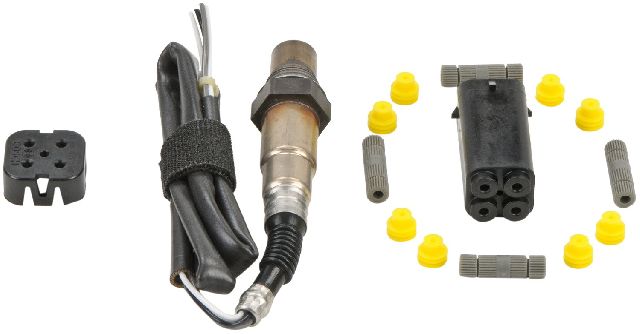
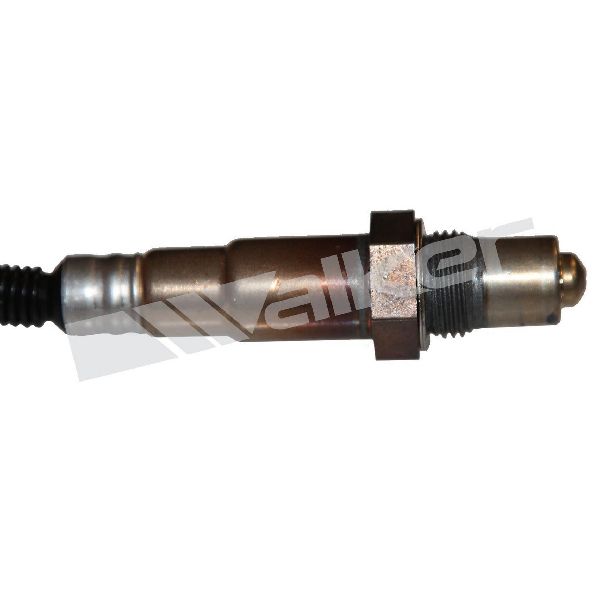
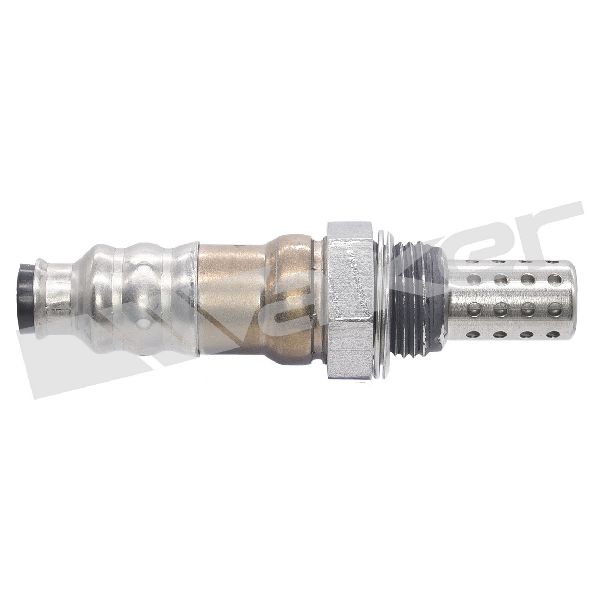
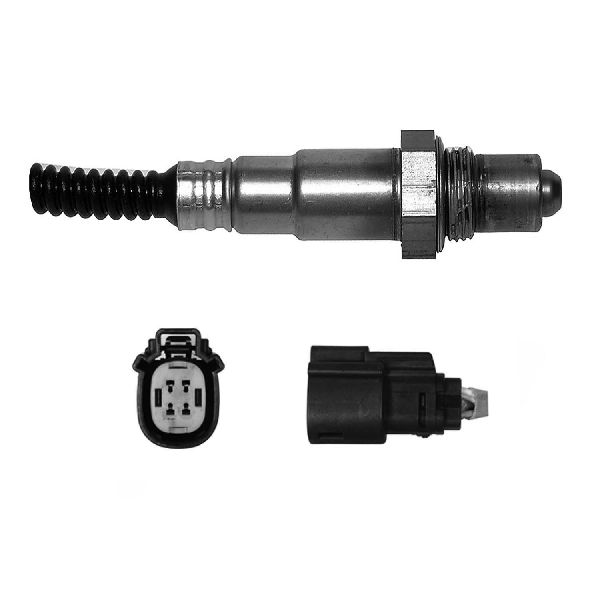
- Downstream Oxygen Sensor (Bank 1, Sensor 2)
(OEM #CV6Z-9G444-A)— The internal heater element is the most common failure point, causing the P0037 code.
Trusted brands: Motorcraft (DY-1179), Bosch (15717), Denso, NGK/NTK
OEM price range: $90-$150
Aftermarket price range: $45-$90
Technical Service Bulletins (TSBs) & Recalls
- TSB 18-2062: Engine wiring harness may chafe near the intake manifold on 2012-2014 models, potentially causing various electrical faults including P0340/P0344 and others. While P0037 is not explicitly listed, it demonstrates a known wiring vulnerability on the platform.
Platform-Specific Known Issues
- While not directly for P0037, Ford TSB 18-2062 was issued for 2012-2014 Focus models due to the engine harness chafing against the intake manifold, causing various DTCs. This highlights a general vulnerability in harness durability that could potentially cause a P0037 if the O2 sensor wiring is affected in that bundle.
Mechanic-Grade Diagnostic Values
- Downstream O2 Sensor (HO2S B1S2) Heater Resistance — expected: 4.2 - 6.6 Ohms at room temperature. Some sources state a wider acceptable range of 2-10 Ohms.. Failure: A multimeter reading of 'OL' (Open Loop / infinite resistance) or near-zero Ohms (short circuit).
- Heater Circuit Power Supply Voltage (KOEO) — expected: ~12.6V (Battery Voltage) at Pin 1 (Violet/Orange wire) of the harness-side connector C149, referenced to chassis ground.. Failure: 0V or significantly low voltage, indicating a blown fuse (F32) or a break in the power wire from the Battery Junction Box.
- Heater Circuit Ground Control — expected: The PCM provides a pulsed ground on Pin 2 (Brown/Green wire) of connector C149 to control the heater. Advanced probing may be needed to see this signal.. Failure: A constant ground on this wire with the key on would indicate a short to ground, causing the 'low circuit' fault.
- O2 Sensor Installation Torque — expected: 35 ft-lbs (48 Nm). Failure: N/A. Incorrect torque can lead to exhaust leaks or damage to the sensor/exhaust pipe threads.
Scan Tool Commands That Help
- FORScan / Professional Scanners: Live Data PID Monitoring (e.g., 'O2S12_HTR', 'HO2S12.HTRFLT') — To monitor the on/off status commanded by the PCM for the heater circuit and to check for specific heater fault flags ('YES'/'NO'). This can confirm if the PCM is attempting to activate the heater and is detecting the fault in real-time, which helps differentiate a constant hard fault from an intermittent one.
- Ford IDS / Professional Scanners: Actuation Test / Output State Control for HO2S Heater — This bidirectional command allows a technician to manually command the O2 sensor heater circuit ON and OFF. This is used to verify the integrity of the wiring and the PCM's driver circuit. If the heater can be commanded on and voltage drop is observed, it confirms the wiring and PCM are likely good, isolating the fault to the sensor itself.
Wiring & Ground Locations
- C149 — Top of the engine bay, mounted to the firewall on the driver's side, near the brake fluid reservoir.. This is the main 4-pin connector for the downstream oxygen sensor (Bank 1, Sensor 2). All electrical tests for the sensor and harness are performed here. Pin 1 is VT-OG (Power), Pin 2 is BN-GN (PCM Control/Ground), Pin 3 is BU-OG (Signal), Pin 4 is YE-GY (Signal Ground).
- G104 / G105 — Main chassis ground points located on the left front inner fender / strut tower area, under the hood. G104 is typically closer to the front, G105 is closer to the firewall.. These are primary ground points for the engine harness and Powertrain Control Module (PCM). A corroded or loose ground at these locations can cause erratic voltage and various sensor circuit codes, including P0037, though it is not the most common cause.
- Battery Junction Box (BJB) — Under the hood, on the driver's side, near the battery.. This box contains fuse F32 (10A), which supplies power to the O2 sensor heater circuits. The power wire (VT-OG) for the downstream sensor originates from this fuse box.
OEM Part Supersession History
CV6Z-9G444-A→DY-1179 (Motorcraft Service Part Number)— DY-1179 is the service part number that corresponds to the engineering number CV6Z-9G444-A. They are effectively the same part.
Heads up: No incompatibility issues reported. This part is consistent across the 2012-2018 2.0L non-turbo model years.
Diagnostic Flowchart
Other Known Issues on This Vehicle
Issues unrelated to this code that are worth knowing about as an owner of this generation:
- DPS6 PowerShift Transmission Failure 🔴 High — Extremely common on 2012-2016 models with automatic transmission. Symptoms include shuddering, hesitation, slipping, and complete failure, often within 30,000-60,000 miles. (Ref: Multiple lawsuits, warranty extensions (e.g., 14M02), and software updates were issued, but the fundamental mechanical issues with the dry-clutch design persist.)
- Stuck Canister Purge Valve (P1450) 🟠 Medium — Very common across all model years. Leads to rough idle, stalling after refueling, and difficulty starting. (Ref: Covered by Ford Safety Recall 18S32. The issue can cause excessive vacuum that deforms the fuel tank if not addressed.)
- Failed Passenger-Side Engine Mount 🟠 Medium — Common failure item. The hydraulic mount collapses, causing excessive engine vibration to be felt in the cabin, especially at idle or in reverse.
- Electronic Power Steering Assist Failure 🔴 High — More common on earlier 2012-2014 models. Can result in a sudden loss of power steering, making the vehicle very difficult to steer. (Ref: NHTSA investigation and various owner complaints, but no universal recall for all affected years.)
- Engine Wiring Harness Chafing 🟠 Medium — Specifically noted on 2012-2014 models. Harness can rub against the intake manifold, causing shorts and a wide array of seemingly unrelated electrical DTCs. (Ref: TSB 18-2062)
Used vs. New Parts: Buying Guide for This Vehicle
When a used part is the smart pick: For this repair, buying a used oxygen sensor is strongly discouraged. O2 sensors are wear items with a finite lifespan. A used part offers no guarantee of remaining life and may fail shortly after installation. The only used part that might be considered is a connector pigtail from a salvage harness if the original connector body is physically damaged.
Donor-vehicle mileage cap: roughly under 15000 miles for the part to have meaningful remaining life.
What to inspect on the donor part:
- For a connector pigtail, ensure the plastic is not brittle, cracked, or melted.
- Check for any signs of corrosion (green or white powder) on the pins.
- Ensure there is at least 4-6 inches of wire attached to allow for a proper splice.
Aftermarket brands forum-validated for this vehicle:
- Bosch
- Denso
- NTK/NGK
Brands owners have reported issues with on this vehicle:
- Unbranded, no-name parts from online marketplaces are frequently reported on forums to be dead-on-arrival or fail prematurely, sometimes not allowing the vehicle's emissions monitors to set correctly.
Real Owner Stories
Aggregated from forums and TSBs cited above. Mileages and costs reflect what owners reported in those sources.
2014 Ford Focus 2.0L GDI
Symptoms: Check Engine Light on with code P0037.
What fixed it: Replacement of the downstream oxygen sensor.
Source hint: Go-Parts owner report
2012-2018 Ford Focus 2.0L Ti-VCT GDI — ~75000 miles
Symptoms: Check Engine Light is on; internal heater element failure due to heat cycles.
What fixed it: Replacing the downstream oxygen sensor (Bank 1, Sensor 2) using a 22mm socket and torquing to 35 ft-lbs.
Source hint: focusfanatics.com forum threads
Related OBD-II Codes
Frequently Asked Questions
Where is the downstream oxygen sensor connector located on the 2012-2018 Focus 2.0L GDI?
Which specific replacement part is recommended for the P0037 code on this vehicle?
Could the engine wiring harness TSB 18-2062 be related to my P0037 code?
What are the specific resistance specs I should look for when testing the sensor heater?
Which fuse should I check for the O2 heater circuit on a 2012-2018 Focus?
What is the correct torque specification for installing the new sensor?
Helpful Videos
We Have This Part in Stock


The information in this article is provided for general reference and educational purposes only. Vehicle specifications, procedures, and part compatibility can vary by production date, trim level, and region. Always consult your vehicle's factory service manual and verify part numbers before purchasing or performing repairs. Safety-critical components such as airbags, seat belts, and braking systems should be installed by a qualified professional.
- Ford Focus:
- 🧭 Diagnostic Flowchart
- 🎬 Helpful Videos
- 🛍️ Shop This Part
- What's Unique About the 2012-2018 Ford Focus
- Symptoms You May Notice
- Most Likely Causes
- Rare But Worth Checking
- Diagnosis Steps
- Parts You'll Likely Need
- Technical Service Bulletins (TSBs) & Recalls
- Platform-Specific Known Issues
- Mechanic-Grade Diagnostic Values
- Scan Tool Commands That Help
- Wiring & Ground Locations
- OEM Part Supersession History
- Other Known Issues on This Vehicle
- Used vs. New Parts: Buying Guide for This Vehicle
- Real Owner Stories
- 2014 Ford Focus 2.0L GDI
- 2012-2018 Ford Focus 2.0L Ti-VCT GDI — ~75000 miles
- Related OBD-II Codes
- Frequently Asked Questions
- 🎟️ Get 5% Off