

P0037 on 2013-2016 Jaguar XF: HO2S Heater Circuit Low Causes and Fixes
On a 2013-2016 Jaguar XF, code P0037 almost always points to a failed downstream oxygen sensor (Bank 1, Sensor 2) due to a burned-out internal heater. Bank 1 is the passenger side on LHD vehicles. Expect to pay between $60-$200 for an aftermarket part and up to $750 for an OEM part, with DIY replacement being moderately difficult due to tight access. Before replacing, check the wiring for heat damage and verify the O2 sensor heater fuse.
- P0037 on your Jaguar XF points to a problem with the heater in the oxygen sensor after the catalytic converter on Bank 1 (passenger side for LHD).
- The most likely fix is replacing the Bank 1, Sensor 2 oxygen sensor. OEM part numbers include C2D23702 and its successors.
- Before buying parts, visually inspect the sensor's wiring for any melting or damage, as this is another possible cause.
- Check fuse F12 or F13 (20A) in the engine bay fuse box before proceeding with more complex diagnostics.
- This is a manageable DIY repair for those with the right tools, but access is tight and requires a special 22mm oxygen sensor socket.
What's Unique About the 2013-2016 Jaguar XF
Jaguar issued multiple Technical Service Bulletins (TSBs) for a wide range of heated oxygen sensor (HO2S) codes, including P0037, across various models from this era, such as SSM72477 and JTB-00392-NAS-3. This indicates a known pattern of sensor-related faults. Furthermore, Service Action H231 was issued for some models to update the Powertrain Control Module (PCM) software to address performance-related O2 sensor DTCs, suggesting some issues could be software-related. While the cause is often a simple sensor failure, diagnosis must include a careful inspection of the wiring, which is routed near hot exhaust components and can be susceptible to heat damage.
Diagnostic Flowchart
Tap your situation to follow the diagnostic path that matches what you're seeing on this vehicle.
Symptoms You May Notice
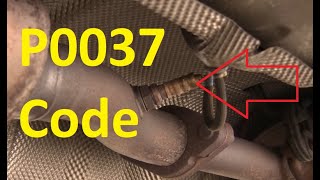
- Check Engine Light is on 🎬 Watch: A quick overview of P0037 causes and fixes
- Vehicle fails emissions testing
- Slightly reduced fuel economy
- In rare cases, rough running or hesitation during acceleration.
- Replacing the catalytic converter. The P0037 code is for the sensor's heater circuit, not the sensor's reading of catalyst efficiency. A bad converter would typically trigger a different code, like P0420.
- Replacing the wrong oxygen sensor. Owners on forums frequently get confused about Bank 1 vs Bank 2 and Sensor 1 vs Sensor 2. P0037 is definitively Bank 1 (passenger side on LHD cars) and Sensor 2 (downstream/post-catalytic converter).
Most Likely Causes
- Failed Bank 1 Sensor 2 Oxygen Sensor 🔴 High Probability → Shop Oxygen Sensor The internal heater element within the oxygen sensor is a common failure point, similar to a light bulb filament burning out. Jaguar TSBs for this period list numerous HO2S codes, suggesting a higher-than-average failure rate for these components. [SSM72477, JTB-00392-NAS-3]
How to confirm: Disconnect the sensor and measure the resistance across the two heater circuit pins (usually same-colored wires, often white) with a multimeter. A normal reading is typically between 3-10 Ohms, with some sources specifying a tighter range of 0.5-2.5 Ohms. An open circuit (infinite resistance or 'OL') confirms the heater element has failed.
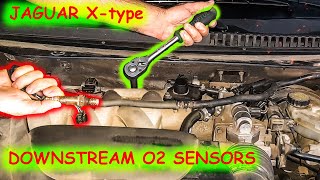
Typical fix: Replace the Bank 1, Sensor 2 oxygen sensor. This is a DIY-possible job but can be difficult due to tight access, often requiring a special slotted oxygen sensor socket. 🎬 See this step-by-step Jaguar XF oxygen sensor replacement
Est. part cost: $60-$390 - Damaged Wiring or Corroded Connector 🟡 Medium Probability The sensor wiring is routed near hot exhaust components, making it susceptible to melting or heat-related degradation over time. Road debris can also damage the under-car harness. Corrosion in the connector pins is another common point of failure.
How to confirm: Visually inspect the entire wiring harness from the sensor to the main loom for any signs of melting, chafing, or corrosion in the connector pins. Check for shorts to ground by looking for wires resting on the metal frame or exhaust.
Typical fix: Repair the damaged section of the wire or clean/replace the connector. Using dielectric grease on the connector can help prevent future corrosion.
Est. part cost: $5-$50 - Blown Fuse for O2 Sensor Heater Circuit ⚪ Low Probability → Shop Oxygen Sensor A short circuit in the wiring or the sensor itself can cause the related fuse to blow as a protective measure.
How to confirm: Locate the Engine Compartment Fuse Box. According to the owner's manual, fuse F12 (20A Yellow) or F13 (20A Yellow) often protects the oxygen sensor heater circuits for Bank A and Bank B respectively. Check these fuses for continuity.
Typical fix: Replace the blown fuse after diagnosing and fixing the underlying short circuit. Simply replacing the fuse without finding the short will likely result in the new fuse blowing as well.
Est. part cost: $1-$5
Rare But Worth Checking
- Faulty Engine Control Module (ECM): → Shop Engine Control Module (ECM) This is extremely rare. The ECM's internal driver for the heater circuit can fail, but all other possibilities (sensor, wiring, fuse) should be exhausted before considering ECM replacement. An outdated software calibration could also be a factor, as noted in JLR Service Action H231.
Diagnosis Steps
- Read the code with an OBD-II scanner and confirm P0037 is present.
- Perform a visual inspection of the Bank 1 Sensor 2 oxygen sensor and its wiring harness. Bank 1 is the cylinder bank on the passenger side of a left-hand-drive vehicle. Sensor 2 is the downstream sensor, located after the catalytic converter. 🎬 Watch: How to remove a stubborn downstream oxygen sensor
- Check for any obvious signs of damage, such as melted wires touching the exhaust, chafed insulation, or a corroded connector.
- Check the fuses for the oxygen sensor heater circuit. In the engine bay fuse box, this is often fuse F12 or F13 (20A).
- If the wiring and fuse are okay, disconnect the sensor. With the ignition on (engine off), use a multimeter to check for 12-volt power at the heater circuit power pin in the harness-side connector. For Bank 1, this is the White-Green wire at Pin 2.
- With the sensor still disconnected, measure the resistance between the two heater pins on the sensor itself (typically the two same-colored wires). A normal reading is 3-10 Ohms; a reading of infinite resistance (OL) means the internal heater is broken and the sensor must be replaced.
- If all tests pass but the code returns, the issue may be an intermittent wiring short or, in very rare cases, a faulty ECM or outdated ECM software.
Parts You'll Likely Need
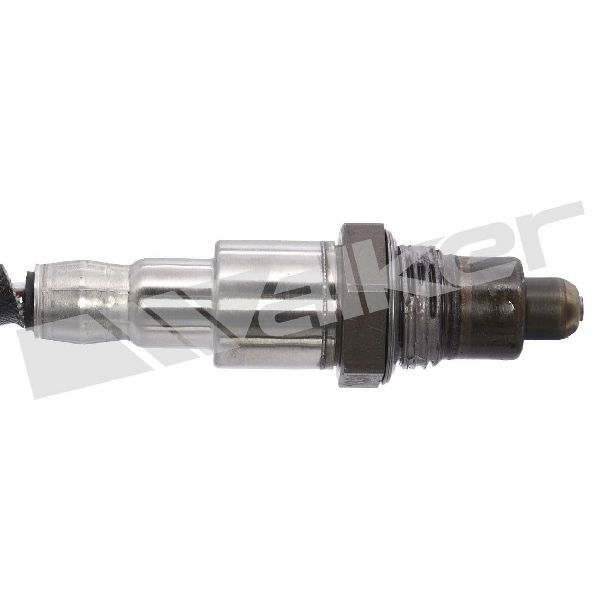
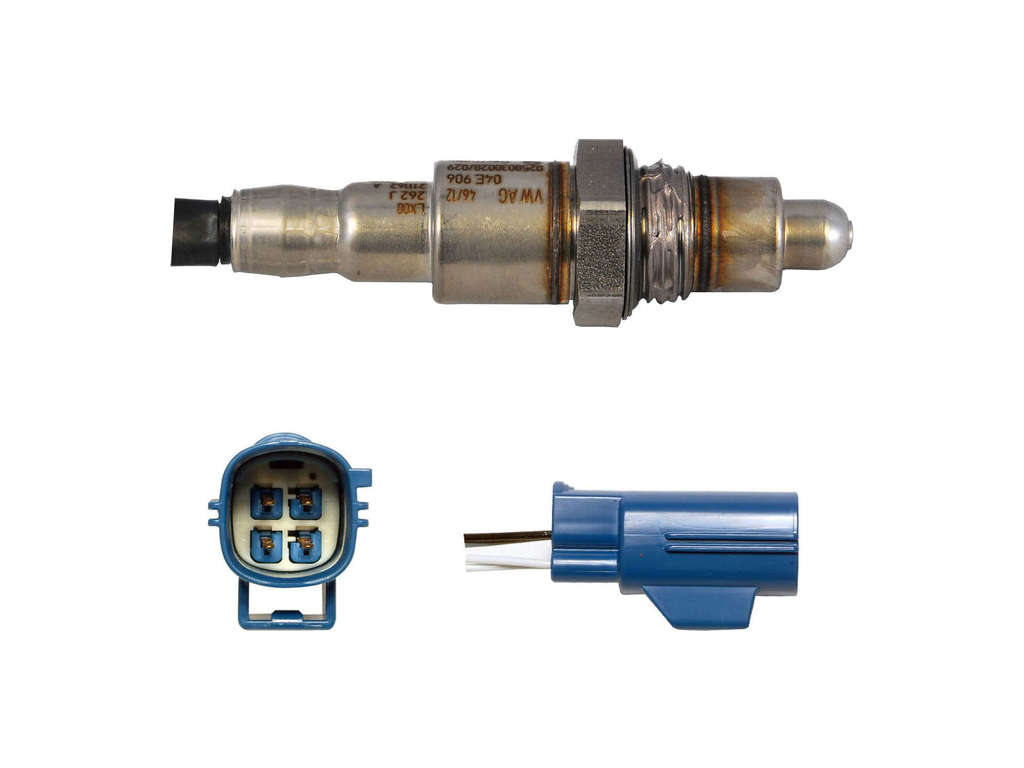
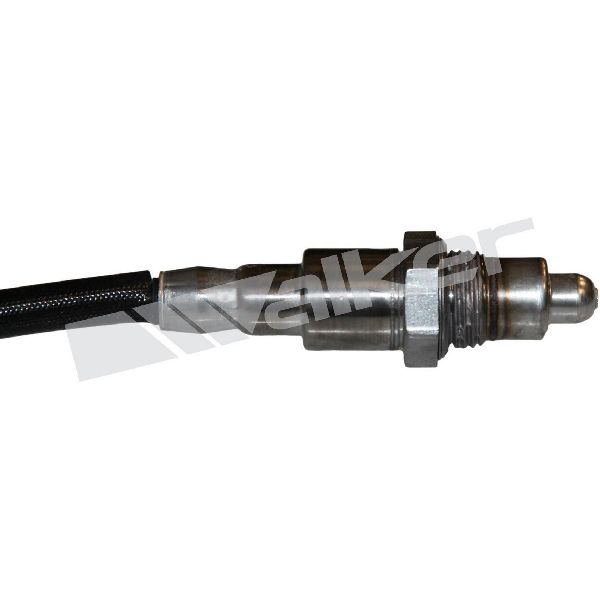
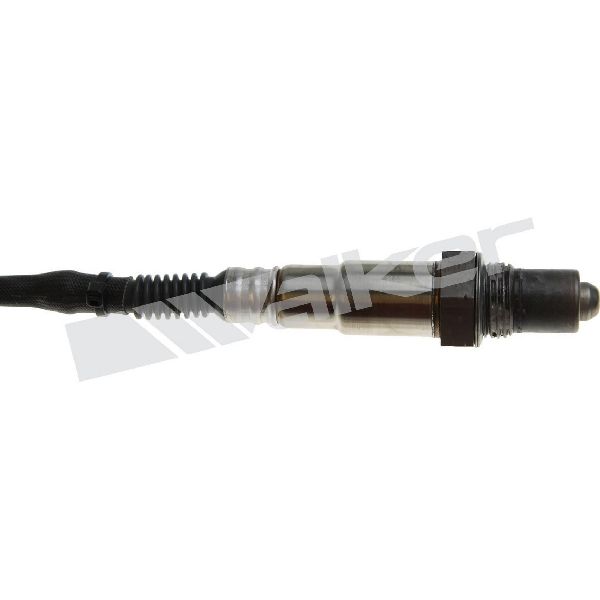
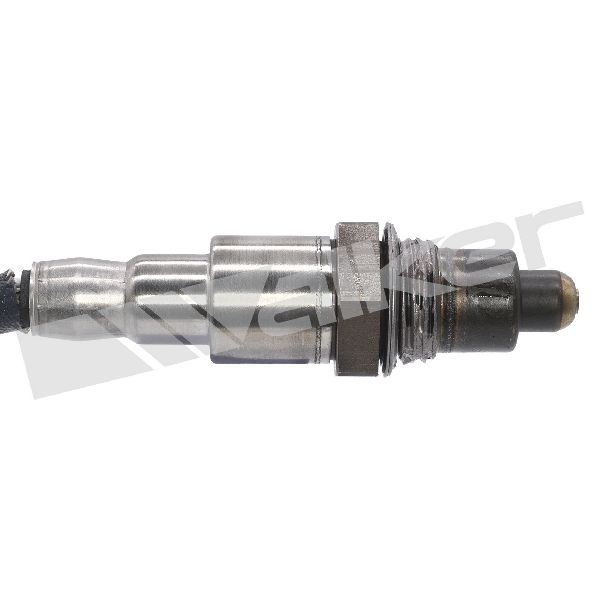
- Downstream Oxygen Sensor (Bank 1, Sensor 2)
(OEM #C2D23702 (superseded by C2D54166, T2H48050 for 3.0L/5.0L))— This is the most common cause of a P0037 code, as the internal heater element fails over time.
Trusted brands: Bosch, Denso, NGK/NTK
OEM price range: $230-$830
Aftermarket price range: $60-$200
Related Codes That Often Appear With This One
- P0036 — This is the generic equivalent of P0037 and may appear on some scan tools.
- P0141 — This code also relates to the Bank 1 Sensor 2 heater circuit performance ('Circuit Malfunction') and is often seen alongside P0037, as noted in Jaguar TSBs. [SSM72477, JTB-00392-NAS-3]
- P0057 — This is the equivalent code for the other bank: 'HO2S Heater Control Circuit Low (Bank 2, Sensor 2)'. If both appear, it could suggest a common power or ground issue for the heater circuits.
Technical Service Bulletins (TSBs) & Recalls
- SSM72477: Mentions P0037 in a list of heated oxygen sensor (HO2S) fault codes. The bulletin is a general diagnostic aid for a wide array of O2 sensor codes.
- JTB-00392-NAS-3: Lists P0037 as a DTC relevant to mid-catalyst and post-catalyst heated oxygen sensors, providing diagnostic guidance.
- JTB00392NAS1: An earlier version of the above TSB, also listing P0037 as a relevant DTC for post-catalyst HO2S issues.
- H231NAS: A service action for related models to update PCM software to address O2 sensor performance DTCs, indicating some faults may be software-related rather than pure hardware failure.
Platform-Specific Known Issues
- Jaguar issued TSB #SSM72477, #JTB-00392-NAS-3, and #JTB00392NAS1, which all list P0037 among a large group of diagnostic trouble codes related to heated oxygen sensor faults, indicating a recognized issue on these vehicles.
- Service Action H231 was released for some JLR vehicles, including the F-Type (which shares engines with the XF), to update the PCM software to correct how it monitors O2 sensor performance, which could potentially address false codes.
- Owners on forums frequently report confusion over the location of Bank 1 vs Bank 2. For V-engines in a LHD Jaguar, Bank 1 is the right (passenger) side.
Mechanic-Grade Diagnostic Values
- O2 Sensor Heater Element Resistance — expected: 0.5 - 2.5 Ohms (some general sources state up to 10 Ohms). Failure: Infinite resistance (OL) indicates an open circuit (failed heater). Zero resistance indicates an internal short.
- O2 Sensor Heater Power Supply Voltage — expected: ~12 Volts (Battery Voltage). Failure: 0 Volts or significantly less than battery voltage indicates a problem with the fuse or power supply wiring.
Scan Tool Commands That Help
- Jaguar SDD (Symptom Driven Diagnostics): Symptom Selection & Pinpoint Tests — After retrieving the DTC, the technician selects the observed symptom (e.g., 'emissions system warning'). SDD then uses this context to rank the relevance of fault codes and guide the technician through specific, targeted pinpoint tests for the most likely causes, including checking for related TSBs.
- Jaguar SDD (Symptom Driven Diagnostics): Vehicle Reset — After a repair is completed and a new component is fitted, a 'vehicle reset' can be performed to clear adaptations and ensure all control modules recognize the new part's operational state.
Wiring & Ground Locations
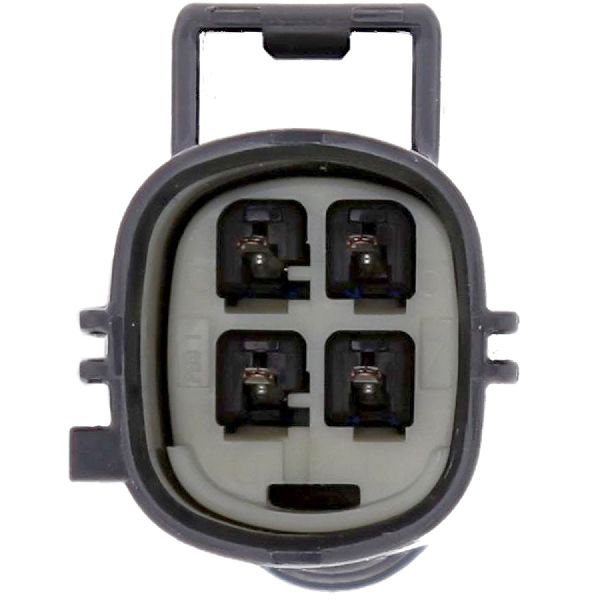
- Bank 1 HO2S Connector (Vehicle Side) — The connector for the Bank 1 Sensor 2 oxygen sensor, typically located on or near the transmission housing on the passenger side of the vehicle.. Knowing the pinout is critical for testing. For Bank 1: Pin 1 is a Blue wire (heater ground, controlled by ECM), Pin 2 is a White/Green wire (heater power, ~12V), Pin 3 is a White wire (sensor ground), and Pin 4 is a Brown wire (sensor signal).
Real Owner Repair Stories
- JaguarForums.com user 'SunFlower' (2013 Jaguar XF 5.0 Supercharged) — Check Engine Light (code not specified, but related to O2 sensor)
✅ What actually fixed it Replaced the Bank 1, Sensor 3 oxygen sensor. The key takeaway is the confirmation that Bank 1 is on the passenger side and the workspace is very tight, requiring a lift and special tools.
OEM Part Supersession History
C2D23702→C2D54166, then T2H48050— Standard part evolution and updates by the manufacturer.
Heads up: While the parts are interchangeable, forum users have noted that left and right side downstream sensors on some models may have different connector keying, so it is critical to order the part for the correct bank/position.
Helpful Videos

We Have This Part in Stock

The information in this article is provided for general reference and educational purposes only. Vehicle specifications, procedures, and part compatibility can vary by production date, trim level, and region. Always consult your vehicle's factory service manual and verify part numbers before purchasing or performing repairs. Safety-critical components such as airbags, seat belts, and braking systems should be installed by a qualified professional.
- Jaguar XF:
- 🧭 Diagnostic Flowchart
- 🎬 Helpful Videos
- 🛍️ Shop This Part
- What's Unique About the 2013-2016 Jaguar XF
- Symptoms You May Notice
- Most Likely Causes
- Rare But Worth Checking
- Diagnosis Steps
- Parts You'll Likely Need
- Related Codes That Often Appear With This One
- Technical Service Bulletins (TSBs) & Recalls
- Platform-Specific Known Issues
- Mechanic-Grade Diagnostic Values
- Scan Tool Commands That Help
- Wiring & Ground Locations
- Real Owner Repair Stories
- OEM Part Supersession History
- 🎟️ Get 5% Off