

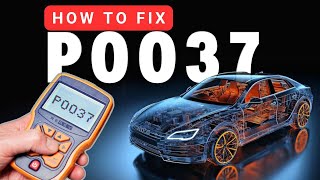
P0037 on 2011-2015 Kia Optima: Causes and Fixes for O2 Sensor Heater Fault
On a 2011-2015 Kia Optima, code P0037 almost always means the downstream oxygen sensor (Bank 1, Sensor 2) has a failed internal heater. Replacing the sensor is the most common fix, costing around $50-$100 for an aftermarket part, and is a DIY-friendly repair. Before replacing, it is critical to check the 15A 'SENSOR 1' fuse in the engine bay fuse box, as a shorted sensor or wiring can blow it.
- P0037 specifically points to a fault in the heater circuit for the oxygen sensor located *after* the catalytic converter (Bank 1, Sensor 2).
- The most probable cause is a failed oxygen sensor with a burned-out internal heater element.
- Before buying a new sensor, always check the 'SENSOR 1' 15A fuse in the engine bay and perform a quick visual inspection of the wiring for melting or damage.
- Replacing the downstream O2 sensor is a manageable DIY job that requires a specific 22mm (7/8") O2 sensor socket and basic hand tools.
- This fault will cause an automatic emissions test failure, so it should be addressed before any required inspections.
What's Unique About the 2011-2015 Kia Optima
The P0037 code on the third-generation Kia Optima (TF) is a very common and straightforward fault, consistent with many other vehicles from this era, including its platform-mate, the Hyundai Sonata. The underlying cause is almost always the failure of the O2 sensor's internal heating element due to age and heat cycles. A notable issue on this platform is the potential for the sensor's wiring harness to detach from its clips and melt against the hot exhaust pipe, causing a short that blows the 'SENSOR 1' fuse. Otherwise, there are no significant platform-specific recalls directly tied to this specific heater circuit fault, making diagnosis predictable.
Symptoms You May Notice
- Check Engine Light (CEL) is illuminated.
- Automatic failure of a state emissions or smog test.
- Potentially a slight decrease in fuel economy, though often not noticeable by the driver.
- In some cases, a rough or uneven idle may be observed.
- Replacing the upstream (Bank 1, Sensor 1) oxygen sensor instead of the correct downstream (Bank 1, Sensor 2) sensor.
- Replacing the catalytic converter. This code relates to the sensor's heater circuit, not the efficiency of the converter itself. A P0420 code would indicate a converter issue.
Most Likely Causes
- Failed Downstream Oxygen Sensor 🔴 High Probability → Shop Oxygen Sensor The internal heater element within the O2 sensor is a common failure point over time due to constant exposure to extreme exhaust temperatures and thousands of heat cycles.
How to confirm: Disconnect the sensor and use a multimeter to test the resistance between the two heater circuit pins (typically the two wires of the same color, often white or black). A healthy sensor should have a resistance reading typically between 2.5 and 15 ohms when cold. An open circuit (infinite resistance/OL) or a reading far outside this range confirms the heater has failed.
Typical fix: Replace the Bank 1, Sensor 2 oxygen sensor.
Est. part cost: $50-$150 - Damaged Wiring or Connector 🟡 Medium Probability The sensor's wiring is routed under the vehicle near hot exhaust components. It is common for the harness to come loose from retaining clips and melt against the exhaust pipe, causing a short circuit. This can also blow the 'SENSOR 1' fuse.
How to confirm: Visually inspect the entire length of the sensor's wiring harness and connector for any signs of physical damage, melting, chafing, or corrosion. Use a multimeter to check for battery voltage (12V) and ground at the harness-side of the connector with the key on, engine off.
Typical fix: Repair the damaged section of wire or replace the connector pigtail. Secure the harness away from the exhaust with new clips or high-temperature zip ties.
Est. part cost: $15-$40 - Blown Fuse ⚪ Low Probability A short circuit in the O2 sensor's heater element or its wiring can cause the related fuse to blow as a protective measure.
How to confirm: Check the fuse panel in the engine bay for a blown fuse. On the 2011-2015 Optima, this is typically a 15A fuse labeled 'SENSOR 1'.
Typical fix: Replace the blown fuse. If the fuse blows again immediately, it confirms a short circuit in the wiring or the sensor itself that must be located and repaired.
Est. part cost: $1-$5
Rare But Worth Checking
- Faulty Powertrain Control Module (PCM): → Shop Engine Control Module (ECM) This is extremely rare. The PCM's internal driver for the heater circuit can fail, but this should only be considered after all other possibilities (sensor, wiring, fuse) have been definitively ruled out.
Diagnosis Steps
- Confirm P0037 is the active code using an OBD-II scanner.
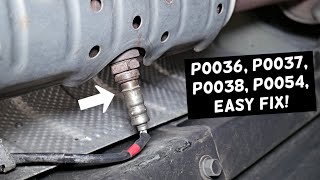
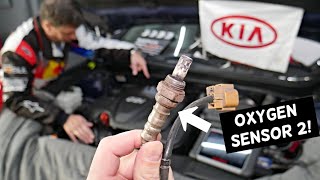
- Locate the downstream oxygen sensor (Bank 1, Sensor 2). On the 4-cylinder Optima, it is screwed into the exhaust pipe after the catalytic converter, accessible from underneath the vehicle. 🎬 Watch: Downstream O2 sensor location and replacement guide
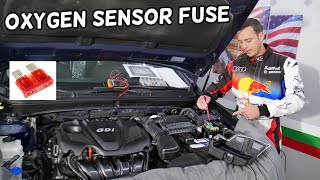
- Check the 'SENSOR 1' 15A fuse in the engine compartment fuse box. If it's blown, suspect a short circuit.
- Carefully inspect the sensor's wiring harness and connector for any visible damage, such as melting from contact with the exhaust, chafing, or corrosion.
- If the fuse and wiring appear intact, disconnect the sensor's electrical connector.
- Using a multimeter set to measure resistance (Ohms), test the resistance across the two heater pins on the sensor side of the connector (usually same-colored wires). A reading between 2.5-15 Ohms is typically good. A reading of infinite resistance (OL) indicates a failed heater element, and the sensor must be replaced. 🎬 Watch: Step-by-step P0037 diagnostic and repair walkthrough
- If the sensor's resistance is within spec, test for power at the vehicle's harness connector. With the ignition on (engine off), one pin should have battery voltage (12V), and another should have a good ground.
- If there is no voltage or ground at the harness, the wiring issue is further up the circuit and needs to be traced back to the PCM.
Parts You'll Likely Need
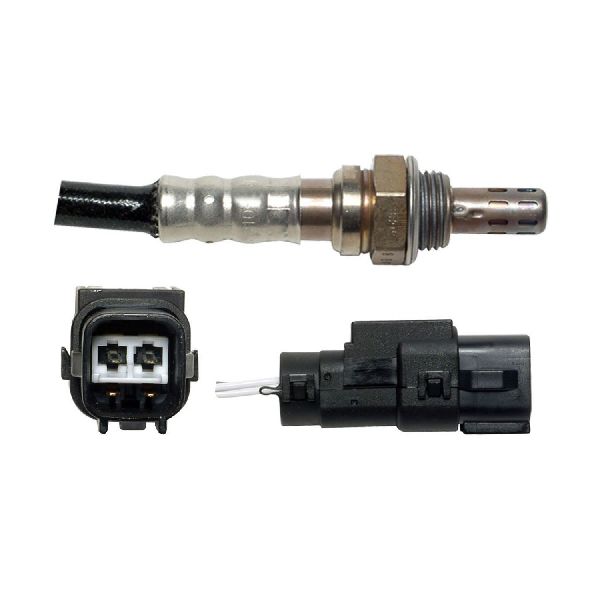
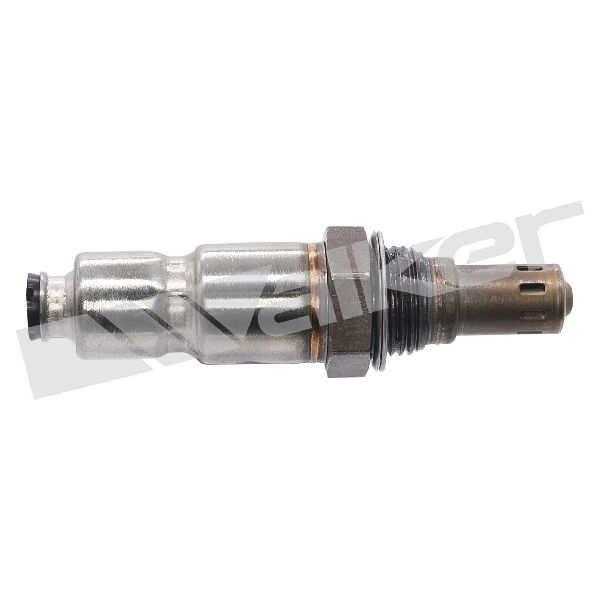
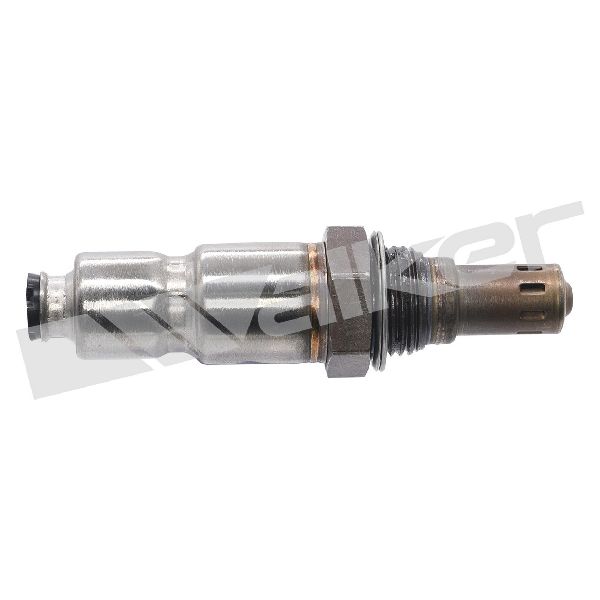
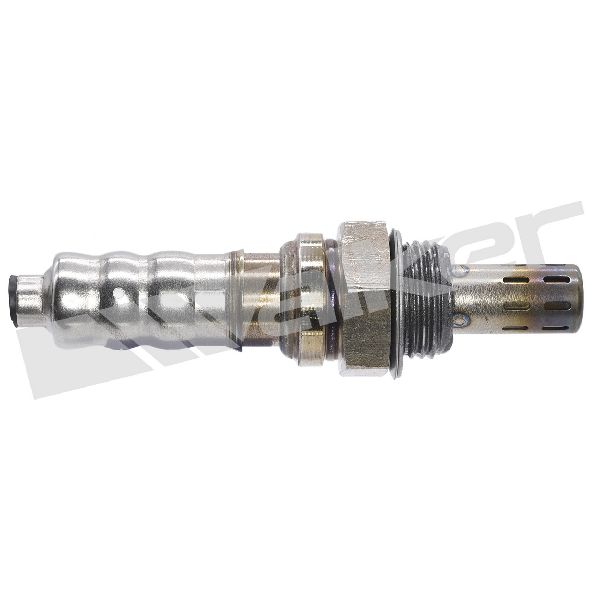
- Downstream Oxygen Sensor (Bank 1, Sensor 2)
(OEM #39210-2G200 or 39210-2G400 (Verify with VIN))— This is the most common cause of a P0037 code, as the internal heater element burns out over time.
Trusted brands: Denso, NGK/NTK, Bosch, Walker
OEM price range: $130-$200
Aftermarket price range: $40-$100 - 22mm (or 7/8") Offset Oxygen Sensor Socket — Required tool to remove and install the oxygen sensor without damaging its wire. A standard deep socket will not fit over the sensor's pigtail.
Trusted brands: Lisle, OEMTOOLS, GearWrench
Aftermarket price range: $10-$20
Related Codes That Often Appear With This One
- P0137 — This code indicates 'O2 Sensor Circuit Low Voltage'. A failed heater (P0037) can prevent the sensor from warming up properly, leading it to produce a low voltage signal and triggering P0137 as well.
- P0036 — This is a generic code for 'HO2S Heater Control Circuit (Bank 1 Sensor 2)'. P0037 is the more specific 'low circuit' fault, but they point to the same component and problem area.
- P0038 — This indicates 'HO2S Heater Circuit High (Bank 1 Sensor 2)'. If wiring is melted, it could short to power instead of ground, causing a P0038 instead of or in addition to P0037.
Mechanic-Grade Diagnostic Values
- O2 Sensor Heater Element Resistance — expected: 4-10 Ohms when cold.. Failure: A reading of infinite resistance (OL) or zero ohms indicates a failed heater element.
- Voltage at Heater Power Supply Wire (Harness Side) — expected: Approximately 12V (Battery Voltage) with Key On, Engine Off.. Failure: A reading below 9V or 0V indicates a blown fuse ('SENSOR 1' 15A) or an open in the power supply circuit.
- Heater Ground Circuit Control (Harness Side) — expected: The PCM supplies a Pulse Width Modulated (PWM) ground to control the heater. A test light connected between the power and ground pins should pulse or illuminate when the engine is started.. Failure: No ground signal (test light does not light/pulse) when power is confirmed present indicates an open in the ground wire back to the PCM or a failed PCM driver.
Scan Tool Commands That Help
- Advanced OBD-II Scanner (e.g., Kia GDS): Live Data Monitoring for O2 Heater PID — To monitor the status of the heater circuit commanded by the PCM. Look for a PID like 'O2 Heater B1S2' or 'HTR12_CMD'. The status should change from 'Off' to 'On' after the engine starts, confirming the PCM is attempting to activate the heater.
Wiring & Ground Locations
- Heater Circuit Wires — Within the 4-wire connector for the downstream O2 sensor. The two heater wires are typically the same color (e.g., two black or two white wires).. Correctly identifying these two wires is essential for performing resistance tests on the sensor and voltage/ground tests on the vehicle harness.
- Heater Circuit Power — One of the two same-colored wires in the harness-side connector. It receives power from the 'SENSOR 1' 15A fuse in the engine bay fuse box.. No voltage on this wire is a primary reason for the P0037 code, indicating a blown fuse or a break in the power wire.
- Heater Circuit Ground — The second of the two same-colored wires in the harness-side connector. This wire runs directly to the Powertrain Control Module (PCM).. The PCM provides a controlled ground to activate the heater. A break in this wire will prevent the heater from working, even if power is present.
OEM Part Supersession History
39210-2G200→This part number remains active for many 2009-2016 Hyundai/Kia models with the 2.4L engine, including the Optima.— N/A
Heads up: This part is listed for various positions (upper, lower, rear) depending on the specific vehicle application (e.g., Sonata Hybrid vs. standard Optima). Always verify the correct part for the downstream (Bank 1, Sensor 2) position for your specific VIN.39210-2G400→This part number is primarily listed for earlier models (approx. 2008-2013) and may not be correct for all vehicles in the 2011-2015 range.— N/A
Heads up: Fitment for the 2011-2015 Optima is less certain with this part number compared to 39210-2G200. It's critical to verify by VIN, as using the wrong sensor can lead to persistent codes.
Model Year Variations Within This Range
- 2014-2015: The 2014 model year marked a mid-cycle refresh for the Optima. While the core engine and emissions components related to P0037 remained largely the same, there were unrelated recalls and TSBs, such as for the Knock Sensor Detection System (KSDS) software and potential engine issues on certain 2014-2015 models. These are not direct causes of P0037 but indicate ongoing updates to the platform during this period.
Diagnostic Flowchart
Other Known Issues on This Vehicle
Issues unrelated to this code that are worth knowing about as an owner of this generation:
- Theta II Engine Failure (Rod Bearing Wear) 🔴 High — Very common across 2.0T and 2.4L GDI engines. Can occur at various mileages, often under 100,000 miles. (Ref: Recall SC147 / NHTSA Campaign 17V224000. A class-action lawsuit settlement also extended warranties.)
- MDPS Steering Coupler Failure 🟠 Medium — Extremely common. Causes a distinct clicking or clunking noise when turning the steering wheel, especially at low speeds or when stopped. (Ref: TSB CHA-072 / Customer Satisfaction Program CS1604 extended the warranty to 10 years/unlimited miles.)
- Peeling White Paint (Snow White Pearl) 🟡 Low — Common issue, particularly with the 'Snow White Pearl' color, where the paint delaminates from the primer in large sheets. (Ref: No official recall, but Kia has offered assistance to some owners on a case-by-case basis.)
Used vs. New Parts: Buying Guide for This Vehicle
When a used part is the smart pick: Never. Oxygen sensors are wear-and-tear items with a finite lifespan of 60,000 to 100,000 miles. A used sensor has an unknown history and is likely to fail soon after installation, wasting time and money.
What to inspect on the donor part:
- Not applicable. Do not purchase a used oxygen sensor.
OEM-only on this vehicle (don't cheap out):
- While not strictly OEM-only, it is highly recommended to use either a genuine Hyundai/Kia sensor or a sensor from the original equipment manufacturer (OEM) like Denso or NTK. Cheaper, unbranded aftermarket sensors are known to have incorrect resistance values or fail prematurely, causing the P0037 code to return.
Aftermarket brands forum-validated for this vehicle:
- Denso
- NGK/NTK
- Bosch
Brands owners have reported issues with on this vehicle:
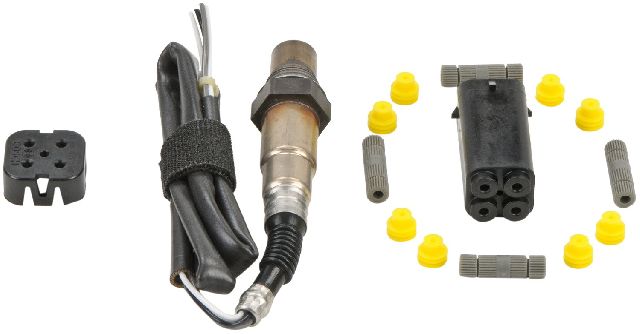
- Unbranded, low-cost 'universal' sensors that require splicing wires. These often have incorrect internal resistance and are a common cause of persistent codes after a repair attempt.
Real Owner Stories
Aggregated from forums and TSBs cited above. Mileages and costs reflect what owners reported in those sources.
2015 Kia Optima LX
Symptoms: Check engine light popped up, OBD2 scanner showed p0031 and p0037. Found the downstream sensor wire was touching the engine and was melted reaching one of the wires inside.
What fixed it: The owner replaced the downstream sensor with a brand new Denso one, but this did not immediately solve the problem, suggesting further electrical or fuse issues remained.
Source hint: reddit.com r/AskMechanics thread titled 'Check engine light'
2011-2015 Kia Sorento (2.4L)
Symptoms: The 'SENSOR 1' 15A fuse was repeatedly blowing, triggering the P0037 code.
What fixed it: Identified the O2 sensor wiring harness had melted on the exhaust pipe, causing a short circuit. Repairing the wiring and replacing the fuse resolved the issue.
Source hint: kiasorento.org
Related OBD-II Codes
Frequently Asked Questions
Where is the 'SENSOR 1' fuse located on my 2011-2015 Kia Optima, and could it cause a P0037 code?
I have a 2015 Optima LX and replaced the downstream sensor with a Denso part, but P0037 is still there. What should I check next?
Is the P0037 code related to the Theta II engine recall (SC147) on my Optima?
Can I use a used oxygen sensor from a salvage yard to fix this?
Which aftermarket brands are recommended for the 2011-2015 Kia Optima downstream O2 sensor?
Where exactly is the Bank 1, Sensor 2 oxygen sensor located on my 4-cylinder Optima?
Helpful Videos
We Have This Part in Stock


The information in this article is provided for general reference and educational purposes only. Vehicle specifications, procedures, and part compatibility can vary by production date, trim level, and region. Always consult your vehicle's factory service manual and verify part numbers before purchasing or performing repairs. Safety-critical components such as airbags, seat belts, and braking systems should be installed by a qualified professional.
- Kia Optima:
- 🧭 Diagnostic Flowchart
- 🎬 Helpful Videos
- 🛍️ Shop This Part
- What's Unique About the 2011-2015 Kia Optima
- Symptoms You May Notice
- Most Likely Causes
- Rare But Worth Checking
- Diagnosis Steps
- Parts You'll Likely Need
- Related Codes That Often Appear With This One
- Mechanic-Grade Diagnostic Values
- Scan Tool Commands That Help
- Wiring & Ground Locations
- OEM Part Supersession History
- Model Year Variations Within This Range
- Other Known Issues on This Vehicle
- Used vs. New Parts: Buying Guide for This Vehicle
- Real Owner Stories
- 2015 Kia Optima LX
- 2011-2015 Kia Sorento (2.4L)
- Related OBD-II Codes
- Frequently Asked Questions
- 🎟️ Get 5% Off