

P0037 on 2004-2009 Mazda 3: Causes, Fixes, and Parts for the O2 Sensor Heater
This code almost always means the heater inside the downstream oxygen sensor (Bank 1, Sensor 2) has failed. Replacing the sensor is the most common fix. Expect to pay $40-$90 for an aftermarket sensor and $150+ for an OEM part. It's a straightforward DIY job for many.
- P0037 on a 2004-2009 Mazda 3 points to a problem with the heater in the downstream O2 sensor (after the catalytic converter).
- The most likely solution is to replace the downstream O2 sensor with an OEM (Denso) or quality aftermarket part.
- Before buying parts, check the 10A fuse in the engine bay fuse box, likely at position 32 or 33, labeled 'ENG BAR 3' or 'ENG BAR 4'.
- Also, perform a quick visual inspection of the sensor's wiring underneath the car for any obvious damage, as this is the second most likely cause.
- This is a DIY-friendly repair for those with basic tools, including an O2 sensor socket.
What's Unique About the 2004-2009 Mazda 3
For the first-generation Mazda 3, the P0037 code is a very common and straightforward issue. There are no significant design flaws that make this problem complex. The most frequent point of failure is simply the oxygen sensor itself reaching the end of its service life. While some vehicles have complex wiring or software issues related to this code, the Mazda 3 typically does not; diagnosis is usually direct and leads to a clear component failure. Some owners report that using non-OEM sensors can cause the code to return, but many have success with quality aftermarket brands like Denso or Bosch.
Symptoms You May Notice
- Check Engine Light is on
- Failing a vehicle emissions test
- Slightly reduced fuel economy
- Replacing the upstream (Bank 1, Sensor 1) oxygen sensor. This code specifically points to the downstream sensor, so replacing the wrong one will not fix the issue.
- Replacing the catalytic converter. While O2 sensors monitor the converter, this specific code points to the sensor's heater circuit, not the converter's efficiency.
- Ignoring a blown fuse. Some owners replace the sensor, but the code returns because the underlying issue was a blown fuse caused by a temporary short. Always check the fuse first.
Most Likely Causes
- Failed Downstream Oxygen Sensor 🔴 High Probability → Shop Oxygen Sensor The internal heating element of the O2 sensor is a common wear item and simply burns out over time due to constant heat cycles.
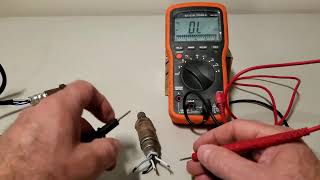
How to confirm: After checking fuses and wiring, test the resistance of the heater circuit at the sensor's connector (usually the two same-colored wires, often black or white). A good heater should have a low resistance, typically between 2-15 ohms when cool. An open circuit (infinite resistance or 'OL' on a multimeter) confirms the heater has failed. 🎬 Watch: How to test if your oxygen sensor heater is bad.
Typical fix: Replace the downstream (Bank 1, Sensor 2) oxygen sensor. An O2 sensor socket is highly recommended for removal. 🎬 See this walkthrough on replacing the downstream sensor.
Est. part cost: $40 - $180 - Damaged Wiring or Corroded Connector 🟡 Medium Probability The sensor wiring is routed under the car near the hot exhaust, making it susceptible to heat damage, road debris, and corrosion over time. The connector itself can also become contaminated with dirt and moisture.
How to confirm: Visually inspect the entire wiring harness from the O2 sensor to its connection point. Look for melted insulation, frayed wires, or green/white corrosion on the connector pins. Perform a continuity test on the heater circuit wires if no visual damage is found. Check for 12V power at the heater power wire in the harness-side connector with the key on, engine off.
Typical fix: Repair the damaged section of wire or clean/replace the connector. Dielectric grease can be used on the connector to prevent future corrosion.
Est. part cost: $5 - $50 - Blown Fuse ⚪ Low Probability A short circuit in the heater wiring can cause the corresponding fuse to blow as a protective measure.
How to confirm: Locate the fuse for the O2 sensor heater circuit. In the first-generation Mazda 3, this is typically a 15A fuse in the engine compartment fuse box, often labeled 'ENG BAR 4', 'ENG BAR 3', or 'ENGINE1'. Check if it is blown. 🎬 Watch this quick 2-minute guide to fixing the P0037 code.
Typical fix: Replace the blown fuse. If it blows again immediately, a short circuit is present in the wiring that must be found and repaired.
Est. part cost: $1 - $5
Rare But Worth Checking
- Faulty Powertrain Control Module (PCM): → Shop Engine Control Module (ECM) This is extremely rare. The PCM should only be suspected if all other diagnostic steps—checking the sensor, wiring, and fuses—have been completed and ruled out. A forum user noted that a PCM is rarely the cause.
Diagnosis Steps
- Retrieve the trouble code from the PCM using an OBD-II scanner to confirm P0037 is present.
- Check the fuse for the oxygen sensor heater circuit in the engine bay fuse box (positions 32 or 33, labeled 'ENG BAR 4' or 'ENG BAR 3', or a 15A fuse labeled 'ENGINE1'). Replace if blown.
- Lift the vehicle safely and locate the downstream oxygen sensor (Sensor 2), which is installed in the exhaust pipe after the catalytic converter.
- Visually inspect the sensor's wiring harness and connector for any signs of melting, chafing, corrosion, or physical damage.
- Disconnect the sensor. With the ignition on (engine off), use a multimeter to check for battery voltage (approx. 12V) at the power wire for the heater circuit on the harness side.
- Check for a good ground on the ground wire for the heater circuit.
- If power and ground are present, measure the resistance between the two heater pins (typically the two wires of the same color) on the sensor itself. A reading of 'OL' or infinite resistance indicates a failed heater element. A good sensor should read between 2 and 15 ohms.
- If the sensor's resistance is within spec but the code persists, re-check the wiring for a short to ground or an open circuit between the harness connector and the PCM.
- If a user on a forum replaced the sensor and the code returned, other users suggested checking the wiring or that the new aftermarket sensor may be faulty.
- If all wiring and the sensor are confirmed to be good, the PCM may be at fault, but this is highly unlikely.
Parts You'll Likely Need
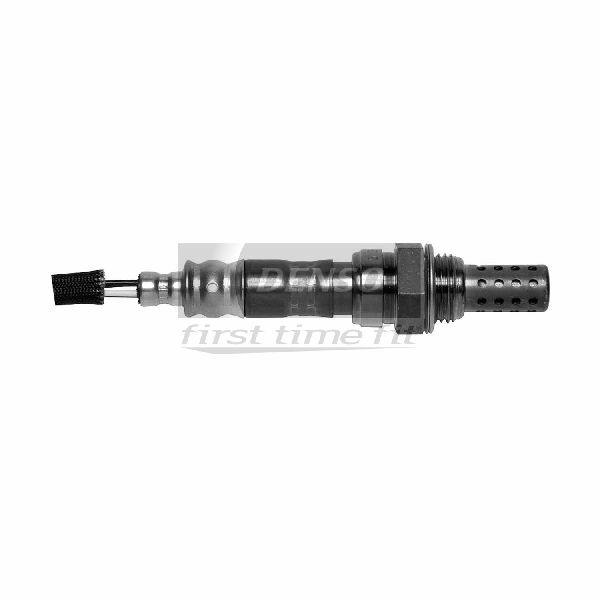
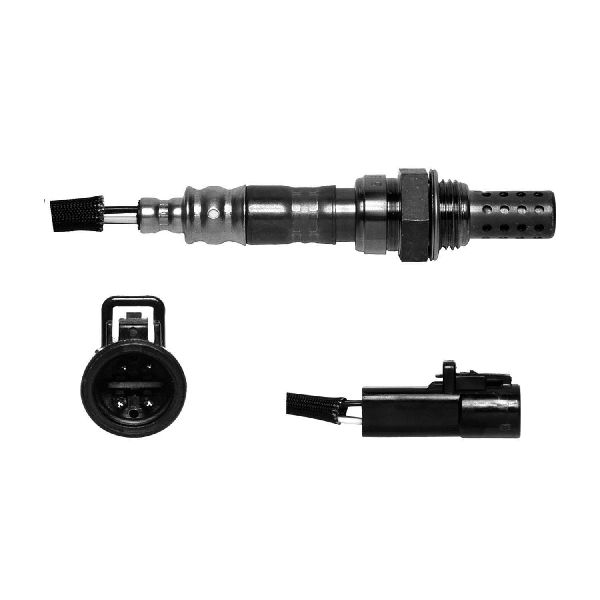
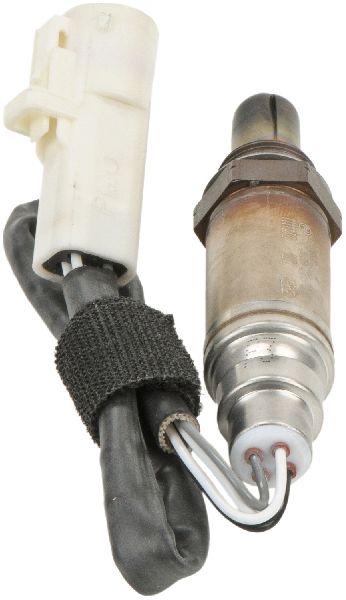
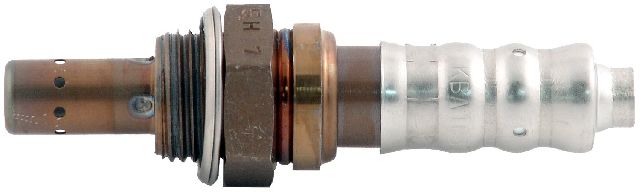
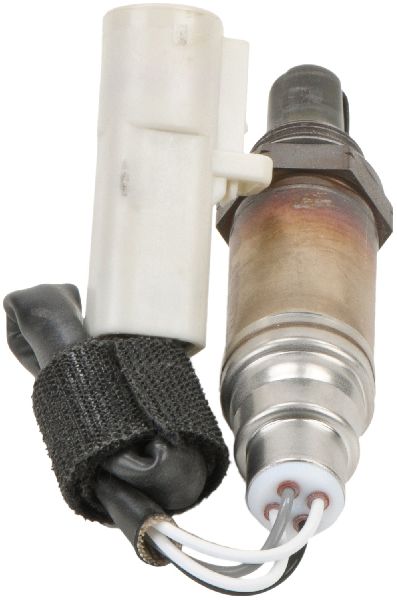
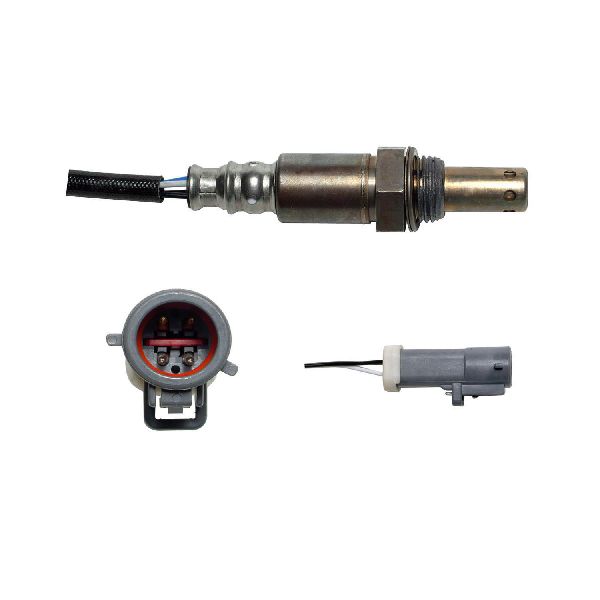
- Downstream Oxygen Sensor (Bank 1, Sensor 2)
(OEM #LF67-18-861A, LF67-18-861B)— This is the most common cause of code P0037, as the internal heating element fails with age.
Trusted brands: Denso (OEM Manufacturer), Bosch, NTK/NGK, Walker Products
OEM price range: $150-$220
Aftermarket price range: $40-$90
Platform-Specific Known Issues
- Some PZEV (Partial Zero Emission Vehicle) models, often sold in California, may have a slightly different exhaust configuration with three O2 sensors. For P0037, you are still concerned with the sensor designated as 'Sensor 2', which is typically located between the primary and secondary catalytic converters on these models. Federal emissions vehicles have two sensors. Always verify the location for your specific vehicle.
- Some owners on forums have noted that on rare occasions, using a non-OEM (specifically, not Denso) sensor can cause the code to persist or return prematurely. If replacing the sensor, using a Denso part is the safest bet.
Mechanic-Grade Diagnostic Values
- Downstream O2 Sensor Heater Element Resistance — expected: 5.0 - 16.0 Ohms at ambient temperature.. Failure: A reading of infinite resistance ('OL') indicates an open/failed heater. A reading significantly outside the expected range suggests a faulty sensor.
- Voltage at HO2S Connector (Harness Side) — expected: Battery Voltage (approx. 12V) on the power supply pin with Key On, Engine Off.. Failure: No voltage suggests a blown fuse or an open circuit in the power wire from the main relay.
- Continuity to Ground on Heater Control Wire — expected: No continuity to ground with the sensor and PCM disconnected.. Failure: Continuity to ground indicates a short circuit in the wiring harness between the sensor connector and the PCM.
Scan Tool Commands That Help
- Mazda IDS (Integrated Diagnostic System): KOER (Key On, Engine Running) Self-Test — This function can be used after a repair to quickly verify that the fault has been corrected and that the PCM no longer detects an issue with the heater circuit, without waiting for a full drive cycle.
- Mazda IDS (Integrated Diagnostic System): Parameter PID Monitoring (e.g., HTR_S2) — To monitor the live status of the downstream O2 sensor heater circuit as commanded by the PCM. This can help determine if the PCM is attempting to activate the heater and see the resulting circuit feedback.
Wiring & Ground Locations
- HO2S B1S2 Connector — Underneath the vehicle, on the exhaust pipe after the catalytic converter. The harness connector is typically clipped to the vehicle's underbody nearby.. This is the primary connection point for testing. The heater circuit consists of the two same-colored wires (often black or white). Pin D is the heater control wire to the PCM, and Pin C is the power supply from the fuse/relay.
- PCM Connector 2 — The Powertrain Control Module (PCM) is located in the engine bay. The heater control wire (from Pin D of the O2 sensor) connects to Pin 2C of the PCM connector.. This is the termination point for the heater control circuit. A continuity test between HO2S Pin D and PCM Pin 2C is necessary to rule out an open or shorted wire if the sensor itself tests good.
- Engine/Transmission Ground Points — Several key ground points are located on the transmission housing and the driver's side fender/shock tower area. One major ground strap is on top of the transmission, with others on the front.. While the O2 sensor heater has a dedicated power and control wire, a poor main engine or chassis ground can cause floating voltages and intermittent electrical issues throughout the system, potentially affecting sensor readings and control circuits.
Real Owner Repair Stories
- Mazdas247 Forum (2008 Mazda 5 (similar platform/engine)) — P0037 code, Check Engine Light on.
❌ Tried (didn't work) Replacing the rear O2 sensor., Checking fuses.
✅ What actually fixed it The user was advised that since the sensor and fuse were good, the next step was to perform a pin-by-pin electrical test of the wiring harness between the sensor connector and the PCM for a short or open circuit, or to inspect the PCM connectors for damage. The thread implies a wiring fault was the likely culprit.
OEM Part Supersession History
LF67-18-861→LF67-18-861A— Standard part revision by the manufacturer.
Heads up: LF67-18-861A is the direct replacement for the original part on 2004-2009 models. Be aware that other similar-looking Mazda O2 sensors like LF4K-18-861B (for Mazda 6) or L34B-18-861B are for different models/years and are not compatible.
Model Year Variations Within This Range
- 2004-2009 (PZEV Models): Partial Zero Emission Vehicle (PZEV) models, primarily sold in California and other CARB states, have a more complex exhaust with two catalytic converters and three oxygen sensors. For code P0037, Sensor 2 is located between the first and second catalytic converters, not at the final downstream position. Federal emissions vehicles have only two sensors, and Sensor 2 is the final one.
Diagnostic Flowchart
Used vs. New Parts: Buying Guide for This Vehicle
When a used part is the smart pick: Never. Oxygen sensors are wear items with a finite lifespan determined by heat cycles and contamination. A used sensor has unknown remaining life and is highly likely to fail soon, making it a poor value. The labor to install it is the same as for a new part.
What to inspect on the donor part:
- Not applicable. Do not purchase a used oxygen sensor.
Aftermarket brands forum-validated for this vehicle:
- Denso (often the original OEM supplier)
- Bosch
- NTK / NGK
Brands owners have reported issues with on this vehicle:
- Unbranded, 'white-box' parts from online marketplaces have a high failure rate. Some forum users report issues with Walker brand sensors, though experiences vary.
Real Owner Stories
Aggregated from forums and TSBs cited above. Mileages and costs reflect what owners reported in those sources.
2009 Mazda 3
Symptoms: The check engine light with code P0037 came back on within a mile of driving, even after replacing both the upstream and downstream oxygen sensors with aftermarket parts.
What fixed it: The issue was not confirmed resolved, but a mechanic suggested the problem was the use of non-OEM parts. Another forum user recommended inspecting the wiring harness for chafing, cuts, or shorts.
Source hint: Reddit r/mazda3
Mazda 3
Symptoms: The check engine light came on with both P0037 (Heater Circuit Low) and P0038 (Heater Circuit High) codes appearing at the same time. This occurred about three months after the rear O2 sensor had been replaced.
What fixed it: The owner had not yet found a solution. Replacing the rear O2 sensor was only a temporary fix that lasted for three months before both codes appeared.
Source hint: Reddit r/mazda3
2007 Mazda 3
Symptoms: The P0037 code remained active even after replacing the downstream oxygen sensor.
What fixed it: A confirmed fix was not reported, but the troubleshooting discussion pointed towards checking the wiring harness for faults between the sensor connector and the PCM.
Source hint: mazda-forums.com: A user reported replacing the sensor but the code remained, leading to a discussion about checking wiring back to the PCM.
Related OBD-II Codes
Frequently Asked Questions
Where is the P0037 oxygen sensor located on my 2004-2009 Mazda 3?
I replaced the downstream O2 sensor, but the P0037 code came back. What should I check next?
Which fuse should I check for the P0037 code on my Mazda 3?
How can I test the oxygen sensor heater to confirm it has failed?
My Mazda 3 is a PZEV model from California. Is the diagnosis for P0037 different?
Is it important to use a Denso or OEM oxygen sensor for this repair?
Helpful Videos
![How to Fix P0037 Engine Code in 2 Minutes [1 DIY Method / Only $19.54]](https://img.youtube.com/vi/a0TB272H-Sc/mqdefault.jpg)
We Have This Part in Stock

The information in this article is provided for general reference and educational purposes only. Vehicle specifications, procedures, and part compatibility can vary by production date, trim level, and region. Always consult your vehicle's factory service manual and verify part numbers before purchasing or performing repairs. Safety-critical components such as airbags, seat belts, and braking systems should be installed by a qualified professional.
- Mazda 3:
- 🧭 Diagnostic Flowchart
- 🎬 Helpful Videos
- 🛍️ Shop This Part
- What's Unique About the 2004-2009 Mazda 3
- Symptoms You May Notice
- Most Likely Causes
- Rare But Worth Checking
- Diagnosis Steps
- Parts You'll Likely Need
- Platform-Specific Known Issues
- Mechanic-Grade Diagnostic Values
- Scan Tool Commands That Help
- Wiring & Ground Locations
- Real Owner Repair Stories
- OEM Part Supersession History
- Model Year Variations Within This Range
- Used vs. New Parts: Buying Guide for This Vehicle
- Real Owner Stories
- 2009 Mazda 3
- Mazda 3
- 2007 Mazda 3
- Related OBD-II Codes
- Frequently Asked Questions
- 🎟️ Get 5% Off