

P0037 on 2006-2015 Mazda MX-5 Miata: Downstream O2 Sensor Heater Fixes
On a 2006-2015 (NC) Miata, code P0037 almost always means the heater element inside the downstream oxygen sensor has failed. Replacing the sensor, a common DIY task, is the typical fix. Expect to pay around $60-$120 for an aftermarket sensor and $150+ for an OEM part.
- P0037 on an NC Miata points directly to the heater circuit for the downstream (post-catalytic converter) O2 sensor.
- The most likely cause by a wide margin is a failed O2 sensor, which is a common wear-and-tear item.
- The repair is DIY-friendly for those with basic tools, including a 22mm or O2 sensor socket and a multimeter for diagnosis.
- While driving with the code is possible, it will cause an emissions failure and can mask other issues.
What's Unique About the 2006-2015 Mazda MX-5 Miata
The 2006-2015 MX-5 Miata, known as the NC generation, is generally very reliable, and P0037 is a straightforward and common maintenance issue rather than a sign of a deeper platform flaw. Unlike some earlier Miatas where the O2 sensor wiring passed through the cabin floor and required removing the seat to access, the NC's downstream sensor has a shorter, more accessible harness in the transmission tunnel area. The diagnosis is typically direct, with the vast majority of cases pointing to a failed sensor rather than complex wiring or computer issues.
Symptoms You May Notice
- Check Engine Light is illuminated.
- Failure to pass a vehicle emissions test.
- In rare cases, a rough idle on a cold start, though most drivers report no change in performance.
- Some owners have reported hesitation or jerking during acceleration, though this is not a majority experience.
- Replacing the upstream (Bank 1, Sensor 1) oxygen sensor instead of the downstream (Bank 1, Sensor 2) sensor. The code P0037 specifically points to the downstream sensor.
Most Likely Causes
- Failed Downstream (Bank 1, Sensor 2) Oxygen Sensor 🔴 High Probability → Shop Oxygen Sensor The internal heater element is a common failure point on O2 sensors due to constant heat cycles and age. It's considered a regular maintenance item after 80,000-100,000 miles.
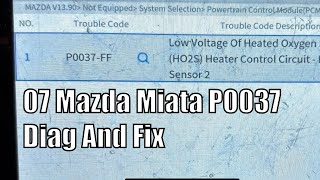
How to confirm: Using a multimeter, measure the resistance across the two heater pins on the sensor's connector (usually the two same-colored wires, often black). An open circuit (infinite resistance) or a direct short (near-zero resistance) confirms the heater has failed. A good heater will have a specific low resistance, often cited as being around 16 ohms 🎬 See a full diagnostic and replacement walkthrough for P0037 when tested cold, though specs can range from 2-50 ohms.
Typical fix: Replace the downstream oxygen sensor. The sensor is located on the exhaust pipe after the first catalytic converter 🎬 Watch: Locate the O2 sensors on your NC Miata and is accessible from under the car.
Est. part cost: $60 - $180 - Damaged Wiring or Connector 🟡 Medium Probability The wiring harness is located under the vehicle and is exposed to high heat from the exhaust, road debris, and moisture, which can cause melting, chafing, or corrosion over time. This can lead to an intermittent P0037 code even after sensor replacement.
How to confirm: Visually inspect the wiring harness leading to the downstream O2 sensor for any signs of melting, chafing, or corrosion at the connector pins. Check for 12V power at the heater circuit wires on the harness side with the ignition on.
Typical fix: Repair the damaged section of the wiring harness or clean/replace the connector.
Est. part cost: $5 - $50 - Blown Fuse ⚪ Low Probability
How to confirm: Check the main fuse box in the engine compartment for a blown fuse. While not always explicitly labeled 'O2 Sensor', on some Mazda models, this may be labeled 'ENGINE1' (a 10A or 15A fuse). Refer to your owner's manual for the specific fuse layout.
Typical fix: Replace the blown fuse. If the fuse blows again, it indicates a short circuit in the wiring or the sensor itself that needs to be diagnosed.
Est. part cost: $1 - $5
Rare But Worth Checking
- Faulty Powertrain Control Module (PCM): → Shop Engine Control Module (ECM) This is extremely rare. The PCM should only be considered after all other possibilities, including the sensor, wiring, and fuses, have been thoroughly tested and ruled out.
Diagnosis Steps
- Read the code with an OBD-II scanner to confirm P0037 is present. Note if it is a current or pending code.
- Visually inspect the downstream O2 sensor's wiring and connector for any obvious damage, such as melting, corrosion, or breaks. The sensor is located after the first catalytic converter, and the connector is accessible from the passenger side of the transmission tunnel.
- Check the fuse for the O2 sensor heater circuit in the engine bay fuse box (often labeled 'ENGINE1').
- If the wiring and fuse are okay, disconnect the sensor. Use a multimeter to test the resistance of the heater circuit on the sensor itself across the two same-colored wires (often black). A good sensor should read a low resistance, typically between 5-16 ohms when cold, though the acceptable range can be wide (2-50 ohms). An open circuit (infinite resistance) or a direct short (near zero ohms) confirms a failed sensor.
- To be certain, check for battery voltage (B+, ~12 volts) at the harness-side connector's power wire with the ignition on. If power is present, the problem is almost certainly the sensor or the ground-side control wire.
- If no power is present at the connector, there is a wiring issue between the fuse box and the sensor that must be traced.
- Replace the downstream O2 sensor if it is confirmed to be faulty. A 22mm O2 sensor socket is recommended. 🎬 Watch: How to swap the post-cat sensor under the car
- Clear the code with the OBD-II scanner and perform a drive cycle to ensure the Check Engine Light does not return. Note that the code may appear as 'pending' on the first drive cycle and will become a hard fault after a second consecutive failure.
Parts You'll Likely Need
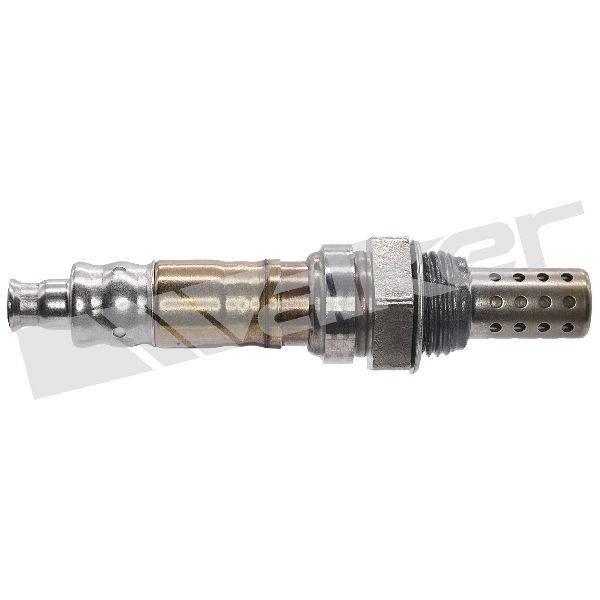
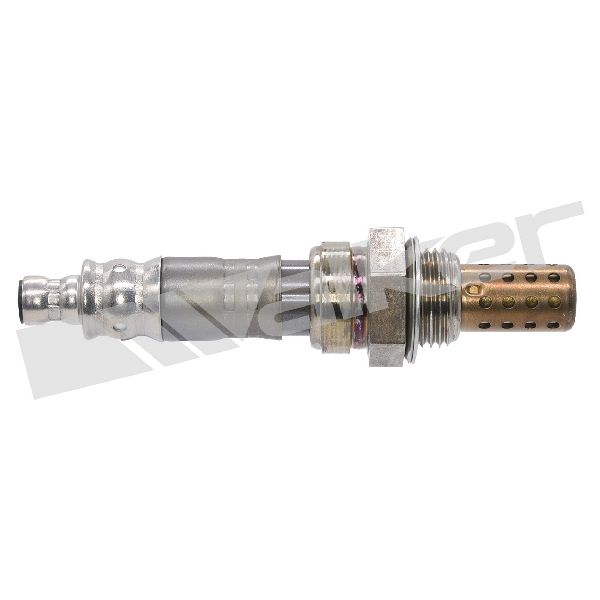
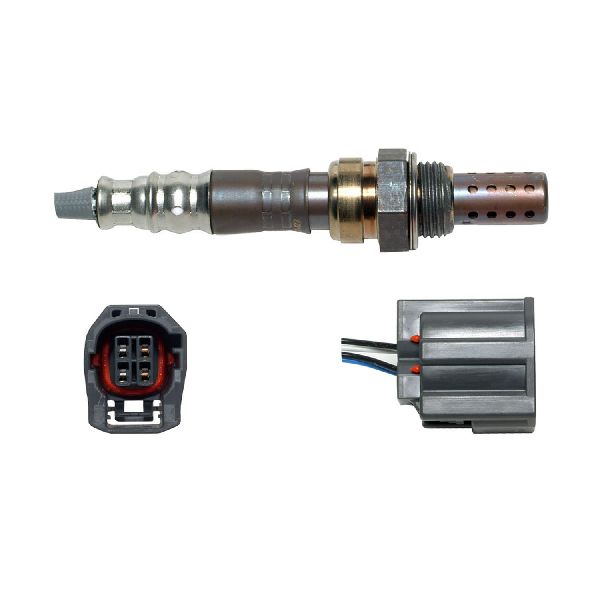
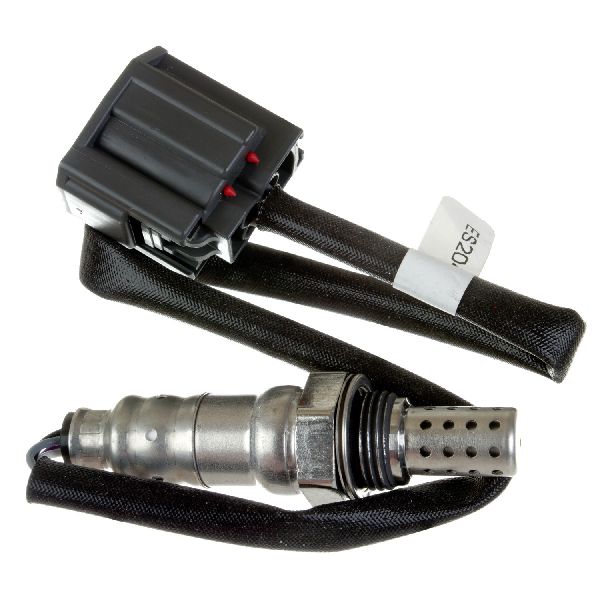
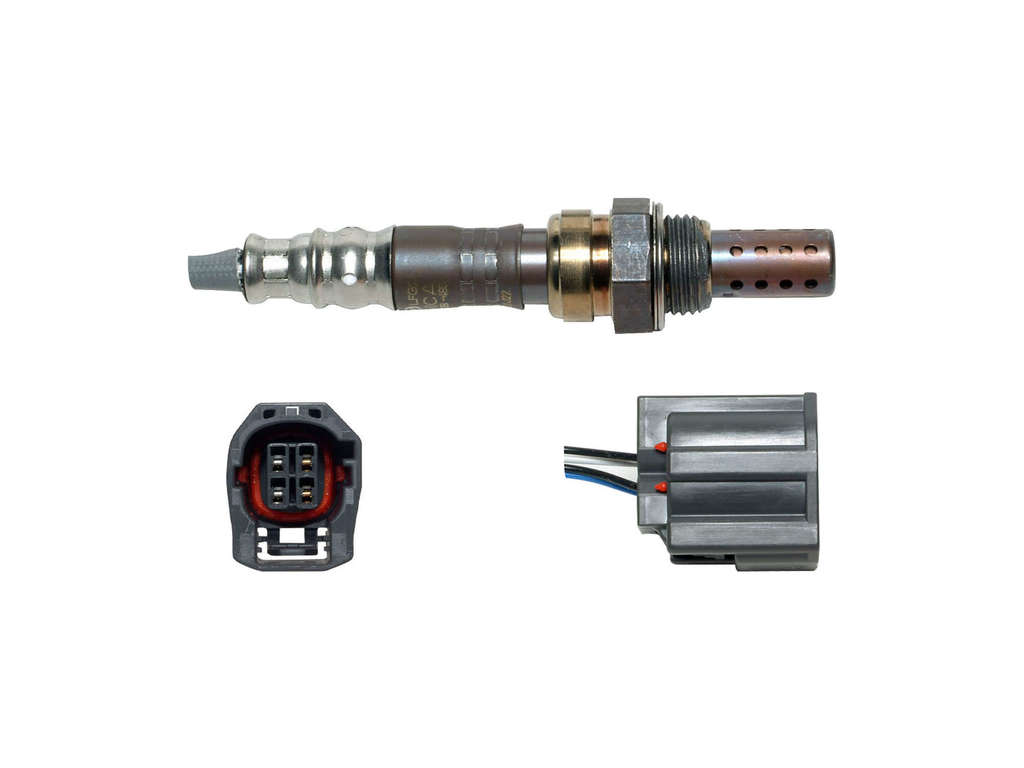
- Downstream Oxygen Sensor (Bank 1, Sensor 2)
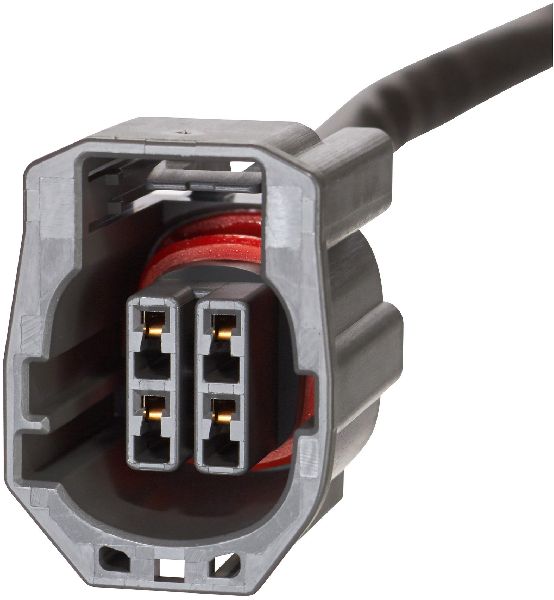
(OEM #LFG1-18-8G1A)— This is the most common failure point for code P0037, as the internal heater element burns out over time.
Trusted brands: Denso (OEM Supplier), NGK/NTK, Bosch
OEM price range: $150-$220
Aftermarket price range: $60-$120
Technical Service Bulletins (TSBs) & Recalls
- No specific Technical Service Bulletins (TSBs) for the 2006-2015 MX-5 Miata directly addressing the P0037 trouble code were found during research.
Platform-Specific Known Issues
- Some owners have reported receiving faulty aftermarket sensors, causing the code to return shortly after replacement. Using a reputable brand like Denso (the OEM supplier) or NTK is often recommended to avoid this.
- The wiring for the downstream sensor runs close to the exhaust and can become brittle or damaged from heat over time, leading to an intermittent P0037 code that can be tricky to diagnose.
Mechanic-Grade Diagnostic Values
- Downstream O2 Sensor Heater Resistance — expected: 2 - 50 Ohms at ambient temperature. More typically, 5 - 16 Ohms is seen on a good sensor.. Failure: An open circuit (infinite or 'O.L.' on a multimeter) or a dead short (near 0 Ohms) indicates a failed heater element.
- Voltage at HO2S Harness Connector (Power Pin) — expected: B+ (Battery Voltage, approx. 12V) with Key On, Engine Off.. Failure: 0V indicates a blown fuse or an open circuit in the power supply wire from the fuse box.
- Live Data - Downstream O2 Sensor Voltage (O2S12) — expected: Should settle to a steady voltage, typically around 0.7V - 0.8V, after the engine is fully warmed up.. Failure: Stuck at a very low voltage (e.g., < 0.1V) for an extended period after startup, even with revving, can indicate a slow or dead sensor.
Hidden / Shadow Codes Worth Checking
- PENDING CODE: The PCM will store P0037 as a 'Pending Code' on the first drive cycle where a fault is detected. It will not illuminate the Check Engine Light at this stage. (see via Most modern OBD-II scanners can display pending codes in a separate menu from active/stored codes.)
Scan Tool Commands That Help
- Mazda M-MDS (or equivalent professional scanner): PID/Data Monitor Inspection — Use this to monitor the live data PID for the downstream O2 sensor voltage (e.g., 'O2S_OUT_VOLT12' or 'O2S12') to verify if the sensor is responding correctly after replacement or during diagnosis.
Wiring & Ground Locations
- HO2S Connector (Harness Side) — On the passenger side of the transmission tunnel, accessible from under the car.. This is the primary test point. Power (from ENGINE1 fuse) is at Terminal C. The PCM control wire is at Terminal D.
- PCM Connector — The Powertrain Control Module, typically located in the engine bay.. Terminal 2C is the pin that receives the ground control signal from the HO2S at Terminal D. This is the final point to test for continuity in the control wire before suspecting a faulty PCM.
- ENGINE1 Fuse — In the main fuse box in the engine compartment.. This 10A or 15A fuse provides battery power to the O2 sensor heater circuit. If it's blown, the heater will not receive power.
Real Owner Repair Stories
- Reddit user 'burna-boy' on r/Miata (2008 Mazda MX-5 Miata (NC1)) — Check Engine Light with code P0037, jerking during acceleration, hesitation.
❌ Tried (didn't work) Initially, just replacing the O2 sensor fixed the P0037 code, but the hesitation and jerking symptom remained, though it became irregular.
✅ What actually fixed it The P0037 code was fixed by replacing the downstream O2 sensor. The separate hesitation issue was ultimately traced to water in an ignition coil pack well, which was discovered when a retaining screw for the coil was found broken. The water was from a recent engine bay cleaning. After cleaning out the water, all symptoms were resolved. - Reddit user on r/MiataNC (2012 Mazda MX-5 Miata (NC2)) — Intermittent Check Engine Light with code P0037. The light would come on, could be reset, and would stay off for weeks before returning.
❌ Tried (didn't work) Having a garage replace the downstream O2 sensor. The code returned after a few weeks.
✅ What actually fixed it The user's story highlights a common unresolved issue where the next diagnostic step, after a failed sensor replacement, is to meticulously inspect the wiring harness that runs along the catalytic converter for intermittent shorts or opens caused by heat damage. The thread did not have a final resolution post from the original author, but serves as a classic example of an intermittent wiring fault being the likely culprit after a new sensor fails to fix the issue long-term.
OEM Part Supersession History
LFG1-18-8G1A→LFG1-18-8G1A— No supersession found. The part number appears stable.
Heads up: CRITICAL TRAP: Many online parts catalogs incorrectly label this downstream sensor (Sensor 2) with descriptions like 'Front' or 'Front Rear'. This can cause confusion and lead to ordering the wrong part. Verify you are ordering the sensor for the post-catalytic converter position.
Model Year Variations Within This Range
- 2006-2015: No significant variations have been identified for this specific trouble code. While the NC platform had facelifts (NC1 vs NC2/3) with engine and cosmetic changes, the downstream O2 sensor part number, function, and diagnostic procedure for P0037 remain consistent across the entire generation.
Diagnostic Flowchart
Used vs. New Parts: Buying Guide for This Vehicle
When a used part is the smart pick: A used part is NOT recommended for the oxygen sensor itself, as it is a wear item with a limited lifespan. However, sourcing a used wiring harness pigtail from a salvage yard is an excellent, cost-effective solution if your original connector is melted, corroded, or damaged.
Donor-vehicle mileage cap: roughly under 120000 miles for the part to have meaningful remaining life.
What to inspect on the donor part:
- For a wiring pigtail, inspect for a clean, unbroken connector body.
- Check that the wires are still flexible and the insulation is not cracked or brittle.
- Ensure there is no green or white corrosion on the connector pins.
- Cut a longer section of wire than you think you'll need to allow for easier splicing.
OEM-only on this vehicle (don't cheap out):
- No parts for this repair are considered 'OEM-only'. High-quality aftermarket sensors are widely available and trusted.
Aftermarket brands forum-validated for this vehicle:
- Denso (often the original OEM supplier)
- NGK / NTK
Brands owners have reported issues with on this vehicle:
- Unbranded, 'white box' sensors from major online retailers are frequently reported by owners to be dead-on-arrival or fail within a few months.
Real Owner Stories
Aggregated from forums and TSBs cited above. Mileages and costs reflect what owners reported in those sources.
2008 Mazda MX-5
Symptoms: Check engine light was on, and the car would jerk during acceleration with a lack of power. It also hesitated at idle, with the jerking starting once the engine warmed up.
What fixed it: Replacing the downstream O2 sensor resolved the P0037 code. The separate hesitation issue was later traced to water in a coil pack from a recent engine bay cleaning.
Source hint: Reddit r/Miata - P0037 code | NC 2008
Mazda MX-5 NC
Symptoms: An intermittent P0037 code that kept returning even after a garage had already replaced the oxygen sensor.
What fixed it: The owner was investigating underlying wiring issues as the likely cause, since the sensor replacement did not solve the intermittent check engine light.
Source hint: Reddit r/MiataNC - Intermittent Engine Check Light error code P0037
Mazda MX-5
Symptoms: After replacing the sensor to fix a P0037 code, the owner was still seeing 0.00v on live data from the sensor, indicating it was not functioning.
What fixed it: The issue was not resolved by the sensor replacement, leading to a deeper investigation into the wiring harness and potential ECU problems.
Source hint: Miata Turbo Forum - A not-so-simple P0037 CEL issue..... helps?
Related OBD-II Codes
Frequently Asked Questions
Where is the P0037 sensor (Bank 1, Sensor 2) located on my 2006-2015 MX-5?
What is the most likely cause of a P0037 code on my Miata?
I replaced the O2 sensor, but the check engine light came back for P0037. What's next?
How can I test the oxygen sensor on my MX-5 to confirm it's bad?
Are there any recommended O2 sensor brands for the Mazda MX-5 to avoid issues?
What tools do I need to replace the downstream O2 sensor myself?
Are there any official recalls or TSBs for the P0037 code on the NC Miata?
Helpful Videos
We Have This Part in Stock

The information in this article is provided for general reference and educational purposes only. Vehicle specifications, procedures, and part compatibility can vary by production date, trim level, and region. Always consult your vehicle's factory service manual and verify part numbers before purchasing or performing repairs. Safety-critical components such as airbags, seat belts, and braking systems should be installed by a qualified professional.
- Mazda MX-5 Miata:
- 🧭 Diagnostic Flowchart
- 🎬 Helpful Videos
- 🛍️ Shop This Part
- What's Unique About the 2006-2015 Mazda MX-5 Miata
- Symptoms You May Notice
- Most Likely Causes
- Rare But Worth Checking
- Diagnosis Steps
- Parts You'll Likely Need
- Technical Service Bulletins (TSBs) & Recalls
- Platform-Specific Known Issues
- Mechanic-Grade Diagnostic Values
- Hidden / Shadow Codes Worth Checking
- Scan Tool Commands That Help
- Wiring & Ground Locations
- Real Owner Repair Stories
- OEM Part Supersession History
- Model Year Variations Within This Range
- Used vs. New Parts: Buying Guide for This Vehicle
- Real Owner Stories
- 2008 Mazda MX-5
- Mazda MX-5 NC
- Mazda MX-5
- Related OBD-II Codes
- Frequently Asked Questions
- 🎟️ Get 5% Off