

P0037 on 1999-2003 Mazda Protege: O2 Sensor Heater Circuit Fixes
For the 1999-2003 Mazda Protege, code P0037 almost always points to a failed heater element inside the downstream oxygen sensor (Bank 1, Sensor 2). Replacing this sensor, located after the catalytic converter, is the most common fix. Before replacing, check the 'ENGINE' fuse in the driver's side interior fuse panel.
- P0037 on a 1999-2003 Mazda Protege means there is a problem with the heater circuit for the downstream oxygen sensor.
- The most likely cause, by far, is that the oxygen sensor itself has failed and needs to be replaced.
- Before replacing the sensor, always perform a quick visual inspection of the wiring for obvious damage and check the 10A 'ENGINE' fuse in the interior fuse box.
- This issue will not prevent you from driving the car, but it will cause an automatic failure of an emissions test.
What's Unique About the 1999-2003 Mazda Protege
On the third-generation (BJ) Mazda Protege, this code is straightforward. Like many vehicles from this era, the downstream oxygen sensor is primarily used for monitoring the catalytic converter's health, not for critical fuel trim adjustments. Therefore, a P0037 code won't usually cause major drivability problems, but it will keep the Check Engine Light on and cause an automatic failure on an emissions test. The most frequent point of failure is simply the O2 sensor's internal heater burning out from age and heat cycles. While a P0037 alone won't cause a no-start, one owner on Mazdas247 reported a severe loss of power and eventual no-start condition that began with a P0037, though it was likely compounded by other issues like a slipped timing belt.
Symptoms You May Notice
- Check Engine Light is on.
- Vehicle will fail an emissions test.
- No noticeable change in drivability in most cases.
- Replacing the upstream (Bank 1, Sensor 1) oxygen sensor. P0037 specifically points to the downstream sensor (Sensor 2).
- Replacing the catalytic converter. While the downstream sensor monitors the converter, this code is for the sensor's heater circuit, not the converter's performance. A shop incorrectly diagnosed a bad cat for a user on Mazdas247 who had a P0037 code.
Most Likely Causes
- Failed Downstream Oxygen Sensor 🔴 High Probability → Shop Oxygen Sensor The heater element inside the sensor is a common wear-and-tear item that eventually burns out from constant heat cycles. Owners on forums frequently recommend replacing O2 sensors as a maintenance item every 100,000-120,000 miles to prevent this failure.
How to confirm: Disconnect the sensor and measure the resistance between the two heater circuit wires (often the two same-colored wires, typically black). A good sensor will have a resistance between 2-15 Ohms. A forum member on Mazdas247 noted a spec of approximately 15.7 ohms. An open circuit (infinite resistance or 'OL' on a multimeter) or a resistance value far outside this range indicates a failed heater element.
Typical fix: Replace the downstream (Bank 1, Sensor 2) oxygen sensor. Applying anti-seize to the threads of the new sensor is recommended. It can also help to warm up the exhaust before attempting to remove the old sensor, as they can be seized.
Est. part cost: $40-$120 - Damaged Wiring or Connector 🟡 Medium Probability The wiring for the downstream O2 sensor runs underneath the car and is exposed to road debris, moisture, and extreme heat from the exhaust, which can cause wires to melt, chafe, or break. A visual inspection is the first step.
How to confirm: Visually inspect the entire wiring harness from the sensor to the main connector for any signs of melting, chafing, corrosion, or breaks. Check the connector pins for corrosion or damage. If the visual inspection is clear, use a multimeter to check for battery voltage (B+) at the harness connector with the key on.
Typical fix: Repair the damaged section of wiring or replace the connector pigtail.
Est. part cost: $10-$30 - Blown Fuse ⚪ Low Probability A short circuit in the heater wiring or within the sensor itself can cause the associated fuse to blow.
How to confirm: Locate the fuse for the O2 sensor heater circuit. On the Protege, this is often the 10A 'ENGINE' fuse at position 14 in the interior fuse panel located in the driver's side footwell. A forum member noted that if this fuse is blown, the engine will typically crank but not start, and the temperature gauge may spike to maximum. If the fuse is blown, there is likely a short circuit in the wiring or sensor that must be fixed before replacing the fuse.
Typical fix: Identify and repair the short circuit, then replace the blown fuse with one of the same amperage.
Est. part cost: $1-$5
Rare But Worth Checking
- Faulty Powertrain Control Module (PCM): → Shop Engine Control Module (ECM) This is extremely rare. The PCM's internal driver for the heater circuit can fail, but all other possibilities (sensor, wiring, fuse) should be exhausted before considering PCM replacement.
Diagnosis Steps
- Scan the vehicle for the exact trouble code and any other stored codes. Confirm P0037 is present.
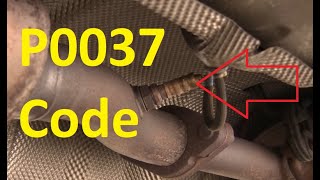
- Locate the downstream oxygen sensor (Bank 1, Sensor 2). On the Protege, this is under the car, installed in the exhaust pipe just after the catalytic converter.
- Inspect the sensor's electrical connector and wiring harness for any visible damage, such as melting, corrosion, or broken wires.
- Check the fuse for the oxygen sensor heater circuit. This is typically the 10A 'ENGINE' fuse in the driver's side interior fuse box (position 14). If the fuse is blown, inspect the wiring for a short to ground before replacing it.
- If the wiring and fuse are good, disconnect the sensor. Use a multimeter to test the resistance of the heater circuit within the sensor itself. A reading of 'OL' (over-limit) or infinite resistance means the heater element is burned out and the sensor must be replaced. A good sensor should read between 2-15 ohms.
- If the sensor's resistance is within spec, check for power and ground at the vehicle's harness connector with the key on. You should see battery voltage (~12V) on one pin and a ground or control signal on another. Lack of voltage points to a wiring issue upstream or a blown fuse.
Parts You'll Likely Need
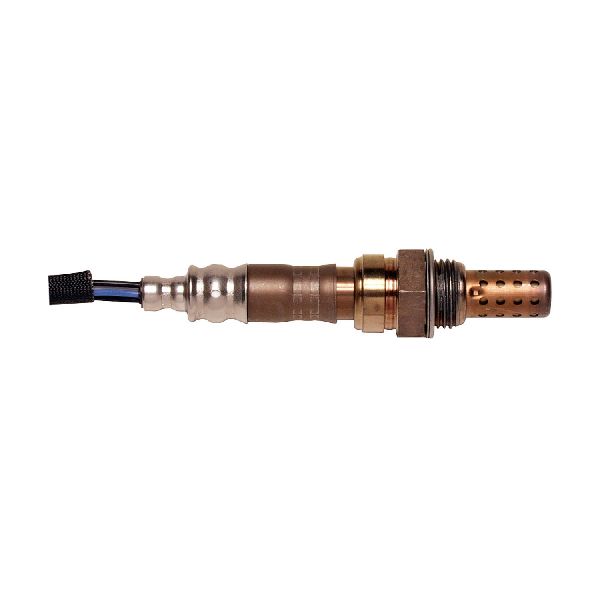
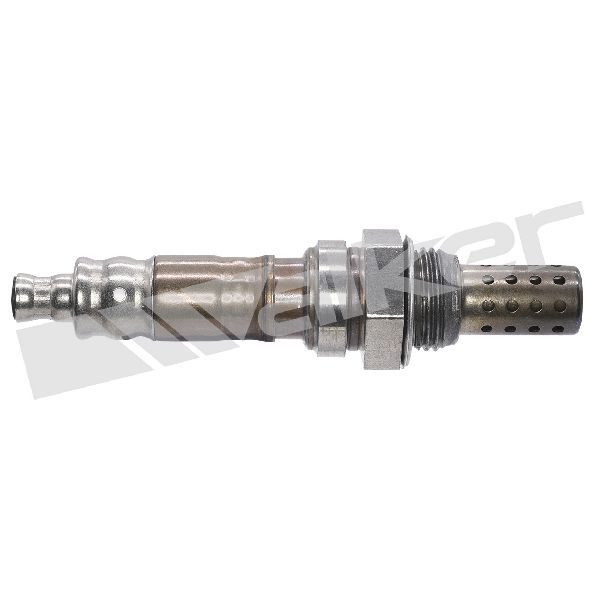
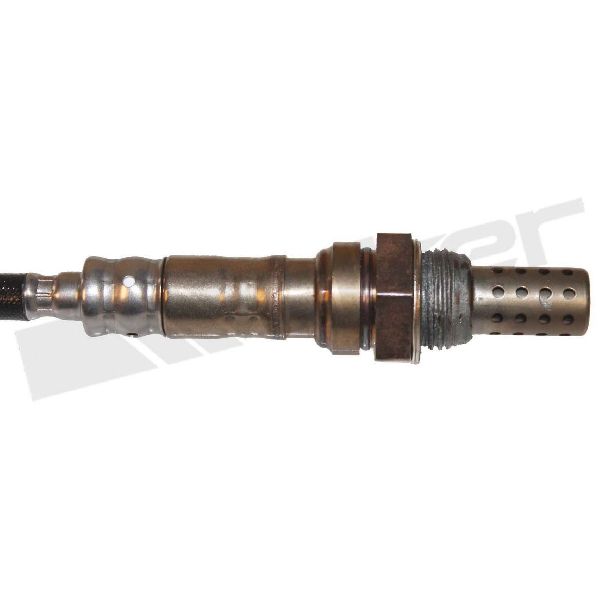
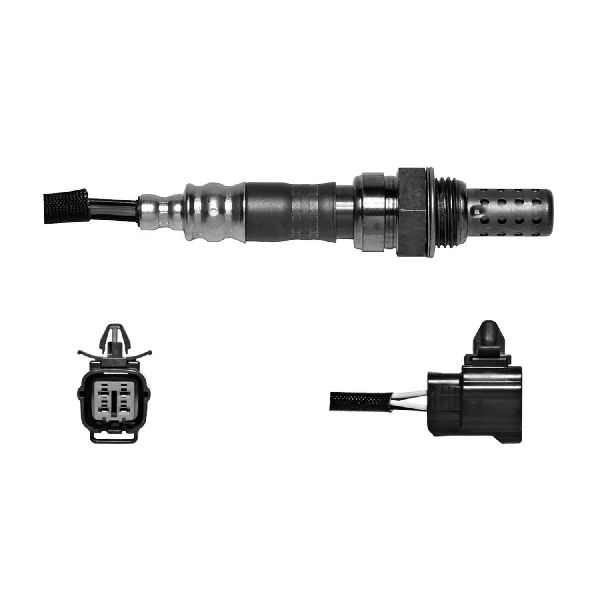
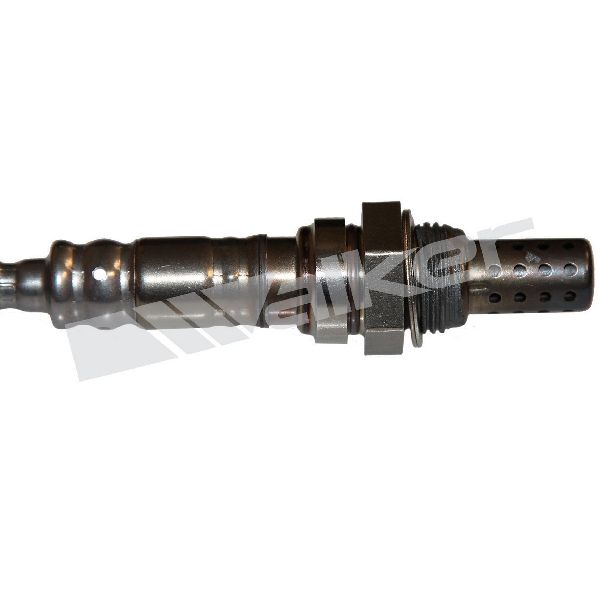
- Downstream Oxygen Sensor
(OEM #Denso 234-4721 (for 2.0L), Walker 250-24367, Denso cross-reference 87222ZXDX)— This is the most common failure for code P0037, as the internal heater element burns out over time.
Trusted brands: Denso, NGK/NTK, Bosch, Walker
OEM price range: $100-$180
Aftermarket price range: $40-$120
Related Codes That Often Appear With This One
- P0038 — This indicates a 'Heater Control Circuit High' condition for the same sensor. Seeing both P0037 and P0038 intermittently could point to a loose connection or damaged wiring.
- P0141 — This is another generic code for 'Sensor Heater Circuit Malfunction (Bank 1, Sensor 2)'. It is functionally very similar to P0037 and points to the same set of potential causes.
Mechanic-Grade Diagnostic Values
- Rear O2 Sensor Heater Control (HTR12) Scan Tool PID — expected: Should switch to 'ON' when engine coolant temperature is above 70°C (158°F).. Failure: PID remains 'OFF' when the engine is warm, indicating the PCM is not commanding the heater on, or it has detected a fault.
- Voltage at Rear O2 Sensor Harness Connector (Power Pin) — expected: Battery Voltage (~12V) with Key On, Engine Off.. Failure: 0V or significantly low voltage indicates a blown fuse or an open circuit in the power supply wire from the fuse.
Wiring & Ground Locations
- PCM Pin 93 (G/R wire) — At the Powertrain Control Module (PCM) connector, typically located in the engine bay near the firewall. This is the pin for the Rear O2 Sensor signal on the 1.8L engine.. This pin receives the signal from the rear O2 sensor. While P0037 is a heater circuit code, a full diagnostic would involve checking for continuity from the sensor connector back to the PCM to rule out a wiring break.
- 10A 'ENGINE' Fuse — In the interior fuse panel, located in the driver's side footwell, often at position 14.. This fuse provides power to the heater circuit for both oxygen sensors. If it's blown, the car will likely crank but not start, and the temperature gauge may max out.
Real Owner Repair Stories
- Mazdas247 Forum User 'PowrSlave' (2002 Mazda Protege5, 5-speed, 195k miles) — P0037 code was present for a few weeks. Then, experienced a severe loss of power, followed by the engine dying at a stoplight and a crank-no-start condition.
❌ Tried (didn't work) Replacing the downstream (rear) O2 sensor did not resolve the no-start issue.
✅ What actually fixed it The thread concluded that the no-start was a separate, more severe issue, likely a slipped timing belt or other major engine failure, which was merely coincidental to the P0037 code. The P0037 was a correct diagnosis for the sensor, but not the cause of the drivability problem.
Model Year Variations Within This Range
- 1999-2000: These years primarily used the 1.8L FP-DE engine. The correct downstream oxygen sensor is Denso P/N 234-4752.
- 2001-2003: These years primarily used the 2.0L FS-DE engine. The correct downstream oxygen sensor is often listed as Denso P/N 234-4752, but the upstream sensor is different (Denso P/N 234-4721). It is critical to verify the part by engine type, as both engines were available in the 2001 model year.
Diagnostic Flowchart
Other Known Issues on This Vehicle
Issues unrelated to this code that are worth knowing about as an owner of this generation:
- Severe Body Rust 🔴 High — Very common, especially in areas with road salt. Typically starts around rear wheel wells and strut towers after the 5-year warranty period.
- Intake Manifold Butterfly Screws Loosening (FS-DE 2.0L) 🔴 High — A known issue on the 2.0L engine where screws for the VICS/VTCS butterfly valves can back out and fall into the engine, causing catastrophic damage. (Ref: A TSB was reportedly issued, but the number is not widely documented. The fix is to apply Loctite to the screws.)
- Automatic Transmission Failure 🟠 Medium — The 2002 model year is particularly noted for automatic transmission issues like rough shifting, hesitation, and complete failure. (Ref: TSB 05-002-21-3854 exists for a transmission cooler flushing procedure, indicating awareness of transmission health issues.)
- High Oil Consumption (FS-DE 2.0L) 🟠 Medium — Many owners of the 2.0L engine report significant oil consumption, often due to sticking/clogged oil control rings or worn valve stem seals.
- Restricted EGR System 🟡 Low — The EGR valve and passages can become clogged with carbon, leading to a Check Engine Light and rough idle.
- Failed Engine Mounts 🟡 Low — The hydraulic engine mounts are a common wear item, leading to excessive vibration at idle and clunking noises when shifting.
Used vs. New Parts: Buying Guide for This Vehicle
When a used part is the smart pick: A used part is almost never a good choice for an oxygen sensor, as it is a wear item with a finite lifespan. However, obtaining a used connector pigtail from a junkyard harness is a very smart and cost-effective way to repair a damaged connector.
Donor-vehicle mileage cap: roughly under 10000 miles for the part to have meaningful remaining life.
What to inspect on the donor part:
- For a connector pigtail, ensure the plastic is not brittle or cracked.
- Check that the locking tab is intact.
- Inspect the wires for any signs of melting, corrosion, or previous repair.
- Ensure you get at least 6-8 inches of wire to work with.
Aftermarket brands forum-validated for this vehicle:
- Denso (often the Original Equipment Manufacturer)
- NGK / NTK
- Bosch
Brands owners have reported issues with on this vehicle:
- Unnamed or generic 'white-box' brands from online marketplaces should be avoided, as forum users across many platforms report premature failures or out-of-spec performance that can cause persistent codes.
Real Owner Stories
Aggregated from forums and TSBs cited above. Mileages and costs reflect what owners reported in those sources.
2003 Mazda Protege5
Symptoms: Check engine light illuminated with code P0037.
What fixed it: The owner was advised that the fix is either replacing the sensor due to a busted internal heating element or repairing an interruption in the wiring harness.
Source hint: Mazda Forum - 'P0037 and P0090'
2002 Mazda Protege5
Symptoms: The car had a P0037 code, then experienced a severe loss of power, wouldn't idle, and eventually died (no-start).
What fixed it: Replacing the O2 sensor did not fix the no-start condition, indicating that while P0037 was present, other underlying issues were causing the drivability failure.
Source hint: Mazdas247 - '2002 Protege5 with P0037 code started losing power...'
2002 Mazda Protege — ~110000 miles
Symptoms: Failed an emissions test due to the P0037 code.
What fixed it: Identified as a downstream O2 sensor heater circuit failure rather than the catalytic converter.
Source hint: Mazdas247 - 'P0037 emission test code'
Related OBD-II Codes
Frequently Asked Questions
Where is the fuse for the O2 sensor heater circuit located on my Protege?
My Protege cranks but won't start and the temp gauge is spiked; could this be related to P0037?
What is the specific resistance specification for the downstream O2 sensor on a Mazda Protege?
Is there a specific mileage interval when I should replace the O2 sensors on my Protege to prevent P0037?
Does the P0037 code mean I need a new catalytic converter?
Are there any tips for removing a seized downstream O2 sensor on a Protege5?
Helpful Videos
We Have This Part in Stock


The information in this article is provided for general reference and educational purposes only. Vehicle specifications, procedures, and part compatibility can vary by production date, trim level, and region. Always consult your vehicle's factory service manual and verify part numbers before purchasing or performing repairs. Safety-critical components such as airbags, seat belts, and braking systems should be installed by a qualified professional.
- Mazda Protege:
- 🧭 Diagnostic Flowchart
- 🎬 Helpful Videos
- 🛍️ Shop This Part
- What's Unique About the 1999-2003 Mazda Protege
- Symptoms You May Notice
- Most Likely Causes
- Rare But Worth Checking
- Diagnosis Steps
- Parts You'll Likely Need
- Related Codes That Often Appear With This One
- Mechanic-Grade Diagnostic Values
- Wiring & Ground Locations
- Real Owner Repair Stories
- Model Year Variations Within This Range
- Other Known Issues on This Vehicle
- Used vs. New Parts: Buying Guide for This Vehicle
- Real Owner Stories
- 2003 Mazda Protege5
- 2002 Mazda Protege5
- 2002 Mazda Protege — ~110000 miles
- Related OBD-II Codes
- Frequently Asked Questions
- 🎟️ Get 5% Off