

P0037 on 2005-2009 Subaru Legacy: Rear O2 Sensor Heater Circuit Causes and Fixes
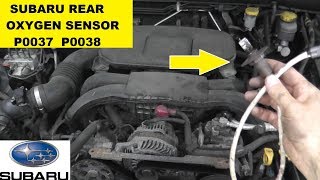
On a 2005-2009 Subaru Legacy with the 2.5L engine, P0037 almost always means the rear (downstream) oxygen sensor has failed. The most common fix is to replace the sensor. Expect to pay $70-$120 for a quality aftermarket Denso (p/n 234-4445) or NGK/NTK sensor and $110-$170 for an OEM part (p/n 22690AA81A). It's a DIY-friendly job, but the sensor is often seized in the exhaust, requiring an O2 sensor socket and significant penetrating oil.
- P0037 points directly to a problem with the rear oxygen sensor's heater circuit.
- The most probable cause is a failed sensor. A quality aftermarket replacement from a brand like Denso (234-4445) is a reliable and cost-effective fix.
- Before buying parts, always perform a quick visual inspection of the sensor's wiring for any obvious melting or damage, and check the A/F heater fuse (5B in the engine bay fuse box).
- The flashing cruise control light is a normal side effect of the Check Engine Light on this Subaru and will be resolved when the P0037 code is fixed.
What's Unique About the 2005-2009 Subaru Legacy
On this generation of Subaru Legacy, a P0037 code will almost always trigger a flashing 'CRUISE' light on the dashboard along with the solid Check Engine Light. This is a standard Subaru feature designed to get the driver's attention and does not indicate a separate problem with the cruise control system; it is disabled as a precaution. The system will function normally again once the P0037 code is resolved. Additionally, the wiring for the rear O2 sensor can be susceptible to damage from exhaust heat or chafing against the driveshaft, making a visual inspection of the harness a critical first step. The electrical connector for the sensor is located inside the cabin, under the passenger-side carpet near the center console.
Symptoms You May Notice
- Check Engine Light is on
- Flashing 'CRUISE' light on the dashboard
- Vehicle will fail an emissions test
- Potential for slightly reduced fuel economy
- Replacing the front oxygen sensor (Air/Fuel Ratio Sensor). P0037 specifically refers to Sensor 2, the rear sensor.
- Assuming the flashing cruise control light indicates a separate problem with the cruise control system. 🎬 Watch: Why your cruise light is flashing and how to fix it. It is a secondary warning triggered by the ECU for this fault code.
Most Likely Causes
- Failed Rear Oxygen Sensor 🔴 High Probability → Shop Oxygen Sensor The internal heating element of the sensor is a common failure point due to age and constant heat cycles. It's considered a wear item.
How to confirm: After confirming the fuse and wiring are intact, test the resistance of the heater circuit in the sensor with a multimeter. Disconnect the sensor and measure between the two heater pins (usually the two black wires on an aftermarket sensor). A good sensor should have a low resistance, typically between 5 and 15 ohms. A failed sensor will show an open circuit (OL) or very high resistance (kOhms).
Typical fix: Replace the rear (downstream) oxygen sensor. Soaking the sensor threads with penetrating oil for an extended period before attempting removal is highly recommended to avoid damage to the exhaust pipe. An O2 sensor socket is essential.
Est. part cost: $70-$170 - Damaged Wiring or Connector 🟡 Medium Probability The sensor wiring is routed near the hot exhaust and rotating driveshaft, making it susceptible to melting, chafing, or corrosion over time. Forum users have specifically reported finding melted and frayed wires as the cause of the code.
How to confirm: Visually inspect the entire wiring harness from the sensor to the main connector inside the passenger footwell. Look for melted plastic, frayed wires, or corroded pins in the connector.
Typical fix: Repair the damaged section of the wiring harness or clean the connector terminals.
Est. part cost: $5-$25 - Blown Fuse ⚪ Low Probability
How to confirm: Check the fuse panel in the engine bay for a blown fuse. It is often labeled 'A/F HEATER' or similar. One user on LegacyGT.com identified fuse '5B' in the under-hood panel as the correct one for a 2005 Legacy GT.
Typical fix: Replace the blown fuse. If it blows again immediately, this indicates a short circuit in the wiring or the sensor itself that must be located and repaired.
Est. part cost: $1-$5
Rare But Worth Checking
- Faulty Engine Control Module (ECM): → Shop Engine Control Module (ECM) This is extremely rare. The ECM should only be considered after all other possibilities (sensor, wiring, fuses) have been definitively ruled out.
Diagnosis Steps
- Read the code with an OBD-II scanner to confirm P0037 is present. Note that the flashing cruise light is expected.
- Inspect the 'A/F HEATER' fuse in the under-hood fuse box (check position 5B). Replace if blown.
- Perform a thorough visual inspection of the rear oxygen sensor's wiring harness. Trace it from the sensor to the connector under the passenger carpet. Look for signs of melting, chafing against the driveshaft, or broken wires.
- If wiring and fuse are good, test the sensor's heater circuit. Unplug the sensor and use a multimeter to measure the resistance between the two heater circuit pins (usually same-colored wires). A reading between 5-15 ohms is good; an open circuit (OL) or very high resistance confirms a failed heater element.
- If the sensor resistance is good, check for power at the harness connector. With the key on, engine off, you should have approximately 12V at one of the heater circuit pins. If not, there is a wiring issue between the fuse box and the sensor.
- If all other checks pass, the sensor is the culprit. Replace the rear oxygen sensor. Use a 22mm (or 7/8") O2 sensor socket and be prepared for it to be seized. Liberal use of penetrating oil beforehand is crucial.
Parts You'll Likely Need
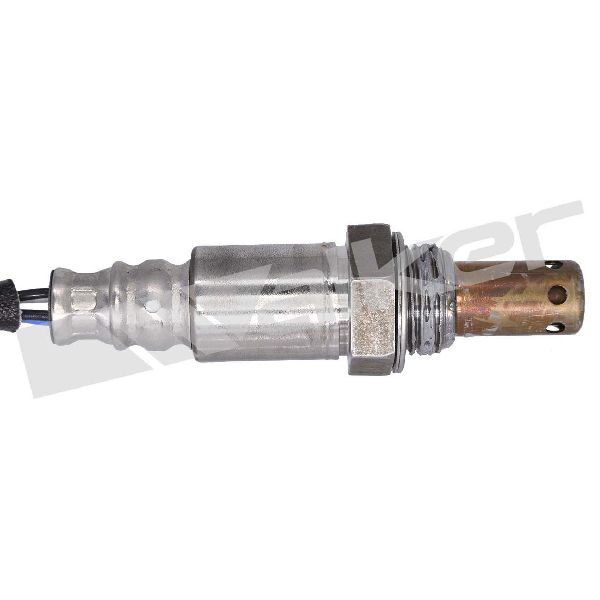
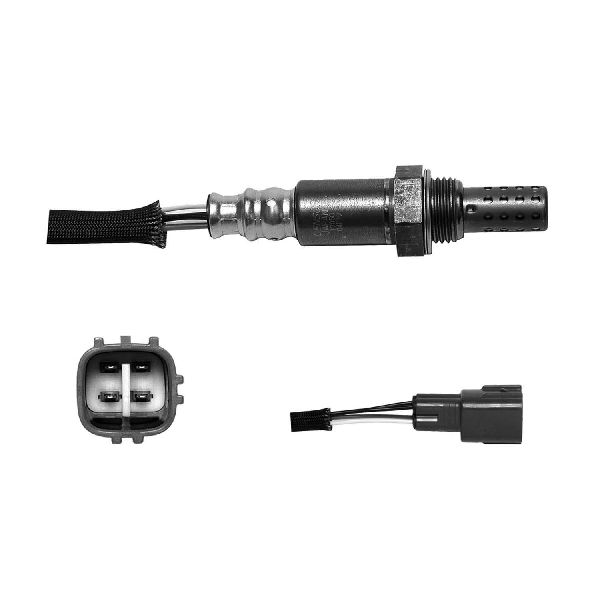
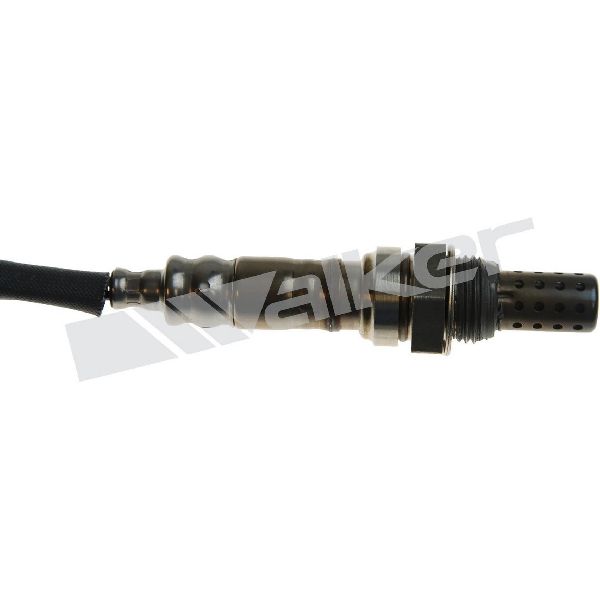
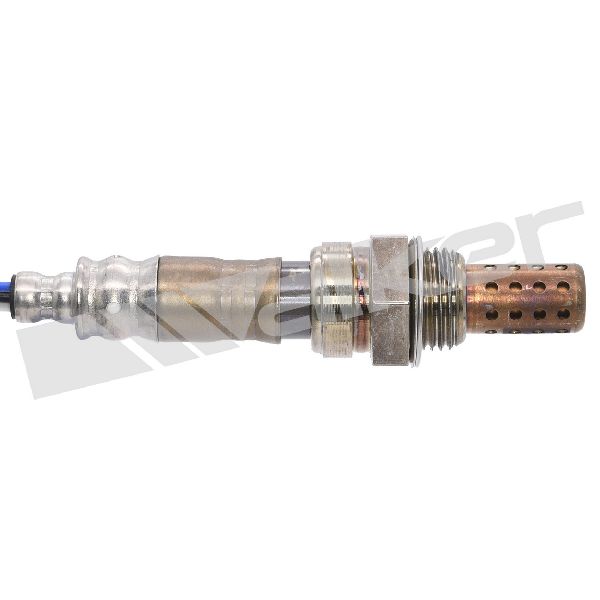
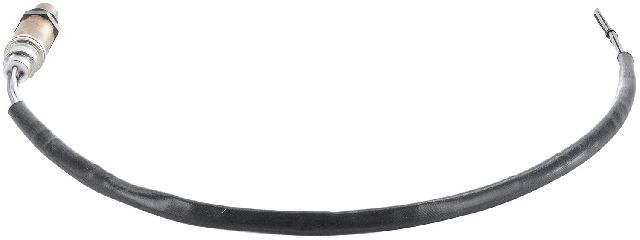
- Rear Oxygen Sensor (Downstream)
(OEM #22690AA81A)— The internal heater element fails from age and heat cycles, which is the direct cause of the P0037 code.
Trusted brands: Denso (p/n: 234-4445), NGK/NTK (p/n: 24642), Bosch (p/n: 15172)
OEM price range: $110-$170
Aftermarket price range: $70-$120
Related Codes That Often Appear With This One
- P0031 — P0031 refers to the heater circuit for the front oxygen sensor (Bank 1, Sensor 1). Seeing both codes together often points to a shared power or ground issue, like a blown 'A/F HEATER' fuse or a damaged common wire, rather than two simultaneously failed sensors.
- P0038 — This code is for 'HO2S Heater Control Circuit High', which is the opposite fault for the same sensor. Seeing either P0037 or P0038 points to a problem with the rear O2 sensor heater circuit.
Platform-Specific Known Issues
- The rear oxygen sensor is notoriously difficult to remove due to rust and seizure in the exhaust pipe bung. Extensive use of penetrating oil, and sometimes heat, is required for removal without damaging the exhaust.
- The connector for the rear O2 sensor is located inside the cabin, requiring the passenger-side carpet to be pulled back for access, which can be an unexpected step for DIYers.
Mechanic-Grade Diagnostic Values
- Rear O2 Sensor Heater Circuit Resistance — expected: 3 to 10 Ohms. Some sources indicate up to 15 Ohms is acceptable, while others cite a tighter range of 2.8-5.5 Ohms on similar EJ engines.. Failure: An open circuit (OL on multimeter), infinite resistance, or very high resistance (in the kOhms/MOhms) confirms a failed heater element.
- Heater Circuit Power Supply Voltage — expected: Battery voltage (approximately 12V) at the harness connector pin for the heater power supply with the key in the ON position.. Failure: A reading below 9V or no voltage indicates a problem upstream in the wiring, fuse, or relay.
- Rear O2 Heater Current (Live Data) — expected: A specific amperage value is not consistently documented, but the Subaru Select Monitor can display this PID. A reading of zero amps while the heater should be active would indicate an open circuit.. Failure: 0A when commanded on.
Hidden / Shadow Codes Worth Checking
- Mode $06, TID $81: This is not a DTC, but a Test ID within the OBD-II system's diagnostic monitoring. It specifically tracks the results of the O2 Sensor Heater Circuit test for Bank 1, Sensor 2. Viewing this data can show if the component is passing or failing its self-test, sometimes before a persistent P0037 code is stored. (see via An advanced OBD-II scan tool capable of displaying Mode $06 data.)
Scan Tool Commands That Help
- Subaru Select Monitor (SSM) or equivalent professional scan tool: O2 Heater Diagnosis / Test of Oxygen Sensor Heater — This is a bidirectional test that allows a technician to command the rear O2 sensor heater ON and OFF manually. It is used to verify the integrity of the entire circuit, from the ECM driver to the heater element itself. If the heater can be activated with the scan tool, it suggests the problem may be intermittent or related to the ECM's logic rather than a hard failure of the component or wiring.
Wiring & Ground Locations
- ECU Grounds (e.g., GE-1, GE-2) — On the top of the intake manifold.. The Subaru ECU grounds directly through the intake manifold. A corroded, loose, or otherwise poor ground connection here can cause a variety of strange and intermittent electrical issues, including incorrect sensor readings or fault codes like P0037. This is a critical check if the sensor and its direct wiring test good.
- Main Chassis/Engine Grounds — Key ground straps are typically located from the passenger side strut tower to the engine and near the starter motor. The primary chassis ground point is where the negative battery cable attaches to the frame.. Degraded or corroded main ground straps can create voltage drops and electrical noise throughout the vehicle's systems, potentially affecting the O2 sensor heater circuit's operation and triggering a fault.
- Rear O2 Sensor Connector (Vehicle Side) — Inside the cabin, under the passenger-side carpet near the center console.. This is the main connection point for testing the circuit. The wiring diagram identifier for this receptacle is often B19.
Real Owner Repair Stories
- YouTube video by 'P0031 and P0037 Fix! Subaru Wrx 2008-2014' (2008-2014 Subaru WRX (similar EJ engine platform)) — Check Engine Light with codes P0031 and P0037, indicating heater circuit faults for both front and rear O2 sensors. The A/F Heater fuse would blow instantly upon replacement.
❌ Tried (didn't work) Initially replacing the fuse without finding the root cause.
✅ What actually fixed it The technician found that a metal heat shield on the passenger side had bent or shifted and was physically touching the O2 sensor. This created a direct short to ground, causing the fuse to blow. The fix was to bend the heat shield away from the sensor and repair/replace the damaged components. This highlights the importance of inspecting for physical interference causing a short circuit, especially when a fuse blows repeatedly.
Diagnostic Flowchart
Other Known Issues on This Vehicle
Issues unrelated to this code that are worth knowing about as an owner of this generation:
- Head Gasket Failure 🔴 High — Very common, typically between 100,000 and 150,000 miles. The EJ253 engine is known for external oil and coolant leaks from the head gaskets.
- Failing Wheel Bearings 🟠 Medium — Common failure item, often starting around 80,000-100,000 miles, causing a loud humming or grinding noise that changes with vehicle speed.
- Catalytic Converter Failure (P0420) 🟠 Medium — The front catalytic converter can degrade over time, leading to a P0420 'Catalyst System Efficiency Below Threshold' code. This is a costly repair if the converter needs replacement.
- Failing ABS Control Module 🟡 Low — The electronic portion of the ABS module can fail, causing an ABS light on the dash. The vehicle's normal braking is unaffected, but the anti-lock function is disabled.
Used vs. New Parts: Buying Guide for This Vehicle
When a used part is the smart pick: For this repair, a used part is almost never a smart choice. Oxygen sensors are wear items with a finite lifespan. The cost savings of a used sensor are minimal and not worth the risk of premature failure and having to do the labor a second time.
Donor-vehicle mileage cap: roughly under 20000 miles for the part to have meaningful remaining life.
What to inspect on the donor part:
- If forced to use one in an emergency, source from the lowest-mileage vehicle possible.
- Inspect the wiring for any signs of brittleness, melting, or fraying.
- Ensure the connector is clean and free of corrosion or damage.
OEM-only on this vehicle (don't cheap out):
- While not strictly 'OEM-only', using a sensor from the original equipment manufacturer (Denso) or another highly reputable brand (NGK/NTK) is strongly recommended. Cheap, unbranded sensors are notorious for failing quickly or providing inaccurate readings, leading to persistent codes.
Aftermarket brands forum-validated for this vehicle:
- Denso (often the OEM supplier)
- NGK / NTK
Brands owners have reported issues with on this vehicle:
- Generic, unbranded 'eBay special' or 'Amazon cheapest' sensors. Forum discussions are filled with stories of these parts failing out of the box or within a few months.
Real Owner Stories
Aggregated from forums and TSBs cited above. Mileages and costs reflect what owners reported in those sources.
2007 Subaru Legacy 2.5L Turbo
Symptoms: Check Engine Light with a flashing cruise light; confirmed the P0037 code using a built-in code reader/Accessport.
What fixed it: The issue was identified as the rear O2 sensor heater circuit, requiring an inspection of the sensor and its wiring.
Source hint: LegacyGT.com thread titled 'P0037'
2009 Subaru Legacy GT
Symptoms: P0037 code present; the rear O2 sensor wire was found to be frayed and melted very close to the sensor.
What fixed it: The repair required addressing the melted and frayed wiring. Note that simply replacing the sensor may not work if the wiring short has also blown a fuse.
Source hint: LegacyGT.com - A thread titled 'P0037' from 2009
2008 Subaru Outback 2.5i
Symptoms: MIL Lamp on, Check engine and cruise lights on, P0037: b-1 s-2 heater circuit low.
What fixed it: Replaced blown fuse SBF 5. However, the fuse blew again during a test drive, indicating a wiring short that required a wiggle test to locate and repair.
Source hint: iATN report for 2008 Subaru Outback 2.5i
Related OBD-II Codes
Frequently Asked Questions
Why is my cruise control light flashing along with the Check Engine Light on my 2005 Legacy?
Where is the fuse for the rear oxygen sensor heater located on a 2005 Legacy GT?
I can't find the rear O2 sensor connector under the car; where is it hidden?
What resistance should I see when testing the rear O2 sensor on my EJ253?
Is the P0037 code related to the common head gasket issues on the EJ253 engine?
Can I just replace the sensor to fix P0037, or is there a common wiring issue?
Helpful Videos
We Have This Part in Stock


The information in this article is provided for general reference and educational purposes only. Vehicle specifications, procedures, and part compatibility can vary by production date, trim level, and region. Always consult your vehicle's factory service manual and verify part numbers before purchasing or performing repairs. Safety-critical components such as airbags, seat belts, and braking systems should be installed by a qualified professional.
- Subaru Legacy:
- 🧭 Diagnostic Flowchart
- 🎬 Helpful Videos
- 🛍️ Shop This Part
- What's Unique About the 2005-2009 Subaru Legacy
- Symptoms You May Notice
- Most Likely Causes
- Rare But Worth Checking
- Diagnosis Steps
- Parts You'll Likely Need
- Related Codes That Often Appear With This One
- Platform-Specific Known Issues
- Mechanic-Grade Diagnostic Values
- Hidden / Shadow Codes Worth Checking
- Scan Tool Commands That Help
- Wiring & Ground Locations
- Real Owner Repair Stories
- Other Known Issues on This Vehicle
- Used vs. New Parts: Buying Guide for This Vehicle
- Real Owner Stories
- 2007 Subaru Legacy 2.5L Turbo
- 2009 Subaru Legacy GT
- 2008 Subaru Outback 2.5i
- Related OBD-II Codes
- Frequently Asked Questions
- 🎟️ Get 5% Off