

P0037 on 2010-2012 Subaru Outback 2.5L: Rear O2 Sensor Heater Fixes
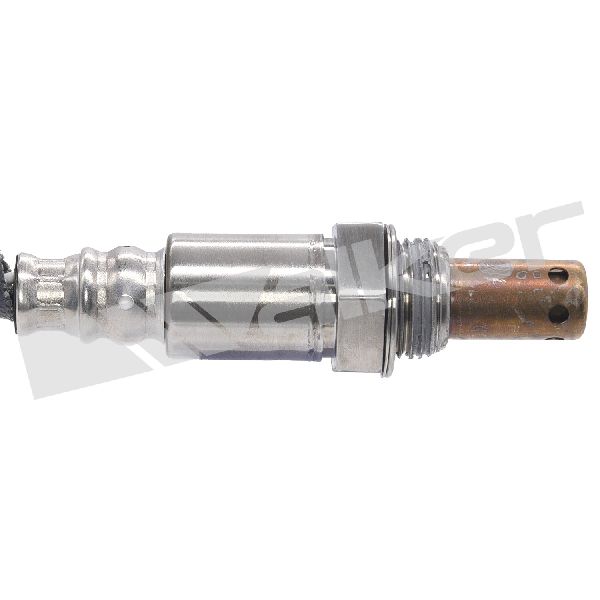
This code almost always means the heater inside the rear oxygen sensor has failed. Replacing the sensor, which costs about $70-$120 for a quality aftermarket part (Denso/NTK) or $105-$150 for OEM, is the typical fix. It's a straightforward DIY job if the old sensor isn't rusted in place, requiring a 22mm O2 sensor socket.
- P0037 on your Outback almost certainly means the rear O2 sensor's internal heater has failed.
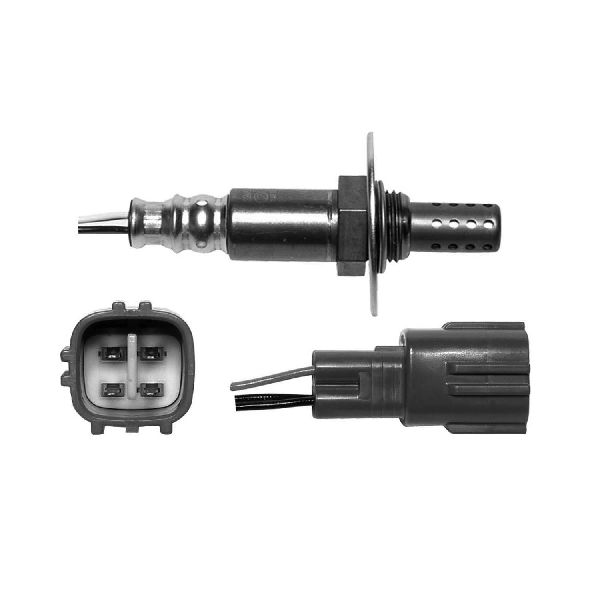
- The fix is to replace the rear O2 sensor. Use the OEM part (Subaru 22690AA93A) or a trusted aftermarket equivalent like Denso 234-4445.
- The sensor connector is the gray one, easily accessible in the engine bay on the passenger side, making diagnosis with a multimeter straightforward before buying parts.
- A good sensor heater should have a resistance of around 5-15 ohms; a failed one will read open (OL).
- Always check the 'A/F Heater' fuse before replacing parts, though it is a less common cause.
What's Unique About the 2010-2012 Subaru Outback
The 2010-2012 Outback (BR generation) with the EJ253 engine has its rear O2 sensor connector conveniently located in the engine bay on the passenger side, just under the air intake snorkel, making it easy to access for testing. While the P0037 code is generic, Subarus of this era are known for having this specific failure. The fix is almost always a direct replacement of the sensor itself. It's important to use a quality OEM (Subaru/Denso) or equivalent aftermarket (Denso, NTK) sensor, as some forums report that generic or incorrect brands can cause persistent issues.
Symptoms You May Notice
- Check Engine Light is on
- Vehicle will fail an emissions/smog test
- Cruise control may be disabled as a result of the Check Engine Light
- Replacing the front Air/Fuel Ratio sensor (Sensor 1) instead of the rear Oxygen Sensor (Sensor 2). The codes are specific, so be sure you are working on the correct downstream sensor.
Most Likely Causes
- Failed Rear Oxygen Sensor 🔴 High Probability → Shop Oxygen Sensor The internal heater element is a very common failure point in oxygen sensors due to constant, extreme heat cycles. This is a well-documented issue on Subarus with the EJ253 engine.
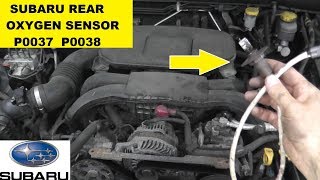
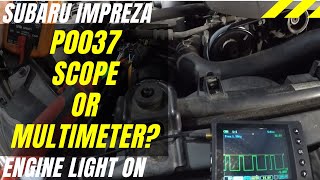
How to confirm: Disconnect the sensor's gray electrical connector in the engine bay. Using a multimeter set to Ohms (Ω), measure the resistance between the two heater circuit pins on the sensor side (usually the two same-colored wires, often black 🎬 See a pro use a multimeter to diagnose this code). A reading of 'OL' (Open Loop) or very high resistance (kilo-ohms or mega-ohms) confirms a broken heater element. A good sensor typically has a resistance between 5 and 15 ohms when cold.
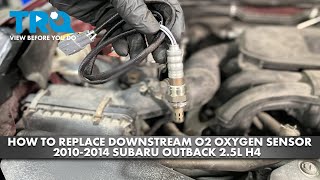
Typical fix: Replace the rear oxygen sensor (Bank 1, Sensor 2). The OEM part is 22690AA93A. 🎬 Watch: How to test and replace the rear sensor A highly recommended aftermarket equivalent is Denso 234-4445.
Est. part cost: $70-$150 - Damaged Wiring or Connector 🟡 Medium Probability The sensor wiring runs down the firewall and along the exhaust, where it can be exposed to heat, road debris, and moisture, potentially causing melting, chafing, or corrosion.
How to confirm: Visually inspect the entire wiring harness from the connector in the engine bay down to the sensor itself for any cuts, melting near the exhaust, or physical damage. Check the connector pins (both on the sensor and the harness side) for moisture, corrosion, or pushed-out pins.
Typical fix: Repair the damaged section of wiring or clean/replace the connector.
Est. part cost: $5-$50 - Blown Fuse ⚪ Low Probability A short circuit in the sensor or wiring can cause the related fuse to blow.
How to confirm: Check the fuse boxes for a blown fuse. The relevant fuse is often labeled 'A/F Heater' or similar in the main fuse box under the hood or the interior panel. On some models, this may be a 15A fuse in the interior fuse panel.
Typical fix: Replace the blown fuse with a new one of the same amperage. If the fuse blows again immediately, a short circuit exists in the wiring or the new sensor.
Est. part cost: $1-$5
Rare But Worth Checking
- Faulty Engine Control Module (ECM): → Shop Engine Control Module (ECM) This is extremely rare. The ECM's internal driver circuit for the heater could fail, but this should only be considered after exhaustively ruling out the sensor, wiring, and fuses.
Diagnosis Steps
- Scan the vehicle for any other stored trouble codes to get a full picture.
- Locate the rear O2 sensor's gray electrical connector. It is in the engine bay on the passenger side, under the plastic air intake snorkel, next to the front A/F sensor's black connector.
- Visually inspect the wiring harness and connector for obvious damage like melting, fraying, or corrosion.
- Check the fuse for the O2 sensor heater circuit, often labeled 'A/F Heater', in the vehicle's fuse boxes.
- Disconnect the sensor's electrical connector. Using a multimeter set to Ohms (Ω), measure the resistance across the two heater circuit pins on the sensor side (typically the two wires of the same color, often black).
- A healthy sensor should show a resistance between 5 and 15 ohms. If the multimeter reads 'OL' (Open Loop) or a very high resistance, the heater element has failed and the sensor must be replaced.
- If the sensor resistance is good, check for 12V power at one of the corresponding pins on the harness side of the connector with the ignition on (engine off).
- If power is present and the sensor's resistance is within spec, the issue may be in the ground-side control wire leading back to the ECM, or a rare ECM fault.
Parts You'll Likely Need
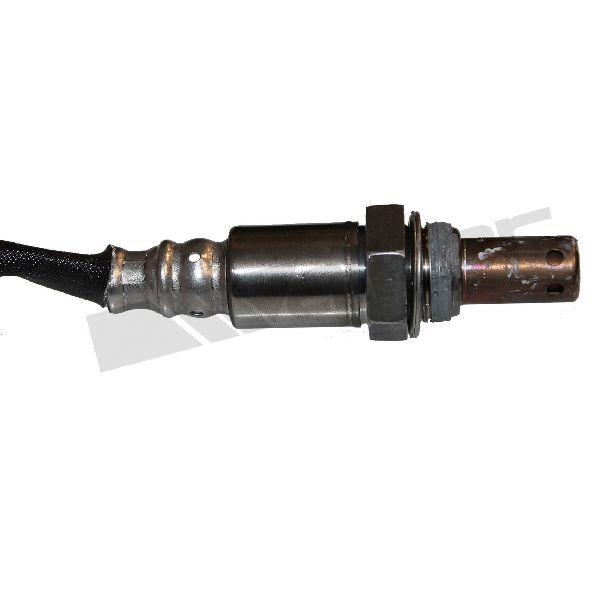
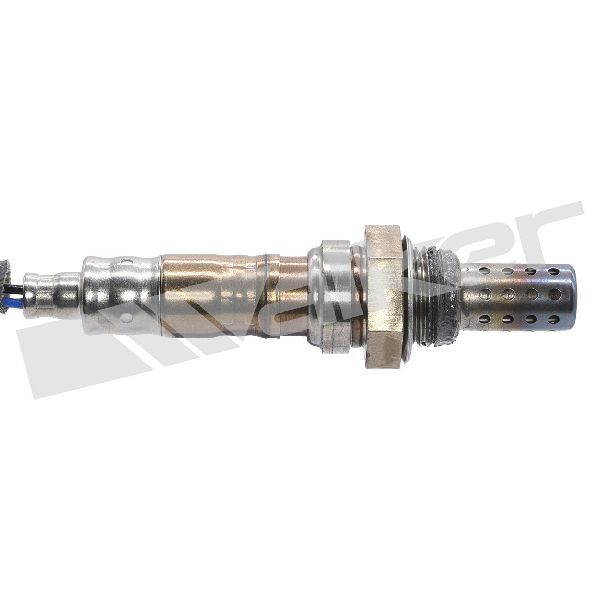
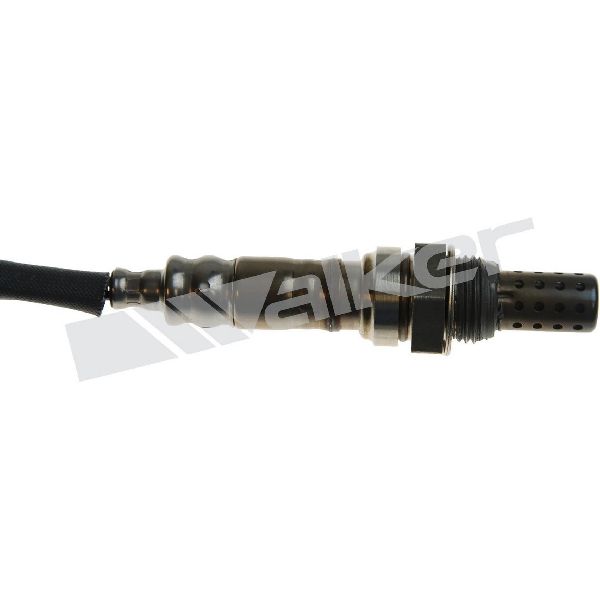
- Rear Oxygen Sensor
(OEM #22690AA93A)— This is the component that contains the heater element that fails and triggers the P0037 code.
Trusted brands: Denso (OEM supplier), NTK, Subaru (Genuine)
OEM price range: $105-$150
Aftermarket price range: $70-$120
Related Codes That Often Appear With This One
- P0038 — This code indicates 'Heater Control Circuit High' and can appear if there's an intermittent short in the wiring or sensor, which is the opposite fault condition of P0037 (open/low circuit).
- P0137 — This code for 'O2 Sensor Circuit Low Voltage' can sometimes accompany a heater fault, as a cold sensor that isn't heating properly may not produce the expected voltage signal.
- P0420 — While P0420 ('Catalyst System Efficiency Below Threshold') usually points to a failing catalytic converter, it can sometimes be triggered by an inaccurate reading from a faulty rear O2 sensor. It's always recommended to resolve any O2 sensor codes like P0037 before addressing a P0420 code.
Platform-Specific Known Issues
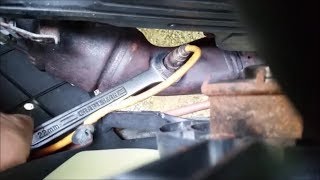
- Seized Sensor Removal: The primary challenge in replacing this sensor is often not accessibility, but the sensor being seized in the exhaust pipe due to rust and heat cycles. Liberal application of penetrating fluid (like PB Blaster) hours or even a day before attempting removal is highly recommended. Heating the exhaust bung (not the sensor itself) with a torch can also be very effective. If the sensor hex rounds off, a specialized bolt/stud extractor socket may be required 🎬 Watch this step-by-step guide to replacing the downstream sensor for removal.
- Connector Location: A key feature for this vehicle is that the rear O2 sensor connector is located in the engine bay, not under the vehicle. It's the gray connector on the passenger side firewall area, making it very easy to access for testing without lifting the car.
Mechanic-Grade Diagnostic Values
- Rear O2 Sensor Heater Resistance — expected: 5 to 15 Ohms (cold). Failure: Open Loop (OL) or very high resistance (Kilo-ohms or higher)
- Rear O2 Sensor Signal Voltage (Live Data) — expected: Relatively steady voltage, typically between 0.1V and 0.9V after warm-up. Failure: Voltage below 0.03V or above 1.2V can indicate a bad sensor
- Heater Circuit Power Supply (at harness connector) — expected: ~12V with key on, engine off or running. Failure: Voltage below 9V or no voltage indicates a wiring or fuse issue upstream of the sensor
Hidden / Shadow Codes Worth Checking
- Mode $06, TID $81: This is not a separate code but a specific monitor ID within OBD-II Mode $06 data. It tracks the test results for the Bank 1 Sensor 2 oxygen sensor heater. Advanced scan tools can view this data to see if the heater circuit is passing or failing its self-test, sometimes before a full-blown DTC is set. (see via An advanced OBD-II scan tool capable of displaying Mode $06 test results.)
Scan Tool Commands That Help
- Subaru Select Monitor (SSM) or equivalent advanced scan tool: O2 Heater Diagnosis / Test of oxygen sensor heater — This function, found in the Engine Control System menu, allows a technician to see the completion status of the O2 sensor heater's diagnostic test. It can confirm if the ECM has successfully run the test required to identify the P0037 fault.
Wiring & Ground Locations
- GE-1 / GE-2 — Top center of the engine, on the intake manifold.. The Subaru ECU grounds through the intake manifold. A poor ground connection at these points can cause a variety of strange electrical issues and sensor faults, even if the sensor's own circuit appears intact. Cleaning these grounds is a key step in troubleshooting persistent, hard-to-diagnose electrical codes.
- Rear O2 Sensor Heater Wires — The two same-colored wires (usually black) in the 4-pin gray connector on the passenger side of the engine bay.. These are the specific wires for the heater element. Resistance should be measured across the pins corresponding to these wires on the sensor side of the connector. Voltage tests are performed on the harness side.
Real Owner Repair Stories
- Romano's Automotive YouTube Channel (2010 Subaru Impreza 2.0L (EJ204 engine, similar system to EJ253)) — Check Engine Light, Cruise Control light flashing.
❌ Tried (didn't work) Initial diagnosis confirmed power and ground to the sensor connector were good, ruling out a wiring/fuse issue.
✅ What actually fixed it The resistance of the original rear O2 sensor's heater circuit was measured in the kilo-ohm range, indicating extremely high resistance. A new sensor measured ~5.5 ohms. Replacing the rear oxygen sensor with the new part resolved the P0037 code.
OEM Part Supersession History
22690AA93A→No official supersession found. This remains the current OEM part number.— N/A
Heads up: This is a special order electrical part from Subaru dealers and is often non-returnable. Verify fitment before ordering.
Diagnostic Flowchart
Used vs. New Parts: Buying Guide for This Vehicle
When a used part is the smart pick: For this specific P0037 repair, a used part is NOT recommended. The failure is the heater element inside the oxygen sensor, which is a wear-and-tear component with a finite lifespan. A used sensor has unknown remaining life and is very likely to fail soon, if it hasn't already.
What to inspect on the donor part:
- Not applicable, as a used sensor is not advised.
OEM-only on this vehicle (don't cheap out):
- While not strictly 'OEM-only', using a Genuine Subaru part or an OEM-supplier part is highly recommended for oxygen sensors on this vehicle. Cheap, no-name aftermarket sensors are a frequent source of persistent codes and compatibility issues on Subarus.
Aftermarket brands forum-validated for this vehicle:
- Denso (OEM supplier for this part)
- NTK
Brands owners have reported issues with on this vehicle:
- Generic, unbranded, or 'white-box' parts from online marketplaces should be avoided as they often do not meet the precise specifications required by the Subaru ECU.
Real Owner Stories
Aggregated from forums and TSBs cited above. Mileages and costs reflect what owners reported in those sources.
2011 Subaru Outback 2.5L — 173000 miles
Symptoms: Check Engine Light was on with code P0037.
What fixed it: The owner was replacing the rear oxygen sensor (Bank 1, Sensor 2) as part of a larger job replacing the catalytic converter. He recommended using a Denso brand sensor.
Source hint: youtube_comment from Carsntoys, hinted at by 'Subaru Rear Oxygen Sensor Testing and Replacement P0037 P0038 - YouTube'
2011 Subaru Outback
Symptoms: Persistent Check Engine Light with code P0037 that would not clear.
What fixed it: The issue was unresolved. The owner had already tried replacing the sensor with a cheap aftermarket part, then an OEM part, checking the fuse, and performing an idle relearn, all without success.
Source hint: Reddit r/MechanicAdvice, hinted at by 'O2 sensor heater circuit codes (Subaru) : r/MechanicAdvice'
2009 Subaru Legacy GT
Symptoms: Owner was troubleshooting a P0037 code.
What fixed it: The cause was found to be melted and frayed wiring very close to the oxygen sensor itself.
Source hint: LegacyGT.com - A thread titled 'P0037' from 2009
Related OBD-II Codes
Frequently Asked Questions
Where is the rear oxygen sensor connector on my 2010-2012 Outback? I can't find it under the car.
What's the best replacement rear O2 sensor for my Outback to fix P0037?
I'm testing my rear O2 sensor. What resistance reading should I get on my multimeter?
The oxygen sensor is completely seized in the exhaust pipe. What's the best way to remove it?
I replaced the sensor and P0037 came back. What else should I check on my Subaru?
Will the P0037 code disable the cruise control on my Outback?
Helpful Videos
We Have This Part in Stock


The information in this article is provided for general reference and educational purposes only. Vehicle specifications, procedures, and part compatibility can vary by production date, trim level, and region. Always consult your vehicle's factory service manual and verify part numbers before purchasing or performing repairs. Safety-critical components such as airbags, seat belts, and braking systems should be installed by a qualified professional.
- Subaru Outback:
- 🧭 Diagnostic Flowchart
- 🎬 Helpful Videos
- 🛍️ Shop This Part
- What's Unique About the 2010-2012 Subaru Outback
- Symptoms You May Notice
- Most Likely Causes
- Rare But Worth Checking
- Diagnosis Steps
- Parts You'll Likely Need
- Related Codes That Often Appear With This One
- Platform-Specific Known Issues
- Mechanic-Grade Diagnostic Values
- Hidden / Shadow Codes Worth Checking
- Scan Tool Commands That Help
- Wiring & Ground Locations
- Real Owner Repair Stories
- OEM Part Supersession History
- Used vs. New Parts: Buying Guide for This Vehicle
- Real Owner Stories
- 2011 Subaru Outback 2.5L — 173000 miles
- 2011 Subaru Outback
- 2009 Subaru Legacy GT
- Related OBD-II Codes
- Frequently Asked Questions
- 🎟️ Get 5% Off