

P0037 on 2008-2013 Toyota Highlander 3.5L V6: Causes and Fixes for Heater Circuit Low
This code almost always means the Bank 1, Sensor 2 oxygen sensor has failed. This is the downstream sensor on the firewall side of the engine. Replacing the sensor is the typical fix, costing around $60-$100 for an aftermarket part (like Denso) or $170-$250 for an OEM part. It's a DIY-friendly job for most.
- P0037 points to a failure in the heater circuit for the oxygen sensor located after the catalytic converter on the firewall side (Bank 1).
- The most likely cause is a failed oxygen sensor itself. A good sensor has 11-16 Ohms of resistance in its heater circuit; a bad one is typically open (infinite resistance).
- Replacing it with a quality part (Denso is the OEM supplier, P/N 234-4509 is the correct aftermarket cross-reference for the Highlander) is the most common fix.
- Before replacing the sensor, it's wise to quickly check the 20A 'A/F HEATER' fuse and visually inspect the sensor's wiring for any obvious damage.
- This is a minor issue that won't stop you from driving, but it will cause an automatic failure on an emissions test.
What's Unique About the 2008-2013 Toyota Highlander
On the 2GR-FE V6 engine in the Highlander, Bank 1 is the rear bank of cylinders against the firewall, which can make accessing the sensor slightly more challenging than the more exposed Bank 2 sensor. A specific quirk is that the electrical connector for this sensor often passes through the floor and is located inside the cabin, under the driver's side dash or carpet. However, the failure of the oxygen sensor's internal heater element is a common maintenance item across many Toyota vehicles using this engine as they age.
Symptoms You May Notice
- Check Engine Light is on
- Vehicle will fail an emissions test
- VSC (Vehicle Stability Control) light may also illuminate along with the Check Engine Light.
- Replacing the oxygen sensor without first checking the wiring and fuses. A damaged wire can mimic a failed sensor, leading to the new sensor not fixing the problem.
- Using a cheap, low-quality aftermarket oxygen sensor. Many owners report that non-OEM or non-Denso sensors fail to resolve the code or fail prematurely.
Most Likely Causes
- Failed Oxygen Sensor (Bank 1, Sensor 2) 🔴 High Probability → Shop Oxygen Sensor The internal heater element within the oxygen sensor is a common failure point over time due to constant heat cycles. This is the most frequent cause for P0037.
How to confirm: Disconnect the sensor and measure the resistance across the two heater circuit pins (usually the two same-colored wires, often black). A good sensor will have a resistance between 11 and 16 Ohms at room temperature. A failed sensor will typically show an open circuit (infinite resistance) or a very high, out-of-spec reading.
Typical fix: Replace the Bank 1, Sensor 2 oxygen sensor. Using an OEM-supplier brand like Denso is highly recommended to avoid compatibility issues.
Est. part cost: $60-$250 - Damaged Wiring or Connector 🟡 Medium Probability The sensor and its wiring are located under the vehicle, exposed to road debris, moisture, and exhaust heat, which can cause corrosion or physical damage. Wires can get snagged or melt.
How to confirm: Visually inspect the wiring harness and connector leading to the sensor for any signs of melting, fraying, corrosion, or loose pins. If the sensor tests good, check for 12V battery voltage at the vehicle-side connector with the ignition on (engine off). The connector itself is often inside the vehicle, so check the harness both inside and outside.
Typical fix: Repair the damaged section of the wiring harness or clean/replace the connector.
Est. part cost: $5-$50 - Blown Fuse or Faulty Relay ⚪ Low Probability
How to confirm: Locate and inspect the fuse for the oxygen sensor heater circuit. In the under-hood fuse box, this is typically a 20A fuse labeled 'A/F' or 'A/F HEATER'. This circuit is often powered by the 'EFI MAIN' relay.
Typical fix: Replace the blown fuse or faulty relay.
Est. part cost: $1-$25
Rare But Worth Checking
- Faulty Engine Control Module (ECM): → Shop Engine Control Module (ECM) This is extremely rare. The ECM should only be considered after all other possibilities (sensor, wiring, fuses) have been exhaustively tested and ruled out. A recurring code after replacing the sensor with a quality part and verifying wiring could point to an ECM driver issue.
Diagnosis Steps
- Read the code with an OBD-II scanner to confirm P0037 is present.
- Visually inspect the Bank 1, Sensor 2 oxygen sensor, its connector, and wiring. It is located on the rear exhaust pipe, after the catalytic converter. Look for any signs of melting, corrosion, or physical damage.
- Check the 20A 'A/F HEATER' fuse in the under-hood fuse box.
- If the visual inspection and fuse are fine, locate the sensor connector (it may be inside the vehicle under the driver's side floor/dash). Disconnect it.
- Use a multimeter to measure the resistance between the two heater pins on the sensor side (typically two black wires). A reading between 11-16 Ohms is good. A reading of infinite resistance (OL) or very high kilo-ohms indicates a failed heater element.
- If sensor resistance is within spec, test the vehicle-side connector. With the ignition on (engine off), check for 12V battery voltage on one pin and a good ground on another corresponding to the heater circuit.
- If voltage or ground is missing, trace the wiring back towards the ECM and fuse/relay box to find the break or short.
- If the sensor, wiring, and power supply all test good, the fault may be intermittent or, in very rare cases, an issue with the ECM.
Parts You'll Likely Need
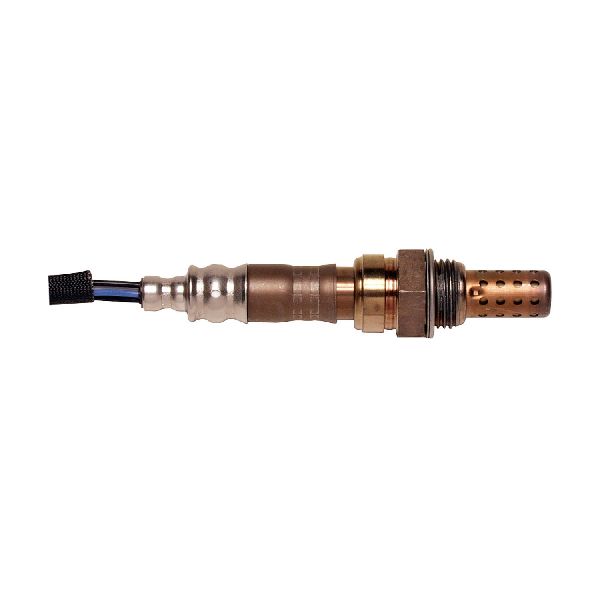
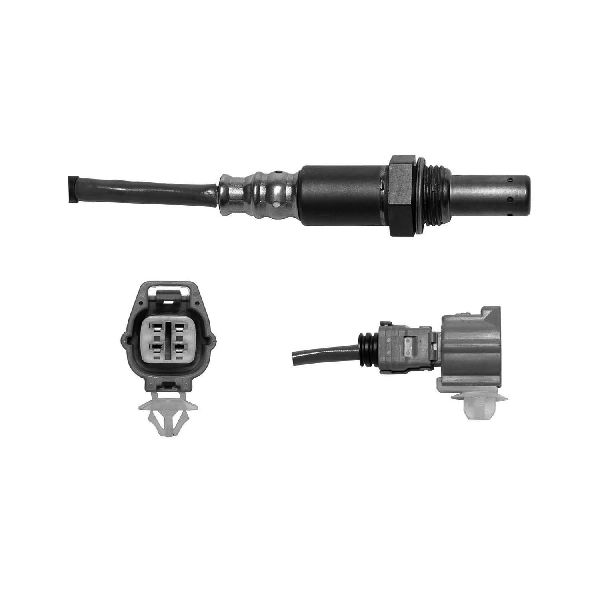
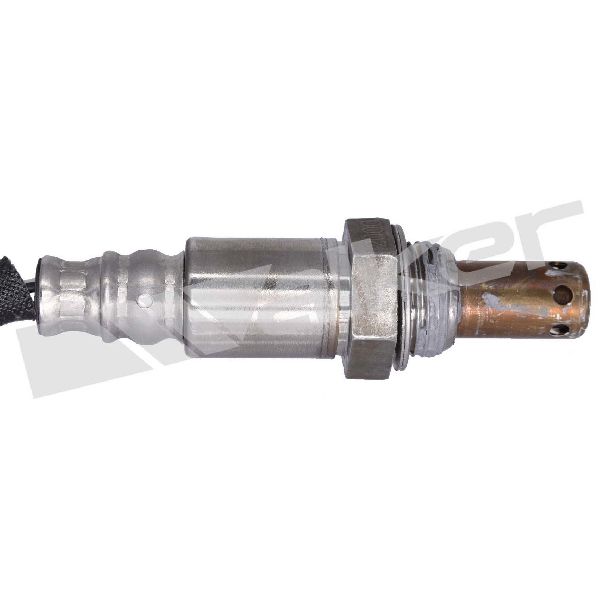
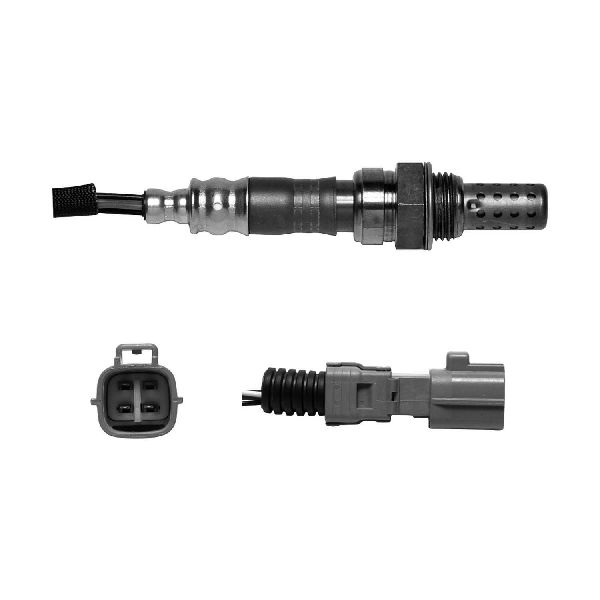
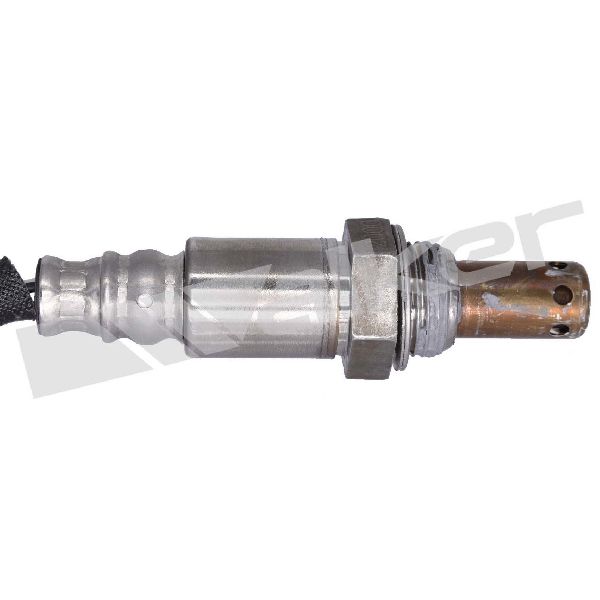
- Oxygen Sensor (Bank 1, Sensor 2)
(OEM #89465-0E030 (supersedes 89465-48110))— This is the downstream oxygen sensor for the rear cylinder bank. The internal heater element is the most common point of failure for code P0037.
Trusted brands: Toyota (OEM), Denso (OEM supplier, P/N: 234-4509), NGK/NTK
OEM price range: $170-$250
Aftermarket price range: $60-$120
Related Codes That Often Appear With This One
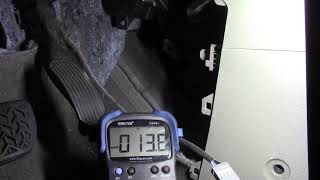
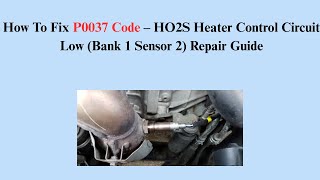
- P0141: This code is for 'Sensor Heater Circuit (Bank 1, Sensor 2)' and is a more general heater performance fault, while P0037 specifically indicates a 'low' circuit condition. They often appear together and 🎬 Watch a diagnostic walkthrough for codes P0037 and P0141 point to the same failed sensor heater. 🎬 See this guide on fixing the P0037 heater circuit code
Technical Service Bulletins (TSBs) & Recalls
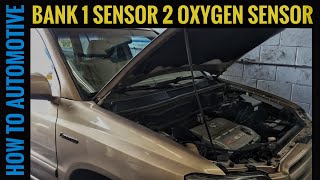
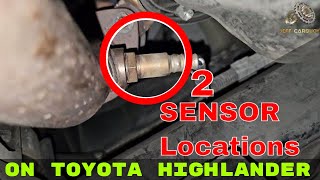
- EG034-07: This Technical Service Bulletin provides standardized identification for engine banks and sensor locations for various Toyota engines, including the 2GR-FE. It confirms Bank 1 is the bank with cylinder #1 (the rear bank on this FWD-based platform) and Sensor 2 is post-catalytic converter. 🎬 Watch: Locate all four O2 sensors on your Highlander V6
Mechanic-Grade Diagnostic Values
- O2 Sensor Heater Circuit Current Draw — expected: Greater than 0.3 Amps when active. Failure: Current draw is less than 0.3 Amps (or <0.25A if battery voltage is between 11.5V-10.5V), which triggers DTC P0037.
- Voltage at Sensor Connector (Harness Side) — expected: 9 - 14 Volts (Battery Voltage). Failure: Less than 9V on the +B pin with key on, engine off, indicates a power supply issue from the EFI MAIN relay or fuse.
- Downstream O2 Sensor Live Data Voltage (at idle, fully warm) — expected: A steady, low voltage, typically between 0.05V and 0.2V.. Failure: Voltage that is stuck high (e.g., >0.8V) or fluctuating rapidly like an upstream sensor can indicate a failing sensor or catalytic converter, though P0037 is specific to the heater circuit. A dead sensor may read a static 0.5V.
Hidden / Shadow Codes Worth Checking
- Mode $06, TID $81, CID $02: This refers to the onboard diagnostic monitor for the Bank 1 Sensor 2 Heater. A professional scan tool can access Mode $06 data to see the raw test results from the ECM's last self-test of the heater circuit, even before a full DTC is set. It can show the measured current or resistance value compared to the minimum/maximum thresholds. (see via Professional scan tool with Mode $06 functionality, such as Toyota Techstream.)
Scan Tool Commands That Help
- Toyota Techstream: Active Test: 'Control the Injection Volume for A/F sensor' — While this doesn't directly test the heater, it is used to verify the sensor's overall function after a repair. By commanding the fuel mixture rich (-12.5%) or lean (+12.5%), a technician can observe if the downstream O2 sensor voltage responds accordingly, confirming the new sensor is reading correctly.
- Toyota Techstream: Data List Monitoring — Use the Data List to monitor 'O2S B1S2' voltage and 'A/F Heater B1S2' status (On/Off). This confirms if the ECM is attempting to activate the heater and what the resulting sensor voltage is. The heater should be commanded 'On' during engine warm-up.
Wiring & Ground Locations
- Connector E35 — The vehicle-side electrical connector for the Bank 1, Sensor 2 oxygen sensor. It is often located inside the cabin, under the driver's side carpet or dash area, after the harness passes through the floor pan.. This is the primary test point. Pin +B should have 9-14V (power from EFI MAIN relay) and pin HT1B is the control wire going to the ECM.
- EFI MAIN Relay — Located in the main engine compartment relay block, often labeled 'Engine Room R/B'.. This relay supplies the 12V power to the O2 sensor heater circuit. A failure here would cut power to the heater, causing a P0037, and is an uncommon but possible cause if the fuse is good.
- Engine Harness Ground — A critical ground point for the engine harness is located on the side of the front cylinder head, underneath the throttle body assembly.. While the sensor has its own ground wires, a poor main engine harness ground can cause floating voltages and erratic sensor behavior that can be difficult to diagnose. This ground is often overlooked during major engine work.
Real Owner Repair Stories
- Tacoma World user 'Nixinus' (Toyota Tacoma V6 (similar 2GR-FE principles), 85,000 miles) — Rough idle, preventative maintenance.
✅ What actually fixed it Replaced all four A/F and O2 sensors with Denso parts from RockAuto. The old sensors looked visually degraded and one's threads disintegrated on removal. The repair resulted in a noticeably smoother idle and better throttle response.
OEM Part Supersession History
89465-48110→89465-0E030— Standard part number update by Toyota.
Model Year Variations Within This Range
- 2011-2013: A mid-cycle refresh occurred for the 2011 model year, which included revised front-end styling and other feature changes. However, for the non-hybrid 3.5L V6 (2GR-FE), the engine and emissions control system related to code P0037 remained unchanged from the 2008-2010 models. The Highlander Hybrid received a new 3.5L engine (2GR-FXE) in 2011, replacing the prior 3.3L.
Diagnostic Flowchart
Other Known Issues on This Vehicle
Issues unrelated to this code that are worth knowing about as an owner of this generation:
- VVT-i Rubber Oil Line Rupture 🔴 High — Common on 2008-2010 models not yet updated. Failure can occur without warning, typically after 80k+ miles, leading to rapid oil loss and catastrophic engine damage. (Ref: LSC 90K (Limited Service Campaign) was issued to replace the rubber hose with an all-metal line (P/N: 15767-31020). This campaign has expired, but the fix is critical.)
- Intermediate Steering Shaft Clunk 🟠 Medium — A very common issue where a clunk or pop is heard and felt through the steering wheel when turning at low speeds. Not a failure risk but a significant annoyance. (Ref: T-SB-0034-13 describes the issue and repair procedure, which involves replacing the original shaft with an updated part (P/N: 45220-48171).)
- Water Pump Failure 🟠 Medium — The water pump is a known weak point on the 2GR-FE engine, often failing and leaking coolant, typically around 100,000 miles. Failure can lead to overheating if not addressed.
- Cold Start VVT Gear Rattle 🔴 High — More common on earlier 2GR-FE engines (2008-2010). A loud, brief rattle (2-5 seconds) upon cold startup indicates wear in the VVT-i actuator gears. If ignored, it can lead to severe timing issues.
Used vs. New Parts: Buying Guide for This Vehicle
When a used part is the smart pick: A used part is only recommended for sourcing an undamaged electrical connector pigtail if the original was physically broken. For the oxygen sensor itself, a new part is strongly advised due to the high failure rate and sensitivity of the component.
Donor-vehicle mileage cap: roughly under 50000 miles for the part to have meaningful remaining life.
What to inspect on the donor part:
- For a connector: Check for brittle or cracked plastic.
- Inspect pins for any signs of green or white corrosion.
- Ensure the wiring insulation is flexible and not melted or frayed.
OEM-only on this vehicle (don't cheap out):
- Oxygen Sensor: While not strictly 'OEM-only', using the OEM supplier (Denso) or a genuine Toyota part is highly recommended. Forum and mechanic experience shows that generic, low-cost aftermarket sensors frequently fail to resolve the code, have a short service life, or are not calibrated correctly for Toyota's system.
Aftermarket brands forum-validated for this vehicle:
- Denso (OEM supplier)
- NTK/NGK
Brands owners have reported issues with on this vehicle:
- Unbranded 'white-box' parts
- Store-brand sensors with a reputation for poor quality control
Real Owner Stories
Aggregated from forums and TSBs cited above. Mileages and costs reflect what owners reported in those sources.
2005 Lexus RX330 (3MZ-FE/Similar Platform)
Symptoms: Check Engine Light on with code P0037.
What fixed it: Replacing the Bank 1 Sensor 2 with a Denso brand sensor; the owner noted that cheaper parts did not work.
Source hint: ClubLexus Forum: Check Engine P0037
2011 Toyota Sienna 2GR-FE 3.5L V6
Symptoms: P0037 and P0141 codes present. Diagnostic testing showed the heater circuit resistance was 140 kOhms.
What fixed it: Replacement of the failed sensor with a new Denso sensor (which measured 14 Ohms). The connector was accessed inside the cabin under the driver's dash.
Source hint: YouTube: 2011 Toyota Sienna P0037 - P0141
2006 Lexus RX350 2GR-FE 3.5L V6
Symptoms: CEL and VSC Light ON with a P0037 code.
What fixed it: Replacement with an OEM part (P/N: 89465-48110).
Cost: $380-$380
Source hint: Reddit r/Lexus: 06 RX350 CEL and VSC Light ON - P0037 Code
Related OBD-II Codes
Frequently Asked Questions
Where is the Bank 1 Sensor 2 oxygen sensor located on my 2008-2013 Highlander?
Why did my VSC light come on at the same time as the Check Engine Light for P0037?
Which fuse should I check for the P0037 heater circuit on my Highlander?
I can't find the O2 sensor connector under the car; where is it?
What brand of oxygen sensor is recommended for the 2GR-FE engine?
What should the resistance reading be for a healthy B1S2 sensor on my Highlander?
Helpful Videos
We Have This Part in Stock


The information in this article is provided for general reference and educational purposes only. Vehicle specifications, procedures, and part compatibility can vary by production date, trim level, and region. Always consult your vehicle's factory service manual and verify part numbers before purchasing or performing repairs. Safety-critical components such as airbags, seat belts, and braking systems should be installed by a qualified professional.
- Toyota Highlander:
- 🧭 Diagnostic Flowchart
- 🎬 Helpful Videos
- 🛍️ Shop This Part
- What's Unique About the 2008-2013 Toyota Highlander
- Symptoms You May Notice
- Most Likely Causes
- Rare But Worth Checking
- Diagnosis Steps
- Parts You'll Likely Need
- Related Codes That Often Appear With This One
- Technical Service Bulletins (TSBs) & Recalls
- Mechanic-Grade Diagnostic Values
- Hidden / Shadow Codes Worth Checking
- Scan Tool Commands That Help
- Wiring & Ground Locations
- Real Owner Repair Stories
- OEM Part Supersession History
- Model Year Variations Within This Range
- Other Known Issues on This Vehicle
- Used vs. New Parts: Buying Guide for This Vehicle
- Real Owner Stories
- 2005 Lexus RX330 (3MZ-FE/Similar Platform)
- 2011 Toyota Sienna 2GR-FE 3.5L V6
- 2006 Lexus RX350 2GR-FE 3.5L V6
- Related OBD-II Codes
- Frequently Asked Questions
- 🎟️ Get 5% Off