

P0042 on 2013-2016 Jaguar XF: HO2S Heater Circuit Causes and Fixes
P0042 on a Jaguar XF indicates a fault in the heater circuit for the Bank 1, Sensor 3 oxygen sensor. The most common fix is replacing the sensor itself, which costs around $70-$150 for the part. However, check for wiring damage and consult TSBs, as a software update can sometimes be the required solution.
- P0042 specifically points to a fault in the heater circuit for the oxygen sensor on Bank 1 (passenger side, US) and position 3 (rearmost).
- The most likely cause is a failed oxygen sensor, which is a standard wear item.
- Before replacing the sensor, always inspect the wiring and connector for damage and check the relevant fuse.
- Be aware that Jaguar has issued TSBs for groups of O2 sensor codes; if a simple sensor swap doesn't fix the issue, a software update at the dealership might be necessary.
What's Unique About the 2013-2016 Jaguar XF
On the 2013-2016 Jaguar XF, while a single faulty oxygen sensor can trigger P0042, Jaguar has issued Technical Service Bulletins (TSBs) that group this code with dozens of other oxygen sensor faults. Specifically, TSB JTB-00392-NAS-3 indicates the cause may be a software error. The recommended fix is to first replace the specific sensor identified by the DTC and then perform a PCM software update. This is a crucial detail, as simply replacing the sensor without the software update may not permanently resolve the issue. This suggests the fault-triggering thresholds in the original software may have been too sensitive.
Diagnostic Flowchart
Tap your situation to follow the diagnostic path that matches what you're seeing on this vehicle.
Generation note: This year range covers two generations of the Jaguar XF. The 2013-2015 models are part of the facelifted first generation (X250), while the 2016 model year marks the debut of the second generation (X260). The causes and fixes for P0042 are generally consistent across both generations as they relate to universal O2 sensor functions, though specific part numbers and software update procedures may vary. The underlying issue of sensor failure and software sensitivity is common to both.
Symptoms You May Notice
- Check Engine Light (Malfunction Indicator Lamp) is on.
- Possible slight decrease in fuel economy (a drop of 10-15% has been reported in some cases).
- Failure to pass a vehicle emissions test.
- No noticeable drivability issues in most cases.
- In some cases, a rough idle or hesitation, particularly on a cold start, may be observed.
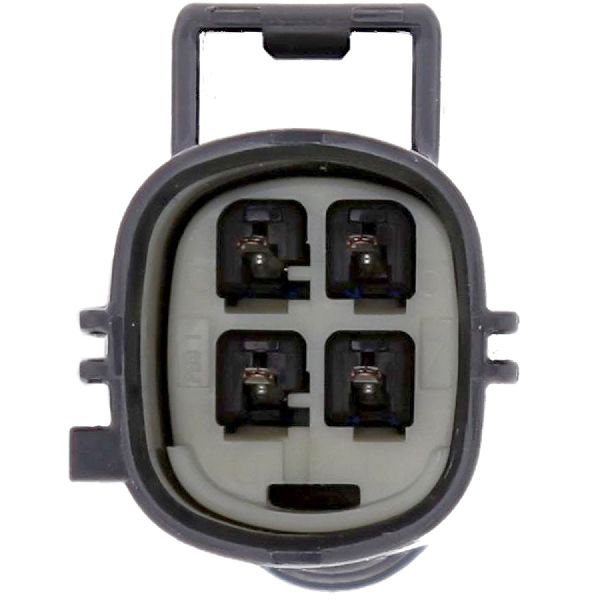
- Replacing the wrong oxygen sensor. The code is specific to Bank 1, Sensor 3. Bank 1 is the passenger side (US) and Sensor 3 is the rearmost sensor on that bank. The connectors for left and right side sensors can be physically different ('handed'), preventing interchangeability even if the sensor itself is identical.
- Replacing the sensor but not performing the required PCM software update as per TSB JTB-00392-NAS-3, leading to the fault returning.
Most Likely Causes
- Failed Heated Oxygen Sensor (Bank 1, Sensor 3) 🔴 High Probability → Shop Oxygen Sensor Oxygen sensors are wear-and-tear components with a finite lifespan. The internal heater element is often the first part to fail. Forum discussions confirm this is a common failure point on these vehicles, with many owners successfully resolving the P0042 code by replacing the sensor.
How to confirm: Unplug the sensor and measure the resistance across the two heater circuit pins (often the two same-colored wires) using a multimeter. A good sensor typically has a low resistance (e.g., 2-14 Ohms), while a failed one will show infinite resistance or 'OL' (Open Line), indicating a burnt-out heater element. 🎬 Watch: How to diagnose and fix the P0042 heater circuit code.
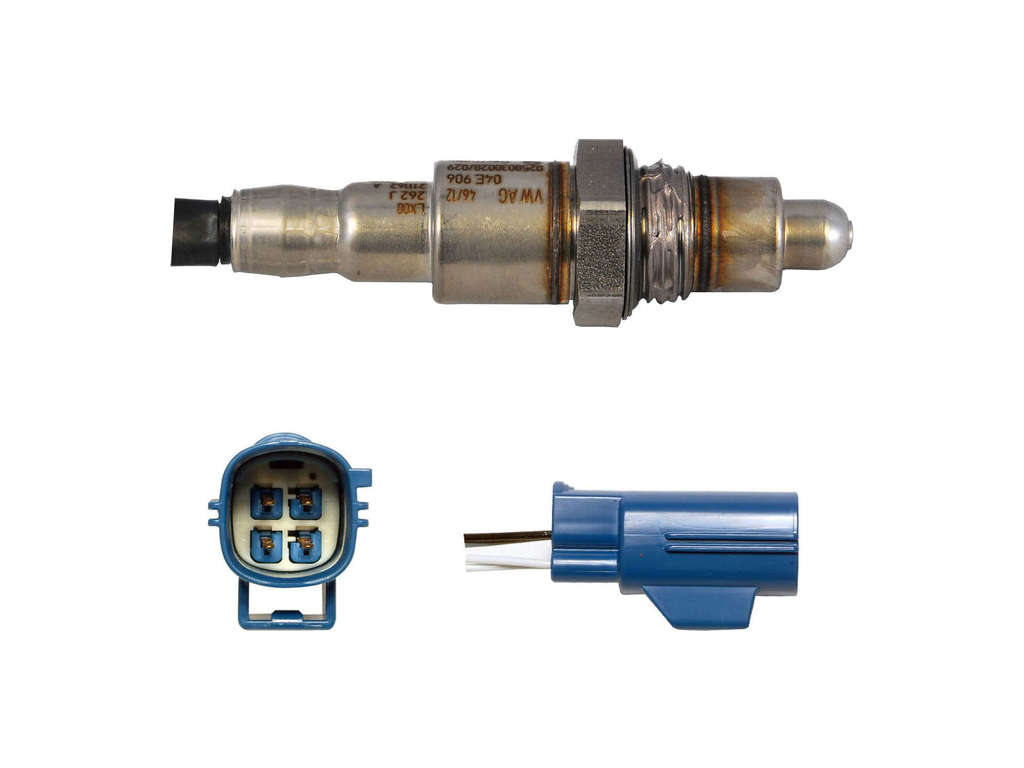
Typical fix: Replace the Bank 1, Sensor 3 oxygen sensor. A forum user with a 2013 XF 3.0L confirmed replacing this sensor with a Denso part (234-4794) resolved their P0042 code.
Est. part cost: $70-$180 - Damaged Wiring or Connector 🟡 Medium Probability The wiring for downstream O2 sensors runs under the vehicle and is exposed to heat, moisture, and road debris, which can cause corrosion or physical damage over time. The connectors are located near the rear of the transmission, behind a small metal plate, and can be susceptible to damage.
How to confirm: Visually inspect the wiring harness and connector leading to the sensor for any signs of melting, chafing, corrosion, or loose pins. Check for battery voltage (approx. 12V) at the harness-side connector with the ignition on.
Typical fix: Repair the damaged section of the wiring harness or clean/replace the connector. Use dielectric grease on the connector to prevent future corrosion.
Est. part cost: $10-$100 - Blown Fuse for O2 Sensor Heater Circuit ⚪ Low Probability → Shop Oxygen Sensor An electrical short in the sensor or wiring can cause the corresponding fuse to blow as a protective measure. However, on many Jaguar models, the O2 sensor heater circuit is powered directly from the fuel pump relay and may not have a dedicated, easily accessible fuse.
How to confirm: Consult the vehicle's specific electrical diagram. On some older models, the power comes from the fuel pump relay located in the trunk/boot above the battery. Check for power at the harness first; a lack of power would prompt a deeper investigation into fuses or relays.
Typical fix: Replace the blown fuse or faulty relay. If a fuse blows again, a short circuit exists that must be diagnosed.
Est. part cost: $1-$30
Rare But Worth Checking
- Powertrain Control Module (PCM) Software Issue: → Shop Engine Control Module (ECM) Jaguar TSB JTB-00392-NAS-3 directly addresses P0042 and other HO2S codes being caused by a software error. The official procedure involves replacing the failed sensor and then updating the PCM software. An owner on a forum noted that a software update was released because the original fault detection was too sensitive.
- Faulty Powertrain Control Module (PCM): → Shop Engine Control Module (ECM) This is extremely rare, but the PCM is responsible for controlling the heater circuit. This should only be considered after all other possibilities, including sensor, wiring, fuses, and software, have been exhaustively ruled out.
Diagnosis Steps
- Read the code with an OBD-II scanner to confirm P0042 is present and check for any other related codes.
- Visually inspect the wiring harness and connector for the Bank 1, Sensor 3 oxygen sensor. The connectors are located near the rear of the transmission. Look for melting, corrosion, or physical damage.
- Check for a blown fuse. While a dedicated fuse is unlikely, consult a wiring diagram for your specific model year and engine to confirm the power source (likely a relay).
- If wiring and fuse/relay are okay, disconnect the sensor. Test the resistance of the heater element within the sensor using a multimeter. A reading between 2-14 ohms is typical for a good sensor; an open-loop (OL) reading confirms the sensor has failed.
- With the sensor still disconnected and the ignition on, carefully test the harness-side connector for ~12-volt power on the heater circuit supply wire.
- If power is present and the sensor's resistance is out of spec, replace the oxygen sensor.
- If power is not present at the harness, there is a wiring issue between the power source and the sensor that needs to be traced.
- After repair, clear the code. Consult a dealer or qualified shop about performing the PCM software update mentioned in TSB JTB-00392-NAS-3 to prevent recurrence.
- Perform a drive cycle to ensure the fault does not return. 🎬 Watch: A helpful guide on how to replace downstream oxygen sensors.
Parts You'll Likely Need
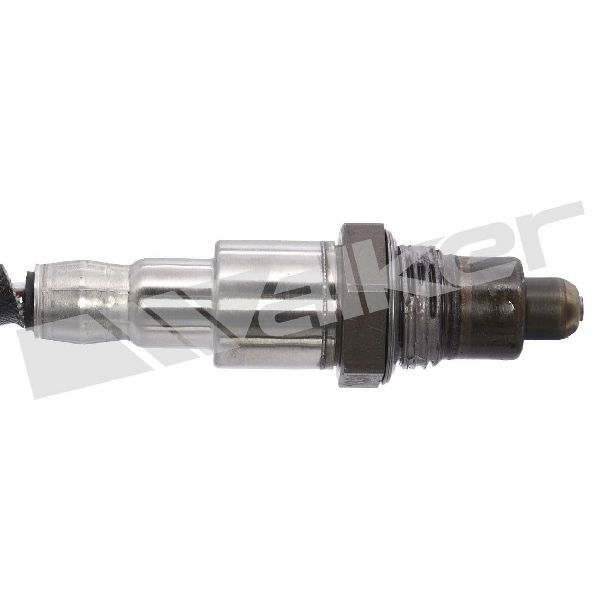
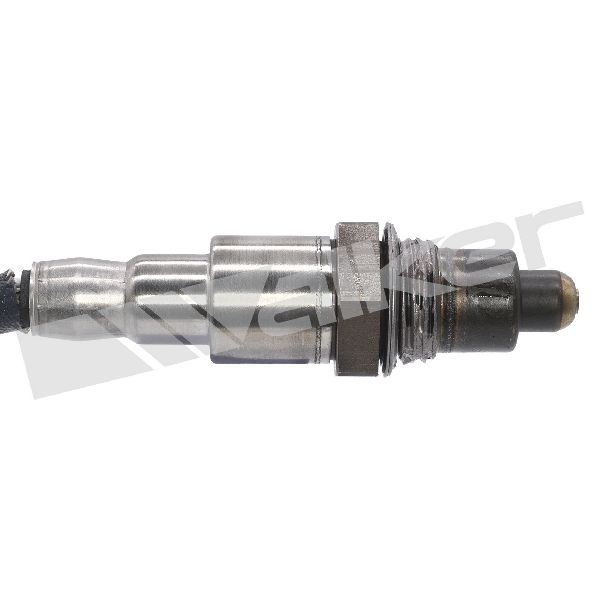
- Heated Oxygen Sensor (Bank 1, Sensor 3)
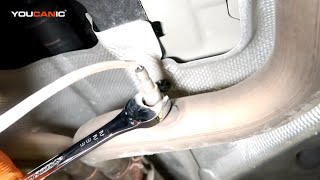
(OEM #C2D54167 (also C2D54165, C2D27350))— This is the most common failure point for a P0042 code. The internal heater element burns out over time. Part numbers can supersede, so verifying with VIN is best. C2D54167 was identified by an owner for a 3.0L AWD. 🎬 See this walkthrough for replacing the sensor on a 3.0L engine. C2D54165 is also listed as a lower sensor for the 3.0L AWD XF.
Trusted brands: Bosch, Denso, NGK/NTK, Walker
OEM price range: $150-$220
Aftermarket price range: $70-$150
Related Codes That Often Appear With This One
- P0043 — This code indicates the heater circuit voltage is too low, which is a related fault within the same circuit.
- P0044 — This code indicates the heater circuit voltage is too high, another related fault within the same circuit.
- P0142 — This code indicates a general circuit malfunction for the same sensor (Bank 1, Sensor 3). A Jaguar F-Type owner reported getting P0042 and P0142 together for the same failed sensor.
Technical Service Bulletins (TSBs) & Recalls
- SSM72477: Mentions P0042 in a list of faults related to pre, mid, or post catalyst heated oxygen sensors.
- JTB-00392-NAS-3: Lists P0042 among DTCs relevant to a software error, recommending sensor replacement followed by a PCM software update.
- JTB00392NAS1: Also lists P0042 in a group of DTCs for mid and post-catalyst heated oxygen sensors.
- SSM72556: A related TSB for 2016 models that also lists P0042 as a potential HO2S fault.
Platform-Specific Known Issues
- Jaguar has issued Technical Service Bulletin (TSB) #JTB-00392-NAS-3, which is highly relevant to code P0042. It states that customers may experience a check engine light with this and other HO2S codes due to a software error. The official repair procedure is to replace the affected oxygen sensor (in this case, Bank 1 Sensor 3) and then update the Powertrain Control Module (PCM) software. Skipping the software update may lead to the code returning.
Mechanic-Grade Diagnostic Values
- O2 Sensor Heater Element Resistance — expected: Typically 2-15 Ohms when measured across the two heater wires (often same color) at ambient temperature.. Failure: Infinite resistance ('OL' on a multimeter) indicates an open/burnt-out heater element, which is the direct cause of a P0042 code.
- Voltage at Sensor Harness Connector (Heater Power Wire) — expected: Approximately 12V (battery voltage) with the ignition on, engine off.. Failure: 0V or significantly low voltage indicates a problem upstream in the wiring, fuse, or relay, not the sensor itself.
Scan Tool Commands That Help
- Jaguar SDD (Symptom Driven Diagnostics): Configure existing module - Powertrain control module — This function is required by TSB JTB00392NAS1 after replacing the oxygen sensor to update the PCM software. Failing to perform this step may cause the P0042 fault to return even with a new sensor.
- Jaguar SDD (Symptom Driven Diagnostics): Datalogger — Used to monitor live data from the oxygen sensors to confirm their operation after a repair. While not a direct test for the heater circuit, it verifies the overall sensor functionality.
Wiring & Ground Locations
- Bank 1, Sensor 3 Connector — On the right (passenger side for US models) of the vehicle, near the rear of the transmission. The connectors for the downstream sensors are often mounted together.. This is the primary point for electrical testing (voltage and resistance) and is exposed to road debris and heat, making it a potential point of failure due to corrosion or damage.
- Engine Ground Strap — A critical ground strap is often cited as running from the transmission bellhousing to the vehicle underbody.. While the 4-wire O2 sensor has its own ground wire, a poor main engine/drivetrain ground can cause unpredictable electrical issues across multiple systems. Checking this ground is good practice if other electrical gremlins are present.
Real Owner Repair Stories
- JaguarForums.com user 'Oz Ifti' (2013 Jaguar XF 3.0L AWD) — Check engine light with code P0042, described as 'O2 open circuit'.
❌ Tried (didn't work) Initially asked about checking a fuse, but the fix was replacing the sensor.
✅ What actually fixed it The owner replaced the Bank 1, Sensor 3 oxygen sensor with a Denso aftermarket part (234-4794). They noted it was an easy replacement and that the left and right downstream sensors appeared to be identical. This successfully cleared the code.
When the Usual Fixes Don't Work
- While replacing the failed oxygen sensor is the most common direct fix, it may not be the complete solution. TSB JTB-00392-NAS-3 from Jaguar strongly indicates that a subsequent PCM software update is required to prevent the fault from recurring, suggesting the root cause is overly sensitive fault logic in the original software, not just component failure. Ignoring the software update may lead to the P0042 code returning.
OEM Part Supersession History
C2D23703, C2D27350→C2D54167 (also listed as T2R54607)— Standard part updates and revisions by the manufacturer.
Heads up: There are conflicting owner reports. One owner of a 2013 3.0L stated the left and right downstream (Sensor 3) sensors were identical. Another owner of a 2013 3.0L reported that for their Sensor 3 replacement, the electrical connectors for the left and right sides were keyed differently and were not interchangeable. This suggests that verifying the specific connector type is crucial before purchasing a replacement part.
Model Year Variations Within This Range
- 2013-2014: TSB JTB00392NAS1, which recommends a software update after sensor replacement for P0042, specifically lists the 2013-2014 model year XF. While the issue may persist on later models, it is explicitly documented for these years.
- 2013-2016: The physical connectors for the left (Bank 2) and right (Bank 1) downstream oxygen sensors may not be interchangeable. Some owners report they are identical, while others report they are keyed differently. This variation does not appear to be tied to a specific model year and may depend on the engine or specific production date.
Helpful Videos
![How to Fix P0042 Engine Code in 2 Minutes [1 DIY Method / Only $19.45]](https://img.youtube.com/vi/YGSteufgX9E/mqdefault.jpg)
We Have This Part in Stock

The information in this article is provided for general reference and educational purposes only. Vehicle specifications, procedures, and part compatibility can vary by production date, trim level, and region. Always consult your vehicle's factory service manual and verify part numbers before purchasing or performing repairs. Safety-critical components such as airbags, seat belts, and braking systems should be installed by a qualified professional.
- Jaguar XF:
- 🧭 Diagnostic Flowchart
- 🎬 Helpful Videos
- 🛍️ Shop This Part
- What's Unique About the 2013-2016 Jaguar XF
- Symptoms You May Notice
- Most Likely Causes
- Rare But Worth Checking
- Diagnosis Steps
- Parts You'll Likely Need
- Related Codes That Often Appear With This One
- Technical Service Bulletins (TSBs) & Recalls
- Platform-Specific Known Issues
- Mechanic-Grade Diagnostic Values
- Scan Tool Commands That Help
- Wiring & Ground Locations
- Real Owner Repair Stories
- When the Usual Fixes Don't Work
- OEM Part Supersession History
- Model Year Variations Within This Range
- 🎟️ Get 5% Off