

P0042 on 2013-2016 Jaguar XJ: HO2S Heater Circuit Fault Causes and Fixes
On a 2013-2016 Jaguar XJ, code P0042 indicates a fault with the heater circuit in the Bank 1, Sensor 3 oxygen sensor. The most common fix is replacing the sensor itself, but Jaguar has issued service bulletins noting that wiring issues or software errors can also be the cause. In the US, this repair may be covered under an extended emissions warranty. Expect to pay $70-$250 for the part.
- P0042 specifically points to a problem with the heater circuit for the oxygen sensor on the passenger side, after the catalytic converter.
- The most likely fix is replacing the oxygen sensor (Part # C2D54167), which is a DIY-friendly job for many.
- Before replacing the sensor, check its fuse and inspect the wiring for damage, as these can also cause the code.
- Be aware that Jaguar has identified a software bug that can trigger this code; if a new sensor doesn't fix it, a dealer software update may be required.
- Your car is safe to drive with this code, but you should get it fixed to ensure you can pass an emissions test and maintain optimal fuel efficiency.
What's Unique About the 2013-2016 Jaguar XJ
For this generation of Jaguar XJ (X351) and its platform mates, the P0042 code is not always a simple case of a bad sensor. Jaguar released Technical Service Bulletin JTB00392NAS1 for 2013-2014 models with the 3.0L V6, specifically addressing a long list of oxygen sensor codes, including P0042. The bulletin states the cause may be a software error in the Engine Control Module (ECM) and instructs technicians to replace the affected sensor *and then* perform a software update. Furthermore, another TSB (SSM72556) from Jaguar Land Rover cites a "parts quality issue" as a likely cause for P0042 on 2016 models, reinforcing that the sensor itself is a common failure point. These bulletins, combined with owner reports of recurring codes after a simple sensor swap, highlight the importance of a thorough diagnosis that includes checking for software updates and inspecting the wiring harness.
Diagnostic Flowchart
Tap your situation to follow the diagnostic path that matches what you're seeing on this vehicle.
Symptoms You May Notice
- Check Engine Light (Malfunction Indicator Lamp) is on.
- Vehicle failing an emissions test.
- Potentially a slight decrease in fuel economy over time.
- In some cases, a rough or hesitant feeling during a cold start.
- Replacing the oxygen sensor without checking the wiring or for available software updates. A forum user on JaguarForums.com with a 2014 XJ reported the P0042 code returned one day after replacing the sensor, pointing to a deeper issue like wiring or the TSB-related software glitch.
Most Likely Causes
- Failed Oxygen Sensor (Bank 1, Sensor 3) 🔴 High Probability → Shop Oxygen Sensor The internal heater element in an oxygen sensor has a finite lifespan and can burn out. JLR has acknowledged this with TSBs like SSM72556, which point to a "parts quality issue" as a likely cause for this specific code on related models. This is the most common failure mode.
How to confirm: Unplug the sensor and measure the resistance across the two heater circuit pins. A reading of infinite resistance (OL) confirms the heater has failed. A good sensor should have a stable resistance between approximately 2-10 ohms.
Typical fix: Replace the Bank 1, Sensor 3 oxygen sensor. In the US, check with a dealer if this is covered under the 10-year/120,000-mile (5.0L) or 15-year/150,000-mile (3.0L PZEV) emissions warranty.
Est. part cost: $70 - $250 - Wiring or Connector Issue 🟡 Medium Probability As noted in Jaguar TSBs, these vehicles can be prone to wiring issues. The harness for the downstream O2 sensors is located under the vehicle near the transmission, exposed to heat, moisture, and road debris. This can lead to corrosion in the connector or damaged/frayed wires.
How to confirm: Visually inspect the wiring harness and connector for any signs of melting, corrosion, or physical damage. The connectors are located behind a small metal plate near the rear of the transmission. Use a multimeter to check for 12V power and a good ground at the harness-side connector with the key on.
Typical fix: Repair the damaged section of the wiring harness or clean/replace the connector. Use dielectric grease on the connector to prevent future moisture intrusion.
Est. part cost: $10 - $100 - Engine Control Module (ECM) Software Error ⚪ Low Probability → Shop Engine Control Module (ECM) Jaguar TSB #JTB00392NAS1 explicitly states that a software error can cause this and other related HO2S codes on 2013-2014 models with the 3.0L V6 engine. A forum user also mentioned a software update was available because the original fault detection was too sensitive.
How to confirm: This can only be confirmed by a Jaguar dealer or a qualified shop with access to Jaguar's diagnostic software (SDD) to check the current software version against available updates mentioned in the TSB.
Typical fix: Update the Engine Control Module software. The TSB recommends replacing the faulty sensor first, then performing the software update to prevent recurrence.
Est. part cost: $0 (if done under warranty) - $250 (for dealer labor) - Blown Fuse ⚪ Low Probability The O2 sensor heater circuits are protected by fuses. While not a common failure point, an electrical short in the sensor or wiring can cause a fuse to blow.
How to confirm: Consult the vehicle's fuse diagram. On related Land Rover models, fuses F11 (15A) and F14 (20A) in the engine compartment fuse box are for the O2 heaters. Check the corresponding fuses on the XJ, likely located in one of the engine bay fuse boxes.
Typical fix: Replace the blown fuse. If it blows again, there is an underlying short circuit in the wiring or the sensor itself that must be found and repaired.
Est. part cost: $1 - $5
Rare But Worth Checking
- Powertrain Control Module (PCM) Failure: → Shop Engine Control Module (ECM) This is extremely rare. The internal driver circuit within the PCM that controls the sensor heater can fail. This should only be considered after all other possibilities (sensor, wiring, fuses, software) have been exhaustively ruled out.
Diagnosis Steps
- Read the trouble codes with an OBD-II scanner and note any other codes present.
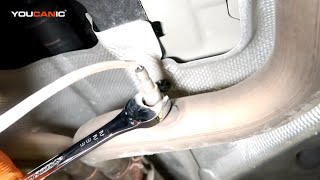
- Visually inspect the Bank 1, Sensor 3 oxygen sensor, its connector, and the wiring harness. The sensor is on the passenger side (right side) exhaust pipe, 🎬 Watch: This 3.0L oxygen sensor replacement walkthrough may help. located after the catalytic converter, near the transmission. The connectors are behind a small metal shield near the back of the transmission. Look for any signs of melting, chafing, or corrosion.
- Check the fuse for the oxygen sensor heater circuit. Consult your owner's manual or fuse diagrams for the engine compartment fuse boxes.
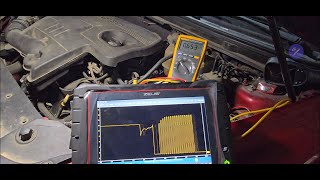
- If the wiring looks good, disconnect the sensor. Use a multimeter to test the resistance of the heater circuit on the sensor side. A reading of infinite resistance (OL) or a fluctuating, unstable reading means the heater is broken and the sensor must be replaced. A good reading is typically stable between 2-10 ohms.
- With the sensor still disconnected and the ignition key in the 'On' position (engine off), test the vehicle's harness connector for power (should be ~12V) and ground on the appropriate pins.
- If power or ground is missing, trace the wiring back to find the break or short. If the fuse was blown, this is the likely cause.
- If the sensor and wiring test good, the issue may be the software glitch mentioned in Jaguar's TSB JTB00392NAS1 (for 2013-14 models). Contact a dealer to see if your vehicle's software is up to date.
- Only after all other steps have failed should a faulty PCM be considered.
Parts You'll Likely Need
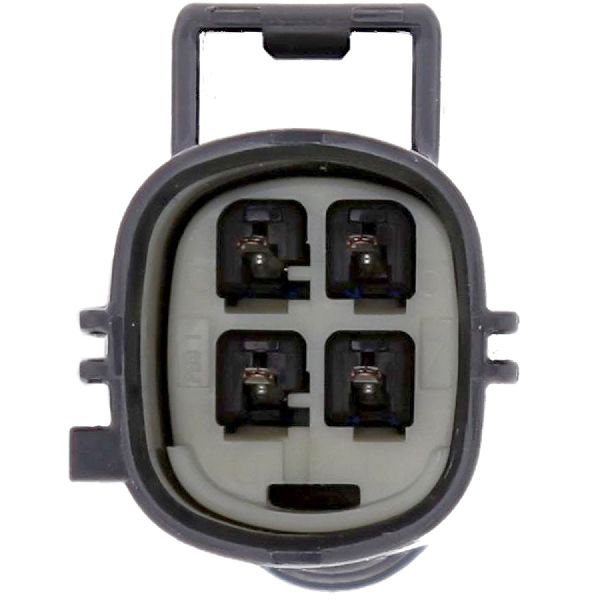
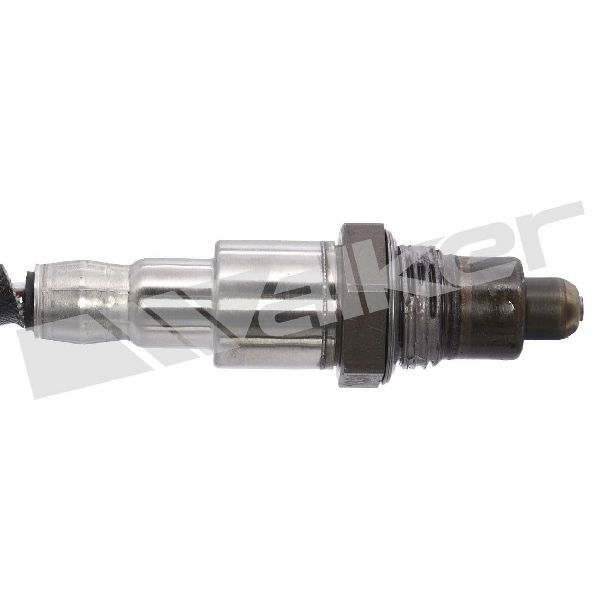
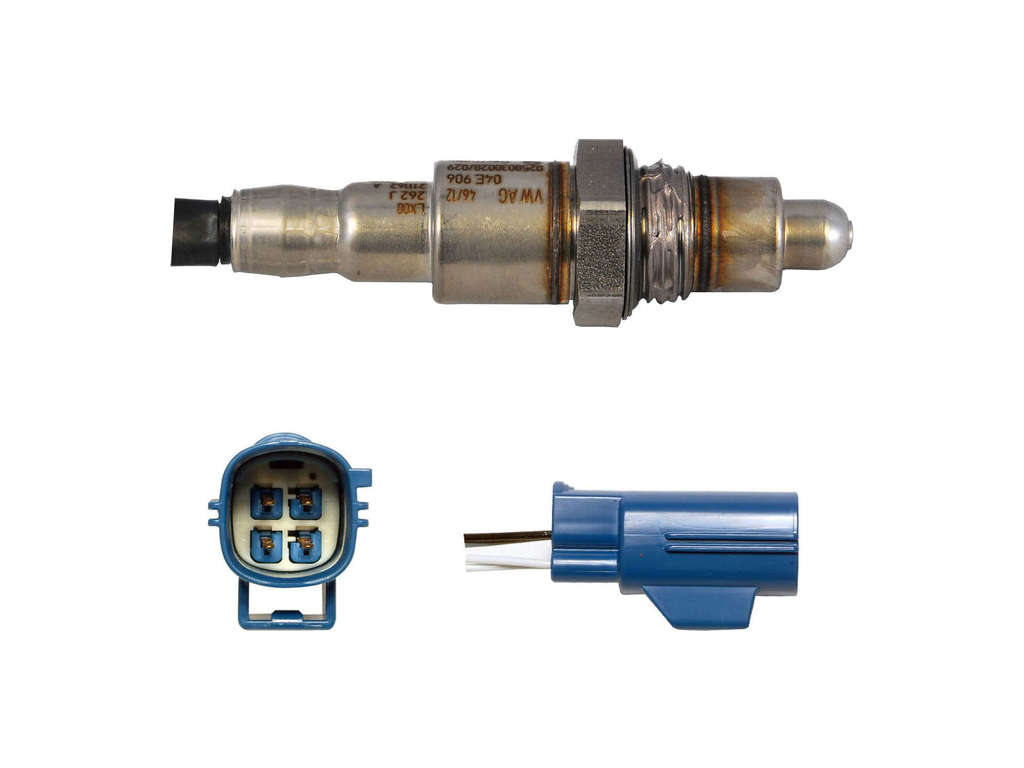
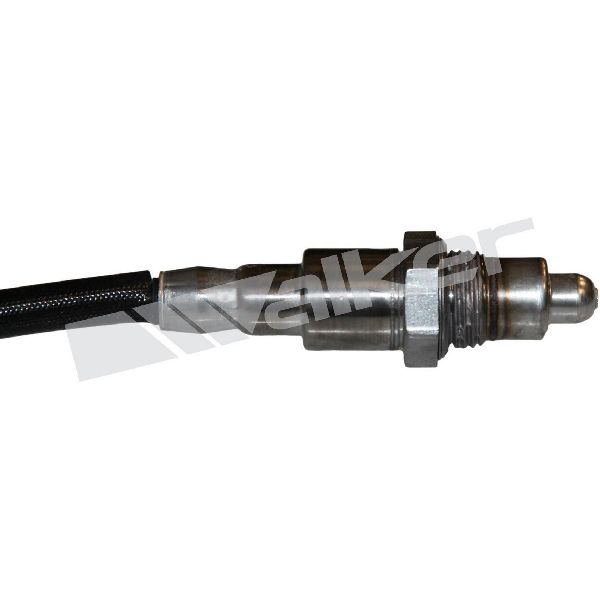
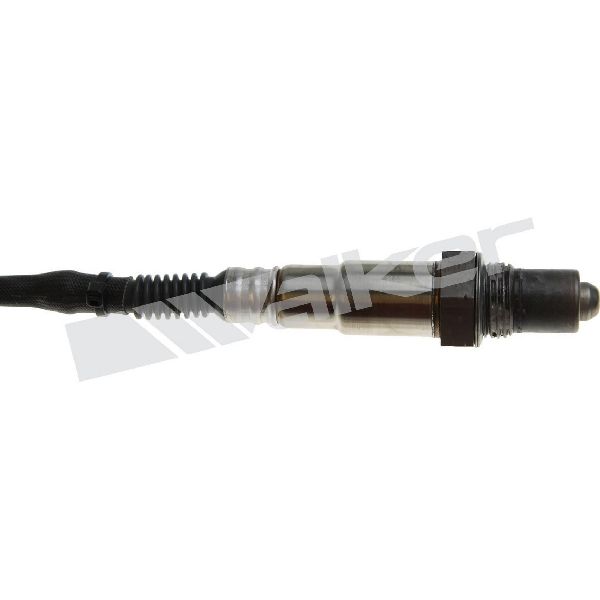
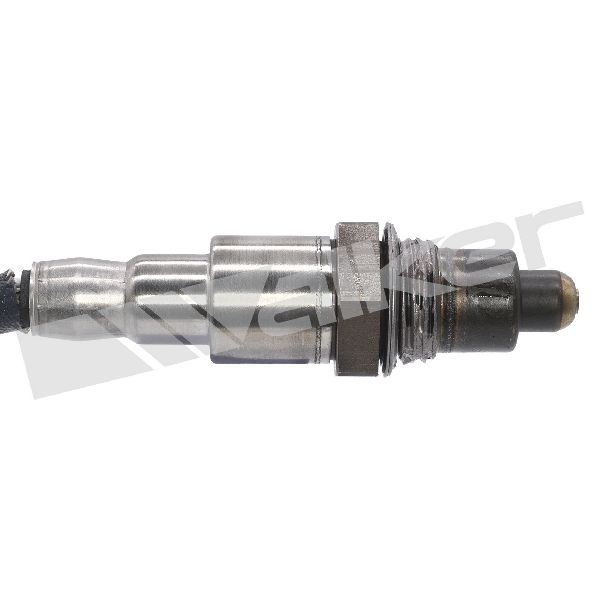
- Heated Oxygen Sensor (Bank 1, Sensor 3)
(OEM #C2D54167 (superseded by T2R54607))— The internal heater element failing is the most common cause of code P0042, a fact supported by JLR service bulletins.
Trusted brands: Jaguar (OEM), Bosch (e.g., 17242), Denso (e.g., 234-4794)
OEM price range: $180-$320
Aftermarket price range: $70-$150
Related Codes That Often Appear With This One
- P0043 — This code indicates "HO2S Heater Control Circuit Low," which is another fault mode for the same circuit.
- P0044 — This code indicates "HO2S Heater Control Circuit High," which is another fault mode for the same circuit.
- P0142, P0143, P0144 — These codes relate to the sensor circuit itself (not just the heater) for Bank 1, Sensor 3. They often appear together if there is a significant wiring problem or a complete sensor failure.
- P0062 — This is the equivalent code for Bank 2, Sensor 3. Seeing both P0042 and P0062 simultaneously could point to a common power or ground issue, or the software glitch mentioned in TSBs.
Technical Service Bulletins (TSBs) & Recalls
- JTB00392NAS1: Notes that the engine MIL can illuminate with P0042 due to a post-catalyst HO2S software error, requiring sensor replacement and an ECM software update for 2013-2014 3.0L models.
- SSM72477: Lists P0042 among a large group of oxygen sensor fault codes related to pre, mid, or post catalyst sensors.
- JTB-00392-NAS-3: Lists P0042 as a potential Diagnostic Trouble Code (DTC) relevant to mid-catalyst and post-catalyst heated oxygen sensors (HO2S).
- JTB00392NAS1: Mentions P0042 as a possible DTC related to mid-catalyst and post-catalyst heated oxygen sensors (HO2S).
Platform-Specific Known Issues
- Jaguar issued Technical Service Bulletin #JTB00392NAS1 for 2013-2014 XJ models with the 3.0L V6 engine, which states that an engine MIL with code P0042 (among many others) may be caused by a software error. The recommended action is to replace the affected sensor and then update the Engine Control Module (ECM) software.
- Jaguar Land Rover TSB SSM72556 applies to 2016 models and notes that P0042 can be caused by a "parts quality issue" with the sensor itself, instructing technicians to replace the sensor if no wiring faults are found.
- In the United States, the oxygen sensors on these vehicles may be covered by an extended emissions warranty for up to 15 years or 150,000 miles, depending on the engine and state of registration. It is worth contacting a dealer to check for warranty coverage before paying for a repair.
Mechanic-Grade Diagnostic Values
- O2 Sensor Heater Element Resistance — expected: Typically 2-10 ohms. Some sources state a universal resistance of around 8 ohms is normal. Another source specifies approximately 9.0Ω at 20°C (68°F) for a similar sensor type.. Failure: An infinite reading (Open Line or OL on a multimeter) or a resistance significantly outside the expected range indicates a failed heater element.
- Heater Circuit Voltage at Harness Connector — expected: Approximately battery voltage (~12V) with the ignition on, engine off.. Failure: No voltage suggests a blown fuse or a break in the power supply wire.
Scan Tool Commands That Help
- Jaguar SDD (Symptom Driven Diagnostics): Recommendations > Technical Service Bulletin (TSB) check — After reading DTCs, the SDD software can recommend relevant TSBs. For P0042, this is critical as it can point to a required software update that a generic scanner would miss.
- Jaguar SDD (Symptom Driven Diagnostics): Datalogger > Pinpoint Tests — If a TSB does not resolve the issue, SDD can recommend specific pinpoint tests to check the wiring integrity between the sensor and the ECM, guiding the technician through a wiring diagram-based diagnosis.
- Jaguar SDD (Symptom Driven Diagnostics): Unrelated Events — Sometimes, DTCs that are the root cause may not be directly linked to the selected symptom. Checking 'Unrelated Events' can reveal underlying issues, such as a sensor drawing incorrect current, that might not appear in the primary diagnostic path.
Wiring & Ground Locations
- Bank 1 Sensor 3 Connector — The connectors for the post-catalyst oxygen sensors are located under the vehicle, behind a small metal heat shield near the rear of the transmission.. This is the primary connection point to test for power, ground, and signal, and it is a common area for corrosion or damage due to its exposed location.
- Engine to Chassis Ground Points — While not specific to the X351 in the search results, general Jaguar practice includes major ground points on the firewall on each side, and grounds near the battery. A poor engine ground can cause a variety of sensor issues.. The oxygen sensor heater circuit relies on a solid ground connection. A corroded or loose main ground can introduce resistance and cause heater circuit faults.
Real Owner Repair Stories
- JaguarForums.com user (2014 Jaguar XJ-L AWD) — Check Engine Light with code P0042 "HO2S Heater Control Circuit Bank 1 Sensor 3".
❌ Tried (didn't work) Replaced the Bank 1 Sensor 3 oxygen sensor and cleared the code.
✅ What actually fixed it The code returned one day after replacing the sensor. The user was advised to investigate further, pointing towards the known TSB regarding a software update or a persistent wiring issue, as a simple sensor swap was not the final fix.
OEM Part Supersession History
C2D54167→T2R54607— Unspecified, but likely to address the premature failure rates and "parts quality issue" mentioned in service bulletins.
Heads up: The original part C2D54167 was also superseded by C2D23703 before being replaced by T2R54607. Using the latest part number (T2R54607) is recommended for all repairs.
Model Year Variations Within This Range
- 2012-2019 (from VIN V39427): The oxygen sensor part number was updated to T2R54607 for XJ models starting from VIN V39427. Vehicles before this VIN may have used the older part numbers (C2D54167, C2D23703), which have since been superseded.
- 2013-2014: Models with the 3.0L V6 in this range are specifically called out in TSB JTB00392NAS1 as potentially having a software error that can cause P0042, requiring an ECM update in addition to sensor replacement.
Helpful Videos
We Have This Part in Stock

The information in this article is provided for general reference and educational purposes only. Vehicle specifications, procedures, and part compatibility can vary by production date, trim level, and region. Always consult your vehicle's factory service manual and verify part numbers before purchasing or performing repairs. Safety-critical components such as airbags, seat belts, and braking systems should be installed by a qualified professional.
- Jaguar XJ:
- 🧭 Diagnostic Flowchart
- 🎬 Helpful Videos
- 🛍️ Shop This Part
- What's Unique About the 2013-2016 Jaguar XJ
- Symptoms You May Notice
- Most Likely Causes
- Rare But Worth Checking
- Diagnosis Steps
- Parts You'll Likely Need
- Related Codes That Often Appear With This One
- Technical Service Bulletins (TSBs) & Recalls
- Platform-Specific Known Issues
- Mechanic-Grade Diagnostic Values
- Scan Tool Commands That Help
- Wiring & Ground Locations
- Real Owner Repair Stories
- OEM Part Supersession History
- Model Year Variations Within This Range
- 🎟️ Get 5% Off