

P0042 on 2013-2016 Land Rover Range Rover Evoque: HO2S Heater Circuit Causes and Fixes
On a 2013-2016 Range Rover Evoque, code P0042 almost always points to a failed Bank 1, Sensor 3 oxygen sensor. This is often due to a known manufacturing defect mentioned in a Land Rover TSB. Replacing the rearmost O2 sensor is the most common fix, with the part costing between $80 and $250.
- P0042 on a 2013-2016 Evoque means the heater in the rearmost oxygen sensor has failed.
- The most likely cause is a defective sensor itself, a known issue acknowledged by Land Rover in TSB #SSM63157.
- Before replacing the sensor, perform a quick check of the O2 sensor fuse and visually inspect the wiring for heat damage.
- This is a DIY-friendly repair for most, requiring a 22mm (or 7/8") oxygen sensor socket.
- Ignoring the code will cause an automatic emissions test failure and can lead to reduced fuel economy.
What's Unique About the 2013-2016 Land Rover RANGE ROVER EVOQUE
For this specific generation of Range Rover Evoque, the P0042 code is strongly linked to a known manufacturing issue. Land Rover issued Technical Service Bulletin #SSM63157, which points to a "manufacturing fault at the supplier - misalignment with in the sensor" as a direct cause for this and other related oxygen sensor codes. This pre-stresses the internal ceramic component, leading to premature failure. This makes the sensor itself a much higher probability failure item compared to other vehicles where wiring or fuse issues might be more common.
Diagnostic Flowchart
Tap your situation to follow the diagnostic path that matches what you're seeing on this vehicle.
Symptoms You May Notice
- Check Engine Light is on
- Failure to pass an emissions test
- Slightly reduced fuel economy
- Replacing the wrong oxygen sensor (e.g., Sensor 1 or Sensor 2). It is critical to identify the correct 'Sensor 3' position, which is the rearmost sensor.
- Replacing the catalytic converter. This code is specific to the sensor's heater circuit, not the efficiency of the converter itself.
Most Likely Causes
- Faulty Bank 1, Sensor 3 Oxygen Sensor 🔴 High Probability → Shop Oxygen Sensor TSB #SSM63157 explicitly calls out a manufacturing defect within the sensor from the supplier, causing premature failure due to internal misalignment and stress on the ceramic element.
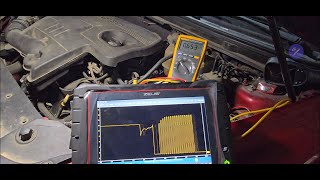
How to confirm: Test the resistance of the sensor's heater circuit with a multimeter. Disconnect the sensor and measure between the two heater circuit pins 🎬 Watch: How to test oxygen sensor heater circuits with a multimeter (often same-colored wires). A healthy sensor should have a cold resistance typically between 4 and 10 ohms. An open circuit (infinite resistance) or a reading far out of spec confirms the internal heater has failed.
Typical fix: Replace the Bank 1, Sensor 3 oxygen sensor. This is the rearmost sensor in the exhaust system. 🎬 See this walkthrough for repairing the P0042 sensor circuit
Est. part cost: $80-$250 - Damaged Wiring or Connector 🟡 Medium Probability The sensor wiring is routed near the hot exhaust, making it vulnerable to melting, chafing, or corrosion at the connector. Forum users have noted the connector can be difficult to access, sometimes tucked behind heat shields, increasing the chance of unseen damage.
How to confirm: Visually inspect the wiring harness leading to the sensor for any signs of melting, breaks, or corrosion in the connector pins. Check for power (~12V) and ground at the connector with the key on.
Typical fix: Repair the damaged section of wiring or clean/replace the connector.
Est. part cost: $5-$50 - Blown Fuse for O2 Heater Circuit ⚪ Low Probability
How to confirm: Locate and inspect the fuse for the oxygen sensor heater circuits in the engine bay fuse box. A visual inspection or continuity test will confirm if it's blown. For a 2014 model, this may include fuses F11 (15A) and F14 (20A).
Typical fix: Replace the blown fuse. If it blows again immediately, a short circuit exists in the wiring or the sensor itself.
Est. part cost: $1-$5
Rare But Worth Checking
- Faulty Powertrain Control Module (PCM): → Shop Engine Control Module (ECM) This is extremely rare. All other possibilities, especially the sensor and its wiring, should be exhaustively ruled out before considering the PCM as the cause.
Diagnosis Steps
- Read the code with an OBD-II scanner to confirm P0042 is present.
- Visually inspect the Bank 1, Sensor 3 (rearmost) oxygen sensor and its wiring harness for any obvious damage, melting, or corrosion. Pay close attention to the area near the exhaust and behind any heat shields.
- Check the fuse for the O2 sensor heater circuit in the engine compartment fuse box. For a 2014 model, this includes F11 and F14.
- If the fuse and wiring appear intact, disconnect the sensor.
- Use a multimeter to measure the resistance between the two heater circuit pins on the sensor itself. A reading between 4-10 ohms is typically good. An open circuit (infinite resistance) or very high resistance indicates a failed heater element, and the sensor must be replaced.
- If the sensor resistance is within spec, check for battery voltage (~12V) and a good ground at the vehicle-side connector with the ignition on.
- If voltage or ground is missing, trace the wiring back to the PCM to find the break or short.
- If all wiring and the sensor check out, the fault may be intermittent as suggested by TSB #SSM72448, or in very rare cases, a faulty PCM.
Parts You'll Likely Need
- Oxygen Sensor (Bank 1, Sensor 3)
(OEM #LR028931)— This is the most common failure point for code P0042 on this vehicle, confirmed by Land Rover TSB #SSM63157. It is the rear-most sensor.
Trusted brands: Bosch, Walker, Denso, NGK, OEM Land Rover
OEM price range: $150-$250
Aftermarket price range: $80-$160
Related Codes That Often Appear With This One
- P0062 — This is the identical heater circuit fault but for Bank 2, Sensor 3. On V6/V8 models, the TSBs indicate both banks can fail for the same manufacturing reason.
- P0142 — This is a general circuit fault for Bank 1, Sensor 3. It can appear with P0042 as they both relate to the same sensor's electrical integrity.
- P0043 — This code indicates the heater control circuit is low, which is a specific type of electrical fault within the same circuit as P0042.
- P0044 — This code indicates the heater control circuit is high, another specific electrical fault within the same circuit as P0042.
Technical Service Bulletins (TSBs) & Recalls
- SSM63157: Mentions a manufacturing fault ('misalignment within the sensor') causing premature failure and lists P0042 as a resulting code. It advises checking the date code on replacement sensors.
- SSM72448: Lists P0042 as a code that may be present despite no fault being found during diagnosis, suggesting an intermittent issue or a problem with the sensor itself when wiring checks out.
Platform-Specific Known Issues
- A known manufacturing defect in the oxygen sensors can cause premature failure, as documented in Land Rover Technical Service Bulletin #SSM63157. The bulletin cites a 'misalignment with in the sensor' from the supplier.
- TSB #SSM72448 lists P0042 among many other O2 sensor codes that may be stored with a 'NO FAULT' finding upon diagnosis, suggesting potential for intermittent electrical issues or the need for a software update in some cases. The TSB notes the root cause was still under investigation at the time of its release.
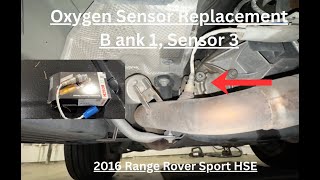
- Owners on forums report that the electrical connector for the Sensor 3 position can be difficult to access, sometimes requiring removal of heat shields or working in a tight space, which can complicate 🎬 Watch: DIY oxygen sensor replacement on this Land Rover platform an otherwise simple replacement.
Mechanic-Grade Diagnostic Values
- O2 Sensor Heater Circuit Resistance — expected: 4 to 10 Ohms (when cold). Failure: An open circuit (OL or infinite resistance) or a reading significantly outside the expected range.
- Voltage at Heater Circuit Power Pin (Key On, Engine Off) — expected: ~12 Volts (Battery Voltage). Failure: 0V or significantly low voltage, indicating a problem with the fuse or power supply wiring.
- PCM Ground Resistance — expected: Less than 0.5 Ω. Failure: Resistance higher than 0.5 Ω indicates a poor ground connection that needs to be cleaned or repaired.
Hidden / Shadow Codes Worth Checking
- P0042-00: This is the full code often stored in the JLR system. The '-00' suffix indicates 'No Sub Type Information,' meaning the ECU has detected a general fault in the heater control circuit without specifying if it's an open, short to ground, or short to power. (see via JLR-specific diagnostic tools like SDD or Pathfinder. Basic OBD-II scanners may only show 'P0042'.)
Scan Tool Commands That Help
- JLR SDD / Pathfinder: Configure existing module - Powertrain Control Module — To apply a PCM software update as suggested by TSBs LTB00671NAS3 and JTB00330NAS4, which may resolve false or intermittent P0042 codes.
- JLR SDD / Pathfinder: Clear Learned Adaptations / Reset Adaptive Values — After replacing the oxygen sensor, this function resets the PCM's long-term fuel trims and other learned values, forcing it to re-learn with the new sensor's data for optimal performance.
Wiring & Ground Locations
- Engine Bay Fuse Box — Located in the engine compartment.. Contains the fuses for the O2 sensor heater circuits. For a 2014 model, fuses F11 (15A) and F14 (20A) are specifically for the heated oxygen sensors and should be checked if there is no power at the sensor connector.
- ECM Connector C0635 — At the Engine Control Module (ECM), located in the center rear of the engine compartment.. This is the main connector where the O2 sensor wiring terminates. According to wiring diagrams for similar JLR models, the heater circuit power, ground, and signal wires for the downstream sensors pass through this connector, making it a key point for advanced wiring diagnostics.
Real Owner Repair Stories
- Jaguar Forums user 'Oz Ifti' (2013 Jaguar XF 3.0L AWD (Shares engine architecture concepts with Land Rover)) — Check Engine Light with code P0042.
❌ Tried (didn't work) Initial diagnosis only.
✅ What actually fixed it Replaced the Bank 1, Sensor 3 oxygen sensor with a Denso aftermarket part (234-4794). The code was cleared and did not return after a 10-mile drive.
OEM Part Supersession History
LR028931→N/A - Still active— This remains the primary OEM part number cited for the rear oxygen sensor on the 2.0L Evoque.
Heads up: While other part numbers like LR062827 -> LR140077 exist for other Range Rover models/engines, LR028931 is the correct part for this specific application.
Model Year Variations Within This Range
- 2016: For the 2016 model year, Land Rover began introducing the new 2.0L 'Ingenium' diesel engine alongside the existing 2.0L petrol engine. While the P0042 code's meaning is the same, owners of 2016 models should verify which engine their vehicle has, as wiring, fuse locations, and part numbers may differ for the Ingenium diesel.
Helpful Videos

The information in this article is provided for general reference and educational purposes only. Vehicle specifications, procedures, and part compatibility can vary by production date, trim level, and region. Always consult your vehicle's factory service manual and verify part numbers before purchasing or performing repairs. Safety-critical components such as airbags, seat belts, and braking systems should be installed by a qualified professional.
- Land Rover RANGE ROVER EVOQUE:
- 🧭 Diagnostic Flowchart
- 🎬 Helpful Videos
- What's Unique About the 2013-2016 Land Rover RANGE ROVER EVOQUE
- Symptoms You May Notice
- Most Likely Causes
- Rare But Worth Checking
- Diagnosis Steps
- Parts You'll Likely Need
- Related Codes That Often Appear With This One
- Technical Service Bulletins (TSBs) & Recalls
- Platform-Specific Known Issues
- Mechanic-Grade Diagnostic Values
- Hidden / Shadow Codes Worth Checking
- Scan Tool Commands That Help
- Wiring & Ground Locations
- Real Owner Repair Stories
- OEM Part Supersession History
- Model Year Variations Within This Range
- 🎟️ Get 5% Off