

P0043 on 2014-2016 Jaguar F-TYPE: Causes and Fixes for HO2S Heater Circuit Low
On a 2014-2016 Jaguar F-TYPE, code P0043 almost always points to a failed post-catalytic converter oxygen sensor on the passenger side (Bank 1, Sensor 3). The internal heater element within the sensor is the common failure point. A Jaguar Technical Service Bulletin (JTB-00392-NAS-3) also notes a software bug can cause this code, so a PCM update by a dealer may be required after replacing the sensor to prevent the code from returning.
- P0043 on your F-TYPE points to the rearmost oxygen sensor on the passenger side.
- The most likely cause is a failed sensor, which is a straightforward DIY replacement with an O2 sensor socket.
- Check for damaged wiring leading to the sensor before replacing it.
- Be aware that a Jaguar TSB exists for this issue; a dealer software update might be necessary to permanently fix the problem, even after replacing the part.
What's Unique About the 2014-2016 Jaguar F-TYPE
For the 2014-2016 F-TYPE, this code isn't always just a simple sensor failure. Jaguar issued Technical Service Bulletins (TSBs), specifically JTB-00392-NAS-3, acknowledging that a software error in the Powertrain Control Module (PCM) could falsely trigger P0043 and a host of other oxygen sensor codes. Because of this, the official repair procedure often involves not only replacing the faulty sensor but also updating the PCM software to prevent the code from returning. This makes checking the vehicle's software version an important, and often necessary, step in the diagnostic process that might be overlooked in a generic repair.
Diagnostic Flowchart
Tap your situation to follow the diagnostic path that matches what you're seeing on this vehicle.
Symptoms You May Notice
- Check Engine Light is on.
- Failure to pass an emissions inspection.
- Slightly increased fuel consumption (rare).
- Rough running or poor engine performance (very rare).
- Smell of gasoline from the exhaust on startup (rare, more common with upstream sensor failures).
- Replacing the wrong oxygen sensor. It is critical to correctly identify Bank 1 (passenger side) and Sensor 3 (post-catalyst) before purchasing parts.
- Ignoring the TSB for the software update. If the root cause is the software glitch, the code may return even after replacing the sensor. This is a common complaint on forums where a DIY sensor replacement doesn't permanently fix the issue.
- Assuming a new sensor is good. One owner on JaguarForums reported a dealer receiving a bad replacement sensor, leading to a prolonged diagnosis.
Most Likely Causes
- Failed Oxygen Sensor (Bank 1, Sensor 3) 🔴 High Probability → Shop Oxygen Sensor The internal heater element within the oxygen sensor is a common failure point over time due to thermal stress. Bosch is the original equipment manufacturer, and these sensors are a known wear item on JLR vehicles. Forum discussions frequently cite this as the fix.
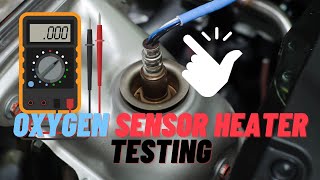
How to confirm: Using a multimeter, disconnect the sensor and measure the resistance between the two heater circuit wires (often two white wires). A healthy Bosch sensor heater should have a cold resistance of around 9-10 ohms. An open circuit (infinite resistance) or a reading far outside this range indicates a failed heater element. 🎬 Watch: How to test an oxygen sensor heater with a multimeter.
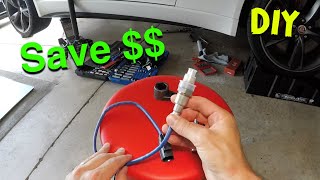
Typical fix: Replace the Bank 1, Sensor 3 oxygen sensor. This is the post-catalytic converter sensor on the passenger side. It is accessible from underneath the vehicle without removing belly pans. 🎬 See this DIY walkthrough for replacing the F-Type oxygen sensor.
Est. part cost: $70-$150 - Wiring or Connector Issue 🟡 Medium Probability The wiring for the rear oxygen sensor runs underneath the vehicle and is exposed to road debris, moisture, and exhaust heat, which can cause corrosion, chafing, or a short to ground. The connector itself can also become contaminated or have a pin recede into the housing.
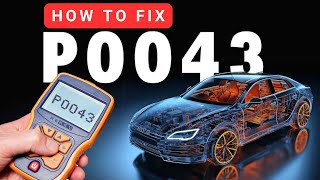
How to confirm: Visually inspect the wiring harness and connector leading to the sensor for any signs of damage, melting, or corrosion. Check for 12V power and a good ground at the harness-side connector with the ignition on. A 'low circuit' code often points to a short to ground. 🎬 Watch: A detailed guide on fixing the P0043 circuit low code.
Typical fix: Repair the damaged section of the wiring harness or clean/replace the connector.
Est. part cost: $10-$50 - Powertrain Control Module (PCM) Software Error 🟡 Medium Probability → Shop Engine Control Module (ECM) Jaguar released TSB JTB-00392-NAS-3 specifically stating that a 'post-catalyst heated oxygen sensor (HO2S) software error' can cause this code on 2014-2015 models. This is a known issue across the JLR lineup using these engines.
How to confirm: This must be confirmed by a Jaguar dealer or a qualified independent shop with access to Jaguar's diagnostic software (SDD/Pathfinder). They can check the current software calibration ID against the latest available version mentioned in the TSB.
Typical fix: Update the PCM software to the latest version. The TSB recommends doing this *after* replacing the faulty sensor if a hardware fault code is present.
Est. part cost: $0-$250 - Blown Fuse ⚪ Low Probability
How to confirm: Check the vehicle's fuse box diagrams for a fuse related to the O2 sensor heaters. Visually inspect the fuse and test for continuity.
Typical fix: Replace the blown fuse.
Est. part cost: $1-$5
Rare But Worth Checking
- Faulty Powertrain Control Module (PCM): → Shop Engine Control Module (ECM) This is very rare. Before condemning the PCM, all other possibilities (sensor, wiring, software) must be exhaustively ruled out. This is typically a last resort diagnosis.
Diagnosis Steps
- Read the code with an OBD-II scanner and confirm it is P0043. Note any other codes present.
- Visually inspect the Bank 1, Sensor 3 (passenger side, rearmost) oxygen sensor and its wiring harness. Look for any obvious signs of damage, melting on the exhaust, or corrosion in the connector.
- Check the fuse for the oxygen sensor heater circuit in the vehicle's fuse box.
- If the wiring looks good, disconnect the sensor. Set a multimeter to Ohms (Ω) and test the resistance of the heater circuit on the sensor side (usually across the two same-colored wires). A reading of 9-10 Ohms is expected for a good sensor. An open circuit (OL) or very high resistance means the heater is broken and the sensor must be replaced.
- With the key on and engine off, test the harness-side connector for 12V power on one pin and a good ground on another. A lack of power or ground points to a wiring issue upstream toward the PCM.
- If the sensor's heater circuit tests good and power/ground are present, the fault is intermittent or could be software-related.
- Replace the oxygen sensor if it failed the resistance test. Using a 22mm or 7/8" oxygen sensor socket is required.
- After replacement, clear the codes. If the code returns, consult a dealer or specialist shop to check if the PCM software update from TSB JTB-00392-NAS-3 is needed.
Parts You'll Likely Need
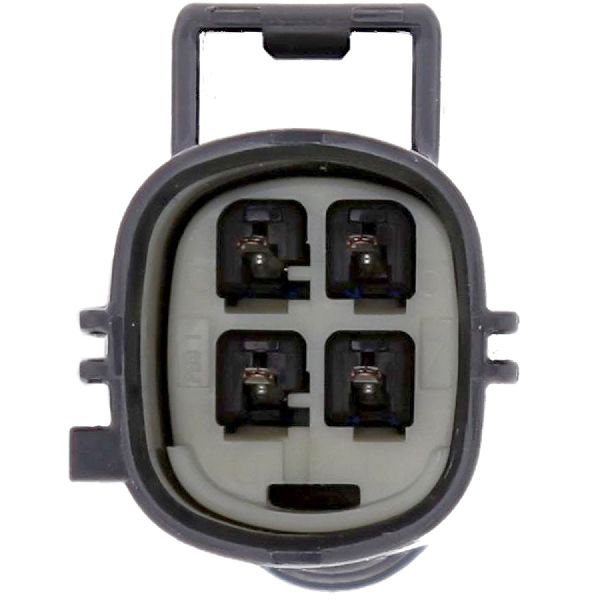
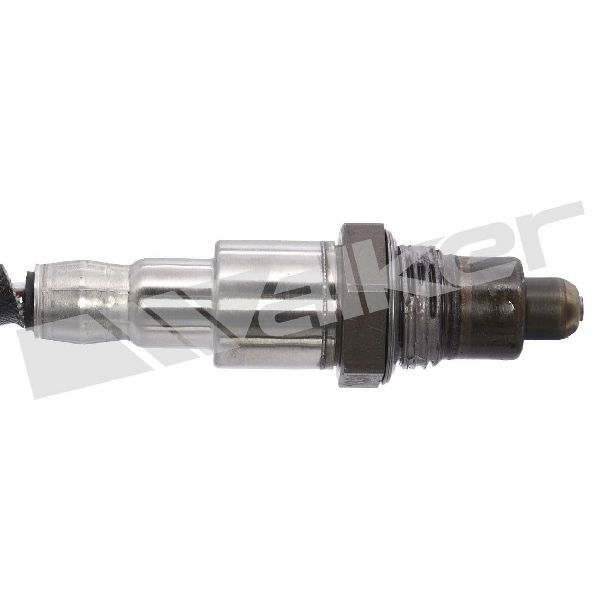
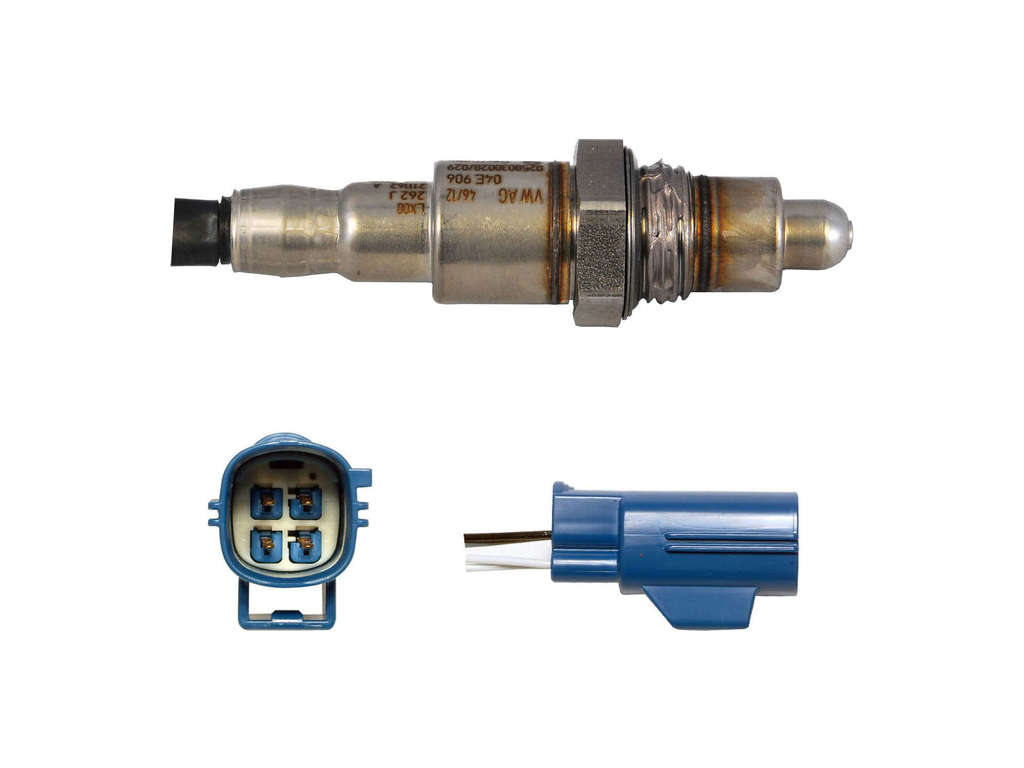
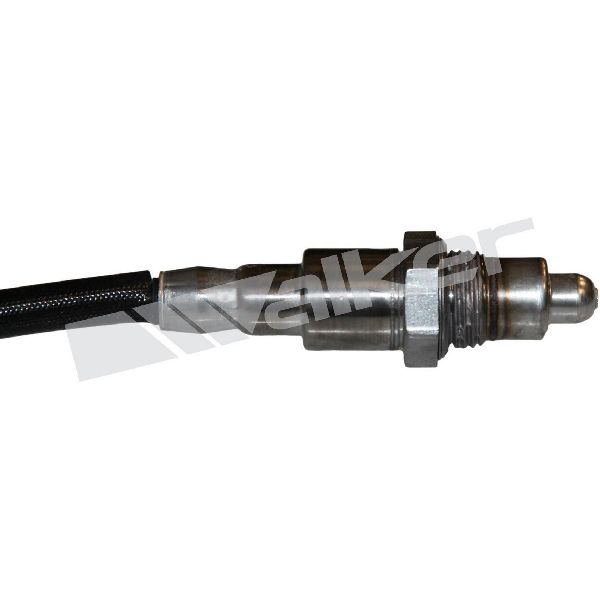
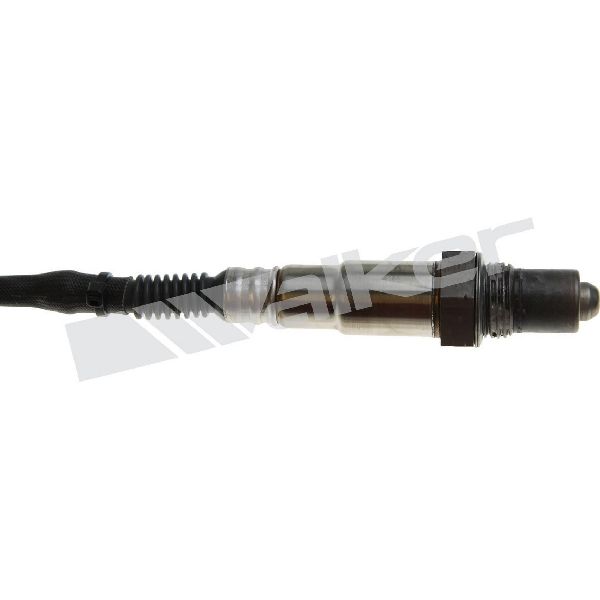
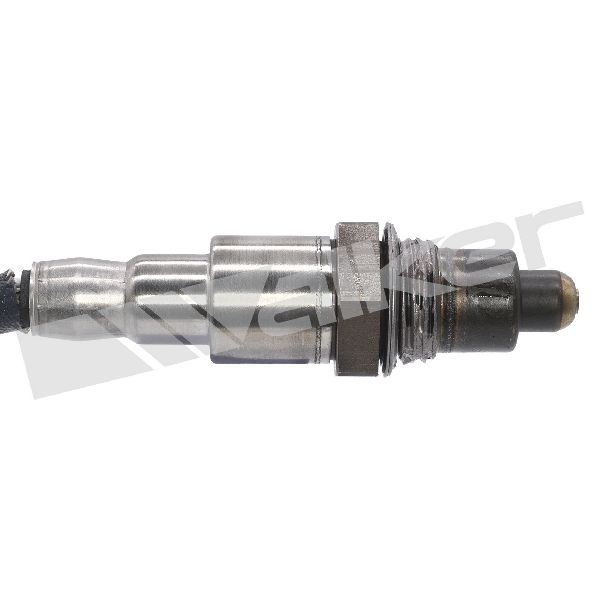
- Oxygen Sensor (Bank 1, Sensor 3)
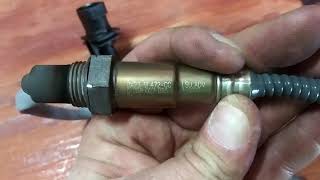
(OEM #T2R54607)— This is the most common failure point for code P0043. The internal heater element burns out, requiring replacement of the entire sensor unit.
Trusted brands: Bosch (OEM), Denso, NTK (NGK), Walker
OEM price range: $150-$220
Aftermarket price range: $70-$150
Related Codes That Often Appear With This One
- P0042 — This code is for 'HO2S Heater Control Circuit' for the same sensor (Bank 1, Sensor 3). A user on JaguarForums reported getting P0042, which has the same root cause and fix.
- P0044 — This code is for 'HO2S Heater Control Circuit High' for the same sensor. It can appear alongside P0043 if the circuit issue is intermittent or complex.
- P0142 — This code is for 'O2 Sensor Circuit (Bank 1, Sensor 3)'. It relates to the sensor's signal circuit, not the heater, but a failing sensor can sometimes trigger multiple codes for the same component.
- P0062 — This is the equivalent code for the other side of the vehicle, 'HO2S Heater Control Circuit (Bank 2, Sensor 3)'. It is common for these sensors to fail around the same time.
Technical Service Bulletins (TSBs) & Recalls
- JTB-00392-NAS-3: States that a software error can cause various HO2S codes, including P0043, and recommends a software update after sensor replacement for 2014-2015 F-TYPE, XF, and XJ models.
- SSM72477: Groups P0043 with a large family of faults related to pre, mid, or post-catalyst heated oxygen sensors, indicating a common pattern of failures.
- JTB00392NAS1: An earlier version of the TSB also identifying P0043 as a relevant code for HO2S issues.
Platform-Specific Known Issues
- A Technical Service Bulletin (JTB-00392-NAS-3) was issued for 2014-2015 F-TYPE models, indicating the Malfunction Indicator Lamp (MIL) may illuminate with P0043 (and other related codes) due to a 'post-catalyst heated oxygen sensor (HO2S) software error'. The recommended action is to replace the affected sensor and then update the PCM software.
- The F-Type uses three oxygen sensors per bank: one upstream (pre-cat), one in the middle of the catalyst, and one downstream (post-cat). Sensor 3 is the downstream, post-catalyst sensor.
Mechanic-Grade Diagnostic Values
- O2 Sensor Heater Circuit Resistance — expected: 9-10 Ohms (for OEM Bosch sensor); some generic sources cite 2-8 Ohms.. Failure: An open circuit (infinite resistance) or a reading significantly outside the expected range.
- Voltage at Harness Connector (Heater Power Pin) — expected: ≥ 9.0 Volts (should be close to battery voltage, ~12V) with key on, engine off.. Failure: Voltage below 9.0V or 0V indicates a wiring issue, blown fuse, or problem with the PCM/relay.
Scan Tool Commands That Help
- Jaguar SDD / Pathfinder: Read/Clear DTCs — Used at the beginning of diagnosis to confirm P0043 and at the end to clear the code after repair.
- Jaguar SDD / Pathfinder: Datalogger / Live Data — To monitor the O2 sensor heater status and voltage in real-time to confirm the fault. It may be possible to manually activate the heater circuit as a bidirectional test.
- Jaguar SDD / Pathfinder: Clear Adaptations / Vehicle Reset — After replacing a component like an O2 sensor, it can be beneficial to reset the engine's learned fuel trim and component adaptations to ensure it learns correctly with the new part.
Wiring & Ground Locations
- Engine Control Module (ECM) — Located in the left rear of the engine compartment.. The ECM provides the power and control for the oxygen sensor heater circuit. All wiring for the sensor ultimately terminates at the ECM.
- Bank 1 Sensor 3 Connector — Underneath the vehicle, on the passenger side, following the wiring from the rearmost oxygen sensor on the exhaust pipe. The connector is typically attached to the transmission or underbody.. This is the primary point for electrical testing (voltage, ground, resistance) without having to access the ECM directly. It is also a common point of failure due to exposure to heat and debris.
OEM Part Supersession History
C2D23703, C2D54167, DX239G444FD→T2R54607— Standard part revision and consolidation by the manufacturer.
Heads up: While older part numbers may be found, T2R54607 is the latest revision and should be used for repairs.
Model Year Variations Within This Range
- 2014-2015: Models in this range are specifically called out in TSB JTB-00392-NAS-3 as potentially having a software error that can cause P0043. While the sensor can still fail on a 2016 model, the likelihood of the cause being a software bug is lower, as later models were likely built with the updated software from the factory.
- 2014+: The oxygen sensor part number T2R54607 is specified for vehicles from VIN K69156 onwards, which begins during the 2014 model year. Vehicles built before this VIN may use a different part number, though it has likely been superseded.
Helpful Videos
We Have This Part in Stock

The information in this article is provided for general reference and educational purposes only. Vehicle specifications, procedures, and part compatibility can vary by production date, trim level, and region. Always consult your vehicle's factory service manual and verify part numbers before purchasing or performing repairs. Safety-critical components such as airbags, seat belts, and braking systems should be installed by a qualified professional.
- Jaguar F-TYPE:
- 🧭 Diagnostic Flowchart
- 🎬 Helpful Videos
- 🛍️ Shop This Part
- What's Unique About the 2014-2016 Jaguar F-TYPE
- Symptoms You May Notice
- Most Likely Causes
- Rare But Worth Checking
- Diagnosis Steps
- Parts You'll Likely Need
- Related Codes That Often Appear With This One
- Technical Service Bulletins (TSBs) & Recalls
- Platform-Specific Known Issues
- Mechanic-Grade Diagnostic Values
- Scan Tool Commands That Help
- Wiring & Ground Locations
- OEM Part Supersession History
- Model Year Variations Within This Range
- 🎟️ Get 5% Off