

P0043 on 2013-2016 Land Rover Range Rover: O2 Sensor Heater Circuit Causes and Fixes
This code almost always points to a failed Bank 1, Sensor 3 oxygen sensor. On this Range Rover, sensors are known to fail due to manufacturing defects or, on the 3.0L V6, thermal shock from water splash. The fix is to replace the sensor, which costs about $60-$150 for the part. In some cases, a wiring issue or an ECM software update is required.
- P0043 on a 2013-2016 Range Rover means the heater in the passenger side, post-catalyst oxygen sensor (B1S3) has an electrical fault.
- The most likely cause is a failed oxygen sensor, a problem Land Rover has acknowledged in technical service bulletins for manufacturing defects and design vulnerabilities. [SSM63157, LTB00671NAS3]
- For models with the 3.0L V6 engine, a software update for the engine computer is a required part of the repair along with sensor replacement to prevent the issue from recurring.
- Before replacing the sensor, always perform a quick visual inspection of the wiring for obvious damage and use a multimeter to confirm the sensor's internal heater has failed.
- Ensure you are replacing the correct sensor; there are multiple sensors, and Bank 1 Sensor 3 is in a specific location.
What's Unique About the 2013-2016 Land Rover RANGE ROVER
For this generation of Range Rover, P0043 is often more than just a random part failure. Land Rover has issued Technical Service Bulletins (TSBs) indicating specific known issues. One bulletin points to a manufacturing fault within the oxygen sensors from the supplier, causing them to fail prematurely. [SSM63157] Another TSB, specific to the 3.0L V6 engine, identifies a problem where the sensor can be damaged by thermal shock if water splashes onto it, requiring not only a new sensor but also an ECM software update to prevent it from happening again. [LTB00671NAS3] This issue is shared across other JLR vehicles using the same supercharged engines.
Diagnostic Flowchart
Tap your situation to follow the diagnostic path that matches what you're seeing on this vehicle.
Symptoms You May Notice
- Check Engine Light (Malfunction Indicator Lamp) is on
- Vehicle will fail an emissions test
- Potentially decreased fuel economy, though often not noticeable by the driver
- No noticeable performance or drivability issues in most cases
- Replacing the wrong oxygen sensor. This vehicle has up to six oxygen sensors. It is critical to identify the correct one: Bank 1 (passenger side for LHD) and Sensor 3 (the furthest downstream/post-catalyst sensor on that bank).
- Replacing the sensor without checking the wiring. A melted wire shorting to the frame will cause the code to return immediately, even with a new sensor.
- Repeatedly replacing sensors on a 3.0L V6 without performing the ECM software update specified in TSB LTB00671NAS3, leading to repeat failures.
Most Likely Causes
- Faulty Bank 1, Sensor 3 Oxygen Sensor 🔴 High Probability → Shop Oxygen Sensor Land Rover TSBs confirm a high failure rate due to a supplier manufacturing defect [SSM63157] and susceptibility to thermal shock on 3.0L V6 models [LTB00671NAS3]. The internal heater element simply burns out or fails.
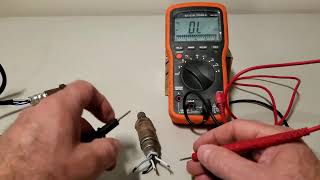
How to confirm: After confirming power and ground to the sensor connector, test the resistance of the heater circuit within the sensor itself using a multimeter. Disconnect the sensor and measure resistance across the two heater circuit pins (often the two same-colored wires). A typical healthy heater coil reads between 3-15 Ohms. An open circuit (infinite resistance) or a reading far outside this range confirms a failed heater element.
Typical fix: Replace the Bank 1, Sensor 3 oxygen sensor. On 3.0L V6 models, the ECM should also be updated by a dealer or qualified shop to prevent recurrence. [LTB00671NAS3]
Est. part cost: $60-$150 - Damaged Wiring or Connector 🟡 Medium Probability The sensor and its wiring are located under the vehicle, exposed to road debris, water, and high heat from the exhaust. Wiring can melt against the hot exhaust pipe, causing a short to ground which triggers the 'Circuit Low' code. Connectors can also corrode or fill with debris.
How to confirm: Visually inspect the entire wiring harness from the sensor to where it enters the main loom. Look for any signs of melting, chafing, corrosion, or loose pins. Use a multimeter to check for 12V power and a good ground at the harness-side connector with the key on, engine off. A test light can also confirm power.
Typical fix: Repair the damaged section of the wiring harness or clean/replace the connector. Use heat-shrink tubing for a durable repair.
Est. part cost: $5-$50 - Outdated ECM Software (3.0L V6 Models) 🟡 Medium Probability TSB LTB00671NAS3 explicitly states that a software update is part of the fix to prevent repeat failures from thermal shock. The original software calibration may be too sensitive or manage the heater circuit improperly, leading to premature failure of the sensor, especially after exposure to water.
How to confirm: A Land Rover dealer or a specialized shop with access to JLR's diagnostic system (SDD/Pathfinder) can check the current software version against the latest available version referenced in the TSB.
Typical fix: Update the Engine Control Module (ECM) to the latest software version. This is often done in conjunction with sensor replacement.
Est. part cost: $0-$250
Rare But Worth Checking
- Blown Fuse: The oxygen sensor heater circuits are protected by a fuse, often located in the engine bay fuse box. While not common for it to blow without another issue (like a shorted wire), it's a quick and easy check. The fuse may be labeled 'O2 Heater', 'A/F Sensor', or something similar.
- Faulty Engine Control Module (ECM): → Shop Engine Control Module (ECM) This is very rare. Before condemning the ECM, all other possibilities (sensor, wiring, software) must be exhaustively ruled out. TSB SSM72448 notes that diagnosis can sometimes lead to a 'no fault found' conclusion, which can sometimes point towards intermittent ECM or software issues that require a module update to resolve. [SSM72448] A bad ground or pin fitment at the ECU connector itself can also be a cause.
Diagnosis Steps
- Read the code with an OBD-II scanner and confirm P0043 is present. Note any other codes.
- Visually inspect the Bank 1, Sensor 3 oxygen sensor, its connector, and its wiring harness. It is located under the vehicle on the passenger side, after the catalytic converter. Trace the wiring and look for any signs of physical damage, melting from exhaust contact, or corrosion.
- Disconnect the sensor and turn the ignition to the 'ON' position (engine off). Use a multimeter or test light to verify that the harness-side connector is receiving approximately 12 volts for the heater circuit.
- Check for a good ground on the corresponding pin in the harness-side connector. Resistance to chassis ground should be less than 1 Ohm.
- If power and ground are present, use the multimeter to measure the resistance across the two heater circuit pins on the sensor itself. A reading between 3-15 Ohms is typical for a good sensor. A reading of infinite resistance (open) or near-zero resistance (short) indicates a failed sensor that needs replacement.
- If the sensor and wiring test good, the issue may be software-related, especially on 3.0L V6 models. Check with a dealer for available ECM updates as per TSB LTB00671NAS3.
- As a final, rare check, inspect the O2 sensor heater fuse in the engine compartment fuse box.
Parts You'll Likely Need
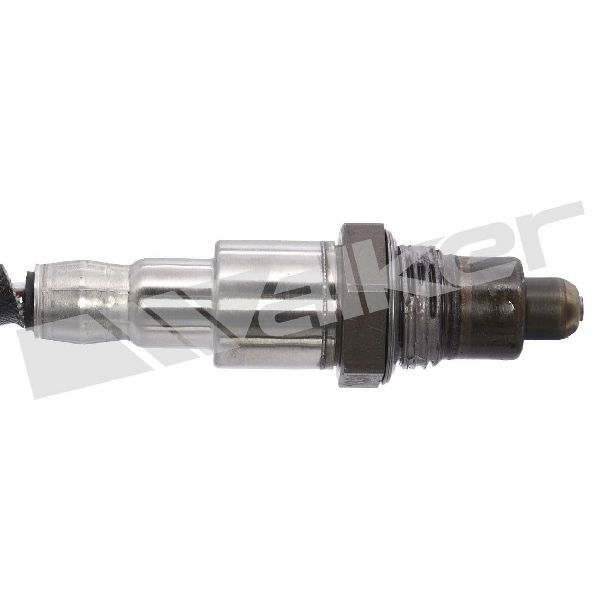
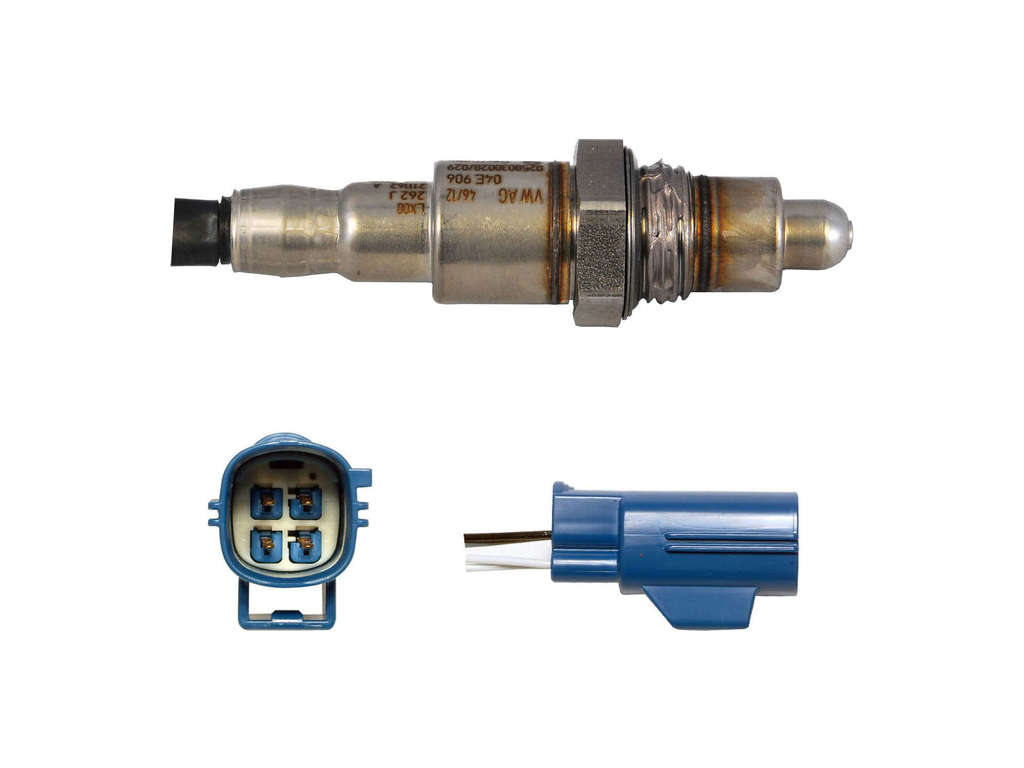
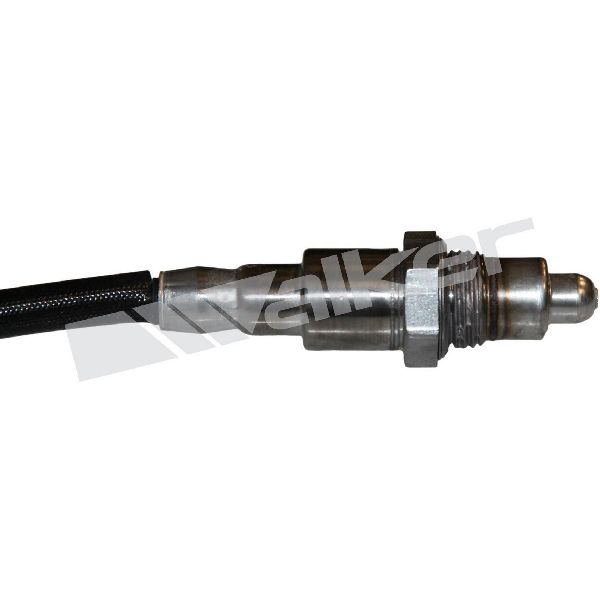
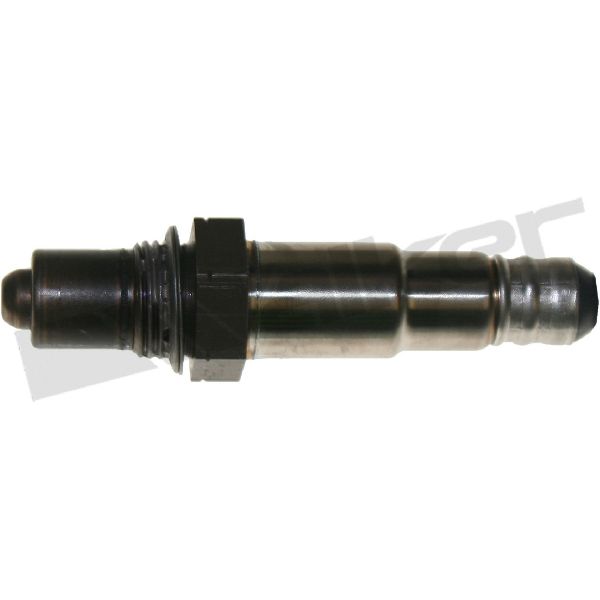
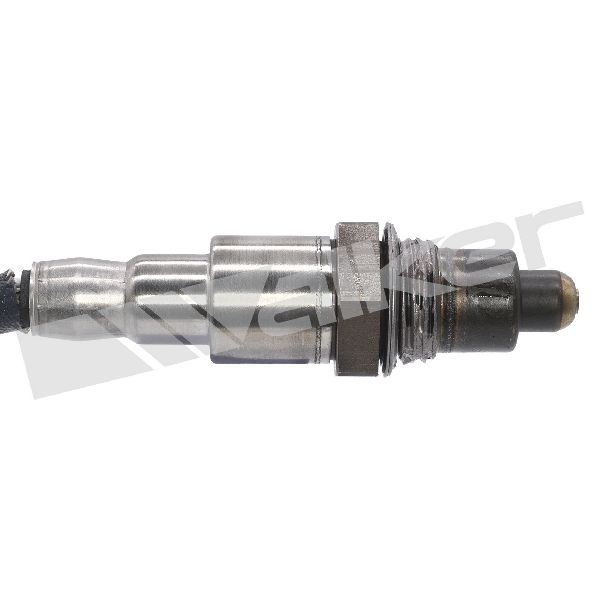
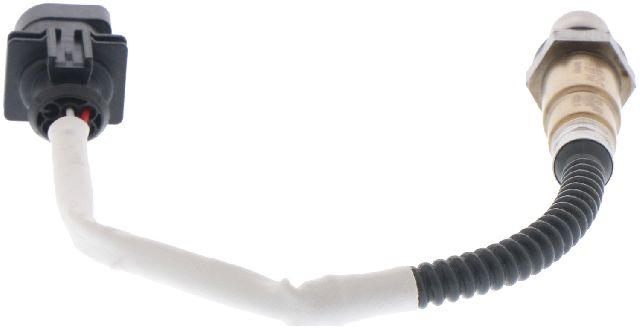
- Post-Catalyst Oxygen Sensor (Bank 1, Sensor 3)
(OEM #LR035750 (Note: This part number often refers to the upstream/front sensors, but is sometimes listed for downstream as well. Verify correct position before ordering. Other potential numbers include C2D23702).)— This is the component identified by the code, and it has a high failure rate on this vehicle due to documented manufacturing and design issues. [SSM63157, LTB00671NAS3]
Trusted brands: Bosch (Often the OEM supplier), NGK/NTK, Denso, Walker Products
OEM price range: $120-$200
Aftermarket price range: $60-$150
Related Codes That Often Appear With This One
- P0042 — This code is for the same sensor circuit, indicating a general malfunction.
- P0044 — This code is for the same sensor circuit, but indicates 'Circuit High' instead of 'Low', suggesting a different type of electrical fault (like an open circuit) with the same component.
- P0142, P0143, P0144, P0147 — These are all codes related to the Bank 1, Sensor 3 oxygen sensor and are listed together with P0043 in Land Rover TSBs as part of the same fault pattern. [LTB00671NAS3]
Technical Service Bulletins (TSBs) & Recalls
- LTB00671NAS3: Engine MIL Illuminated With DTC P0042, P0043, etc. Stored
- SSM63157: Engine Malfunction Indicator Lamp (MIL) Illuminated - Oxygen Sensor DTC's Stored
- SSM72448: 3.0L S/C Petrol Engine - MIL Illuminated - Multiple Oxygen Sensor DTC's Stored
Platform-Specific Known Issues
- TSB LTB00671NAS3: Affects 2014 Range Rovers with the 3.0L SC V6 engine. The Malfunction Indicator Lamp may illuminate with P0043 (and other related codes) due to thermal shock when water contacts the heated sensing element. The official fix is to replace the affected sensor and perform an ECM software update to change the sensor's heating strategy.
- TSB SSM63157: Notes that various oxygen sensor codes, including P0043, can be stored due to a manufacturing fault within the sensor from the supplier ('misalignment within the sensor leading to side load'), leading to premature failure. [SSM63157]
- TSB SSM72448: Mentions that after diagnosing a wide range of oxygen sensor codes, including P0043, sometimes no fault is found, suggesting the possibility of intermittent software or electrical issues that may require a module update to resolve. [SSM72448]
- Owner Experience: A common owner complaint on forums involves the dealer replacing the sensor, only for the code to return, indicating the underlying issue was wiring or required a software update that was initially missed.
Mechanic-Grade Diagnostic Values
- O2 Sensor Heater Element Resistance — expected: 3 to 15 Ohms at ambient temperature.. Failure: An open circuit (infinite resistance) or a direct short (near zero Ohms) indicates a failed sensor.
- Heater Circuit Voltage Supply (at harness connector) — expected: Approximately 12V (Battery Voltage) with ignition on, engine off.. Failure: Voltage significantly below 9V or no voltage indicates a problem with the power supply from the fuse or ECM, not the sensor itself.
Hidden / Shadow Codes Worth Checking
- Mode $06 Data: Mode $06 does not show a specific 'shadow code' but provides raw data from the ECM's self-tests. A technician can view the test results for the O2 sensor heaters (e.g., Test ID $81, Component ID $01-$08 for O2 heaters). A value outside the specified min/max range indicates a failure or pending failure before a DTC is formally set. (see via An advanced OBD-II scanner with Mode $06 capability (like BlueDriver or dealer tools) is required.)
Scan Tool Commands That Help
- JLR SDD (Symptom Driven Diagnostics) / Pathfinder: Symptom Selection & Datalogger — When diagnosing P0043, a technician would use SDD to select the relevant symptom (e.g., from a DTC read). The software then guides the user through a diagnostic workflow. The datalogger function can be used to monitor live O2 sensor heater circuit status and voltage to confirm the fault.
- JLR SDD / Pathfinder: Clear Adaptations / Module Programming — After replacing a sensor and, crucially, when performing the fix outlined in TSB LTB00671NAS3, the technician must use SDD or Pathfinder to update the ECM software. Clearing adaptations may also be recommended after sensor replacement.
Wiring & Ground Locations
- Heated Oxygen Sensor (Bank 2) — A wiring diagram for the 2014 Range Rover Sport 3.0L shows the Bank 2 (driver's side) heated oxygen sensor connector located mid-catalyst. While this is for Bank 2, the Bank 1 location is mirrored on the passenger side.. Knowing the physical location and being able to trace the harness is critical for finding melts or chafing, which is a common cause of the 'Circuit Low' fault.
- ECM Connector C0635 (Discovery II reference) — On older Land Rover models, the O2 sensor heater circuits run through the main engine ECU connector. A forum post for a Discovery II mentions checking for bad pins or corrosion at this connector (C0635) as a potential cause for heater circuit faults.. While this is for an older model, the principle remains. If the sensor and wiring near the exhaust test good, the fault could be at the other end of the circuit, at the main ECU connector. This is a rare but important check before condemning the ECU.
Real Owner Repair Stories
- Land Rover Forums user 'KingKoopa' (2004 Land Rover Discovery V8 (Note: Older model, but diagnostic principle is identical)) — P0150 (O2 Sensor Circuit Malfunction), lean codes, and misfires.
❌ Tried (didn't work) Initial diagnosis pointed to a bad sensor with iffy continuity.
✅ What actually fixed it The user discovered the ground wire for the heater circuit was receiving 12V, indicating a short to power somewhere in the harness. The problem was not the sensor itself but a wiring fault between the sensor and the ECU. - Reddit user on r/RangeRover (2017 Range Rover Evoque, 45,000 miles) — P0036 (Bank 1 Sensor 2 Heater Control Circuit) after rodent damage.
❌ Tried (didn't work) Replaced the damaged O2 sensor with a new Bosch unit from FCP Euro. The code immediately returned after clearing.
✅ What actually fixed it The issue was unresolved in the post, but the next diagnostic step recommended by a shop was to check the other three O2 sensors, as they appeared to not be working properly on the scan tool, suggesting a wider circuit or power supply issue. This highlights that even with a clear cause (rodent damage) and a new part, the fault can persist due to upstream wiring or related component failures.
OEM Part Supersession History
LR035750→N/A— This part number is consistently listed as the FRONT (upstream, pre-catalyst) oxygen sensor for the 3.0L and 5.0L engines.
Heads up: This part is incorrect for a P0043 (Sensor 3) fault. Using this upstream sensor in a downstream position will not work. The pass 2 data correctly identified this ambiguity.C2D23702→Multiple cross-references including LR052426, LR098291, etc.— This part number is listed for DOWNSTREAM applications on multiple Jaguar and Land Rover vehicles with the same engines, making it a likely candidate for Sensor 3.
Heads up: It is critical to verify the specific part number for the vehicle's VIN. However, C2D23702 and its equivalents are the correct type (downstream) for this fault code, unlike LR035750.
Model Year Variations Within This Range
- 2014 (specifically 3.0L SC V6): TSB LTB00671NAS3 specifically calls out 2014 models for a required ECM software update to change the O2 sensor heating strategy to prevent thermal shock. While the sensor may fail on other years, this specific TSB and software fix is noted for the 2014 model year.
Helpful Videos


We Have This Part in Stock

The information in this article is provided for general reference and educational purposes only. Vehicle specifications, procedures, and part compatibility can vary by production date, trim level, and region. Always consult your vehicle's factory service manual and verify part numbers before purchasing or performing repairs. Safety-critical components such as airbags, seat belts, and braking systems should be installed by a qualified professional.
- Land Rover RANGE ROVER:
- 🧭 Diagnostic Flowchart
- 🎬 Helpful Videos
- 🛍️ Shop This Part
- What's Unique About the 2013-2016 Land Rover RANGE ROVER
- Symptoms You May Notice
- Most Likely Causes
- Rare But Worth Checking
- Diagnosis Steps
- Parts You'll Likely Need
- Related Codes That Often Appear With This One
- Technical Service Bulletins (TSBs) & Recalls
- Platform-Specific Known Issues
- Mechanic-Grade Diagnostic Values
- Hidden / Shadow Codes Worth Checking
- Scan Tool Commands That Help
- Wiring & Ground Locations
- Real Owner Repair Stories
- OEM Part Supersession History
- Model Year Variations Within This Range
- 🎟️ Get 5% Off