

P0044 on 2014-2016 Jaguar F-TYPE: Causes and Fixes for HO2S Heater Circuit High
This code indicates a high voltage problem in the heater circuit for the Bank 1, Sensor 3 oxygen sensor. The most common fix is replacing the sensor itself, which is located post-catalytic converter on the right side of the vehicle. Before replacement, check for potential software issues, as a PCM update per TSB JTB-00392-NAS-3 can sometimes resolve the fault without new hardware.
- P0044 on a Jaguar F-TYPE points to a fault in the heater circuit for the rearmost oxygen sensor on the passenger side.
- Before replacing parts, check for TSB JTB-00392-NAS-3, as a simple PCM software update may be the correct fix.
- If the sensor must be replaced, the most probable cause is a failed internal heater element, which is a straightforward replacement for a DIYer with basic tools.
- Always inspect the wiring for heat damage or corrosion and verify the vehicle's battery is fully charged and healthy before diagnosing sensor faults on this platform.
- Ensure you are replacing the correct sensor (Bank 1, Sensor 3, OEM part C2D23701 or equivalent); this vehicle has six sensors, and connectors can be specific to each side.
What's Unique About the 2014-2016 Jaguar F-TYPE
On the Jaguar F-TYPE, both the AJ126 V6 and AJ133 V8 models use a total of six oxygen sensors—three on each bank. P0044 specifically points to the rearmost sensor on the passenger side (in North America). Jaguar has issued several Technical Service Bulletins (TSBs), notably JTB-00392-NAS-3, which address a wide range of oxygen sensor codes, including P0044. The cause is cited as a potential software error, and the prescribed fix is often to reconfigure the PCM with the latest software, not necessarily to replace the sensor. This indicates a known sensitivity in the sensor monitoring system. Additionally, these vehicles are known to be sensitive to low battery voltage, which can cause a cascade of erroneous fault codes, so ensuring the battery is healthy is a critical first step.
Diagnostic Flowchart
Tap your situation to follow the diagnostic path that matches what you're seeing on this vehicle.
Symptoms You May Notice
- Check Engine Light is on.
- Reduced fuel efficiency.
- Possible rough idle or hesitation during cold starts, before the sensor warms up naturally from the exhaust.
- Failing an emissions test.
- Replacing the wrong oxygen sensor. The F-TYPE has six sensors, so it is critical to correctly identify Bank 1 (right side) and Sensor 3 (post-catalytic converter) before replacement.
- Replacing the sensor when the actual fault is a software issue that requires a PCM update per TSB JTB-00392-NAS-3.
- Replacing the sensor when the root cause is a low vehicle battery voltage causing spurious electronic faults.
Most Likely Causes
- Failed Bank 1, Sensor 3 Oxygen Sensor 🔴 High Probability → Shop Oxygen Sensor The internal heater element within the oxygen sensor can burn out or short after many heat cycles, which is a common failure mode for this part. TSBs also mention potential manufacturing faults and susceptibility to thermal shock from water contact.
How to confirm: Disconnect the sensor and measure the resistance across the two heater circuit pins (often the two same-colored wires) with a multimeter. A healthy sensor should have a resistance between 2 and 30 ohms. An infinite resistance reading (open circuit) or zero resistance (short circuit) confirms a failed heater element.
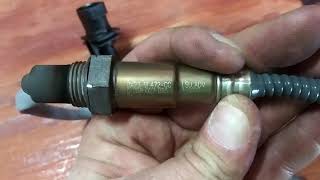
Typical fix: Replace the Bank 1, Sensor 3 oxygen sensor. The OEM part number is often C2D23701, which may be superseded by T2H4721. Aftermarket options like NTK 25752 are also available. 🎬 Watch: A step-by-step DIY guide to replacing F-TYPE oxygen sensors.
Est. part cost: $80-$200 - Wiring or Connector Damage 🟡 Medium Probability The sensor wiring runs along the hot exhaust system and under the vehicle, making it susceptible to melting, chafing against the chassis, or corrosion in the connector, especially where the harness is exposed near the transfer case on AWD models.
How to confirm: Visually inspect the wiring harness from the sensor to its connection point for any signs of burns, fraying, or loose pins. Test for 12V power and a good ground at the connector with the key on, engine off. A short to voltage on the signal wire can also cause this code.
Typical fix: Repair the damaged section of the wiring harness or clean/replace the corroded connector.
Est. part cost: $10-$50 - PCM Software Error 🟡 Medium Probability Jaguar TSB JTB-00392-NAS-3 explicitly states that a group of HO2S codes, including P0044, may be caused by a software error.
How to confirm: A Jaguar dealer or a specialist with access to the JLR diagnostic tool (SDD) 🎬 See how a specialist performs JLR SDD module software updates. can check if the vehicle's PCM software is up to date. If it's not, the TSB recommends a software update as the primary fix.
Typical fix: Reconfigure the Powertrain Control Module (PCM) with the latest software level. This is a dealer or specialist-level task.
Est. part cost: $0-$250 - Blown Fuse or Faulty Relay ⚪ Low Probability
How to confirm: Locate the fuse for the O2 sensor heater circuit in the vehicle's fuse box (refer to the owner's manual) and check for continuity. On some S-Types, which share architecture, this was Fuse #14 in the engine bay fuse box.
Typical fix: Replace the blown fuse. If it blows again, a short circuit is present that must be diagnosed.
Est. part cost: $1-$5
Rare But Worth Checking
- Powertrain Control Module (PCM) Fault: → Shop Engine Control Module (ECM) This is extremely rare. Before condemning the PCM, all other possibilities, including the sensor, wiring, fuses, and especially software updates, must be exhaustively ruled out. A faulty driver circuit within the PCM can cause a high voltage reading.
Diagnosis Steps
- Read the code with an OBD-II scanner to confirm P0044 is present. Note any other codes. 🎬 Watch: This video explains the P0044 code and common fixes.
- Check for applicable TSBs, especially JTB-00392-NAS-3, to see if a PCM software update is the recommended first step.
- Visually inspect the Bank 1, Sensor 3 oxygen sensor and its wiring harness. It is located on the passenger side, after the catalytic converter. Look for any signs of melted plastic, frayed wires, or corrosion.
- Check the fuse for the oxygen sensor heater circuit in the main fuse box.
- Disconnect the sensor's electrical connector. With the ignition on (engine off), use a multimeter to verify that one pin has 12V power and another has a solid ground.
- With the sensor still disconnected, measure the resistance between the two heater pins on the sensor side. A reading between 2 and 30 Ohms is good. A reading of infinite resistance (open loop) or near-zero (short) confirms the heater element has failed and the sensor needs replacement.
- If power, ground, and sensor resistance are all good, the fault likely lies in the signal wire between the sensor and the PCM, or in a rare case, the PCM itself. At this point, professional diagnosis is recommended.
Parts You'll Likely Need
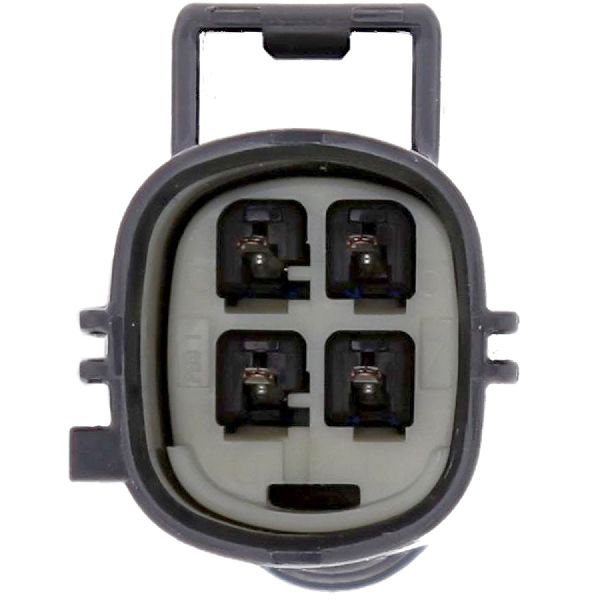
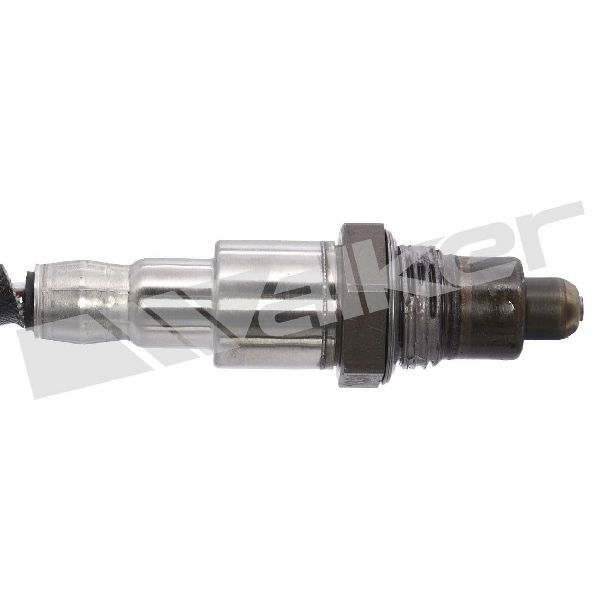
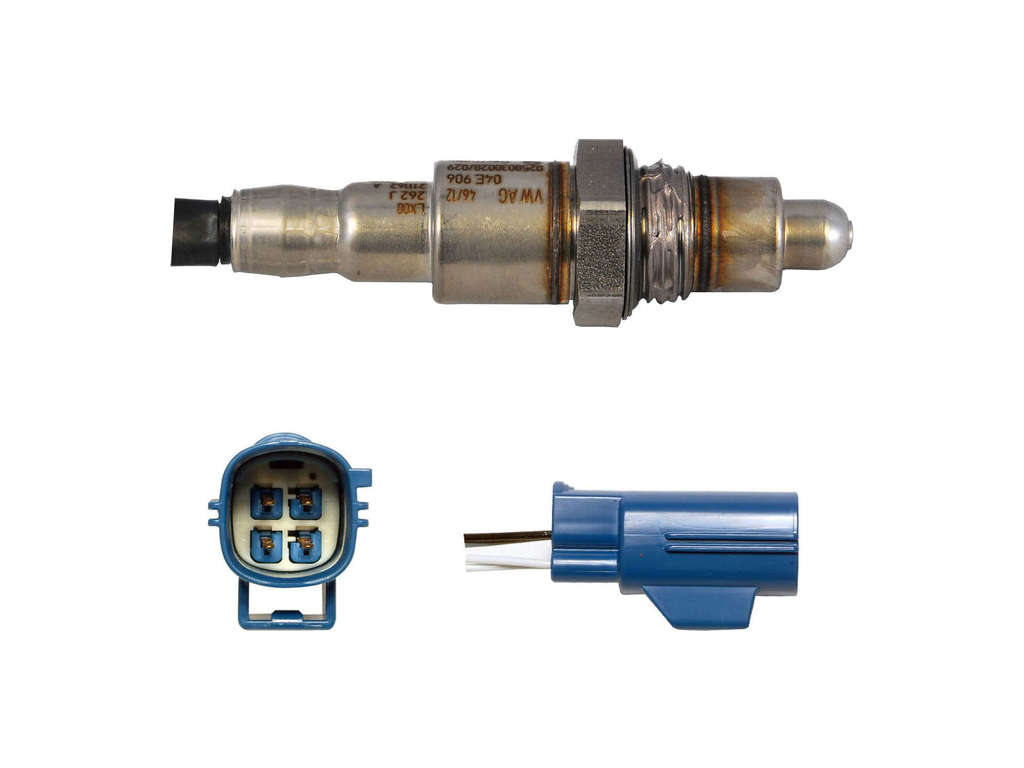
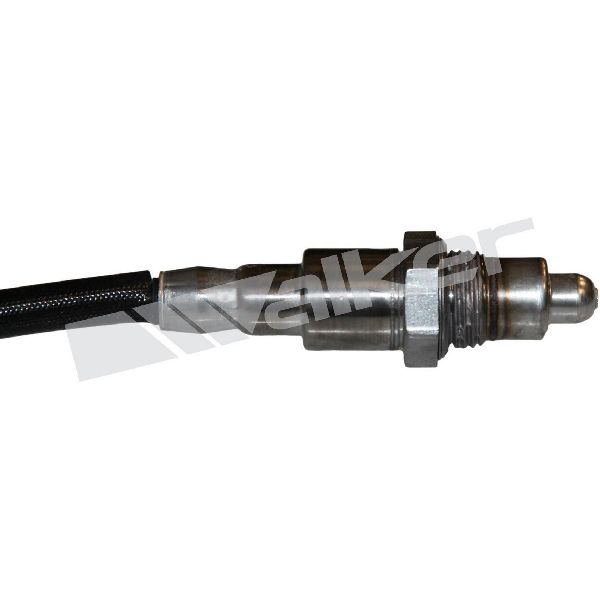
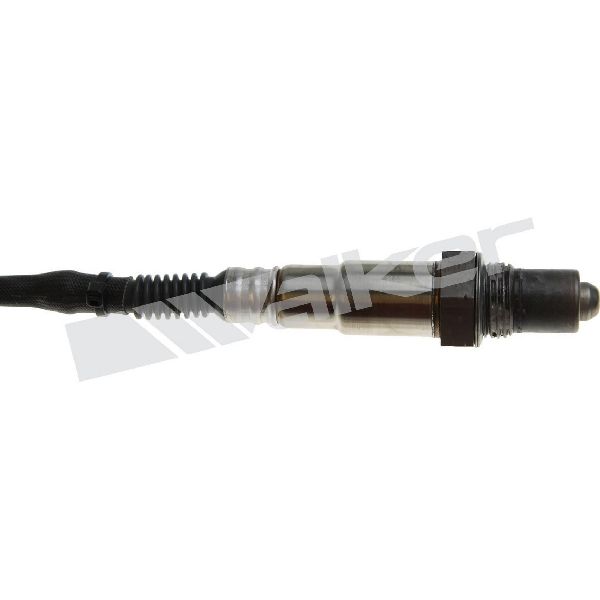
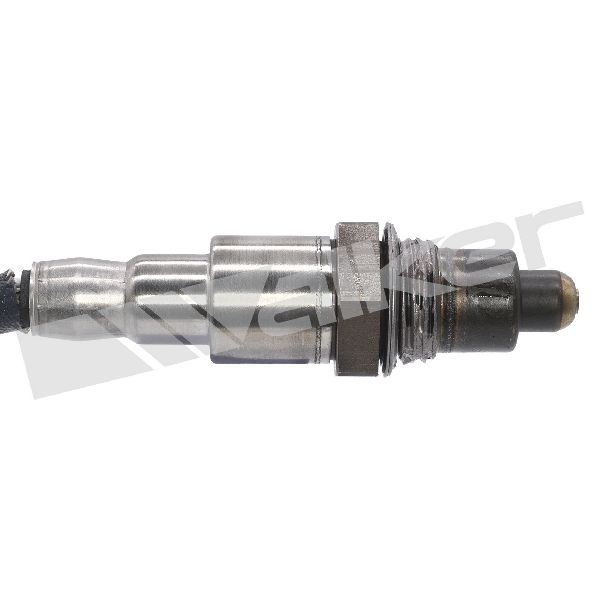
- Heated Oxygen Sensor (Bank 1, Sensor 3)
(OEM #C2D23701, T2H4721)— The internal heater element is the most common point of failure for this code, and TSBs also point to potential manufacturing defects in the sensors themselves.
Trusted brands: Bosch, Denso, NGK/NTK (e.g. NTK 25752)
OEM price range: $180-$300
Aftermarket price range: $80-$150
Related Codes That Often Appear With This One
- P0042 — This code indicates a 'Heater Control Circuit Low' condition for the same sensor (Bank 1 Sensor 3). Seeing both P0042 and P0044 can suggest an intermittent wiring short or a failing heater element that is fluctuating.
- P0043 — This code also indicates a 'Heater Control Circuit Low' condition for the same sensor circuit, and may appear alongside P0044 if the wiring issue is intermittent or the sensor is failing erratically.
- P0144 — This code indicates 'O2 Sensor Circuit High Voltage' for the same sensor (Bank 1 Sensor 3). While P0044 is specific to the heater circuit, P0144 relates to the sensor's signal circuit. They can appear together if there is a short to voltage affecting multiple wires in the harness.
Technical Service Bulletins (TSBs) & Recalls
- SSM72477: Lists P0044 in a group of faults related to pre, mid, or post-catalyst heated oxygen sensors and notes the root cause was under investigation, asking dealers to collect data from failed parts.
- JTB-00392-NAS-3: Lists P0044 with other DTCs and identifies the cause as a potential 'post-catalyst heated oxygen sensor (HO2S) software error', recommending a PCM software update as the fix.
- JTB00392NAS1: An earlier version of the above TSB, also listing P0044 with other DTCs for mid-catalyst and post-catalyst heated oxygen sensors.
Platform-Specific Known Issues
- Jaguar TSB JTB-00392-NAS-3: This is a critical document for this code. It suggests that P0044 and a host of other O2 sensor codes may be triggered by a PCM software error. The recommended action is to update the PCM software before replacing any hardware.
- Jaguar TSB SSM72477: This bulletin acknowledges a high number of O2 sensor faults on 2015-2016 F-TYPE, XF, and XJ models. At the time, the root cause was still under investigation, and dealers were asked to submit diagnostic data, indicating a known complex issue with the system.
- Electrical System Sensitivity: Owners on forums frequently report that a weak or dying battery can cause numerous, seemingly unrelated electronic error codes to appear. Before extensive diagnosis of P0044, ensuring the battery and charging system are in perfect health is a wise first step.
Mechanic-Grade Diagnostic Values
- HO2S Heater Circuit Resistance — expected: Between 2 and 30 Ohms. Some sources specify tighter ranges like 5-9 Ohms for upstream and 11-15 Ohms for downstream sensors on similar platforms.. Failure: A reading of infinite resistance (open circuit) or near-zero Ohms (short circuit) indicates a failed heater element.
- HO2S Heater Circuit Voltage (at connector) — expected: Approximately 12V (battery voltage) with ignition on, engine off.. Failure: Significantly less than 12V or 0V points to a wiring issue, blown fuse, or problem with the PCM driver circuit.
- Engine Ground Strap Voltage Drop (during crank) — expected: Well under 0.5V (500mV).. Failure: A reading higher than 0.5V indicates a poor ground connection, which can cause a variety of electrical issues, including erroneous sensor codes.
Scan Tool Commands That Help
- Jaguar SDD (Symptom Driven Diagnostics): Configure existing module - Powertrain control module — This function is used to apply a software update to the PCM, which is the specific fix recommended by TSB JTB-00392-NAS-3 for a P0044 code caused by a software error.
- Jaguar SDD (Symptom Driven Diagnostics): Data Logger / Live Data — To monitor live data from the oxygen sensors, including heater circuit status and voltage. This can help confirm if the PCM is commanding the heater on and if the sensor is responding as expected before and after a repair.
- Jaguar SDD (Symptom Driven Diagnostics): Read and clear Diagnostic Trouble Codes (DTC) — This is a standard function required after any repair, including a software update or sensor replacement, to clear the fault from the PCM's memory and turn off the Check Engine Light.
Wiring & Ground Locations
- Bank 1 Sensor 3 Connector — The sensor is located on the right (passenger side in North America) exhaust pipe, after the main catalytic converter. The wiring follows the exhaust and the connector is typically found on the side of the transmission.. This is the primary connector to inspect for corrosion, damage, or a poor connection. It's also where voltage and resistance tests for the sensor and circuit are performed.
- Main Engine Grounding Strap — Located on the right (passenger) side of the vehicle, connecting the engine/transmission assembly to the chassis/frame, often directly under the starter motor area.. A poor main ground can cause a host of unpredictable electrical issues and spurious fault codes. Verifying this connection is clean and tight is a crucial step in diagnosing any electrical fault on the engine, including sensor circuit problems.
Real Owner Repair Stories
- JaguarForums user (2015 F-Type R, 29,200 miles) — Recurring Check Engine Light for O2 sensor faults.
❌ Tried (didn't work) Replacing the O2 sensors four times., Replacing two wiring harnesses.
✅ What actually fixed it The suggested fix, which the owner was pursuing, was a PCM software update as per a Technical Service Bulletin (TSB) related to O2 sensor calibration for MY 2014-2015 vehicles. This highlights the importance of checking for software fixes before repeatedly replacing hardware.
OEM Part Supersession History
C2D23701→T2H4721— Part revision or supplier change. This is a common practice to improve reliability or address known issues.
Heads up: While the parts are generally interchangeable, it's critical to ensure the correct part is ordered for the specific bank and position, as connectors can differ between left and right sides.
Model Year Variations Within This Range
- 2016: For the 2016 model year, Jaguar introduced significant updates including optional All-Wheel Drive (AWD), a manual transmission option for V6 models, and a switch to Electric Power Assisted Steering (EPAS). The V8 R model became AWD-standard, adding 80kg of weight. While the core engines and emissions systems remained similar, the introduction of AWD could alter wiring harness routing and exposure underneath the vehicle.
Helpful Videos

We Have This Part in Stock

The information in this article is provided for general reference and educational purposes only. Vehicle specifications, procedures, and part compatibility can vary by production date, trim level, and region. Always consult your vehicle's factory service manual and verify part numbers before purchasing or performing repairs. Safety-critical components such as airbags, seat belts, and braking systems should be installed by a qualified professional.
- Jaguar F-TYPE:
- 🧭 Diagnostic Flowchart
- 🎬 Helpful Videos
- 🛍️ Shop This Part
- What's Unique About the 2014-2016 Jaguar F-TYPE
- Symptoms You May Notice
- Most Likely Causes
- Rare But Worth Checking
- Diagnosis Steps
- Parts You'll Likely Need
- Related Codes That Often Appear With This One
- Technical Service Bulletins (TSBs) & Recalls
- Platform-Specific Known Issues
- Mechanic-Grade Diagnostic Values
- Scan Tool Commands That Help
- Wiring & Ground Locations
- Real Owner Repair Stories
- OEM Part Supersession History
- Model Year Variations Within This Range
- 🎟️ Get 5% Off