

P0044 on 2014-2016 Land Rover LR4: HO2S Heater Circuit High Causes and Fixes
P0044 on a 2014-2016 Land Rover LR4 indicates a high voltage issue in the heater circuit for the Bank 1, Sensor 3 oxygen sensor. While this can be a failed sensor, Land Rover TSBs suggest the cause is often intermittent, related to wiring, or a software issue where no physical fault is found. A high percentage of warranty-claimed sensors are found to have no defect, making diagnosis critical before replacing parts.
- P0044 points to a high voltage fault in the heater circuit for the passenger-side, post-catalyst oxygen sensor.
- Before replacing the sensor, inspect the wiring for damage and check the relevant fuse, as Land Rover TSBs indicate that 'no fault found' is a common outcome, suggesting other causes like wiring or software glitches.
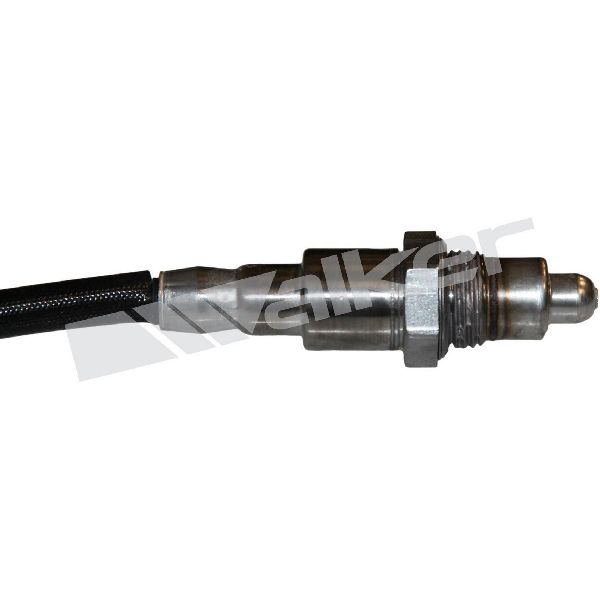
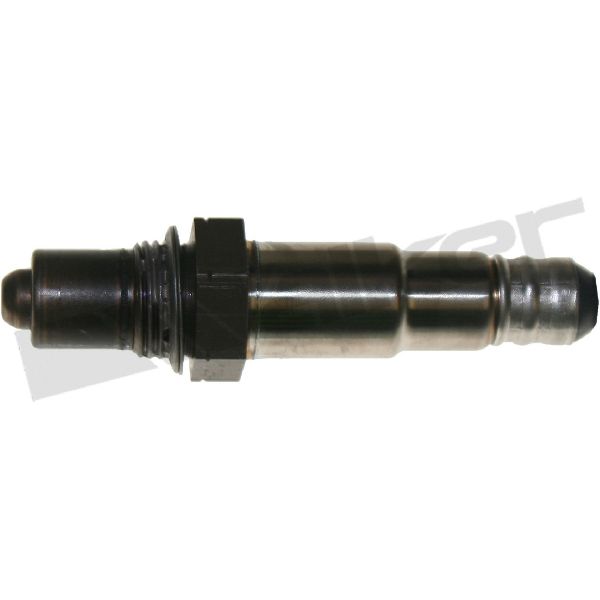
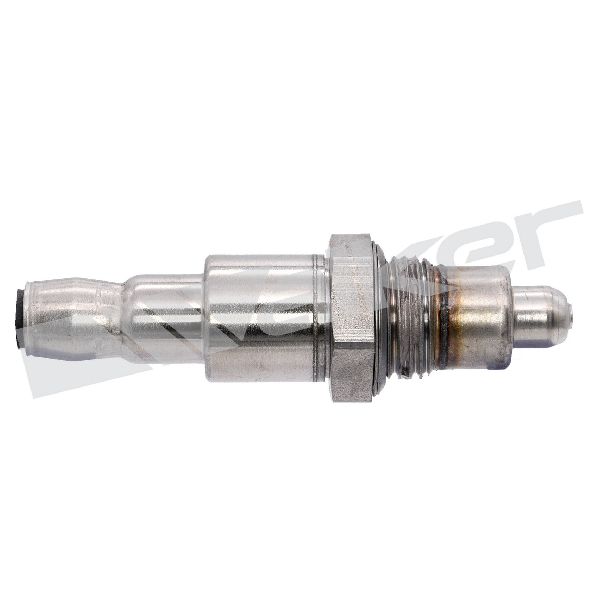
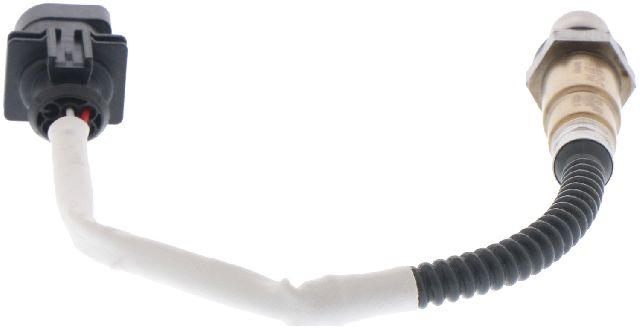
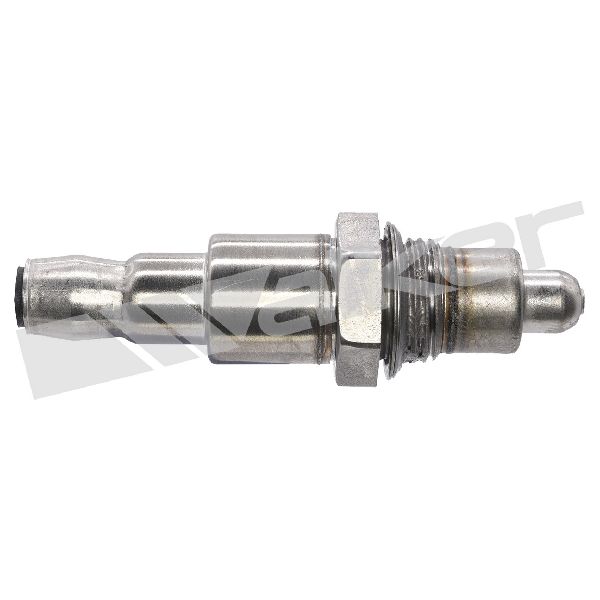
- The correct replacement part is OEM number LR140071 (often made by Bosch), which supersedes the older LR035750.
- This issue is also common on other JLR vehicles with the 3.0L Supercharged V6 engine, such as the Range Rover and various Jaguar models.
What's Unique About the 2014-2016 Land Rover LR4
For this generation of Land Rover with the AJ126 engine, P0044 and related oxygen sensor codes are subject to multiple Technical Service Bulletins (TSBs). Specifically, TSB SSM72448 notes that upon diagnosis for this code, it is common for technicians to find no actual fault with the components. This is corroborated by another bulletin, SSM72039, which stated that in an analysis of 101 warranty claims for heated oxygen sensors (HO2S), 23% were found to have no defects. This points towards potential intermittent wiring issues or software calibration sensitivities rather than a simple failed sensor, making a thorough diagnosis more critical than on other vehicles. TSB LTB00671NAS5 also notes that thermal shock from water contacting the hot sensor can cause failure, and an updated software calibration can prevent future issues.
Diagnostic Flowchart
Tap your situation to follow the diagnostic path that matches what you're seeing on this vehicle.
Symptoms You May Notice
- Check Engine Light (Malfunction Indicator Lamp) is on
- Failure to pass an emissions test
- Potentially a slight decrease in fuel economy
- Rough idling or hesitation in some cases
- Immediately replacing the oxygen sensor without first inspecting the wiring harness, connector, and checking for a blown fuse. Given the TSBs for this vehicle noting 'no fault found' and wiring issues, these items should be ruled out first to avoid unnecessary expense.
- Replacing the wrong sensor. P0044 refers specifically to Bank 1, Sensor 3, which is the passenger side, rearmost sensor after the final catalytic converter.
Most Likely Causes
- Faulty Heated Oxygen Sensor (Bank 1, Sensor 3) 🔴 High Probability → Shop Oxygen Sensor The heater element inside the sensor can fail or develop high resistance over time due to constant heat cycles. Some TSBs for related codes on this platform point to manufacturing defects in the sensors themselves, increasing the failure probability. One owner of a 2016 LR4 reported needing two rounds of oxygen sensor replacements at low mileage. TSB LTB00671NAS5 also identifies thermal shock from water contact as a primary cause for failure.
How to confirm: Using a multimeter, test the resistance of the two heater circuit wires on the sensor (often the two same-colored wires). If the reading is open-circuit (infinite resistance) or far outside the manufacturer's specification (typically 3-20 Ohms), the sensor has failed.
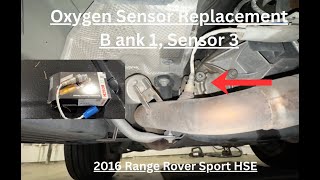
Typical fix: Replace the Bank 1, Sensor 3 oxygen sensor. 🎬 Watch this DIY walkthrough for replacing the sensor on your LR4. Bank 1 is the passenger side on US models.
Est. part cost: $120-$275 - Wiring or Connector Issue 🟡 Medium Probability As noted in TSB SSM72448, intermittent faults are common. The wiring harness is exposed to high heat from the exhaust and road debris, which can cause wires to chafe, melt, or break. A short to a power source in the harness will cause a 'Circuit High' code.
How to confirm: Visually inspect the wiring harness and connector leading to the sensor for any signs of damage. Check for battery voltage on the heater power supply wire and test for continuity on the ground and signal wires back to the PCM. With the ignition off, voltage should be zero; if voltage is present, a short is likely.
Typical fix: Repair the damaged section of the wiring harness or clean/replace the connector. A pre-terminated pigtail wiring kit (Part No. 418107) can be used for repairs. Wires must be crimped, not soldered, especially on the sensor side.
Est. part cost: $10-$50 - PCM Software or Hardware Fault ⚪ Low Probability TSB SSM72448 suggests that a 'no fault found' diagnosis is possible, which can sometimes be attributed to software calibration issues that misinterpret sensor data. On the similar Evoque platform, TSBs explicitly state that P0044 can be stored due to an 'On-Board Diagnostics (OBD) calibration error'. TSB LTB00671NAS5 recommends a software update as the primary fix to prevent recurrence after sensor replacement.
How to confirm: This is a last resort after confirming the sensor and wiring are good. A Land Rover dealer or specialist with access to SDD/Pathfinder software would need to check for available PCM updates against the vehicle's VIN.
Typical fix: Update the PCM software. In very rare cases, the PCM itself may need to be replaced.
Est. part cost: $150-$2000
Rare But Worth Checking
- Blown Fuse for O2 Sensor Heater Circuit: → Shop Oxygen Sensor
Diagnosis Steps
- Verify the code with an OBD-II scanner. Note any other codes present.
- Check the fuse for the O2 sensor heater circuit in the vehicle's fuse box(es). Fuse 2 in the engine compartment fuse box is a likely candidate. Replace if blown and re-test.
- Locate the Bank 1, Sensor 3 oxygen sensor. On the 3.0L V6, Bank 1 is the passenger side (right side) of the vehicle. Sensor 3 is the rearmost sensor in the exhaust system, after the catalytic converter, near the transfer case.
- Perform a thorough visual inspection of the sensor's wiring harness and connector. Look for any signs of melting, chafing, corrosion, or loose connections.
- Disconnect the sensor. Use a multimeter to test the resistance of the heater circuit on the sensor side. Compare the reading to the manufacturer's specification (typically between 3 and 20 ohms). An open circuit (OL) or zero resistance indicates a failed sensor.
- With the key on and engine off, test the vehicle-side connector. Check for battery voltage on the heater power supply wire and a good ground on the ground wire.
- If the sensor tests good and the power/ground at the connector are correct, the issue is likely in the signal wire to the PCM or the PCM itself. The heater control for the downstream RH (Bank 1) sensor is via pin 1 of ECM connector C0635.
- If no physical fault is found, consult a Land Rover dealer or specialist about potential software updates as suggested by TSBs SSM72448 and LTB00671NAS5.
Parts You'll Likely Need
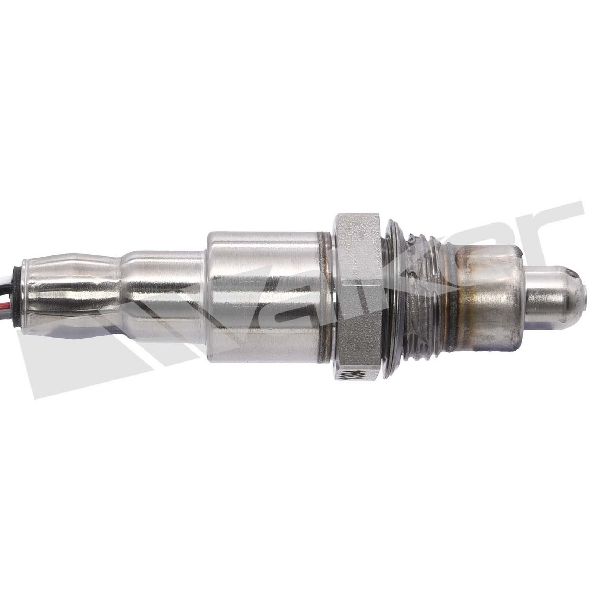
- Heated Oxygen Sensor (Bank 1, Sensor 3)
(OEM #LR140071 (current), supersedes LR035750)🎬 Watch a pro technician replace a downstream sensor on this platform. — This is the most common component to fail. The internal heater element burns out or shorts, causing the high circuit code. Part number LR035750 was the original fitment, which has been superseded by LR140071.
Trusted brands: Bosch (OEM supplier), Denso, NGK
OEM price range: $230-$410
Aftermarket price range: $120-$275 - Oxygen Sensor Connector Pigtail
(OEM #418107)— If the connector or wiring near the sensor is melted or corroded, replacing the pigtail is the standard repair instead of replacing the entire engine harness.
Trusted brands: Land Rover (Genuine), Aftermarket harness repair kits
OEM price range: $25-$50
Aftermarket price range: $10-$25
Related Codes That Often Appear With This One
- P0042 — This code relates to the same sensor circuit (HO2S Heater Control Circuit Low), and both can be triggered by intermittent wiring problems. It is also listed in TSB LTB00671NAS5.
- P0043 — This code relates to the same sensor circuit (HO2S Heater Control Circuit Low), and both can be triggered by intermittent wiring problems. It is also listed in TSB LTB00671NAS5.
- P0147 — This is another heater circuit malfunction code for a post-catalyst sensor. The TSB LTB00671NAS3 groups it with P0044, indicating a common cause or diagnostic procedure. It is also listed in TSB LTB00671NAS5.
- P0061 — This is the equivalent code for the opposite bank (Bank 2, Sensor 3). TSBs often group these codes as the sensors are susceptible to the same failure modes.
Technical Service Bulletins (TSBs) & Recalls
- SSM72448: Notes that for a list of O2 sensor codes including P0044, diagnosis may result in 'NO FAULT IS FOUND'.
- LTB00671NAS3: Identifies P0044 as a code relevant to post-catalyst heated oxygen sensors that can illuminate the check engine light.
- SSM72039: Highlights that a significant percentage (23%) of oxygen sensors replaced under warranty were found to have no fault, cautioning against replacing parts without thorough diagnosis.
- LTB00671NAS5: Cites thermal shock as a cause for a range of HO2S codes including P0044 and recommends a software update as part of the fix.
Platform-Specific Known Issues
- Technical Service Bulletin #SSM72448 notes that for code P0044 (and many other O2 sensor codes), a 'NO FAULT IS FOUND' result is possible upon diagnosis, pointing to intermittent issues.
- Technical Service Bulletin #LTB00671NAS3 confirms that P0044 is relevant to the post-catalyst heated oxygen sensors and can cause the Malfunction Indicator Lamp (MIL) to illuminate.
- Technical Service Bulletin #SSM72039 indicates that a JLR internal investigation of 101 warranty-returned oxygen sensors found 23% had no defects, suggesting misdiagnosis is common.
- Technical Service Bulletin #LTB00671NAS5 suggests the cause may be thermal shock from water contacting the sensor and recommends a software update to prevent recurrence.
Mechanic-Grade Diagnostic Values
- O2 Sensor Heater Element Resistance — expected: 3-20 Ohms at ambient temperature.. Failure: An open circuit (infinite resistance/OL) or a direct short (near 0 Ohms) indicates a failed sensor.
- Heater Circuit Power Supply Voltage — expected: 11-14 Volts (Battery Voltage) at the power supply wire of the sensor connector with Key On, Engine Off.. Failure: 0 Volts indicates a blown fuse or an open in the power supply wire.
- Heater Circuit Control Wire (PCM Side) — expected: The PCM supplies a pulse-width modulated ground to control the heater. With a scope, you should see a square wave when the heater is active.. Failure: No activity or a constant ground/open could indicate a PCM driver fault or a wiring issue.
Scan Tool Commands That Help
- Land Rover SDD/Pathfinder or advanced generic scanner: O2 Heater Test / Actuator Test — After verifying power and ground at the connector, this command can be used to manually activate the heater circuit. Monitoring the voltage or current on the control wire with a multimeter or scope while activating the heater can confirm if the PCM driver is functioning correctly.
Wiring & Ground Locations
- ECM Connector C0635, Pin 1 — This is one of the main connectors on the Engine Control Module (ECM).. This specific pin provides the switched ground path for the heater circuit of the downstream RH (Bank 1, Sensor 3) oxygen sensor. Testing for continuity from this pin to the sensor connector can diagnose a break in the control wire.
- Engine Bay Ground Studs — There are several main ground studs located on the inner fender, to the right of the battery compartment.. Poor engine or chassis grounds can cause a variety of unpredictable electrical faults, including incorrect voltage readings on sensor circuits. Ensuring these main grounds are clean and tight is a crucial preliminary step in diagnosing any electrical code.
- Fuse 2 (Engine Compartment Fuse Box) — Located in the fuse box in the engine bay.. This fuse provides the direct battery supply to the heaters for all four (or six) oxygen sensors. A failure here would likely cause heater codes for multiple sensors, not just P0044.
Real Owner Repair Stories
- LandyZone forum user 'russ22' (2014 Range Rover 5.0 Supercharged (same engine family and sensor setup)) — High voltage fault codes for both Bank 1 Sensor 3 and Bank 2 Sensor 3.
❌ Tried (didn't work) Confirmed heater circuits were good using a bulb test. Checked wires to the ECU and found no breaks. Manually applying a ground to the signal ground wire did not change the high voltage reading.
✅ What actually fixed it The user discovered that the signal ground wire for Sensor 2 (mid-catalyst) was intact, but the signal ground wires for both Sensor 3s were missing their ground connection. The final fix was to repair the missing ground path for the sensor signal circuit, which resolved the high voltage reading. This implies a wiring fault, not a sensor failure.
OEM Part Supersession History
LR035750→LR140071— Part revisions are common to improve reliability or address manufacturing defects. TSB LTB00671NAS5, which addresses thermal shock failures, lists LR035750 as a part number to be replaced, suggesting the newer part may be more robust.
Helpful Videos
We Have This Part in Stock

The information in this article is provided for general reference and educational purposes only. Vehicle specifications, procedures, and part compatibility can vary by production date, trim level, and region. Always consult your vehicle's factory service manual and verify part numbers before purchasing or performing repairs. Safety-critical components such as airbags, seat belts, and braking systems should be installed by a qualified professional.
- Land Rover LR4:
- 🧭 Diagnostic Flowchart
- 🎬 Helpful Videos
- 🛍️ Shop This Part
- What's Unique About the 2014-2016 Land Rover LR4
- Symptoms You May Notice
- Most Likely Causes
- Rare But Worth Checking
- Diagnosis Steps
- Parts You'll Likely Need
- Related Codes That Often Appear With This One
- Technical Service Bulletins (TSBs) & Recalls
- Platform-Specific Known Issues
- Mechanic-Grade Diagnostic Values
- Scan Tool Commands That Help
- Wiring & Ground Locations
- Real Owner Repair Stories
- OEM Part Supersession History
- 🎟️ Get 5% Off