

P0044 on 2013-2016 Land Rover Range Rover: Heater Circuit Fault or Software Glitch?
On a 2013-2016 Range Rover, code P0044 often points to a software error in the Engine Control Module (ECM), not a failed part. Before replacing the oxygen sensor, check with a dealer for required software updates as specified in Technical Service Bulletins like LTB00671NAS3. This is a well-documented issue that can cause the code to appear without any actual hardware fault.
- Always check for available software updates with a Land Rover dealer before replacing any parts for code P0044.
- This code rarely indicates a serious problem and the vehicle is safe to drive, but it will cause an emissions test failure.
- If a hardware repair is needed after a software update, the most likely culprit is the Bank 1, Sensor 3 oxygen sensor itself.
- Bank 1 is the passenger side of the engine, and Sensor 3 is the rearmost sensor in the exhaust.
What's Unique About the 2013-2016 Land Rover RANGE ROVER
For this generation of Land Rover Range Rover (L405), the P0044 code is frequently a 'ghost code' triggered by a software calibration error, not a hardware failure. Land Rover has issued multiple Technical Service Bulletins (TSBs), including LTB00671NAS3 and SSM72448, acknowledging that this code can be stored without any actual fault in the sensor or its wiring. In many cases, the official and only fix is to have a dealer update the Engine Control Module (ECM) software. This is a critical distinction from many other vehicles where P0044 almost always points to a bad oxygen sensor. Another TSB also notes that on some models, thermal shock from water contacting the hot sensor could trigger faults, which was also addressed with software updates.
Diagnostic Flowchart
Tap your situation to follow the diagnostic path that matches what you're seeing on this vehicle.
Generation note: The 2013-2016 model years all fall within the L405 generation of the Range Rover. The software-related issues cited in service bulletins apply to vehicles within this range, particularly those with the 3.0L V6 and 5.0L V8 supercharged petrol engines. The same engines were used in platform mates like the Range Rover Sport (L494) and Land Rover LR4, which are also noted in the relevant TSBs.
Symptoms You May Notice
- Check Engine Light (Malfunction Indicator Lamp, MIL) is illuminated.
- No noticeable drivability problems in most cases.
- Vehicle will fail an emissions inspection.
- Slight decrease in fuel economy may be possible but is not always noticed by the driver.
- In rare cases, a rough idle or hesitation may occur during warm-up, but this is not typical for the software-related fault.
- Replacing the oxygen sensor before checking for software updates. Given the numerous TSBs, a software check should always be the first step for this specific code on this vehicle.
- Assuming the fault is with the sensor when it is an intermittent wiring short that only occurs when the vehicle is hot.
Most Likely Causes
- Outdated Engine Control Module (ECM) Software 🔴 High Probability → Shop Engine Control Module (ECM) Land Rover has officially documented this as a software calibration error in TSBs LTB00671NAS3 and SSM72448. The ECM's sensitivity for monitoring the sensor heater circuit is too high, causing it to set a fault code when no real issue exists. 🎬 Watch: A detailed breakdown of the P0044 code and diagnosis. Service Action N020 also called for a preventative software update on a wide range of 2013-2016 vehicles to improve O2 sensor operation.
How to confirm: Contact a Land Rover dealership or a qualified independent shop with your Vehicle Identification Number (VIN). They can check if your vehicle's software is up-to-date and if TSBs like LTB00671NAS3 or Service Action N020/Q514 apply.
Typical fix: Update the ECM software using the official Land Rover diagnostic tool (SDD/Pathfinder). This is a dealer or specialist-level repair. Out of warranty, this may cost between $200-$500.
Est. part cost: $0 - Failed Heated Oxygen Sensor (Bank 1, Sensor 3) 🟡 Medium Probability → Shop Oxygen Sensor While software is the most common cause, the sensor's internal heater element can still fail or short out due to extreme heat cycles. Another TSB (SSM63157) noted a manufacturing fault in some sensors (including part number LR035748) that could lead to premature failure.
How to confirm: After confirming the ECM software is up-to-date, disconnect the sensor and measure the resistance across the two heater circuit pins (usually same-colored wires) with a multimeter. A healthy sensor should read between 4 and 15 Ohms when cold. An open circuit (infinite resistance) or a reading near zero indicates a failed heater.
Typical fix: Replace the Bank 1, Sensor 3 heated oxygen sensor.
Est. part cost: $80-$250 - Wiring or Connector Issue ⚪ Low Probability The wiring harness runs under the vehicle close to the hot exhaust system and can become brittle, melt, or corrode over time, leading to a short circuit to a power source. Check the harness routing near the transfer case, as this is a potential area for chafing.
How to confirm: Visually inspect the wiring harness and connector for the Bank 1, Sensor 3 O2 sensor. Look for any signs of melting, chafing, or corrosion. Use a multimeter to check for battery voltage on the heater control wire at the connector with the key on, which would confirm a short to power.
Typical fix: Repair the damaged section of the wiring harness or replace the corroded connector pigtail.
Est. part cost: $20-$100
Rare But Worth Checking
- Faulty Engine Control Module (ECM): → Shop Engine Control Module (ECM) This is very rare. Before condemning the ECM, all other possibilities, especially software updates, sensor failure, and wiring issues, must be exhaustively ruled out. An internal driver failure in the ECM is a last resort diagnosis. If required, a remanufactured 'Plug n' Drive' ECM is an option that avoids dealer programming.
Diagnosis Steps
- CRITICAL FIRST STEP: Contact a Land Rover dealer or a specialist with your VIN to check for open recalls or applicable Technical Service Bulletins (TSBs) like LTB00671NAS3 or Service Action N020 (sometimes referred to as Q514). Inquire if an ECM software update is available for this code.
- If no software update is needed or the update doesn't fix the issue, proceed with physical diagnosis.
- Connect an OBD-II scanner to confirm P0044 is the active code and note any other codes present.
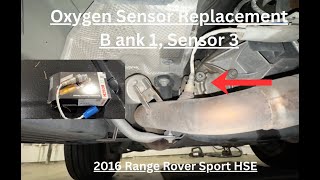
- Locate the Bank 1, Sensor 3 oxygen sensor. Bank 1 is on the right (passenger) side of the engine for V-engines. Sensor 3 is the rearmost sensor in the exhaust system, after the final catalytic converter, often near the transfer case area. 🎬 See this complete guide to locating and replacing all sensors.
- Visually inspect the sensor's wiring harness and connector for any obvious damage, such as melting, chafing, or corrosion. Trace the wiring as far back as possible.
- Disconnect the sensor. Check the resistance of the heater element using a multimeter on the sensor's pins (typically the two same-colored wires). Compare the reading to the specification of 4-15 Ohms. An open circuit (OL) or very low resistance indicates a faulty sensor.
- With the key on and engine off, test the vehicle-side connector. Check for battery voltage (approx. 12V) on the heater power supply wire and for a good ground on the ground wire.
- If the sensor tests good and power/ground at the connector are present, the issue may be an intermittent short in the signal wire to the ECM. This requires more advanced testing, like checking for voltage on the control wire with the connector plugged in.
Parts You'll Likely Need
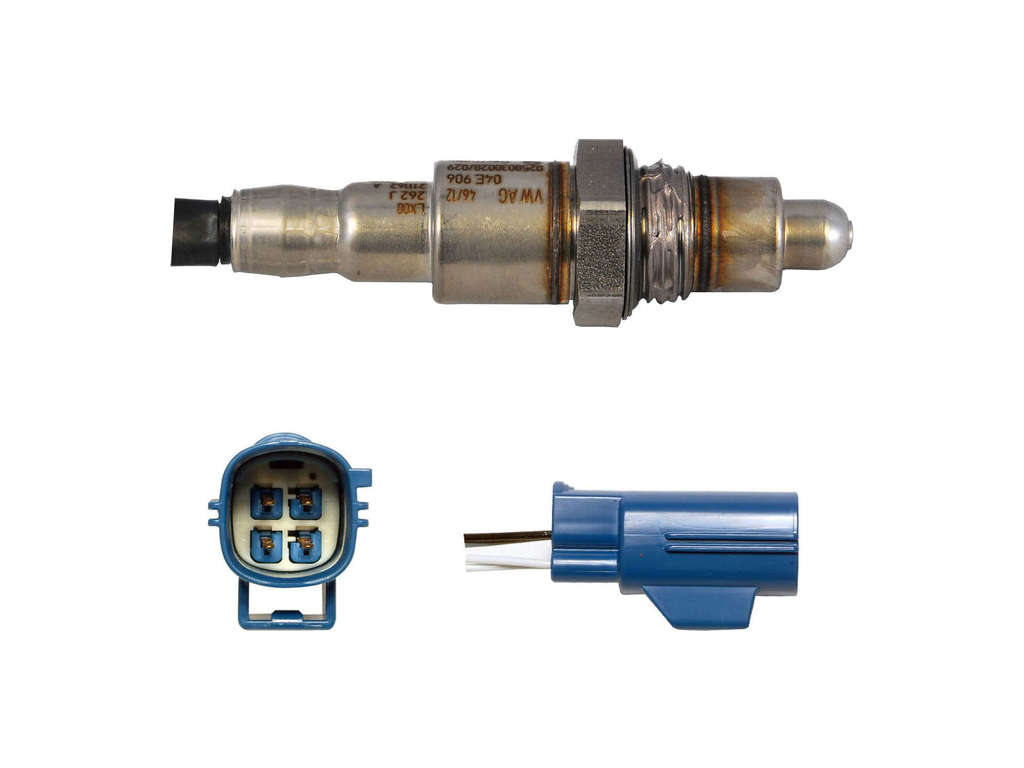
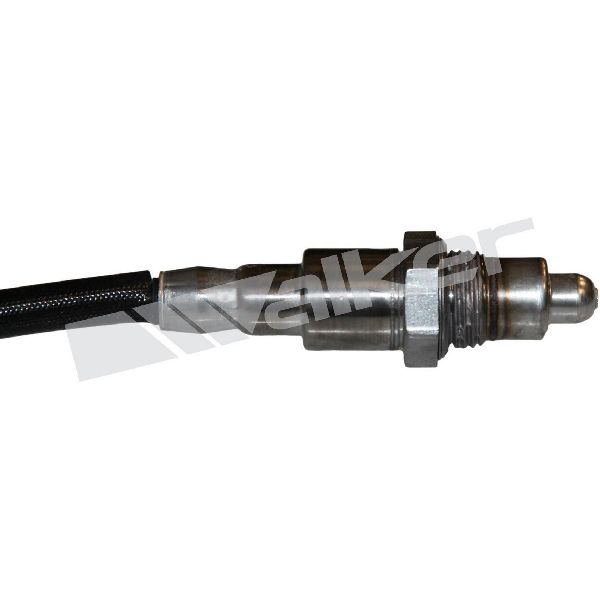
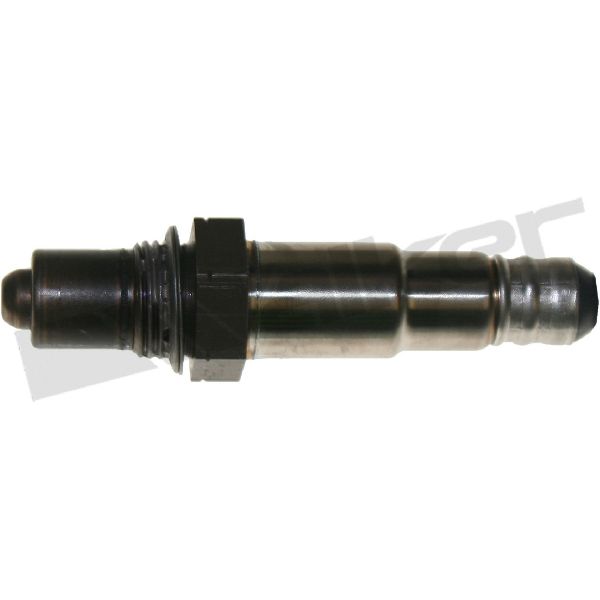
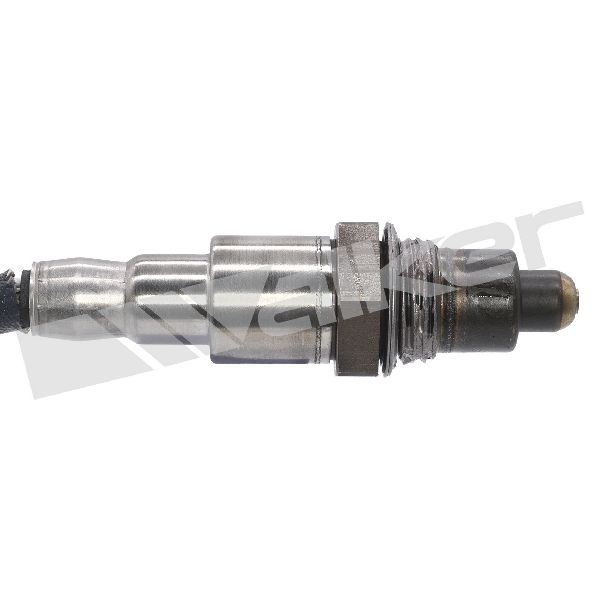
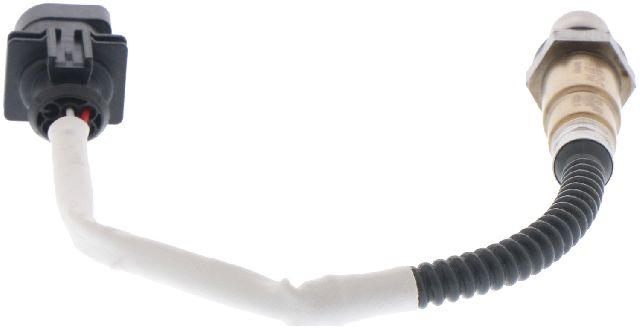
- Heated Oxygen Sensor (Post-Catalyst)
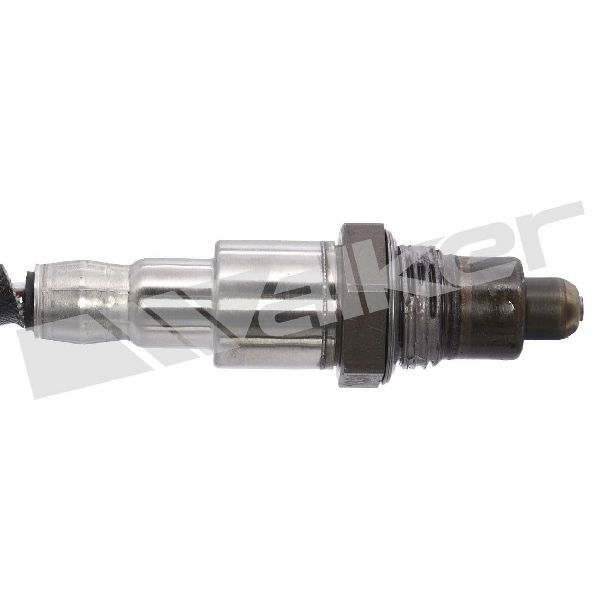
(OEM #LR035748)— If a software update does not resolve the code, the sensor's internal heater has likely failed. This is the most common hardware component to be replaced 🎬 Watch: Step-by-step downstream oxygen sensor replacement walkthrough. for this issue. TSBs have also noted manufacturing defects with this part.
Trusted brands: Bosch (e.g., 0 258 030 023), Denso, Walker Products, VEMO
OEM price range: $180-$250
Aftermarket price range: $80-$150
Related Codes That Often Appear With This One
- P0042 — This code for 'HO2S Heater Control Circuit Low' is listed in the exact same TSB (LTB00671NAS3) and can be triggered by the same software sensitivity issue.
- P0043 — Also related to the same heater circuit ('Low' input), it is part of the group of codes addressed by the Land Rover software update TSB.
- P0147 — This is a generic fault for the same heater circuit (Bank 1, Sensor 3). It is often listed in the same TSBs as P0044, pointing to the same software error cause.
- P0062 — This is the equivalent code for the other bank (Bank 2, Sensor 3). It is also listed in TSB LTB00671NAS3, indicating the software issue can affect either or both downstream sensors.
Technical Service Bulletins (TSBs) & Recalls
- LTB00671NAS3: States that P0044 (and other related codes) may be caused by a post-catalyst HEGO sensor software calibration concern.
- SSM72448: Notes that upon diagnosis for P0044 and a list of other O2 sensor codes, no fault may be found, pointing towards a non-hardware root cause.
Platform-Specific Known Issues
- A significant number of 2013-2016 Range Rovers with petrol engines can trigger P0044 due to a software calibration error, as documented in TSB LTB00671NAS3.
- Customer Satisfaction Program Q514 / Service Action N020 was issued for some 2013-2016 models, offering a free software update to correct this specific issue, which often presented with no drivability concerns.
- TSB SSM72448 notes that P0044 is one of many O2 sensor codes where diagnosis may find no actual fault, further supporting the software-glitch theory.
- TSB LTB00671NAS2 mentions that in some cases, the fix involves replacing the affected sensor *and then* performing the software update to prevent future issues.
Mechanic-Grade Diagnostic Values
- Post-Catalyst O2 Sensor Heater Resistance — expected: 11.7-14.5 Ohms when cold. Other sources cite a broader range of 4-15 Ohms.. Failure: An open circuit (infinite resistance/OL) or a short circuit (near 0 Ohms) indicates a failed heater element.
- Heater Circuit Power Supply Voltage — expected: 11-14 Volts (battery voltage) with Key On, Engine Off.. Failure: 0V indicates a likely blown fuse, bad relay, or an open in the power supply wire.
- Heater Control Wire Voltage (ECM side) — expected: This is a Pulse-Width Modulated (PWM) ground controlled by the ECM. With a multimeter, it may show a fluctuating voltage or an average when active. With the sensor unplugged and key on, it may show a bias voltage from the ECM.. Failure: A constant 0V may indicate a short to ground in the harness; constant battery voltage would indicate a short to power.
Hidden / Shadow Codes Worth Checking
- Mode $06, TID $85: This is the standard OBD-II monitor for O2 Sensor Heater diagnosis. It tracks the performance of the heater circuit self-test. While not a 'hidden' code, viewing this data with an advanced scan tool can show if the heater test is failing or borderline before a full DTC is set. (see via An OBD-II scan tool that supports Mode $06 data display.)
Scan Tool Commands That Help
- Advanced OBD-II Scanner (e.g., Thinktool, Autel, etc.): Heater Circuit Active Test / Bidirectional Control — This function allows the technician to manually command the O2 sensor heater circuit ON and OFF. It is used to verify the integrity of the wiring and the ECM's ability to control the circuit. When commanding the heater ON, you should see voltage on the control wire change and current flow (if using an amp clamp).
Wiring & Ground Locations
- Bank 1, Sensor 3 Connector (C1E807) — On the passenger side (Bank 1) of the vehicle, connecting to the rearmost (Sensor 3) oxygen sensor in the exhaust, near the transfer case.. This is the primary connection point for all testing. A pinout for a similar model is: Pin 1 = 12V Power, Pin 2 = Heater Control (Ground from ECM), Pin 3 = Sensor Signal (-), Pin 4 = Sensor Signal (+). The heater circuit uses Pin 1 and Pin 2.
- ECM Connector (e.g., C0635) — The Engine Control Module is typically located in the engine bay. The heater control wire (Pin 2 from the sensor) traces back to a specific pin on one of the main ECM connectors.. If wiring from the sensor to the ECM is suspected to be faulty, checking for continuity between the sensor connector pin and the corresponding ECM pin is the definitive test. For Bank 2, the ground is provided by Pin 7 on connector C0635; the pin for Bank 1 will be on a similar connector.
- Main Body/Engine Ground Straps — Multiple key ground points exist, including one on the inner fender behind the battery and another from the chassis to the transmission/engine block.. On the L405 platform, corroded or loose main ground straps are a known cause of numerous, seemingly unrelated electronic faults. A poor ground can affect the ECM's reference voltage, potentially causing it to misinterpret sensor readings and set false codes like P0044.
Real Owner Repair Stories
- YouTube channel 'LR-Tech' (2013-2021 Range Rover L405 / Sport L494 with V6/V8 Gasoline Engine) — Check engine light with a code for Bank 1, Sensor 3.
❌ Tried (didn't work) The video proceeds directly to the fix, implying diagnosis confirmed the sensor was the fault after ruling out software.
✅ What actually fixed it The mechanic replaced the Bank 1, Sensor 3 oxygen sensor. The video confirms the location on the passenger side, rear of the catalytic converter, and shows the connector is accessible near the transmission crossmember after removing a small heat shield. A 22mm wrench or O2 sensor socket is required.
OEM Part Supersession History
LR035748→LR098290, LR136928— Part improvement to address premature failures and manufacturing faults noted in service bulletins like SSM63157.
Helpful Videos

We Have This Part in Stock

The information in this article is provided for general reference and educational purposes only. Vehicle specifications, procedures, and part compatibility can vary by production date, trim level, and region. Always consult your vehicle's factory service manual and verify part numbers before purchasing or performing repairs. Safety-critical components such as airbags, seat belts, and braking systems should be installed by a qualified professional.
- Land Rover RANGE ROVER:
- 🧭 Diagnostic Flowchart
- 🎬 Helpful Videos
- 🛍️ Shop This Part
- What's Unique About the 2013-2016 Land Rover RANGE ROVER
- Symptoms You May Notice
- Most Likely Causes
- Rare But Worth Checking
- Diagnosis Steps
- Parts You'll Likely Need
- Related Codes That Often Appear With This One
- Technical Service Bulletins (TSBs) & Recalls
- Platform-Specific Known Issues
- Mechanic-Grade Diagnostic Values
- Hidden / Shadow Codes Worth Checking
- Scan Tool Commands That Help
- Wiring & Ground Locations
- Real Owner Repair Stories
- OEM Part Supersession History
- 🎟️ Get 5% Off