

P0044 on 2014-2016 Land Rover Range Rover Evoque: Heater Circuit Fault or Software Glitch?
On a 2014-2016 Evoque, P0044 is frequently caused by a software glitch requiring a dealer update, not a bad oxygen sensor. Check for Technical Service Bulletins (TSBs) before replacing any parts, as this is a widely documented issue.
- Before buying any parts for a P0044 code on a 2014-2016 Evoque, check with a dealer for applicable software updates.
- This code is often a 'ghost code' caused by a software glitch, not a failed part.
- If a part replacement is needed after a software update, the issue is likely the rearmost oxygen sensor (Bank 1, Sensor 3).
- The vehicle is safe to drive with this code, but it will not pass an emissions inspection and may have slightly reduced fuel economy.
What's Unique About the 2014-2016 Land Rover RANGE ROVER EVOQUE
For the 2014-2016 Range Rover Evoque with the 2.0L GTDi engine, this code is very often not a hardware problem. Multiple Land Rover Technical Service Bulletins (TSBs), including LTB00799NAS2, explicitly state that P0044 can be stored due to an "On-Board Diagnostics (OBD) calibration error" within the engine's software. Technicians are advised that diagnosis may reveal no actual fault with the sensor or wiring, and the official fix is a software update for the Powertrain Control Module (PCM). This is a critical distinction from other vehicles where P0044 almost always points to a failed oxygen sensor or its wiring.
Diagnostic Flowchart
Tap your situation to follow the diagnostic path that matches what you're seeing on this vehicle.
Symptoms You May Notice
- Check Engine Light (Malfunction Indicator Lamp, MIL) is illuminated.
- No noticeable drivability issues in most cases.
- Possible slight increase in fuel consumption.
- Failure to pass an emissions test due to the active fault code.
- Replacing the oxygen sensor without first checking for required software updates. Given the number of TSBs pointing to software as the root cause, this is a very common mistake that leads to unnecessary expense and the code returning.
Most Likely Causes
- Outdated Powertrain Control Module (PCM) Software 🔴 High Probability → Shop Engine Control Module (ECM) Multiple TSBs (LTB00799NAS2, Q409NAS1, LTB00688NAS1) specifically identify an "On-Board Diagnostics (OBD) calibration issue" as the cause, requiring a software update. This is the most common and well-documented reason for this code on this specific vehicle.
How to confirm: A Land Rover dealer or a qualified independent shop with access to the Symptom Driven Diagnostics (SDD) or Pathfinder system can check the vehicle's software version against the latest available calibrations mentioned in the TSBs. The TSBs require specific versions of the diagnostic software (e.g., DVD142.03 v.212 or later for SDD) to perform the update.
Typical fix: Update the PCM software using the Land Rover SDD/Pathfinder tool. This is a dealer or specialist-level repair. The TSBs confirm this action resolves the false code. If the vehicle is under warranty, this should be a no-cost repair. Out of warranty, owners can expect to pay a dealer diagnostic fee or a one-hour labor charge for the reflash.
Est. part cost: $0 - Failed Heated Oxygen Sensor (Bank 1, Sensor 3) 🟡 Medium Probability → Shop Oxygen Sensor While software is the primary suspect, the internal heater element of the oxygen sensor can still fail or short out from age and heat cycles. This should only be considered after verifying the PCM software is up to date.
How to confirm: After confirming the PCM software is current, a technician can test the sensor. Unplug the sensor and use a multimeter to measure the resistance across the two heater circuit pins. An open circuit (infinite resistance) or a value far outside the manufacturer's specification (typically between 2 and 30 ohms for a good heater) indicates a failed heater. 🎬 Watch: How to test an O2 sensor with a multimeter
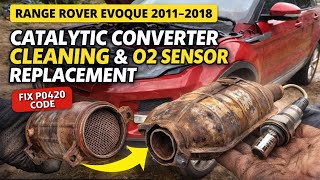
Typical fix: Replace the Bank 1, Sensor 3 oxygen sensor. This sensor is located downstream, after the final catalytic converter. An O2 sensor socket is recommended for removal. 🎬 Watch: How to replace the O2 sensors on an Evoque
Est. part cost: $60-$220 - Wiring or Connector Issue ⚪ Low Probability The wiring harness for the downstream oxygen sensor runs under the vehicle and is exposed to heat from the exhaust and road debris. This can cause wires to melt, chafe, or break, and connectors can become corroded.
How to confirm: Visually inspect the wiring harness and connector leading to the Bank 1, Sensor 3 O2 sensor for any signs of melting, corrosion, or physical damage. Check for a short to power by testing for voltage on the control wire at the connector with the key on. A 'high' circuit code suggests a wire may have shorted to a power source.
Typical fix: Repair the damaged section of the wiring harness or clean/replace the corroded connector. In some cases, a new connector pigtail may need to be spliced in.
Est. part cost: $10-$60
Rare But Worth Checking
- Faulty Powertrain Control Module (PCM): → Shop Engine Control Module (ECM) This is extremely rare. If the software is updated, and both the sensor and wiring have been tested and confirmed to be good, the driver circuit within the PCM itself could be at fault. This should be the absolute last consideration after all other possibilities have been exhausted.
Diagnosis Steps
- Connect an OBD-II scanner to confirm P0044 is present and check for any other codes, especially P2188, P0196, or P0420.
- CRITICAL FIRST STEP: Contact a Land Rover dealer or specialist with your VIN. Inquire specifically about TSBs LTB00799NAS2, Q409NAS1, and LTB00688NAS1. A PCM software update is the most likely and manufacturer-recommended first step.
- If software is confirmed to be up-to-date or the update does not resolve the code, proceed with physical diagnosis.
- Locate the Bank 1, Sensor 3 oxygen sensor. On the 2.0L I4 engine, Bank 1 is the only bank. Sensor 3 is the rearmost (post-catalyst) sensor in the exhaust system, often located near the transfer case or in the mid-pipe section.
- Visually inspect the sensor's wiring harness and connector for any signs of melting, chafing, corrosion, or loose connections. Trace the harness as far back as possible.
- Disconnect the sensor. Use a multimeter set to Ohms (Ω) to measure the resistance of the heater circuit on the sensor side (usually the two wires of the same color). 🎬 See this guide on testing oxygen sensor heater circuits Compare the reading to the manufacturer's specification (typically 2-30 Ω). An infinite reading (OL) or zero reading indicates a bad sensor.
- With the sensor disconnected and the ignition on (engine off), check the harness-side connector for battery voltage on the heater power supply wire and check for a good ground on the ground wire.
- If wiring and the sensor test good, but the code persists after a software update, the fault may be an intermittent wiring issue or a very rare PCM failure.
Parts You'll Likely Need
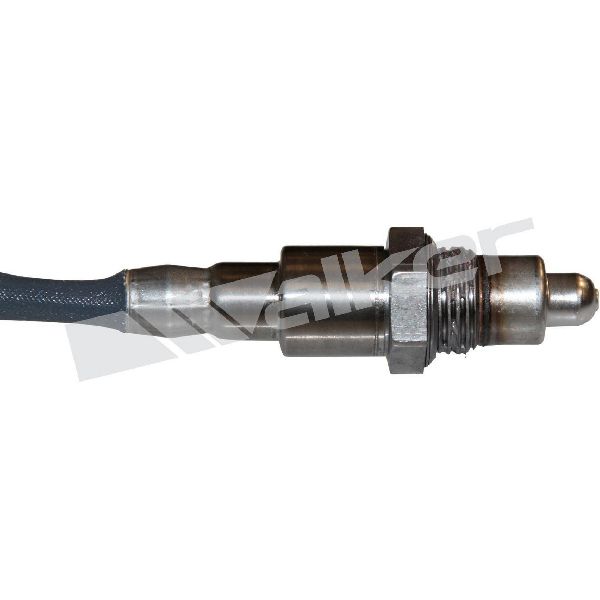
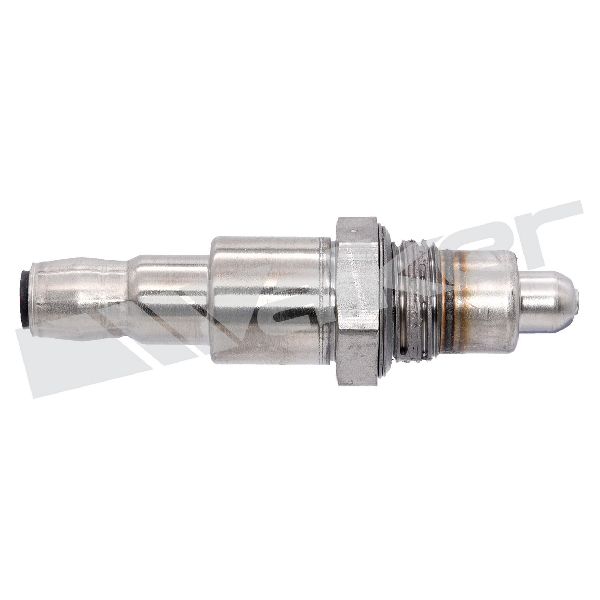
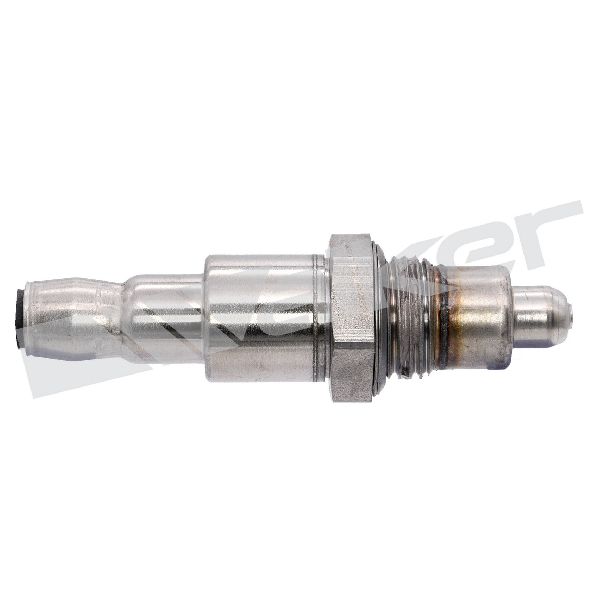
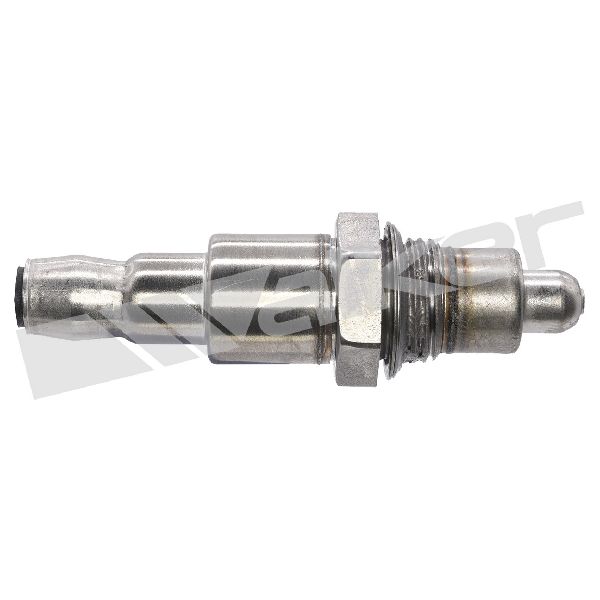
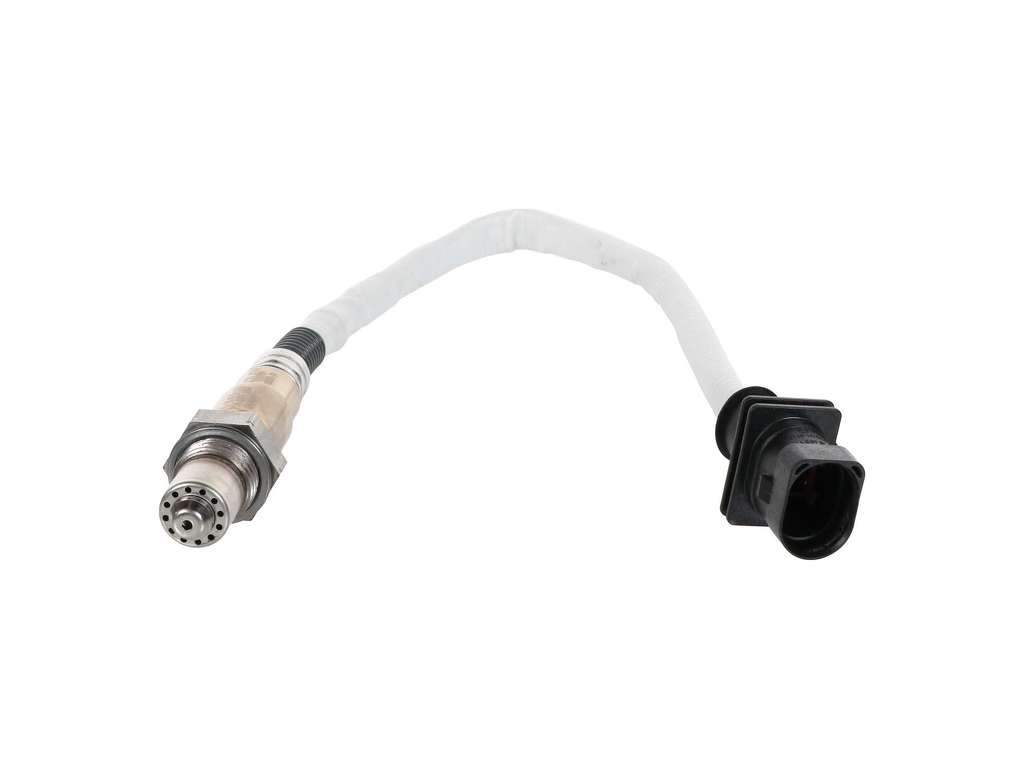
- Heated Oxygen Sensor (Bank 1, Sensor 3)
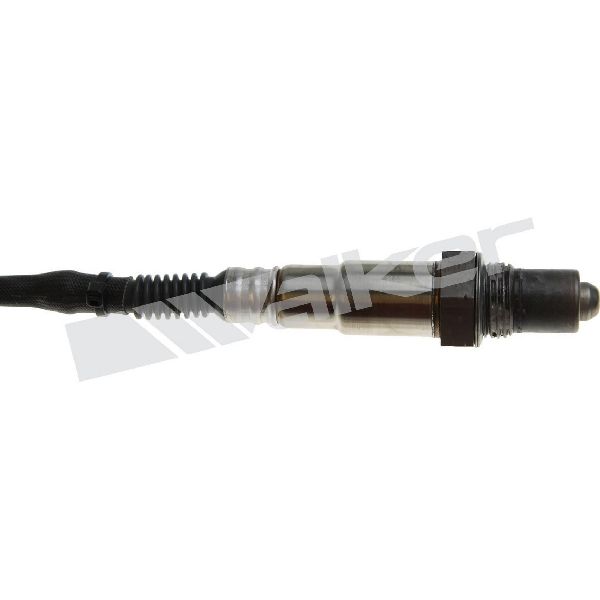
(OEM #LR028931)— If a software update does not resolve the issue, the most common hardware failure is the internal heater element of the oxygen sensor itself. This part is also referred to as the 'Rear' or 'Downstream' oxygen sensor.
Trusted brands: Bosch (OEM supplier), Denso, NTK, Walker
OEM price range: $180-$320
Aftermarket price range: $60-$150
Related Codes That Often Appear With This One
- P2188 — TSB LTB00799NAS2 and LTB00688NAS1 explicitly link P0044 with P2188 ('System Too Rich at Idle Bank 1'). Both can be triggered by the same PCM software calibration error and should be addressed by the same software update.
- P0196 — TSBs SGI14-40 and Q409NAS1 link P0044 with P0196 ('Engine Oil Temperature Sensor Range/Performance'), indicating a potential software issue affecting multiple sensor readings. A software update is the specified fix for this combination.
- P0420 — TSB LTB00688NAS1 also links P0044 with P0420 ('Catalyst System Efficiency Below Threshold Bank 1'), suggesting the software issue can affect catalyst monitoring.
- P0042, P0043 — These codes also relate to the Bank 1 Sensor 3 heater circuit (Open, Low). They can appear alongside P0044 if the fault is intermittent or complex, pointing to a wiring or sensor issue rather than the specific 'high circuit' software glitch.
Technical Service Bulletins (TSBs) & Recalls
- LTB00799NAS2: States that upon diagnosis for P0044 (and others), a technician may find no hardware fault. It identifies the cause as an "On-board Diagnostics (OBD) calibration error" and instructs technicians to perform a software update.
- Q409NAS1 / SGI14-40: A customer satisfaction program and service instruction noting that the MIL may illuminate with P0044 and/or P0196 stored "without a noticeable driveability concern," again pointing to a software update as the fix.
- LTB00688NAS1: Specifically links P0044 with P0420 and P2188, identifying the cause as an OBD calibration issue fixed by a software update.
- SSM72448: A general communication listing P0044 among a large group of O2 sensor codes where "upon diagnosis no fault is found," suggesting widespread software sensitivity issues across the model line.
Platform-Specific Known Issues
- A high number of Technical Service Bulletins (TSBs) point to PCM software calibration errors as the root cause for P0044 on this vehicle, often accompanied by other codes like P2188 and P0196.
- Owners and technicians may mistakenly replace the oxygen sensor when the actual problem is software-related, leading to the code returning. This is a well-documented pattern for this specific model and code.
- Forum discussions on sites like babyrr.com frequently mention electrical gremlins and the importance of checking for software updates before replacing parts on an Evoque.
Mechanic-Grade Diagnostic Values
- O2 Sensor Heater Circuit Resistance — expected: 5 to 15 Ohms (when measured cold with a multimeter).. Failure: An open circuit (OL), short circuit (near 0 Ohms), or a reading significantly outside the expected range indicates a faulty heater element within the sensor.
- O2 Sensor Heater Live Data Voltage (Scan Tool) — expected: 0V when the heater is commanded off, or battery voltage (approx. 12V) during the warm-up phase.. Failure: A consistent voltage reading above 13V, especially when the heater should be off, points to the 'high circuit' condition described by P0044.
Scan Tool Commands That Help
- Land Rover SDD / Pathfinder: Configure existing module - Engine Control Module — This is the specific software update function required by multiple TSBs (Q409NAS1, LTB00799NAS2) to resolve the false P0044 code caused by a PCM calibration error. A battery maintainer must be connected during this procedure.
Wiring & Ground Locations
- G1D108 / G1D108B — Near the battery, in the engine compartment.. This is a primary ground point for the Battery Junction Box, which supplies power to many systems, including the Engine Control Module (ECM). A poor connection here can cause widespread electrical issues.
- G1D130A — Left front of the engine compartment.. This is a direct ground point for the Engine Control Module (ECM). Corrosion or a loose connection at this specific point can cause erratic sensor readings and control module behavior, potentially leading to false codes like P0044.
"I Checked Everything" — The Actual Cause
- For this electrical code, the equivalent of a 'smoke test clean' scenario is when the oxygen sensor and its wiring harness test perfectly fine with a multimeter. In the case of the 2014-2016 Evoque, the TSBs confirm that even with no hardware faults found, the P0044 code can be set. The actual cause is an internal software calibration error in the Powertrain Control Module, which is resolved by a dealer-level software update.
OEM Part Supersession History
LR028931→LR028931— No supersession found.
Heads up: Part number appears to be consistent for the specified model years. Always verify with VIN before ordering.
Model Year Variations Within This Range
- 2016: The 2016 model year marked a significant facelift for the Evoque, introducing new JLR 'Ingenium' diesel engines. However, the 2.0L Si4 GTDi petrol engine was carried over from the 2014-2015 models. Therefore, the P0044 fault and its software-related cause apply to petrol models across this entire 2014-2016 range, though specific TSBs may call out certain VIN ranges or model years.
Helpful Videos
We Have This Part in Stock

The information in this article is provided for general reference and educational purposes only. Vehicle specifications, procedures, and part compatibility can vary by production date, trim level, and region. Always consult your vehicle's factory service manual and verify part numbers before purchasing or performing repairs. Safety-critical components such as airbags, seat belts, and braking systems should be installed by a qualified professional.
- Land Rover RANGE ROVER EVOQUE:
- 🧭 Diagnostic Flowchart
- 🎬 Helpful Videos
- 🛍️ Shop This Part
- What's Unique About the 2014-2016 Land Rover RANGE ROVER EVOQUE
- Symptoms You May Notice
- Most Likely Causes
- Rare But Worth Checking
- Diagnosis Steps
- Parts You'll Likely Need
- Related Codes That Often Appear With This One
- Technical Service Bulletins (TSBs) & Recalls
- Platform-Specific Known Issues
- Mechanic-Grade Diagnostic Values
- Scan Tool Commands That Help
- Wiring & Ground Locations
- "I Checked Everything" — The Actual Cause
- OEM Part Supersession History
- Model Year Variations Within This Range
- 🎟️ Get 5% Off