

P0052 on 2002-2006 Toyota Camry 3.0L V6: Causes and Fixes for Heater Circuit High
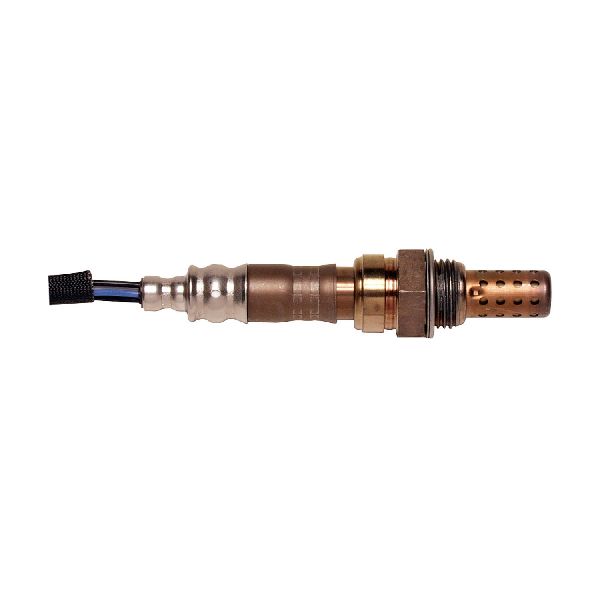
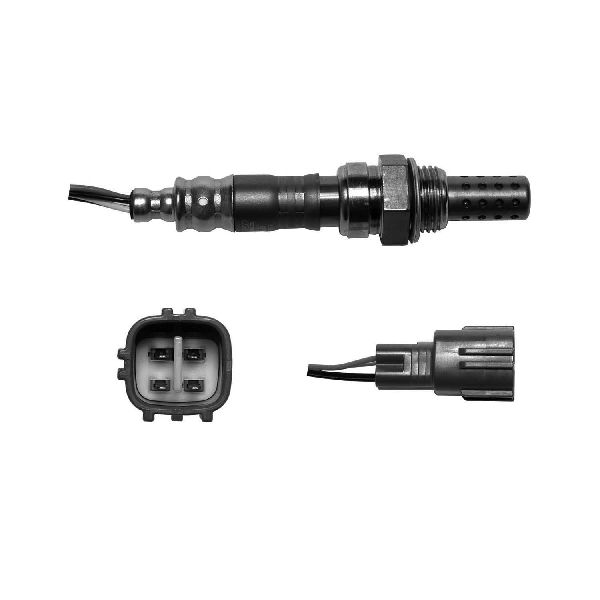
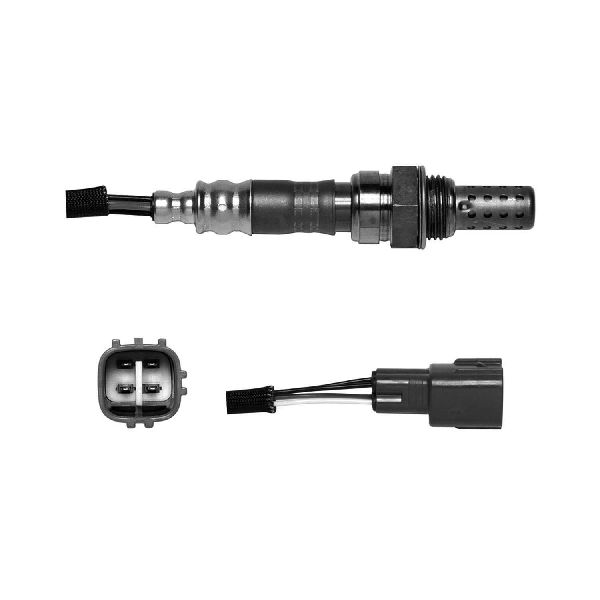
This code almost always means the upstream Air-Fuel Ratio (A/F) sensor on Bank 2 has failed. Bank 2 is the cylinder bank closer to the radiator, making this a relatively easy DIY replacement. Expect to pay $70-$120 for an aftermarket Denso sensor (the OEM supplier, part #234-9041) or $180-$250 for the OEM part. Be wary of counterfeit sensors from non-reputable sellers.
- P0052 on your Camry V6 points directly to a failure in the heater circuit of the front (Bank 2) upstream Air-Fuel Ratio sensor.
- The most likely cause is simply that the sensor has worn out. This is a very common repair on these vehicles.
- Because the faulty sensor is on the front of the engine, it is relatively easy to access and replace with basic hand tools and a special oxygen sensor socket.
- Always check the 25A 'A/F HTR' fuse before replacing parts, though a blown fuse usually happens because the sensor has failed.
What's Unique About the 2002-2006 Toyota Camry
The 2002-2006 Toyota Camry with the 1MZ-FE 3.0L V6 engine uses a wideband Air-Fuel Ratio (A/F) sensor for its upstream sensor, not a conventional oxygen sensor. While very reliable, the internal heater element in these sensors is a common failure point as the vehicle ages. The good news for this specific code (P0052) is that it refers to Bank 2, which is the cylinder bank located at the front of the engine bay, making the sensor much easier to access and replace compared to the Bank 1 sensor against the firewall. A critical note for DIYers is the prevalence of counterfeit Denso sensors on sites like eBay; purchasing from reputable auto parts stores is highly recommended to avoid faulty parts.
Symptoms You May Notice
- Check Engine Light is on
- Reduced fuel economy
- Vehicle will fail an emissions/smog test
- Slightly rough idle on a cold start
- Longer than normal for the engine to enter closed-loop operation
- Replacing the wrong sensor (e.g., the downstream O2 sensor or the sensor on Bank 1 against the firewall).
- Replacing the catalytic converter.
- Overlooking a blown 'A/F HTR' fuse.
Most Likely Causes
- Failed Air-Fuel Ratio Sensor (Bank 2, Sensor 1) 🔴 High Probability → Shop Oxygen Sensor The internal heater element is a known wear item that fails from age and countless heat cycles. This is the most common cause for this code by a wide margin.
How to confirm: Disconnect the sensor and measure the resistance between the two heater pins (usually the two same-colored wires, e.g., black). A reading of 'OL' (over-limit) or infinite resistance on a multimeter indicates a burned-out heater element. A healthy sensor should have a low resistance, typically between 1.8 and 3.4 Ω at 20°C (68°F), though some manuals state 0.8 - 1.4 Ω. A value far below specification suggests a shorted heater element.
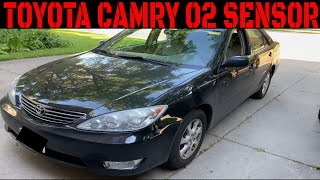
Typical fix: Replace the Bank 2, Sensor 1 Air-Fuel Ratio sensor. 🎬 Watch: This video shows how to test and replace the sensor.
Est. part cost: $70-$250 - Damaged Wiring or Connector ⚪ Low Probability The wiring harness is in the front of the engine bay and generally well-protected, but can be susceptible to road debris, improper service, or melting from contact with hot exhaust components.
How to confirm: Visually inspect the wiring harness leading to the A/F sensor for any signs of melting, fraying, or breaks. Check the connector for corrosion or pushed-out pins. With the key on, engine off, check for battery voltage (9-14V) at the power wire in the harness-side connector.
Typical fix: Repair the damaged section of the wiring harness or clean/replace the connector.
Est. part cost: $5-$50 - Blown A/F Heater Fuse ⚪ Low Probability
How to confirm: Locate the fuse box in the engine compartment and check the 25A fuse labeled 'A/F HTR'. A 'High' circuit code usually indicates a short in the sensor that may have blown the fuse.
Typical fix: Replace the blown fuse after replacing the shorted sensor. If the new fuse blows immediately, there is a short circuit in the wiring that needs to be traced.
Est. part cost: $1-$5
Rare But Worth Checking
- Faulty Engine Control Module (ECM): → Shop Engine Control Module (ECM) This is extremely rare. The internal driver circuit for the sensor heater can fail, but all other possibilities should be exhaustively ruled out before condemning the ECM.
Diagnosis Steps
- Confirm the code P0052 is present using an OBD-II scanner.
- Locate the Bank 2, Sensor 1 A/F sensor. It is screwed into the exhaust manifold on the side of the engine closest to the radiator.
- Visually inspect the sensor's wiring and connector for any obvious damage like burns, melting, or frayed wires.
- Check the 25A 'A/F HTR' fuse in the engine bay fuse box. If it's blown, it's highly likely the sensor itself has an internal short and caused the fuse to blow.
- Disconnect the sensor's electrical connector. To test the sensor, use a multimeter set to Ohms to measure the resistance across the two heater pins on the sensor side (typically the two black wires). An open circuit (infinite resistance) or a dead short (near zero resistance) confirms the sensor's heater is bad. A healthy sensor should read between 1.8 and 3.4 Ω at room temperature, though some sources cite 0.8-1.4 Ω.
- To test the wiring, turn the ignition to 'ON' (engine off). Use a multimeter set to DC Volts to check for battery voltage (9-14V) between the power and ground pins on the vehicle's harness connector.
- If the fuse is good, wiring has power, and the sensor's heater circuit tests bad, replace the Air-Fuel Ratio sensor.
- After replacement, clear the code with the scanner and drive the vehicle through a full drive cycle to ensure the code does not return.
Parts You'll Likely Need
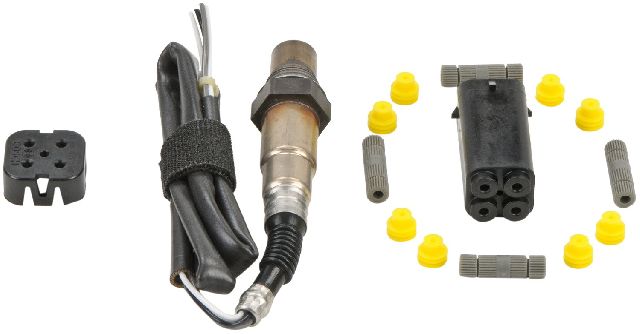
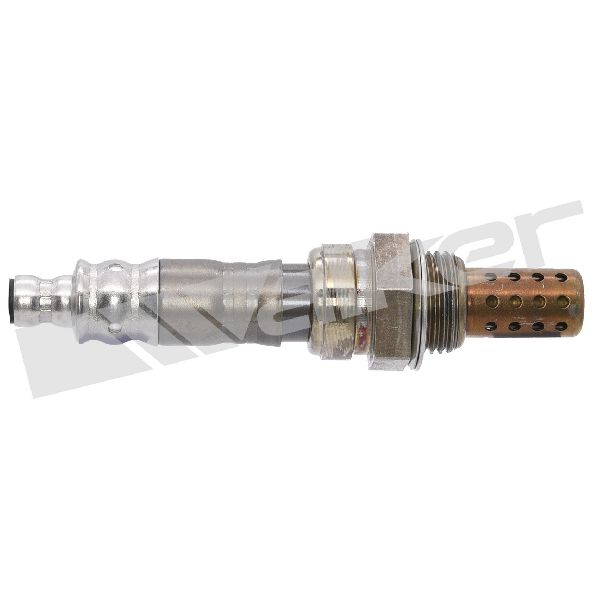
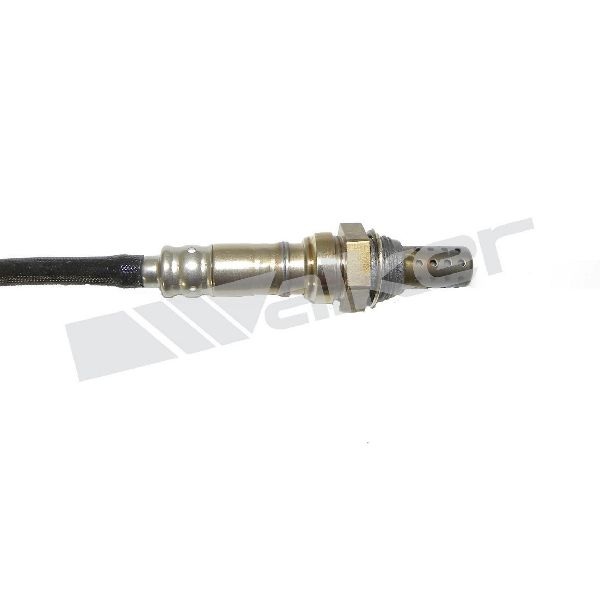
- Air-Fuel Ratio Sensor (Bank 2, Sensor 1)
(OEM #89467-33040)— This is the upstream sensor for the front cylinder bank. The internal heater element fails, causing the P0052 code.
Trusted brands: Denso, Bosch, Walker
OEM price range: $180-$250
Aftermarket price range: $70-$120
Technical Service Bulletins (TSBs) & Recalls
- While no TSB directly addresses P0052, related service bulletins exist for this platform. Toyota issued a Special Policy Adjustment extending the warranty for engine oil sludge on the 1MZ-FE V6 to 8 years/unlimited miles, a known issue for this engine.
- TSB EG017-02 was released for the 2002 Camry V6 to address an engine surge condition via an ECM recalibration, which can be related to overall drivability diagnostics.
Platform-Specific Known Issues
- Owner Repair Experience: A common repair story found on forums involves an owner of a 2003 Camry V6 with ~150,000 miles getting a P0052 code. The owner first checked the 25A A/F HTR fuse, which was intact. They then disconnected the front A/F sensor and measured the resistance between the two black heater wires, getting an 'OL' (open loop) reading. They purchased a Denso 234-9041 sensor, applied anti-seize to the threads, installed it with an O2 sensor socket, cleared the code, and the check engine light did not return.
Mechanic-Grade Diagnostic Values
- A/F Sensor Heater Element Resistance — expected: 1.8 to 3.4 Ω at 20°C (68°F). Some service documents may specify 0.8 to 1.4 Ω.. Failure: An open circuit ('OL' on multimeter) or near-zero resistance (dead short) indicates a failed sensor.
- A/F Sensor Heater Circuit Voltage (at harness connector) — expected: 9 to 14 V with ignition ON, engine OFF.. Failure: 0V indicates a lack of power, which could be a blown fuse or wiring issue. Voltage significantly above 14V could indicate a regulator or ECM issue.
- A/F Sensor Heater Current (Live Data) — expected: 0.9 to 9.9 A during operation.. Failure: The ECM sets P0052 when current exceeds 10 A. It sets P0051 (low) if current is below 0.8 A.
- A/F Sensor Signal Voltage (Live Data) — expected: Approximately 3.3V at idle. Voltage will fluctuate based on air/fuel mixture.. Failure: A static, unchanging voltage or a voltage that doesn't respond to throttle changes can indicate a failed sensor.
Scan Tool Commands That Help
- Toyota Techstream: Active Test: A/F Control — This function allows a technician to manually alter the fuel mixture rich or lean and observe the A/F sensor's voltage and current response on the live data screen. A sensor that does not respond correctly to these commands is faulty.
- Toyota Techstream: Data List for A/F Sensor — Use this to monitor live data PIDs like 'A/F Sensor Current (Bank 2 Sensor 1)' and 'A/F Sensor Voltage (Bank 2 Sensor 1)'. This is crucial for confirming the sensor's operational status and observing the high current condition that triggers P0052.
Wiring & Ground Locations
- EA & EB — Engine compartment, on the left and right radiator side supports.. These are primary engine bay ground points. A corroded or loose ground at these locations can introduce resistance and voltage issues into various sensor circuits, including the A/F sensor heater circuit.
- EF — Rear side of the surge tank (intake manifold).. This is a critical engine ground point. The ECM and its sensors rely on clean ground paths. A problem here could cause erratic sensor readings and trigger fault codes.
- A/F Sensor Connector (Bank 2, Sensor 1) — Attached to the front (radiator side) exhaust manifold, with the connector typically clipped to a bracket nearby.. This is the direct connection point for the sensor. All voltage and resistance tests are performed here. The connector itself can be a point of failure due to heat, vibration, and corrosion.
OEM Part Supersession History
89467-33040→N/A— This part number remains current for the specified vehicle application.
Heads up: While the part number itself has not been superseded, it is critical to note that this part is for specific 2002-2004 models. Always verify fitment with a VIN, as other similar-looking sensors for different Toyota models or years may not be compatible.
Model Year Variations Within This Range
- 2004-2006: For the 2004 model year, the Camry SE V6 trim was equipped with a larger 3.3L 3MZ-FE engine instead of the 3.0L 1MZ-FE. While the diagnosis for P0052 is nearly identical, it's important to ensure you are purchasing parts for the correct engine, as part numbers may differ.
Diagnostic Flowchart
Other Known Issues on This Vehicle
Issues unrelated to this code that are worth knowing about as an owner of this generation:
- Engine Oil Sludging (1MZ-FE) 🔴 High — Common on engines over 100,000 miles, especially if oil change intervals were extended or non-synthetic oil was used. Caused by an inefficient PCV and valve cover baffle design. (Ref: Toyota issued a Special Policy Adjustment (not a recall) extending warranty coverage for sludge-related repairs to 8 years/unlimited miles for affected models. A common DIY fix is to replace the 1MZ-FE valve covers with the improved design from the later 3MZ-FE engine.)
- Automatic Transmission Shift Flare/Shudder (U140E) 🟠 Medium — Frequently occurs on vehicles over 120,000 miles. Presents as a hesitation or RPM jump between 2nd and 3rd gear, or a shudder under light throttle. Caused by hydraulic wear in the valve body. (Ref: TSB EG017-02 was issued for a 2002 Camry V6 engine surge, which involved an ECM recalibration. General shift quality issues are well-documented in repair databases.)
- Valve Cover Gasket Leaks 🟡 Low — Common at higher mileage (100,000+ miles) as the rubber gaskets age and harden. Results in oil seeping onto the engine block and exhaust manifolds.
Used vs. New Parts: Buying Guide for This Vehicle
When a used part is the smart pick: For this repair, buying a used Air-Fuel Ratio sensor is generally not recommended. A/F sensors are wear items with a finite lifespan, and the heater element is the most common failure point. A used sensor from a junkyard carries a high risk of premature failure, offering poor value even at a low price.
Donor-vehicle mileage cap: roughly under 50000 miles for the part to have meaningful remaining life.
What to inspect on the donor part:
- If considering a used sensor, source it from a very low-mileage wreck.
- Inspect the wiring and connector for any signs of melting, brittleness, or corrosion.
- Avoid sensors that show heavy carbon fouling or physical damage to the sensor tip.
OEM-only on this vehicle (don't cheap out):
- While not strictly 'OEM-only', using the OEM supplier (Denso) is highly recommended for A/F sensors on this vehicle. Cheap, unbranded aftermarket sensors are known to have high failure rates and can cause persistent codes.
Aftermarket brands forum-validated for this vehicle:
- Denso (OEM supplier)
- Bosch
Brands owners have reported issues with on this vehicle:
- Unbranded or 'white-box' sensors from online marketplaces like eBay and Amazon are frequently cited in forums as being unreliable or dead-on-arrival.
Real Owner Stories
Aggregated from forums and TSBs cited above. Mileages and costs reflect what owners reported in those sources.
2003 Toyota Camry 3.0L V6 — ~150000 miles
Symptoms: The Check Engine Light came on, triggering a P0052 code.
What fixed it: After confirming the A/F HTR fuse was good, the owner tested the sensor's heater pins and got an 'OL' (open loop) reading. Replacing the sensor with a Denso 234-9041 part and clearing the code resolved the issue.
Source hint: Owner Repair Experience from vehicle_specific_issues
Toyota Owner Report — NHTSA ODI #11235367
Symptoms: In a related case involving the same manufacturer, an owner reported that their vehicle would not go above 40MPH on city streets or highways.
What fixed it: A dealership identified multiple codes including P0052, P0456, P2140, and P2442, noting that the secondary air injection system was bad and required significant repairs.
Related OBD-II Codes
Frequently Asked Questions
Where is the Bank 2, Sensor 1 A/F sensor located on my 2004 Camry V6?
What resistance reading should I expect when testing the A/F sensor heater on my Camry?
Is there a specific fuse to check for the P0052 code on this vehicle?
I've heard about an engine oil sludge problem on the 3.0L V6. Was there a recall for this?
Does TSB EG017-02 address the P0052 code?
What is a commonly used replacement part number for the Bank 2, Sensor 1 A/F sensor?
Helpful Videos
We Have This Part in Stock

The information in this article is provided for general reference and educational purposes only. Vehicle specifications, procedures, and part compatibility can vary by production date, trim level, and region. Always consult your vehicle's factory service manual and verify part numbers before purchasing or performing repairs. Safety-critical components such as airbags, seat belts, and braking systems should be installed by a qualified professional.
- Toyota Camry:
- 🧭 Diagnostic Flowchart
- 🎬 Helpful Videos
- 🛍️ Shop This Part
- What's Unique About the 2002-2006 Toyota Camry
- Symptoms You May Notice
- Most Likely Causes
- Rare But Worth Checking
- Diagnosis Steps
- Parts You'll Likely Need
- Technical Service Bulletins (TSBs) & Recalls
- Platform-Specific Known Issues
- Mechanic-Grade Diagnostic Values
- Scan Tool Commands That Help
- Wiring & Ground Locations
- OEM Part Supersession History
- Model Year Variations Within This Range
- Other Known Issues on This Vehicle
- Used vs. New Parts: Buying Guide for This Vehicle
- Real Owner Stories
- 2003 Toyota Camry 3.0L V6 — ~150000 miles
- Toyota Owner Report — NHTSA ODI #11235367
- Related OBD-II Codes
- Frequently Asked Questions
- 🎟️ Get 5% Off