

OBD-II Code P0054: Heated O2 Sensor Resistance (Bank 1, Sensor 2)
The Ultimate 2026 Guide to Diagnosing and Fixing P0054
- P0054 indicates an electrical resistance failure in the heater circuit of the Bank 1, Sensor 2 (downstream) oxygen sensor.
- Test the 10-15 amp O2 heater fuse and visually inspect the wiring harness before spending $50-$150 on a replacement sensor.
- Driving with an active P0054 code causes a 5-15% drop in fuel economy and guarantees an automatic emissions test failure.
- Replace the faulty sensor with an exact OEM match (like Denso or NTK) to prevent the code from returning due to incorrect aftermarket resistance values.
- Ignoring this code for over 6 months forces the engine to run rich, risking a $1,000 to $2,500 catalytic converter replacement.
What Does P0054 Mean?
The Powertrain Control Module (PCM) detected an electrical resistance problem in the heater circuit of the Bank 1, Sensor 2 oxygen sensor. The heater gets the sensor to 600°F-800°F in under a minute, ensuring accurate readings and optimal air-fuel mixture right from a cold start.
Technical definition: The SAE/OBD-II definition is "HO2S Heater Resistance (Bank 1, Sensor 2)". The PCM continuously monitors the voltage and amperage of the downstream oxygen sensor's heater circuit. If the calculated resistance is too high (indicating an open circuit) or too low (indicating a short circuit), the PCM logs P0054 and illuminates the Check Engine Light.
🎬 Watch: A quick overview of P0054 and the heater circuit.Can I Drive With P0054?
Yes, But With Caution. Yes, but fix it within two weeks. Ignoring it causes a 5-15% drop in fuel economy and guarantees an emissions test failure. Prolonged driving forces the engine to run rich, destroying the catalytic converter—a $1,000 to $2,500 repair. Stop driving immediately if the check engine light flashes or you experience significant power loss.
Common Causes
- Faulty Heated Oxygen Sensor (HO2S) (Very Common) — The internal heating element is the most frequent point of failure. It functions like a light bulb filament and simply burns out after thousands 🎬 Watch: How to fix the P0054 code in minutes. of heat cycles, creating an open circuit with infinite resistance.
- Damaged Wiring, Connectors, or Grounds (Common) — The sensor's wiring sits near the extremely hot exhaust. Wires melt, chafe on the chassis, or break. Connectors suffer moisture intrusion, causing corrosion. A corroded ground strap also creates high resistance, triggering the code.
- Blown Fuse for Heater Circuit (Less Common) — The O2 sensor heater circuit is protected by a 10-15 amp fuse. If this fuse blows, the heater loses power. A fuse that blows repeatedly is a clear sign of a short circuit in the wiring or the sensor itself.
- PCM Software/Calibration Issue (Rare) — The PCM's software sometimes contains overly sensitive parameters, causing it to flag a normal resistance value as a fault. A technical service bulletin (TSB) from the manufacturer dictates a software re-flash to correct this.
- Faulty Powertrain Control Module (PCM) (Very Rare) — The driver circuit within the PCM that controls the O2 sensor heater fails in extremely rare instances. This is the absolute last possibility considered after exhaustively ruling out the sensor, wiring, and fuses.
Symptoms
- Check Engine Light is On — This is the most common and often the only symptom. The light illuminates as soon as the PCM detects the resistance fault, which on many vehicles requires the failure to be present on two consecutive cold starts.
- Failed Emissions / Smog Test — A P0054 code is an automatic failure for any state-mandated emissions inspection. The disabled heater prevents the emissions control system from operating as designed.
- Decreased Fuel Economy — With a faulty heater, the engine stays in 'open-loop' mode longer after startup, running a richer fuel mixture. This results in a noticeable 5-15% decrease in miles per gallon (MPG), especially on short trips.
- Rough or Unsteady Idle on Cold Starts — During the first few minutes after a cold start, the engine idle is slightly rough or hunting. This symptom disappears once the exhaust gas passively heats the sensor to its operating temperature.
- Hesitation or Sluggish Acceleration (also visible on scanner) — As the PCM struggles to get accurate data from the cold O2 sensor, you experience a slight hesitation or sluggish response when pressing the accelerator before the engine is fully warmed up.
Diagnostic Flowchart
Tap your situation to follow the diagnostic path that matches what you're seeing on this code.
Common Fixes & Costs
- Replace the Bank 1, Sensor 2 Oxygen Sensor — Parts: $50-$150, Labor: $75-$150, ~0.8 hr book time (DIY)
- Replace Blown Heater Circuit Fuse — Parts: $1-$5, Labor: $0-$60, ~0.1 hr book time (DIY)
- Repair Damaged Wiring Harness — Parts: $10-$50, Labor: $120-$250, ~1.5 hr book time (Intermediate)
- Replace Corroded Connector Pigtail — Parts: $15-$40, Labor: $100-$200, ~1.0 hr book time (Intermediate)
- Update or Re-flash Powertrain Control Module (PCM) — Parts: $0, Labor: $100-$250, ~1.0 hr book time (Professional)
Used vs. New Parts: Buying Guide
When a used part is worth it: Never. Used oxygen sensors are not recommended. They are a wear-and-tear component with a finite lifespan (typically around 100,000 miles). The labor to install the part is significant, and installing a used sensor with unknown history is a major risk.
Donor-vehicle mileage cap: roughly under 10000 miles for the part to have meaningful remaining life.
Donor quality checklist:
- It is nearly impossible to verify the quality or remaining life of a used oxygen sensor.
- Avoid any sensor that shows signs of physical damage, oil contamination, or heavy carbon buildup.
- Even if it 'works', a used sensor has a slow response time, negatively impacting fuel economy.
Decision logic:
- If The part is an oxygen sensor → Always buy new from a reputable brand (OEM, Denso, Bosch, NTK).
- If Budget is extremely tight → Consider a budget-friendly new aftermarket sensor over a used one. The warranty and certainty of it being unused outweigh any small savings.
- If The part has a known wear-out failure mode (like an O2 sensor's heater element) → Favor new to ensure maximum lifespan and avoid repeat labor costs.
Warranty tradeoff: Used parts: Typically no warranty or a 30-day max. Aftermarket new: 1-year to limited lifetime warranty is common. OEM new: 1-2 year warranty typical.
Worst-case if a used part fails: $150-$350 if a used or cheap sensor fails prematurely, requiring repeat labor and the purchase of another part.
What Happens If You Wait — Timeline
- 0-2 weeks: Check Engine Light is on. The PCM detects the heater resistance fault, usually on a cold start. No other symptoms are likely to be noticed by the driver. (MPG impact: 0-5%% · Added cost: $0)
- 2 weeks - 3 months: A noticeable 5-15% drop in fuel economy occurs as the engine runs in open-loop mode for longer. The vehicle automatically fails an emissions test. A slight rough idle on cold starts is present. (MPG impact: 5-15%% · Added cost: $20-$60 per month in wasted fuel)
- 3-8 months: The consistently rich fuel mixture begins to affect the catalytic converter. The excess fuel causes it to operate at higher-than-normal temperatures, slowly degrading the precious metals on the substrate. (MPG impact: 10-15%% · Added cost: $0, but risk of catalyst damage is high)
- 8+ months: Prolonged exposure to rich exhaust gases overheats and permanently damages the catalytic converter, leading to irreversible failure and the appearance of a P0420 code. The converter itself now requires replacement. (MPG impact: 10-20%% · Added cost: $1,000 - $2,500 for catalytic converter replacement)
Cost of Not Fixing It
- 0-1 month: Guaranteed failure of emissions/smog test and a 5-15% drop in fuel economy, especially on short trips. (Added cost: $20-$60 per month in wasted fuel)
- 1-6 months: The engine runs richer than necessary, which begins to slowly degrade the catalytic converter's efficiency. (Added cost: Negligible, but risk of future costs increases.)
- 6+ months: Prolonged rich conditions overheat and permanently damage the catalytic converter, leading to a P0420 code and a very expensive repair. (Added cost: $1000-$2500 for catalytic converter replacement.)
Diagnosis Steps
- Scan and Document the Codes
Use an OBD-II scanner to confirm P0054 is present. Check for related codes (e.g., P0141, P0420). Document the freeze frame data to capture engine conditions at the moment the fault triggered. Clear the codes and take a short drive to see if P0054 returns immediately.
Tools: OBD-II Scanner (Beginner) - Inspect the O2 Sensor Heater Fuse
Consult your owner's manual to locate the fuse for the 'HO2S', 'O2 HTR', or 'EMISS' circuit. Pull the fuse and inspect it. If the metal strip is broken, replace it with a new fuse of the exact same amperage (typically 10-15A). If the new fuse blows, you have a short circuit.
Tools: Owner's manual, fuse puller or pliers (Beginner) - Visually Inspect the Sensor and Harness
Safely raise the vehicle. Locate Bank 1, Sensor 2 (downstream, after the catalytic converter). Meticulously inspect the sensor's wiring harness for melting, chafing, or breaks. Inspect the connector for corrosion or pushed-out pins.
Tools: Jack and jack stands, flashlight (Beginner) - Test the Sensor's Heater Resistance (Pro Tip)
Unplug the sensor. Set a multimeter to Ohms (Ω). Identify the two heater wires on the sensor's connector (often the same color, e.g., two black or two white wires). A good sensor has a resistance between 5 and 15 ohms. A reading of 'OL' (Over Limit) indicates an open circuit, while near zero ohms indicates a short. In either case, replace the sensor.
Tools: Multimeter (Intermediate) - Test for Power at the Harness Connector
With the sensor unplugged, turn the ignition to 'ON' (engine off). Set your multimeter to DC Volts. Connect the black probe to a known good ground (chassis metal). Touch the red probe to the heater power supply pin on the vehicle-side harness connector. You must see battery voltage (12.0V - 12.6V). If not, the problem is upstream in the wiring or fuse box.
Tools: Multimeter (Intermediate) - Test for Ground at the Harness Connector
Set your multimeter to check continuity (beep setting). With the sensor unplugged and ignition off, probe the ground pin on the harness connector and the negative battery terminal. You must have good continuity (below 1 ohm). If not, there is a break in the ground wire going back to the PCM.
Tools: Multimeter (Advanced) - Check for a Short to Ground
Perform this test if the fuse keeps blowing. Disconnect the O2 sensor and the PCM. Set your multimeter to continuity mode. Touch one probe to the heater circuit power wire at the sensor connector and the other to a clean chassis ground. If the multimeter beeps, the power wire is shorted to ground in the harness and requires repair.
Tools: Multimeter (Advanced) - Use a Scan Tool to Monitor Live Data
A professional scan tool commands the heater circuit on and off. Monitor the PCM's command status and live amperage draw. A normal heater draws between 0.5 and 1.5 amps. No draw indicates an open circuit; excessive draw (above 2A) indicates a short.
Tools: Advanced OBD-II Scan Tool (Professional) - Perform a Heater Circuit Load Test
Disconnect the sensor and connect a test light (a #7440 incandescent bulb draws about 1.75A) to the power and ground terminals on the vehicle's harness connector. Start the engine. The light must illuminate brightly. A dim or unlit bulb indicates high resistance or an open in the power or ground wiring.
Tools: Test light or #7440 bulb with socket, wiring adapters (Advanced)
When This Code Triggers (Freeze-Frame Conditions)
- Engine Coolant Temp: Below 122°F (50°C) (During a cold start, when the heater is most critical.)
- RPM: Idle (700-900 RPM) (The heater test runs within the first few minutes of idling after a cold start.)
- Engine Load: 15-35% (Low load, such as idle or steady cruise, when the PCM performs background tests.)
- Vehicle Speed: 0 mph (The initial heater circuit resistance check is performed before the vehicle is moving.)
Related Codes
- P0141 — This is a broader code for 'Sensor Heater Circuit Malfunction (Bank 1, Sensor 2)'. P0054 is more specific, pointing directly to a resistance problem. The diagnostic process is identical.
- P0053 — This is the identical resistance fault code, but for the upstream sensor (Bank 1, Sensor 1). If you see P0053 and P0054 together, suspect a shared problem like a blown fuse or a damaged main wiring harness.
- P0420 — This code means 'Catalyst System Efficiency Below Threshold (Bank 1)'. If the P0054 fault prevents Sensor 2 from working correctly, the PCM falsely triggers a P0420 code. Always fix P0054 first.
- P0060 — This is the identical resistance fault code, but for the other side of the engine (Bank 2, Sensor 2). Seeing both P0054 and P0060 indicates a problem with a fuse or relay powering both banks.
Climate & Environmental Factors
- Cold Climates / Road Salt: Regions using road salt see a much higher incidence of P0054. Salt spray accelerates corrosion of the sensor body, wiring harness connector, and ground connections, increasing electrical resistance.
- High Humidity: Humid environments promote moisture intrusion into the sensor's electrical connector, leading to corroded pins and intermittent high resistance faults.
- Extreme Cold Starts: The PCM's test for this circuit runs specifically under cold start conditions. While not a direct cause of failure, extreme cold makes it more likely for the code to trigger during the first run of the day.
How to Talk to a Mechanic About This Code
Say this: "I have a check engine light and my scanner shows a P0054 code. I'd like to book a diagnostic appointment to confirm the cause. I suspect it's the Bank 1 Sensor 2 heater circuit, but I want to rule out wiring or fuse issues before replacing the sensor. Please also check for a pending P0420 code and look at the Mode 6 data for the catalyst monitor before recommending a catalytic converter replacement."
This language signals to the shop that you are an informed customer. It specifies the exact code, shows you understand the common causes (sensor, wiring, fuse), and preemptively defends against the most expensive unnecessary upsell (a catalytic converter) by asking for specific data (Mode 6) used to properly diagnose it.
Avoid saying:
- 'My check engine light is on, can you just fix it?' (This is too vague and invites a lengthy, expensive diagnostic process).
- 'My car is running fine, just clear the code.' (This ignores the underlying problem which causes the light to return and leads to further damage).
- 'I read online it's the O2 sensor, just replace it.' (This skips proper diagnosis; the problem could be a simple fuse, and you'll pay for a part and labor you didn't need).
Questions to ask before authorizing the repair:
- Did you test the sensor's heater resistance with a multimeter, and what was the reading?
- Did you confirm there is 12-volt power and a good ground at the sensor connector?
- If you are recommending a catalytic converter, can you show me the downstream O2 sensor readings or the 5-gas analyzer results that prove it has failed?
- What is the warranty on the parts and labor for this specific repair?
Where to Take It: Dealer vs Independent vs Chain
- Dealer:
Best for: Vehicles still under a powertrain or emissions warranty., Known complex, manufacturer-specific issues like a PCM re-flash or TIPM problems on Chrysler/Jeep vehicles., Diagnosing recurring issues after an independent shop has failed.
Downsides: Significantly higher labor rates, often 1.5x to 2x more than independent shops., May be quicker to recommend replacing a whole component (like a wiring harness) rather than repairing it. (Typical cost: +50% vs. baseline) - Independent Shop:
Best fit for most scenarios. A competent independent mechanic easily diagnoses and repairs P0054 by testing the sensor, wiring, and fuse. This is a very common code that does not require dealership-level tools unless a PCM software update is needed.
Best for: Out-of-warranty vehicles where cost is a primary concern., Straightforward diagnosis and replacement of common parts like O2 sensors, fuses, and wiring.
Downsides: Quality and diagnostic capabilities vary widely. Vet the shop by checking for ASE certifications and online reviews., May not have access to the very latest manufacturer-specific software for re-flashing. (Typical cost: +0% vs. baseline) - Chain Shop:
Use with caution. Acceptable if you are certain the sensor is the only issue. AVOID for initial diagnosis due to the high risk of being upsold on a catalytic converter.
Best for: Simple, clear-cut parts replacement when you have already diagnosed the problem yourself (e.g., 'Please replace the Bank 1, Sensor 2 O2 sensor with this part').
Downsides: High pressure to upsell is common. A P0054 code is easily misdiagnosed as a P0420, leading to a recommendation for an expensive and unnecessary catalytic converter replacement., Technician skill and experience is inconsistent. (Typical cost: -10% vs. baseline)
When to Walk Away From the Repair
If the estimated repair cost exceeds 50% of your car's private-party value, you should seriously consider not repairing it. For older, high-mileage cars (over 150,000 miles), a lower threshold of 40% is more prudent.
- Car worth $4000, fix is $350: Fix it. This repair cost is under 10% of the car's value and is a routine maintenance item.
- Car worth $4000, fix is $2200: Walk away. The repair cost is 55% of the car's value. The shop misdiagnosed a P0054 as needing a new catalytic converter. This cost far exceeds the threshold.
- Car worth $2500, fix is $1500: Walk away. At 60% of the vehicle's value, this repair is not economically sound.
What Scan Tool You Need for This Code
Minimum: A scanner that reads and clears codes, shows live data (especially O2 sensor voltage), and accesses Mode 6 diagnostic monitoring test results.
A basic $20 code reader only shows the 'P0054' code. It cannot show live data from the sensor to see if it's working, nor can it show the results of the catalyst monitor self-test (Mode 6). Without this data, you or your mechanic are guessing, leading to replacing the wrong parts.
Budget: BlueDriver Pro Bluetooth Scanner (~$100) — Pairs with your smartphone and provides a user-friendly interface to read codes, view freeze frame data, graph live O2 sensor voltage, and access Mode 6 results. This is enough to confirm if the sensor is the likely culprit before going to a shop.
Mid-range: Innova 5610 or Foxwell NT510 Elite (~$350) — These handheld units offer advanced features, including bidirectional controls to test circuits. They run manufacturer-specific diagnostic tests and have deeper system access, useful for ruling out PCM-related issues.
Professional: Autel MaxiCOM MK808Z (~$450) — Provides full bidirectional control, allowing a technician to command the O2 heater circuit on and off to test its function directly. It offers OEM-level diagnostics, comprehensive data logging, and is essential for diagnosing intermittent or complex wiring issues.
Rent vs buy: If this is a one-time repair, AutoZone offers a 'Loan-A-Tool' program where you borrow an OBD-II scanner for free after leaving a refundable deposit. Buy a scanner only if you plan to do your own diagnostics more than once or twice a year.
How to Clear the Code After You Fix It
- Use an OBD-II scan tool to clear the P0054 code.
- Perform the specific O2 sensor heater monitor drive cycle.
- Check readiness monitors to confirm the O2 and HTR (Heater) monitors have run.
Drive cycle (~20 minutes): From a cold start (engine off for at least 8 hours), idle the engine for 2-5 minutes to allow the heater test to run. Drive at a steady highway speed (e.g., 55 mph) for 5-10 minutes. Follow this with 10 minutes of mixed city/suburban driving.
Readiness monitors affected: O2 Sensor Heater Monitor, O2 Sensor Monitor, Catalyst Monitor
Before emissions retest: drive at least 50 miles to fully set monitors.
Watch out for:
- Disconnecting the battery clears the code but resets all readiness monitors, making it impossible to pass an emissions test until a full drive cycle is completed.
- The code returns immediately if the root cause (bad sensor, wiring, fuse) was not correctly fixed.
- Not starting from a true 'cold start' prevents the O2 heater monitor from running.
Will This Fail Emissions / State Inspection?
Yes — this code typically fails an OBD-II emissions inspection.
- California: An active P0054 code is an automatic smog check failure. After repair, the O2 Sensor and O2 Heater readiness monitors must be set to 'Ready' before a retest. You are allowed one incomplete monitor (usually EVAP).
- New York: The NYS DMV vehicle inspection includes an OBD-II scan. A P0054 code causes an immediate failure. The associated readiness monitors must be complete before the vehicle passes.
- Texas: In counties requiring emissions testing, an illuminated Check Engine Light and a P0054 code result in a failed inspection. After repairs, a drive cycle must be completed to set the readiness monitors.
Most Commonly Affected Vehicles
- Ford F-150, Explorer, Focus, Mustang (2004-2016) — The heater circuit fuse (often fuse #33 or #77 in the engine bay box) is a common failure point. For 2011-2014 F-150s, inspect the harness for chafing near the transmission crossmember.
- Chevrolet / GMC Silverado, Sierra, Tahoe, Suburban (2007-2014) — These trucks are known for the wiring harness rubbing through on the frame or a heat shield, causing a short and blowing the fuse. TSB 08-06-04-002C addresses harness chafing on 2007-2008 models.
- Toyota Camry, RAV4, Tacoma, Highlander (2002-2015) — Using an OEM Denso sensor is strongly advised; aftermarket sensors have slightly different resistance values that cause the code to return immediately.
- Dodge / Chrysler / Jeep Ram 1500, Grand Cherokee, Charger (2005-2016) — On Grand Cherokees from 2011-2013, check for issues with the Totally Integrated Power Module (TIPM) which causes erratic power to the heater circuit.
- Volkswagen / Audi Jetta, Golf, Passat, A4 (2005-2015) — The insulation on the wiring harness becomes brittle with age and cracks, leading to shorts. Always inspect wiring carefully before replacing the sensor.
- Honda Accord, CR-V, Civic, Odyssey (2003-2014) — A very common code as these vehicles reach higher mileage. For the 2008-2012 Accord, ensure the replacement sensor has the correct harness length, as generic parts are often too short.
- Nissan Altima, Maxima, Pathfinder, Frontier (2004-2015) — Check for corrosion on the connector pins if the vehicle is from a region that uses road salt. 2013-2015 Altimas had a recall involving ECM reprogramming that affects O2 sensor diagnostics.
- Hyundai / Kia Elantra, Sonata, Sorento, Optima (2006-2017) — Check for open campaigns or Technical Service Bulletins (TSBs) related to PCM software updates. Some models had logic errors that incorrectly triggered heater codes.
Manufacturer-Specific Notes
- Subaru: Subaru vehicles are notoriously sensitive to the resistance values of aftermarket oxygen sensors. Using a non-OEM or non-Denso brand sensor causes the P0054 code to return immediately.
- General Motors (GM): On many GM trucks and SUVs, P0054 is a 'two-trip' fault. The PCM must detect the heater resistance problem on two separate cold starts before illuminating the Check Engine Light, making the issue seem intermittent.
- Ford: On many Ford trucks and cars, the O2 sensor heater fuse is a very common point of failure. It is often a 15A mini fuse in the engine compartment fuse box. Always check this specific fuse before ordering parts.
- Chrysler/Dodge/Jeep: Some models utilize a ground-side switched circuit, where the PCM provides the ground to activate the heater. A failure in the PCM's internal driver mimics a sensor or wiring fault.
Real Owner Stories
2011 Ford Fiesta with P0054
Check Engine Light came on. Scanned the code and found P0054. No other symptoms were noticeable.
What they tried:
- Checked the O2 sensor heater fuse (Fuse 17, 15A in the under-hood fuse box), which was good.
- Visually inspected the wiring harness and found no obvious damage.
Outcome: Replaced the Bank 1, Sensor 2 (downstream) oxygen sensor. The Check Engine Light turned off on its own after about 50 miles of driving.
Lesson: On many Fords, the fuse is a common culprit, so check it first. If the fuse and wiring are okay, the sensor itself is the most likely point of failure. It's a straightforward DIY replacement.
2010 Chevrolet Express 1500 with P0054
Vehicle threw a P0054 code. Owner was unsure of the sensor's location.
What they tried:
- Initially replaced the wrong sensors (passenger side).
- After clarification, replaced the correct sensor (driver's side, after the converter) and checked the fuses, which were good.
Outcome: The code persisted after replacing the sensor. A forum expert suggested the wiring harness on these trucks is known to rub through on the frame, causing a short or open that blows the fuse or mimics a bad sensor.
Lesson: Always confirm you are replacing the correct sensor (Bank 1 is the driver's side on V-engines). On GM trucks, thoroughly inspect the entire wiring harness for chafing against the frame, as this is a very common failure point that a new sensor won't fix.
Subaru owner with recurring P0054
Check Engine Light with P0054 came on. Replaced the downstream O2 sensor with a new aftermarket part.
What they tried:
- Replaced the Bank 1, Sensor 2 with a generic aftermarket sensor.
Outcome: The P0054 code returned shortly after the repair. The issue was only resolved after replacing the aftermarket sensor with a genuine OEM or Denso-branded sensor.
Lesson: Subaru (and Toyota) vehicles are notoriously sensitive to the specific resistance values of their oxygen sensors. Using cheaper, non-OEM sensors often results in the code returning. Always use a high-quality OEM or OEM-supplier (like Denso/NTK) part to avoid repeat repairs.
How to Prevent This Code From Triggering
- Use Top Tier certified gasoline (Every fill-up) — Higher levels of detergents in Top Tier fuels help prevent carbon buildup on internal engine components and oxygen sensors, leading to more complete combustion and less stress on the catalytic converter.
- Address engine misfires immediately (As needed) — Engine misfires send unburnt fuel into the exhaust, which superheats and destroys both the oxygen sensors and the catalytic converter. A flashing check engine light indicates a severe misfire requiring immediate attention.
- Inspect wiring during under-vehicle service (e.g., oil changes) (Every 5,000-7,500 miles) — Periodically checking that the O2 sensor harness is secure and not touching hot exhaust components prevents the most common cause of wiring failure: melting or chafing.
- Consider replacing upstream O2 sensors proactively (Every 100,000 miles) — Aging upstream sensors become slow to respond, leading to a rich fuel mixture that degrades the catalytic converter over time, putting more stress on the downstream sensor.
- Apply dielectric grease to the connector (When replacing a sensor) — Applying a small amount of dielectric grease to the inside of the electrical connector helps seal out moisture and prevent the pin corrosion that often leads to high resistance faults.
Frequently Asked Questions
What does Bank 1 and Sensor 2 mean?
Bank 1 is the side of the engine with cylinder #1. Sensor 2 is the 'downstream' sensor located after the catalytic converter. Its primary job is monitoring the converter's efficiency.
What are the most common mistakes when diagnosing P0054?
The biggest mistake is replacing the O2 sensor without testing the fuse or wiring first. The second is replacing the wrong sensor. Always confirm you are working on Bank 1, Sensor 2 (downstream), not Sensor 1 (upstream).
Can I clean an oxygen sensor to fix a P0054 code?
No. Cleaning an oxygen sensor has no effect on this code. P0054 indicates an internal electrical failure of the heater element, which cannot be repaired. You must replace the sensor.
Why did the code come back after I replaced the sensor?
If the code returns, the original problem was likely in the wiring or fuse, not the sensor. Alternatively, you used a cheap aftermarket sensor with the wrong resistance. Finally, an unfixed intermittent wiring short will trigger the code again.
How much does it cost to fix P0054?
A DIY fuse replacement costs under $5. A professional sensor replacement typically costs between $200 and $350, including parts and labor. Wiring repairs range from $150 to $300 depending on the damage.
What's the difference between P0054 and P0141?
P0054 specifically flags 'Heater Resistance', meaning the measured electrical resistance is too high or too low. P0141 is a broader 'Heater Circuit Malfunction' code. Both point to the same component and require identical diagnostic steps.
Will a bad battery cause a P0054 code?
It is highly unlikely. The heater circuit requires a stable 12V supply, but the PCM's resistance test is generally unaffected by low system voltage. A failing charging system causes erratic electrical behavior, but triggers many other fault codes first.
What O2 sensor socket size do I need?
The standard size for most oxygen sensor sockets is 22mm (or 7/8 inch). You need a special slotted socket that allows the wire pigtail to pass through without damage.
Key Takeaways
- P0054 indicates an electrical resistance failure in the heater circuit of the Bank 1, Sensor 2 (downstream) oxygen sensor.
- Test the 10-15 amp O2 heater fuse and visually inspect the wiring harness before spending $50-$150 on a replacement sensor.
- Driving with an active P0054 code causes a 5-15% drop in fuel economy and guarantees an automatic emissions test failure.
- Replace the faulty sensor with an exact OEM match (like Denso or NTK) to prevent the code from returning due to incorrect aftermarket resistance values.
- Ignoring this code for over 6 months forces the engine to run rich, risking a $1,000 to $2,500 catalytic converter replacement.
Helpful Videos
![How to Fix CHEVROLET P0054 Engine Code in 2 Minutes [1 DIY Method / Only $19.24]](https://img.youtube.com/vi/S6Ud4SUK-wQ/mqdefault.jpg)
Shop the Parts Behind P0054
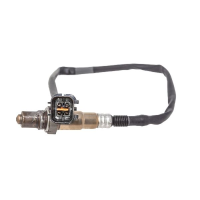
Below are the parts most often responsible for code P0054, ranked by how frequently each one is the actual culprit (per the diagnosis above). Tap any to see what we have for your vehicle.



The information in this article is provided for general reference and educational purposes only. Vehicle specifications, procedures, and part compatibility can vary by production date, trim level, and region. Always consult your vehicle's factory service manual and verify part numbers before purchasing or performing repairs. Safety-critical components such as airbags, seat belts, and braking systems should be installed by a qualified professional.
- 🧭 Diagnostic Flowchart
- 🎬 Helpful Videos
- 🛍️ Shop This Part
- What Does P0054 Mean?
- Can I Drive With P0054?
- Common Causes
- Symptoms
- Common Fixes & Costs
- Used vs. New Parts: Buying Guide
- What Happens If You Wait — Timeline
- Cost of Not Fixing It
- Diagnosis Steps
- When This Code Triggers (Freeze-Frame Conditions)
- Related Codes
- Climate & Environmental Factors
- How to Talk to a Mechanic About This Code
- Where to Take It: Dealer vs Independent vs Chain
- When to Walk Away From the Repair
- What Scan Tool You Need for This Code
- How to Clear the Code After You Fix It
- Will This Fail Emissions / State Inspection?
- Most Commonly Affected Vehicles
- Manufacturer-Specific Notes
- Real Owner Stories
- 2011 Ford Fiesta with P0054
- 2010 Chevrolet Express 1500 with P0054
- Subaru owner with recurring P0054
- How to Prevent This Code From Triggering
- Frequently Asked Questions
- What does Bank 1 and Sensor 2 mean?
- What are the most common mistakes when diagnosing P0054?
- Can I clean an oxygen sensor to fix a P0054 code?
- Why did the code come back after I replaced the sensor?
- How much does it cost to fix P0054?
- What's the difference between P0054 and P0141?
- Will a bad battery cause a P0054 code?
- What O2 sensor socket size do I need?
- Key Takeaways
- 🎟️ Get 5% Off