

P0054 on 2014-2016 Jaguar F-TYPE: Heater Resistance Fault Causes and Fixes
On a 2014-2016 Jaguar F-TYPE, code P0054 is almost always caused by a failed Bank 1, Sensor 2 oxygen sensor. This is the 'mid-cat' sensor on the passenger side (US). Replacing the sensor is the typical fix, costing around $60-$110 for an aftermarket part or over $250 for OEM. In some cases, a PCM software update may also be required as per a Jaguar TSB.
- P0054 on an F-TYPE refers specifically to the middle oxygen sensor (Sensor 2) on the passenger-side exhaust (Bank 1).
- The most likely cause is a failed sensor, which is a straightforward replacement for a DIYer with basic tools.
- Always check fuse F12 (20A) in the engine bay fuse box and inspect the wiring for heat damage before buying a new sensor.
- Ensure you purchase the correct 'mid-cat' or 'Sensor 2' part, as the pre-cat and post-cat sensors are different.
- Be aware that a PCM software update may be required to fully resolve the issue, as noted in Jaguar TSB JTB-00392-NAS-3.
What's Unique About the 2014-2016 Jaguar F-TYPE
Unlike many vehicles that use only two oxygen sensors per exhaust bank (pre- and post-catalytic converter), the Jaguar F-TYPE (both V6 and V8 models) features a more complex system with three sensors per bank: pre-cat (Sensor 1), mid-cat (Sensor 2), and post-cat (Sensor 3). Code P0054 specifically points to the middle sensor of the three on the passenger side. This unique configuration means it's crucial to identify the correct sensor, as replacing the wrong one will not solve the issue. The provided NHTSA technical service bulletins confirm that faults in this mid-catalyst sensor group are a recognized issue by the manufacturer. [SSM72477, JTB-00392-NAS-3] TSB JTB-00392-NAS-3 also suggests that a software update may be required to address certain HO2S-related codes, indicating that not all faults are purely hardware-based.
Diagnostic Flowchart
Tap your situation to follow the diagnostic path that matches what you're seeing on this vehicle.
Symptoms You May Notice
- Check Engine Light is on
- Slightly reduced fuel economy
- Potential for a brief rough idle or hesitation immediately after a cold start
- Failure to pass an emissions inspection
- Possible unsteady idling
- Replacing the wrong oxygen sensor (e.g., Sensor 1 or Sensor 3, or a sensor on Bank 2).
- Replacing the oxygen sensor without first checking for damaged wiring or a blown fuse, which may be the actual root cause.
- Replacing the sensor when an available PCM software update would have resolved the fault logic.
Most Likely Causes
- Failed Oxygen Sensor (Bank 1, Sensor 2) 🔴 High Probability → Shop Oxygen Sensor The internal heater element within the oxygen sensor is a common failure point over time due to constant, rapid heat cycles. The TSBs indicate this is a known area of concern for Jaguar.
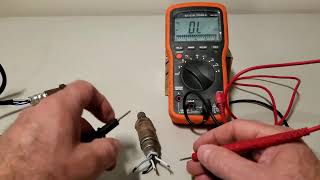
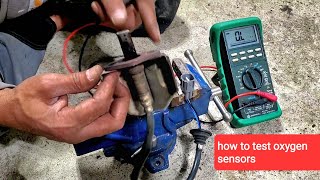
How to confirm: After checking the fuse and wiring, test the resistance across the two heater circuit pins on the sensor connector (usually the two same-colored wires) with a multimeter. 🎬 See how to test the resistance of an O2 sensor heater. An open circuit (infinite resistance) or a value far outside the manufacturer's specification (typically 5-15 Ohms when cold) confirms the heater has failed.
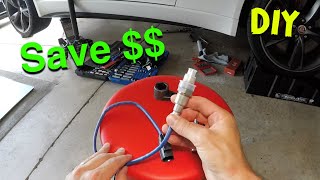
Typical fix: Replace the Bank 1, Sensor 2 (mid-cat, passenger side) oxygen sensor. 🎬 Watch this DIY walkthrough for replacing your F-Type oxygen sensor.
Est. part cost: $60-$260 - Damaged Wiring or Connector 🟡 Medium Probability The sensor wiring is routed near the hot exhaust system, making it susceptible to melting, chafing, or corrosion over time.
How to confirm: Visually inspect the entire wiring harness from the sensor to its main connection point. Look for any signs of melted plastic, frayed wires, or corrosion on the connector pins. Perform a continuity test on the heater circuit wires if visual inspection is inconclusive.
Typical fix: Repair the damaged section of wire or clean/replace the connector. Ensure the repaired wiring is secured away from the exhaust.
Est. part cost: $5-$50 - Blown Fuse ⚪ Low Probability
How to confirm: Locate the fuse for the oxygen sensor heater circuit and check for continuity. For the 2014 F-Type, this is fuse F12 (20A) labeled 'oxygen sensor-right side' in the engine compartment fuse box. If the fuse is blown, it often indicates a short circuit in the wiring that must be found and repaired before replacing the fuse.
Typical fix: Replace the blown fuse after diagnosing and fixing the underlying short circuit.
Est. part cost: $1-$5
Rare But Worth Checking
- Outdated Powertrain Control Module (PCM) Software: → Shop Engine Control Module (ECM) TSB JTB-00392-NAS-3 indicates that for some HO2S codes, a PCM software update is the recommended fix. A dealer service record for a similar code (P014A) on an F-Type shows the fix was to both replace the sensor and update the PCM software, suggesting this is a real-world scenario. This should be considered if a new sensor doesn't resolve the code.
- Faulty Powertrain Control Module (PCM): → Shop Engine Control Module (ECM) This is very uncommon. The internal driver circuit in the PCM that powers the heater can fail. All other possibilities, especially the sensor, its wiring, fuse, and software, should be exhaustively ruled out before considering the PCM as the cause.
Diagnosis Steps
- Read the code with an OBD-II scanner to confirm P0054 is present.
- Check for related TSBs, specifically JTB-00392-NAS-3, to see if a software update is a recommended action for HO2S codes on your vehicle's VIN range.
- Locate the Engine Compartment Fuse Box. Inspect fuse F12 (20A), which protects the right-side oxygen sensors. If blown, find and repair the short circuit before replacing the fuse.
- Safely raise the vehicle and locate Bank 1 (passenger side in US) and its catalytic converter.
- Identify Sensor 2, which is located in the middle of the catalytic converter assembly, between the pre-cat (Sensor 1) and post-cat (Sensor 3) sensors.
- Thoroughly inspect the sensor's wiring harness and connector for any signs of melting, chafing, or corrosion.
- If the wiring appears intact, disconnect the sensor. Use a multimeter to measure the resistance between the two heater circuit pins on the sensor side of the connector (typically the two wires of the same color). A reading of infinite resistance (OL) or zero indicates a failed heater element. A good sensor should read between 5-15 ohms when cold.
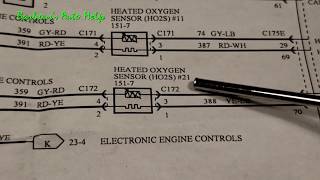
- If resistance is within spec, check for 12V power at the heater circuit pins on the harness side of the connector 🎬 Watch this guide on testing oxygen sensor ohms and voltages. (with the ignition on, engine off).
- If power is present and the sensor's resistance is out of spec, the sensor is faulty and needs replacement.
- If power is not present, there is a wiring issue between the fuse box and the sensor that needs to be traced.
- If the sensor and wiring test good, the issue may be related to PCM software. Consult a dealer or specialist shop about performing the software update mentioned in TSB JTB-00392-NAS-3.
Parts You'll Likely Need
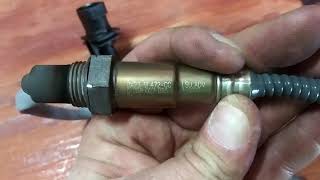
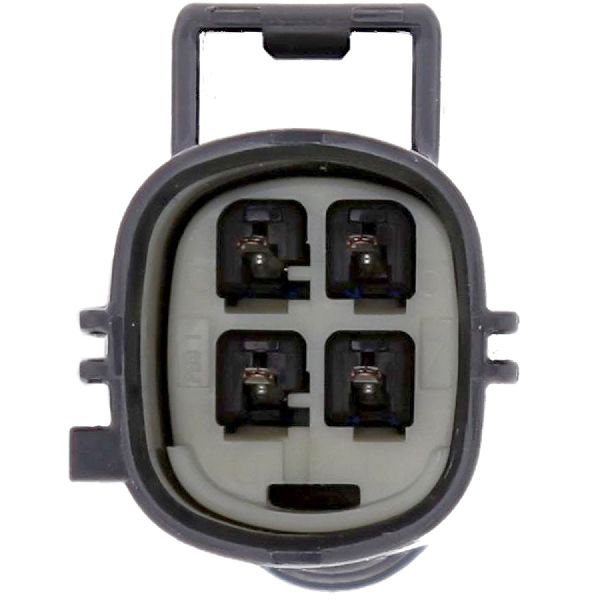
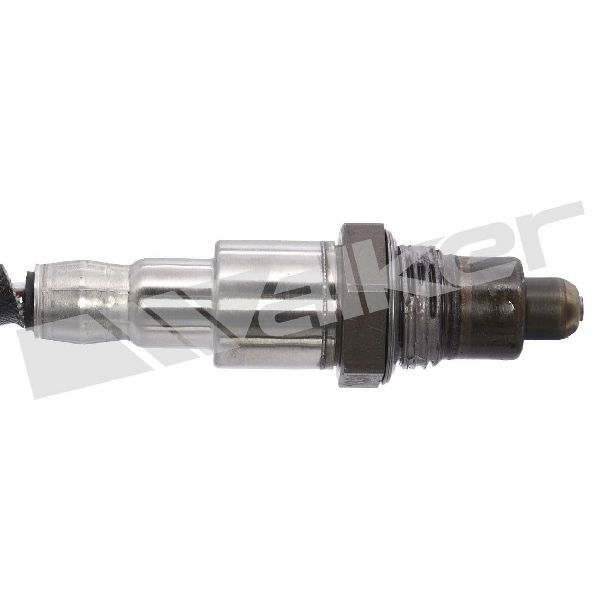
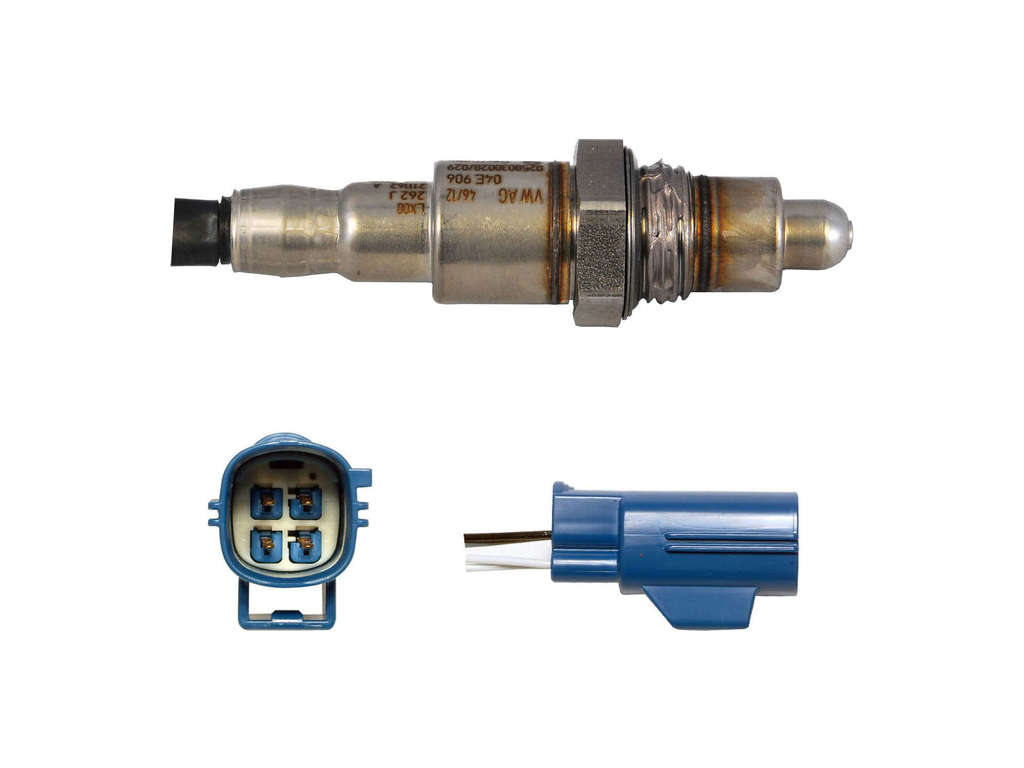
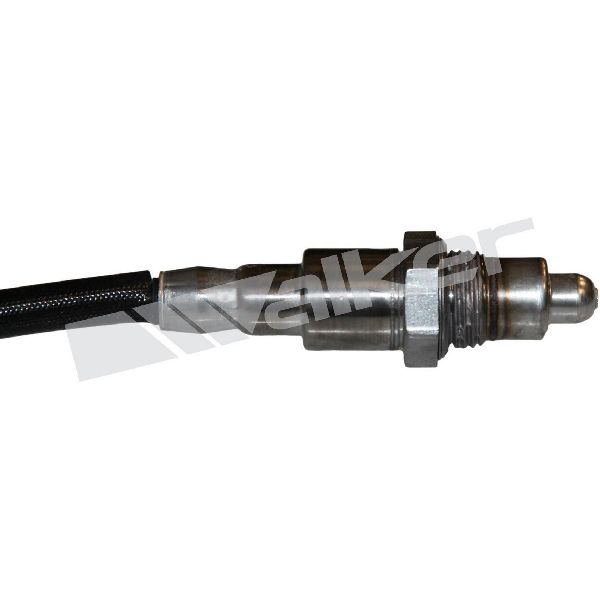
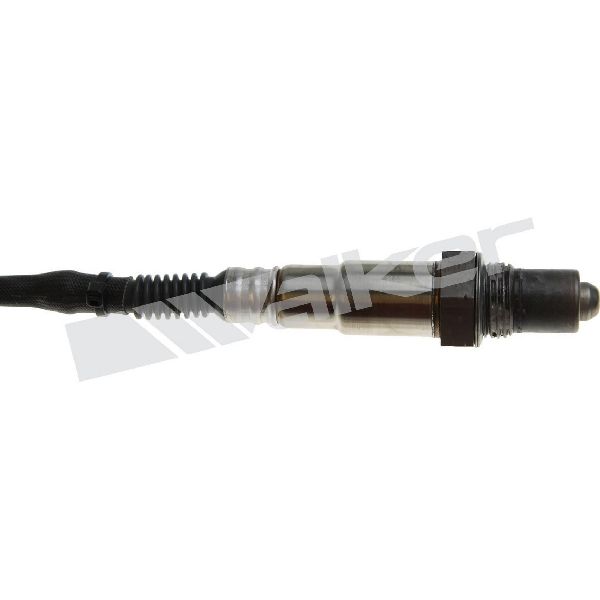
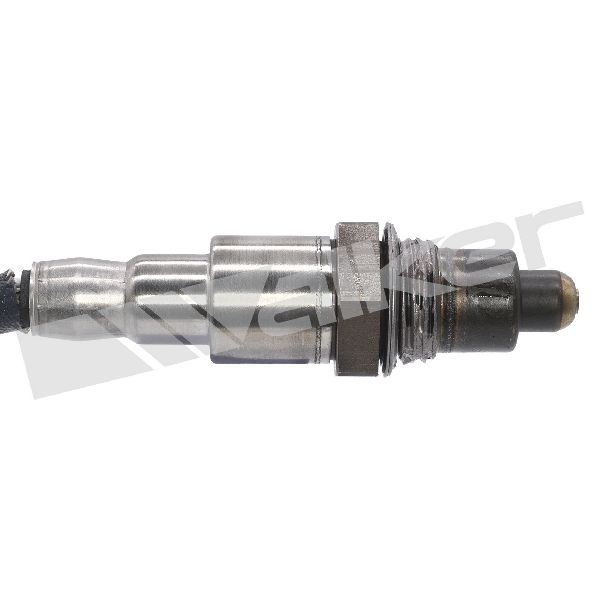
- Oxygen Sensor (Bank 1, Sensor 2)
(OEM #T2H48048)— This is the mid-catalyst oxygen sensor for the passenger side. Its internal heater element is the most common failure point for code P0054.
Trusted brands: Jaguar (OEM), Bosch (Aftermarket P/N: 17483), NGK/NTK, Denso, Walker
OEM price range: $250-$300
Aftermarket price range: $60-$110 - 20A Mini Fuse — If the heater circuit has shorted, the F12 fuse in the engine bay fuse box will blow.
Trusted brands: Bussmann, Littlefuse
OEM price range: $1-$5
Aftermarket price range: $0.50
Related Codes That Often Appear With This One
- P0036 — This code is for the Bank 1, Sensor 2 heater control circuit. It can appear alongside P0054 as they both relate to the function of the same sensor's heater.
- P013E — This code indicates a delayed response from the Bank 1, Sensor 2. A faulty heater can cause this delay, so the codes may appear together.
- P0055 — This is the equivalent heater resistance code for Bank 2, Sensor 2. While not on the same bank, it points to a similar type of failure on the opposite side of the exhaust.
Technical Service Bulletins (TSBs) & Recalls
- SSM72477: Mentions P0054 in a list of codes related to heated oxygen sensor faults.
- JTB-00392-NAS-3: Lists P0054 as a DTC relevant to mid-catalyst and post-catalyst heated oxygen sensors and, for some faults, recommends a software update as the solution.
Platform-Specific Known Issues
- Jaguar has issued Technical Service Bulletins (TSBs) #SSM72477 and #JTB-00392-NAS-3 that list P0054 as a potential diagnostic trouble code related to mid-catalyst and post-catalyst heated oxygen sensors, indicating this is a known issue.
- TSB JTB-00392-NAS-3 also recommends a PCM software update for a range of HO2S codes, suggesting the fault logic itself can be a problem, not just the hardware. A dealer repair for a similar code on an F-Type involved replacing the sensor AND updating the PCM software.
Mechanic-Grade Diagnostic Values
- O2 Sensor Heater Element Resistance — expected: 5 - 15 Ohms (when sensor is at ambient temperature, ~20°C/68°F). Failure: An open circuit (OL or infinite resistance) or zero resistance (short circuit) indicates a failed heater element.
- Voltage at Heater Circuit Power Wire — expected: 11 - 14 Volts (Battery Voltage) with ignition on, engine off.. Failure: Zero volts indicates a blown fuse (F12 in engine bay fuse box) or an open in the power supply wiring.
- Voltage at Heater Circuit Control (Ground) Wire — expected: A pulsing voltage (best viewed on an oscilloscope) when the engine is running and the PCM is commanding the heater on.. Failure: A steady 0V or steady battery voltage may indicate a wiring short or a failed PCM driver.
Hidden / Shadow Codes Worth Checking
- Various: DTCs that do not immediately trigger a Check Engine Light or are not associated with the primary symptoms selected by the technician may be filed under an 'Unrelated Events' category. (see via Jaguar's Symptom Driven Diagnostics (SDD) software. A technician may need to specifically look in this section if the primary diagnosis is inconclusive.)
Scan Tool Commands That Help
- Jaguar SDD (Symptom Driven Diagnostics): Actuation Test / Service Functions for HO2S Heater — This function allows a technician to manually command the O2 sensor heater circuit on and off. It is used to verify that the PCM driver is functional and that the wiring can carry the load, helping to isolate the fault between the sensor itself and the control module.
Wiring & Ground Locations
- Engine Bay Ground Studs — There are critical ground studs on the firewall/bulkhead, one on the left and one on the right side of the engine bay.. The Engine Control Module (ECM) relies on clean, secure grounds to operate correctly. A poor ground connection can cause erratic sensor readings and incorrect fault codes.
- G1D132D — A ground point located on the right side of the rear engine compartment.. This is a key ground distribution point for engine management components on the right side (Bank 1) of the vehicle.
- Bank 1 Sensor 2 Connector — The connector for the mid-cat sensor is located up along the transmission tunnel, accessible from underneath the vehicle.. This is the connection point for performing electrical tests (resistance, voltage) on the sensor and harness. It is exposed to road debris and heat, making it a point of potential failure.
Real Owner Repair Stories
- JaguarForums.com user (Jaguar F-Type R (5.0L V8)) — Check Engine Light with code P013E (O2 Sensor Delayed Response - Rich to Lean Bank 1 Sensor 2)
✅ What actually fixed it The user identified Bank 1, Sensor 2 as the sensor located on the passenger side (US-spec) catalytic converter, confirming the 'mid-cat' position. They replaced this sensor. Notably, the replacement aftermarket sensor (Bosch 16035) had a slightly longer wire and an 'opposite hand' connector, but was successfully installed. This confirms the physical location and provides a valuable tip about potential minor differences in aftermarket parts.
OEM Part Supersession History
T2H48048→T2H48048 (current)— No supersession found. This part number remains the current OEM designation for this application.
Heads up: This part is specific to the 'mid-cat' (Sensor 2) position. It is not interchangeable with the pre-cat (Sensor 1) or post-cat (Sensor 3) sensors. It fits both 3.0L and 5.0L F-Type models from 2014-2016.
Helpful Videos
We Have This Part in Stock

The information in this article is provided for general reference and educational purposes only. Vehicle specifications, procedures, and part compatibility can vary by production date, trim level, and region. Always consult your vehicle's factory service manual and verify part numbers before purchasing or performing repairs. Safety-critical components such as airbags, seat belts, and braking systems should be installed by a qualified professional.
- Jaguar F-TYPE:
- 🧭 Diagnostic Flowchart
- 🎬 Helpful Videos
- 🛍️ Shop This Part
- What's Unique About the 2014-2016 Jaguar F-TYPE
- Symptoms You May Notice
- Most Likely Causes
- Rare But Worth Checking
- Diagnosis Steps
- Parts You'll Likely Need
- Related Codes That Often Appear With This One
- Technical Service Bulletins (TSBs) & Recalls
- Platform-Specific Known Issues
- Mechanic-Grade Diagnostic Values
- Hidden / Shadow Codes Worth Checking
- Scan Tool Commands That Help
- Wiring & Ground Locations
- Real Owner Repair Stories
- OEM Part Supersession History
- 🎟️ Get 5% Off