

P0055 on 2013-2016 Jaguar XJ: HO2S Heater Resistance Causes and Fixes
This code indicates a failed heater circuit in the Bank 1, Sensor 3 oxygen sensor (passenger side, post-catalyst). The most common fix is replacing the sensor, with Jaguar part number C2D23703 being a likely candidate, and performing a mandatory powertrain control module (PCM) software update as per Jaguar's technical bulletin JTB-00392-NAS-3. Expect to pay $80-$150 for an aftermarket sensor, with a shop visit required for the software update, which can add to the cost.
- P0055 points directly to a problem with the heater in the oxygen sensor on the passenger side, after the catalytic converter.
- The most likely cause is a failed oxygen sensor, which needs to be replaced.
- A simple part swap is not enough. Jaguar issued a TSB stating that a PCM software update is a required step after replacing the sensor to complete the repair.
- Due to the required software update and difficult access to the sensor, this repair is best left to a professional with the correct tools.
What's Unique About the 2013-2016 Jaguar XJ
For this generation of Jaguar XJ, and its platform mates with the same engines, the P0055 code is specifically addressed in Technical Service Bulletin (JTB-00392-NAS-3). The bulletin reveals that the cause is often a 'post-catalyst heated oxygen sensor (HO2S) software error' and the fix is a two-part process: replacing the faulty oxygen sensor and then updating the Powertrain Control Module (PCM) software. Simply replacing the sensor without the software update may not resolve the issue, making this a more complex repair than on other vehicles where a simple part swap would suffice. Jaguar also extended the warranty on these sensors for some vehicles to 10 years/150,000 miles, so owners should check for eligibility.
Diagnostic Flowchart
Tap your situation to follow the diagnostic path that matches what you're seeing on this vehicle.
Symptoms You May Notice
- Check Engine Light is on.
- Failure to pass an emissions inspection.
- Slightly increased fuel consumption.
- Possible rough idle or stalling on a cold start.
- Black smoke from exhaust or foul, egg-like smell due to a rich fuel mixture.
- Replacing the oxygen sensor but not performing the required PCM software update. The TSB from Jaguar makes it clear that a software update is part of the complete repair, and skipping this step may cause the code to return.
- Replacing the wrong sensor. P0055 is for Bank 1, Sensor 3. Bank 1 is the passenger side in the US, and Sensor 3 is the final sensor in the exhaust stream, after the catalytic converter.
Most Likely Causes
- Failed Bank 1, Sensor 3 Oxygen Sensor 🔴 High Probability → Shop Oxygen Sensor Jaguar has issued TSBs (JTB-00392-NAS-3, SSM72477) that group P0055 with numerous other oxygen sensor codes, indicating a known pattern of failure for these components due to 'design or manufacturing variations'. The internal heater element simply burns out.
How to confirm: Test the resistance of the heater circuit at the sensor's connector using a multimeter. An open circuit (infinite resistance) or a shorted circuit (near-zero resistance) confirms the heater element has failed. 🎬 Watch: How to diagnose and fix the P0055 heater resistance code. A forum member noted downstream sensors should be around 12 Ohms, while upstream sensors are much lower. The heater wires are typically the two wires of the same color.
Typical fix: Replace the Bank 1, Sensor 3 oxygen sensor. This is the downstream (post-catalytic converter) sensor on the passenger side. The OEM part number is likely C2D23703, which supersedes several other numbers.
Est. part cost: $70-$300 - Outdated Powertrain Control Module (PCM) Software 🟡 Medium Probability → Shop Engine Control Module (ECM) TSB JTB-00392-NAS-3 explicitly states the cause may be a 'post-catalyst heated oxygen sensor (HO2S) software error' and mandates a software update as part of the repair procedure. The new software prevents future issues.
How to confirm: A Jaguar dealer or specialist with the appropriate diagnostic tool (like SDD) can check the current software version of the PCM and determine if an update is available and required per the TSB. A forum post showed a dealer invoice explicitly mentioning updating the PCM per this TSB to fix a related O2 sensor code.
Typical fix: Update the PCM software to the latest version using the Jaguar SDD tool. This is typically done after replacing the faulty sensor.
Est. part cost: $0 (if part of TSB/warranty) or $100-$250 for labor - Damaged Wiring or Connector ⚪ Low Probability The sensor is located under the vehicle and is exposed to road debris, moisture, and extreme exhaust heat, which can degrade the wiring or connector over time. A JLR document noted that for some models, the harness at the rear of the transfer case could contact the output flange, causing damage.
How to confirm: Visually inspect the wiring harness and connector leading to the sensor for any signs of burning, chafing, or corrosion. Check for power and ground at the connector with a multimeter.
Typical fix: Repair the damaged section of the wiring harness or replace the connector pigtail.
Est. part cost: $20-$50
Rare But Worth Checking
- Blown Fuse: The oxygen sensor heater circuits are protected by a fuse, often in the front power distribution box. A Jaguar forum discussion for a similar model pointed to fuses F33 and F34 (30A) and relay R12 as being responsible for the HO2S heaters. This is a quick check that can prevent unnecessary sensor replacement.
- Faulty Powertrain Control Module (PCM): → Shop Engine Control Module (ECM) This is extremely rare. The PCM should only be considered as the cause after all other possibilities, including the sensor, wiring, and software update, have been exhausted. A replacement PCM for a Jaguar XJ can be very expensive, often over $2,000 for the part alone.
Diagnosis Steps
- Read the code with an OBD-II scanner to confirm P0055 is present.
- Check for eligibility under Jaguar's extended O2 sensor warranty (10 years / 150,000 miles for some vehicles).
- Visually inspect the wiring and connector for the Bank 1, Sensor 3 oxygen sensor (passenger side, downstream of the catalytic converter) for any signs of damage, melting, or corrosion. Pay attention to harness routing near the transfer case.
- Check the fuse for the O2 sensor heater circuit in the vehicle's fuse box (potentially F33/F34 in the front power box).
- Disconnect the sensor and measure the resistance between the two heater circuit pins (usually same-colored wires) on the sensor side. If the reading is infinite (open) or near zero (shorted), the sensor has failed. A good downstream sensor should read around 12 Ohms. 🎬 See this video for testing oxygen sensor heater resistance.
- If the sensor resistance is within spec, check for battery voltage at the heater power supply pin on the harness side of the connector (with the key on, engine off).
- If voltage and wiring are good, replace the Bank 1, Sensor 3 oxygen sensor (Part No. C2D23703 or equivalent).
- After sensor replacement, have a dealer or qualified shop update the PCM software per TSB JTB-00392-NAS-3.
Parts You'll Likely Need
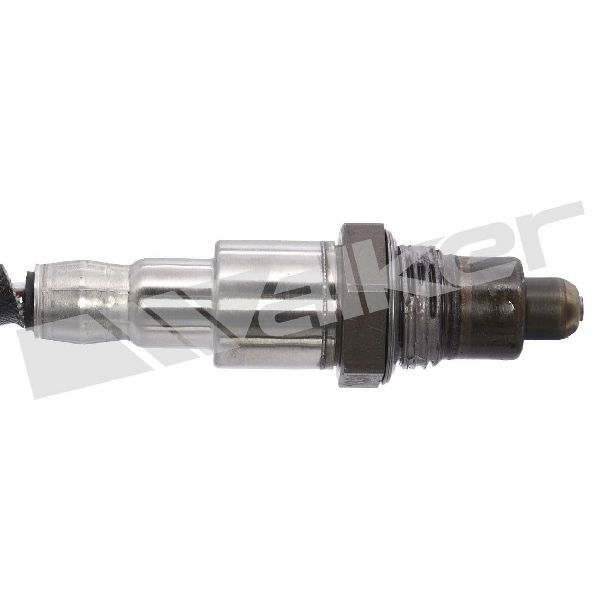
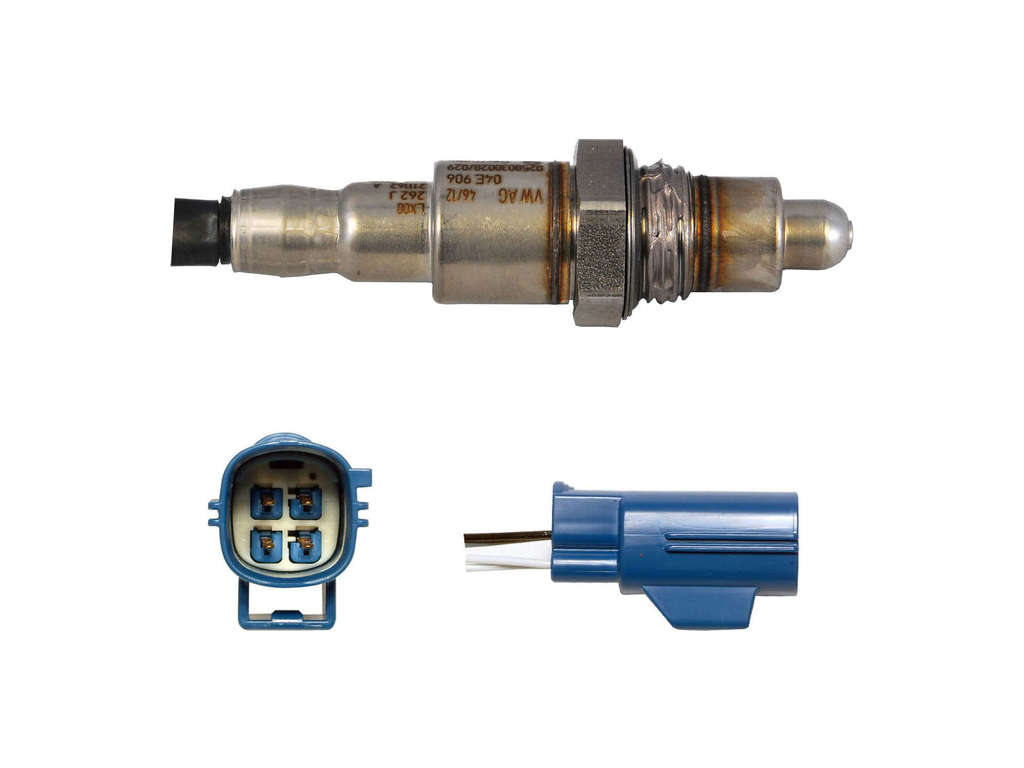
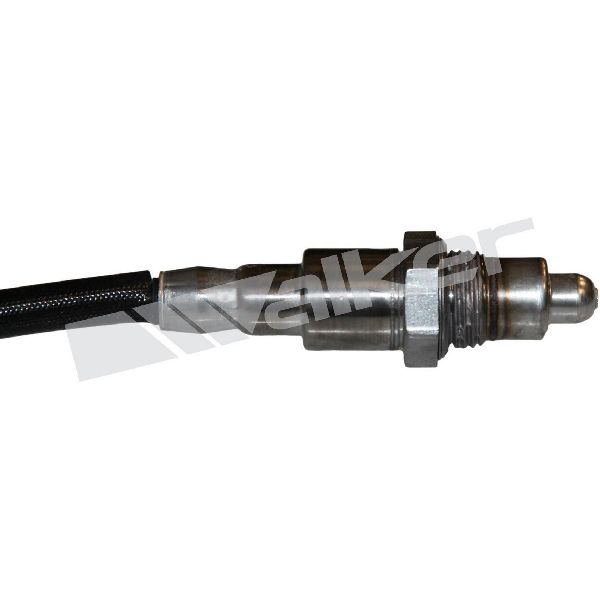
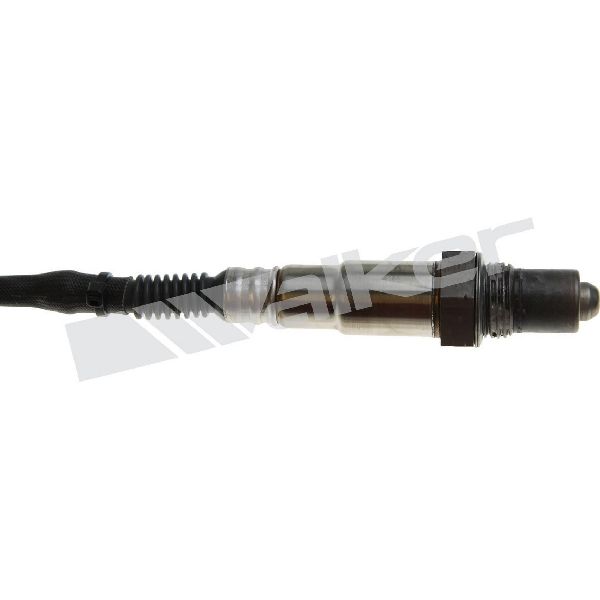
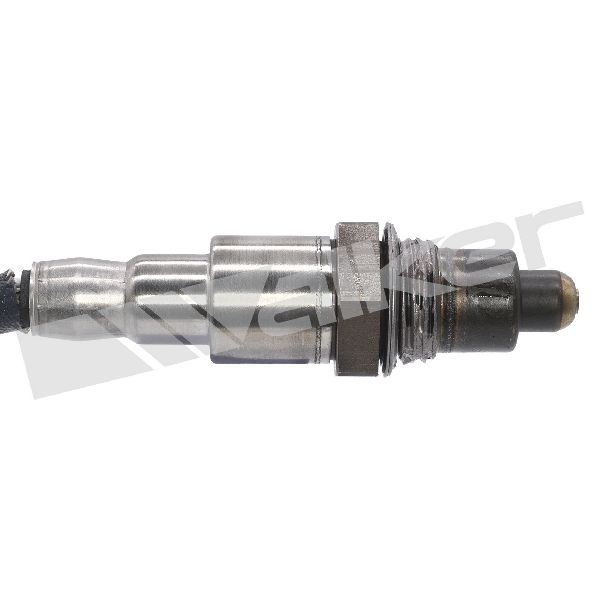
- Oxygen Sensor (Bank 1, Sensor 3)
(OEM #C2D23703)— The internal heater element of the sensor is the most common point of failure for this code, compounded by a software error identified by Jaguar.
Trusted brands: Bosch, NGK / NTK, Denso, Walker Products
OEM price range: $250-$450
Aftermarket price range: $70-$150
Related Codes That Often Appear With This One
- P0036 — This is a general heater control circuit fault for the same sensor (Bank 1, Sensor 2/3). Both are listed in TSB JTB-00392-NAS-3 and point to the same component and software issue.
- P0061 — This is the equivalent heater resistance code for the opposite bank (Bank 2, Sensor 3). It's common for sensors to fail around the same time, and both are covered under the same Jaguar TSB.
- P0147 — This is a generic malfunction code for the heater circuit on Bank 1, Sensor 3. P0055 is more specific about the resistance being out of range, but they often appear together and are listed in the same TSB.
- P0042, P0043, P0044 — These are related heater circuit codes for the post-catalyst sensor on the same bank (Bank 1, Sensor 3) and are also included in TSB JTB-00392-NAS-3.
Technical Service Bulletins (TSBs) & Recalls
- JTB-00392-NAS-3: States that the MI
Platform-Specific Known Issues
- Jaguar Technical Service Bulletin JTB-00392-NAS-3 identifies that a 'software error' can cause this code. The official fix requires replacing the indicated sensor and then performing a mandatory software update to the Powertrain Control Module (PCM).
- Jaguar Land Rover North America extended the warranty for O2 sensors on many affected 2013-2017 models to 10 years or 150,000 miles due to known performance issues. Owners should contact a dealer to check their VIN for eligibility.
Mechanic-Grade Diagnostic Values
- O2 Sensor Heater Circuit Resistance — expected: Generally between 3 and 25 Ohms, with a forum member specifically noting around 12 Ohms for a downstream sensor on a similar Jaguar model.. Failure: An open circuit (infinite resistance, or 'OL' on a multimeter) or a short circuit (near-zero resistance) indicates a failed heater element.
- O2 Sensor Heater Circuit Voltage — expected: Should match battery voltage (approximately 12.6V) with the key on, engine off.. Failure: No voltage suggests a problem with the power supply, such as a blown fuse or a wiring issue upstream of the sensor connector.
Scan Tool Commands That Help
- Jaguar SDD (Symptom Driven Diagnostics): Data Logger / Live Data — After starting a diagnostic session, navigate to 'Recommendations' and then 'Data Logger' to monitor live data from the oxygen sensors. This can help observe the heater circuit's current draw and sensor activity in real-time. A forum post noted that a faulty sensor drew current in the Amps range when it should have been in milliamps (mA), which was visible in SDD.
- Jaguar SDD (Symptom Driven Diagnostics): Clear Adaptations — After replacing an oxygen sensor, it may be beneficial to clear the transmission and engine adaptations. A forum user noted finding this function buried in SDD and using it after a repair to help the systems relearn.
- Jaguar SDD (Symptom Driven Diagnostics): Read All Stored and Accumulated DTCs — To ensure no 'Unrelated Events' or shadow codes are missed, this function can be run to get a complete picture of all faults stored across different modules, not just the ones related to the initial symptoms entered.
Wiring & Ground Locations
- Bank 1 Sensor 3 Connector — For the V6/V8 engines, Sensor 3 is located downstream of the catalytic converter. The connector for the Bank 1 (passenger side in US) Sensor 3 is often found at the rear of the transmission.. This is the primary connector to disconnect for testing the sensor's resistance and for checking voltage/ground on the harness side.
- Engine Ground Strap — A primary engine ground strap is often located on the lower right side of the car, connecting the frame to the engine or transmission, sometimes directly under the starter. Another braided strap may run from the transmission tunnel to the chassis behind the radio.. A poor engine ground can cause a multitude of electrical issues and incorrect sensor readings. While not a direct cause of a specific heater resistance code, verifying main grounds is a crucial step in diagnosing any electrical fault.
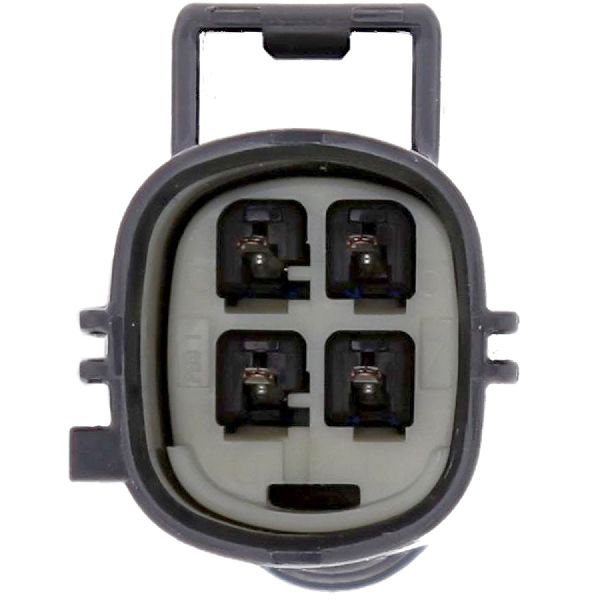
- Harness-Side Connector Pinout (General) — At the connector for the oxygen sensor.. A forum post for a similar Jaguar model identified the typical harness-side wire functions: Pin 1 (Blue) = heater ground, Pin 2 (White/Green) = heater power, Pin 3 (White) = sensor ground, Pin 4 (Brown) = signal wire. This allows for targeted testing of power and ground at the connector.
Real Owner Repair Stories
- JaguarForums user 'Jaag Driva' (2013 Jaguar XJL Supersport (5.0L V8) with ~100,000 miles) — Roughness at idle, poor fuel mileage, and an intermittent O2 sensor heater circuit DTC for Bank 1, Sensor 1 (a related code).
✅ What actually fixed it The owner replaced all six oxygen sensors as a preventative maintenance measure due to the high mileage and known failure rates. The owner noted the sensors tend to seize in the exhaust bungs and required custom-modified tools for removal, especially for the upstream sensors. After replacement, the DTC was cleared using SDD and the car ran smoothly.
OEM Part Supersession History
C2D23703→T2R54607— Standard part number evolution by the manufacturer.
Heads up: T2R54607 is the direct replacement for C2D23703 and C2D54167, indicating they are interchangeable for the specified applications.C2D54167→T2R54607— Standard part number evolution by the manufacturer.
Heads up: This part is also replaced by T2R54607.
Helpful Videos




We Have This Part in Stock

The information in this article is provided for general reference and educational purposes only. Vehicle specifications, procedures, and part compatibility can vary by production date, trim level, and region. Always consult your vehicle's factory service manual and verify part numbers before purchasing or performing repairs. Safety-critical components such as airbags, seat belts, and braking systems should be installed by a qualified professional.
- Jaguar XJ:
- 🧭 Diagnostic Flowchart
- 🎬 Helpful Videos
- 🛍️ Shop This Part
- What's Unique About the 2013-2016 Jaguar XJ
- Symptoms You May Notice
- Most Likely Causes
- Rare But Worth Checking
- Diagnosis Steps
- Parts You'll Likely Need
- Related Codes That Often Appear With This One
- Technical Service Bulletins (TSBs) & Recalls
- Platform-Specific Known Issues
- Mechanic-Grade Diagnostic Values
- Scan Tool Commands That Help
- Wiring & Ground Locations
- Real Owner Repair Stories
- OEM Part Supersession History
- 🎟️ Get 5% Off