

P0056 on 2014-2016 Jaguar F-TYPE: O2 Sensor Heater Circuit Causes and Fixes
P0056 on a 2014-2016 Jaguar F-TYPE indicates a fault in the heater circuit for the Bank 2, Sensor 2 oxygen sensor. The most common fix is replacing the sensor itself, which costs about $70-$150 for the part. However, wiring issues or a blown fuse are also possible causes.
- P0056 points to a failure in the heater circuit for the driver's side, post-catalytic converter O2 sensor.
- The most likely cause is a failed sensor, which is a common issue on this car and covered under an extended warranty by Jaguar.
- Before buying parts, check if your vehicle is still covered by the extended warranty (10-15 years, 120k-150k miles depending on engine).
- Always check the simple things first: inspect the wiring for damage and check the relevant fuse.
- Be aware that Jaguar TSBs indicate this code can sometimes be set without a clear component failure, possibly requiring a software update. [SSM72477]
What's Unique About the 2014-2016 Jaguar F-TYPE
Jaguar has issued multiple Technical Service Bulletins (TSBs) that include the P0056 code, noting that sometimes diagnosis reveals no actual fault (TSB #SSM72477). This suggests the code can be triggered by intermittent connection issues or software glitches, not just a failed sensor. Furthermore, Jaguar extended the warranty on oxygen sensors for these vehicles, covering them for up to 15 years/150,000 miles for 3.0L engines and 10 years/120,000 miles for 5.0L engines, due to known performance issues. This indicates a higher-than-average rate of O2 sensor-related problems on this platform.
Diagnostic Flowchart
Tap your situation to follow the diagnostic path that matches what you're seeing on this vehicle.
Symptoms You May Notice
- Check Engine Light is on
- Vehicle may fail an emissions inspection
- Slightly reduced fuel economy in some cases
- Replacing the wrong oxygen sensor. The F-TYPE has up to six O2 sensors (three per bank). P0056 specifically refers to Bank 2 (driver's side) and Sensor 2 (the middle or post-catalyst sensor). Always confirm the correct sensor location before replacement.
Most Likely Causes
- Failed Bank 2, Sensor 2 Oxygen Sensor 🔴 High Probability → Shop Oxygen Sensor Jaguar extended the warranty on O2 sensors for these models, acknowledging a higher rate of issues related to design, manufacturing, or software.
How to confirm: Disconnect the sensor and measure the resistance across the two heater circuit pins using a multimeter. An open circuit (infinite resistance) or a short circuit (near zero resistance) confirms the internal heater has failed. The expected resistance is typically low, between 2 and 30 ohms.
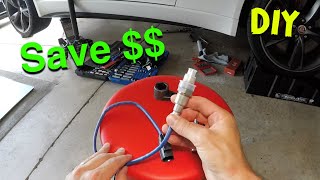
Typical fix: Replace the Bank 2, Sensor 2 oxygen sensor. 🎬 Watch: A complete DIY walkthrough for replacing your F-TYPE oxygen sensors. On the F-TYPE, this is the middle or rearmost sensor on the driver's side exhaust.
Est. part cost: $70-$150 - Wiring or Connector Damage 🟡 Medium Probability The wiring is routed under the vehicle near the hot exhaust system, making it susceptible to heat damage, chafing, or corrosion over time.
How to confirm: Visually inspect the wiring harness and connector leading to the sensor for any signs of melting, fraying, or corrosion. Perform a continuity test on the heater circuit wires from the connector back to the PCM if damage is suspected.
Typical fix: Repair the damaged section of wire or replace the connector pigtail.
Est. part cost: $10-$40 - Blown Fuse for the O2 Heater Circuit ⚪ Low Probability
How to confirm: Check the vehicle's fuse boxes for a fuse labeled for O2 sensors or emissions components. The F-TYPE has multiple fuse boxes in the engine bay, cabin, and trunk. A visual inspection or a test with a multimeter will confirm if the fuse is blown.
Typical fix: Replace the blown fuse. If the new fuse blows immediately, it indicates a short circuit in the wiring or the sensor itself that must be found and repaired.
Est. part cost: $1-$5
Rare But Worth Checking
- Powertrain Control Module (PCM) Fault: → Shop Engine Control Module (ECM) This is very rare. Before suspecting the PCM, all other possibilities (sensor, wiring, fuses) must be exhaustively ruled out. The provided TSBs (#JTB-00392-NAS-3, #SSM72477) suggest that software updates or intermittent issues are more likely than a complete PCM failure.
Diagnosis Steps
- Verify code P0056 is present using an OBD-II scanner.
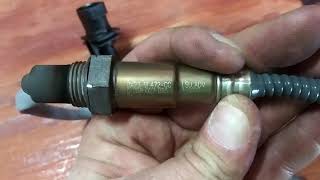
- Locate the Bank 2, Sensor 2 oxygen sensor. On a US-spec F-TYPE, Bank 2 is the driver's side. Depending on the specific model year and exhaust configuration, this will be the middle or rearmost sensor. 🎬 See this step-by-step guide for replacing the O2 sensor on a 2015 model.
- Inspect the sensor's wiring harness and connector for any visible damage, such as melting, chafing, or corrosion.
- Check the fuse for the oxygen sensor heater circuit. The F-TYPE has fuse boxes in the engine bay, passenger footwell, driver's side dash, and trunk. Consult the owner's manual for the specific fuse location, often labeled 'O2S' or similar.
- If the fuse and wiring appear intact, disconnect the sensor. Use a multimeter to test the resistance of the heater element within the sensor. A reading outside the manufacturer's specification (or infinite resistance) indicates a failed sensor.
- If the sensor's resistance is good, test for power and ground at the vehicle-side connector with the ignition on. You should have battery voltage on one pin and a good ground on another. The ground is often controlled by the PCM.
- If power is missing, trace the circuit back from the fuse. If ground is missing, it could indicate a wiring issue or, rarely, a problem with the PCM driver circuit.
- If all wiring and the sensor test good, consider the possibility of an intermittent issue or a needed software update as mentioned in Jaguar TSBs. Check with a dealer about TSB #JTB-00392-NAS-3.
Parts You'll Likely Need
- Oxygen Sensor (Bank 2, Sensor 2) — The internal heater element is the most common failure point for this code. Due to known issues, Jaguar extended the warranty on these parts.
Trusted brands: Bosch, Denso, NTK
OEM price range: $150-$250
Aftermarket price range: $70-$150
Related Codes That Often Appear With This One
- P0036 — This is the equivalent heater circuit code for Bank 1, Sensor 2. Seeing both codes together could point to a common power or ground issue, such as a blown fuse that supplies both sensors.
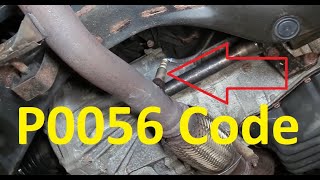
- P0156 — This code indicates a circuit malfunction for the signal portion of the same sensor (Bank 2, Sensor 2). When they appear together, it strongly points to a faulty sensor or a damaged connector/wiring harness affecting the entire component. 🎬 Watch: A helpful breakdown of P0056 causes and common heater circuit fixes.
Technical Service Bulletins (TSBs) & Recalls
- SSM72477: Notes that diagnosis for P0056 and other HO2S codes may result in 'no fault found'.
- JTB-00392-NAS-3: Pertains to software updates for various heated oxygen sensor codes.
- JTB00392NAS1: An earlier version of the TSB related to software updates for HO2S codes.
Platform-Specific Known Issues
- Jaguar Land Rover North America issued an extended warranty for oxygen sensors on 2014-2017 F-TYPE models with the 3.0L and 5.0L engines. This was in response to performance issues from design/manufacturing variations or software problems.
- TSB #SSM72477 notes that for a list of O2 sensor codes including P0056, it is common that upon diagnosis, no fault is found, pointing towards intermittent electrical connection or software-related issues.
- TSB #JTB-00392-NAS-3 and #JTB00392NAS1 relate to software updates for a range of mid-catalyst and post-catalyst heated oxygen sensor DTCs, including P0056.
Mechanic-Grade Diagnostic Values
- O2 Sensor Heater Element Resistance — expected: 2-30 Ohms (at ambient temperature). Failure: An open circuit (infinite resistance) or a direct short (near zero Ohms) indicates a failed heater element.
- O2 Sensor Installation Torque — expected: 35 ft-lb. Failure: Under-torquing can lead to exhaust leaks; over-torquing can damage the sensor or threads.
- Voltage at Sensor Connector (Heater Power Wire) — expected: Battery voltage (approx. 12V) with Key On, Engine Off.. Failure: No voltage suggests a blown fuse or a wiring issue upstream.
- Voltage at Sensor Connector (Heater Control Wire) — expected: May show a bias voltage (e.g., 2.9V) when the sensor is disconnected, which is a PCM self-test function.. Failure: Zero volts when unplugged could indicate a short to ground in the wiring or a faulty PCM driver.
- ECM Driver Circuit Resistance to Ground (Advanced) — expected: 10 k-Ohms (on a Jaguar S-Type with a similar issue). Failure: A much lower reading, such as 650 Ohms, indicates a short to ground within the ECM itself.
Hidden / Shadow Codes Worth Checking
- N/A: While no specific shadow codes are documented, technicians have noted that Jaguar's Symptom Driven Diagnostics (SDD) software may place relevant fault codes in an 'Unrelated Events' folder if the initial symptoms entered do not directly match the fault. A thorough diagnosis requires checking this section. (see via Jaguar SDD diagnostic tool.)
Scan Tool Commands That Help
- Jaguar SDD (Symptom Driven Diagnostics): Live Data Monitoring — To monitor the voltage output and heater circuit status of all oxygen sensors in real-time to confirm which sensor is malfunctioning before replacement.
- Jaguar SDD (Symptom Driven Diagnostics): Vehicle Reset — After performing a repair, such as replacing a sensor or fixing wiring, a 'Vehicle Reset' should be performed to clear adaptations and ensure all modules recognize the new state of the system.
Wiring & Ground Locations
- Bank 2, Sensor 2 Location — Driver's side (for US/LHD models), middle sensor. It is located directly in the center of the catalytic converter housing, between the upstream (Sensor 1) and rearmost (Sensor 3) sensors.. This is the specific sensor indicated by P0056. Misidentifying this sensor is a common misdiagnosis.
- Engine Control Module (ECM) — Located in the left rear of the engine compartment.. The ECM controls the heater circuit. In rare cases of a shorted sensor, the ECM's internal driver can be damaged, making this a critical test point for advanced diagnosis.
- Main Ground Stud — A primary chassis ground stud is located in the engine bay near the headlight assembly, often under a red plastic cover.. While not exclusive to the O2 sensor, a poor main ground connection can cause a variety of difficult-to-diagnose electrical issues. This is a known, accessible point to check for clean, tight connections.
- Central Junction Box (CJB) — Located behind the lower center of the dashboard.. The CJB houses many fuses and relays. The fuse for the O2 sensor heater circuit is likely located here or in one of the engine bay fuse boxes.
Real Owner Repair Stories
- Jaguar Forums user (2006 Jaguar S-Type 3.0L (Note: Not an F-TYPE, but diagnosis for identical P0036/P0056 codes is highly relevant)) — Check Engine Light with codes P0036 and P0056 after replacing catalytic converters and all O2 sensors due to a previous engine issue.
❌ Tried (didn't work) Replacing both downstream oxygen sensors.
✅ What actually fixed it The user diagnosed a faulty Engine Control Module (ECM). A previously melted O2 sensor had shorted and damaged the heater driver circuit inside the ECM. The fault was confirmed by measuring a low resistance (650 Ohms) to ground on the heater control pin at the ECM connector, which should have been much higher. The user planned to perform an SMD (surface-mount device) rework on the ECM board to fix the shorted driver.
OEM Part Supersession History
C2D23703, C2D54167→T2R54607— Part number updates by the manufacturer.
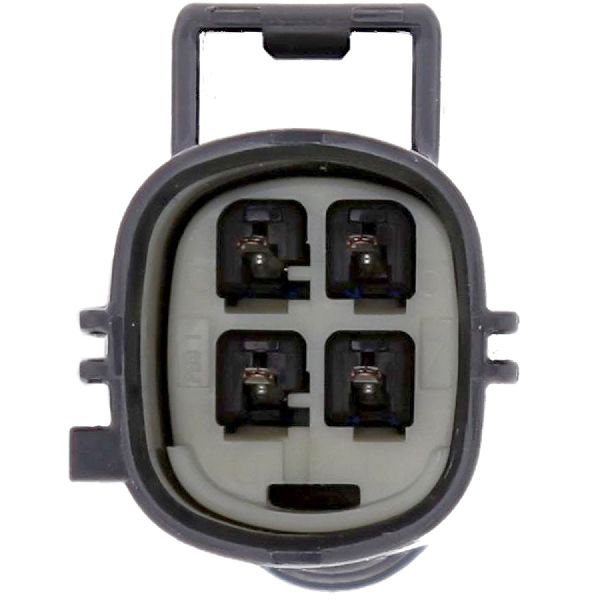
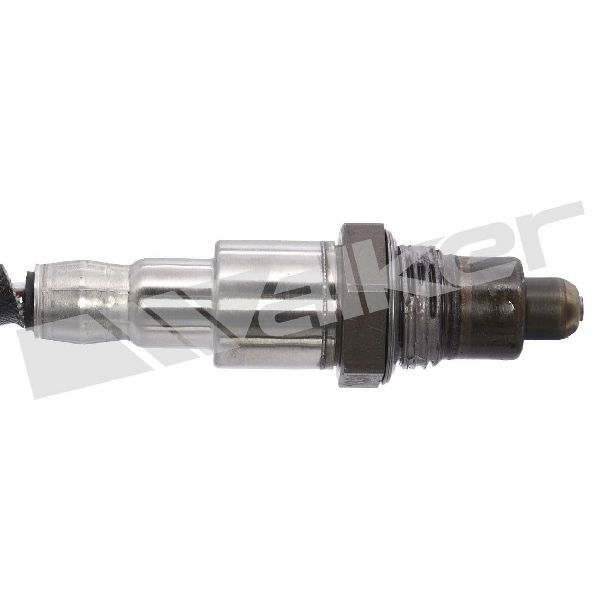
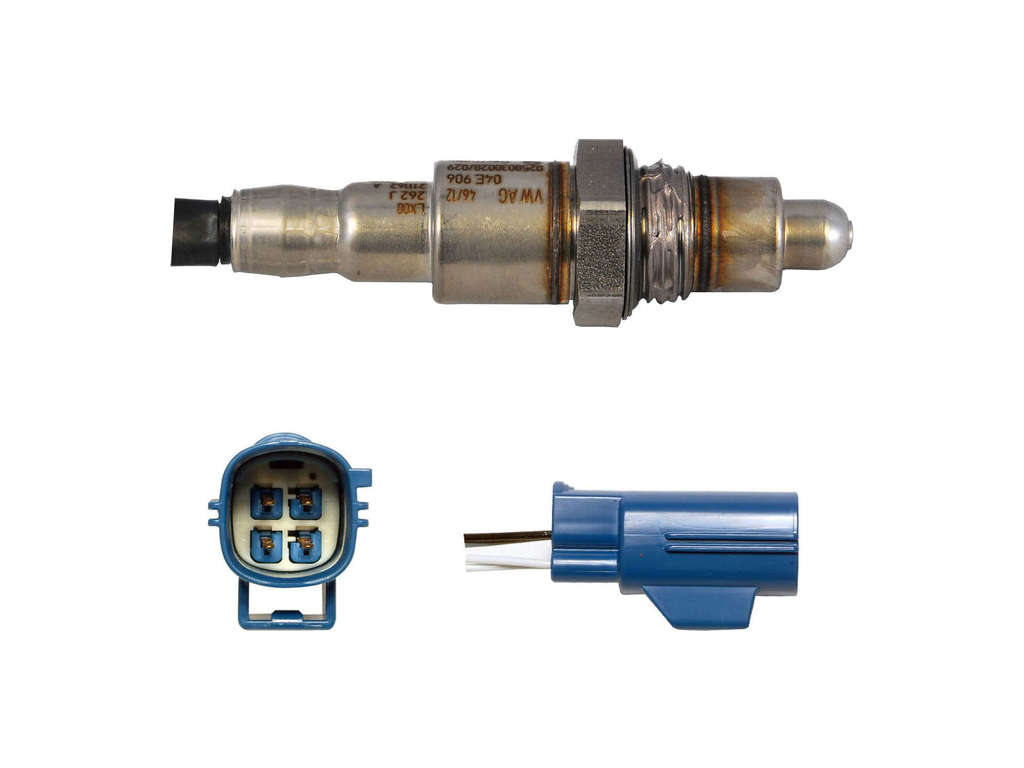
Heads up: This Bosch OEM part is listed for 'Downpipe Rear, Left & Right Side' on F-TYPE 3.0L and 5.0L models. Given Bank 2 is the left (driver's) side, this is the most likely correct part for the Sensor 2 or Sensor 3 position. Always verify with VIN.C2D17259→C2D39892— Part number updates by the manufacturer.
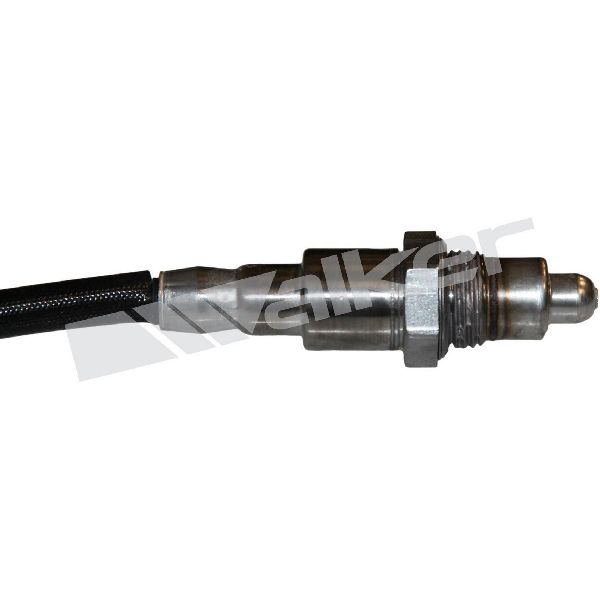
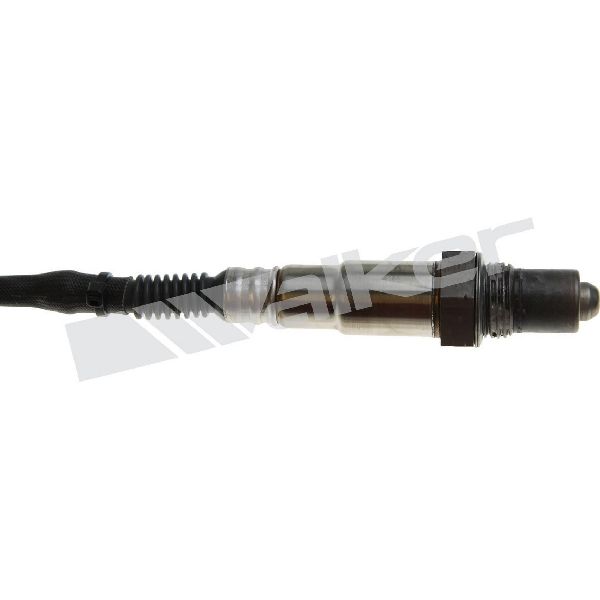
Heads up: This part is often listed for 'Upper' or 'Front' sensor positions, making it less likely to be correct for the P0056 code (Sensor 2).
Helpful Videos
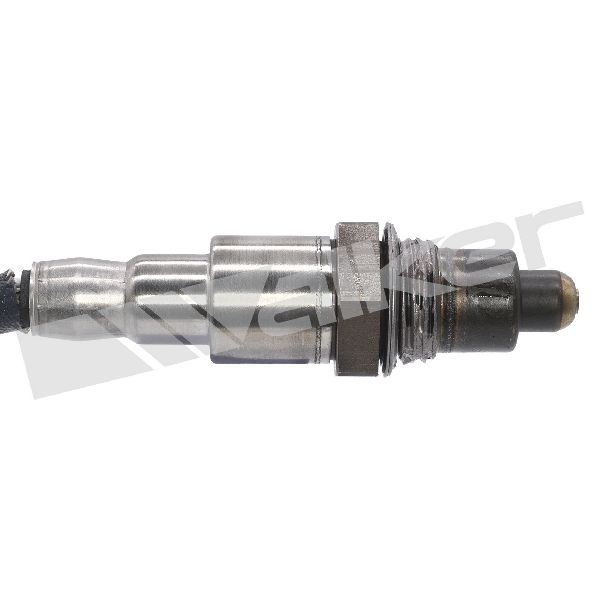
We Have This Part in Stock

The information in this article is provided for general reference and educational purposes only. Vehicle specifications, procedures, and part compatibility can vary by production date, trim level, and region. Always consult your vehicle's factory service manual and verify part numbers before purchasing or performing repairs. Safety-critical components such as airbags, seat belts, and braking systems should be installed by a qualified professional.
- Jaguar F-TYPE:
- 🧭 Diagnostic Flowchart
- 🎬 Helpful Videos
- 🛍️ Shop This Part
- What's Unique About the 2014-2016 Jaguar F-TYPE
- Symptoms You May Notice
- Most Likely Causes
- Rare But Worth Checking
- Diagnosis Steps
- Parts You'll Likely Need
- Related Codes That Often Appear With This One
- Technical Service Bulletins (TSBs) & Recalls
- Platform-Specific Known Issues
- Mechanic-Grade Diagnostic Values
- Hidden / Shadow Codes Worth Checking
- Scan Tool Commands That Help
- Wiring & Ground Locations
- Real Owner Repair Stories
- OEM Part Supersession History
- 🎟️ Get 5% Off