

P0058 on 2021-2024 Jeep Gladiator: Heater Circuit High Causes and Fixes
This code means the heater circuit in the downstream oxygen sensor on the driver's side (Bank 2, Sensor 2) has a problem, usually a short or open circuit. The most common fix is replacing the O2 sensor itself, but first, check for software updates, as multiple Jeep TSBs recommend a PCM reflash as a primary step for this specific issue on Gladiators and Wranglers.
- P0058 on a Jeep Gladiator points to the driver's side, downstream (post-catalytic converter) O2 sensor heater circuit.
- Before replacing any parts, check with a dealer for a potential PCM software update, as this is a common fix recommended by Jeep TSBs.
- If no software update is needed, the most likely cause is a failed O2 sensor, which can be confirmed with a resistance test.
- Always inspect the wiring harness for melting or damage before installing a new sensor, as the under-vehicle location makes it vulnerable, especially on an off-road vehicle.
What's Unique About the 2021-2024 Jeep GLADIATOR
For the 2021-2024 Jeep Gladiator and its platform-mate, the Jeep Wrangler (JL), the P0058 code is frequently addressed in manufacturer Technical Service Bulletins (TSBs). These bulletins suggest the problem may not just be a faulty sensor but could be related to the PCM software's sensitivity or logic. In many cases, the official repair procedure from Jeep involves reprogramming the PCM with updated software, sometimes in addition to replacing the sensor. This makes checking for available software updates a critical first step before replacing any parts, a sentiment echoed in owner forums where a PCM flash was the ultimate solution.
🎬 Watch: Understanding Jeep O2 sensor heater circuit codes and TSBsDiagnostic Flowchart
Tap your situation to follow the diagnostic path that matches what you're seeing on this vehicle.
Symptoms You May Notice
- Check Engine Light is on
- Failed emissions test
- Slightly reduced fuel economy (often not noticeable by the driver)
- Rough or unstable idle on a cold start (less common)
- Replacing the O2 sensor without checking for TSBs. The problem may return if a required PCM software update is not performed. This is a common complaint in owner forums.
- Replacing the wrong O2 sensor. P0058 is specifically Bank 2 (driver's side) and Sensor 2 (downstream/post-catalytic converter). A user on JK-Forum.com replaced the passenger side sensor by mistake before realizing Bank 2 is the left side.
Most Likely Causes
- Faulty Bank 2, Sensor 2 Oxygen Sensor 🔴 High Probability → Shop Oxygen Sensor The internal heater element within the O2 sensor can fail or develop an open circuit, which is a common failure mode for these components over time due to constant heat cycles.
How to confirm: Test the resistance of the heater circuit within the sensor using a multimeter. Disconnect the sensor and measure between the two heater pins (often the same color wires). A good sensor should have a resistance between 4 and 10 Ohms 🎬 See how to test oxygen sensor heater circuits with a multimeter for this engine family. An infinite reading (OL) means an open circuit and a failed heater.
Typical fix: Replace the Bank 2, Sensor 2 oxygen sensor. 🎬 Watch this walkthrough on fixing the P0058 Bank 2 Sensor 2 code
Est. part cost: $40-$90 - PCM Software Update Required 🔴 High Probability Jeep has issued multiple TSBs (e.g., 18-065-24 REV. A, 18-071-22 REV. C) that list P0058 and recommend a PCM software update as part of the fix. This suggests the original software may be too sensitive or have logic errors in monitoring the heater circuit, falsely triggering the code.
How to confirm: A Jeep dealership or a qualified shop with access to OEM tools (like wiTECH) can check if your vehicle's VIN has any pending software updates by referencing the TSBs.
Typical fix: Reprogram the Powertrain Control Module (PCM) with the latest software. The TSB may or may not require sensor replacement in conjunction with the flash.
Est. part cost: $0-$200 - Damaged Wiring or Connector 🟡 Medium Probability The sensor is located under the vehicle, exposed to road debris, water, and high exhaust temperatures. The wiring harness can become melted, frayed, or corroded, causing a short to voltage or an open circuit. Off-roading increases this risk, as owners have reported crushing or tearing the harness.
How to confirm: Visually inspect the wiring harness leading to the sensor for any signs of damage. Use a multimeter to check for 12V power and a good ground at the sensor connector with the key on, engine off.
Typical fix: Repair or replace the damaged section of the wiring harness. In some cases, a new connector pigtail is needed.
Est. part cost: $10-$50
Rare But Worth Checking
- Blown Fuse or Faulty Relay: While less common for a 'high' circuit code, a problem in the power supply circuit, like a stuck relay, could theoretically cause this issue. It's worth a quick check of the fuse box for any fuses labeled 'O2 Heater' or similar.
- Exhaust Leak: An exhaust leak before the O2 sensor can introduce outside air into the exhaust stream. While this typically causes performance codes (P0137, P2096), it can in some cases throw off sensor readings enough to contribute to other faults. It's a good secondary check if other solutions fail.
- Faulty Powertrain Control Module (PCM): → Shop Engine Control Module (ECM) This is very rare. The PCM contains driver circuits that control the O2 heaters, and one can fail. The PCM should be the last thing to suspect after all other possibilities, including the sensor, wiring, and software, have been thoroughly checked and ruled out.
Diagnosis Steps
- Use an OBD-II scanner to confirm P0058 is the active code and check for any other related codes.
- Contact a Jeep dealership or qualified shop to check if your vehicle's VIN is eligible for a PCM software update per TSBs #18-065-24 REV. A, #18-071-22 REV. C, or #18-006-26 REV.A. If so, this is the recommended first step.
- Visually inspect the wiring harness and connector for the Bank 2, Sensor 2 O2 sensor (driver's side, downstream of the catalytic converter). Look for any signs of melting on the exhaust, corrosion in the connector, or physical damage from road debris.
- With the key on and engine off, disconnect the sensor and use a multimeter to check for battery voltage on the heater power wire and a good ground on the heater ground wire at the harness connector.
- If power and ground are good, test the resistance of the heater circuit on the sensor itself. Measure across the two heater pins. A reading outside the 4-10 Ohm range (especially an open circuit/infinite resistance) indicates a failed sensor.
- If the sensor and wiring test good, the issue is almost certainly the PCM software (Step 2) or, in very rare cases, a failed driver circuit within the PCM itself.
Parts You'll Likely Need
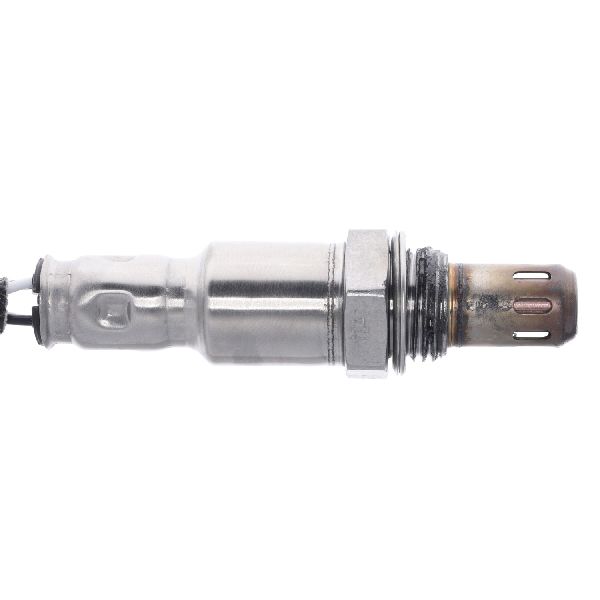
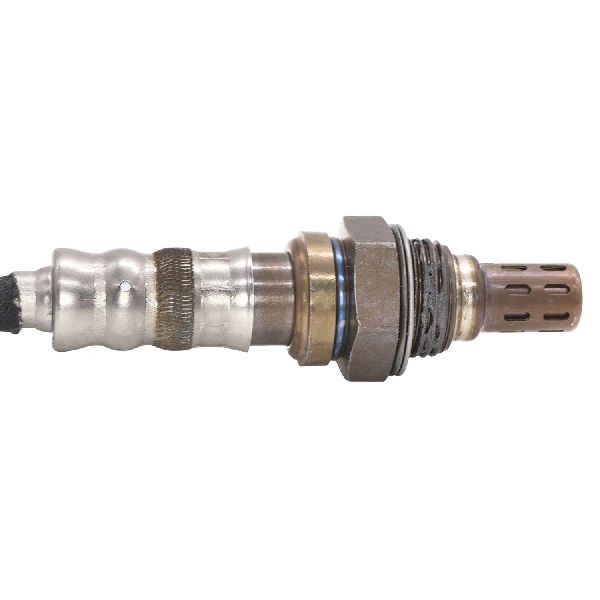
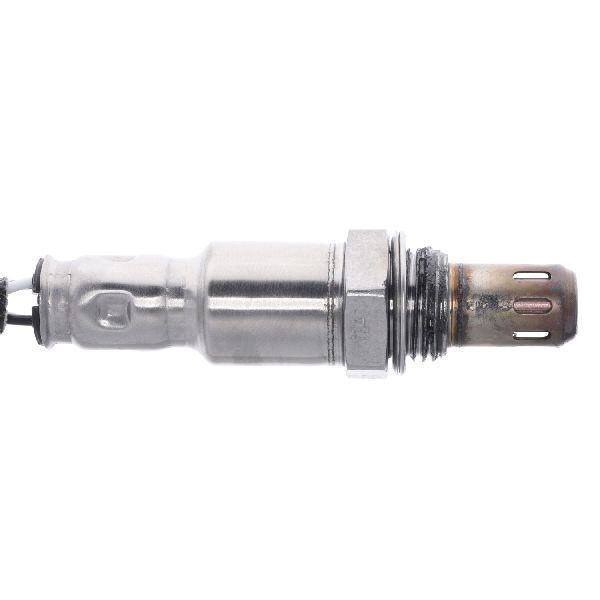
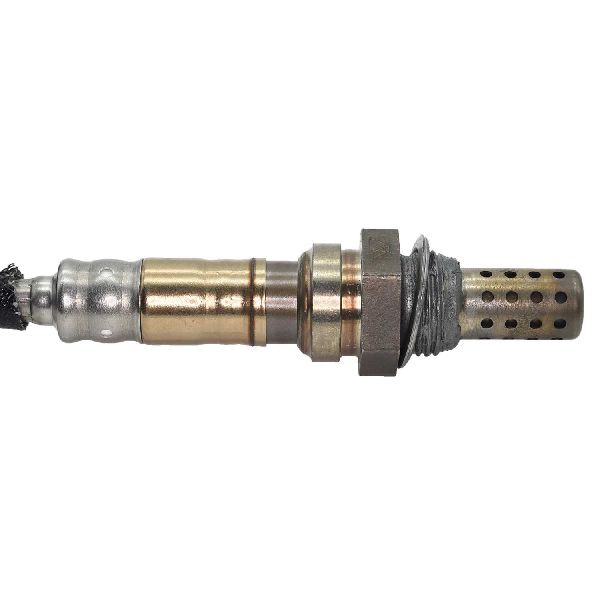
- Oxygen Sensor (Bank 2, Sensor 2)
(OEM #68224424AA (Verify with VIN, as part numbers can supersede))— This is the most common hardware failure for code P0058. The internal heater element fails.
Trusted brands: Mopar, NTK, Denso, Bosch
OEM price range: $70-$120
Aftermarket price range: $40-$90
Related Codes That Often Appear With This One
- P0038 — Heater Circuit High for Bank 1, Sensor 2. The TSBs from Jeep often group all four heater circuit high codes (P0032, P0038, P0052, P0058) together, suggesting a common software-related cause or a systemic wiring issue.
- P0032 — Heater Circuit High for Bank 1, Sensor 1. TSBs group these codes together, suggesting a common software-related cause.
- P0052 — Heater Circuit High for Bank 2, Sensor 1. TSBs group these codes together, suggesting a common software-related cause.
Technical Service Bulletins (TSBs) & Recalls
- 18-065-24 REV. A: Recommends reprogramming the PCM and possibly replacing an O2 sensor for P0058 and other heater circuit codes on 2024 models.
- 18-071-22 REV. C: Lists P0058 among DTCs that may be resolved with a PCM software update for 2022 models.
- 18-006-26 REV.A: Also points to a PCM reflash for a list of O2 sensor circuit high codes, including P0058, on 2021 models.
Platform-Specific Known Issues
- Multiple Technical Service Bulletins (TSBs) have been issued by Jeep for 2021-2024 models that include P0058. These bulletins often recommend reprogramming the PCM as the primary solution, indicating a known software issue that can trigger this code.
- Real Owner Experience: PCM Flash Fixed It: On the JeepGladiatorForum.com, a user with a 2023 Gladiator reported a check engine light for an O2 sensor. After taking it to the dealership, they found no hardware issue but discovered a pending software update related to the O2 sensors. The dealer performed the PCM reflash under warranty, which resolved the code. This mirrors the official guidance in Jeep's TSBs.
Mechanic-Grade Diagnostic Values
- O2 Sensor Heater Element Resistance — expected: 4 to 10 Ohms at ambient temperature (approx. 70°F / 21°C).. Failure: A reading of 0 Ohms (short circuit), infinite resistance / OL (open circuit), or a value significantly outside the expected range.
- Heater Control Circuit Voltage (Harness Side) — expected: Should show battery voltage (approx. 12V) on the power supply pin with key on, engine off.. Failure: Voltage close to zero on the power wire indicates an open circuit or blown fuse. Voltage present on the ground control wire when not commanded by the PCM can indicate a short.
- Heater Ground Circuit Resistance (Harness Side) — expected: Less than 5.0 ohms when measured between the ground pin at the connector and a known good chassis ground.. Failure: High or infinite resistance indicates an open in the ground circuit.
Scan Tool Commands That Help
- OEM Scan Tool (e.g., wiTECH): O2 Heater Test Actuation — This bidirectional command allows a technician to manually turn the O2 sensor heater circuit on and off. It is used to verify if the PCM driver is functioning and if the wiring can carry the load. While the test is active, a technician can check for voltage at the sensor connector to confirm the entire circuit's integrity from the PCM to the sensor.
Wiring & Ground Locations
- O2 2/2 Heater Control Circuit — This is the wire that the PCM uses to provide a controlled ground to the heater element. Per diagnostic documents, it may be identified as circuit K399.. A 'high' code can be caused by an open in this control circuit, preventing the PCM from pulling the voltage down, or a short to power on this wire.
- O2 2/2 Heater Ground Circuit — This is the dedicated ground wire for the heater element, which may be identified as circuit Z906.. An open in this ground wire will prevent the heater circuit from completing, causing a fault.
- Frame Ground Points — On the Jeep Gladiator, common chassis ground points can be found in the engine bay near the battery, on the frame behind the front passenger wheel, and on each side of the frame above the spare tire.. A poor main ground connection for the engine or PCM can cause a variety of electrical issues, including sensor circuit faults. Verifying these grounds are clean and tight is a good practice during diagnosis.
Real Owner Repair Stories
- JeepGladiatorForum.com user (2021 Jeep Gladiator 3.6L V6) — Check Engine Light with O2 sensor codes.
❌ Tried (didn't work) The owner had already replaced both the upstream and downstream O2 sensors on the driver's side (Bank 2) and the alternator in previous attempts to fix the issue.
✅ What actually fixed it The ultimate cause was not hardware. A dealership performed a PCM software update (reflash) which finally resolved the check engine light and O2 sensor codes. This aligns with the guidance in multiple Jeep TSBs.
OEM Part Supersession History
68224424AA→N/A (current as of searches)— N/A
Heads up: This part number is listed for multiple positions (upstream/downstream, left/right) across various Jeep, RAM, Chrysler, and Dodge models with different engines. It is critical to verify the correct part for the specific Bank 2, Sensor 2 location for the Gladiator using the vehicle's VIN, as using a sensor designed for a different position can cause functionality issues even if it physically fits.
Model Year Variations Within This Range
- 2021, 2022, 2024: Jeep has issued separate Technical Service Bulletins for different model years concerning O2 sensor heater circuit codes. For example, TSB #18-006-26 applies to 2021 models, #18-071-22 REV. C applies to 2022 models, and #18-065-24 REV. A applies to 2024 models. This indicates that the specific software logic and potential fixes evolved, making it crucial to reference the correct TSB for the vehicle's specific year.
Helpful Videos

We Have This Part in Stock

The information in this article is provided for general reference and educational purposes only. Vehicle specifications, procedures, and part compatibility can vary by production date, trim level, and region. Always consult your vehicle's factory service manual and verify part numbers before purchasing or performing repairs. Safety-critical components such as airbags, seat belts, and braking systems should be installed by a qualified professional.
- Jeep GLADIATOR:
- 🧭 Diagnostic Flowchart
- 🎬 Helpful Videos
- 🛍️ Shop This Part
- What's Unique About the 2021-2024 Jeep GLADIATOR
- Symptoms You May Notice
- Most Likely Causes
- Rare But Worth Checking
- Diagnosis Steps
- Parts You'll Likely Need
- Related Codes That Often Appear With This One
- Technical Service Bulletins (TSBs) & Recalls
- Platform-Specific Known Issues
- Mechanic-Grade Diagnostic Values
- Scan Tool Commands That Help
- Wiring & Ground Locations
- Real Owner Repair Stories
- OEM Part Supersession History
- Model Year Variations Within This Range
- 🎟️ Get 5% Off